Most people buy EVs to save money. Electricity is more affordable than fuel, and EVs are also cheaper to maintain than internal combustion engine (ICE) vehicles. But EVs have another side: they can deliver unbelievable driving performance. Because electric motors can be immensely powerful and deliver instant torque, EVs are breaking acceleration records at an unprecedented rate.
In this article, we examine the Top 10 Fastest Electric Cars in 2026 based on their speed from zero to 100 kilometres per hour. Some of these are rare and very expensive hypercars that are essentially forbidden fruit, but there are a few truly remarkable production vehicles that make an appearance. However, each one either has been or is sold in North America, so Canadians have access to them (in theory, at least).
Every single car on this list accelerates faster than a modern Formula 1 car, even though the new power units produce a 0 to 100 km/h time of 2.6 seconds. That really puts the performance of the world’s fastest electric cars into perspective.
The 10 fastest-accelerating EVs in the world are so quick that many cars you might assume you’d see don’t even make the list. These include the Volvo EX30 (3.6 seconds), Hyundai Ioniq 5 N (3.4 seconds), Tesla Model 3 Performance (3.1 seconds), Lotus Evija (<3 seconds), Lotus Emeya R (2.8 seconds), Rivian R1T and R1S (2.6 seconds), and the Audi RS e-tron GT (2.5 seconds). These times are far beyond what everyday models like the Volvo EX40 or Volvo EX90, Ford Mustang Mach-e GT, BMW iX, or even some potentially upcoming Chinese models like the BYD Atto 3 and BYD Seal can offer.
Prices from Canadian subsidiaries, where shown, include manufacturer’s suggested retail price (MSRP) plus destination charges but not fees, options, or sales taxes. While current at time of publication, prices are subject to change.
The 10 Fastest Electric Cars in 2026
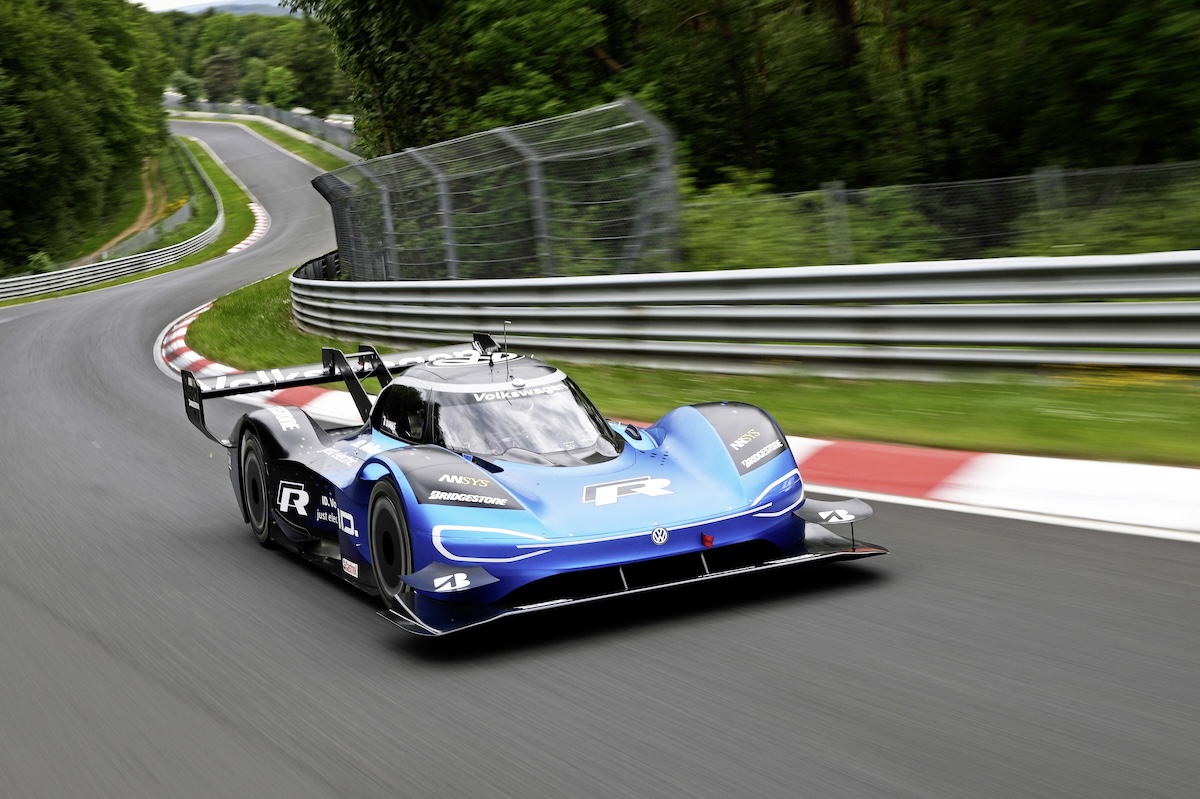
Volkswagen ID.R: 2.25 seconds
The Volkswagen ID.R prototype was one of the first track-dedicated EVs to set records and turn heads. Since its arrival in 2018, it’s held records at the Nurburgring and Pikes Peak. The Volkswagen ID.R’s official 0 to 100 km/h time is 2.25 seconds, though French sports car driver Romain Dumas has driven it and claims it’s gone as fast as 1.65 seconds. Its dual-motor all-wheel drive (AWD) system is rated at 671 horsepower and 479 lb-ft of torque, but a small 45 kWh battery pack and weight of just 1,100 kilograms (2,425 pounds) make it blisteringly quick. Years after its debut, it continues to hold a place among the top 10 fastest-accelerating electric cars on Earth. That’s truly remarkable.
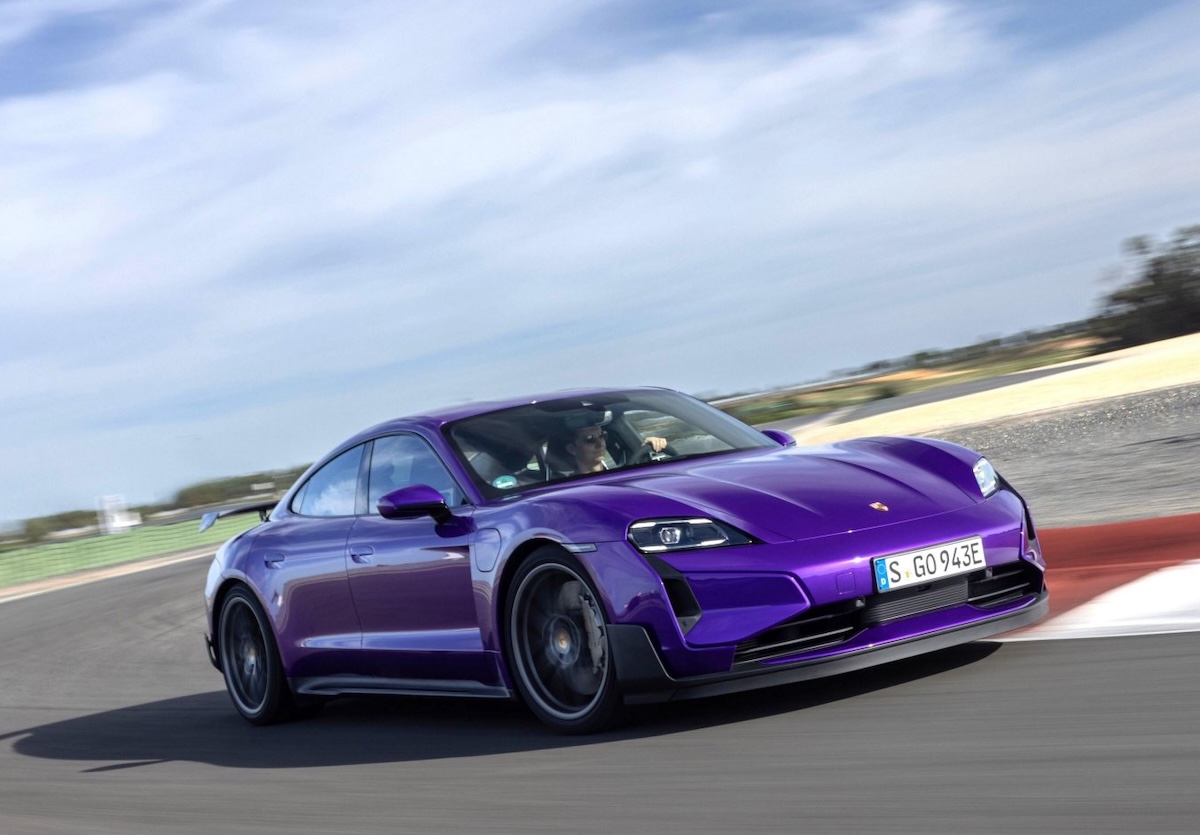
Porsche Taycan Turbo GT Weissach Package: 2.2 Seconds
The Porsche Taycan was the first true competitor to the Tesla Model S from a mainstream car maker when it launched in 2019. Progressively faster and more powerful models have been released by the German automaker since. Currently, the fastest is the Porsche Taycan Turbo GT with the Weissach Package. It has an official 0 to 100 km/h time of 2.2 seconds with launch control, a peak power rating of 1,019 horsepower, and a straight-line top speed of 305 km/h. The 2025 Porsche Taycan Turbo GT with Weissach Package is also the most expensive version of this performance EV with a starting price tag in Canada of $273,900 including destination. That’s before factoring in fees and the federal luxury tax, though, which pull its price past $300,000.
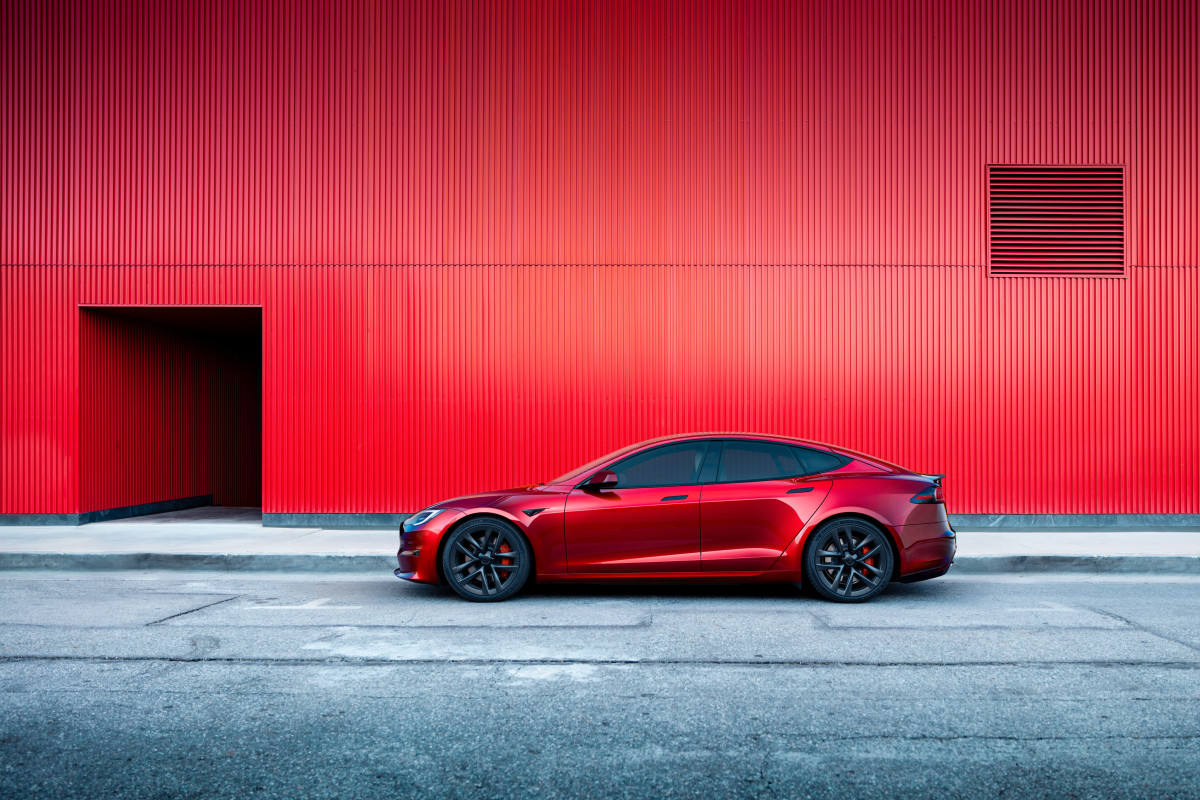
Tesla Model S Plaid: 2.1 seconds
Tesla Model S Plaid: 2.1 seconds
In its dual-motor Plaid configuration, the Tesla Model S is rated to go from 0 to 100 km/h in 2.1 seconds. With a power output of 1,020 hp and 1,050 lb-ft of torque and a quarter-mile time of 9.23 seconds according to Tesla's website, the Tesla Model S Plaid is among the fastest production cars ever made. All versions of the Tesla Model S are now discontinued. In its final form, pricing on the 2025 Tesla Model S Plaid was listed in Canada at roughly $135,000.
As a side note, the Tesla Model X Plaid electric SUV was no slouch: it managed a 0-100 km time of 2.6 seconds.
Lucid Air Sapphire: 2.0 seconds
The Lucid Air Sapphire arrived to take the wind out of the Model S Plaid’s sails with a blistering 0 to 100 km/h time of 2.0 seconds. This comes from a power rating of 1,234 hp and brings with it a top speed of 330 km/h. Lucid Cars, based in California, has received rave reviews for the thoughtful design and luxury appointments integrated into its vehicles.
With its torque-vectoring rear drive unit, track-tuned suspension, and carbon ceramic brakes, the Lucid Air Sapphire represents the pinnacle of performance in the Air lineup. For perspective, the Lucid Air Pure has a 0-100 km/h time of 4.7 seconds, while Lucid Air Touring does the sprint in 3.6 seconds and the Grand Touring in 3.2 seconds. In Canada, the 2025 Lucid Air Sapphire is priced from $327,300 — and that’s before adding in the federal luxury tax.
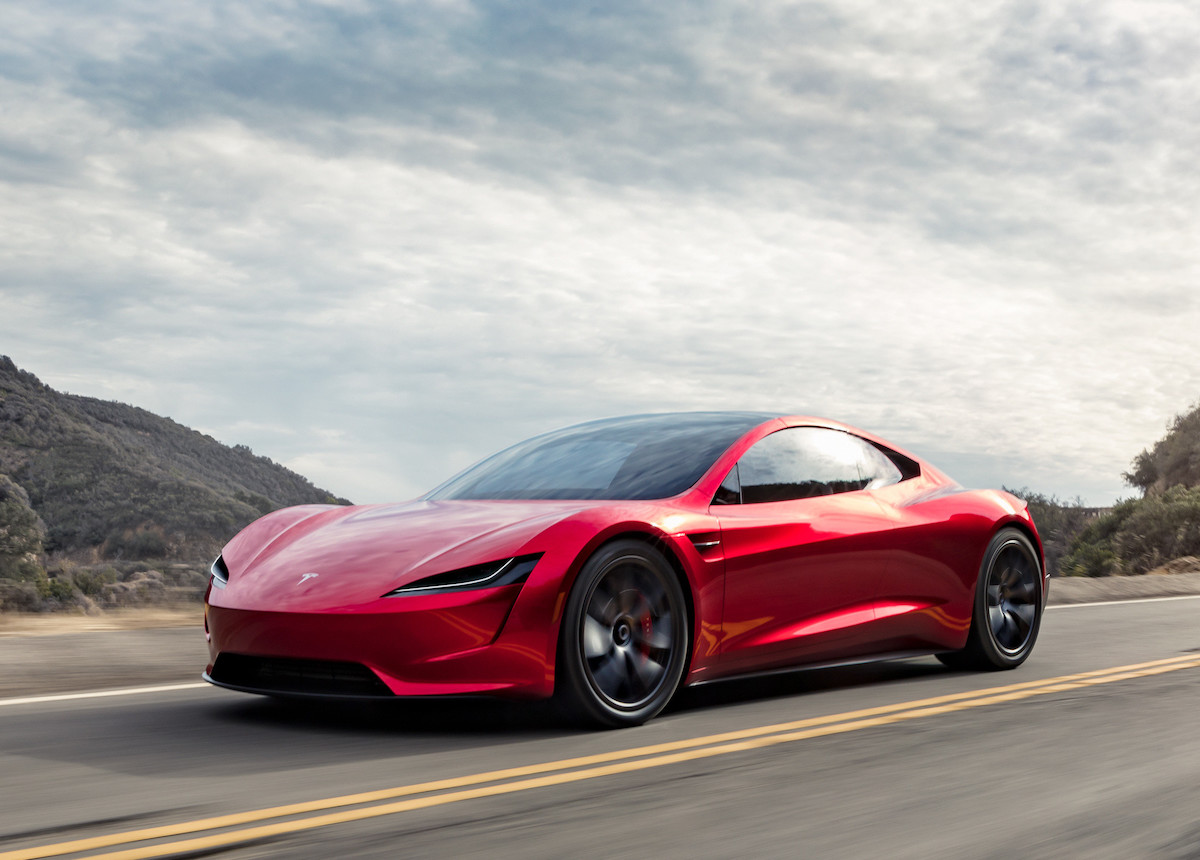
Tesla Roadster: 2.0 seconds
Although the ongoing hype has been tempered by one delay after another, deliveries of the second-generation tri-motor Tesla Roadster supercar are now slated for sometime in 2028. Three electric motors, one in the front and two in the rear that combine for all-wheel drive, will send an insane total of nearly 7,400 lb-ft of torque to the wheels for a published 0-100 km/h time of 2.0 seconds. Its estimated ultra-long range of 1,000 km is also a pretty huge deal. But what’s even more unhinged is claims of a SpaceX package involving rocket thrusters that could reduce that time to 1.1 seconds. We’ll take a wait-and-see approach on that claim.
Deus Vayanne: 1.99 seconds
Deus Automobiles, a startup from Austria, collaborated with Italian design and engineering house Italdesign Giugiaro as well as Williams Advanced Engineering to develop the Deus Vayanne, an electric hypercar limited to just 99 units worldwide. With claimed power specs of 2,243 hp and 1,504 lb-ft of torque, Deus says the Vayanne sprints from 0 to 100 km/h in 1.99 seconds with a top speed of more than 400 km/h. The limited production run began in 2025 with each unit priced at more than $2 million.
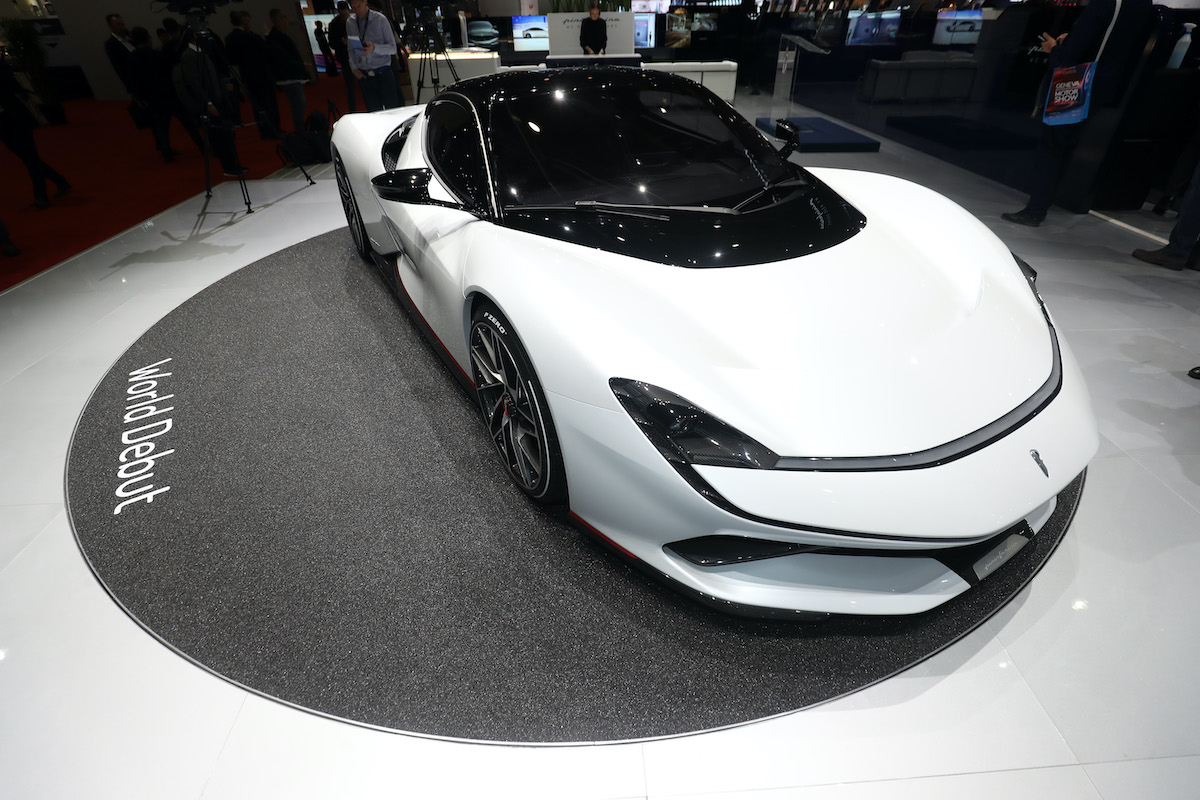
Pininfarina Battista: 1.86 seconds
It’s unsurprising that the Pininfarina Battista boasts similar performance figures to the Rimac Nevera listed below since the two cars share a chassis and powertrain. With four motors producing a combined output of 1,900 hp and 1,726 lb-ft of torque, the Battista’s 0-100 km/h time of 1.86 seconds is achievable while traveling up to 476 kilometres on a single charge. Priced at more than $3 million, 10 units have been earmarked for sale through Pininfarina’s Canadian retail partners.
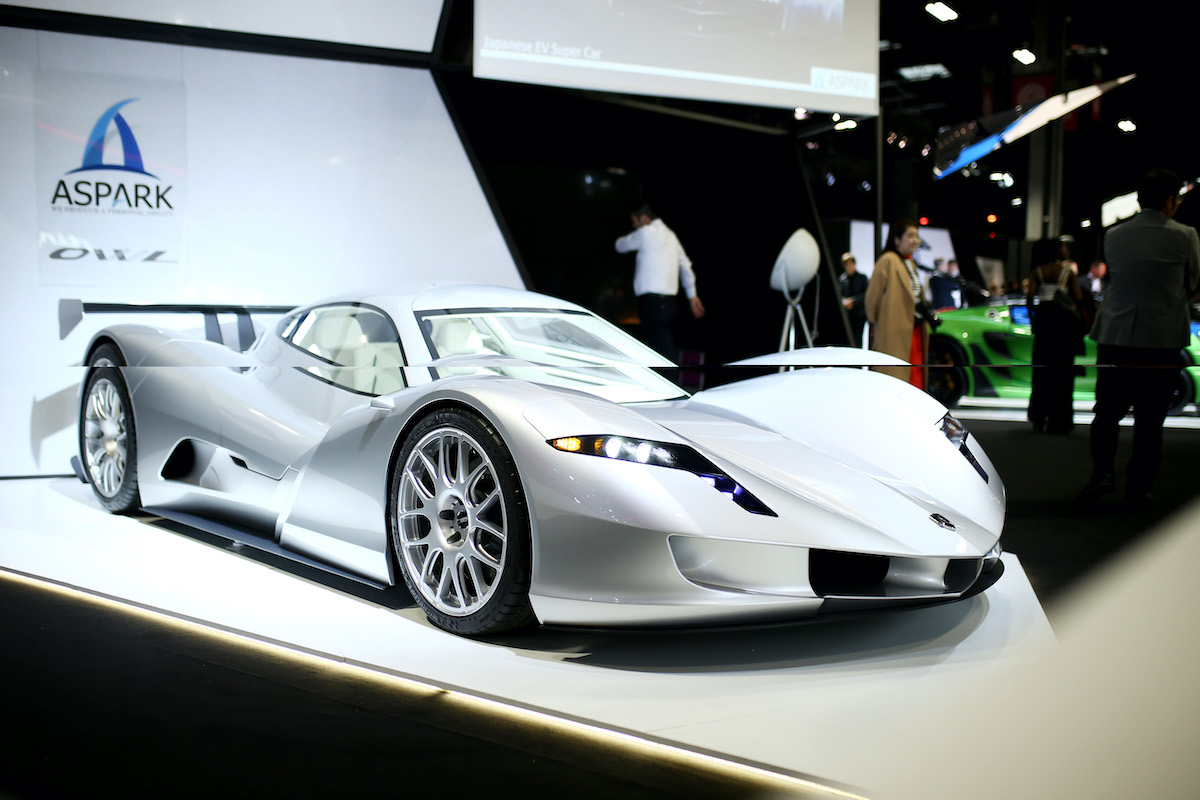
Aspark Owl: 1.78 seconds
The Aspark Owl was originally revealed as a concept car at the 2017 Frankfurt auto show, and a production version followed at the Dubai International Motor Show in 2019. This electric supercar produces 1,980 hp and 1,475 lb-ft of torque. It takes 1.78 seconds to get from 0 to 100 km/h and 9.74 seconds to get to 299 km/h with a top speed of 413 km/h. It can also run for 400 kilometres on a single charge. Priced at US$3.2 million, only 10 units were allocated for North America.
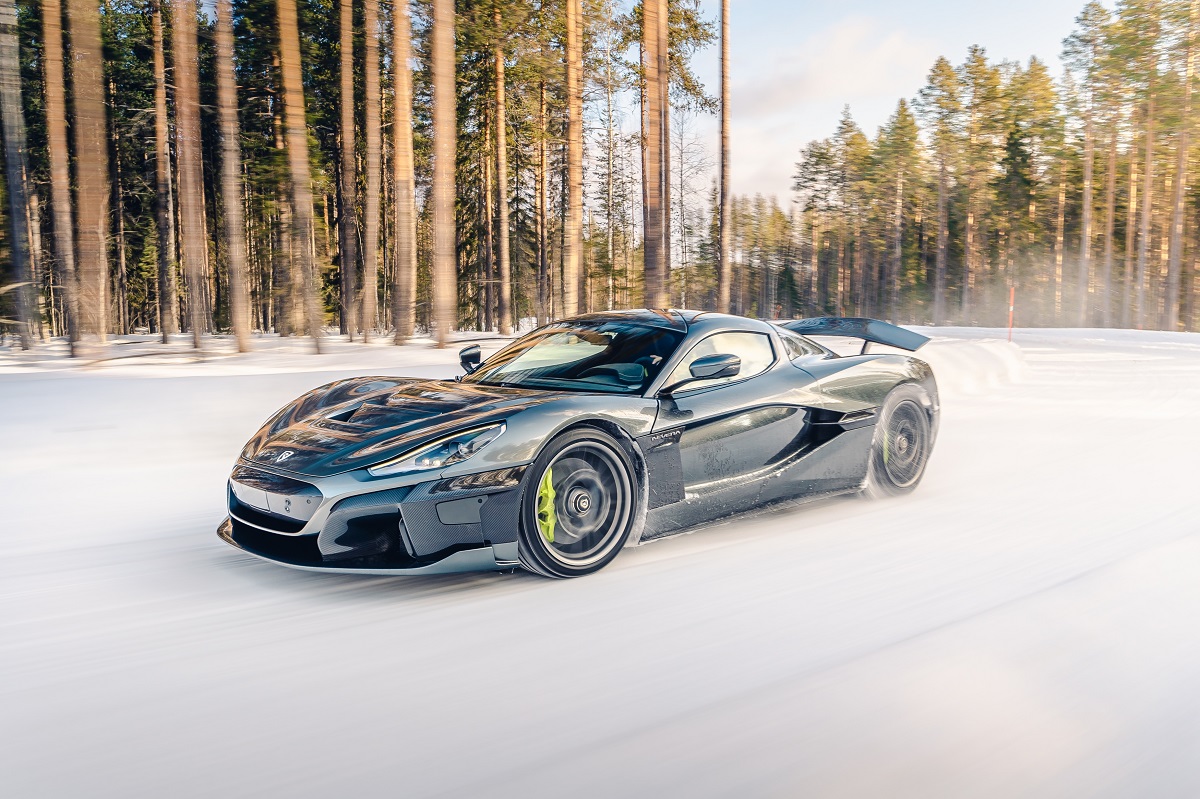
Rimac Nevera R: 1.72 seconds
In case the original Rimac Nevera’s 1,888 hp and 1,741 lb-ft of torque weren’t unhinged enough for you, the Rimac Nevera R has arrived to shatter the brand’s own records. This evolution uses four even more powerful independent electric motors to bump those specs up to 2,107 hp and 1,726 lb-ft of torque. In 2025, these figures were good enough to earn the car world records in 24 different performance categories, including a 0 to 400 to 0 km/h time of 25.79 seconds. The Nevera R’s price is set at 2.3 million Euros (more than $3,500,000 Canadian). Given the brand’s partnership with luxury dealer group Grand Touring Automobiles, we expect it to be available from these Canadian dealerships.
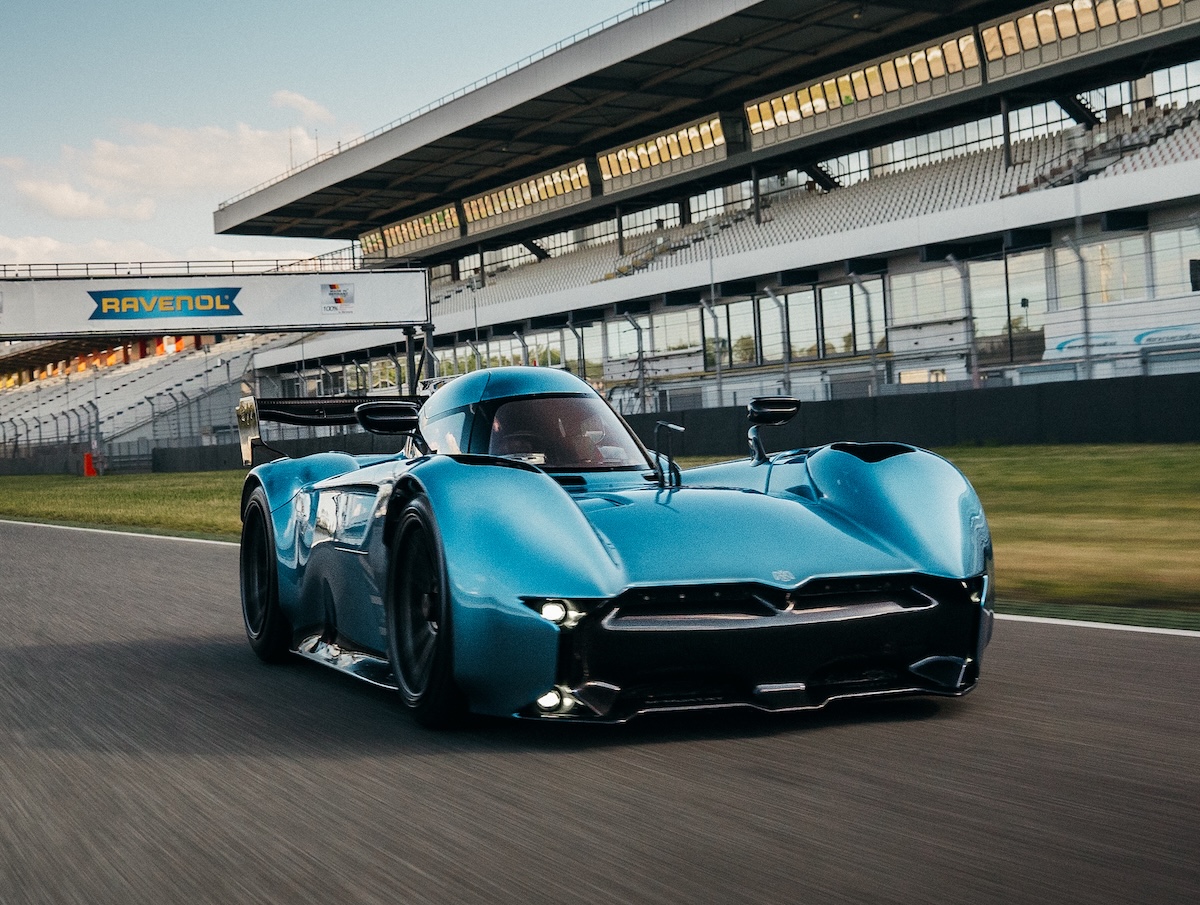
McMurtry Spéirling: 1.4 seconds
Talk about making a first impression. The McMurtry Spéirling, a single-seat track-only electric hypercar, burst onto the scene by smashing the record at the Goodwood Festival of Speed hill climb in 2022. It’s capable of sprinting from 0 to 100 km/h in just 1.4 seconds thanks to its 986 hp and a weight of just 1,000 kilograms (2,200 pounds). With suction fans mounted to the underfloor, it’s even capable of driving upside down. If you’re willing to drop a relatively reasonable £1,200,000 (roughly $2.25 million Canadian) and jump through import hoops to land this truly impressive performance, the car is rumoured to be on the verge of production as of the summer of 2026.
Related Topics:


