Porsche was floundering in the 1990s. Its iconic 911 couldn't sustain the company on its own, and the front-engined coupes such as the 928 simply didn't have a broad enough appeal in a developing automotive market. Thankfully, an alternative appeared in the form of the Boxster, a lighter and more affordable mid-engine sports car. This short-wheelbase, two-seat roadster captured a younger demographic and helped to keep the German automaker afloat until the Cayenne SUV essentially saved the company. However, convertibles have a limited audience. To make up for this, the Cayman coupe was introduced at roughly the same time as the second-generation Boxster.
Porsche Cayman Buying Guide: Cost, Reliability, and the Best Years to Buy
Search for Porsche 718 Cayman
See all


The Cayman wasn't just a hard-top version of a Boxster, though. The added rigidity from a solid roof blessed this small sports coupe with impressive cornering abilities, aided by the optimally balanced layout. In some ways, the Cayman had the potential to outshine the flagship 911, and later models even borrowed some 911 components. The Porsche Cayman continues to thrill drivers to this day, though a big change is on the horizon with its expected electrification.
Porsche Cayman Buying Guide: Cost, Reliability, and the Best Years to Buy
- Frequently Asked Questions
- Porsche Cayman Pros and Cons
- Porsche Cayman Generations
- Third Generation (2017 - present)
- Second Generation (2014 - 2016)
- First Generation (2006 - 2013)
Frequently Asked Questions
Which Porsche Cayman years are the best?
The latest third-generation Cayman is arguably the best, but that only applies to the more expensive six-cylinder models. Their plentiful power, combined with newer technology and engineering, makes them some of the best sports cars on the road at any price.
Which Porsche Cayman years are the worst?
Oddly enough, the third-generation Cayman is also arguably the worst in the model's lineage, but that only applies to the 2017 through 2019 model years when four-cylinder engines were the only option. As superficial as it seems, the sound these Caymans make can be a deal-breaker for some. They lack the refinement expected of a Porsche, and at higher revs the noise can be off-putting. That's too bad since these models are more powerful and more efficient than the six-cylinder engines they initially replaced.
Is the Porsche Cayman a good deal?
Until the debut of the Macan compact SUV, the Cayman was the most affordable Porsche in the lineup. It continues to serve as a deserving gateway to the brand, delivering extraordinary performance without exorbitant pricing. Caymans also tend to retain much of their value for the first few years before adjusting to more typical depreciation. There are even a few rare models that have increased in value.
Porsche Cayman Pros and Cons
Pros:
- Beautifully balanced handling
- More comfortable and luxurious than most rivals
- Plenty of customization options
Cons:
- Limited cargo capacity
- Uninspiring four-cylinder models
- Pricey upper trims and options
Porsche Cayman Generations

Third Generation (2017 - present)
The current Cayman generation debuted as a 2017 model. A 718 was added to the name as a tribute to the race cars that Porsche successfully campaigned in its motorsport heyday in the late 1950s and early 1960s. (The Porsche 718 Boxster simultaneously added the same three numbers to its name.) The new Porsche represented the most significant change in the Cayman’s relatively short history, although that wasn’t immediately apparent from the outside.
In terms of styling, the 718 Cayman looked very similar to the previous generation. A facelift narrowed the headlights and the air intakes below to form a more prominent bumper. The rear end was easier to distinguish, sporting a black gap between the taillights with a Porsche badge suspended within it. A power-deployed spoiler was hidden in the top lip of this gap.
The most prominent change for the 718 Cayman was its engine. Instead of the horizontally opposed six-cylinder "Boxer" engine that powered previous generations, this version used a turbocharged four-cylinder for both trim levels. The base 718 Cayman had a 2.0-litre engine that produced 300 horsepower and 280 pound-feet of torque, while the 718 Cayman S was upgraded to a 2.5-litre engine with 350 hp and 309 lb-ft of torque. Both were equipped with a standard six-speed manual transmission and rear-wheel drive with a seven-speed automated dual-clutch available as an option. It's called the PDK transmission, a mercifully short acronym for Porsche-Doppelkupplungsgetriebe.
Both engines had more impressive specs than those they replaced from the previous generation, resulting in quicker acceleration. The base Cayman reached 100 km/h in 4.7 seconds, while the S model shortened that to 4.2 seconds. That should have been enough to lure owners to dealerships for an upgrade, but the sound of the flat-four-cylinder engine was a definite downgrade. It lacked the smooth refinement of the six-cylinder, and at higher engine speeds the racket behind the passenger compartment could have been a deal-breaker for many. To some, it sounded like a poorly modified Subaru and did not inspire drivers to accelerate harder.
Standard features were nearly identical between the 718 Cayman and Cayman S. They included 18-inch wheels (19-inch for the Cayman S), heated mirrors, parking proximity sensors, partial leather seat upholstery, a seven-inch infotainment touchscreen, satellite radio, and iPod/iPhone input. In typical Porsche car fashion, the features list is fairly thin with expensive options available to fill the voids. These included LED adaptive headlights, keyless entry/ignition, dual-zone automatic climate control, heated and ventilated seats, sport seats with added side bolstering, a navigation system, Apple CarPlay, and the choice of either a Bose or Burmester premium audio system.
There were also several performance upgrades, such as adaptive suspension dampers called Porsche Active Suspension Management (or PASM for short), which lowered the base 718 Cayman by 10 millimetres and the Cayman S by 20 mm. Also available was Porsche Torque Vectoring, which operated much like a rear differential but used the individual brakes instead of gears. Other add-ons included ceramic composite brakes and a sport exhaust system.
The Sport Chrono package was a popular addition for spirited drivers, adding a digital and analog stopwatch atop the dash, a drive mode selector on the steering wheel, a Sport Response button that sharpened the engine and transmission reactions, launch control for PDK models, upgraded transmission mounts, and an additional performance meter.
For its sophomore year, the 2018 Porsche 718 Cayman GTS increased the 2.5-litre engine’s output to 365 hp. It had restyled front and rear fascias, synthetic suede interior elements, the Sport Chrono package, and most other performance options.
For the 2020 model year, the 718 Cayman lineup grew to include two new models. The Cayman T included the most desirable performance upgrades and slotted between the base Cayman and the Cayman S. The big news was the return of the naturally aspirated flat-six engine with the debut of the top-end GT4 trim. The 4.0-litre was a detuned variant of the Porsche 911 Carrera's engine, producing 414 hp and 309 lb-ft of torque. Porsche enthusiasts rejoiced with this addition, but its six-figure starting price made it more expensive than the base 911 of the time.
The six-cylinder 718 Cayman was a much-needed addition to the stable, and a Cayman GTS 4.0 model was added for 2021 to make it more accessible. Power was scaled back slightly to 394 hp, and this model came with many of the Cayman T's performance upgrades, rendering it good for a top speed of 288 km/h. That year also moved Apple CarPlay, adaptive headlights, and the dual-zone climate control from the options menu to the standard features list for most models.
There was yet another model for 2022 with the addition of the Porsche 718 Cayman GT4 RS. This top-performing variant shared its six-cylinder engine with the Porsche 911 GT3, though power was reduced to 493 hp and 331 lb-ft of torque. It was only available with the PDK transmission and gained several aerodynamic enhancements, including a much larger and permanently fixed rear wing.
The roster received a shakeup for 2024 with the Cayman T replaced by a new 718 Cayman Style Edition model and the GT4 discontinued. The Style Edition was aptly named since it added mostly cosmetic enhancements that included larger wheels, racing stripes, leather upholstery, and a heated steering wheel. For 2025, the PDK was made the default transmission with the manual still available as a no-cost option.
The early four-cylinder 718 Cayman models put a spotlight on how important sound is to the average Porsche driver. Even though they were as exciting as previous generations and outperformed them on paper, the smaller engines failed to inspire on a visceral level. Apart from sound, the Cayman remained one of the best sports coupes to drive. The manual transmission was the choice for drivers seeking a more engaging experience, though the seven-speed PDK was quicker and more efficient. For many of the Porsche faithful, only the six-cylinder variants were worthy of consideration.
The 718 Cayman was a standout performer among its few contemporary rivals. It was more balanced and trustworthy to drive than the Chevrolet Corvette, and more reactive and agile than a BMW M2 or an Audi RS3.
The 718 Cayman's interior borrowed heavily from the Porsche 911 with a similar snug fit for drivers of any size or shape. The familiar round gauges and ignition to the left side of the steering wheel are obvious carryovers, along with the solid cabin that was covered in premium materials, justifying the Cayman's price. Porsche has prided itself on building driver-focused vehicles with a focus on performance, so they typically have fewer tech and safety features than other sports cars. Adaptive cruise control and a blind-spot monitor were optional.
The Cayman's smaller size also limited its practicality. Passengers had plenty of space, but cargo capacity was sparse. A trunk in the tail measured only 272 litres, and the odd shape would not accept bulkier objects. You could fit maybe one or two smaller rolling bags back there, and perhaps a thinner compressible duffel bag on the engine cover, but that would block your rear view. Under the hood was a smaller frunk that could hold up to 150 litres, and in some cases it was more convenient for its deeper shape.
Considering how lively and entertaining the 718 Cayman was, it was surprisingly fuel-efficient. As of 2026, the base Cayman was estimated by Natural Resources Canada to return 11.0 litres per 100 kilometres in the city, 8.7 highway, and 10.0 in combined driving with the PDK transmission. The manual increased those figures by roughly one litre per 100 kilometres across the board. The Cayman S was rated at 12.2 L/100 km city, 9.2 highway, and 10.9 combined for the PDK and 12.5/9.6/11.2 for the manual. The six-cylinder GTS models were understandably less economical but were still estimated between 11.1 and 12.2 L/100 km in combined driving.
Neither the U.S. National Highway Traffic Safety Administration (NHTSA) nor the Insurance Institute for Highway Safety (IIHS) has published crash test results for the Porsche 718 Cayman. That's not unusual for high-end sports and luxury vehicles, though with the Cayman’s more accessible pricing we think it would be warranted. In its first year, the 2017 Cayman was issued recalls for a possible post-collision fuel leak and airbags. These were quickly addressed, and by 2019 it had a clean bill of health that remained through 2025.
The Cayman's relatively trouble-free nature kept resale values healthy for the first few years of ownership. After that, it depreciated at a comparable rate to other sports coupes. The six-cylinder Caymans were more desirable and rarer, which kept prices unusually high. Coinciding with the pandemic supply issues, some six-cylinder Caymans actually increased in value for a few years.
Currently, expect to pay between $60,000 and $250,000 for a used third-generation Porsche 718 Cayman on the Canadian used vehicle market with the former being early base models and the latter being GT4 RS units. Unless you live in a major city, you’ll need to travel to acquire one.
Second Generation (2014 - 2016)
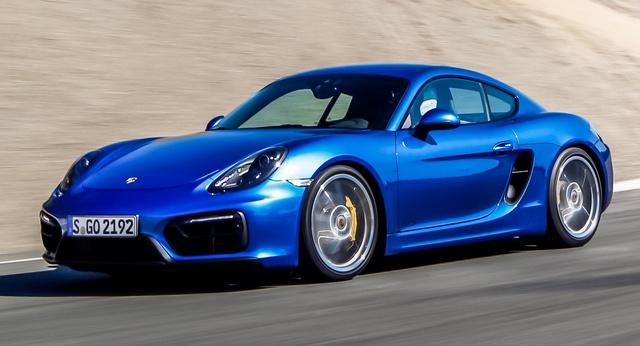
The second-generation Cayman (known internally as the 981 Cayman) went on sale as a 2014 model, though in Europe it was classified as a 2013 vehicle. It can easily be identified from other generations by its taller headlight enclosures. Compared to its predecessor, this follow-up also had larger front and side air intakes, giving it an athletic and sporty demeanour.
The 2014 Cayman was available in Canada in two trim levels that were largely differentiated by their engines and performance features. The base model was powered by a 2.7-litre six-cylinder boxer engine that produced 275 horsepower and 213 lb-ft of torque. A six-speed manual transmission was standard, with a seven-speed PDK available as an option. The Cayman S was upgraded to a 3.4-litre engine, which increased output to 325 hp and 273 lb-ft of torque. The base Cayman could accelerate to 100 km/h in 6.0 seconds with the manual transmission, while the Cayman S took 4.8 seconds.
Standard features included 18-inch wheels, a power spoiler that rose from the rear deck, a seven-inch infotainment touchscreen, Bluetooth, and a very basic four-speaker audio system. The Cayman S added 19-inch wheels, xenon headlights, and larger front brakes. Satellite radio and iPod/iPhone connectivity were available along with keyless entry/ignition, adaptive cruise control (PDK only), a rearview camera, parking proximity sensors, ceramic composite brakes, a rear differential, sport seats, dual-zone automatic climate control, heated seats, and either a Bose or Burmester premium audio system.
The GTS model joined the Canadian line-up for 2015. It used a tuned version of the 3.4-litre engine that was good for 340 hp and 280 lb-ft of torque. GTS trim upgrades included 20-inch wheels, PASM adaptive suspension dampers, smarter interior materials, and the Sport Chrono package with dynamic transmission mounts, adjustable sport modes, and launch control for PDK-equipped models.
In 2016, the Cayman GT4 was introduced featuring a 3.8-litre six-cylinder engine that produced 385 hp and 309 lb-ft of torque. It was only offered with a six-speed manual transmission and could accelerate to 100 km/h in 4.4 seconds. It also gained a sport suspension with a lower ride height, larger brakes, additional aerodynamic elements, a sport exhaust, and synthetic suede upholstery.
Natural Resources Canada estimated fuel economy for the base Cayman was 10.7 L/100 km city, 7.4 highway, and 9.2 in combined driving with the PDK transmission. The manual increased those figures to 11.5/7.9/9.9 L/100 km. The Cayman S was rated at 9.8 L/100 km combined with the PDK and 10.4 L/100 km combined with the stick-shift. The GTS averaged 9.5 L/100 km combined with the PDK and 10.7 L/100 km combined with the manual, while the GT4 burned 11.8 L/100 km combined with the default manual transmission.
Crash test safety scores were not available. Issues that received recalls included a rear axle component, the hood lock, and passenger airbag sensors. These were addressed within a year or two of issuance.
Second-generation Caymans held their value as well as other sports coupes of the era, though the GTS and GT4 continue to fetch higher prices on the used market due to their sharper performance and relative rarity. In Canada, expect to pay between $40,000 and $130,000, the former being for higher-kilometre base models and the latter for GT4 units.

First Generation (2006 - 2013)
The original Cayman was introduced in the 2006 model year as a hard-top alternative to the related second-generation Porsche Boxster, which debuted a year earlier. The Cayman wasn't just a coupe variant of the convertible, though, as it was enhanced with a more powerful engine and an upgraded suspension for even better handling.
The 2006 Porsche Cayman was only offered in a single trim level, Cayman S, with a 3.4-litre six-cylinder boxer engine that produced 295 horsepower and 250 lb-ft of torque. A six-speed manual was the standard transmission with a five-speed automated manual "Tiptronic" offered as an option. It could accelerate to 100 km/h in 5.3 seconds.
Standard feature highlights were limited and included 18-inch wheels and a nine-speaker audio system. Options included leather upholstery, power-adjustable and heated seats, rear parking proximity sensors, and a navigation system. Performance-minded shoppers could also add a limited-slip differential, ceramic composite brakes, and PASM adaptive suspension dampers. A base Cayman model debuted in the second year. It had a 2.7-litre six-cylinder engine that produced 245 hp and 201 lb-ft of torque, good enough to get it to 100 km/h in 6.2 seconds. The entry-level model downgraded to 17-inch wheels and the smaller brakes from the Boxster. In 2008, folding leather sport bucket seats were added to the options list.
The base engine grew to 2.9 litres in 2009, and output increased to 265 hp and 221 lb-ft of torque. The Cayman S also received a power bump to 320 hp and 273 lb-ft of torque. These increases didn't fundamentally change the Cayman, but the adoption of the PDK dual-clutch transmission offered slightly improved acceleration and quicker shifts. These were early days for that type of transmission, and manual operation was controlled via steering wheel-mounted buttons instead of today’s more common and intuitive shift paddles.
Bluetooth and iPod/iPhone integration were added in 2011, and in 2012 the higher-performing Cayman R appeared. Power increased to only 330 hp, but it came standard with a limited-slip differential, a lower sport suspension, and lightweight sport seats. The Cayman R was intended for more hardcore drivers and did not include air conditioning or a stereo, though they were available as options. The Cayman went on hiatus in 2013 in anticipation of a full redesign.
Fuel economy estimates from Natural Resources Canada had the 2014 base Cayman returning 10.7 L/100 km city, 7.4 highway, and 9.2 in combined driving with the PDK gearbox and 11.5/7.9/9.9 with the manual. The Cayman S was rated at 11.3/7.9/9.8 L/100 km with the PDK and 11.9/8.6/10.4 with the PDK. The Cayman R was estimated at 10.4/6.7/12.1 L/100 km combined.
The only recall listed for the first-generation Cayman was issued for the 2012 model year and was related to the seatbelt fittings. As with Caymans in later years, these early models depreciated at a rate comparable to other sports cars of the era. The Cayman R, however, has actually risen in value and could be a future collectible.
Most first-generation Porsche Caymans listed for sale in Canada are priced in the $30,000 to $40,000 range. The one Cayman R we found had an asking price of $108,888.
Related Topics


by Mark Takahashi
Mark Takahashi's automotive career began in art direction working on car and motorcycle publications, and he honed his craft as an amateur open-wheel racer. Those experiences opened the way into automotive journalism, where he built a reputation writing for outlets including Edmunds, Car and Driver, Autoblog, and TrueCar, reviewing thousands of vehicles during a decades-long career and earning a seat on the jury of the North American Car and Truck of the Year Awards.
The content above is for informational purposes only and should be independently verified. Please see our Terms of Use for more details.

