Planning a road trip in an electric vehicle (EV) can feel daunting, especially in Canada where charging infrastructure is still lacking in some areas. But we’ve seen what’s possible when drivers plan ahead—EVs have made it all the way across Canada and even to the Arctic Ocean! In the parts of the country where most EV drivers want to reach, there are now plenty of charging stations, so EV road tripping is a lot easier than it used to be. However, it still pays to plan ahead.
When road tripping in an EV in Canada, it’s important to understand the car's key capabilities, such as its real-world range, its maximum charging speed, and how to precondition the battery (warming or cooling it to the optimum temperature) for faster charging. Drivers also need to factor in the road and weather conditions along their route, the extra time charging stops will add, and where to stay so they can charge their EV overnight. In this article, we lay out our best tips for planning a road trip in an EV in Canada.
Planning a Road Trip in Your EV in Canada
- Your Road Trip Range is Not Your Full Range
- Know Your EV’s Charging Speed
- Use the Built-in EV Trip Planning Tools
- Understand Your Vehicle’s Port Type
- Plan Your Route in Advance
- Download Apps to Monitor Charging Stations
- Consider Road and Weather Conditions
- Add Extra Time to Your Plans
- Choose Hotels or Campgrounds Where You Can Charge Overnight
- Conclusion
Your Road Trip Range is Not Your Full Range
You likely already know the advertised range of your EV. This figure is the total range available if you were to completely drain the battery from a 100% charge. In practice, though, you won’t ever be able to access this entire range, and this is especially true on road trips. Aim to arrive at a fast charging station with no less than 10% of the car's range remaining, and ideally with enough in reserve to get to the next closest charging station if necessary. Typically, you’ll stop your charge at 80% unless you need more to get to your next destination since fast charging slows down significantly past that point to protect your car’s battery.
Run some calculations to understand how far you can realistically travel between charges. For example, a Hyundai Ioniq 5 Long Range, with an advertised range of 504 kilometres, has 50 km left at 10% and 403 km at 80%, meaning owners can expect a maximum of 350 km between charging stops. In a Chevrolet Silverado EV WT Max Range, with an advertised 793-km range, 10% is 79 km and 80% is 634 km, so that driver can plan to travel 555 kilometres between stops. Working out these figures for your own EV will help enormously.
Know Your EV’s Charging Speed
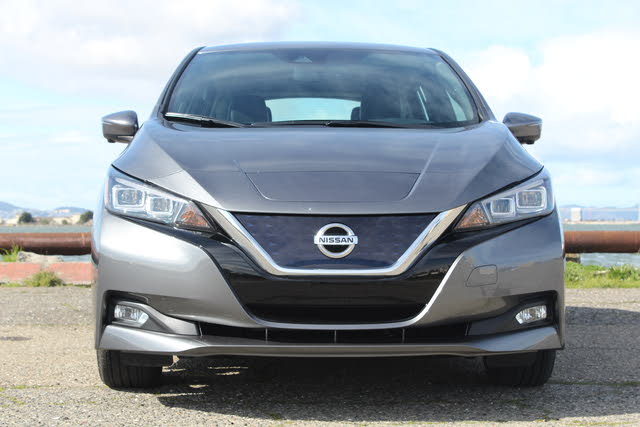
Not all EVs charge at the same rate. Older models such as the early Nissan Leaf and the Chevrolet Bolt charge at 50 kilowatts, while newer EVs such as the Lucid Gravity and the BMW iX3 can charge at 400 kW. Most modern EVs have charging rates between 100 and 250 kW.
However, knowing your EV’s charging speed only tells part of the story. The fastest chargers available in Canada at the time of writing were 350 kW, and those are still few and far between. You’ll also rarely reach the car’s peak charging rate due to factors such as outdoor temperature, the charger’s hardware and software, and whether the battery is preconditioned when you arrive at the charge point.
In general, you’ll want to plan your road trip route around DC fast charging stations that are the quickest the car can handle. If the car takes up to 150 kW and you charge at a 50 kW station when there was a faster one around the corner, you’re wasting your time (you’re also wasting money if the station charges based on how long you’re plugged in and not the actual power drawn, which is still very common). On the flip side, using a 350 kW charger when your car can only handle 100 kW is likely a waste of money, as faster chargers tend to be more expensive. You’d also be taking up space that could be used by an EV that’s capable of faster charging.
Use the Built-in EV Trip Planning Tools
Many newer EVs have trip planning tools built into their navigation systems. These include models from Tesla, Ford, General Motors, Hyundai, Kia, and more. Some use the Google built-in operating system and base their trip planning information on Google Maps. These tools plan charging stops at appropriate points along the route and also precondition the battery to minimize the charging time.
These on-board trip planners can be helpful for finding convenient charging locations, but they don’t always select the best spots for things like charging speed and surrounding amenities. Smartphone apps such as A Better Route Planner (ABRP), PlugShare, and ChargeHub offer EV route planning functions with more customization. The data for Canada isn’t always perfect in any given app, so we recommend using these as a starting point and refining the route.
Some EVs and apps let drivers set their desired state of charge (SoC), and will map out charging stops to get you to your destination with the requested range remaining. This can be helpful if charging spots are limited, and you want to ensure you have enough range left to reach your next stop.

Understand Your Vehicle’s Port Type
All EVs on the road today in North America come with one of three charging port types. The North American Charging Standard (NACS) port is the type used on Tesla vehicles. NACS ports are now appearing on newer EVs from other brands and will eventually become the standard in Canada and the United States. Since Tesla charging infrastructure is faster and more widespread than other networks, having an NACS port can be helpful. However, it’s important to know that not every Tesla Supercharger is available to non-Tesla vehicles, so check the status of a charging bank you’d like to use on the Tesla app before planning any important stops.
Many late-model EVs come with a CCS port. Until NACS adoption became more widespread, CCS was the standard for non-Tesla EVs. Many charging banks across Canada have NACS and CCS ports at the same stations, but some may offer CCS only. Some vehicle manufacturers now offer NACS or CCS adapters for compatible vehicles, which may allow you to charge using either port type. Check with your dealership to see if this is available for your EV, as it will open up many more charging options.
The third charging port type is CHAdeMO, a charging standard that originated in Japan. A few models with CHAdeMO ports remain in Canada, such as the first- and second-generation Nissan Leaf and all versions of the Mitsubishi Outlander PHEV. This port is being phased out in North America and becoming less common at Level 3 DC fast chargers. If you’re considering buying an EV with CHAdeMO charging, it’s important to know you’ll have fewer fast charging options than other EVs. These stations also tend to be slower than others, usually topping out at 50 kW.
Plan Your Route in Advance
When you know your vehicle’s 10 to 80% range, its charging speed, and the stations available based on its charging port, you’re ready to start planning your EV road trip.
While the route planners available in your vehicle and on apps are very helpful, Canadian information on these tools can be inconsistent. Unless you’re traveling along routes with plenty of charging options, such as the Windsor to Montreal corridor, we highly recommend taking the time to map out your route in advance. This will give you peace of mind knowing you can comfortably travel the distances between charging stations, you’ll have the amenities you’ll need while charging such as washrooms and restaurants, and there will be alternate charging stations available nearby in case one of them is out of action.
One factor to consider as you map out your route is that convenient charging stations tend to be more expensive and busier than less convenient ones. For example, the Ivy Charging Network stations at ONRoute rest stops along Highway 401 and 400 in Ontario are more expensive than those in surrounding communities, and lines sometimes form during peak travel periods. If alternate stations give you the amenities you need without taking you far off your route, you may find them to be quieter and more cost-effective.
Download Apps to Monitor Charging Stations
Mapping out charging stations along your route is important, especially if you're traveling in areas with less robust charging infrastructure, such as Northern Ontario and the Prairies. However, we highly recommend monitoring the status of charging stations as you go to ensure you don’t get caught by surprise with stations that are down for maintenance.
A good rule of thumb is to take a minute to look up the next station you plan to stop at to make sure it’s working as planned while you're charging at another. The most reliable station status information can be found in the smartphone app for each station’s charging network. Before you start your trip, take the time to download the native apps for any networks you plan to use along your route, such as Tesla, Flo, Ivy, Petro-Canada, Electrify Canada, and others. And if you set up your payment method in the apps in advance, you’ll save yourself some time at the charger and you won’t be left standing around in a parking lot fumbling with your credit card.
Some drivers also like to download apps with information for multiple networks, such as PlugShare and ChargePoint, to quickly and easily find alternate charging stations.

Consider Road and Weather Conditions
Summer road tripping with an EV in Canada is relatively easy, and drivers should hit or get close the manufacturer estimates for range. However, there are a number of factors that can affect real-world range even in the summer, such as driving long distances on gravel roads or into strong headwinds. Speed also has an enormous impact on real-world range; differences of 10 to 20 km/h will make a noticeable difference on how far you can go between charging stops. Towing or carrying a lot of extra weight can also reduce your range, so be sure to consider these factors when mapping out your trip.
Long-distance driving in an EV in the winter is a different story. According to CAA’s real-world EV range testing in Canadian winters, trudging through snow and frigid temperatures has been shown to reduce observed range by 14 to 39%. Fast charging also slows down significantly in colder weather, even when the battery is preconditioned. If you’re planning a road trip in an EV during the winter months, aim to cover shorter distances between stops and allow plenty of extra time.
Add Extra Time to Your Plans
When planning an EV road trip, you’ll need to add more time than you would for a gas-powered car to account for charging stops and slightly slower driving. However, the difference ends up negligible for most drivers. Most modern EVs have a long enough range that the driver or passengers will need to stop for food or to use the facilities before or at the same time as the EV needs a charge. On top of that, a typical fast charging stop takes 30 to 60 minutes, which for many people is just the right amount of time for a lunch break.
The most important time consideration when planning a long drive in an EV is the unexpected. No matter how carefully you plan, you may find a charging station is occupied or down when you arrive, which could mean you need to wait longer than you’d planned or drive to an alternative. (this is why you should always arrive at a charging station with enough charge left to get to another one). These situations are less common than they once were, and EV proponents consider them a small price to pay for the big savings from choosing electricity over gas. However, it’s still a good idea to expect the unexpected and to leave plenty of time so you’re not under pressure if things go sideways.
Choose Hotels or Campgrounds Where You Can Charge Overnight
Fast charging is just one piece of the EV road trip puzzle. Overnight charging in locations where you can top up your battery with a Level 2 charging station—in other words, the same type of slower charger you likely use at home—lets you start in the morning with a full charge and make more progress toward your next destination. Seek out hotels that have Level 2 chargers available on the property or nearby.
If you’re camping, you may also be able to use a portable Level 2 charger or a manufacturer-supplied charging cable to top-up at a campsite. To do this successfully, you’ll need to make sure your campsite has electrical service that’s compatible with your portable charging station’s plug type. Keep in mind that not all campgrounds are EV-friendly, so you’ll want to check with management that EV charging is allowed before you book.
Conclusion
To plan a successful electric vehicle road trip in Canada, you need to understand your car’s capabilities and limitations, plan your route in advance, leave time for charging stops, and know how to prepare for adverse conditions and unexpected delays. When you keep these considerations in mind, taking a road trip in an EV can be similar to driving in a traditional gas car. Charging infrastructure is now robust throughout most of the country, and with a little advance planning, range anxiety doesn’t need to stop you from taking your EV on an adventure.