Cheap Chinese electric cars are making their way to Canada, which raises an important question: should I buy an affordable used EV or wait to buy a new Chinese EV? It’s quite the conundrum. On one hand, Chinese EVs are expected to be priced similarly when new to what you can get a low-kilometre used EV for today. EVs also lose battery capacity over time, so it’s possible a used EV could be past its peak depending on its age and condition. On the other hand, Chinese EVs are unproven in Canada and there could be some growing pains.
It’s also worth pointing out that federal EV rebates have returned in the Electric Vehicle Affordability Program (EVAP). Although it applies only to cars manufactured in countries under free trade agreements with Canada, which means the list of EVs that qualify for rebates is shorter than it used to be, there are still some good deals to be had. Factor in those incentives, and some new EVs end up being available at very affordable prices, even after you consider that most provincial and territorial programs have wound down.
If you’re shopping for an EV on a somewhat limited budget and you’ve decided you don’t want to wait and see how Chinese EVs shake out, you have plenty of options. In this article, we’ll examine the Best Used Electric Cars in Canada Under $30,000 in 2026. Whether you’re hoping to get a premium EV for a more affordable price or you’re just looking for the best deal you can find, there are plenty of cars here worth considering.
We’ve verified pricing and availability at CarGurus.ca as of this writing, but note both can change without notice. There’s more selection in Quebec and British Columbia where rebate amounts were historically the highest, but there are EVs available at good prices across the country. Most of the EVs listed are either front-wheel drive (FWD) or rear-wheel drive (RWD) as models with all-wheel drive (AWD) tend to be more expensive.
Before you hit the CarGurus.ca used vehicle listings, learn more about how to protect yourself and help your transaction go smoothly by reading our guide to How to Buy a Used Car in Canada. Buying a used EV comes with additional considerations, though. Be sure to ask the seller how often the car was charged at a Level 3 DC fast charger as opposed to a Level 2 charger. Excessive fast charging can degrade the battery prematurely and reduce a car’s available range. Read to the end of this article for more frequently asked questions about buying used EVs and what to look for as you search.
The Best Used Electric Cars in Canada
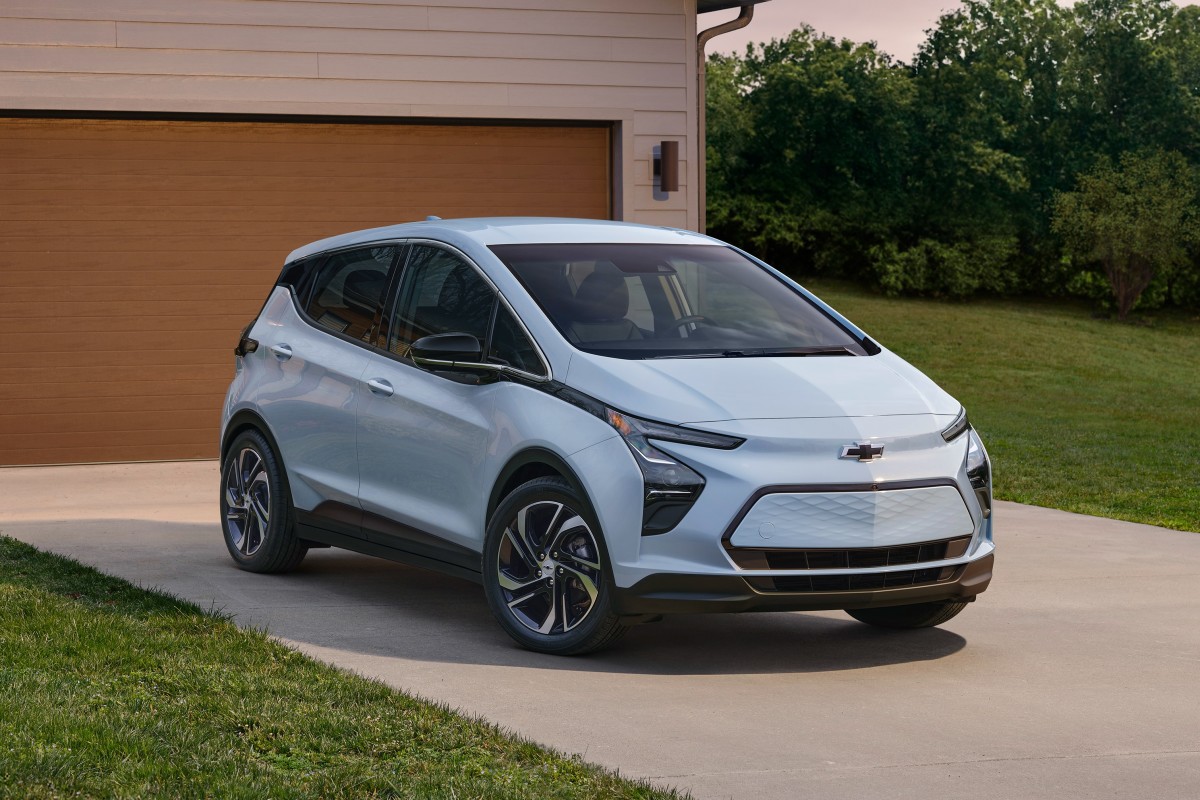
Chevrolet Bolt EV and Bolt EUV
The 2027 Chevrolet Bolt, which is a redesign based on the slightly larger Bolt EUV, is currently one of the most affordable new EVs in Canada. As of this writing, and factoring in the federal EVAP EV rebates, a new Bolt in base trim costs just over $35,000. The Bolt has always been relatively affordable, though, and when you put these factors together, you can find plenty of well-equipped three- and four-year-old Bolt EV and Bolt EUV models in Canada for $25,000 or less. That’s a great deal for a car that originally had nearly 400 kilometres of range.
When it comes to buying a used Bolt, we highly recommend choosing the newest car with the lowest odometer reading you can manage within your budget. In many cases, you’ll still come in well below $30,000. Some of the cars in this price range are even in Premier trim, which added features like leather upholstery, heated rear seats, rain-sensing wipers, adaptive cruise control, a 360-degree camera, and a digital rearview mirror.
Search for Chevrolet Bolt EV
See all
Search for Chevrolet Bolt EUV
See all
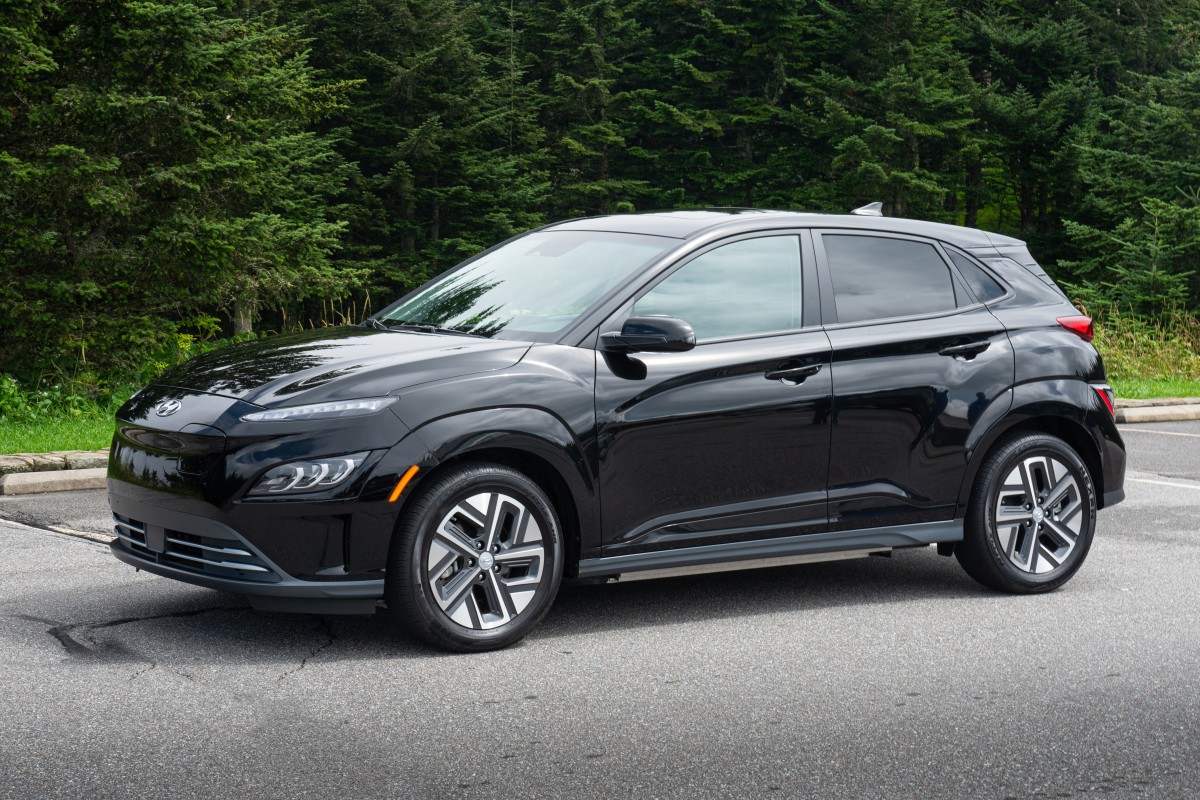
Hyundai Kona Electric
With an impressive range of more than 400 km in most forms and one of the most user-friendly driving interfaces in the industry, the Hyundai Kona Electric has consistently been one of the best small EVs around since its launch for the 2019 model year. It’s also remained relatively affordable as a new car with a Canadian manufacturer’s suggested retail price (MSRP) of roughly $45,000 and has always qualified for EV rebates when they’ve been available. As a result, you’ll find quite a few affordably priced Kona Electrics on the Canadian used market.
With a $30,000 budget, you’ll likely be looking at either a late first-generation model from 2022 or 2023 or an early second-generation model from 2024. Some will prefer the second generation’s futuristic look and improved infotainment system, but most of the sub-$30k cars are in the base Preferred trim. For more features and a shot at a better odometer reading, late first-gen cars present a better value.
Search for Hyundai Kona Electric
See all
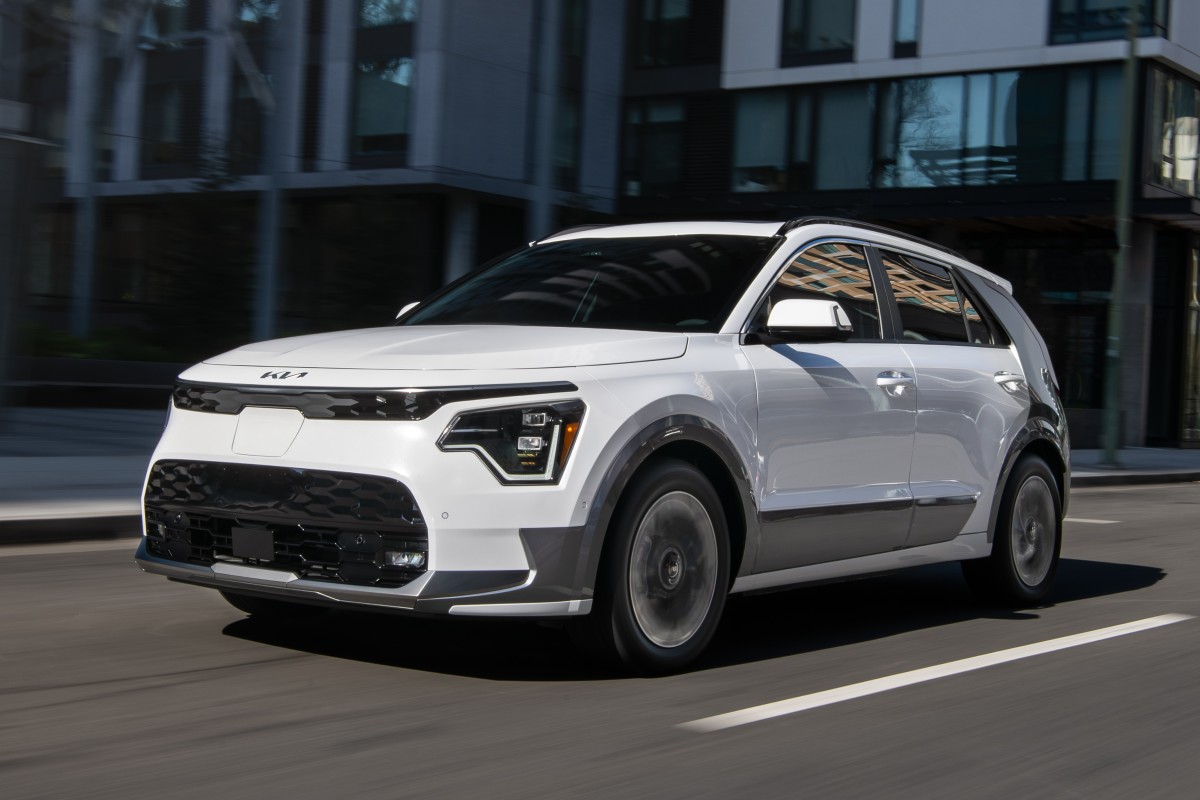
Kia Niro EV
Like the closely related Hyundai Kona Electric, the Kia Niro EV is a fun and affordable subcompact EV with a solid range and plenty of desirable features. Unlike the Kona, though, the Niro is part of a broader electrified line that includes both conventional hybrid and plug-in hybrid (PHEV) powertrains as well as the fully battery electric vehicle (BEV).
If you’re shopping for a used Kia Niro EV with a $30,000 budget, you won’t have any trouble locating a unit from the second generation, which launched for the 2023 model year. This version had 385 kilometres of range at launch and was available in a variety of trims. We recommend looking for a mid-trim Premium+ at minimum (renamed Wind+ for 2024). This will get you heated seats in the front and rear, a heated steering wheel, power front seat adjustment, and plenty of driver assistance and safety features.

Kia Soul EV
The boxy but lovable Kia Soul EV crossover was another long-time mainstay in Canada’s electric vehicle market. It launched for 2015 and was discontinued in 2023. In the meantime, its new vehicle price ranged from $35,000 to $52,000 when there were robust federal and provincial EV incentives available. Power figures measured up at 109 horsepower and 210 pound-feet of torque, and the earliest versions had 149 kilometres of range while this figure peaked in late-model Limited trims at 383 km.
The Kia Soul EV is one of the best used electric vehicles to buy on a tight budget. Pricing averages roughly $22,000 for newer units, and we spotted next to no units priced above $25,000. Note that the Kia Soul EV switched from the less come CHAdeMO charging port to the more common CCS port beginning with the 2020 model year. As CHAdeMO is obsolete and becoming less common at fast charging stations, we highly recommend grabbing a CCS-equipped unit.
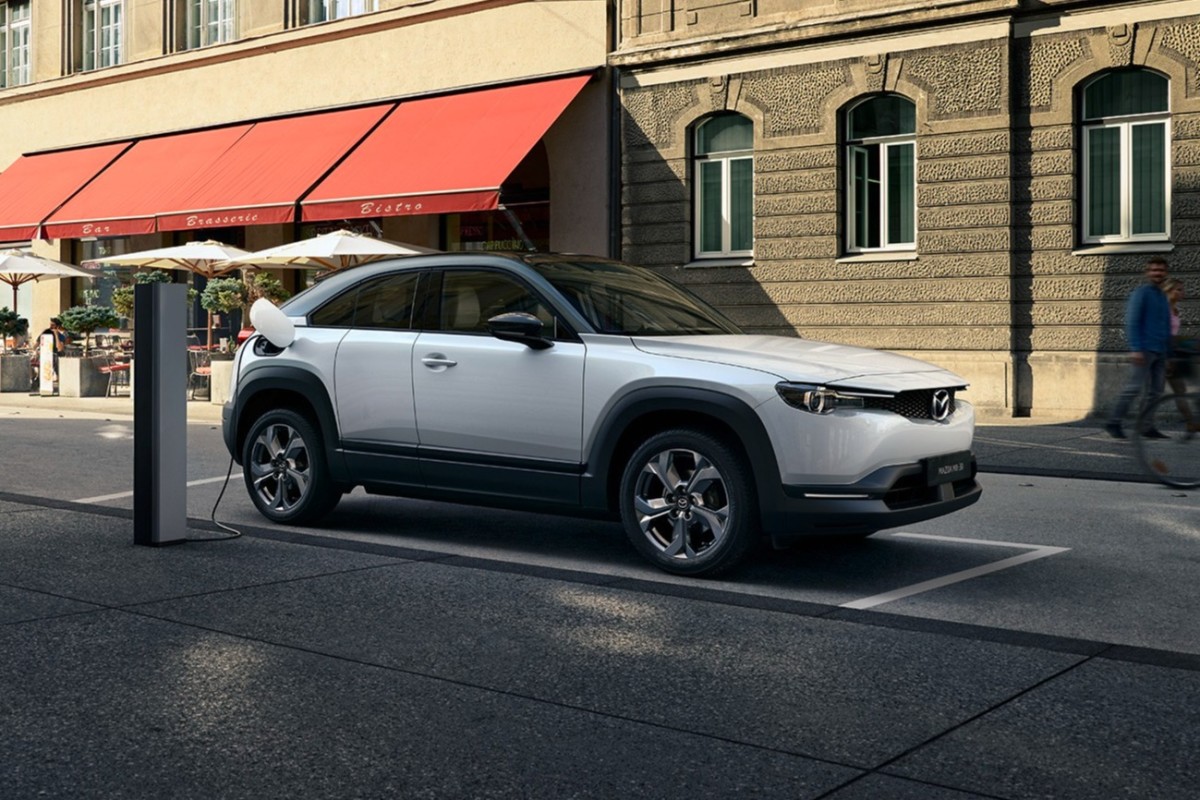
Mazda MX-30
The Mazda MX-30 was a bit of a flop when it hit the market as a new EV. This is mainly due to its relatively short range of 161 kilometres. It was intended as a city commuter car, but Canadians found this hard to accept at an initial MSRP of more than $40,000, even when you factor in the rebates it qualified for during its short three-year run from 2022 to 2024.
However, the flip side of that is MX-30s are also proving less desirable on the used vehicle market, which means there are some seriously good deals to be had. Even the oldest MX-30s are only four years old, and yet there are a few dozen units available at CarGurus.ca with the vast majority priced below $20,000. If you want a newer EV solely for running errands in the city, the Mazda MX-30 could work as an appealing and very stylish alternative.
Nissan Leaf
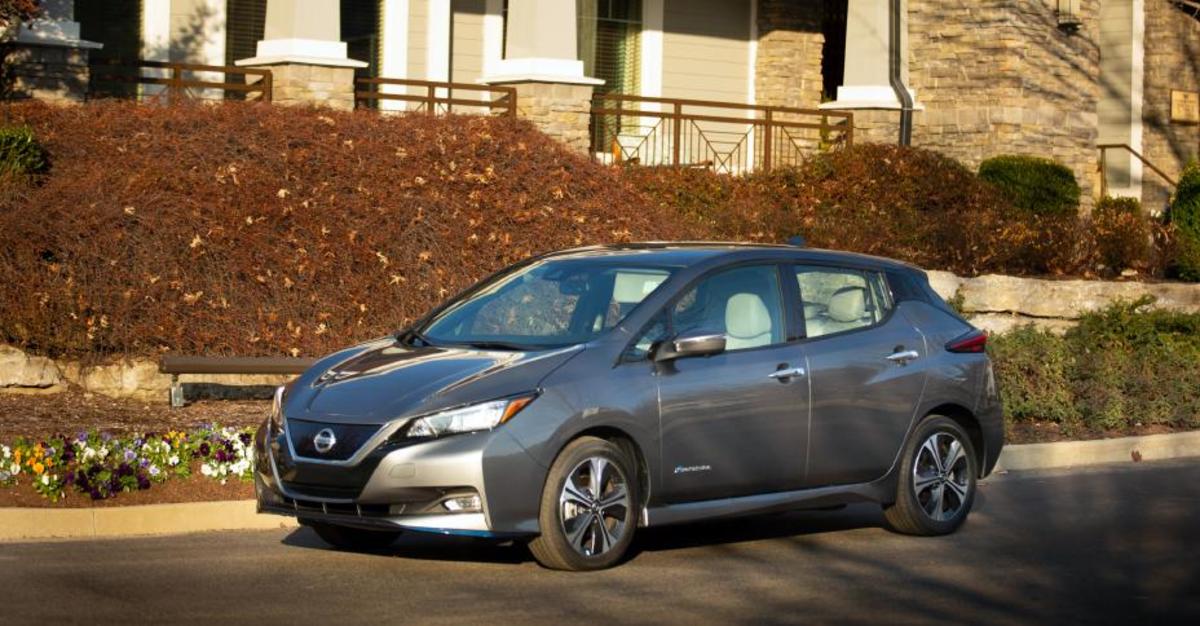
It’s no surprise that the first EV to go into mainstream mass production is also one of the most widely available and affordable on the used car market. The Nissan Leaf first appeared on dealership lots for the 2011 model year, and it’s not unusual to see plenty of used examples at a variety of price points. You’ll even find plenty priced below $10,000, although buying one of these will mean accepting the rather goofy looks and spaceship-like controls that were the norm before the second generation debuted for 2018.
The 160 kilometres of range from a full charge of the battery pack in those early model years is far below modern standards and reportedly difficult to attain in typical Canadian conditions. At the high end, 342 km was the most range the Leaf was able to attain before the third generation launched for 2026. All first- and second-generation Leafs were equipped with the CHAdeMO charging standard, which is being phased out in North America and will become harder to find at public charging stations over time.
Because of its shorter than average range and CHAdeMO charging port, the Nissan Leaf isn’t a used EV we’d recommend for someone who’s hoping to drive long distances and keep their next car for a long time. For those seeking a budget city commuter who can operate solely off a Level 2 charging station at home, though, a used Leaf can be a great introduction to the benefits of electric driving.
Tesla Model 3
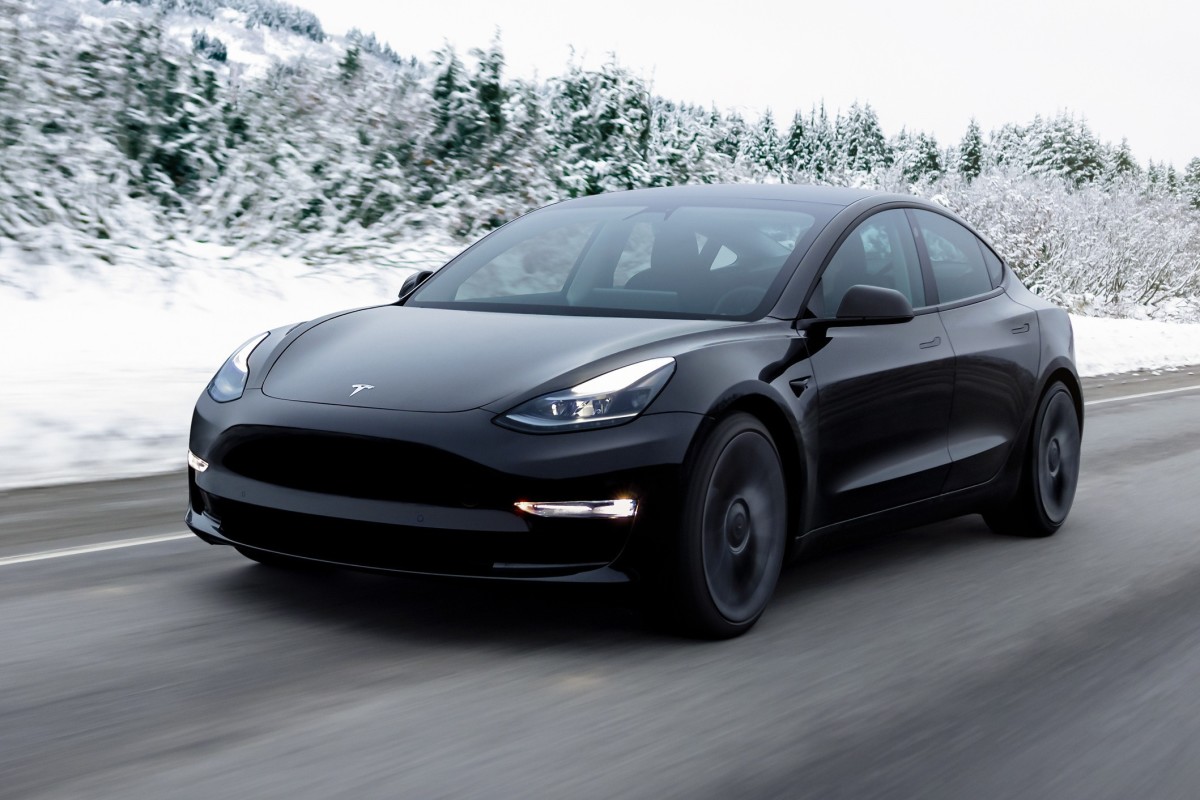
Political commentary notwithstanding, the Canadian used EV market has been flooded with very affordable Tesla Model 3s over the last couple of years. These were always the most affordable cars in the Tesla lineup to begin with, so the fact that they’re the first and most prolific to cross the $30,000 barrier isn’t so surprising.
Most of the cars in this price bracket are standard range units, though even these started with a very healthy 346 km of range. There are some long-range models priced below $30,000, which had up to 584 km of range, though these tend to have been driven longer distances. Watch the odometer readings on used Tesla Model 3s carefully as quite a few are well past the 100,000 km mark, which can affect battery performance. Be sure to ask how often the Model 3 you’re interested in was charged at the Tesla Supercharger network as excessive fast charging can cause premature battery wear.
If you’d prefer a vehicle that’s more crossover than sedan, take a look for used examples of the Tesla Model Y as well. However, they’re not nearly as common as the Model 3 at this price range, and exceptionally high odometer readings are the norm with these. You may have better luck with the Tesla Model S if you don’t mind owning a large sedan. We suggest steering clear of a used Tesla Model X as most cars below $30k are roughly a decade old with very high mileage.
Cars to Skip in your $30,000 EV Search
While the Ford Mustang Mach-e, Hyundai Ioniq 5, Kia EV6, and Volkswagen ID.4 are all well-liked among owners for their excellent range, comfort, and drive dynamics, you’ll find relatively few units priced below $30,000. Most of these are high in kilometres for their age, meaning there are better EV deals out there at this price point. We recommend skipping these models unless you can stretch beyond a $30,000 budget.
The BMW i3 and Volkswagen e-Golf were fun and quirky little EVs, but their numbers have dwindled to the point where there just aren’t many left. Of the units still out there, we didn’t spot any we could recommend considering.
There’s also the Fiat 500e, which re-entered the Canadian market for the 2024 model year. While there aren’t many of these floating around for less than $30,000 used yet, quite a few cars sold new for less than $30,000 as dealers were clearing out their 2025 units. We expect there may be an influx of affordable used examples of the 500e in two to three years as a result, so this is one to watch.
FAQs
What are the advantages of buying a used electric car?
Buying a used EV lets you benefit from lower running and maintenance costs than other vehicle types, saving money on up-front depreciation, and contributing to better local air quality. You’ll also save money by running on electricity instead of gas, especially with today’s high fuel prices. EV owners often drive less than those with other types of vehicles, so odometer readings are typically lower relative to the vehicle’s age.
What are the risks of buying a used electric car?
It’s hard to know how any vehicle has been treated by its previous owners, and that’s a more important consideration with EVs than other vehicle types. All EVs will lose range over time as the battery ages, and frequent Level 3 DC fast charging can exacerbate this effect. Be sure to ask the seller plenty of questions about how the car has been charged during its life. When you go to see the car, request to see it fully charged so you can assess how its current real-world range compares to the quoted figure from when it was new. These data points can give you a clearer picture of the battery health so you know what to expect as an owner.
Note: Images may show US models.
Related Topics:


