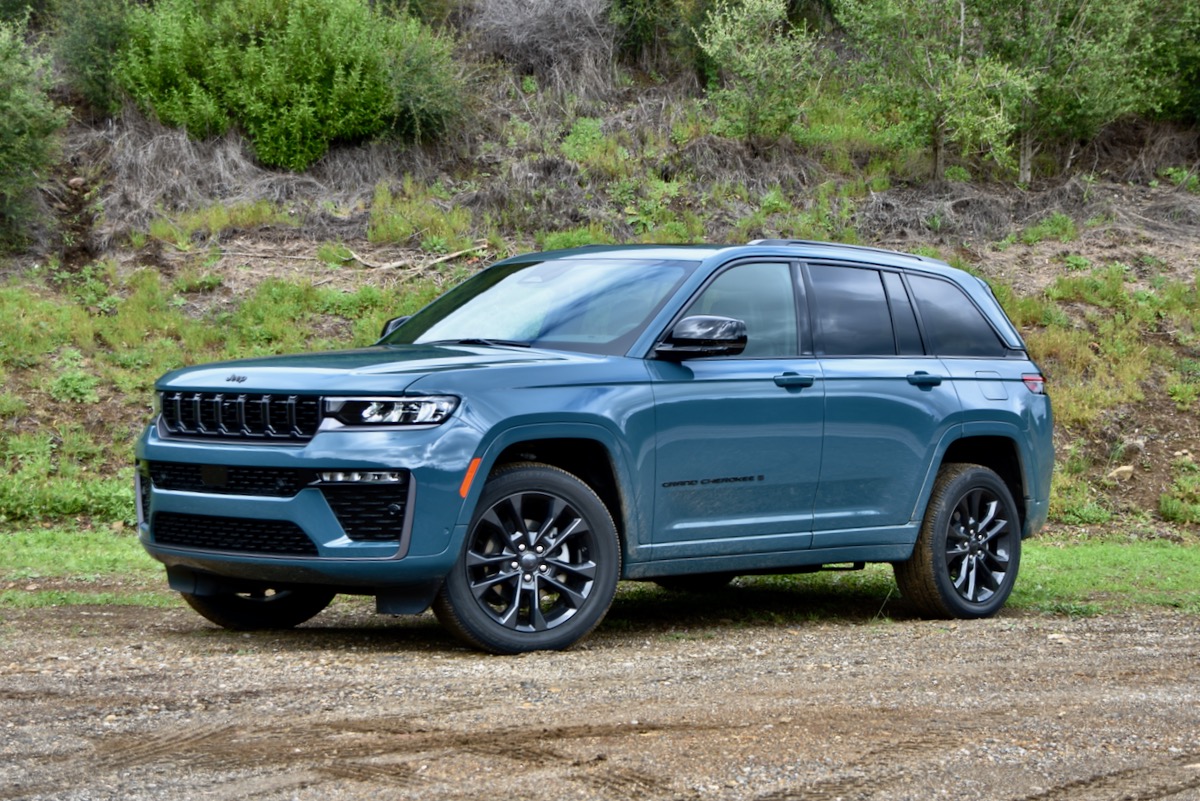
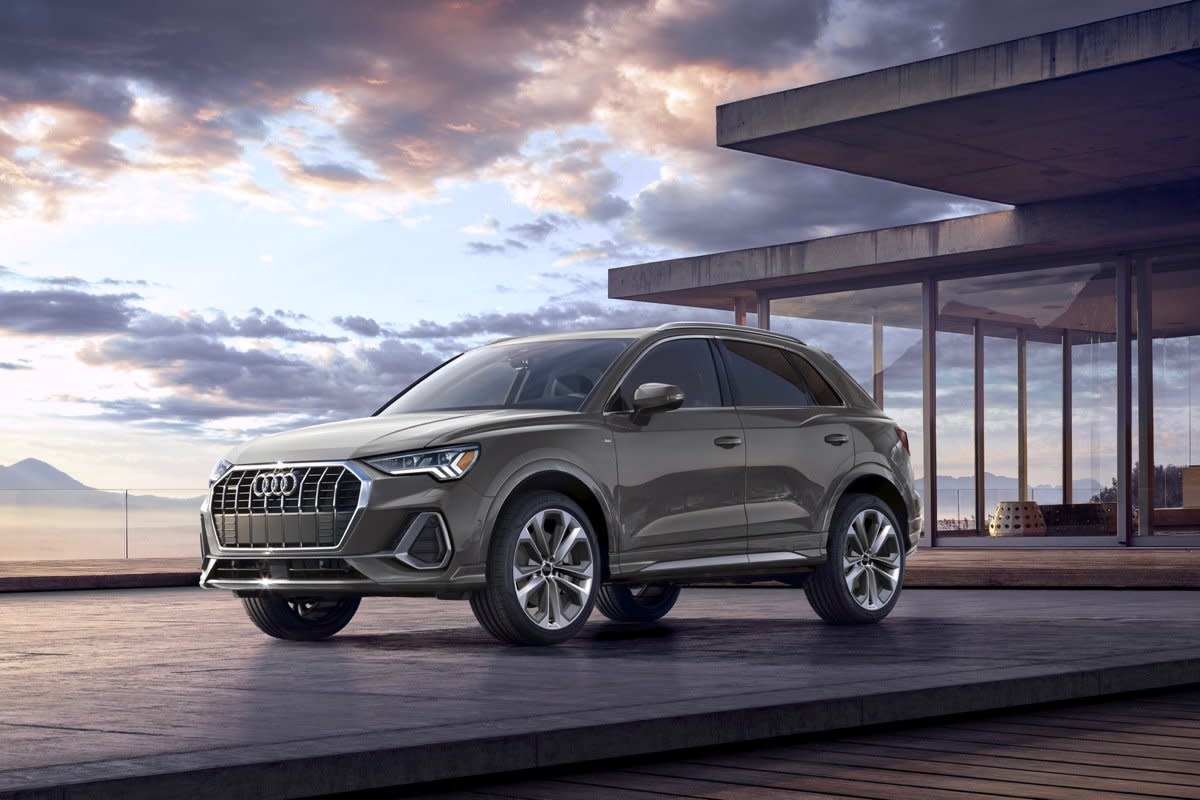
Snow, ice, and gravel roads are a given in most parts of Canada. This leads many Canadians to assume they need all-wheel drive by default, but that’s not necessarily the case. All-wheel drive isn’t a catch-all solution for the pitfalls of winter driving; it’s helpful for getting going in slippery conditions, but it doesn’t do anything to help you stop, which is why winter tires are so important. On top of that, many Canadians live in urban and suburban environments and rarely drive in places where all-wheel drive is truly needed.
All-wheel drive (AWD) is better than front-wheel drive (FWD) for those who frequently drive through deep snow or loose gravel, but AWD may not be essential for those who rarely drive outside cities and towns. In this article, we’ll examine the differences between AWD and FWD drivetrains to help you decide which is better for you.
AWD vs FWD: Which is Better?
- Front-Wheel Drive (FWD) Explained
- All-Wheel Drive (AWD) Explained
- How is Four-Wheel Drive (4WD) Different From AWD?
- About Rear-Wheel Drive (RWD)

Front-Wheel Drive (FWD) Explained
In a FWD vehicle, the car’s power source—whether it’s an internal combustion engine or an electric motor as found in hybrid, plug-in hybrid, or battery electric vehicles—drives only the front axle.
Before traction control became mandatory in the early 2010s, choosing a FWD vehicle meant signing up for a host of issues in low-traction environments. These days, FWD cars are more capable. Modern traction control systems help by measuring the rotation of the wheels and applying the brakes when a wheel begins to slip. This equalizes grip across the axle and reduces oversteer and understeer to keep the car moving in the direction the driver intends.
Thanks to traction control, winter tires, and other modern safety systems, FWD cars are a better choice than they used to be for certain drivers. If you rarely drive outside of urban or suburban environments where the roads are paved and snow is cleared and salted, a FWD drivetrain and a quality set of winter tires may be enough.
Choose FWD If:
-
Winter weather isn’t consistently severe in your location. If you live in a city where serious winter storms are uncommon and the plows spring into action quickly, then winter tires may do more for you than AWD. Fortunately, Canadians have gotten the message that winter tires are important for extra grip in cold weather. More than 80% of Canadians make the switch from all-season tires to winter tires once temperatures drop below 7 degrees Celsius, when cold-optimized rubber compounds improve traction (this temperature-based measure for their effectiveness is why we no longer call them snow tires).
-
Affordability is a significant factor. Two-wheel drive cars save you money twice, first in the initial purchase price, and again in lower ongoing maintenance due to fewer moving parts. When buying on a budget, this cost saving warrants serious consideration.
-
Fuel efficiency is a high priority. FWD cars save money at the gas pumps thanks to their reduced weight. Exactly how much fuel economy improves depends on the size and weight of the vehicle. If you’re trying to decide between FWD and AWD versions of various cars, SUVs, or trucks, take a look at Natural Resources Canada’s fuel consumption ratings search tool. You can search the fuel economy of cars you’re interested in and find estimates for how much gas will cost for each vehicle annually.
-
You want a little more second-row space. A car with a FWD-only platform doesn’t have a channel carved into the interior floor to accommodate a rear driveline, which typically means second-row passengers have more foot and legroom. If you’re buying a two-row vehicle, especially if you’ll use the middle seat regularly, it might be worth factoring that into the equation.

All-Wheel Drive (AWD) Explained
AWD systems distribute power to all four wheels of a vehicle, but not all AWD systems are created equal. If you feel you need AWD, it’s important to understand how the system works in any vehicle you’re considering so you choose a car that meets your needs.
Typical AWD systems employ a centre differential that connects to two output shafts. This contains gears to allow the front and rear axles to rotate at different speeds on demand. In some electric or hybrid vehicles, there is no driveshaft and AWD is achieved by powering one or both axles with independent electric motors.
Some AWD systems can send 100% of available torque to a single axle if conditions call for it. Others may top out at a lower figure such as 80% or 70% to a single axle. Some cars come with full-time AWD, which means power is always being delivered to both axles by default, while others have part-time AWD and only deliver power to the second axle when a loss of traction is detected.
Torque vectoring is another feature of AWD that’s often found in higher-priced sedans, sports cars, and performance cars from luxury brands. This adds a differential on one or both axles so torque can be distributed at different rates to its left and right wheels.
In most cases, AWD is designed to work automatically without driver intervention. A handful of AWD vehicles allow the driver to engage or disengage the system manually, while many cars with AWD have adjustable drive modes that modify the system’s behaviour in varying conditions.
Choose AWD If:
-
You regularly drive on unpaved or slippery roads. AWD is the right choice for drivers who need to navigate changing and unpredictable road conditions, such as going from snow to ice or from pavement to gravel. An AWD car is also suitable for light off-road purposes, such as country routes or rough cottage driveways.
-
You need to tow. For recreational towing duties of up to roughly 5,000 lb, AWD is a better choice than FWD, especially pulling trailers on difficult surfaces, such as boat slipways.
-
You understand that AWD doesn’t make you invincible. There are drivers out there who barrel through icy roads and severe blizzards at full speed believing AWD will save them from trouble. AWD can help a vehicle get moving and keep it in a straight line, but it does nothing to improve cornering or braking performance. Understanding the limitations of AWD is just as important as knowing how it helps.
-
You can afford to pay more and sacrifice fuel economy. In contrast to FWD, you’ll pay more up front for a vehicle with AWD and more to maintain it as there are more wearable components. The added weight and drag from four-wheel traction also burn more fuel. Consider whether you’ll benefit enough from AWD to take on this additional cost.

How is Four-Wheel Drive (4WD) Different From AWD?
Pick-up trucks and larger SUVs are more likely to be equipped with four-wheel drive (4WD) than AWD. 4WD vehicles usually have transmissions with multiple gear sets selected through a transfer case, which gives the driver more options for getting through the most challenging conditions. Typically, the driver also has full control over when 4WD is engaged via a selector inside the vehicle.
If you regularly deal with extreme conditions, such as mountain passes covered in heavy snow or serious backcountry off-roading, 4WD is likely more suitable than AWD. In most cases, it’s also what you’ll want for heavy-duty towing. However, 4WD is not ideal for those who need a nimble vehicle, as sharp turns are hard on this type of system.
About Rear-Wheel Drive (RWD)
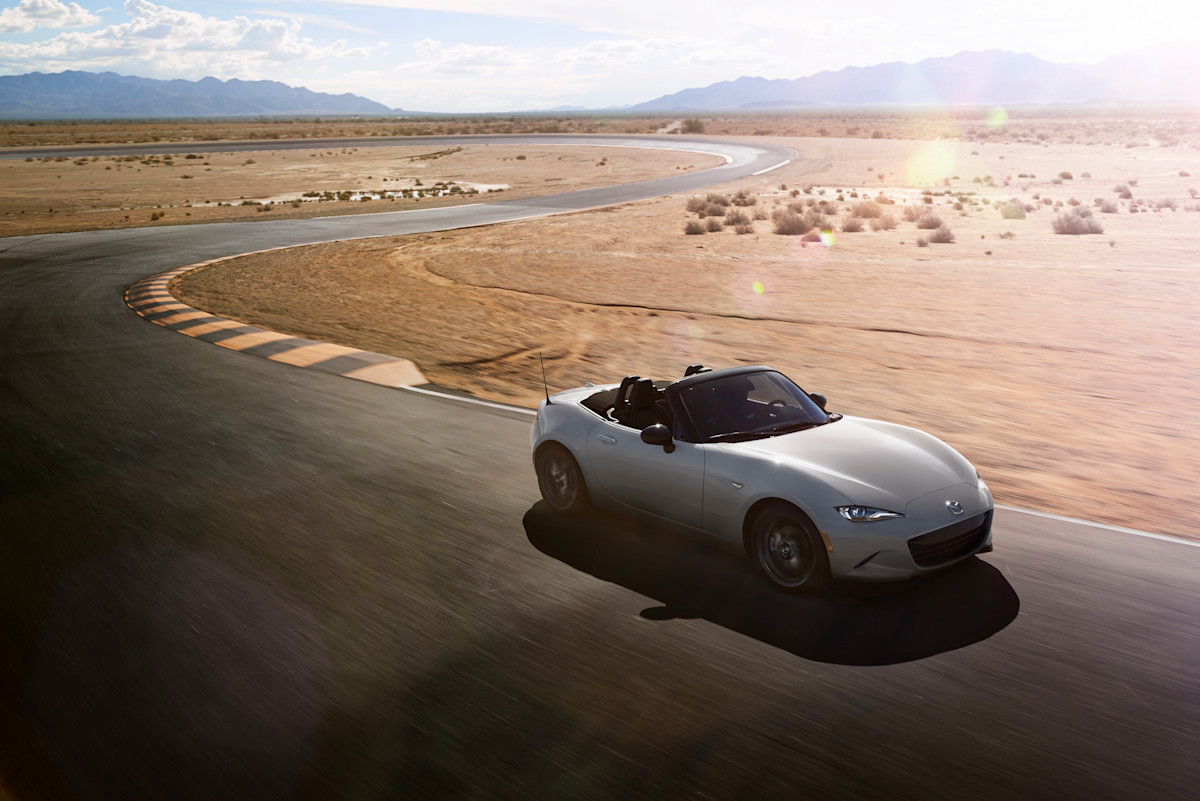
Some vehicles, such as entry-level pickup trucks and sports cars, are rear-wheel drive (RWD).
Just like with FWD, RWD isn’t the liability it used to be thanks to modern traction control systems. However, outside of high-performance situations, such as track driving or drivers who need a truck’s absolute maximum towing capacity, RWD is impractical for most purposes. RWD components impinge on rear-seat room, so you’ll rarely find it in conventional passenger cars today.