Have you ever wondered how much it costs to charge an electric car? The high price of gas and the rising cost of living have sparked this curiosity in many Canadians. At the time of writing, monthly sales for zero-emission vehicles—which includes both battery electric vehicles (BEVs) and plug-in hybrids (PHEVs)—had increased by nearly 75% year-over-year according to Statistics Canada. This demonstrates a renewed interest in electric vehicles (EVs) in Canada amid a variety of financial pressures.
There are many factors that affect how much an EV costs to charge. These include the electricity rates in your province or territory, how often you can charge at home versus at a higher-cost fast charger, and how efficient your EV is while driving. In this article, we’ll outline how much you’d pay to charge an EV at home versus on a road trip and how those costs compare to an equivalent gas-powered internal combustion engine (ICE) vehicle.
How Much Does It Cost to Charge an Electric Car in Canada?
- Most EV Charging is Done at Home
- Here’s How Much It Costs to Charge an EV at Home
- How Much Does It Cost to Charge an EV on a Road Trip?
- Don't be Caught by Idling Fees
- How Cheap Is It to Charge an EV vs. Fuel a Gas Car?
Most EV Charging is Done at Home
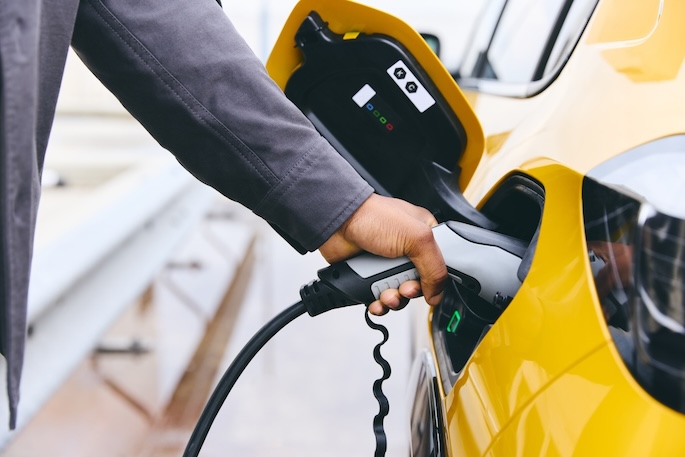
The majority of EV owners find it easiest and most convenient to charge their vehicles at home. According to data from the CAA, more than 80% of vehicle charging in Canada takes place at home, and two-thirds of EV owners use home charging as their primary method for recharging their vehicles.
A PHEV comes with a battery and one or more electric motors for part-time electric-only driving, usually with a range of 30 to 80 kilometres, and a gas engine that kicks in once the battery is depleted. Since PHEVs aren’t designed to drive in electric mode all the time, they have smaller batteries than BEVs. This means most PHEV owners can recharge their vehicles using Level 1 charging, which in EV terms, is the equivalent of a standard 120-volt household outlet. On average, a PHEV can recharge from 0–100% using a household plug in roughly seven hours. A PHEV owner can usually top up their vehicle’s battery by plugging the car in overnight.
With a BEV, which runs exclusively on electricity, the onboard battery is much larger so the car can deliver more range. This makes Level 1 charging too slow to be practical for most, so many owners choose to install Level 2 charging at their homes when they buy their first BEV. This requires a 240-volt outlet, which is the same type used for the larger appliances in your home, such as an electric stove or a clothes dryer.
If you already have a 240-volt outlet close to your parking space, you can simply buy a charging station and you’ll be ready to go. These typically cost between $500 and $1,000 in Canada. If you don’t have this type of outlet near where you park your car, you’ll need to have one installed, and the cost varies depending on whether your home needs an electrical service upgrade, how far the outlet will be from your breaker panel, and whether the work requires extra work, such as running through walls, floors, or masonry. It’s a good idea to receive a professional quote for this work ahead of deciding to buy an EV so you can factor it into the purchase costs.
Using a standard plug or a Level 2 charger doesn’t affect the actual cost of recharging an EV. When charging at home, you’ll be charged for the amount of power drawn, not the speed at which the car receives it. This cost is calculated in kilowatt-hours and is reflected on your home electricity bill.
Here’s How Much It Costs to Charge an EV at Home
To calculate how much it will cost to charge an EV at home, you’ll need to know the cost per kilowatt-hour for residential power delivery in your province or territory. If your jurisdiction charges time-of-use rates, use the figure that corresponds to the time of day when you expect to charge your vehicle most often. You’ll also need to know how many kilometres you drive on average over the period you’d like to calculate.
The average Canadian drives 20,000 kilometres per year, which breaks down to roughly 400 km per week. If you drive significantly more or less, be sure to factor that into your own calculations.
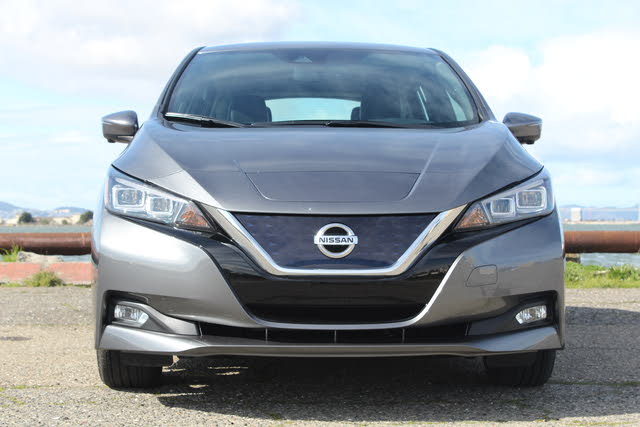
For EVs, efficiency is measured in kilowatt-hours per 100 kilometres. You can find the estimated energy usage listed in kWh/100 km for every EV sold in Canada in the Natural Resources Canada Fuel Consumption Guide. Smaller vehicles use less electricity and are more efficient; examples include the Hyundai Kona Electric (18.1 kWh/100 km), the Nissan Leaf (18.4 kWh/100 km for the SV Plus trim), and the Fiat 500e (19.0 kWh/100 km). Larger and more powerful vehicles are less efficient and consume more electricity, with examples including the Chevrolet Silverado EV (up to 32.6 kWh/100 km), the Mercedes-Benz G 580 EQ (33.6 kWh/100 km), and the VinFast VF8 Performance (47.3 kWh/100 km).
Our examples below use the Hyundai Ioniq 5, one of the best-selling EVs in Canada. Its Long Range AWD trim with 19-inch wheels averages consumption of 20.1 kWh/100 km in combined city and highway driving. Over an average week with 400 kilometres of driving, the Ioniq 5 would use 80.4 kWh.
In Quebec, the province with the cleanest energy—nearly 98% comes from renewable sources such as water and wind—electricity rates were set at 7.065 cents per kilowatt-hour as of April 2026 (that rate increases to 11.142 cents/kWh after a daily average of 40 kWh has been reached for the billing period, but we’ll use the lower rate for simplicity). Based on the Ioniq 5’s weekly usage of 80.4 kWh, exclusively charging at home in Quebec would cost $5.68 per week or $295.36 per year.
Calculating EV charging costs in British Columbia is more complicated. BC Hydro offers both flat-rate and tiered pricing, as well as optional time-of-day discounts. For example, a customer on the tiered plan as of April 2026 pays a base price of 11.87 cents per kWh until 1,350 kWh is reached, after which the rate increases to 14.08 c/kWh. However, charging an EV overnight provides a 5-cent time-of-day discount for the lowest-available rate of 6.87 cents/kWh. At this rate, the Ioniq 5 has an optimal charging cost in BC of $5.52 per week or $287.04 per year, but if a driver needs to charge during the day at peak rates, the cost rises to $9.54/week ($496.08/year) at the lower tier and $11.32/week ($588.64/year) at the higher tier.
The numbers are similar in Ontario, which also offers tiered or flat-rate pricing as well as time-of-use rates. However, Ontario also offers an Ultra-Low Overnight (ULO) electricity rate between 11 p.m. and 7 a.m. daily of 3.9 cents per kilowatt-hour. An Ioniq 5 owner taking advantage of that rate could charge overnight in Ontario for $3.14 per week or $163.05 per year. But Ontario EV owners need to be diligent; charging between 4 p.m. and 9 p.m. at the ULO on-peak electricity rate of 39.1 cents/kWh would raise that cost to $31.43 per week or $1,634.69 per year.
Electricity rates are lower on average in Quebec, BC, and Manitoba, and they’re highest in Alberta, Prince Edward Island, Newfoundland and Labrador, the Northwest Territories, and Nunavut. Running these same calculations using your typical driving distances, the consumption rate of the EV that interests you, and your province or territory’s electricity pricing will give you a personalized picture of how much it will cost to charge your EV at home.
How Much Does It Cost to Charge an EV on a Road Trip?
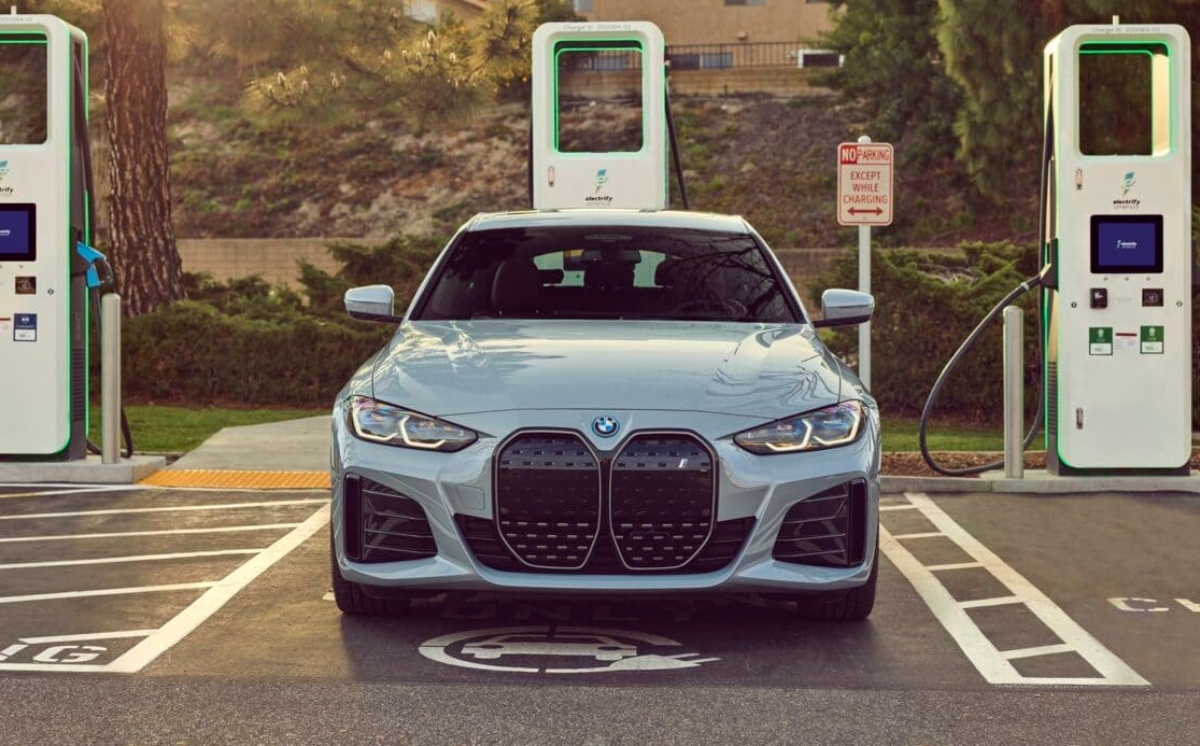
When you’re away from home or need to travel further in a day than the distance your EV offers in range, you’ll need to use public charging infrastructure. Drivers typically find these stations using apps such as PlugShare, ChargePoint, or ChargeHub, which provide information on each station’s network, speed, cost, and reliability.
For extended or overnight stops, this often means using Level 2 public charging at the same type of station you’d have installed at home. These are common in places where people tend to stay for a few hours at a time such as malls, parks, or hotels. You’ll occasionally find stations that still offer free charging, but it’s becoming more common to see rates either by the hour or per session. Prices can vary dramatically, so be sure to assess your need and the value of each station before plugging in. We’ve seen everything from $3.50 for a full charge to an overnight hourly bill adding up to $75.
If you need to juice up faster, look for EV charging stations that offer DC fast charging (DCFC), also known as Level 3 charging. This is the EV equivalent of stopping at a gas station: you arrive with a low battery, plug in to recover your charge relatively quickly, then get back on the road. EV drivers will typically spend 30 minutes to an hour at a Level 3 fast charger, which is just the right amount of time for a stretch and a lunch break.
In Canada, you’ll find a variety of fast charging networks. The Tesla Supercharger network uses North American Charging Standard (NACS) ports, which was formerly proprietary to Tesla vehicles but is now equipped on some newer EVs from other brands. Some EVs with other port types can access Tesla Superchargers by using adapters, but not all Supercharger stations are available to non-Tesla vehicles. These stations have outputs of between 90 and 300 kW.
Other Level 3 public charging stations may offer one or all of the standard charging ports, including NACS, CCS (which was equipped on most modern EVs until NACS became available), and CHAdeMO (a style of connector found on older EVs, such as the original Nissan Leaf that is now becoming obsolete). Stations with these connectors range in output from 50 kW up to 350 kW, though the latter is still rare in Canada and most cars are not yet capable of accepting the highest speeds. The actual speed of delivery can be affected by external factors, most notably ambient temperature: charging is less efficient when it’s very hot or very cold outside.
Like other public charging infrastructure, Level 3 charging costs can vary dramatically. Some stations, including Tesla Superchargers, bill based on the amount of energy delivered to the vehicle, while others bill based on the amount of time the car is plugged in. On top of that, each network sets its own rates, faster stations are often more expensive than slower ones, and costs also vary significantly between provinces.
For example, Tesla Supercharger rates range from $0.25 to $0.60 per kWh. For a Tesla Model Y with a usable battery size of 75 kWh, getting from 10% to 80% charge requires 52.5 kilowatts, which would cost $13.13 at 25 cents/kWh and $31.50 at 60 cents/kWh (note that it’s not recommended to charge past 80% at DC fast chargers to reduce wear on the battery).
At a Petro-Canada fast charging station, drivers pay $0.50 per minute. If it takes 45 minutes to recover the car’s charge from 10% to 80%, the driver pays $22.50 before taxes. Some networks also charge connection and/or administration fees.
As noted above, though, most EV drivers do the majority of their charging at home, and less than 20% of charging time is spent at DC fast chargers. Unless you’re a road warrior who spends a lot of time on the highway, fast charging isn’t likely to significantly impact your overall EV charging costs.
Don't be Caught by Idling Fees
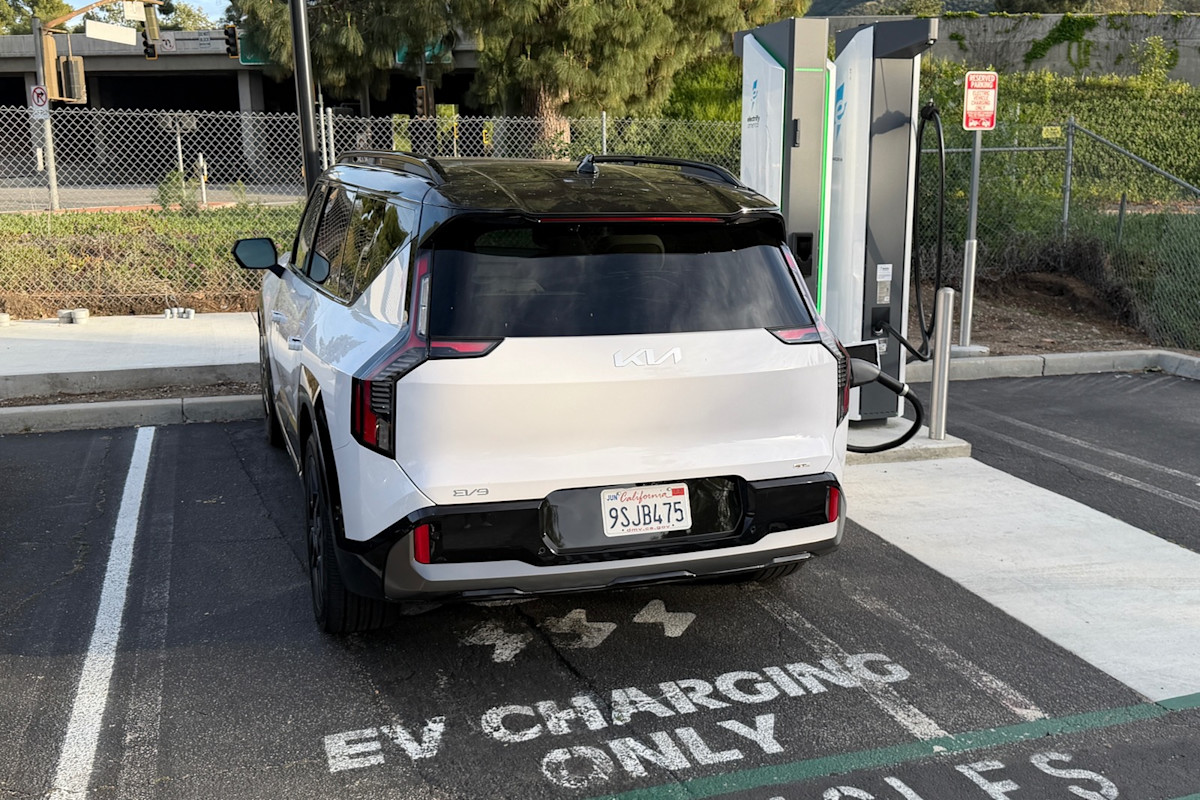
To reduce premature battery wear, Level 3 charging stations slow down their charging rate once the battery reaches 80%. At time-based stations, the relative cost per kWh therefore goes up if you leave the car on the charger past that point. Tesla also charges a congestion fee at busy Supercharger banks if you leave your car plugged in after the battery has reached 80%. On top of that, all public stations charge an idling fee if you don’t move your vehicle within a few minutes of reaching a full charge. Be sure to monitor your session so you don’t get hit with extra costs. Most major charging networks offer an app to make it easier to keep an eye on your charging session while you’re away from the vehicle.
How Cheap Is It to Charge an EV vs. Fuel a Gas Car?
To get an exact picture of how much money you’d save by charging a fully electric vehicle versus fueling a gas vehicle, you’ll need to run your own calculations based on how far you drive annually, the efficiency rates of the cars you’re interested in, and the electricity rates and fuel costs in your area.
Natural Resources Canada (NRCan) provides estimated fuel and charging costs for every vehicle sold in the country. According to its 2026 Fuel Consumption Guide, the least expensive battery electric vehicle to run is the Tesla Model 3 Premium RWD. This model costs $551 per year to charge based on a 20,000-kilometre average and NRCan’s baseline electricity cost estimate of 18 cents per kilowatt-hour. The most expensive EV to charge is the VinFast VF8 Plus Performance, which has an average cost of $1,703 annually based on the same parameters.
Even the high end of EV charging costs doesn’t overlap much with the most affordable gas-powered vehicles such as the Kia Niro Hybrid, which costs $1,320 per year to fuel at 20,000 km of driving and estimated fuel costs of $1.50 per litre for regular gasoline, or the Toyota Corolla Hybrid at $1,410 per year. The most expensive vehicle to fuel in Canada in 2026 is the Ford F-150 Raptor R at $6,895 per year. Other vehicle types fall somewhere in between, with most compact SUVs ranging from $1,700 to $3,500 per year in fuel costs and most three-row SUVs averaging between $2,500 and $5,000 per year.
When you crunch your own numbers, you’ll likely find you’ll recover the higher up-front cost of a battery electric vehicle within a few years of ownership by using electricity instead of gas. This is especially true if you can save money by taking advantage of rebates from the federal government’s Electric Vehicle Affordability Program as well as any incentives offered in your province or territory. Owners also report lower maintenance costs and overall costs of ownership for EVs than ICE vehicles, which help improve the value EVs provide over time.