2024 Jeep Wagoneer S Reviews, Pricing & Specs
Pros & cons
What we like
Fast acceleration
Comfortable seats
Easy-to-use technology
What to consider
High price
Lifeless steering
Glare and reflections on display screens
Expert review
With the arrival of the 2024 Wagoneer S Launch Edition, Jeep finally goes electric.
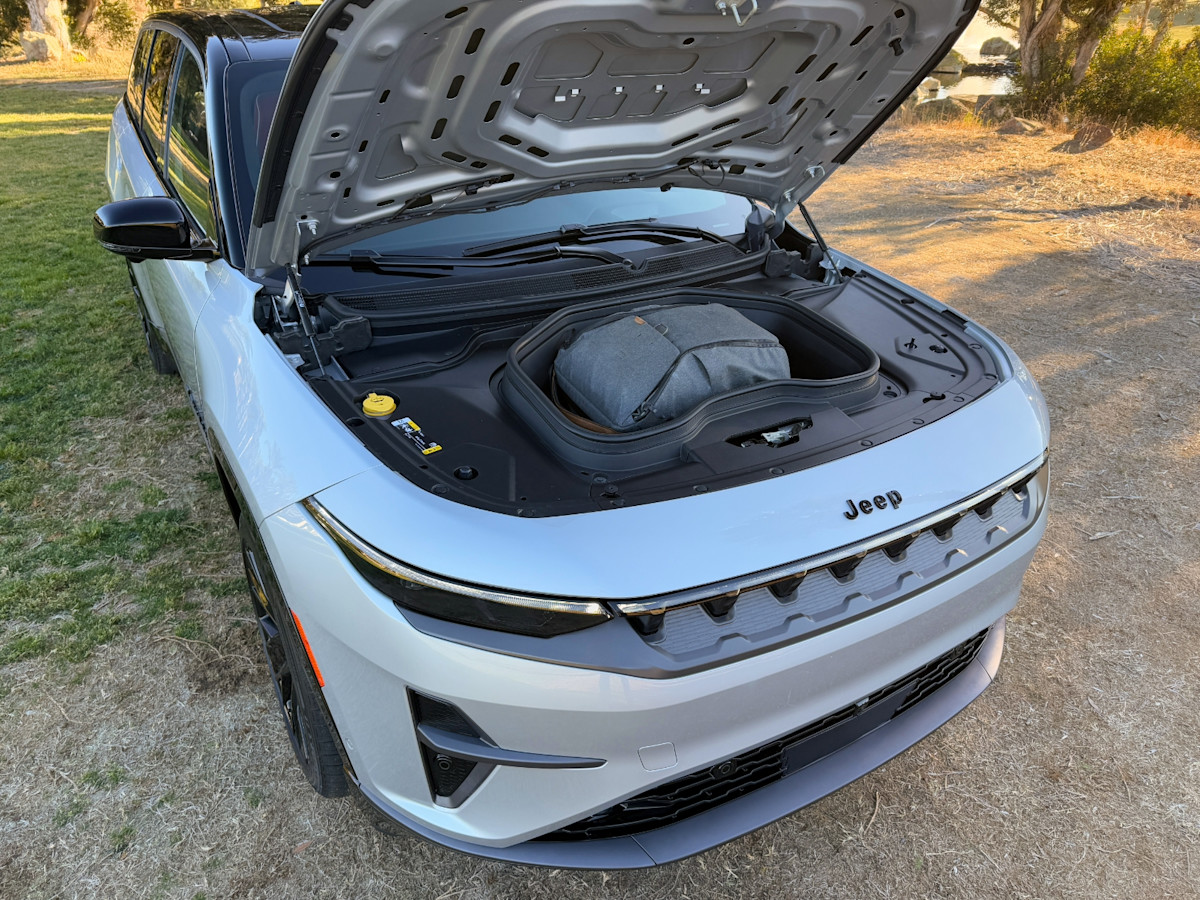
The Wagoneer S shares a platform with the 2024 Dodge Charger (also built by parent company Stellantis) and has a dual-motor electric drive system and 100-kilowatt-hour (kWh) battery good for up to 488 kilometres of driving range. There is plenty of power, and Jeep says the Wagoneer S accelerates to 100 km/h faster than a Grand Cherokee Trackhawk. Five people fit inside, cargo space is reasonable, and there’s a small frunk under the hood. The lineup will expand in 2025 to include more affordable models.
Verdict: Overall, this is an impressive first electric Jeep, but there are a few reasons to pass over the 2024 Jeep Wagoneer S Launch Edition. Price is one of them, although this is a fully equipped vehicle. The dissatisfying steering is another, and the multitude of display screens suffer from dust, fingerprints, reflections, and glare, which may turn off shoppers already a bit shocked by the sticker price.
out of 10 expert review
Look & feel
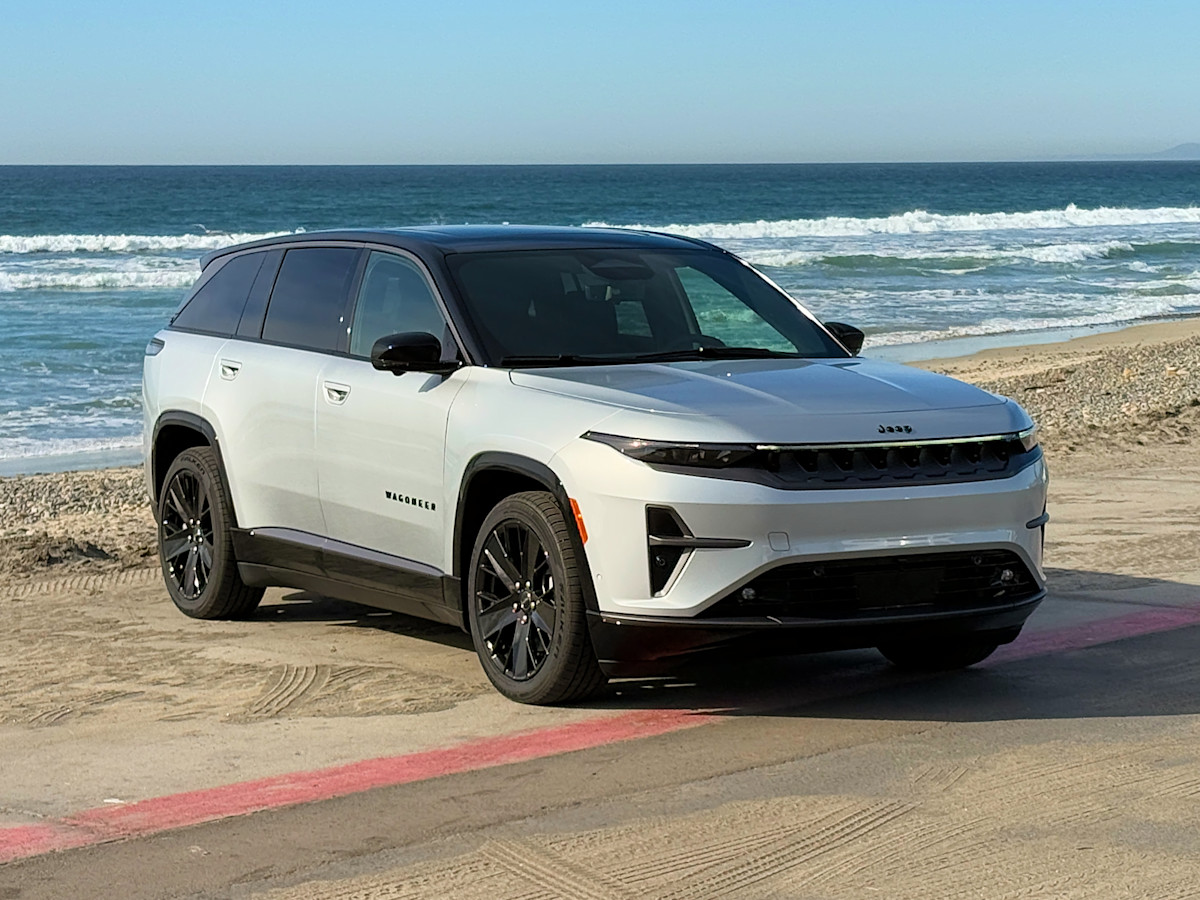
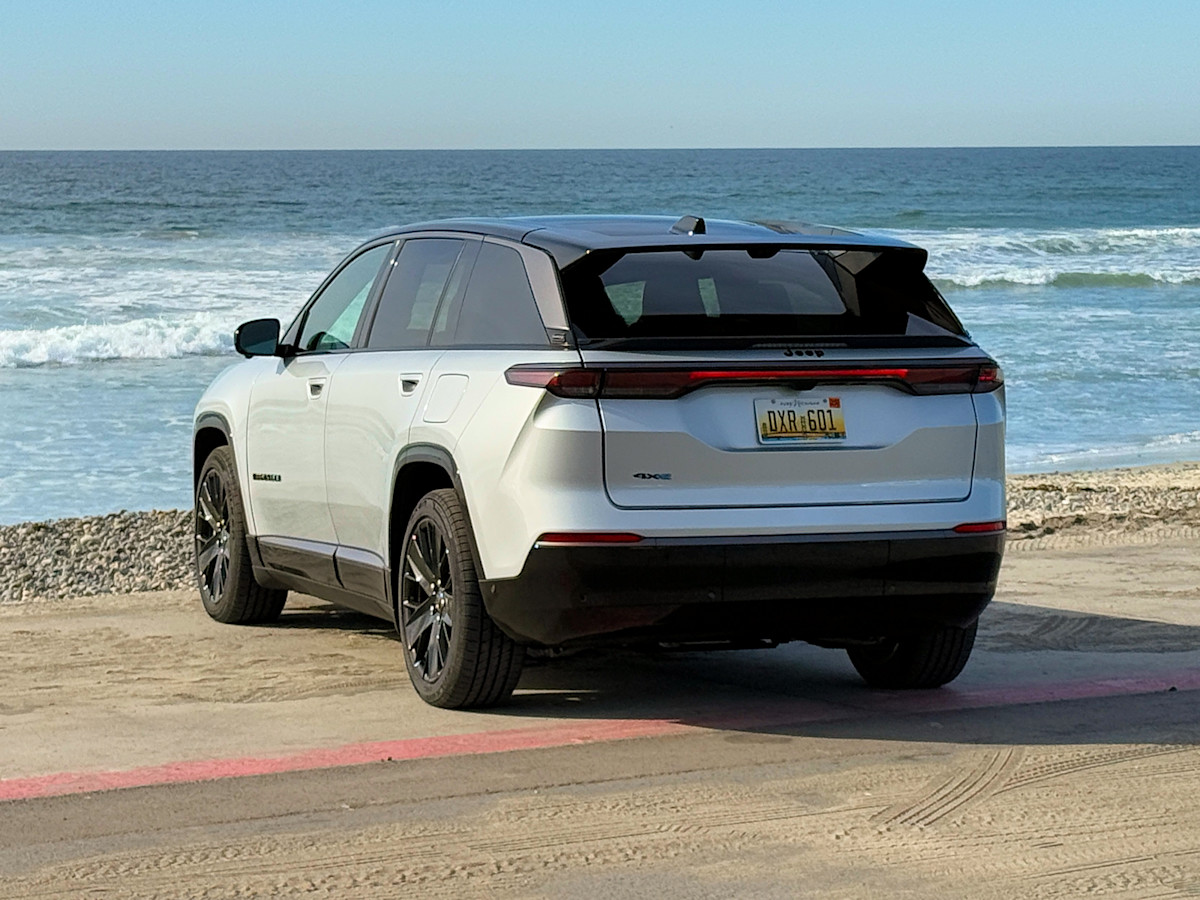
If it seems like you’ve seen the Wagoneer S before, that might be due to its traditional Jeep design cues, such as a seven-slot decorative “grille” and trapezoidal wheel arches. These combine with styling details similar to the current Grand Cherokee, like the greenhouse and taillights. However, the all-new Wagoneer S has a smoother, plainer appearance than other Jeeps to reduce aerodynamic drag. At 0.29, it has the lowest coefficient of drag of any Jeep in history.
This is an appealing electric SUV, and unlike some EVs, the Wagoneer S looks normal instead of strange. However, the black wheels are doing it no favours, visually downplaying one of the most expressive parts of the design.
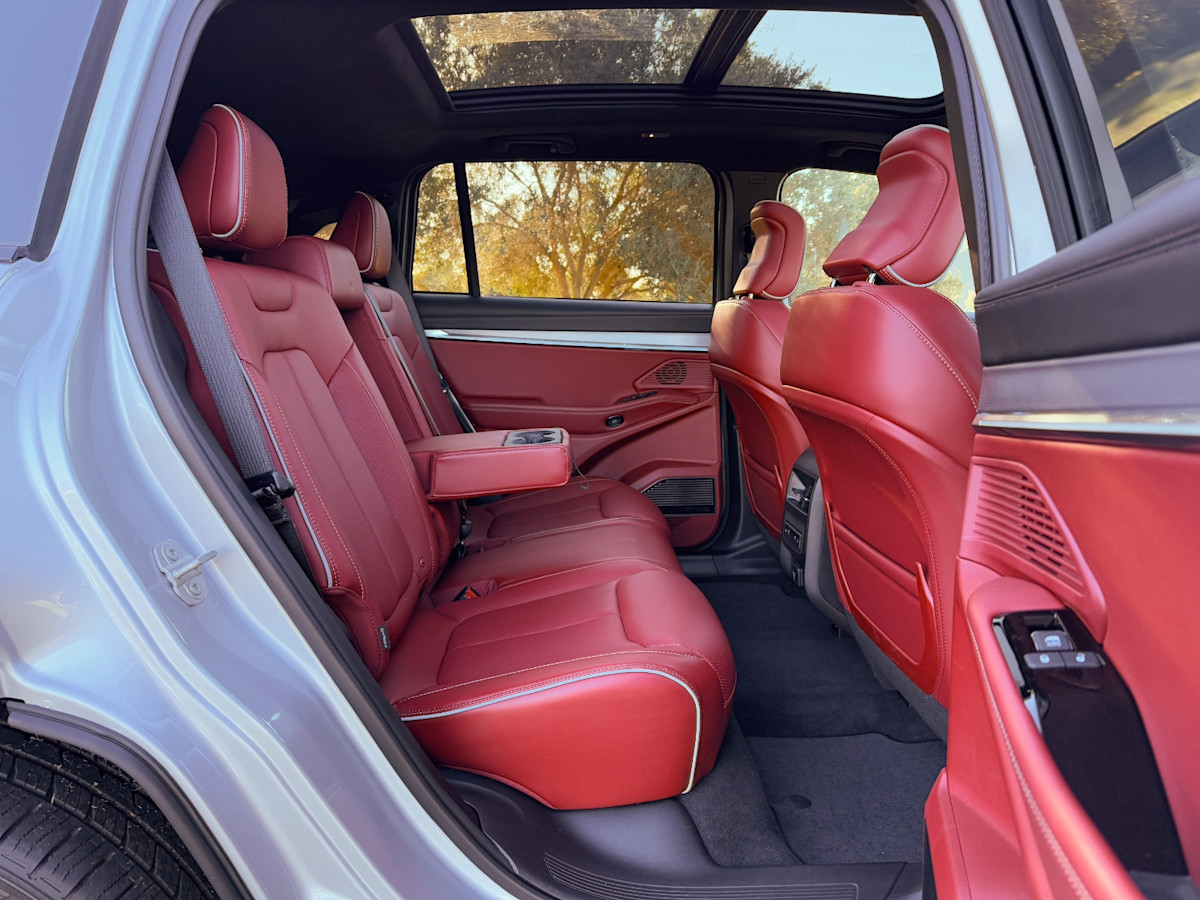
Jeep’s colour chart is dull, too, and every hue except for white costs extra money. Because Fathom Blue is almost black unless the sun shines directly on it, the only choice adding vibrancy to the new car is Red Hot Pearl. Likewise, Global Black is the standard interior colour, though Radar Red is a $1,000 option in Canada. If you want an off-white, tan, or brown cabin, you are out of luck. Maybe that will change in the future.
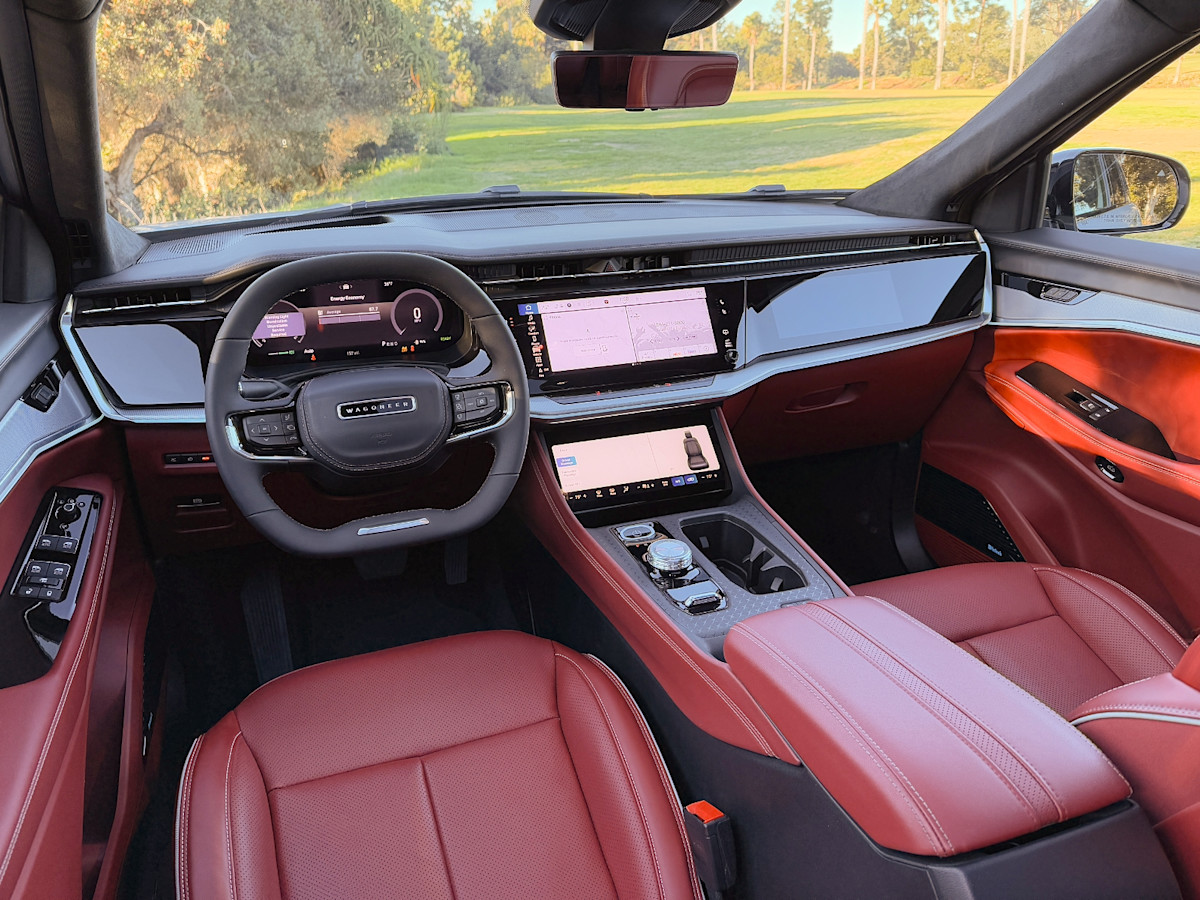
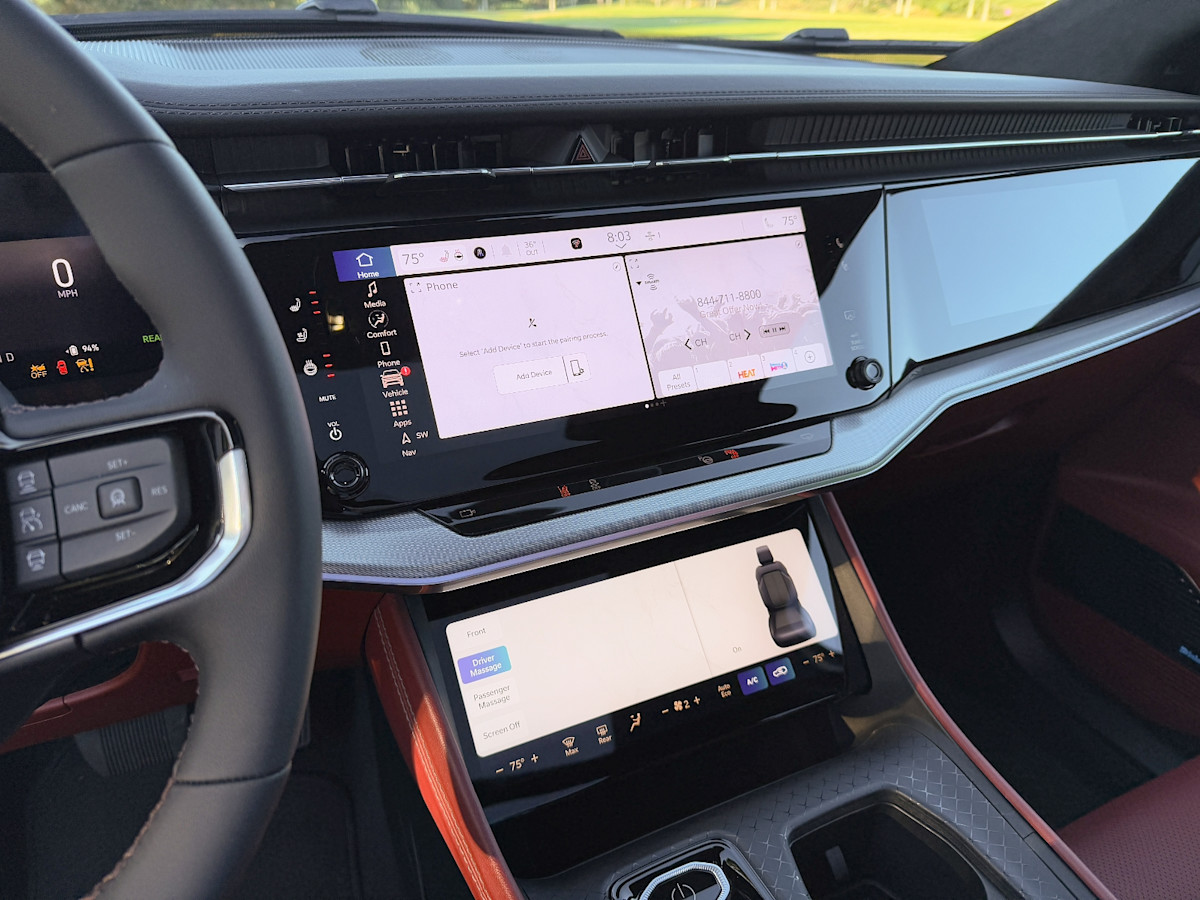
Inside, the Wagoneer S boasts a mix of sustainable, recycled, and animal-free materials. It is mostly upscale, though some of the plastic trim on the lower parts of the cabin looks inexpensive. The dashboard is covered in display screens, giving this Jeep a high-tech look. However, they collect dust and fingerprints like magnets, and during testing on a sunny winter day, the reflections and glare were unacceptable. We had trouble seeing them at times.
For the 2024 model year, only the fully loaded Launch Edition trim level is available. Jeep will build 3,600 examples before switching to production of the 2025 Wagoneer S, which will start at lower prices. The manufacturer’s suggested retail price (MSRP) of the Wagoneer S Launch Edition in Canada is $91,790, including the destination charge and other fees.
Performance
You can tell by looking at it the Wagoneer S isn’t made for going off-road. That doesn’t mean it can’t handle a well-traveled trail or some snow or dirt. With 16.25 centimetres of ground clearance, it boasts over a centimetre more than a Ford Mustang Mach-E Rally, which is touted as an electric off-roader. However, the upcoming Hyundai Ioniq 5 XRT supplies 17.75 cm of clearance and a set of all-terrain tires instead of all-seasons like the Jeep.
Don’t worry, Jeep enthusiasts. The Wagoneer S showed up at the 2024 Easter Jeep Safari decked out in conceptual Trailhawk trim, and we wouldn’t be surprised if a production version shows up in showrooms in the future.
For now, though, we have the Launch Edition, which is best used for street driving. The powertrain comprises two 250-kilowatt (kW) electric motors to create an all-wheel drive (AWD) system and, when the over-the-air Propulsion Boost Package is applied, their combined output measures 600 horsepower and 617 lb-ft of torque. They draw power from a 400-volt, 100.5-kWh battery pack, which can be charged from 20-80% in 23 minutes with a DC fast charger, according to the automaker.
According to Jeep, the Wagoneer S Launch Edition launches itself to 100 km/h a tick faster than the old Grand Cherokee Trackhawk equipped with a supercharged 6.2-litre Hemi V8 making 707 horsepower. We witnessed one being put to that test, screeching away from a stop in a cloud of acrid burnt rubber.
We did not perform the same stunt during our test drive (because public roads). But after a clean launch from a stop, we stomped hard on the accelerator. The Wagoneer S’s Falken tires struggled to maintain their grip as the Jeep whooshed to extra-legal speeds. It never gets old, but the laws of physics remain the same, and the Wagoneer S has 2,570 kilograms (5,667 pounds) to slow down and stop if something goes sideways.
Based on a brief bit of twisty road driving, the brakes seem up to the task. We can’t comment on pedal feel, as we engaged maximum regenerative braking for a one-pedal drive experience. But they proved predictable and easy to use.
You can pair maximum regen with a Creep setting that eliminates the drivetrain’s ability to bring the Jeep to a full stop for a more traditional feel when launching from a stop or driving in stop-and-go traffic. Pair it with minimum regen, and the Wagoneer S drives more like an SUV with an internal combustion engine.
The suspension deserves some credit for that, and it’s remarkably well done considering it doesn’t employ adaptive damping. Unlike many electric vehicles, the Wagoneer S rarely suffers a choppy ride quality, mainly only over heaves and dips on undulating surfaces. And in those situations, it doesn’t feel too stiff or soft. The rest of the time, you’re barely aware of the added electric motor and battery pack weight, and head toss due to unexpected lateral weight transfers was minimal on the prescribed route.
Unfortunately, the steering is unsatisfactory. The wheel rim shape, flatter at the top and bottom, is fine. But the steering feel is either non-existent or too aggressive about returning to centre.
When driving on unfamiliar winding roads in Sport drive mode, the steering built effort and resistance the more we turned into a curve. However, when making the mid-curve corrections that are common when traveling an unknown road, we found it almost impossible to make precise changes due to inconsistent effort levels. The steering felt too eager to return to centre, like a stretched rubber band as you relax it. Having just exited a BMW i4 before driving the Wagoneer S, it seems Jeep should buy one, study it, and copy it.
According to Natural Resources Canada, the 2024 Jeep Wagoneer S should travel 488 kilometres on a full charge with a consumption rate of 21.5 kWh/100 km. During our driving, we found the official estimates to be accurate. The 1,540-kilogram (3,400-pound) towing capacity when properly equipped isn’t going to worry the establishment.
Jeep says a home charger will replenish the Wagoneer S’s battery in about nine hours. Visit a DC fast charging station, and you can bring the battery up from 20% to 80% in 23 minutes, according to the automaker. Expect a two-day wait when using a standard household outlet.
Form & function
It might not be Trail Rated, but an unexpected benefit to the electric Wagoneer is a lower step-in height, large doors, and a roomy cabin, making it easy to get into and out of this SUV. And when have you ever been able to say that about a Jeep?
Since the Launch Edition is fully loaded, it has heated, ventilated, and massaging front seats with 16-way power adjustment. They’re wrapped in artificial leather, and Jeep surrounds the standard dual-pane sunroof with simulated suede. A power tilt-and-telescopic steering wheel helps you to find a perfect driving position.
Rear passengers also benefit from comfortable cushions with good support and outboard heating and ventilation. However, the Wagoneer S does not offer a triple-zone automatic climate control system, so people riding in the back are at the mercy of those in front. Rear window shades are also missing in action, a potential concern for parents carrying babies in reverse-facing child safety seats. After all, we can’t let Mr. Sun ruin their brand-new eyeballs.
Storage space is reasonably good, though the 10.25-inch digital climate panel on the lower part of the dashboard covers most of the most generous tray, just forward of the cupholders. The screen flips up for access, but if you leave it that way, adjusting the climate system and seat massagers is impossible unless you use the voice recognition system. Fortunately, the digital voice assistant works well enough for those tasks.
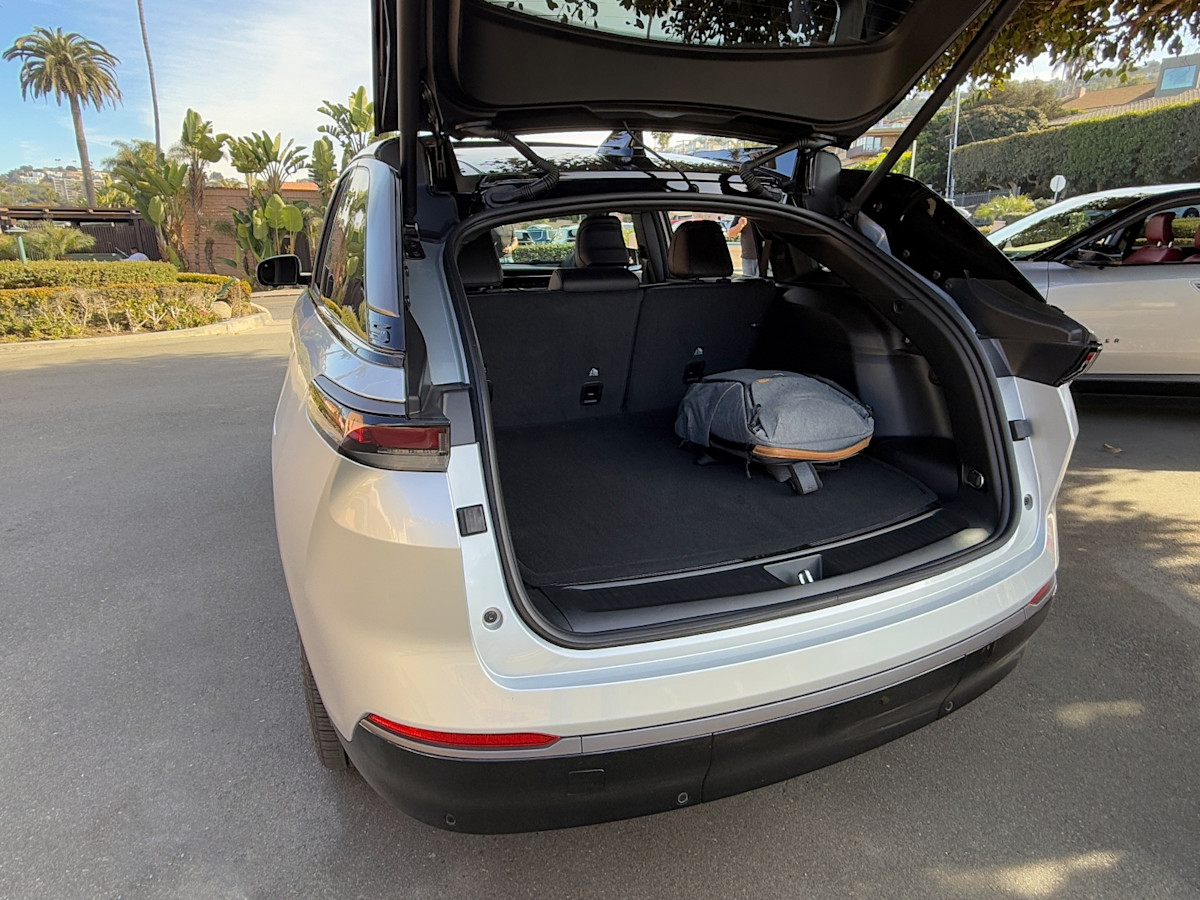
Cargo space behind the rear seat measures 866 litres. Jeep hides it well with an oversized rear spoiler, but the Wagoneer S’s roofline is more like an SUV coupe than a traditional boxy SUV to improve aerodynamics and increase driving range. That cuts down on cargo space, but it’s an easy trade-off to make. Fold the back seats, and the Wagoneer S can handle 1,812 litres of cargo. Also, a 85-litre front trunk (frunk) is available under the hood.
Technology
An array of technology is standard on every 2024 Jeep Wagoneer S Launch Edition. To combat screen envy (if that’s a thing), Jeep claims you get a total of 45 inches of displays in this SUV, spread across the dashboard in four locations.
The 12.3-inch digital driver display is easier to navigate and use than what we’ve experienced in other Jeeps. Likewise, the 12.3-inch touchscreen Uconnect 5 infotainment system is intuitive and familiar enough to anyone with modern smartphone proficiency. Under that is the 10.25-inch climate system screen. The front passenger also gets a 10.25-inch touchscreen for personal entertainment, assisting the driver with navigation programming, and other tasks. A 10-inch head-up display is the cherry on top.
During the evaluation drive, the screens collected a significant amount of dust, fingerprints, and smudges, and they looked awful when the low-angle winter sun shone directly on them. The sun also washed them out, making them hard to see and use, and the reflections didn’t help. We get that a premium-priced vehicle needs to look high-tech inside, and these problems are not limited to the Jeep Wagoneer S. But it sure is easy to miss the good old days of knobs, buttons, and white markings on matte black backgrounds.
The Uconnect 5 infotainment software is robustly featured and includes a voice recognition system that produced hit-and-miss responses during testing. We’ve come to expect this from Uconnect 5, and we typically prefer to use the wireless Apple CarPlay or Android Auto smartphone integration instead. In addition, the Wagoneer S has a wireless charging pad on the centre console, and music flows to an impressive 19-speaker McIntosh audio system.
Like many other EVs, the navigation system offers the ability to find charging stations within the Jeep’s remaining battery range. Uconnect 5 also features Jeep Connect and a smartphone app providing remote climate system activation and other conveniences. A digital rearview mirror improves the view to the rear when the cargo area is packed with gear.
Safety
Jeep equips the Wagoneer S Launch Edition with a generous collection of advanced driving assistance systems. The expected collision warning and avoidance systems are standard, as well as an intersection collision assist system when you’re making left turns. The blind-spot monitoring system has a High Speed Overtake Warning to notify drivers when another vehicle is approaching from behind at a faster rate of speed.
Active Driving Assist is also standard. It is a hands-on driving assistance system pairing the adaptive cruise control with stop-and-go capability with lane-centring assistance. Jeep does not offer a hands-free version of the technology along the lines of the Cadillac Lyriq’s Super Cruise and the Ford Mustang Mach-E’s BlueCruise.
We used Active Driving Assist on the relatively brief highway driving portion of the route. It worked well, proving to be smooth, refined, and mostly resistant to unnecessary sudden braking. At one point, another motorist cut into the gap ahead, and the Jeep briefly braked too hard. But it quickly regained its composure and coasted until returning to the proper following distance. Jeep also gives the Wagoneer S a surround-view camera, parking sensors all around the vehicle, and a fully autonomous self-parking system. If you scrape up those 20-inch wheels, you’ll have no one to blame but yourself.
As of this writing, crash-test scores are unavailable, so the safety rating here does not take this important aspect into account and is based only on the driving assistance technologies.
Cost-effectiveness
The 2024 Jeep Wagoneer S Launch Edition isn’t cheap. Our test vehicle had one option: extra-cost Silver Zynith paint (the optional Radar Red interior shown in the photos was not on the test vehicle). That brings the Canadian MSRP to $92,485, including the destination charge and other fees.
At that price, the Wagoneer S Launch Edition competes with the Acura ZDX, Cadillac Lyriq, and Genesis Electrified GV70.
When the 2025 Wagoneer S goes on sale, Jeep says more versions of the SUV will be available at lower price points. That’s good because the top-shelf versions of the Audi Q6 e-tron, the Chevy Blazer EV, the Ford Mustang Mach-E, the Honda Prologue, the Hyundai Ioniq 5, the Kia EV6, and others are more affordable and appealing electric SUVs in their own right — and the Tesla Model Y looks like a bargain by comparison.

What owners say
Trims & specs
Base MSRP $70,200 | Seating 5 |
Engine 600 hp Electric | Cargo Capacity 30.6 cu ft |
Combined MPG 93 | Drivetrain 4X4 |