2024 Acura ZDX Reviews, Pricing & Specs



Pros & cons
What we like
Stylish design
Comfortable
Impressive technology
What to consider
Unimpressive charging rates
Quirky control placements
Cheap interior plastics
The CarGurus verdict
In life, taking shortcuts rarely leads to good outcomes. The new Acura ZDX might prove an exception to the rule.
Seeking a fast path to an electric vehicle, Acura and its parent company, American Honda, partnered with General Motors to use GM's acclaimed Ultium EV platform and component set. The results are the 2024 Acura ZDX and Honda Prologue, and the ZDX is an appealing entry in the two-row electric luxury SUV segment. Acura sources it from GM's Spring Hill, Tennessee, assembly plant, which also produces the Cadillac Lyriq.
Verdict: Acura-specific design and details distinguish the new 2024 ZDX as different from GM-branded electric SUVs. Still, those in the know will identify GM-sourced design and components as apparent as the infotainment system and as subtle as the new-car smell. Does that matter? Ultimately, the market will decide, but we like the ZDX.
out of 10 expert review
Look & feel
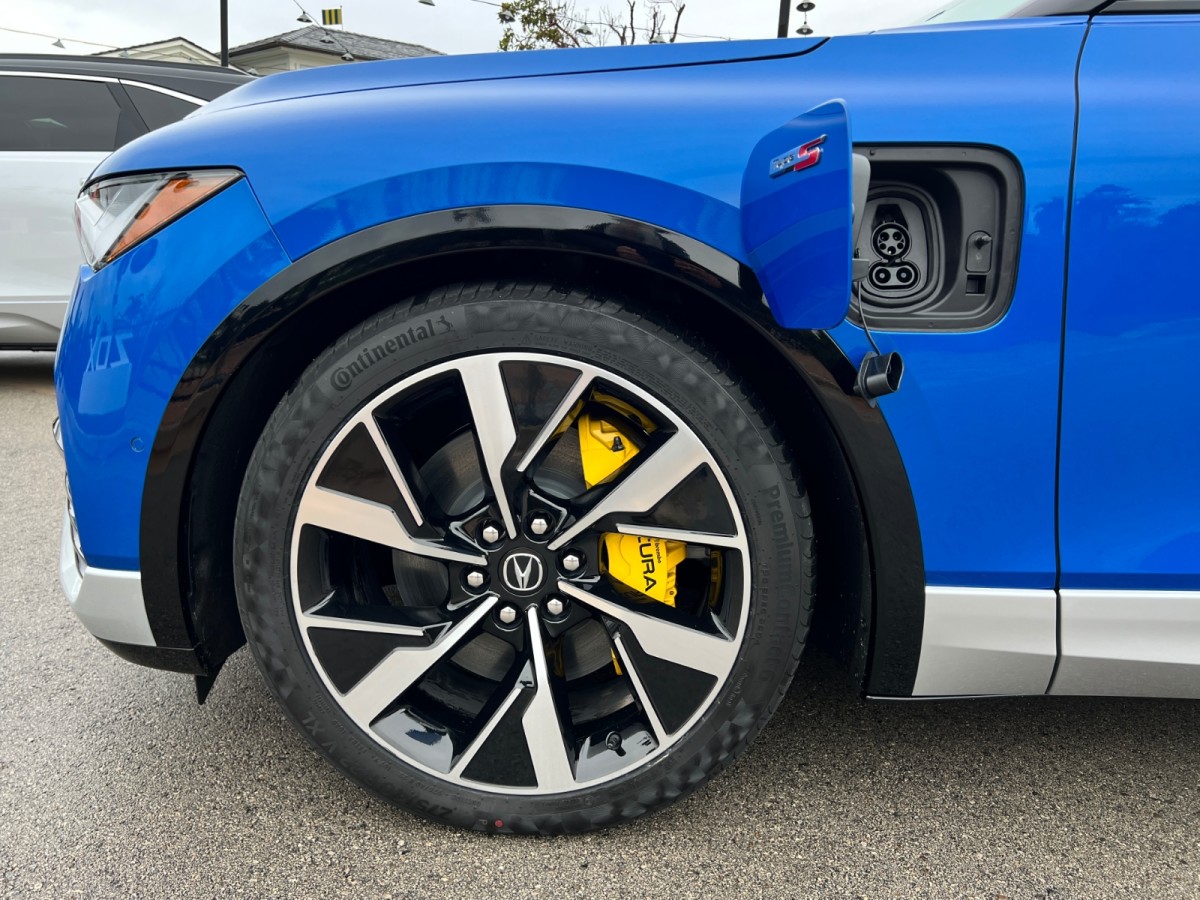
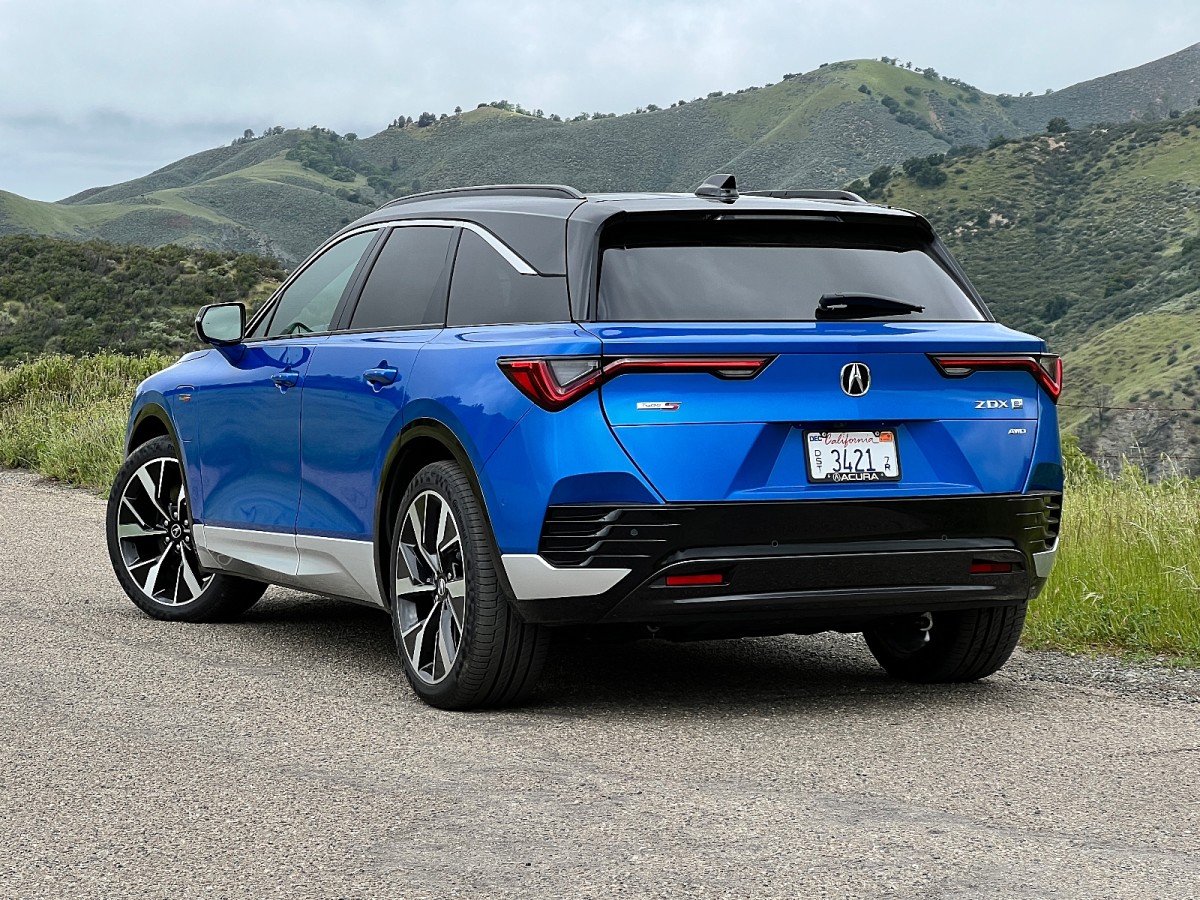
In both Canada and the U.S., Acura offers the ZDX in A-Spec and Type S trim levels. Both are sporty in appearance, but the A-Spec has 20-inch wheels while the Type S features 22s and a black-painted roof. From the blunt nose to the squared-off tail, both versions look appealing. Unfortunately, the Type S model's black roof and the chrome trim above the rear quarter window also reminded us of a hearse.
Prices range from $87,717 to $94,217, including the $2,595 destination charge and other fees. Our Type S test vehicle had Double Apex Blue Pearl paint. Unfortunately, every version of the 2024 Acura ZDX is too expensive to qualify for federal or provincial/territorial rebates in Canada, so the price you see is the price you’ll pay.
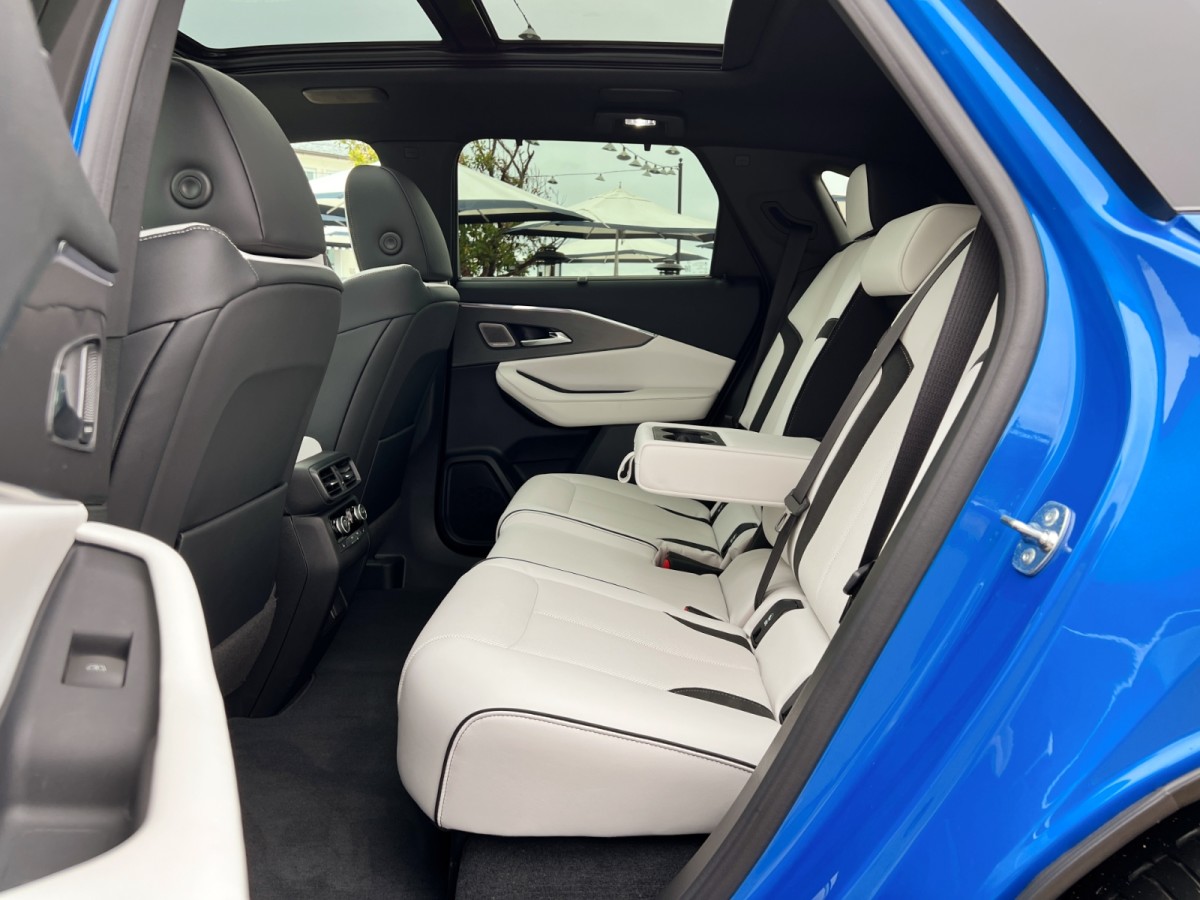
There is a caveat to report. Acura fitted the test vehicles with the optional performance tires but not the all-black 22-inch wheels that typically come with the stickier rubber. This change for the media program was presumably to enhance handling while retaining the more expressive standard machined-finish wheels. Depending on the paint colour, you can choose an Ebony or Red interior decked out in perforated leather. Ambient lighting, brushed aluminum trim, stainless steel pedal detailing, and a panoramic sunroof are standard on all ZDXs.
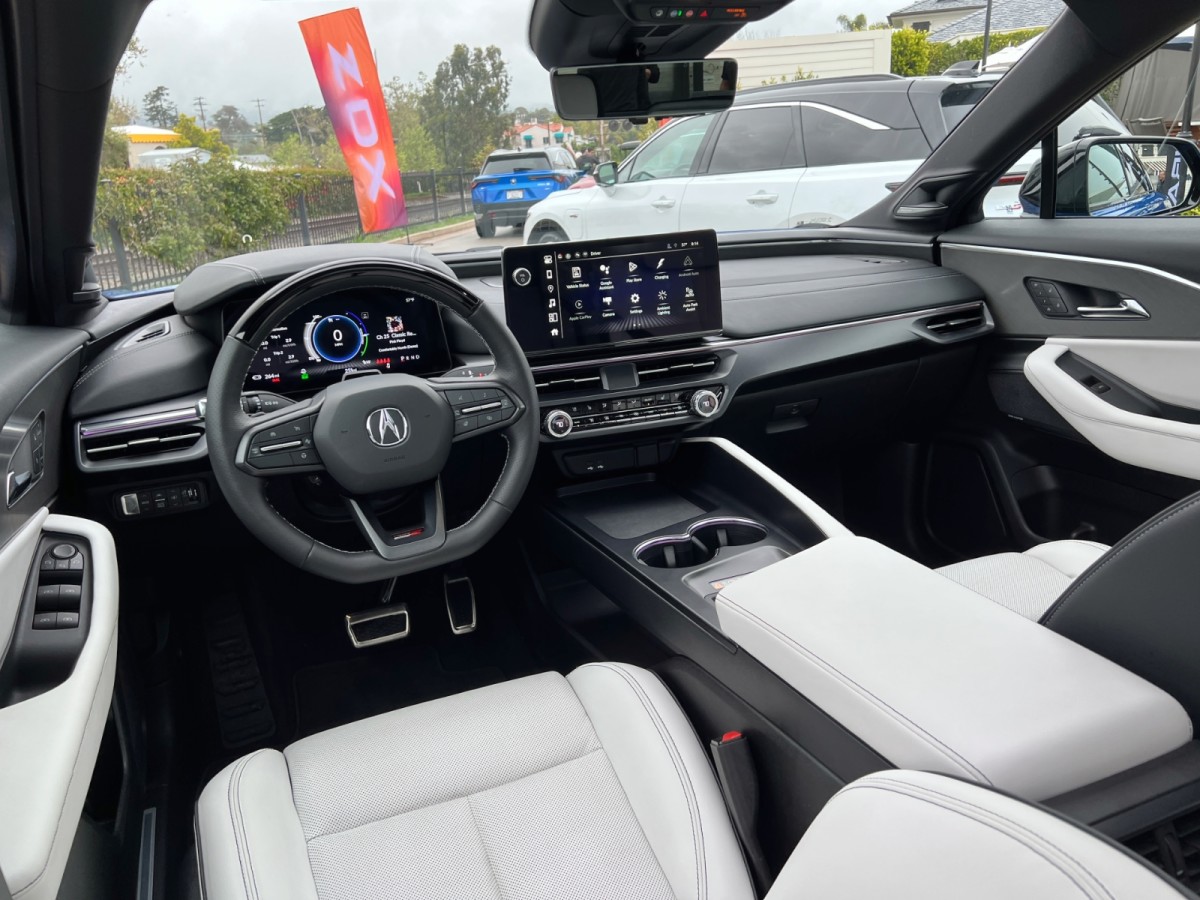
Most people new to the Acura brand will not identify the ZDX's interior components as GM-sourced. That's true even if they're cross-shopping the Acura with the Cadillac Lyriq and Chevrolet Blazer EV because these three electric SUVs have exclusive dashboards, displays, centre consoles, door panels, and other interior treatments.
However, Acura owners will notice the differences, from the inferior quality of some interior plastics and the cabin's unmistakable GM scent to the superior Google Built-in infotainment user interface and simple analog climate controls.
Frustratingly, a button located low on the left side of the dashboard next to the electronic parking brake provides access to the driving modes, and the hazard flasher button (which should be in the space between the centre air vents) is on the ceiling next to the SOS emergency calling button. Neither placement is ideal.
Performance
In Canada, the 2024 ZDX comes solely in its dual-motor all-wheel drive (AWD) configuration, while the single-motor rear-wheel-drive (RWD) version sold in the U.S. is unavailable. With A-Spec trim output measures up at 490 hp and 437 lb-ft, while ZDX Type S makes 500 hp and 544 lb-ft. All three include Normal, Sport, Snow, and Individual driving modes, and the maximum towing capacity is 1,587 kilograms (3,500 pounds).
You'll want the A-Spec for the most driving range at 489 kilometres. Stop at a DC fast-charging station delivering 190 kilowatts of energy or more, and you can recoup 127 kilometres of range in 10 minutes. Type S versions travel an estimated 447 kilometres on a charge and grab 115 kilometres of range in 10 minutes.
Acura says all ZDX models can charge from 20% to 80% in 42 minutes using a 190-kW DC fast charger. At home, on a Level 2 charging station, you can expect to gain 47 kilometres per hour of charging.
The route where we tested the ZDX Type S included plenty of two-lane highway and mountain road driving, plus a little bit of city travel. Over 190 kilometres , the ZDX traveled 3.7 kilometres per kilowatt-hour, resulting in an efficiency rating of 27.0 kWh per 100 kilometres. As of this writing, Natural Resources Canada hasn't published complete official ratings for the ZDX, but our result suggests the Acura isn't quite as efficient as most of its rivals.
According to Acura, the ZDX Type S accelerates to 96 km/h in less than five seconds. It seems that quick, and this variant's exclusive adaptive air suspension does a commendable job of masking the 2,745-kilogram (6,052-pound) curb weight. Also, in Snow mode, the air suspension raises the ride height by 25 mm over the standard 17.8-centimetre ground clearance. Sport mode drops the Type S by 15 mm.
In addition, the Type S has wider, lower-profile tires and substantially thicker stabilizer bars, especially in the back. A quicker steering ratio and larger front brakes clamped by yellow six-piston Brembo calipers also support the Type S model's enhanced performance.
We zipped along hilly, winding, and narrow roads to sample these Type S exclusives. The ZDX acquitted itself nicely, feeling snugged down to the smooth blacktop. It's hard to determine how much the add-on performance tires contributed to the capable handling, but more importantly, on this road, the suspension eliminated unwanted body motions, and the sharper steering made it easy to place the SUV in curves, increasing driver confidence.
The view of the creased fenders and centre hood line from the driver's seat reminded us of a 1960s-era Chevy, which as it turned out, our co-driver had once owned. He agreed that the landscape view of the ZDX's hood was vintage GM. That is good because it makes it easy for the driver to place the Acura when parking and hustling along a narrow road without a shoulder.
We also traveled on a patched and pockmarked mess of a mountain road, and here the ZDX felt huge. Impact harshness made it into the cabin, especially at the rear axle.
On the highway, the ZDX was a comfy cruiser, but neither showcased the Type S model's performance and handling upgrades. However, even in Normal mode, the steering effort level is heavier than we prefer. We extensively used the Hands-Free Cruise technology, which is exclusive to the Type S. It's impressive. On a descent, the EV's multi-stage regenerative brakes proved helpful and offer one-pedal stopping capability. However, the paddle on the steering wheel is a little tricky to use, and the system appears to default to lighter than heavier regen, both upon start-up and not long after you've dialed in the maximum amount.
Overall, driving the Acura ZDX Type S is enjoyable. But is it a true Type S? That's impossible to say without driving an A-Spec back-to-back, and Acura didn't have any of those on hand for comparison purposes.
Form & function
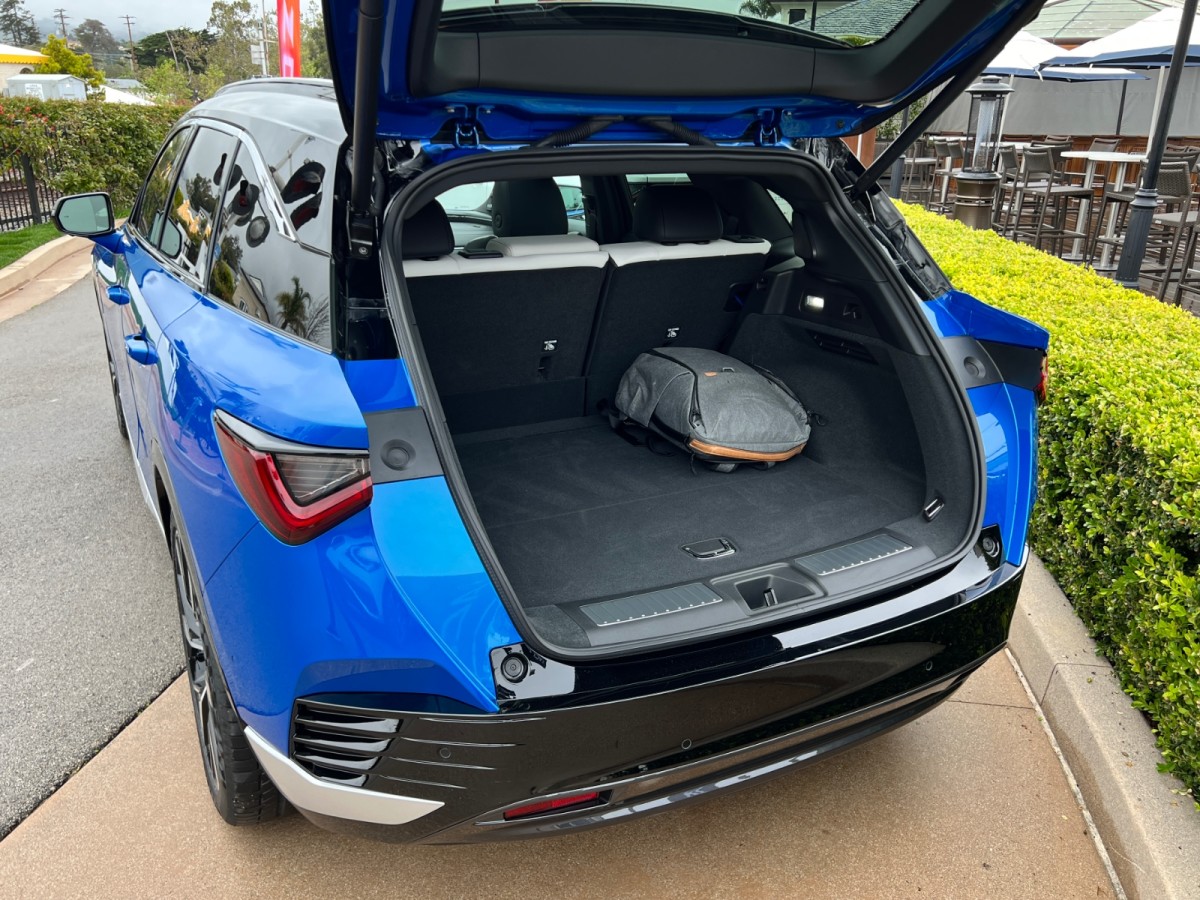
Equipped with two rows of seats, the Acura ZDX offers plenty of room for five passengers and 793 litres of luggage. Or, you can fold the back seat down to create a maximum of 1,722 litres of cargo room. The ZDX also provides added storage space under the cargo floor. A standard power rear liftgate offers hands-free access.
The ZDX A-Spec has 12-way power-adjustable front seats with heating and ventilation and a power-adjustable heated steering wheel. Upgrade to the Type S, and you get adjustable thigh support and side bolsters, and heated rear seats are also standard with this trim level. All ZDX models have premium Milano leather, and most interior surfaces on the upper portion of the cabin feature soft padding and quality materials.
We found the front seats quite comfortable and supportive during several hours of driving and riding as a passenger. In addition, the back seat supplies plenty of room for legs, feet, and heads and offers decent thigh support. Type S models have a triple-zone automatic climate control system with a rear control panel, and the test vehicle featured rear window shades and USB charging ports.
Storage space is practical, but most storage areas lack surface liners, so items placed in each location may vibrate, rattle, and scrape as you drive. In addition, we discovered the cupholder clasps rattled when we put loose items in them. Worse, when you pitch the ZDX around a right-hand corner, items placed on the shallow tray forward of the cupholders can slide off to interfere with the driver's feet. Ask us how we know.
Technology
Acura equips the ZDX with configurable high-definition 11-inch digital instrumentation and 11.3-inch touchscreen infotainment displays. If you measure an EV's worth by the size of its screens, they'll disappoint you. But they're perfectly capable of delivering the information you want in a graphically pleasing and intuitive manner. However, compared to the best tech in the segment, they lack a wow factor.
The infotainment system features Google Built-in with access to Google Assistant, Google Maps, and apps via the Google Play store. In addition, you get wireless Apple CarPlay and Android Auto, SiriusXM satellite radio, HD Radio, and access to a subscription-based Wi-Fi hotspot.
In another GM tell, OnStar provides the AcuraLink connected services, and the ZDX offers Teen Driver technology. Teen Driver allows parents to program a key fob to track vehicle use, and it produces a driving report card when your child returns home.
During testing, Google Assistant quickly and correctly responded to voice commands. There were two hiccups, though. While listening to satellite radio, we requested reggae music. Instead of directing us to the Bob Marley station on channel 19, it asked us to select a streaming service to listen to that genre of music. Also, when we told the ZDX we were too hot, the digital voice assistant suggested a swim rather than adjusting the climate system's temperature. At least it has a sense of humour.
Pairing an iPhone to the infotainment system took no time, and it was easy to run Apple CarPlay and stream music from Apple Music. Overall, the ZDX's infotainment system is easy and intuitive to use and is preferable to every Acura we've recently driven. More of this, please.
The ZDX also marks Acura's switch to Bang & Olufsen audio systems. In this model, an 18-speaker surround-sound system explicitly designed for use in the ZDX immerses you in the music. The fidelity is good, especially for a standard setup, but is not entirely to high-end system standards.
Safety
Acura equips the ZDX A-Spec with its AcuraWatch collection of advanced driving assistance systems (ADAS). It includes numerous collision detection and avoidance systems, and everything you've come to expect on a modern luxury SUV is present and accounted for.
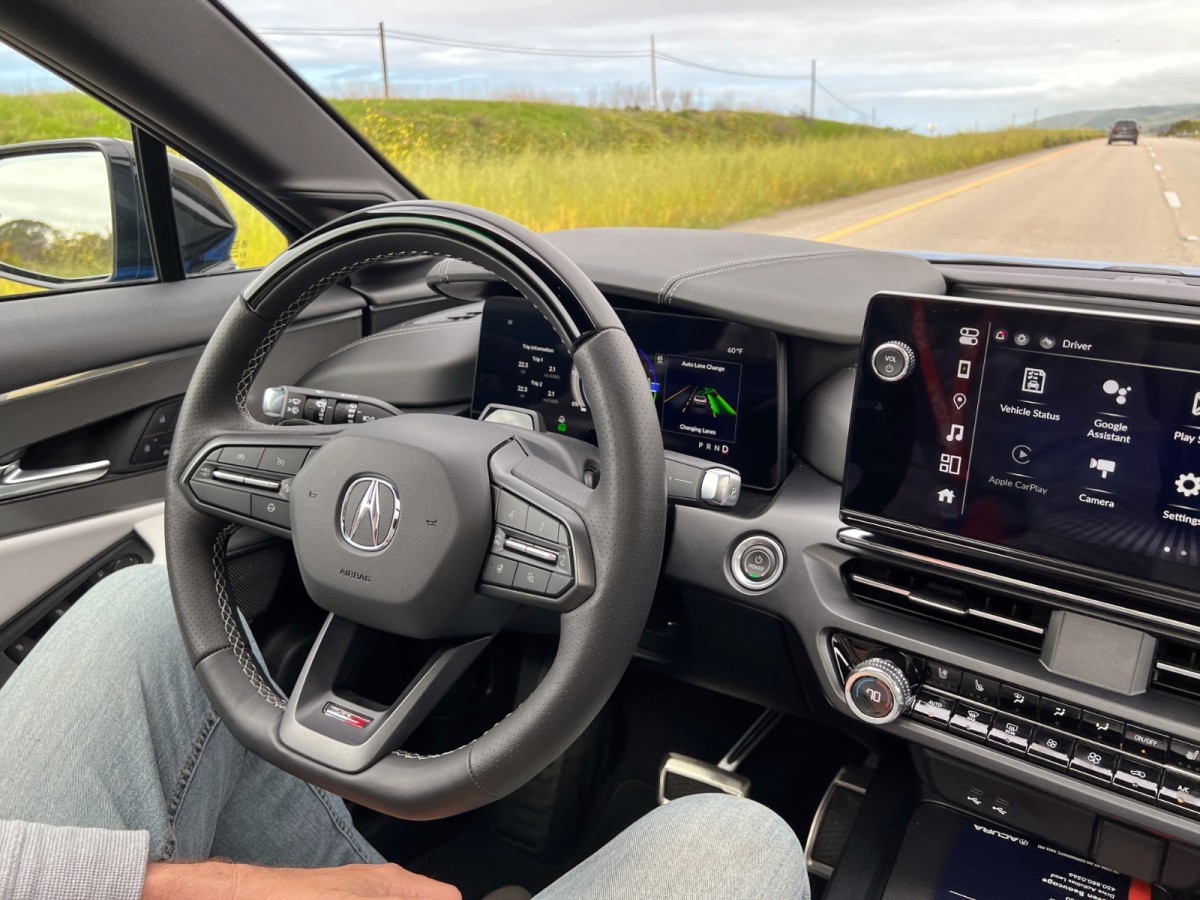
Upgrade to the ZDX Type S, and the electric SUV has AcuraWatch 360+. That adds more parking sensors, a semi-autonomous parking assist system, a rear pedestrian alert system, and a surround-view camera. In addition, it installs Hands-Free Cruise, a rebranded version of GM's Super Cruise technology.
The Hands-Free Cruise system demonstrated remarkable proficiency in our testing. Equipped with an automatic lane-change feature, it effortlessly handled light to moderate traffic and smoothly drove the ZDX while a driver monitoring system ensured we paid attention at all times.
We experienced only one glitch during our evaluation. After manually signaling a lane change, the ZDX complied and steered the SUV from the left lane into the right lane. However, we let go of the signal stalk and the Acura canceled the lane change, returning to the left lane. The car we'd passed was distant in the rearview mirror, and it wasn't clear why the system decided to return to the left lane. Had another motorist been following close behind, this would have proved frustrating to them.
Cost-effectiveness
Compared to its GM platform siblings, the Cadillac Lyriq and Chevrolet Blazer EV, the Lyriq offers better value than the ZDX when comparably equipped, and the ZDX can't match the Blazer SS regarding outright performance. Also, the Cadillac seems more sophisticated, while the Chevy has a dramatically lower base price. None of these observations are surprising.
Unfortunately, without official efficiency ratings, it's hard to judge the ZDX compared to its rivals. Based on our observed data, and compared to the information that’s been published, most alternatives can eke out more distance per kWh. But it's not fair to compare real-world results against testing data; often, the two figures bear little relationship to one another.
So, where does that leave the new 2024 Acura ZDX? Appealing design, a comfortable cabin, enjoyable driving dynamics, and impressive technology favour the Acura. While Acura took a shortcut to speed EV development and get one on the market, the resulting ZDX is an appealing entrant in the luxury electric SUV segment.
Note: Images show a US model.
What owners say
The one thing I would like to see added is the ability to record video like in Tesla vehicles. I compared this model to Tesla model X, BMW IX, Mercedes EVs, Cadillac Lyric, and Lucid EVs.
July 10, 2026Trims & specs
Base MSRP N/A | Seating 5 |
Engine N/A | Cargo Capacity 793 L |
Combined MPG N/A | Drivetrain N/A |
Base MSRP N/A | Seating 5 |
Engine N/A | Cargo Capacity 793 L |
Combined MPG N/A | Drivetrain N/A |
Base MSRP N/A | Seating 5 |
Engine N/A | Cargo Capacity 793 L |
Combined MPG N/A | Drivetrain N/A |
Base MSRP N/A | Seating 5 |
Engine N/A | Cargo Capacity 793 L |
Combined MPG N/A | Drivetrain N/A |


Pricing trends
Current avg. market price
$54,356
Trending up by 1.5% this month
May 2026 - November 2026

