2022 Volvo C40 Recharge Reviews, Pricing & Specs



The CarGurus verdict
The Volvo C40 Recharge is a style-over-substance electric car that defies the Swedish firm's reputation for sensibility.
It’s an exciting time for EV enthusiasts. Many established automakers are launching their first electric cars, each putting a different spin on the concept of zero-emission transportation. Some are taking this opportunity to reinvent brand images with radical designs, but not Volvo. The 2022 Volvo C40 Recharge—the Swedish automaker’s first mass-produced pure electric model without a gasoline counterpart—takes a conservative approach that’s rooted more in today than tomorrow.
The Volvo C40 Recharge is billed as a new car, but it’s more like a second body style of the Volvo XC40 Recharge crossover SUV, which in turn is an electric version of the Volvo XC40. Both models share a platform, powertrains, tech features, interior fittings, and a good amount of sheet metal. The main differences between the two are the C40 Recharge’s sleeker roofline and different equipment and trim-level structures.
Unlike the XC40 Recharge, the C40 Recharge is offered in a single trim level that incorporates the standard and optional equipment from the XC40 Recharge. We spent our test drive in this well-equipped EV around Palm Springs, California, to see how it compares to its sibling, and how it stacks up against EVs from other automakers.
out of 10 expert review
Look & feel
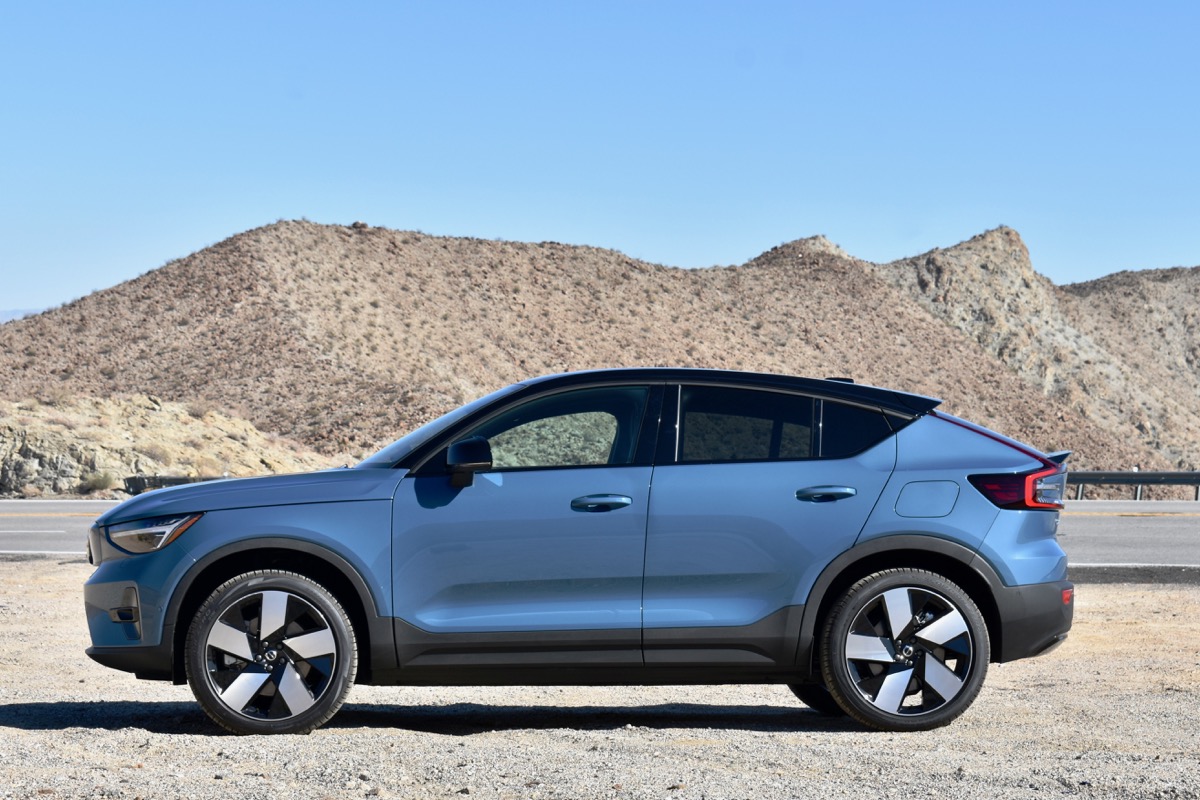
The C40 Recharge is the first Volvo to wear the “C” designation since the C30 hatchback and C70 convertible ended production about a decade ago. It’s also Volvo’s first attempt at the “SUV coupe” genre popularized by the German luxury automakers.
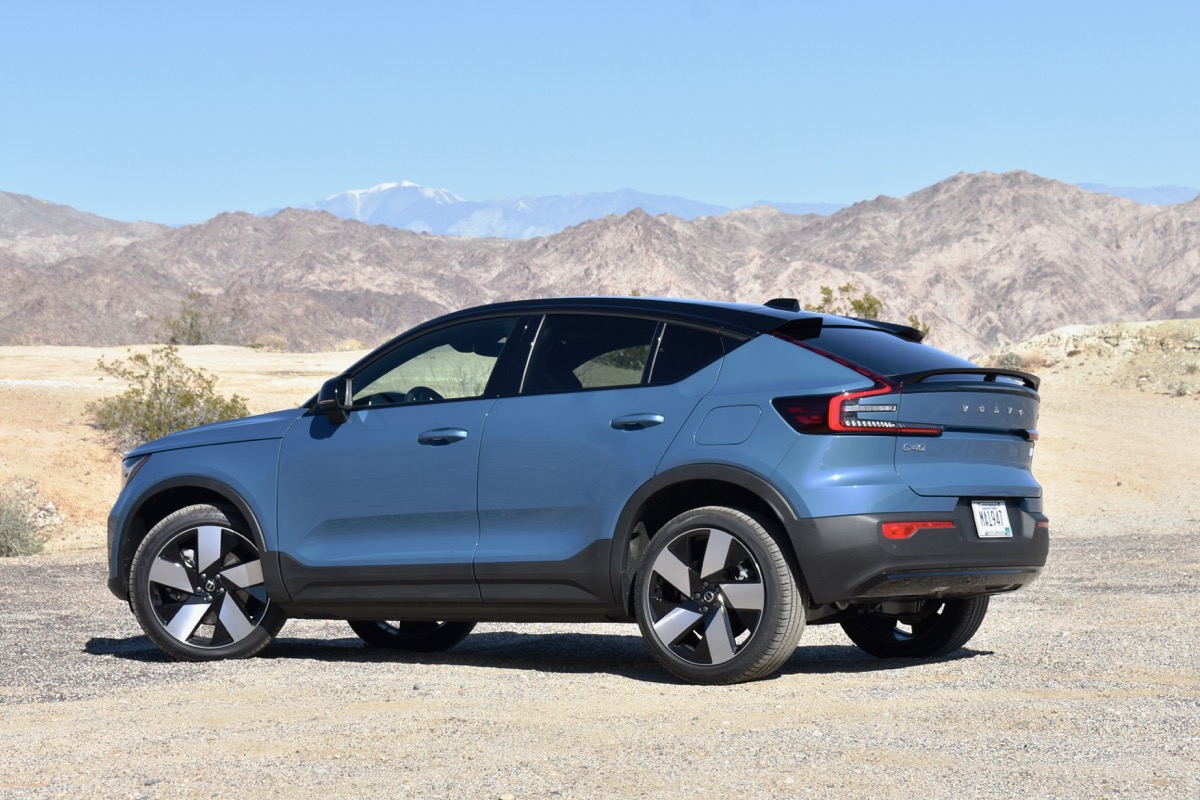
That means, in place of the XC40 Recharge’s upright roofline, the C40 Recharge gets a more streamlined shape, with sloped rear glass and a raked windshield. Volvo also added air-deflector humps at the top of the rear hatch, and a rear spoiler below. Both elements serve a function, Volvo claims. Despite the need for aerodynamic efficiency to maximize range, the C40 still rides on standard 20-inch wheels with fairly wide 255 tires.
At the front, the new Volvo also has slightly different headlights and a different rear fascia than its XC40 Recharge sibling. However, these changes have already been adopted by the European-market XC40 Recharge for the 2022 model year, and we expect the North America-spec version to follow suit.
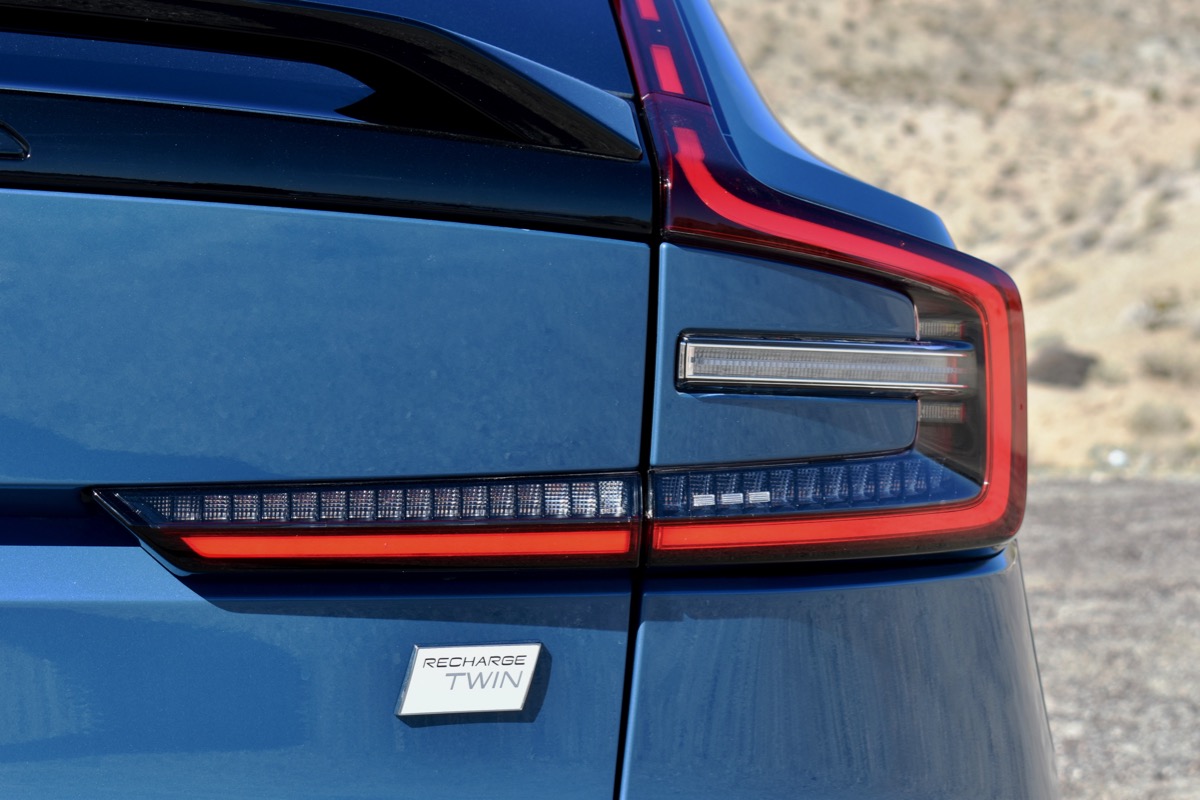
While many other electric crossovers have similar silhouettes, in this case the lowered roofline clashes with the more squared-off look of the rest of the car. The taillights are at least distinctive, running down the rear hatch and zig-zagging around to nicely frame the “Volvo” lettering on the tailgate.
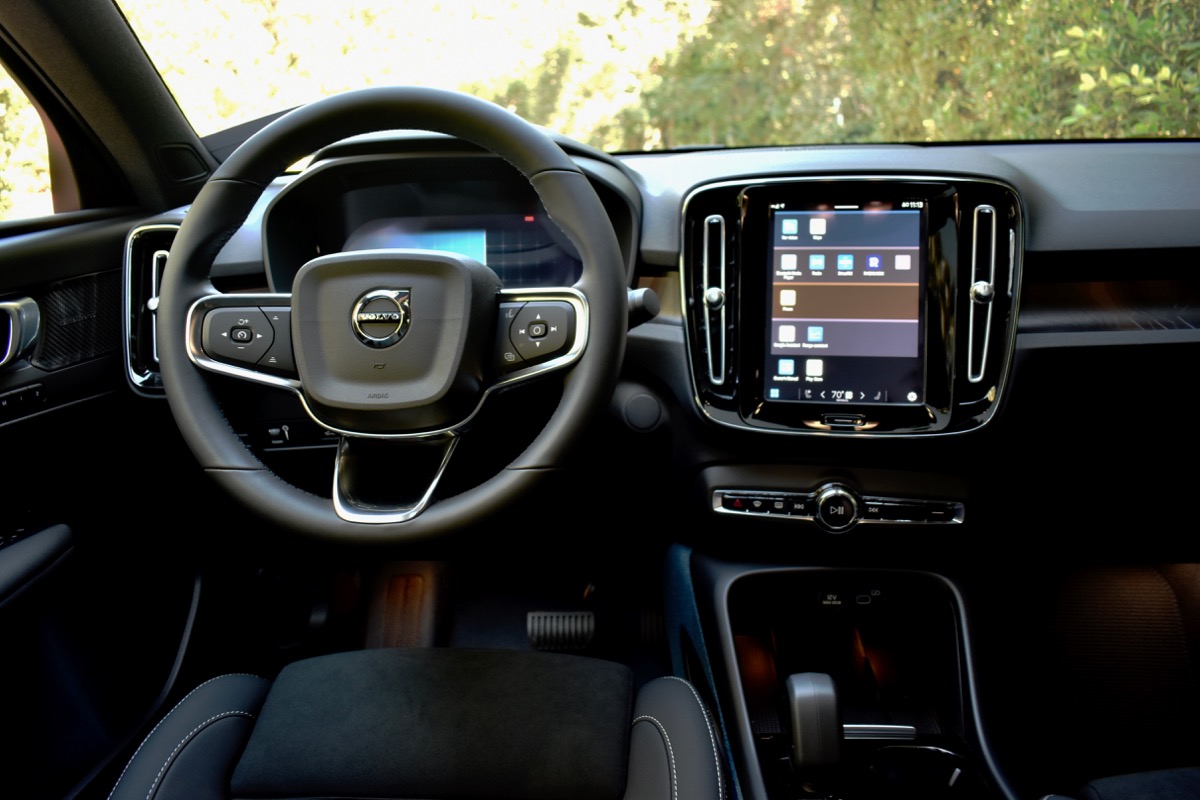
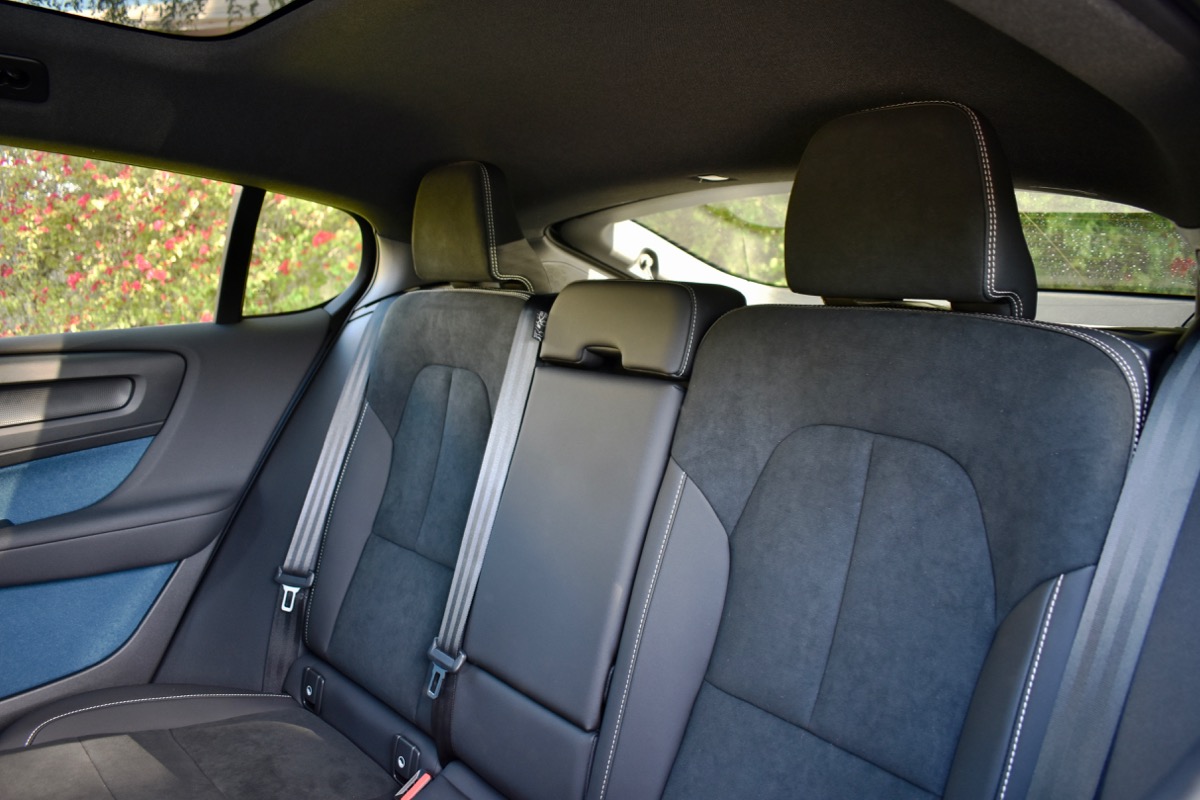
The interior design is similar to that of the XC40 Recharge, which isn’t a bad thing. The well-placed central touchscreen and lack of extraneous jewelry give the cabin an upscale feel. But unlike the XC40 Recharge, leather upholstery is not available. For the C40 Recharge, Volvo doubled down on sustainable materials, going with a leather-free interior and using recycled PET plastic for the seats, carpets, and dashboard trim. We appreciate that Volvo is trying to address the overall environmental impact of cars beyond just tailpipe emissions.
Performance
The C40 Recharge launches in Canada with a dual-motor, all-wheel drive (AWD) electric powertrain good for 402 horsepower and 486 lb-ft of torque, and a 78-kilowatt-hour lithium-ion battery pack (with 75 kWh of usable capacity). Volvo recently announced a single-motor, front-wheel drive (FWD) version for Europe, but hasn’t confirmed it for North America.
The powertrain is shared with the Volvo XC40 Recharge and Polestar 2, and the C40 has the same 907-kilogram (2,000-pound) towing capacity as those EVs. The C40 Recharge falls between its two platform mates in performance. The factory-quoted zero to 100 km/h time of 4.7 seconds is 0.2 seconds quicker than the XC40 Recharge and 0.1 seconds slower than the Polestar 2. Regardless, that’s a fairly impressive number for what wasn’t really intended to be a performance car.
That became immediately apparent once we hit some twisty roads in the hills. With its dual electric motors, the C40 Recharge felt plenty quick in a straight line, but required a patient approach in corners thanks to fairly limited grip. While its small size and relatively short wheelbase provided some feeling of agility, that was countered by artificial-feeling steering that made precise cornering difficult.
We don’t view this as much of a problem, however. Volvo made no claims of sportiness, and the C40 Recharge was very pleasant to drive at a slower pace. The suspension had enough damping to soften impacts from road imperfections, with enough body control to prevent the C40 from bouncing excessively while driving over them. Interior noise was also impressively low; Volvo did a good job of blocking the various road noises that become apparent with the elimination of a combustion engine.
The C40 Recharge also includes a one-pedal drive mode that genuinely allows you to drive it without touching the brake pedal in most situations. That’s important in an EV, as it lets the driver take full advantage of regenerative braking and get some energy back when decelerating. Drivers who may not be used to one-pedal driving can also turn this function off. That switches to less-aggressive regenerative braking, letting the car coast a bit before decelerating, and it activates a creep mode that lets the car roll forward when the brake pedal is released, similar to a gasoline car.
Form & function
The C40 Recharge measures fairly close to its XC40 Recharge sibling on passenger space. Because only the roof is different, the two EVs have the same amount of legroom in both rows. The C40 has slightly more front headroom than the XC40, but less second-row headroom. However, that still doesn’t make for a very spacious interior compared to other electric crossovers, such as the Volkswagen ID.4 and Ford Mustang Mach-E.
At 413 litres with the rear seats in place and 853 litres with the rear seats folded, the C40 Recharge has less cargo space than the XC40 Recharge—likely the result of that steeply raked rear window. The C40’s frunk measures the same as its sibling’s, at 21 litres. Neither frunk is particularly large by EV standards.
The C40 Recharge does at least borrow some clever interior storage ideas from the XC40 Recharge. A removable wastebasket is housed in the centre console, and Volvo included a hook on the glovebox door to hold small bags, as well as wire guides for device charging cables (wireless phone charging is included as well). The C40 Recharge also doesn’t have speakers in its doors, freeing up more storage space.
While the C40 does have the elevated seating position of a traditional crossover, and good side visibility thanks to well-placed exterior mirrors, rear visibility is seriously compromised. The streamlined roof didn’t leave much room for a rear window, and Volvo doesn’t offer a rear-camera mirror. This is a problem with other SUV coupes as well, and apparently the price you pay for style.
Technology
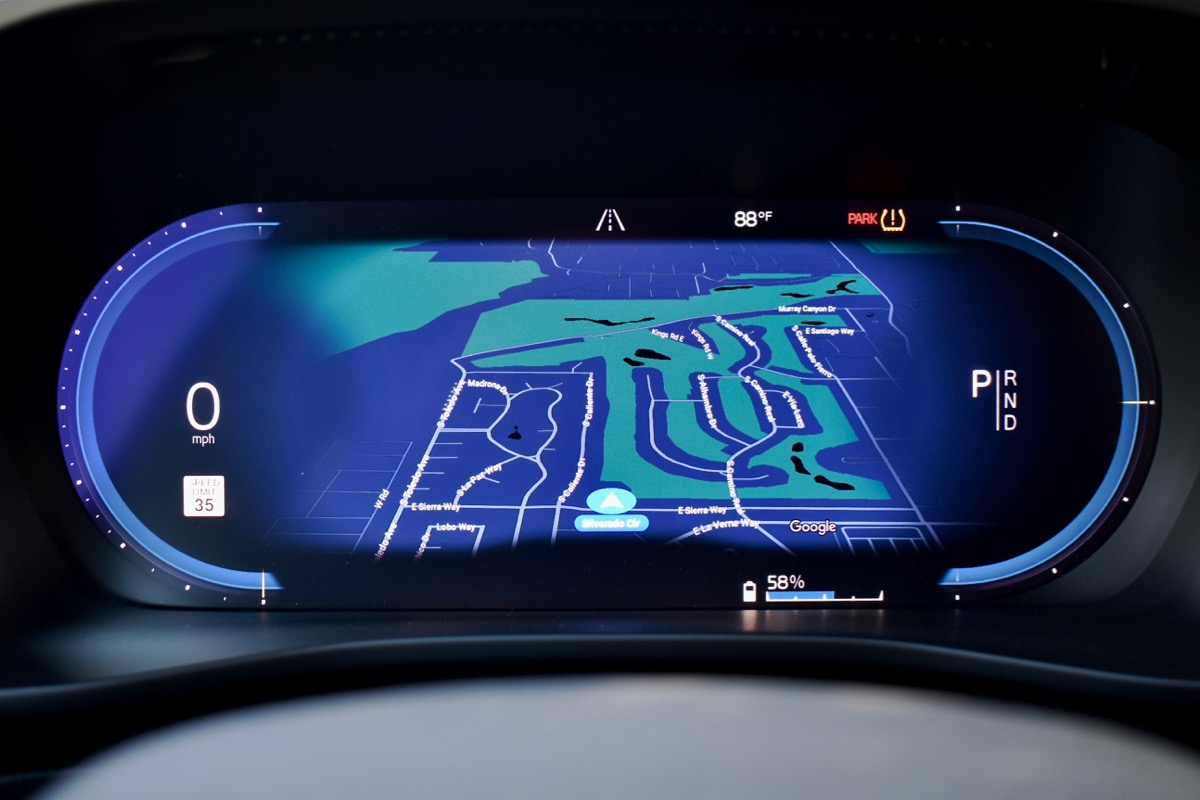
Like the XC40 Recharge, the C40 Recharge gets a standard 12.3-inch digital instrument cluster, a 9-inch touchscreen, and the Android Automotive OS infotainment system. Instead of Android Auto, it’s based on Google built-in features—including Google Maps, Google Assistant, and Google Play—that serve as default whether you connect an Android smartphone or not. Android users can also sync their phones’ information to the car.
The system is also designed to accommodate Bluetooth and Apple CarPlay connectivity, although the latter won’t be ready until mid-2022, and it will be added through an over-the-air software update at the time, according to Volvo. WiFi connectivity is also available through the Volvo Cars app. The infotainment system also allows dual phone pairing, but with split functionality. One phone can make calls and texts, the other can only access Bluetooth streaming audio.
Our experience with Android Automotive OS in the C40 Recharge was similar to other recent Volvo models—which is a good thing. We found the touchscreen responsive and the voice recognition sharp (although it can’t control SiriusXM satellite radio). Both the touchscreen and instrument cluster had nice-looking graphics, and we think more automakers should adopt something like the instrument cluster’s Calm Mode, which dials back the amount of information displayed for a less-distracting experience.
Counteracting that to some extent was the lack of physical buttons. While this made the dashboard look clean and uncluttered, we think Volvo may have gone a bit too far. We would have preferred actual buttons for the heated seat and steering wheel controls rather than touchscreen icons. That would restore tactile feel and declutter the display.
Safety
Volvo includes a long list of standard safety features and driver-assistance technologies, including forward-collision warning, automatic emergency braking, lane-keep assist, lane-departure warning, blind-spot monitoring, rear cross-traffic alert, a driver-attention monitor, traffic-sign recognition, oncoming mitigation by braking, and oncoming lane mitigation. The C40 Recharge also gets Pilot Assist. Shared with most other Volvo models, it combines adaptive cruise control and automated lane centring for highway driving.
Like all Volvo models, C40 Recharge is limited to a 180 km/h top speed. Volvo also includes a spare orange Care Key fob that will owners set an even lower speed limit when loaning out their cars (that feature will be released at a later date).
The C40 Recharge was named a 2022 “Top Safety Pick+” by the Insurance Institute for Highway Safety (IIHS)—the organization’s highest safety award. However, the National Highway Traffic Safety Administration (NHTSA) hadn’t released crash-test ratings for the C40 Recharge at the time of publication.
Note: Images show a US model.
Cost-effectiveness
The 2022 Volvo C40 Recharge gets a Natural Resources Canada-rated 364 kilometres of electric range with efficiency ratings of 2.7 Le/100 km or 23.9 kWh/100 km combined (2.5 Le/22.2 kWh city, 2.9 Le/26.1 kWh highway). That’s fairly close to the XC40 Recharge and Polestar 2, which get 359 and 401 kilometres, respectively, out of the dual-motor drivetrain and 78-kWh battery pack . However, it’s far short of the real-world range many EVs are achieving these days. A single-motor Polestar 2 is currently rated at 435 kilometres of range, which bodes well for the single-motor C40 Recharge should Volvo decide to bring it here.
An 11-kilowatt onboard charger can replenish the battery pack in eight hours using a 240-volt Level 2 AC charging station, Volvo claims. The C40 Recharge also gets standard 150-kW DC fast charging, which can get the battery from zero to 80% charge in about 40 minutes, according to Volvo.
Volvo offers a four-year, 80,000-kilometre, basic and powertrain warranty.
Pricing starts at $72,600 (not including a $2,215 destination charge) for the C40 Recharge’s standard equipment. That’s $12,650 higher than the base price of the XC40 Recharge, but the C40 Recharge has some standard features that are optional extras on its sibling, including a 13-speaker Harman Kardon audio system and a heat pump, which helps preserve range in cold weather. The base XC40 now qualifies for the federal iZEV rebate following expansion of its guidelines, but the C40 does not.
When the Volvo XC40 Recharge launched, it was a respectable entry despite the underwhelming range and charging figures. In the short time since then, however, the EV market has gotten more competitive. New electric SUVs like the Hyundai Ioniq 5, Kia EV6, and Volkswagen ID.4, as well as the Ford Mustang Mach-E, offer more range, faster charging, or better driving dynamics at lower prices.
Volvo’s strategy of taking the existing underpinnings from the XC40 Recharge and focusing on style rather than substance yields an EV that already feels dated. The C40 Recharge is an electric vehicle with many positive attributes, such as its smooth ride, sustainable-chic interior, and well-executed Google integration. But Volvo needs to do a lot more to stay competitive.
Note: Images show a US model.
What owners say
Trims & specs
Base MSRP N/A | Seating 5 |
Engine 408 hp Electric | Cargo Capacity 490 L |
Combined MPG 88 | Drivetrain AWD |
Base MSRP N/A | Seating N/A |
Engine N/A | Cargo Capacity N/A |
Combined MPG N/A | Drivetrain N/A |


Pricing trends
Current avg. market price
$33,525
Trending down by 6.5% this month
May 2026 - August 2026

