2022 Mercedes-Benz EQB Reviews, Pricing & Specs


Pros & cons
What we like
Comfortable
Standard all-wheel drive (AWD)
It's a seven seater electric car
What to consider
Unimpressive electric range
Questionable value for money
Interior materials could be better
The CarGurus verdict
The Mercedes-Benz EQB represents the least-expensive fully electric model offered by the German brand in 2022.
The entry-level electric Mercedes is the EQB, a small crossover based on the gasoline GLB. Introduced late in 2022, the EQB offers up to 365 kilometres of range, 288 horsepower, and a 100-kilowatt fast-charging rate at a price just over $75,000. In our testing, the EQB fell short on range, performance, and build quality when compared with other leading EVs in this segment.
out of 10 expert review
Look & feel
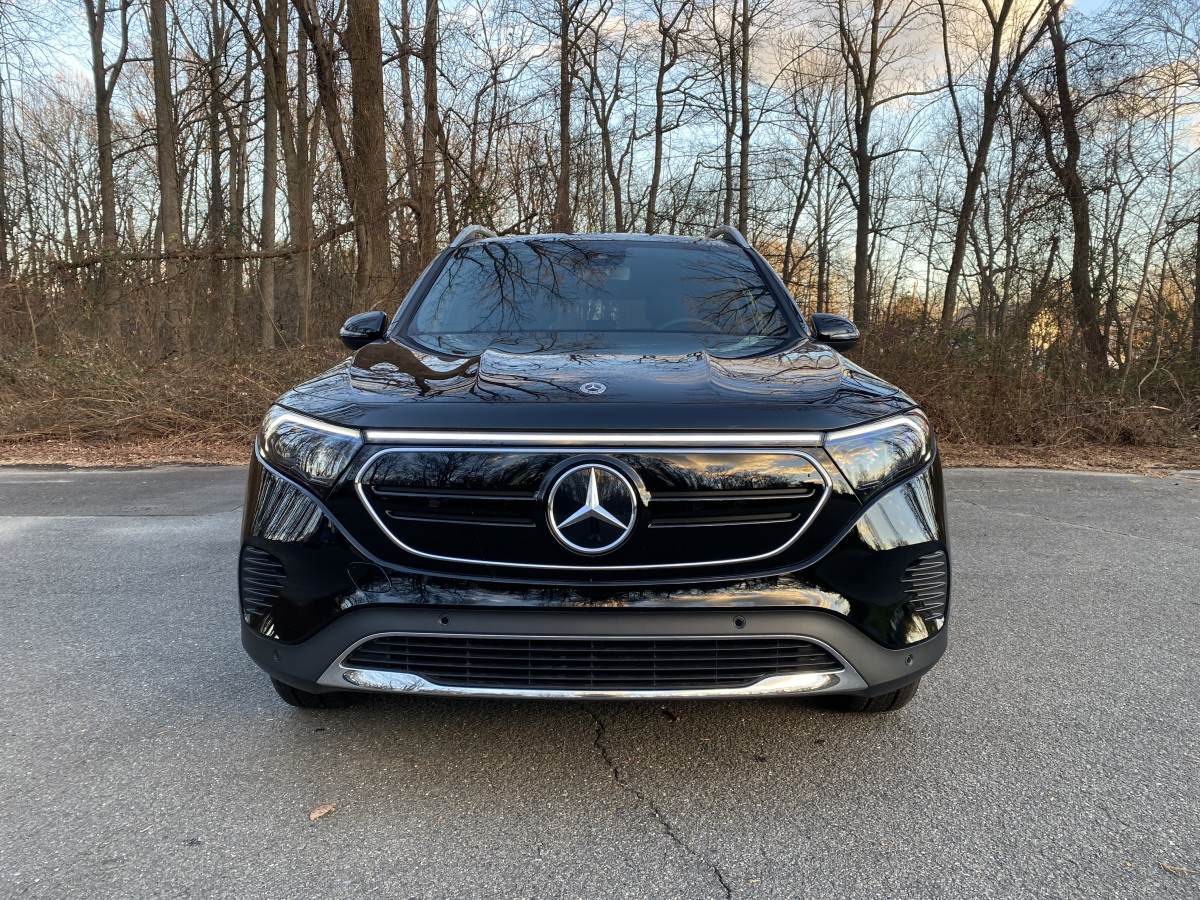
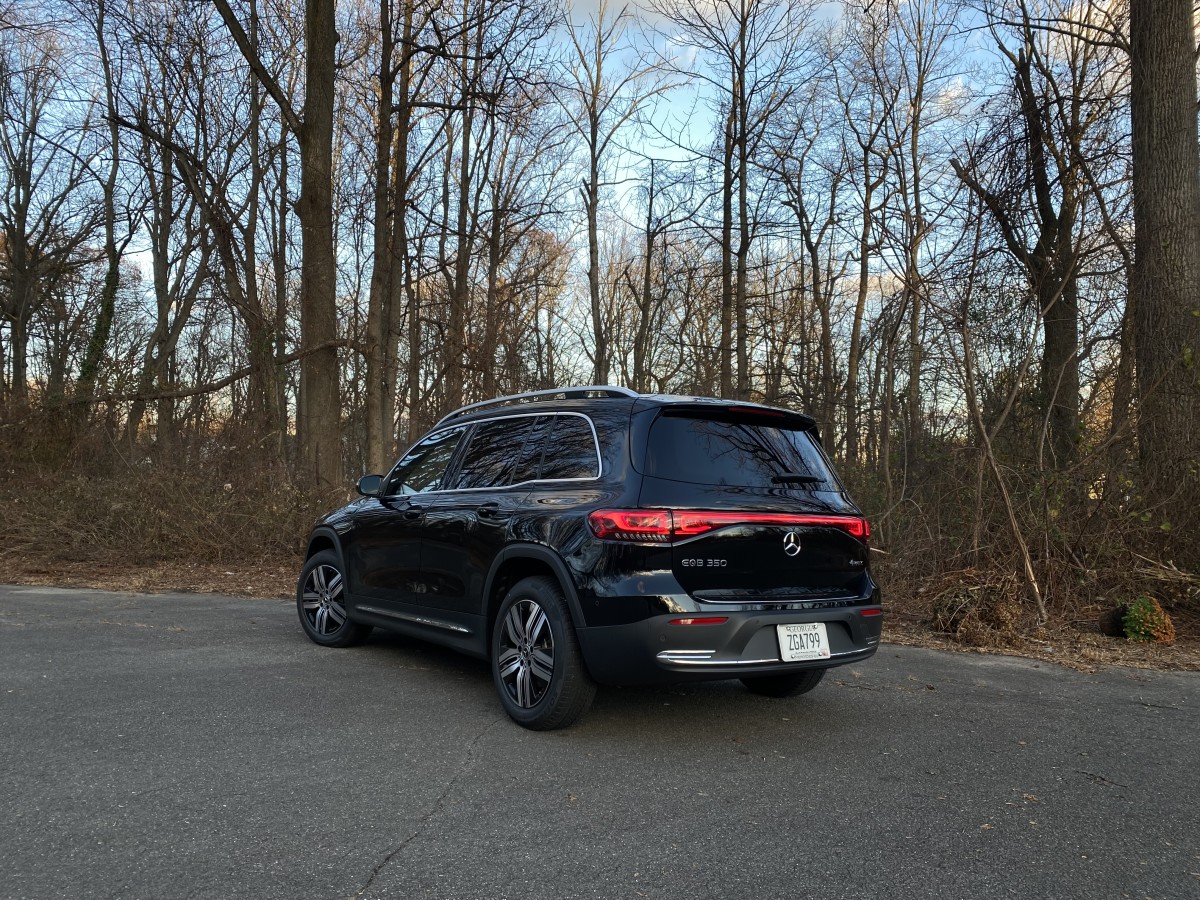
Were it not for the star, the Mercedes-EQ EQB SUV could be mistaken as a Volkswagen Tiguan or any number of cheaper, workaday vehicles. It looks and feels uninspiring and low-end. Partially, that’s because a base Mercedes doesn’t compute in North America. In Europe, Mercedes is as much a working man’s brand as it is an autobahn juggernaut. Many Europeans shop for small, stripped-down cars from premium automakers that are relatively affordable next to Renaults and Fords. Here, Mercedes sells itself strictly on luxury. The regular GLB is supposed to feel like a baby G-Class. With the EQB’s distinct front end, we’re seeing the company’s Metris commercial van. The fascia has a flush, one-piece arrangement for the solid black grille and widened headlights that together give off the profile of a dinner bowl. The new taillights that connect across the tailgate are a nice touch, as are the unique wheels. But instead of a luxury SUV, the EQB’s body evokes a taxi or a florist delivery van.
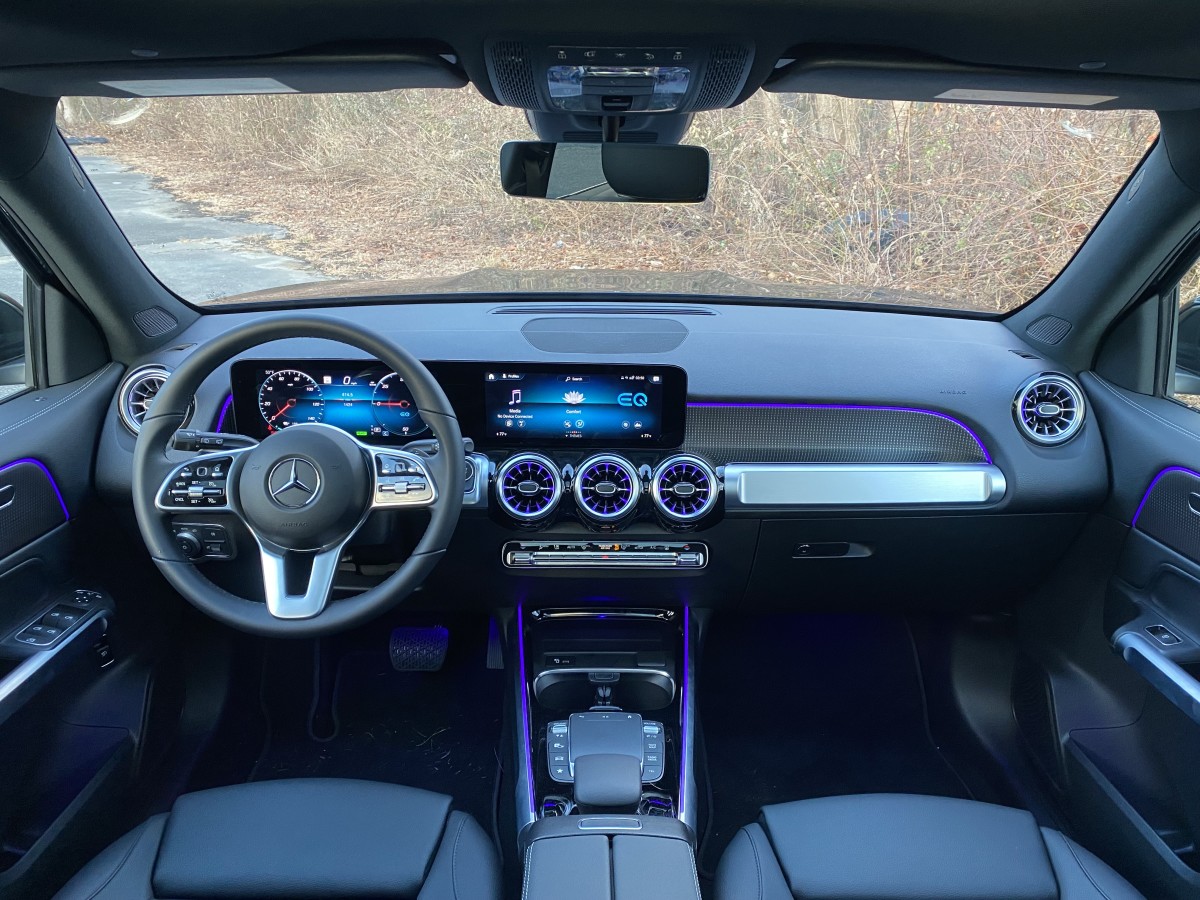
The interior reinforces the message of budgeting and skimpiness. The two 10.25-inch screens and the ambient lighting behind the aircraft-engine-style air vents are the best touches, as they look like what you’ll find in other Mercedes models. That’s where the effort starts and stops. Plastic materials below the driver’s waistline, such as the map pockets and centre console, are thin and brittle. The door panels are flat and featureless. There’s no sliding cover on the console to hide the cupholders or phone tray. The seats are firm but with little lateral support.
Optional leather upholstery and an illuminated pattern on the passenger dash cannot hide the lackluster finishes and tawdry layout of the EQB’s cabin. If the ambience is luxury U-Haul rental, then the EQB succeeds. It’s all the worse when you compare our EQB next to other Mercedes models at the same price. Take a GLC 300, C300, or even an E350 at this price. Their interiors are all built with superior attention to detail and fine craftsmanship. We hold Mercedes-Benz to high standards because it set those expectations for us. We can’t give the EQB a pass when it looks and feels down-market.
Performance
Unlike the EQE, EQS, and EQS SUV, there is no AMG version of the EQB, and that’s a shame. The EQB drives more like the outgoing Nissan Leaf than the latest crop of luxury and semi-luxury EVs. Its range specs (365 kilometres on the EQB 350, the only model sold in the Canadian market) are level with the Genesis GV60, Volvo C40 Recharge, Kia EV6, and Hyundai Ioniq 5. But its acceleration lags behind all of these EVs when priced accordingly. Performance and range are further behind the Tesla Model Y (450-plus kilometres), which leads all compact EV crossovers.
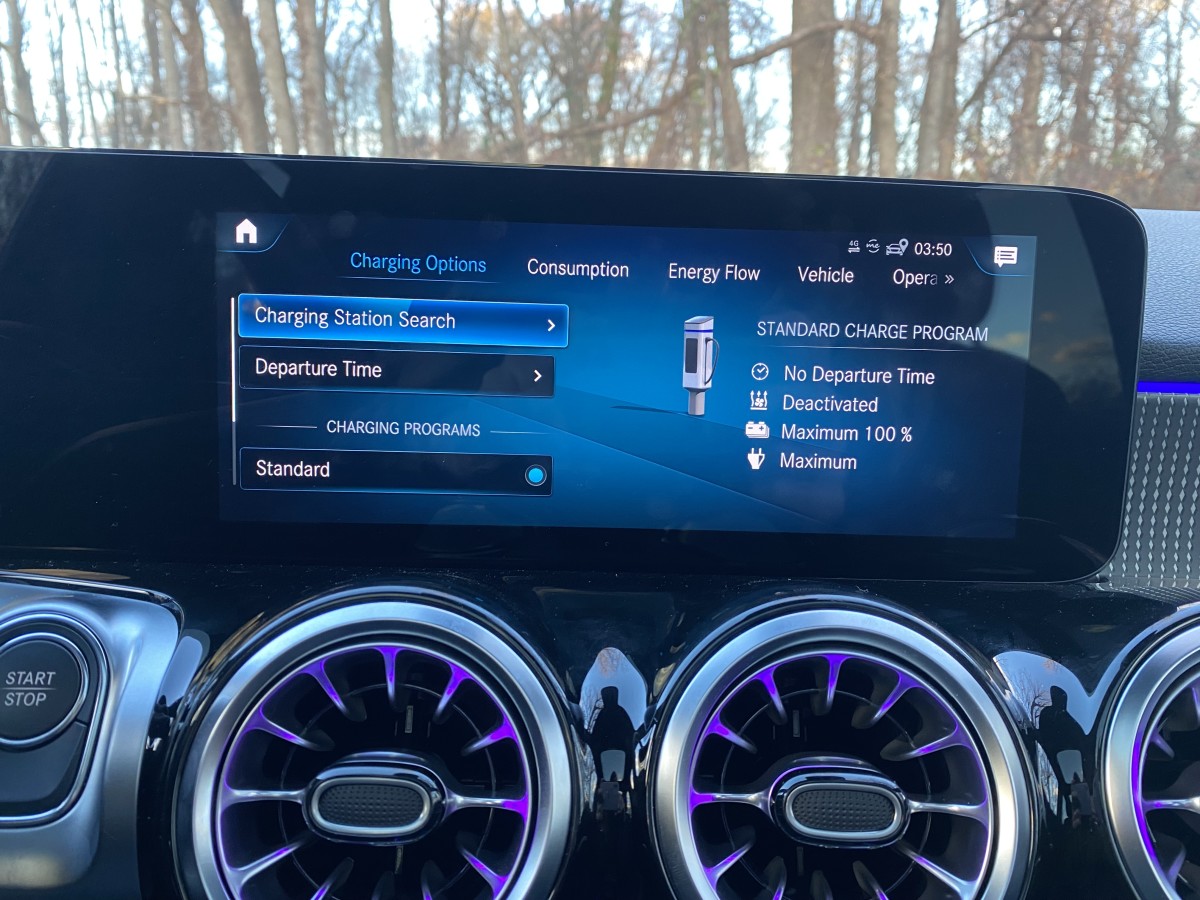
The EQB’s charging speed is slow by today’s standards, which admittedly have improved rapidly in response to more public fast charging stations and an industry shift to 800-volt batteries, which the EQB does not have. With a 100-kW maximum charging rate, the EQB cannot excite its anodes nearly as quickly as the Volvo (150 kW), the Hyundai group EVs (240 kW), or Tesla (250 kW). Even so, the EQB delivered on its promised half-hour charging time from 10 to 80 percent (we recorded seven to 80 percent in 34 minutes; and to 100 percent in 57 minutes). In a separate charge, we saw 16 to 100 percent in 52 minutes and tested chargers rated above the EQB’s 100-kW input.
Even with temperatures in the single digits, the EQB only indicated a maximum driving range of 340 kilometres. But during mostly highway cruising at 110 kilometres per hour, our actual range was closer to 280 kilometres. With a 70.5-kWh lithium-ion battery pack, that’s to be expected. But it’s not acceptable for a day trip—especially when all the non-Tesla fast-chargers on the ride back are either packed with other EVs or broken. Fuel economy estimates in Le/100 km are currently unavailable.
The EQB’s standard dual electric motors output 288 hp and 384 lb-ft in 350 trim. Our EQB 350 felt sprightly off the line up until 50 km/h, at which point the zip petered out. No doubt it’s quicker than its gasoline version, the GLB 250 4Matic, and other entry-level luxury crossovers with gas powertrains. And perhaps this is a realization that not every EV needs to be launching like the space shuttle at every stop light. But nearly every other EV in this class can do that—and shouldn’t a Mercedes?
Handling is adequate, though when pushed it becomes obvious the EQB weighs too much. All EVs weigh too much due to the excessive size of their batteries. Compared to a GLB 250 4Matic, the EQB packs another 450 kilograms (1,000 pounds)—2,130 kilograms (4,700 pounds) in total. That’s as much as an S-Class. It leans noticeably in quicker turns, and when applying throttle during corner exits, the power cuts out early to prevent the wheels from spinning. That’s a safety measure, yet other EVs are better at routing their power to individual wheels without restricting the fun. At speed, the EQB emits a high level of road and wind noise compared to other EVs. Perhaps it’s the square body, but more insulation would be welcome.
Braking is the EQB’s strong point. The paddle shifters control four regenerative brake levels (auto, normal, strong, or none), and the pedal feels natural.
Form & function
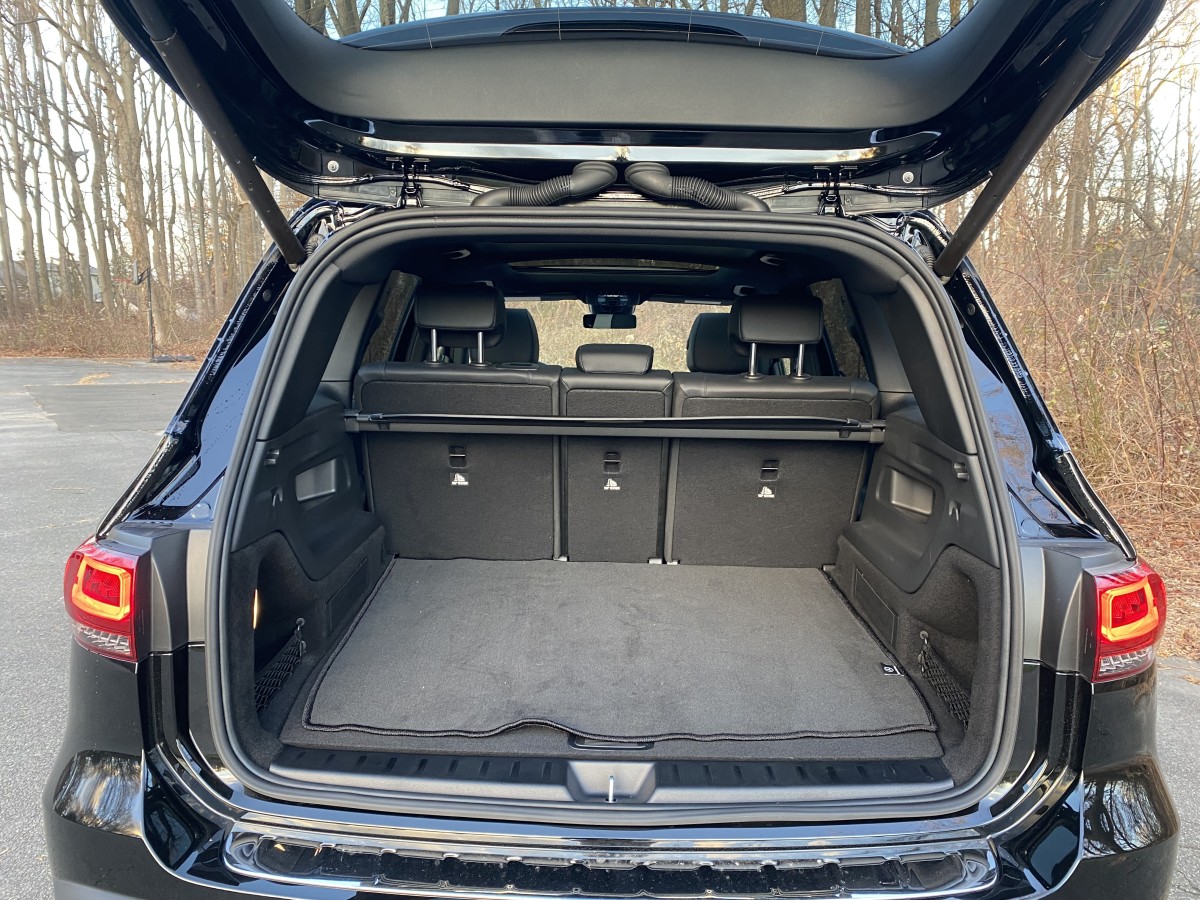
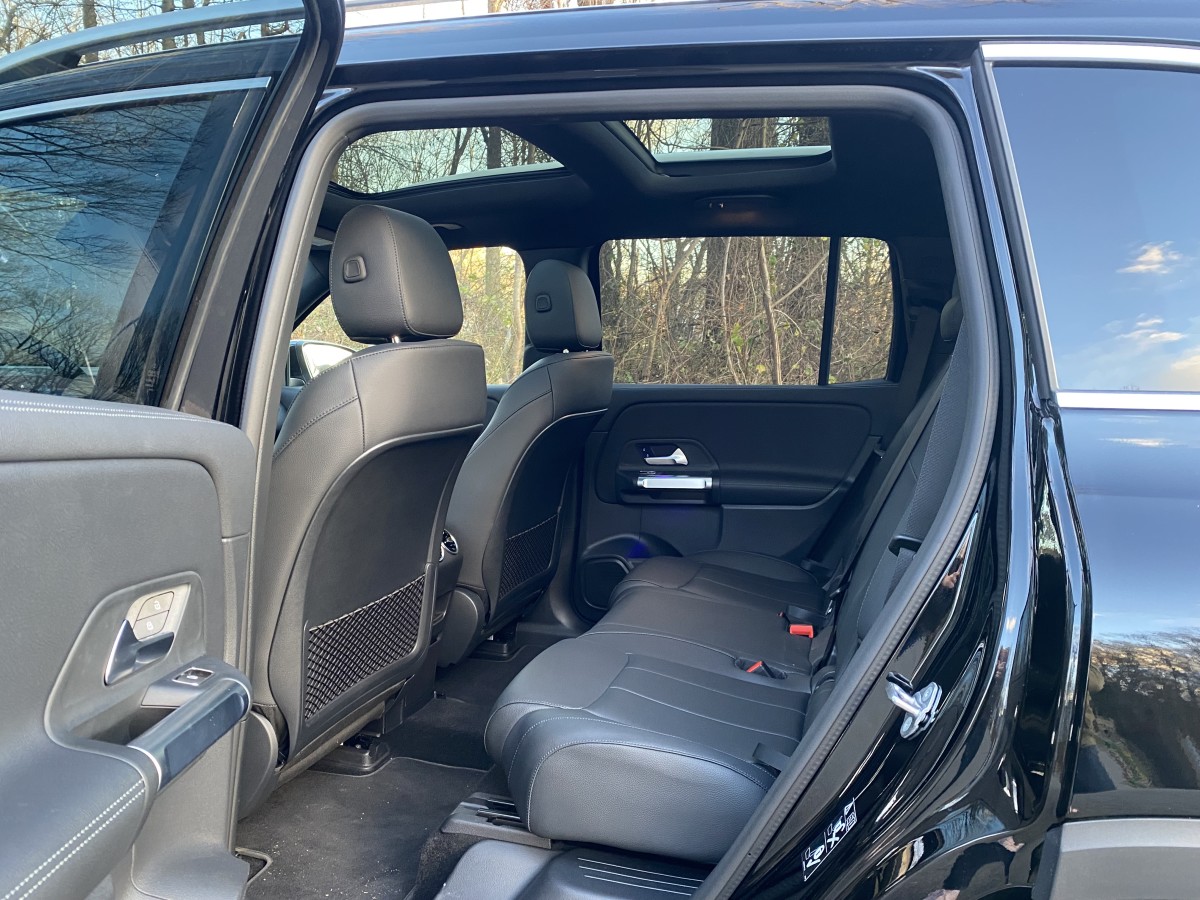
Space and packaging stand out in the EQB. For such a small car, there’s a ton of headroom in every seating position and plenty of legroom. The rear seat has a 40/20/40 split for easy folding and the recline angle is generous. Sightlines are excellent. The rear window is large and upright, while pillars are minimally intrusive for parking and changing lanes. Seat height is perfect for anyone with sensitive knees and the door openings are tall and wide. That’s the benefit of designing an SUV that looks like a van. It's truly practical. Like the GLB, the EQB has an optional third-row jump seat, but we would not recommend it for anyone larger than a seven-year-old. Cargo space is good for an SUV in the subcompact class, with 495 litres behind the second row (65 less than the GLB, due to the battery) and 1,710 litres when folded.
We very much like how the EQB operates like a car instead of a computer. A row of physical climate control switches, steering-wheel controls, shortcut buttons for the infotainment on the console, the choice of using a touchscreen or a touchpad—these are all good things. It takes practice to master the thumbpads on the steering wheel (the left controls three different gauges in the instrument panel; the right controls the touchscreen menus). But once you do, it becomes second-nature. Seat controls on the door panels, normal moonroof switches that aren’t touch-sensitive, and air vents that don’t require an IT certification all make the EQB easy to drive.
Unlike other electric vehicles, the centre console is sealed so there isn’t extra storage below the driver’s knees. We’re fine with that, as the wide shelves on those other EVs have no way to secure items.
Technology
If you want technology, the EQB delivers—for a fee. Our car didn’t come with a power steering column. That’s basic equipment you have to order. We also didn’t have lane-keeping assist or any of the semi-automated driving features that work very well on other Mercedes models. For another $8,500, you can have everything our car was missing, plus cooled front seats, head-up display, 360-degree cameras, a Burmester sound system, and augmented reality for the navigation that overlays street signs and directional arrows on a live video of the road. Our test car’s no-name stereo was adequate, but not having SiriusXM was a bummer. Apple CarPlay and Android Auto require a wired connection.
What’s good is that ambient lighting and two 10.25-inch screens with the MBUX infotainment system come standard, which brighten the interior to a big degree. The screens are sharp, maps can be viewed full-screen on the instrument panel, and there are so many colour themes for the lighting. It feels like a light show at a planetarium. If you adjust the temperature, the air vents glow red or blue for a couple seconds. When plugged in and parked, the lighting glows green to indicate charging. No other automaker does lighting or customizable screens like Mercedes. The voice assistant also works well for directions and adjusting certain functions. A panoramic sunroof is standard.
Safety
The EQB has not been crash-tested by any U.S. organization or agency. Due to the diligence of Mercedes in structural and passenger safety, we expect identical ratings to the 2022 GLB, which received five stars overall by the National Highway Traffic Safety Administration (NHTSA), but four stars for the front passenger in a frontal crash. Seven air bags come standard, including a driver’s knee airbag, while rear side thorax airbags are optional.
Forward emergency braking (active brake assist), blind-spot assist, exit assist (to prevent opening the door into an oncoming vehicle), active parking assist, a driver attention monitor, and automatic high beams come standard. Every other driver assistance and safety feature is optional regardless of trim, which includes adaptive cruise control, active lane-keeping assist, front cross-traffic braking, automatic lane changing, and more semi-automated features.
Cost-effectiveness
The 2022 Mercedes-Benz EQB 350 4Matic starts at $75,700 in Canada. New vehicle destination charges are extra and vary depending on location and individual dealer. In Canada, the EQB is priced above much of its pinnacle competition in the compact SUV EV segment, which includes the Tesla Model Y, Volvo C40 Recharge, Genesis GV60, Audi Q4 e-tron, BMW iX, Kia EV6, and Hyundai Ioniq 5.
We can’t excuse the EQB’s average range, below-average charging speed, mediocre driving performance, its discount styling, or its lower-quality interior. Competitors all do it better. Plus, due to its price, the GLB is ineligible for federal or provincial rebates. Mercedes is new to electric SUVs and cars, and it shows. Hopefully, it’ll pick up the pace and surprise us in the next generation.
Note: Images show a US model.
What owners say
Good performance cars with reasonable price.EQBdoes not have blind spot lane monitoring
November 4, 2022Beautiful car in all ways except one: the battery range is a bit short.
June 1, 2024Trims & specs
Base MSRP $56,550 | Seating 7 |
Engine N/A | Cargo Capacity 23.7 cu ft |
Combined MPG N/A | Drivetrain N/A |
Base MSRP $60,200 | Seating 7 |
Engine N/A | Cargo Capacity 23.7 cu ft |
Combined MPG N/A | Drivetrain N/A |


