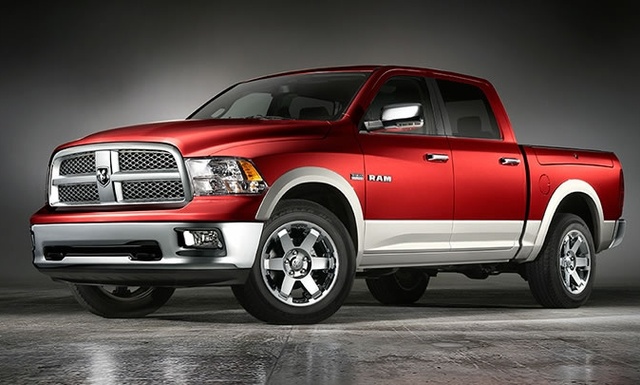
The Ram pickup truck has been around in some form or another for decades. It morphed from Dodge’s D-Series into the Dodge Ram in 1981 and then lost the Dodge badge when Fiat Chrysler Automobiles (now known as Stellantis) spun off its trucks into the separate Ram brand in 2011. The Ram spinoff came just two years after the basic Ram pickup had been comprehensively redesigned and it didn’t lose the Dodge badge right away, so we’ve included some information here about those early years.
The Ram 1500 is beloved for its smooth ride and early adoption of upscale features like a large touchscreen and top-quality interior materials. That smooth ride came about with the 2009 redesign, which swapped out the traditional big pickup leaf spring rear suspension, as on a 19th-century carriage, for a very car-like five-link, coil-spring design. Though some pickups had used such an idea in the past, the Ram was the first traditional, modern, full-size truck to go this route, and it yielded a much better driving personality.
Ram also bundled lots of convenient innovations into its truck, including loads of in-cab storage options, the stretched mega cab, and the RamBox in-bed storage lockers. The very successful design was entirely remade in 2019, setting new standards for room and refinement in the large pickup class, and most recently updated with a new family of powerful, efficient six-cylinder engines for 2025.
In Canada, the current Ram 1500 can be had in Tradesman, Big Horn, Sport, Rebel, Laramie, Limited, Longhorn, and Tungsten trims, along with a number of lower-priced value packages. The lower trim levels still offer decent appointments like automatic headlights, heated side mirrors, standard forward collision warning and blind spot monitoring, and a folding rear seat. The mid-grade Ram 1500 Sport adds options like dual-zone climate control, while the Night Edition Value Package equips key features like heated front seats, a heated steering wheel, and side steps. At the top trims, the Ram 1500 features plenty of chrome and unique grilles and bumpers.
Four-wheel drive (4WD) is standard equipment in Canada, and various configurations are available with a long or a short bed and three different cab configurations: regular, Crew Cab, or Quad Cab. The V8 and diesel options are no more, replaced with a variety of six-cylinder offerings. From 2020 to 2023, buyers could choose Hemi V8s, a diesel, or the wild 702-horsepower Ram 1500 TRX, an off-road warrior aimed at the Ford F-150 Raptor.
The first-generation Ram pickup continued for much of the last five years as the Ram 1500 Classic, with a smaller lineup focused on work trucks and value models.
RAM 1500: Cost, Reliability, and the Best Years to Buy
Frequently Asked Questions
Which RAM 1500 years are the best?
The most recent ones. The Ram 1500 is a reliable vehicle with hard-wearing components, but outlets like Consumer Reports and J.D. Power rate most years as average or fair in terms of reliability. 2020 and newer models have fewer issues than late 2010s versions, while the earlier 2009 to 2011 models also do better. Ram 1500 Classic models also do well, having fewer complex systems than the redesigned 2019 and newer Ram 1500s.
What are the worst RAM 1500 years?
Some sources disagree, but 2012 and 2013 Ram 1500s generate the most significant number of gripes. Consumer Reports gives them both below-average ratings, and they are the subject of more reports on CarComplaints than other years, but J.D. Power rates both years very highly for reliability. Some sources also single out 2018 and 2019 models as having a higher-than-average rate of problems with their electrical and infotainment systems.
Is a used RAM 1500 a good deal?
It depends on what you want out of your truck. The Ram tends to have lower payload and towing limits than the Ford F-150, but it also delivers superior refinement on the road in both generations. The second-generation Ram 1500 also only offers crew cabs. Most consumers want that, but if you want a single-cab model, you’re out of luck. Rams sell for a little less than corresponding Fords but more than alternatives like the Toyota Tundra or Chevrolet Silverado 1500.
RAM 1500 Pros and Cons
Pros:
- Smooth ride
- Roomy cabin
- Quality interior materials
Cons:
- Base engine in early models is inefficient
- Tow ratings tend to lag the competition
- Advanced driver’s aids are only offered on higher trims
RAM 1500 Generations
Second generation (2019-present)
In 2019, Ram completely redesigned the 1500 for the first time since being spun off into a stand-alone brand. In keeping with sales trends, the company decided to concentrate only on extended and crew-cab models; this new truck has no single-cab versions. Other changes included an updated frame and mild hybrid technology, a comprehensively new and plush interior featuring FCA’s latest infotainment and driver assistance technology.
Maximum payload and towing capacity rose to 1,043 kilograms (2,300 pounds) and 5,783 kilograms (12,750 pounds) respectively, and both of the truck’s engines got a new eTorque mild hybrid system. This system, which uses an integrated belt starter, helps save fuel, makes the start/stop system much smoother, and also helps make a little power. The 3.6-litre Pentastar V6 was rated at 305 horsepower and 271 pound-feet of torque, and the 5.7-litre Hemi V8 at 395 ponies and 410 pound-feet of twist. Both engines were mated to an eight-speed automatic transmission.
The 48-volt eTorque system allows for short blasts of extra torque and some brake regeneration. On the V6 engine, the system adds 90 pound-feet of torque while the V8 gets an additional 130 pound-feet.
Ram also added a 3.0-litre EcoDiesel V6 in 2020, making 260 horsepower and 480 pound-feet of torque. What was special about this engine was its fuel economy, which came close to matching Chevrolet and GMC’s equally new turbodiesel inline sixes. Unfortunately, few buyers were interested in the Diesel, and upcoming emissions regulations meant it was dropped at the end of 2023.
The Hemi V8 was also dropped at the end of the 2024 model year, replaced in the upgrade slot by Stellantis’s Hurricane inline-six-cylinder engine. This powerplant makes 420 horsepower and 469 pound-feet of torque. A high-output version is offered, which produces 540 hp and 521 lb-ft of torque. Regardless of output, this engine retains the eight-speed automatic transmission.
A 12-inch touchscreen was available in 2019, as was a 19-speaker Harman Kardon premium sound system. Advanced driver aids like adaptive cruise control were also available in 2019 but most were part of an extra-cost package. Nevertheless, the Ram 1500 earned “Top Safety Pick” and “Top Safety Pick+” designations from the Insurance Institute for Highway Safety from 2019 to 2023, one of the few full-size pickups ever to earn those awards. 2020 also saw the introduction of Ram’s multifunction tailgate.
In 2021 the company went bonkers and introduced the Ram 1500 TRX with a supercharged 6.2-litre V8 with 702 horsepower and 650 pound-feet of torque, previously seen in the Dodge Hellcats and Jeep Trackhawks. In addition to the impressive powertrain specs (and unimpressive fuel economy), this truck boasts 33 centimetres of wheel travel at all four corners, 30 centimetres of ground clearance, and specially tuned Bilstein shocks. The TRX started at just under $100,000 Canadian and stayed in that neighbourhood before being discontinued in 2024. It’s expensive to buy used, too.
Fully electric (Ram 1500 REV) and Series Hybrid (RAM Ramcharger) versions will also arrive late in 2025.
Since the Ram 1500 range is very broad, so are used prices. This is a really good truck, however, and it’s worth paying a little more for over a comparable Chevrolet or GMC, and certainly more than a Nissan Titan.
Low-end Tradesman models are relatively easy to find for under $35,000 with reasonable odometer readings, but they don’t have much equipment. Big Horn and Laramie grades are plusher but not much more expensive, and plenty of them, with V8s, should be available for less than $40,000, with six-cylinder Big Horns going for slightly less. Rebels go for $35,000 to $60,000, and higher models are correspondingly expensive. EcoDiesels aren’t a whole lot more expensive despite being an expensive option, but they are very hard to find. Expect to pay a minimum of $90,000 for a TRX.
First generation (2011-2018)
The new Ram trucks didn’t lose their Dodge moniker until the 2011 model year, but they were launched right into the maw of the Great Recession in 2008. The fourth-generation Ram 1500 was the first to offer a coil spring rear suspension instead of a leaf spring, making for a more comfortable ride, and many new storage, infotainment, and active-safety features were integrated into Ram’s lineup on this truck. Over time, it also saw the introduction of a new V6 base engine and updated versions of the Hemi V8 introduced on its predecessor.
In 2011, the first year this truck was properly a Ram, it came in Tradesman, ST, SLT, Big Horn, Outdoorsman, Sport, and Laramie trims with single, quad, or crew cab configurations, though the higher trims came only as crews. Depending on cab selection, buyers could get a 5.5-foot bed, a 6-foot bed, or an 8-foot bed.
Engine options included a 3.7-litre V6 with 215 horsepower and 235 pound-feet of torque, which was mated to a four-speed automatic transmission in all RWD models. 4WD Ram 1500s, meanwhile, got a 4.7-litre V8 with 310 ponies and 330 lb-ft of torque or a 5.7-litre V8 pushing out 390 horses and 407 pound-feet of torque, both mated to a five-speed automatic transmission. The 1500 could tow a maximum of 4,650 kilograms (10,250 pounds).
2012 brought a six-speed automatic transmission to the 4.7-litre and 5.7-litre engines. The following year, Ram replaced the 3.7-litre engine with a 3.6-litre Pentastar V6 with 305 horsepower and 269 pound-feet of torque, and added an eight-speed automatic transmission.
Ram also introduced a four-corner air suspension system in 2013, with five different ride heights. Maximum towing for this model year was 4,740 kilograms (10,450 pounds). Ram went all-in with technology, offering an 8.4-inch touchscreen with an upgraded Uconnect infotainment system. By 2013, the Laramie Longhorn trim had been added.
In 2014, Ram dropped the 4.7-litre V8 engine and replaced it with a 3.0-litre turbocharged V6 diesel engine with 240 hp and 420 lb-ft of torque mated to an eight-speed automatic transmission. This oil burner was capable of towing 4,170 kilograms (9,200 pounds). The off-road-themed Ram 1500 Rebel debuted in 2015. The Rebel offered 33-inch tires, a 3.92 axle ratio, a 2.5-centimetre lift, skid plates, tow hooks, and other off-road goodies.
In 2016 Ram introduced the Limited trim. Ram also nixed the six-speed automatic in 2017, leaving the eight-speed automatic the only transmission available. For tech upgrades, look to 2018 with the introduction of Apple CarPlay and Android Auto connectivity, but the truck remained largely the same with the introduction of the second-generation 1500 in 2019.
There are many different Ram 1500 configurations and trims over these years, and prices vary accordingly. It’s possible to find early models for as little as $15,000 with less than 150,000 kilometres, but most models cost between $18,000 and $25,000, with top-tier Laramie and other heavily optioned models still running to more than $25,000 in very good shape. Even the nicest late-model Laramie and Rebel models shouldn’t cost more than $35,000, and if you’re spending that much, the second-gen trucks are worth a look.
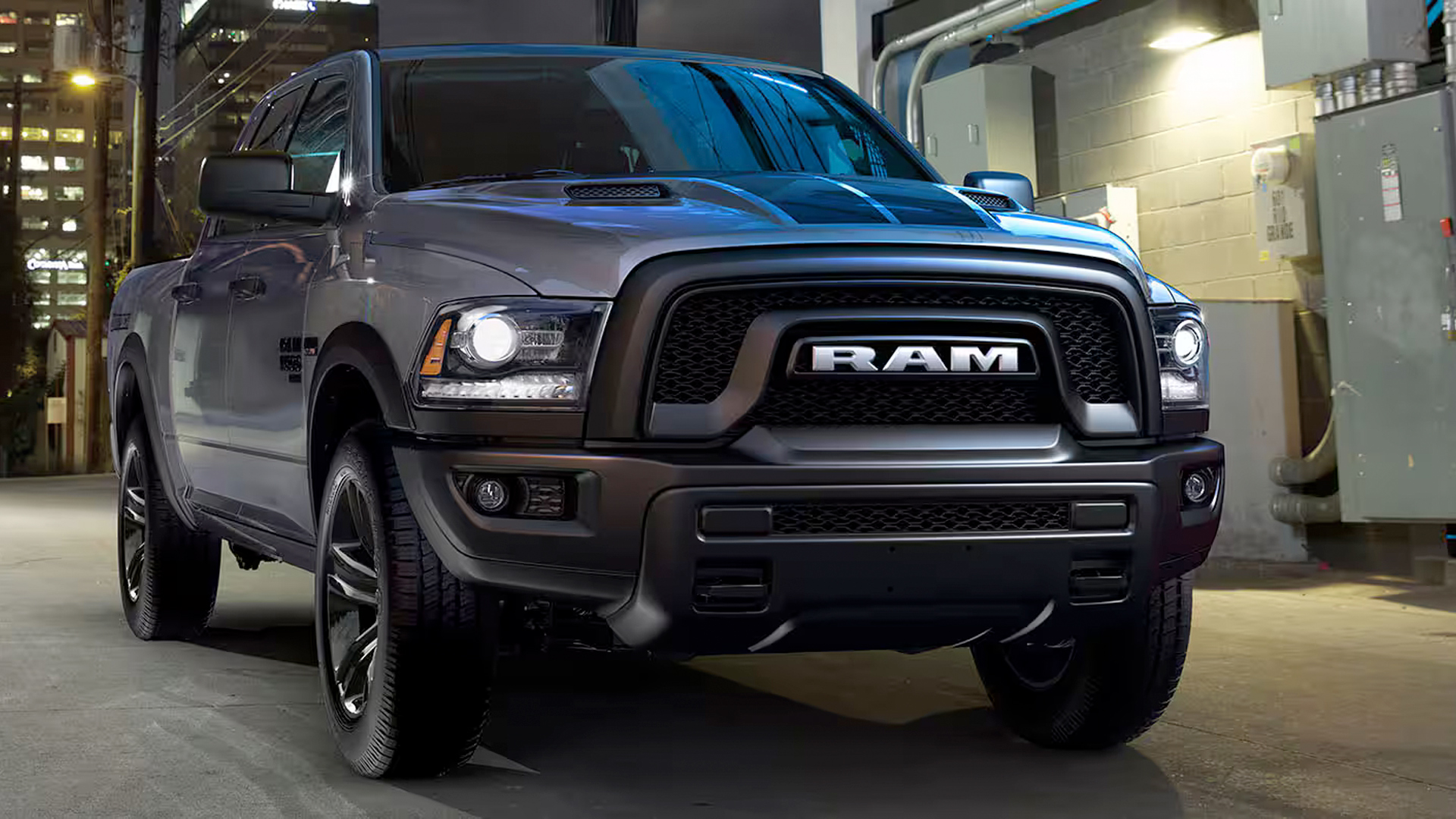
First generation "Classic" (2019-2024)
Amazingly, you could still buy a first-generation Ram 1500 new up until 2024. That’s because Ram kept a truncated lineup of first-generation trucks going as the Ram 1500 Classic when the second-generation model arrived. These are budget models, and many of them are work trucks, but they’re still hanging on.
In Canada, Ram offered the Classic in many different trims throughout its run. The low-budget Tradesman and SLT were available as single-cab options, while Express and Night Edition were quad-cab or crew-cab trucks and the Warlock was available in crew cab only. The Warlock was a continuation of the first-generation Ram 1500 Rebel, with Rebel-like styling and equipment. A Laramie trim was also offered in Canada during the Classic’s run.
Ram 1500 Classic models were offered only with the 3.6-litre Pentastar V6 in 240 or 305 horsepower form or with the old 5.7-litre Hemi V8 (395 horsepower). It’s been a low-budget alternative to newer trucks ever since the second-gen Rams were introduced. They don’t have the latest infotainment setups and don’t get many driver assistance systems, which helps keep the price down.
There are a ton of used Ram 1500 Classics on the Canadian used market now, though they’ve held their values well. Most models cost at least $25,000 used with high kiloometres, and since not much more money buys you a more sophisticated second-gen truck, it isn’t worth shelling out big bucks on one. They can offer great deals as work trucks, though. The Warlock costs more, but it still offers the Ram Rebel image for less than the second-gen Rebel.
Related Topics: