SL roadsters (usually with removable hardtops) debuted in the late 1950s, setting off a successful run through the decades during which the automaker has replaced the four- and six-cylinder engines of the early SLs with V8s and V12s. The hard-core performance elements of the early SLs eventually gave way to more luxurious grand tourers in the 1960s and 1970s, a recipe that made the SL a very big seller despite its towering price. In the 1970s, Mercedes-Benz also briefly offered a four-seat, long-wheelbase coupe version, the SLC.
In 1989, Mercedes-Benz unveiled a high-tech new SL for the 1990s, the R129. Many classic SL fans refer to their cars by their design codes, and the R129 was the first all-new SL in 19 years when it debuted. A radical change from the 1970s R107 it replaced, that car set the tone for most subsequent SLs. The styling and feel have been largely evolutionary rather than revolutionary ever since, though the SL gained a retractable hardtop with its 2003 redesign (R230) and kept it until its most recent remake in 2022.
Prior to 1994, Mercedes used a naming system that led with a car's engine size (300, for instance, indicated a 3.0-litre engine) followed by the SL designation, which stands for “Super Leicht” (“Super Light,” translated from German). Starting in 1994, Mercedes reversed the naming system, leading with the SL designation and establishing the SL as we know it today. In 1995, Mercedes-Benz also launched a smaller, cheaper roadster, the SLK, but it isn’t a direct relative of the big SL.
As the SL has always been one of Mercedes-Benz’s priciest and most sophisticated offerings, it’s not a cheap car to buy or maintain. It’s hard-wearing, reliable, and beautifully crafted, and owners can expect long, relatively trouble-free lives from SLs, but when things do go wrong, expect to pay handsomely to fix them. Newer SLs, which have miles of wiring and many sophisticated electronic gizmos, are especially vulnerable to expensive fixes.
Here, we’ve assembled a guide to each generation of SL including some information about what to watch for and what to pay.
Mercedes-Benz SL-Class Buying Guide: Cost, Reliability, and the Best Years to Buy
Frequently Asked Questions
Which Mercedes-Benz SL-Class years are the best?
Among older but still affordable SLs, the long-lived R107 (1971 to 1989) and sophisticated R129 (1990 to 2001) models are good bets for a fun and hassle-free ownership experience. Both can have issues, mostly on early six-cylinder R129s with weak head gaskets and worn-out wiring harnesses, but they’re both incredibly well made and known for long, trouble-free lives. Among later SLs, the R231 generation (2012 to 2020) isn’t everyone’s aesthetic favorite but is generally extremely reliable while offering the same traditional blend of luxury, tech, and speed as the others.
What are the worst Mercedes-Benz SL-Class years?
The 2003 to 2012 R230-Series SL is one of the least expensive ways into modern SL ownership, but it’s also the most problematic version. While a well-maintained R230 can be a bargain, pre-2008 cars are known for leaky roofs, rust, and problems with two very complex systems, ABC and SBC. ABC stands for Active Body Control, and SBC for Sensotronic Brake Control. Not all models had both systems, and they don’t always fail, but when they do the bill can be really huge. This generation also has issues with oil leaks and sensors in its seven-speed automatic transmission. The 2022 and newer SLs are also known for a variety of electrical gremlins, which some owners attribute to the car being rushed into production.
Is a used Mercedes-Benz SL-Class a good deal?
It is possible to get a good deal on a Mercedes-Benz SL, but it isn’t a cheap car, and as fans say, “there’s nothing more expensive than a cheap Mercedes-Benz.” Maintenance and repair can be very expensive, so the best deal may be one that’s quite pricey but comes with a full slate of maintenance and repair records. Beware of high-kilometre, deeply discounted ones with little or no documentation because they may hide many neglected maintenance items. A pre-purchase inspection by a Mercedes specialist is always advised, and that usually isn’t cheap either.
Mercedes-Benz SL-Class Pros and Cons
Pros:
- Style, speed, and luxury
- Potent powertrains, lots of tech
- Impeccable build quality
Cons:
- Expensive to buy and own
- Old convertible tops can leak, even retractable hardtop ones
- Complex systems to learn and repair
Mercedes-Benz SL-Class Generations

Seventh generation R232 (2022-present)
After a decade of declining interest in convertibles, Mercedes-Benz chose to replace both the sixth-generation SL and the S-Class convertible with a single new SL. As a result, the R232 series, introduced in late 2022, has a few key changes from its predecessors. It has a permanent back seat (though it’s pretty small), the first since the SLC coupe in 1981, and with convertible buyers increasingly interested in speed, it comes only with all-wheel drive and only as a Mercedes-AMG model.
In Canada, two versions of the R232 Series are offered: the 469-horsepower, 4.0-litre V8 SL55, and the 577-horsepower SL63 (with a more highly tuned version of the same V8). A lower-powered SL43 and a SL63 E Performance plug-in hybrid are available in the United States, but neither of these models are offered in Canada.
Both versions use a nine-speed automatic transmission with paddle shifters, and there are half a dozen drive modes including Slippery, Comfort, Sport, Sport +, Individual, and RACE. There are also lots of digital features to learn, as the R232 SL uses the latest and greatest generation of Mercedes-Benz’s MBUX infotainment system and many of its controls are touchscreen-activated. There’s a big 11.9-inch screen similar to the one in the S-Class sedans but with pages for AMG Performance and AMG Track Pace.
This SL has more room than the previous iteration and the back seat, while not very useful even for small children, adds cargo versatility. It comes only with a soft convertible top. The former folding hardtop has been dropped to save weight and space, but if you really want a closed version, 2025 will bring a new AMG GT that shares the SL’s body, interior, and chassis but with a fixed roof. Trunk space shrank with this generation, down to 213 litres, but again, the back seat is there to supplement.
Although this is still a brand-new car, there are some pre-owned ones already for sale. Most of the units you’ll find on the used market in Canada are full-zoot AMG SL63s. Early adopters seem to have encountered several electrical problems, such as phantom battery drains and malfunctioning screens, but nothing that won’t be fixed under warranty. They have lost value rather quickly, though, and it’s possible to find nearly new SL63s on the market for less than $175,000, a big discount considering that car’s $222,500 Canadian MSRP.
Sixth generation R231 (2013-2020)
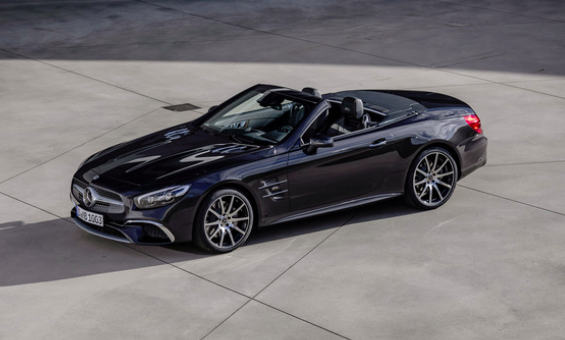
Though based on the previous R230 Series SL, this new-in-2013 design (codenamed R231) had evolutionary styling influenced by the exotic Mercedes-McLaren SLR, a weight-saving aluminum body and spaceframe chassis, and an increased emphasis on performance. Not everyone liked the looks, and the car also came along at a time when convertible sales were in decline, so it’s rarer than its predecessors but still relatively easy to find.
As in previous generations, there were several versions of this SL for buyers to choose from. The entry-level Canadian model was the SL550, which kept its twin-turbo 4.6-litre V8 and name throughout the run, but power rose from 429 horsepower to 449 after the refresh. In earlier model years, these models used a seven-speed automatic, but by 2017 they had been upgraded to a nine-speed gearbox. The 2017 refresh also brought about an SL450 with a 3.0-litre 362-horsepower V6.
There were also AMG versions, of course. The SL63, offered until 2019, was powered by a 5.4-litre twin-turbo V8, at first with 530 horsepower and later with 577. If that wasn’t enough, there was also the SL65, packing a 6.0-litre V12 with 621 horsepower. The two AMGs used a special seven-speed “MCT” (for multi-clutch technology) automatic. All versions were quick, especially the AMGs, but they are less about lithe handling than raw power. Compared to a Porsche 911 or Jaguar F-Pace they don't feel as light or precise, but they’re not slow.
Few people buy these cars for fuel economy, but the V6 could return about 10.1 litres per 100 kilometres combined and the V8 and SL63 weren’t far behind with ratings ranging from 11.7 to 12.4 L/100 km. Don’t expect to see better than 14.2 L/100 km from the SL65.
The sixth-generation SL was known for its impeccable interior materials, design, and technology, including glass roof panels that could dim with the push of a button. There were also extras like the novel AirScarf neck heater on the ventilated and massaging seats. The roadster got Bluetooth, navigation, and iPod connectivity. The trunk was moderately large, offering up to 203 litres of space with the top down and 85 litres more when the top is up.
Aside from the engine changes, the R231’s 2017 refresh included updated exterior styling as well as more standard features like LED headlights, automatic emergency braking, keyless entry, and ambient interior lighting. Apple CarPlay and Android Auto joined the party as well. These cars are packed with other kinds of technology as well, with adaptive suspension systems, rain-sensing wipers, driver attention monitors, crash-responsive head restraints, lane keep assist, adaptive cruise control, night vision, and many other features depending on the specification.
The SL lineup was unchanged for 2018, but Mercedes dropped the SL65 AMG for 2019 and the SL63 for 2020. In 2020, the SL received no major updates. Although some leftover models were still for sale in 2021, production of the R232 Series SL ended in 2020 and there was no official 2021 model.
Since these SLs were not sold in very large numbers, there isn’t much reliability data on them from conventional sources like Consumer Reports. However, Mercedes owners and clubs give the R231 series high marks for quality and reliability. It’s a complex vehicle that demands expensive scheduled maintenance, but if you follow the schedule, it’s a car that doesn’t often go wrong. Mercedes-Benz also offers factory-backed extended warranties on some of the later years.
R231 SLs have also come down in price significantly since they were new. If you’re willing to take a V6 version, clean, low-kilometre SL400 models can be found for $59,000 to $77,000 (bearing in mind that the oldest of these models is from 2017 in Canada). The same is true of SL550 prices. Older ones can be had for under $40,000, but newer ones cost between roughly $50,000 and $85,000. AMG versions will cost more to start, with clean, low-kilometre, well-documented examples costing a minimum of about $70,000 to start. V12s are even more expensive than that and not easy to find. Because of their rarity, you probably won’t be able to negotiate on an SL65.
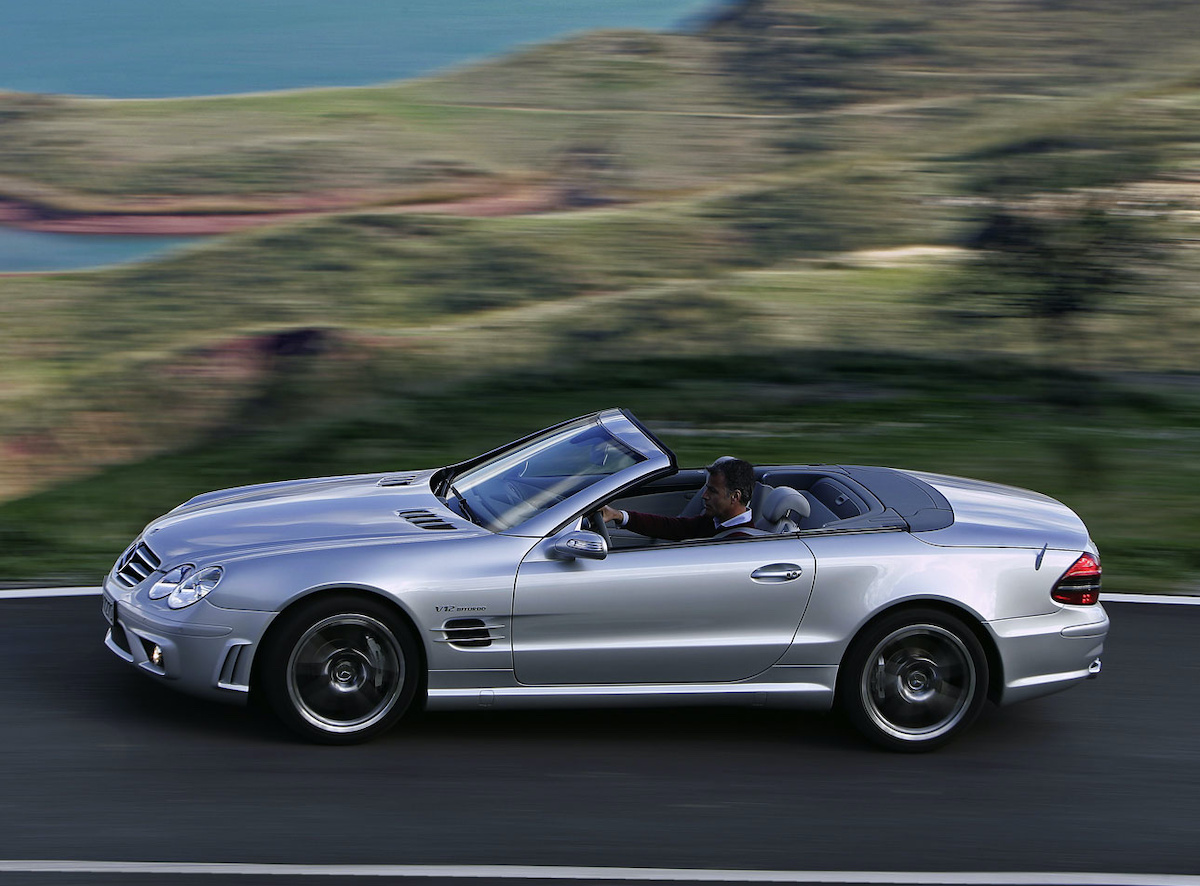
Fifth generation R230 (2003-2012)
After including a folding retractable hardtop on the smaller SLK-Class starting in 1995, Mercedes-Benz made this feature a major part of the redesigned R230-Series SL. It debuted in Europe in 2001 but did not reach North American showrooms until the 2003 model year. The angular styling of its R129 predecessor, like the canvas top, was also gone, replaced by swoopy, curvaceous (faintly Jaguar-like) lines and an even longer, lower, and wider profile.
In other countries, the SL still offered six-cylinder power during the R230 years, but in Canada, buyers could only choose from V8 or V12 powerplants. For 2003, the roadster could be had in SL500 trim with a 5.0-litre V8 pushing out 302 horsepower and 339 pound-feet of torque. Also on tap was the SL55 AMG with a 5.4-litre supercharged V8 with 493 ponies and 516 pound-feet of twist. Both options featured a 5-speed shiftable automatic putting the power to the rear wheels. In 2004, the 5.5-litre V12 SL600 was added, with 493 horsepower and 590 pound-feet. Two years later came the AMG SL65, with a 6.0-litre version of the V12 making 604 horsepower and 738 pound-feet. Canadian models used five or seven-speed automatic transmissions.
The R230 was a technological powerhouse, with an adaptive hydropneumatic suspension, Bi-Xenon headlights, standard memory seats, adaptive cruise control, keyless entry in the form of a small card that replaced a key, and a brake-by-wire system. All of this was cutting edge stuff in the early 2000s, and it was topped by the party-trick retractable hardtop, a 1990s trend that ensured a quiet, coupe-like environment and better security than any cloth top could have provided. It could lower or raise in 16 seconds.
In 2006, Mercedes gave the car a minor facelift and tech upgrade, and it updated some of the systems that caused the largest number of complaints, namely the Automatic Body Control (ABC) suspension and Sensotronic Brake Control (SBC).
The trims and engines were reworked for 2017. The SL500 grew into the SL550, now with 382 horsepower and 391 pound-feet of torque with a new seven-speed automatic, while the SL55 was upgraded to 510 horsepower and 531 pound-feet. The SL600 also made 510 horsepower from its V12, but 612 pound-feet of torque. All but the base model could rocket to 100 km/h in less than five seconds, and the SL65 could manage it in 3.6.
The 2008 SL was unchanged, but Mercedes brought in a heavily refreshed SL for 2009 with a sharply styled front end. There was a new SL63 AMG model that replaced the SL55 AMG. Under the hood of the SL63 was a 6.2-litre V8 with 518 horsepower and 465 pound-feet of torque. This was mated to a cool new seven-speed multi-clutch transmission. The SL65 AMG was still there, too.
As in the prior R129 generation, this SL handled very well, but it struck a balance between grand touring comfort and sport. It isn’t a raw sports car, and wasn’t meant to be. Except for the Black Series. Unveiled at Monterey Car Week in 2008, the SL65 Black Series was an out-and-out track warrior that was 550 pounds lighter than a standard SL65 and featured a lightweight fixed-roof body, the first non-removable hardtop SL since 1981. It extensively used carbon fibre and had many chassis and body modifications. It could do 320 km/h flat out, but only 350 were made and they command huge prices today.
Mercedes cut the SL600 and SL65 AMG in 2012 in preparation for the next generation.
These R230 Series SLs are the easiest and cheapest ticket to modern SL ownership nowadays, but they’re also the most problematic. They are very expensive to fix when things go wrong, and pre-2007 models tend to be the least reliable SLs of all. They’re also at the bottom of their depreciation curve and not yet widely seen as classic cars, which means values are very low.
You can pick up early R230 SL500s in decent condition with under 120,000 kilometres on the odometer for as little as $15,000. There are some that are even cheaper, but remember, the cheaper it is the more likely it is to need work. These cars have trouble with ABC and SBC sensors and systems, which can cost many thousands of dollars to repair, and they also have a fair share of leaks, suspension issues, and transmission woes. Some are wonderfully maintained, but many have had multiple owners now.
Expect to pay more for the later, more reliable SL550s, where good examples costs from $25,000 to $35,000. Curiously, or perhaps because of their maintenance and repair costs, SL600s don’t cost much more, but expect to pay more for the newest ones. The faster and newer versions cost yet more, of course. Good early SL55s start at around $25,000, and later models average around $40,000. SL63s cost a minimum of $45,000. SL65s are rarer and can push toward $100,000 depending on condition. We only found one Black Series for sale in Canada in our research, listed at nearly $700,000. That’s how specialized that model is.
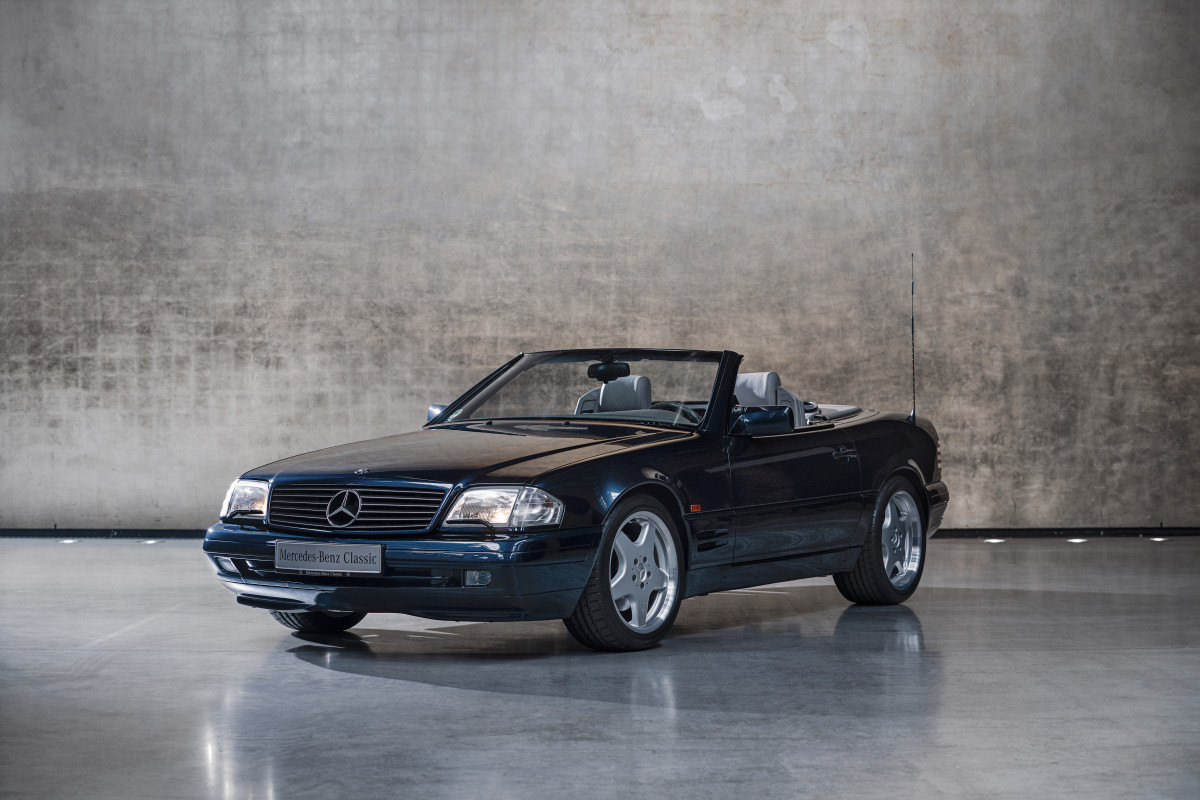
Fourth generation R129 (1990-2002)
The fourth generation R129-series SL arrived on the scene in the summer of 1989 (as a 1990 model) with a long hood, raked windshield, and angular lines tied to the Mercedes-Benz products of the 1980s rather than the circa 1971 styling of its predecessor. It was still a convertible, but now used a hydraulically operated soft top. As before, buyers could also spec a removable hardtop for winter months. This isn’t a top you take with you, mind you, it’s a big bulky item, but that was normal back then.
Developed in an era when Mercedes-Benz spared no expense on being the best in the world, the R129 set new standards of refinement both for the SL and for convertibles generally. It was amazingly free of squeaks, rattles, and chassis flex even when pushed hard on rough roads, and it was one of the quietest convertibles ever made with the top up. It also set new standards for convertible crash safety, integrating a pop-up roll bar and other occupant protection innovations including, from 1995, side-impact airbags.
Mercedes-Benz also imported many different variations, unlike in the previous R107 or later R230 generations. The base 300SL had a 3.0-litre inline six-cylinder engine under the hood with 217 horsepower. A five-speed transmission, either manual or automatic, put the power to the rear wheels. The 500SL had a 5.0-litre V8 pushing out 322 ponies and mated to a four-speed automatic.
1993 saw the V8 lose just a bit of power, but that year Mercedes brought in the 600SL with a 6.0-litre V12 engine with 389 ponies and 420 pound-feet of torque. It was the first time a V12 had been used in the SL. Like the V8, this engine was mated to a four-speed automatic. In 1994, the modern naming logic came into being and we were blessed with the new SL320 boasting a 3.2-litre inline six-cylinder engine with 228 ponies and 232 pound-feet of torque. Unfortunately, the manual transmission was deleted in 1994. The SL500 and SL600 remained the same.
There were no major changes for 1995, but 1996 brought some upgrades in the SL500, like lightened pistons, a new crankshaft, and individual ignition coils. For this year, Mercedes also replaced the four-speed automatic transmission with a five-speed for both the SL500 and SL600. In 1996 the SL got a few light styling tweaks, and the SL320 was dropped in 1998. In 1999, the SL500’s V8 got a boost to 302 horsepower and 339 pound-feet of torque. Unlike later SLs, there were no factory-issue AMG models in this generation.
One of the highest-quality cars in the world when it was new, the R129 is a model of reliability when properly maintained, but it does have some foibles. Wiring harnesses on early cars tend to degrade, which can lead to all sorts of electrical problems. This is more common on the six-cylinder models, but it can also affect some V8s. The power locks and soft top motor are also vulnerable to issues, as are the catalytic converters, which can break internally over time. V8 models also wear out tires and suspension components more quickly thanks to their extra weight.
All told, however, this is still a desirable, now-classic vehicle that you can use every day and feel safe and sound in. The R129 is just beginning to be valuable as a collectible. While rust issues have rendered them very difficult to find in Canada, solid maintenance and high quality have left plenty to choose from if you’d like to shop south of the border.
There, you can find slightly worn, 150,000+ kilometre units for under $10,000 U.S., but really nice ones cost more like $16,000 to $28,000 U.S. depending on condition and specification. You’ll definitely pay more for a rare manual transmission, an unusual colour, or a V12 than you will for a standard V8 in black or white. Given the car’s age, a pre-purchase inspection is a must, especially on a V12. They’re reliable, but when things go wrong, it’s not cheap to deal with.
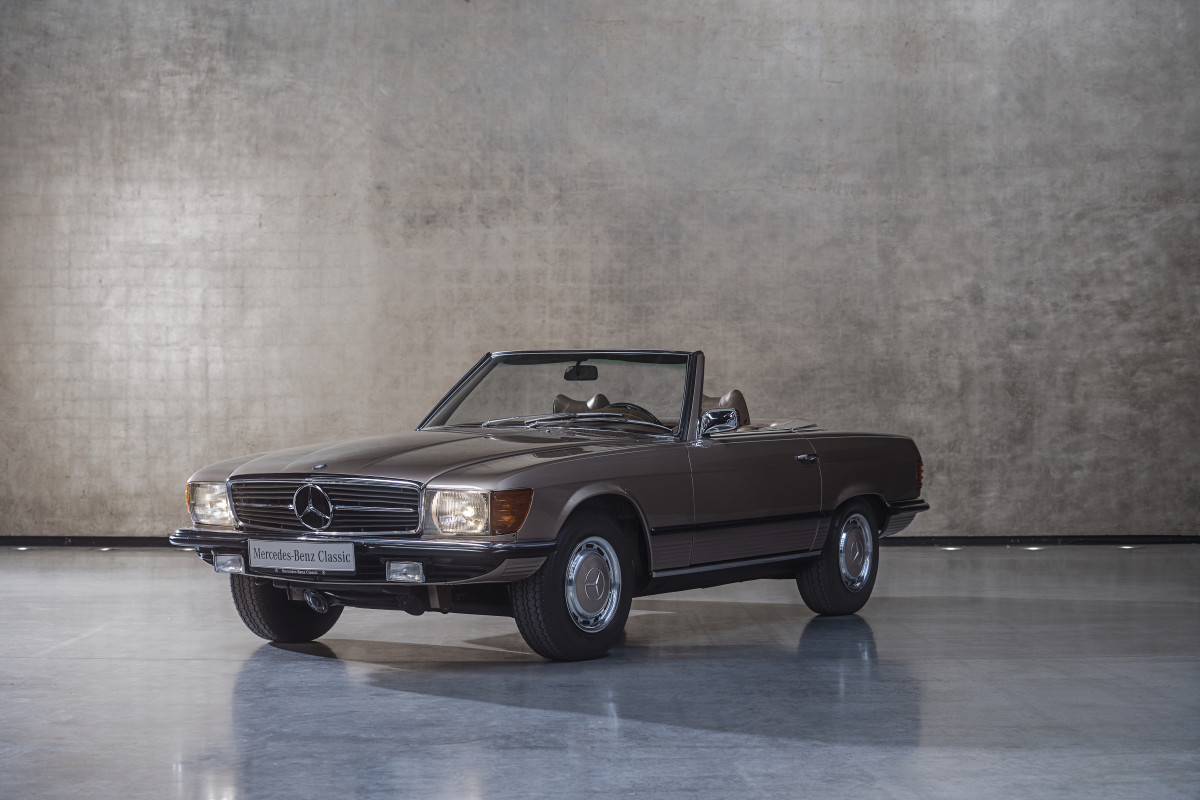
Third generation R107 (1972-1989)
The longest-lived and most popular SL of all time, the third-generation R107-series debuted as a cutting-edge grand tourer in 1971 and left production as a glitzy, aging boulevardier in 1989. It was never as sporty as previous or later generations and emphasized ride quality and luxury over outright speed, despite being the first V8-powered SL.
Sharp-edged handling didn’t seem to matter quite that much to buyers, however, as this car was a smash hit for Mercedes and quickly established itself as a luxury car to crave. In the 1980s, it was so associated with luxury and wealth that it regularly earned starring roles on TV series like Dallas and Dynasty, which only served to market its luxury bona fides and glamour further.
The actual design was created in the 1960s, but it was advanced for its day, with excellent crash protection, good driving dynamics, and plenty of room for two passengers. At various points, an optional rear seat was made available, though it was too small for even small children and few buyers ordered it. Mercedes-Benz did, however, build a larger four-seat coupe version of this design. The C107 series “SLC” is a stretched SL with a hardtop roof and somewhat awkward looks, but plenty of luxury. It temporarily replaced the S-Class two-door models from 1971 to 1981.
In Europe, Mercedes-Benz built a variety of six-cylinder versions of the R107, but in North America, only V8 models were sold, and at that, only certain V8s that would meet new U.S. federal emissions standards. The car first arrived for the 1972 model year as the 350SL, which despite the name used a 4.5-litre, 230-horsepower fuel-injected (still a rarity then) V8. A year later, the name was changed to the 450SL, using the same engine but gradually less power as emissions regulations bit, falling to 180 hp by 1976, when it gained a different version of the fuel injection system.
In 1981, a 3.8-litre V8 making 155 horsepower replaced the old 4.5, and the name was changed to 380SL to suit. This continued until 1986, when a new 5.6-litre version, curiously a development of the original 4.5-litre unit, replaced it and the car became the 560SL, now with 227 horsepower. The 450SLC and 380SLC coupes used the same engines as their SL siblings but were discontinued after 1981.
Because of the wider array of engines on offer in Europe, many of which were cheaper (the six-cylinder 280SL and later 300SL) or more powerful (the 1980 and onward 500SL), a cottage industry of private importers sprang up in the 1970s and 1980s to bring these cars across the Atlantic. They are rare today, but gray-market SLs were sold in large enough numbers here for Mercedes to lobby the government to put a stop to it. These cars are worth more today than standard models, and they’re generally more fun to drive. They also look nicer, with flush aerodynamic headlamps and slimmer, lighter bumpers.
The R107 is rock reliable, but even the newest ones are now 35 years old, so there are many age-related issues to watch out for, including rust, cracks in the front subframe, and most of all timing chains. By now, most will have had their timing chain changed, but receipts are important. If you hear a rattle from the engine, walk away. As with all old cars, many rubber and plastic parts can and will decay with time, and in a convertible there’s always a chance for water damage. Most SLs were sold with a removable hardtop you can stow in the garage, and many have it fitted most of the time, which does help.
R107 SLs are all but extinct in Canada, so you’ll likely need to turn to the U.S. if you’re serious about owning this generation. There, these are no longer cheap, but you can still find good looking, serviceable examples for as little as $10,000 U.S. that won’t need huge repairs. Really nice and low-kilometre ones, however, will cost quite a bit more. For an 80,000-kilometre original 560SL or a very early 450SL, expect to pay over $30,000 U.S. Euro-spec cars, especially 500SL V8s, will go for more. The cheapest ones are the slowest versions, 450SL and 380SL models built from roughly 1975 to 1985, but even they are rising in value.
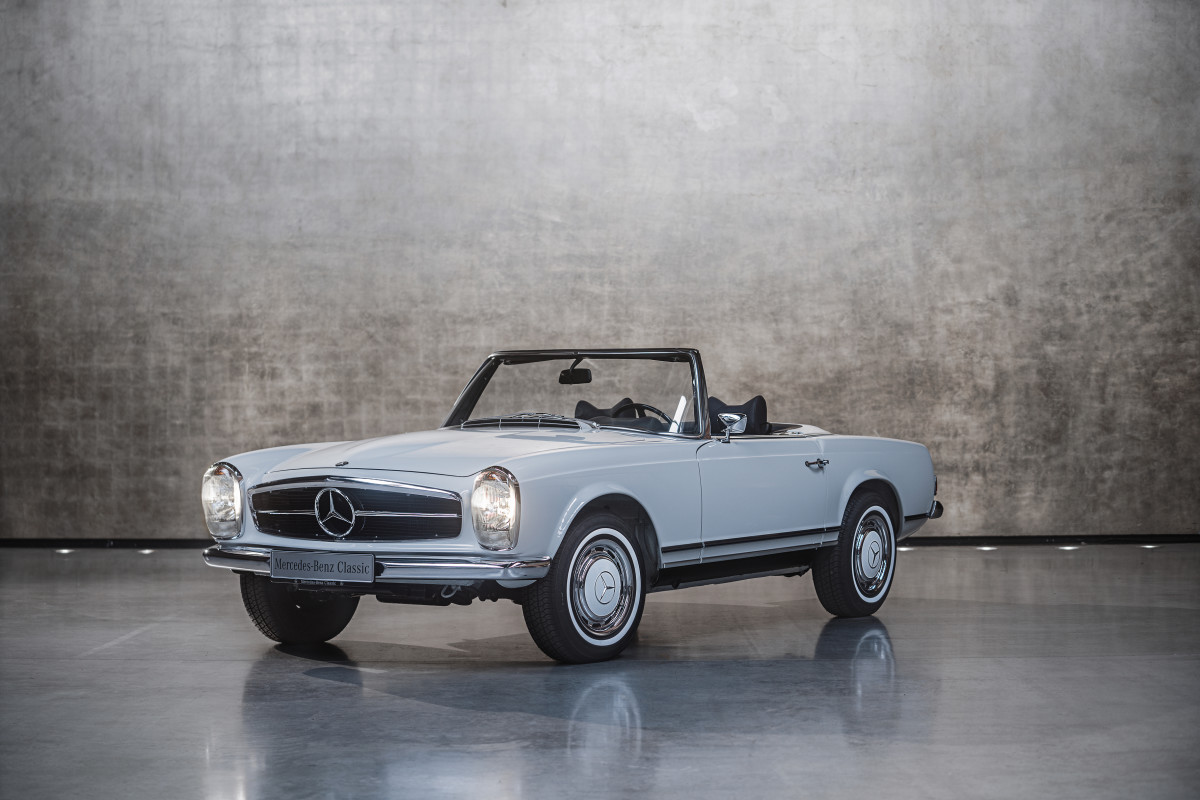
Second generation W113 (1964-1971)
After essentially fielding a lineup of two very different SLs in the 1950s and early 1960s, the winsome four-cylinder 190SL and the exotic 300SL, Mercedes-Benz designed a new car that slotted between them, Goldilocks style. The W113 Series SL, often called the “Pagoda” for its distinctively tall removable hardtop, had sports car moves and considerably more power than the old 190SL it replaced, but not as much speed as the 300SL, and it was much less costly to build than the 300SL.
The car’s restrained styling hid an ultra-modern crash structure, complete with crumple zones and created with modern crash testing in mind years before such things were required or even commonplace. It was a tasteful luxury grand tourer, but glamorous in a 1960s way. It used an inline six-cylinder engine mated to a four or five speed manual, and later an optional four-speed automatic.
Originally, the car was called the 230SL, for its 2.3-litre engine. In 1967 it was enlarged to 2.5 litres and the 250SL, and again in 1968 the size was increased again to the final 2.8 litres for the 280SL. Fun to drive and built to a standard that most cars of the 1960s just weren’t, the SL was expensive but much less likely to let you down than alternatives like the Jaguar E-Type, and cheaper than cars from Aston Martin or Maserati. They’re still reliable today, but they are 60 years old and do need maintenance and TLC.
The most common problems are rust and issues with the mechanical fuel injection system, which usually requires a specialist for repairs. Leaky transmissions, weepy head gaskets, and clogged radiators can also cause trouble, and while not very hard to fix, repairs aren’t cheap. Head gaskets are especially important because the block is made of steel and the head made of aluminum alloy, so leaks and temperature problems can lead to bigger issues.
The Pagoda’s suspension needs regular attention and lubrication, something not common to modern car ownership, and its power steering system can also leak. As with any car this old, a pre-purchase inspection is advisable. This shouldn’t be an issue for those with the budget for one of these, however, because this is an expensive car. Expect to find one of these south of the border, where nice Pagoda SLs sell for a minimum of about $50,000 U.S., and really good ones in rare specs or unusual colours can fetch three times that. On the plus side, it’s one of the safest, coolest, and most modern sports cars of the 1960s.
First generation W198 and W121(1954-1963)
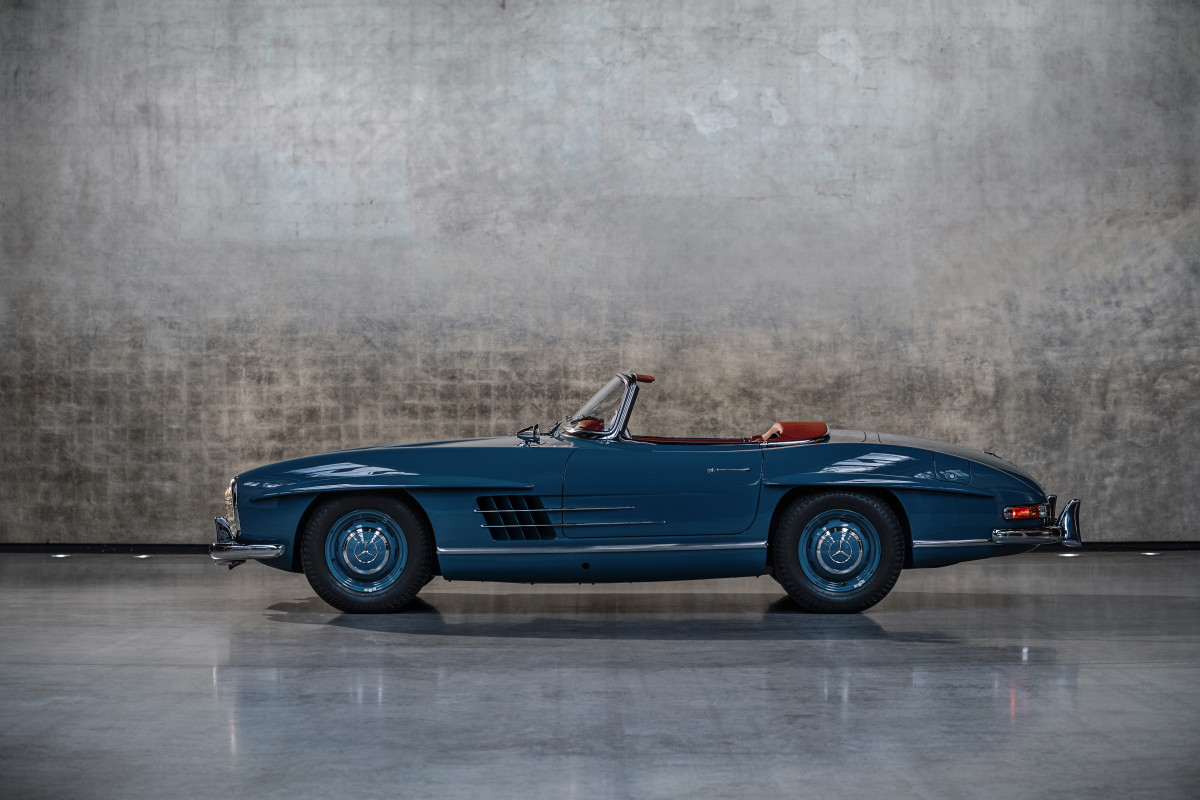
There are actually two, almost totally different, 1950s SL designs. The more famous one is the 300SL, descended from the 1952 W194-series 300 SL race car. This is the car that featured the famous gullwing doors and which saw competition success in the hands of people like Stirling Moss.
The W198-series gullwing coupe was built from 1954 to 1956, and then replaced by a more posh and glamorous roadster version, built from 1957 to 1963. These were genuinely exotic cars in their day and they still are now. A nice Gullwing will cost you well over $1M today, and even the Roadster version is in the high six figures in U.S. dollars.
Those may be the cars that established the SL legend, but it was the more plebeian 190SL that brought the car to most actual consumers. The 300SL was an exotic, expensive-to-make tube-framed supercar, but it was so famous that American Mercedes-Benz importer Max Hoffman suggested building a cheaper sister that could sell in larger numbers. The W121 190SL was that car.
Based on the structure of Mercedes-Benz’s smallest sedans at the time, the W121 was a smallish roadster that looked a lot like the 300SL but which used a 1.8-litre, 105-horsepower four-cylinder engine place of the 300SL’s mighty 3.0-litre, 215-horsepower inline-six and cost a little over half as much as its bigger brother. This formula proved a big success and more than 25,000 190SLs were made, most of which came to North America. A removable hardtop was soon added.
The 190SL was an expensive car for its performance, as costly as a Jaguar XK120 in 1956 but not nearly as quick, but it made up the difference with impeccable quality. Like most Mercedes-Benz cars of the 1950s and 1960s, they were just built to a higher standard than most other automakers at that time. Many 190SLs survive today, and they’re surprisingly safe and easy to use for cars designed seven decades ago. Plus, they look fantastic. Their main weakness is rust, but carburetor troubles and worn seals and rubber parts can also be issues.
For a long time, the 190SL was a surprisingly affordable car, but that’s no longer the case. It’s still worth only about 1/10th of what a Gullwing 300SL might sell for, but that generally amounts to about $80,000 to $140,000 U.S. depending on age and condition. Worn-out ones can sell for much less and the best way to get a deal on one is via a Mercedes-Benz club, but high-end classic dealers can also offer financing and reassurance.
Related Topics: