Hyundai Ioniq 5 vs Lexus TX
Overview | |
MSRP$35,000 | MSRP$56,940 |
Listings195 | Listings55 |
Ratings & Reviews | |
User Reviews | User Reviews |
Expert reviews8.0 out of 10 | Expert reviews7.0 out of 10 |
Pros
Cons
| Pros
Cons
|
Reviews SummaryMany automakers have had a tough time launching electric vehicles, as teething problems have resulted in build-quality issues, gremlins, and production delays. Hyundai, however, got it right from the start with the Ioniq 5. Not only did this compact crossover nail the basics, it has also struck a chord for its stylish looks, fast charging capability, good range, and practicality. Verdict: Five years into its run, the Ioniq 5 is still the electric vehicle we would recommend to most EV buyers. A drive around Hyundai’s factory in Savannah, Georgia, only reinforced our position. | |
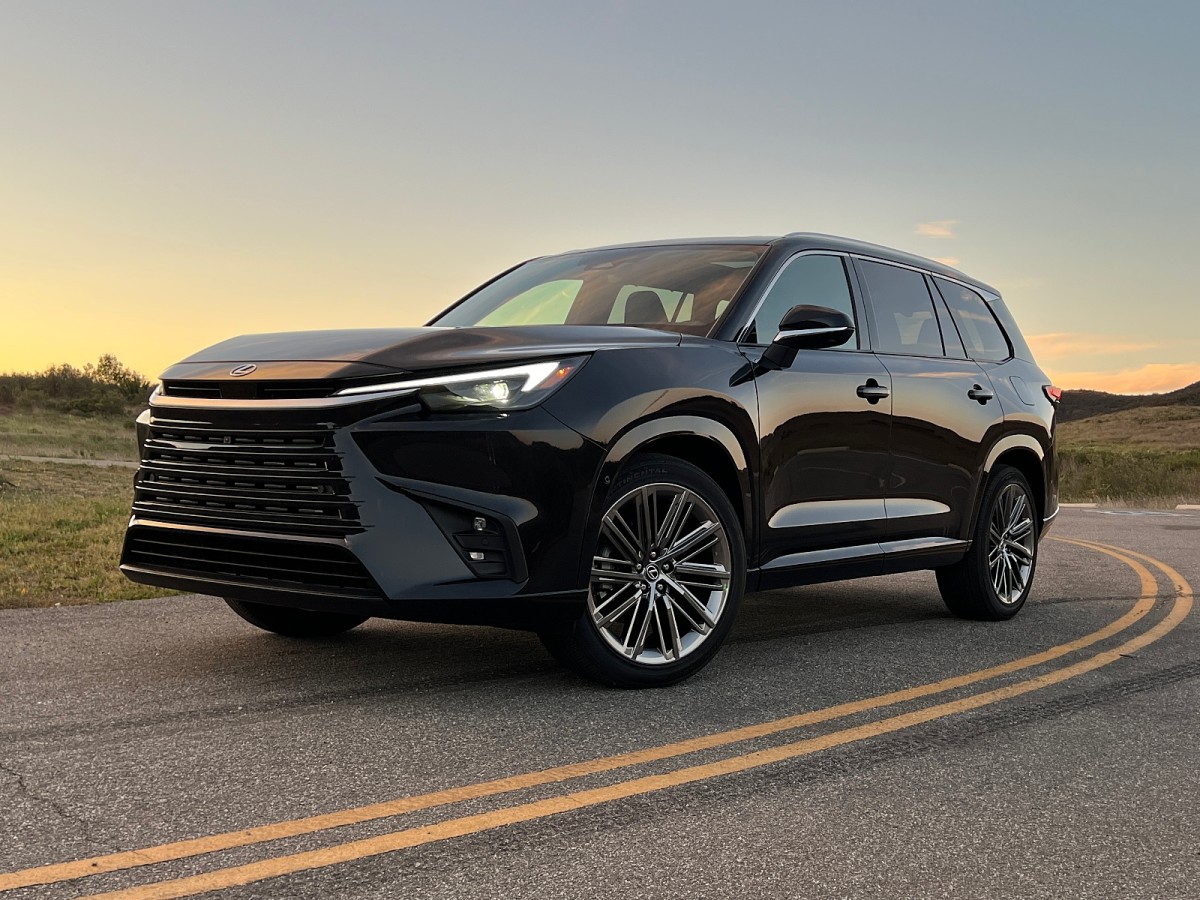
Reviews SummaryYou may not have heard much about the Lexus TX, the company’s full-size three-row SUV. Introduced for the 2024 model year, it’s still a young’un compared to its competition, but has made its mark by offering a spacious interior and three different powertrains, wrapped in a stylish package. In Lexus’ seven-model SUV lineup, the TX slots between the GX and LX—two body-on-frame models focused on off-roading. You can snag a gas-powered TX or one with a hybrid powertrain, but for this review we're focused on the 550h+ plug-in hybrid model. The PHEV offers the most power and best fuel economy, but also has the highest price. Verdict: The 2026 Lexus TX 550h+ is a great option for large families that need a spacious third row, but some of the technology comes with a steep learning curve. | |
No video found | No video found |
Popular Features & Specs | |
Seating Capacity5 | Seating Capacity7 |
EV Battery Capacity63 kWh | EV Battery Capacity |
Battery Charge Time (120V)54 hours | Battery Charge Time (120V) |
Battery Charge Time (240V)5.7 hours | Battery Charge Time (240V) |
Engine | |
Battery Charge Time (120V)54 hours | Battery Charge Time (120V) |
Battery Charge Time (240V)5.7 hours | Battery Charge Time (240V) |
Fuel Economy | |
EV Battery Capacity63 kWh | EV Battery Capacity |
Interior | |
Seating Capacity5 | Seating Capacity7 |
Key Features | |
Navigation SystemStandard | Navigation SystemStandard |
Safety | |
Front Crash Overall | Front Crash Overall4 |
Side Crash Overall | Side Crash Overall5 |
Dimensions & Capacity | |
Cargo Space26.3 cu ft | Cargo Space20.2 cu ft |
Curb Weight4145 lbs | Curb Weight4445 lbs |
Height63.0 in | Height70.1 in |
Length183.3 in | Length203.1 in |
Width74.4 in | Width78.4 in |
Wheelbase118.1 in | Wheelbase116.1 in |
Maximum Payload1080 lbs | Maximum Payload1565 lbs |
Number of doors4 | Number of doors4 |
Maximum Towing Capacity | Maximum Towing Capacity5000 lbs |
Overview | ||
MSRP | $35,000 | $56,940 |
Listings | ||
Ratings & Reviews | ||
User reviews | ||
Expert reviews | 8.0 out of 10Read full review | 7.0 out of 10Read full review |
Pros & cons | Pros
Cons
| Pros
Cons
|
Summary | Many automakers have had a tough time launching electric vehicles, as teething problems have resulted in build-quality issues, gremlins, and production delays. Hyundai, however, got it right from the start with the Ioniq 5. Not only did this compact crossover nail the basics, it has also struck a chord for its stylish looks, fast charging capability, good range, and practicality. Verdict: Five years into its run, the Ioniq 5 is still the electric vehicle we would recommend to most EV buyers. A drive around Hyundai’s factory in Savannah, Georgia, only reinforced our position. | You may not have heard much about the Lexus TX, the company’s full-size three-row SUV. Introduced for the 2024 model year, it’s still a young’un compared to its competition, but has made its mark by offering a spacious interior and three different powertrains, wrapped in a stylish package. In Lexus’ seven-model SUV lineup, the TX slots between the GX and LX—two body-on-frame models focused on off-roading. You can snag a gas-powered TX or one with a hybrid powertrain, but for this review we're focused on the 550h+ plug-in hybrid model. The PHEV offers the most power and best fuel economy, but also has the highest price. Verdict: The 2026 Lexus TX 550h+ is a great option for large families that need a spacious third row, but some of the technology comes with a steep learning curve. |
Video | No video found | No video found |
Popular Features & Specs | ||
Seating Capacity | 5 | 7 |
EV Battery Capacity | 63 kWh | |
Battery Charge Time (120V) | 54 hours | |
Battery Charge Time (240V) | 5.7 hours | |
Engine | ||
Battery Charge Time (120V) | 54 hours | |
Battery Charge Time (240V) | 5.7 hours | |
Fuel Economy | ||
EV Battery Capacity | 63 kWh | |
Interior | ||
Seating Capacity | 5 | 7 |
Key Features | ||
Navigation System | Standard | Standard |
Safety | ||
Front Crash Overall | 4 | |
Side Crash Overall | 5 | |
Dimensions & Capacity | ||
Cargo Space | 26.3 cu ft | 20.2 cu ft |
Curb Weight | 4145 lbs | 4445 lbs |
Height | 63.0 in | 70.1 in |
Length | 183.3 in | 203.1 in |
Width | 74.4 in | 78.4 in |
Wheelbase | 118.1 in | 116.1 in |
Maximum Payload | 1080 lbs | 1565 lbs |
Number of doors | 4 | 4 |
Maximum Towing Capacity | 5000 lbs | |
The 2026 Hyundai Ioniq 5 combined the retro charm of a 1980s hatchback with the modern flair of a crossover SUV, creating a unique and appealing design. Its profile was distinctly hatchback-like, yet larger than typical models like the Volkswagen GTI or Toyota Corolla. Angular lines and a character line rising from the rear wheels to the front doors defined its triangular shape, while dark cladding around the wheels and lower body added a crossover touch. The front featured a visor slit with rectangular headlights and a small grille, while the rear boasted an integrated spoiler and darkened panels. The XRT model stood out with unique 18-inch alloys, pixel-patterned cladding, and a more rugged, rally car-like appearance. Inside, the Ioniq 5 leaned towards a utilitarian design with a focus on technology, offering cloth or synthetic leather upholstery and a pair of 12.3-inch screens for a modern, albeit sterile, look.
The 2026 Lexus TX offered a range of trims and powertrains, including the TX 350, 500h hybrid, and 550h+ plug-in hybrid. The 550h+ featured a panoramic glass roof and striking Matador Red Mica paint. Its design retained a large grille reminiscent of the older spindle shape, complemented by sharp bi-LED headlights and rear LED lighting. Roof rails added practicality, while the interior provided luxury features like multi-zone climate control, heated and cooled seats, and a spacious third row. However, material quality fell short of luxury standards, with basic plastics present. Redesigned door handles offered a novel approach, but some might have preferred more attention to cabin detail. The TX's interior was functional, with thoughtful touches like ambient lighting and a variety of seating configurations, though some controls were less intuitive.

The 2026 Hyundai Ioniq 5 offered a range of powertrains, starting with a single-motor, rear-wheel-drive setup producing 168 horsepower and 258 pound-feet of torque in the base SE Standard Range trim, or 220 hp in other trims. A dual-motor, all-wheel-drive option increased output to 320 hp and 446 lb-ft. The Ioniq 5 N performance model boasted a dual-motor powertrain with up to 641 hp and 568 lb-ft of torque. The Limited and XRT trims, both with dual-motor powertrains, delivered quiet and robust power, achieving an estimated 0-60 mph time of 5.3 seconds. The Ioniq 5 featured five regenerative braking settings and a smooth ride, though its handling was not overly agile. The XRT trim offered a more rugged experience with increased ground clearance, all-terrain tires, and terrain modes for off-road adventures.
The 2026 Lexus TX 550h+ plug-in hybrid generated 404 horsepower from its 3.5-liter V6 and hybrid system, while the base model produced 317 hp from a turbocharged 2.4-liter four-cylinder engine. The TX offered various drive modes, including Normal, Eco, Sport, and Custom, with Sport mode enhancing throttle sensitivity. The 550h+ provided a quiet and smooth ride, seamlessly switching between gas and electric power. Its AWD system could distribute power between the front and rear wheels, and a Trail Mode maintained traction on slippery surfaces. The TX's suspension absorbed bumps effectively, making it ideal for long road trips.
The 2026 Hyundai Ioniq 5 featured spacious front seats with standard eight-way power adjustments for the driver and front passenger in most trims. Heated front seats were standard, with ventilated seats and a "Relaxation" seat for the driver in the Limited trim. The rear seat offered 39.4 inches of legroom, accommodating two adults comfortably. Cargo space was slightly smaller than average for a compact crossover, with 26.3 cubic feet behind the rear seats and 58.5 cubic feet with the second row folded. A small front trunk added 0.85 cubic feet of storage.
The 2026 Lexus TX 550h+ provided standard luxury features like multi-zone climate control, heated and cooled front seats, and heated second-row seats. The third row was spacious, with a recline function and ample headroom. A one-touch button facilitated third-row access, though folding the second row flat was more complex. The front seats were roomy but lacked thigh support. The TX offered excellent cargo space, with 20.2 cubic feet behind the third row, expanding to 57.4 cubic feet with the third row flat and 97 cubic feet with the second row folded. All TX models could tow up to 5,000 pounds.
The 2026 Hyundai Ioniq 5 featured a 12.3-inch digital instrument cluster and infotainment touchscreen, wireless Apple CarPlay and Android Auto, and built-in navigation. Higher trims included a wireless smartphone charger and a head-up display. The Ioniq 5 also offered a Wi-Fi hotspot, MyHyundai smartphone app, and Hyundai Pay for charging station payments. The infotainment system was user-friendly, with voice commands and separate climate controls.
The 2026 Lexus TX had a 14-inch touchscreen, though some features lacked polish. Steering wheel buttons controlled various functions but were not labeled, requiring drivers to rely on the gauge cluster display. Wireless Apple CarPlay and Android Auto were standard, though connectivity issues occasionally arose. The TX offered a backup camera with a bird’s-eye view and an Advanced Park system. With seven USB ports and wireless charging, device connectivity was ample.
The 2026 Hyundai Ioniq 5 came with a comprehensive list of standard safety features, including blind-spot monitors, parking sensors, forward-collision warning, and adaptive cruise control. Optional features included a surround-view camera system and Highway Driving Assist 2. The Ioniq 5 earned a Top Safety Pick+ from the IIHS but lacked NHTSA crash-test ratings.
The 2026 Lexus TX featured Safety System+ 3.0, including forward collision warning, lane centering, and traffic sign recognition. Adaptive cruise control worked well, though setup was confusing. The TX 350 and 500h received five-star NHTSA ratings, while the TX earned mixed IIHS scores.
CarGurus highlights

According to CarGurus experts, the overall rating for the 2026 Hyundai Ioniq 5 is 8.0 out of 10, while the 2026 Lexus TX scores 7.0 out of 10. Based on these ratings, the Hyundai Ioniq 5 is the recommended choice for its superior technology, performance, and safety features.
Choose the 2026 Hyundai Ioniq 5 if:
- You prioritize a modern, tech-savvy interior with user-friendly infotainment.
- You seek a versatile EV with strong performance and off-road capabilities.
- Safety features and top IIHS safety ratings are important to you.


Choose the 2026 Lexus TX if:
- You need a spacious, family-friendly SUV with ample cargo space and towing capacity.
- You value a smooth, comfortable ride with multiple drive modes.
- You prefer a luxury vehicle with a variety of powertrain options, including a plug-in hybrid.


CarGurus highlights
According to CarGurus experts, the overall rating for the 2026 Hyundai Ioniq 5 is 8.0 out of 10, while the 2026 Lexus TX scores 7.0 out of 10. Based on these ratings, the Hyundai Ioniq 5 is the recommended choice for its superior technology, performance, and safety features.
Choose the 2026 Hyundai Ioniq 5 if:
Shop Now- You prioritize a modern, tech-savvy interior with user-friendly infotainment.
- You seek a versatile EV with strong performance and off-road capabilities.
- Safety features and top IIHS safety ratings are important to you.
Choose the 2026 Lexus TX if:
Shop Now- You need a spacious, family-friendly SUV with ample cargo space and towing capacity.
- You value a smooth, comfortable ride with multiple drive modes.
- You prefer a luxury vehicle with a variety of powertrain options, including a plug-in hybrid.

By: CarGurus + AI
At CarGurus, our team of experienced automotive writers remain at the heart of our content operation, conducting hands-on car tests and writing insightful guides that are backed by years of industry experience. To complement this, we are harnessing AI to make our content offering more diverse and more helpful to shoppers than ever. To achieve this, our AI systems are based exclusively on CarGurus content, ratings and data, so that what we produce is both unique to CarGurus, and uniquely helpful to car shoppers.

