2021 Hyundai Tucson vs 2020 Hyundai Santa Fe

Overview | |
MSRP$26,275 | MSRP$23,700 |
Listings188 | Listings175 |
Ratings & Reviews | |
User Reviews | User Reviews |
Expert reviews8.8 out of 10 | Expert reviews7.7 out of 10 |
Pros
Cons
| Pros
Cons
|
2020 Hyundai Santa Fe Reviews SummaryLast year, Hyundai changed its approach to the Santa Fe. The smaller five-passenger Santa Fe Sport got drop-kicked from the automaker’s lineup, replaced by this completely redesigned version of the SUV. The larger seven-passenger Santa Fe got a new name for one year (Santa Fe XL), and then the all-new 2020 Hyundai Palisade replaced that vehicle. With the Palisade’s arrival, there is just one Santa Fe for 2020, a five-passenger crossover that resides in a sweet spot between traditional compact and midsize models. It gets several updates, too, including a standard rear-seat reminder system, an available camera-based Blind-Spot View Monitor system, and new design accents to better distinguish the top trim level. | |
2021 Hyundai Tucson Reviews SummaryIt’s no secret that small SUVs are among the most popular new-car segments. You see them everywhere on the road today. Automakers put a lot of pressure on themselves to continually offer the latest and greatest. But that also means even the not-so-new are still terrific vehicles and provide a great value. Case in point: the 2021 Hyundai Tucson. The current generation of this compact SUV was introduced for the 2016 model year, and this 2021 edition represents the final model year before a new generation is ushered in. So why go with the older model? Because Hyundai has loaded it up with plenty of tech and safety features and it is offered at a competitive price. | |
No video found | |
Popular Features & Specs | |
Engine2.4L 185 hp I4 | Engine2.0L 161 hp I4 |
Drive TrainFWD | Drive TrainFWD |
Seating Capacity5 | Seating Capacity5 |
Horsepower185 hp @ 6000 rpm | Horsepower161 hp @ 6200 rpm |
MPG City22 | MPG City23 |
MPG Highway29 | MPG Highway28 |
Engine | |
Engine Name2.4L 185 hp I4 | Engine Name2.0L 161 hp I4 |
Torque178 lb-ft @ 4000 rpm | Torque150 lb-ft @ 4700 rpm |
Horsepower185 hp @ 6000 rpm | Horsepower161 hp @ 6200 rpm |
DrivetrainFWD | DrivetrainFWD |
Fuel Economy | |
MPG City22 | MPG City23 |
MPG Highway29 | MPG Highway28 |
Interior | |
Seating Capacity5 | Seating Capacity5 |
Safety | |
Front Crash Overall4 | Front Crash Overall5 |
Side Crash Overall5 | Side Crash Overall5 |
Dimensions & Capacity | |
Cargo Space35.9 cu ft | Cargo Space31.0 cu ft |
Curb Weight3591 lbs | Curb Weight3309 lbs |
Height66.1 in | Height64.8 in |
Length187.8 in | Length176.4 in |
Width74.4 in | Width72.8 in |
Wheelbase108.9 in | Wheelbase105.1 in |
Maximum Payload1138 lbs | Maximum Payload1146 lbs |
Number of doors4 | Number of doors4 |
Maximum Towing Capacity2000 lbs | Maximum Towing Capacity1500 lbs |
Overview | ||
MSRP | $26,275 | $23,700 |
Listings | ||
Ratings & Reviews | ||
User reviews | ||
Expert reviews | 8.8 out of 10Read full review | 7.7 out of 10Read full review |
Pros & cons | Pros
Cons
| Pros
Cons
|
Summary | Last year, Hyundai changed its approach to the Santa Fe. The smaller five-passenger Santa Fe Sport got drop-kicked from the automaker’s lineup, replaced by this completely redesigned version of the SUV. The larger seven-passenger Santa Fe got a new name for one year (Santa Fe XL), and then the all-new 2020 Hyundai Palisade replaced that vehicle. With the Palisade’s arrival, there is just one Santa Fe for 2020, a five-passenger crossover that resides in a sweet spot between traditional compact and midsize models. It gets several updates, too, including a standard rear-seat reminder system, an available camera-based Blind-Spot View Monitor system, and new design accents to better distinguish the top trim level. | It’s no secret that small SUVs are among the most popular new-car segments. You see them everywhere on the road today. Automakers put a lot of pressure on themselves to continually offer the latest and greatest. But that also means even the not-so-new are still terrific vehicles and provide a great value. Case in point: the 2021 Hyundai Tucson. The current generation of this compact SUV was introduced for the 2016 model year, and this 2021 edition represents the final model year before a new generation is ushered in. So why go with the older model? Because Hyundai has loaded it up with plenty of tech and safety features and it is offered at a competitive price. |
Video | No video found | |
Popular Features & Specs | ||
Engine | 2.4L 185 hp I4 | 2.0L 161 hp I4 |
Drive Train | FWD | FWD |
Seating Capacity | 5 | 5 |
Horsepower | 185 hp @ 6000 rpm | 161 hp @ 6200 rpm |
MPG City | 22 | 23 |
MPG Highway | 29 | 28 |
Engine | ||
Engine Name | 2.4L 185 hp I4 | 2.0L 161 hp I4 |
Torque | 178 lb-ft @ 4000 rpm | 150 lb-ft @ 4700 rpm |
Horsepower | 185 hp @ 6000 rpm | 161 hp @ 6200 rpm |
Drivetrain | FWD | FWD |
Fuel Economy | ||
MPG City | 22 | 23 |
MPG Highway | 29 | 28 |
Interior | ||
Seating Capacity | 5 | 5 |
Safety | ||
Front Crash Overall | 4 | 5 |
Side Crash Overall | 5 | 5 |
Dimensions & Capacity | ||
Cargo Space | 35.9 cu ft | 31.0 cu ft |
Curb Weight | 3591 lbs | 3309 lbs |
Height | 66.1 in | 64.8 in |
Length | 187.8 in | 176.4 in |
Width | 74.4 in | 72.8 in |
Wheelbase | 108.9 in | 105.1 in |
Maximum Payload | 1138 lbs | 1146 lbs |
Number of doors | 4 | 4 |
Maximum Towing Capacity | 2000 lbs | 1500 lbs |
When shopping for a new 2020 Hyundai Santa Fe, buyers were presented with options between SE, SEL, and Limited trim levels. Models featuring a "2.0T" in their trim name offered an upgrade in power and performance, thanks to a turbocharged engine. All-wheel drive (AWD) was an available option, allowing the automatic transmission to distribute power to the rear wheels when necessary.
In terms of aesthetics, the Santa Fe was a bold experiment by Hyundai, featuring a controversial grille shape, stacked front lighting elements, asymmetrical fender stampings, unique wheel well shapes, and an oversized rear skid plate trim. These design elements caused mixed reactions among potential buyers.
The interior was characterized by a dramatic dual-cowl dashboard design that flowed into door panels adorned with diamond-textured speaker grilles. SUVs with gray or beige interiors showcased a high-contrast visual appeal. However, the materials used did not always match Hyundai's high-style design, with glossy plastics in the lower interior and stiff leather upholstery. Nevertheless, build quality was impeccable, and controls operated with precision.
For those who appreciated daring design, the Santa Fe’s unique look might have been a hit. However, for buyers preferring to blend in, the design might have been off-putting.
In contrast, the 2021 Hyundai Tucson featured a more conventional yet sophisticated design. Its upright layout provided a commanding view of the road. Inside, the Tucson offered a modern and attractive dashboard design, seamlessly integrating tech features. Buttons and dials were thoughtfully placed for easy access.
Trim levels for the Tucson included SE, Value, SEL, Sport, Limited, and Ultimate. Standard features on the base Tucson SE included 17-inch alloy wheels and a 7-inch touchscreen infotainment system with Apple CarPlay and Android Auto. Higher trims added features like LED headlight accents, leather-wrapped steering wheels, and an Infinity premium audio system. The Tucson's design catered to buyers who preferred a more traditional yet refined crossover experience.


The 2020 Hyundai Santa Fe featured a standard 185-horsepower 2.4-liter four-cylinder engine, which proved to be underwhelming for some. The recommended choice was the turbocharged 2.0-liter four-cylinder engine, producing 235 hp and 260 lb-ft of torque available between 1,450 rpm and 3,500 rpm. This turbocharged engine paired with an eight-speed automatic transmission offered a smooth ride, decent handling, and light-effort steering.
The Santa Fe's curb weight ranged between 3,591 pounds and 3,946 pounds. Properly equipped with the 2.0T engine, it had a towing capacity of 3,500 pounds. The EPA rated the 2.0T front-wheel-drive model at 23 mpg in combined driving; the test model returned 22.1 mpg. While it could manage moderate off-roading, the Santa Fe was more suited for daily driving, offering a comfortable and quiet highway experience without necessarily inspiring adventurous driving dynamics.
On the other hand, the 2021 Hyundai Tucson came with two engine options. The base 2.0-liter four-cylinder produced 161 horsepower and 150 lb-ft of torque, and higher trims featured a 2.4-liter four-cylinder engine making 181 hp and 175 lb-ft of torque. Both engines were mated to a six-speed automatic transmission with standard FWD or optional AWD.
While the base engine felt underwhelming, the 2.4-liter engine was more suited for daily driving. The Tucson offered a refined, balanced ride that provided comfort without excessive softness. The towing capacity was rated at 1,500 pounds for the base engine and 2,000 pounds for the 2.4-liter engine.
The 2020 Hyundai Santa Fe excelled in thoughtful detailing and creative storage solutions. It came equipped with eight-way power-adjustable, heated, and ventilated front seats, making long trips comfortable. Additionally, the dual-zone automatic climate control system included a Clean Air ionizer, ensuring effective air conditioning even with the panoramic sunroof.
Rear passengers enjoyed comfortable seating with adequate legroom, reclining seats, air conditioning vents, and even heated cushions in the Limited trim. However, the Santa Fe offered 35.9 cubic feet of cargo space behind the rear seats and a maximum of 71.3 cubic feet, which fell slightly short compared to some competitors. A hands-free smart liftgate was available for added convenience.
The 2021 Hyundai Tucson provided 31 cubic feet of cargo space behind the rear seats, expanding to 61.9 cubic feet with the seats folded. Though on the lower side within the compact SUV segment, it still offered ample space for weekend getaways or larger items. The Tucson’s front seats provided solid headroom and legroom, while the rear seats, though less spacious, were adequate for adults on longer trips. Additionally, the Tucson featured numerous storage compartments and trays for everyday items.
The 2020 Hyundai Santa Fe featured a user-friendly touchscreen infotainment system positioned high on the dashboard. It included stereo control knobs, menu shortcut buttons, Bluetooth connectivity, and Apple CarPlay and Android Auto integration. Upgrading to the SEL trim added SiriusXM satellite radio and Blue Link connected services with three years of free service, including remote engine starting, emergency assistance, and the ability to program driver-specific alerts.
Limited trim enhanced the tech package with a larger 8-inch display, navigation system, surround-view camera, wireless smartphone charging, and a 12-speaker Infinity sound system. An advanced head-up display provided critical information within the driver’s line of sight. The voice recognition system was sophisticated, allowing for natural command input.
In comparison, the 2021 Hyundai Tucson came standard with a 7-inch touchscreen infotainment system featuring Apple CarPlay and Android Auto. Higher trims or the Ultimate trim option offered an upgraded 8-inch touchscreen, navigation, satellite radio, and wireless device charging. The Tucson's touchscreen system was designed for ease of use, with logical menu layouts and supplementary hard buttons.
The 2020 Hyundai Santa Fe was a safe choice for families, earning a five-star overall crash-test rating from NHTSA and a Top Safety Pick rating from IIHS. Every Santa Fe came equipped with adaptive cruise control, forward collision warning, automatic emergency braking, lane-departure warning, lane-keeping assistance, driver monitoring, and a rear-seat reminder system. However, blind-spot warning and rear cross-traffic warning were only available on SEL trim and higher.
The SEL Convenience Package added an ultrasonic occupant alert system, which activated when movement was detected in the rear seats, sending an alert via the owner’s smartphone. Limited trim introduced a Blind-Spot View Monitor, displaying live video feeds of blind spots to supplement traditional warnings.
For the 2021 Hyundai Tucson, standard driver-assistance features included automatic emergency braking, forward collision warning, lane-departure warning, lane-keeping assist, and driver drowsiness monitoring. Additional features like adaptive cruise control, pedestrian detection, automatic high-beams, 360-degree parking monitor, and blind-spot monitoring were available on higher trims. The Tucson earned a five-star crash-test rating from NHTSA and a Top Safety Pick rating from IIHS.
CarGurus highlights
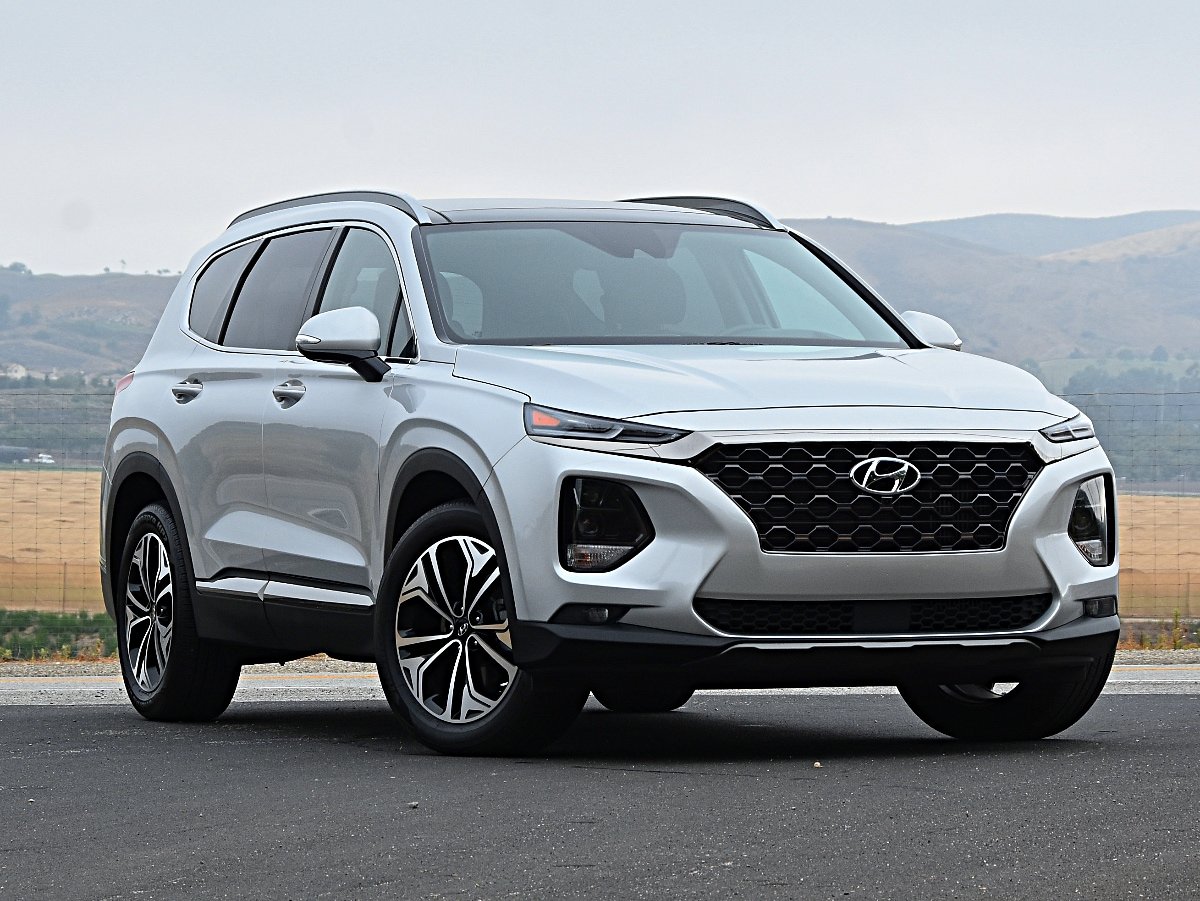
According to CarGurus experts, the overall rating for the 2020 Hyundai Santa Fe was 8.8 out of 10, while the 2021 Hyundai Tucson scored 7.7 out of 10. Based on these ratings, the 2020 Hyundai Santa Fe emerges as the recommended choice. It offers more powerful performance options, a rich array of tech features, and higher safety ratings, making it the better option for most consumers seeking a family-friendly and well-rounded SUV.
Choose the 2021 Hyundai Tucson if:
- You prefer a more conventional, yet refined design for your compact SUV.
- You need a balanced ride with a variety of trim options to suit your tech and comfort requirements.
- Proven safety ratings and a solid suite of driver-assistance features are important in your buying decision.


Choose the 2020 Hyundai Santa Fe if:
- You value a powerful, turbocharged engine for better performance and higher towing capacity.
- You appreciate advanced in-car technology and user-friendly infotainment features.
- A safe family SUV with comprehensive crash-test ratings and unique safety systems is a priority.


CarGurus highlights
According to CarGurus experts, the overall rating for the 2020 Hyundai Santa Fe was 8.8 out of 10, while the 2021 Hyundai Tucson scored 7.7 out of 10. Based on these ratings, the 2020 Hyundai Santa Fe emerges as the recommended choice. It offers more powerful performance options, a rich array of tech features, and higher safety ratings, making it the better option for most consumers seeking a family-friendly and well-rounded SUV.
Choose the 2021 Hyundai Tucson if:
Shop Now- You prefer a more conventional, yet refined design for your compact SUV.
- You need a balanced ride with a variety of trim options to suit your tech and comfort requirements.
- Proven safety ratings and a solid suite of driver-assistance features are important in your buying decision.
Choose the 2020 Hyundai Santa Fe if:
Shop Now- You value a powerful, turbocharged engine for better performance and higher towing capacity.
- You appreciate advanced in-car technology and user-friendly infotainment features.
- A safe family SUV with comprehensive crash-test ratings and unique safety systems is a priority.

By: CarGurus + AI
At CarGurus, our team of experienced automotive writers remain at the heart of our content operation, conducting hands-on car tests and writing insightful guides that are backed by years of industry experience. To complement this, we are harnessing AI to make our content offering more diverse and more helpful to shoppers than ever. To achieve this, our AI systems are based exclusively on CarGurus content, ratings and data, so that what we produce is both unique to CarGurus, and uniquely helpful to car shoppers.

