2020 Mazda CX-30 vs 2019 Ford Edge

Overview | |
MSRP$29,995 | MSRP$21,900 |
Listings220 | Listings50 |
Ratings & Reviews | |
User Reviews | User Reviews |
Expert reviews7.3 out of 10 | Expert reviews7.7 out of 10 |
Pros
Cons
| |
2019 Ford Edge Reviews SummaryThe Edge was a key vehicle in the evolution of the family SUV market when Ford first introduced it for the 2007 model year. Back then, automakers were experimenting with just what a “crossover” could constitute—look at the Pontiac Aztec and first-generation Chrysler Pacifica if you disagree. But with the Edge, the midsize, two-row SUV template started to take shape. Ford offers the 2019 Edge with an ST trim, grafting performance onto the utilitarian Edge blueprint. But that begs a question—can a vehicle still be good at family hauling and commuting while also delivering speed and performance? | |
2020 Mazda CX-30 Reviews SummaryBased on the Mazda3 platform, the 2020 Mazda CX-30 compact crossover offers two distinct advantages over the car on which it is based. The first is extra ground clearance for navigating snowstorms and light-difficulty trails. The second is easier entry and exit because the CX-30 sits higher off the ground. In exchange for these benefits, the CX-30 dilutes the brilliant design and driving dynamics for which the Mazda3 is revered. But it still looks and drives better than most of its competition. | |
Popular Features & Specs | |
Engine2.0L 250 hp I4 | Engine2.5L 186 hp I4 |
Drive TrainFWD | Drive TrainFWD |
Seating Capacity5 | Seating Capacity5 |
Horsepower250 hp @ 5500 rpm | Horsepower186 hp @ 6000 rpm |
MPG City22 | MPG City25 |
MPG Highway29 | MPG Highway33 |
Engine | |
Engine Name2.0L 250 hp I4 | Engine Name2.5L 186 hp I4 |
Torque280 lb-ft @ 3000 rpm | Torque186 lb-ft @ 4000 rpm |
Horsepower250 hp @ 5500 rpm | Horsepower186 hp @ 6000 rpm |
DrivetrainFWD | DrivetrainFWD |
Fuel Economy | |
MPG City22 | MPG City25 |
MPG Highway29 | MPG Highway33 |
Interior | |
Seating Capacity5 | Seating Capacity5 |
Safety | |
Front Crash Overall5 | Front Crash Overall5 |
Side Crash Overall5 | Side Crash Overall5 |
Dimensions & Capacity | |
Cargo Space39.2 cu ft | Cargo Space20.2 cu ft |
Curb Weight4027 lbs | Curb Weight3232 lbs |
Height68.3 in | Height61.7 in |
Length188.8 in | Length173.0 in |
Width85.8 in | Width70.7 in |
Wheelbase112.2 in | Wheelbase104.5 in |
Maximum Payload1243 lbs | Maximum Payload957 lbs |
Number of doors4 | Number of doors4 |
Maximum Towing Capacity1500 lbs | Maximum Towing Capacity |
Overview | ||
MSRP | $29,995 | $21,900 |
Listings | ||
Ratings & Reviews | ||
User reviews | ||
Expert reviews | 7.3 out of 10Read full review | 7.7 out of 10Read full review |
Pros & cons | Pros
Cons
| |
Summary | The Edge was a key vehicle in the evolution of the family SUV market when Ford first introduced it for the 2007 model year. Back then, automakers were experimenting with just what a “crossover” could constitute—look at the Pontiac Aztec and first-generation Chrysler Pacifica if you disagree. But with the Edge, the midsize, two-row SUV template started to take shape. Ford offers the 2019 Edge with an ST trim, grafting performance onto the utilitarian Edge blueprint. But that begs a question—can a vehicle still be good at family hauling and commuting while also delivering speed and performance? | Based on the Mazda3 platform, the 2020 Mazda CX-30 compact crossover offers two distinct advantages over the car on which it is based. The first is extra ground clearance for navigating snowstorms and light-difficulty trails. The second is easier entry and exit because the CX-30 sits higher off the ground. In exchange for these benefits, the CX-30 dilutes the brilliant design and driving dynamics for which the Mazda3 is revered. But it still looks and drives better than most of its competition. |
Video | ||
Popular Features & Specs | ||
Engine | 2.0L 250 hp I4 | 2.5L 186 hp I4 |
Drive Train | FWD | FWD |
Seating Capacity | 5 | 5 |
Horsepower | 250 hp @ 5500 rpm | 186 hp @ 6000 rpm |
MPG City | 22 | 25 |
MPG Highway | 29 | 33 |
Engine | ||
Engine Name | 2.0L 250 hp I4 | 2.5L 186 hp I4 |
Torque | 280 lb-ft @ 3000 rpm | 186 lb-ft @ 4000 rpm |
Horsepower | 250 hp @ 5500 rpm | 186 hp @ 6000 rpm |
Drivetrain | FWD | FWD |
Fuel Economy | ||
MPG City | 22 | 25 |
MPG Highway | 29 | 33 |
Interior | ||
Seating Capacity | 5 | 5 |
Safety | ||
Front Crash Overall | 5 | 5 |
Side Crash Overall | 5 | 5 |
Dimensions & Capacity | ||
Cargo Space | 39.2 cu ft | 20.2 cu ft |
Curb Weight | 4027 lbs | 3232 lbs |
Height | 68.3 in | 61.7 in |
Length | 188.8 in | 173.0 in |
Width | 85.8 in | 70.7 in |
Wheelbase | 112.2 in | 104.5 in |
Maximum Payload | 1243 lbs | 957 lbs |
Number of doors | 4 | 4 |
Maximum Towing Capacity | 1500 lbs | |
The 2019 Ford Edge underwent a noticeable facelift, featuring a new grille, headlights, and a revamped lower front fascia. The rear of the vehicle also saw updates with new taillights and a larger black panel replacing the previous red connector, giving the Edge a sportier look across all trims. Despite these exterior enhancements, the interior remained largely unchanged from previous models, retaining a dated feel reminiscent of the 2010 version. The cabin, while functional with a new rotary shifter, was heavily reliant on plastics, particularly around the touchscreen, which detracted from its modern appeal. The Edge offered a range of trims, from the base SE with standard features like 18-inch alloy wheels and keyless entry, to the performance-oriented ST with unique styling touches and advanced features. The SEL trim, recommended for its balance of features and price, provided options for additional packages to enhance comfort and convenience.
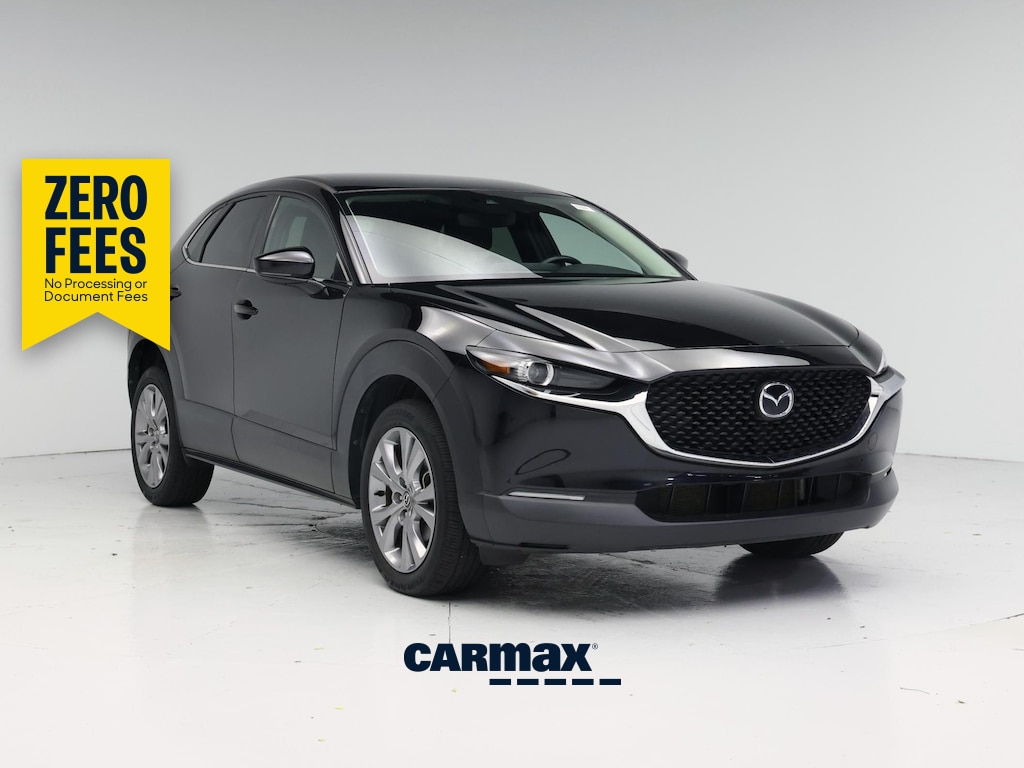
In contrast, the 2020 Mazda CX-30's design was marred by excessive gray plastic cladding, which detracted from its otherwise appealing styling. This cladding made the 18-inch wheels appear small and gave the vehicle a lifted appearance. However, the interior was praised for its luxurious feel, especially above the midpoint of the cabin, where soft materials were used. The CX-30's pricing started at $21,900, with the Select trim offering valuable upgrades like tinted rear glass and 18-inch wheels. The Preferred and Premium trims added features like leather seating and advanced technology, with AWD available for an additional cost. The test model, a Premium AWD, included several extras, bringing its total to $32,120.


The 2019 Ford Edge offered a 2-liter turbocharged 4-cylinder engine for non-ST trims, delivering 250 horsepower and 280 pound-feet of torque. This engine, paired with an 8-speed automatic transmission, provided reliable performance with either front-wheel drive or optional AWD for an additional $1,995. The ST trim, however, boasted a 2.7-liter EcoBoost V6 engine, producing 335 horsepower and 380 pound-feet of torque, exclusively with AWD. The ST's performance was impressive, offering swift acceleration and precise handling, especially in Sport Mode. Despite its power, the ST maintained a smooth ride over rough roads. Fuel economy for the Edge varied, with the base model achieving 22 mpg city and 29 mpg highway, while the ST averaged 19.9 mpg during spirited driving.
The 2020 Mazda CX-30 was powered by a 2.5-liter 4-cylinder engine, generating 186 horsepower and 186 pound-feet of torque. While competitive, the CX-30's weight of 3,408 pounds and lack of a turbocharged option limited its performance. The 6-speed sport automatic transmission, equipped with paddle shifters in Premium trim, made the most of the engine's capabilities. The CX-30's AWD system included off-road traction assist, though its 8 inches of ground clearance limited serious off-roading. The driving dynamics were mixed; while it felt slower compared to the Mazda3, it was sprightly among small SUVs. The CX-30's handling was affected by its higher center of gravity and torsion beam axle rear suspension, but it remained sharp in steering and braking. Fuel economy was rated at 27 mpg combined, though real-world testing showed 23.9 mpg.
The 2019 Ford Edge's interior, though dated, was practical with ample storage options, including a deep center console bin and in-door pockets. The front seats were comfortable, with the ST trim featuring performance-oriented bucket seats, though these were not ideal for taller individuals due to limited adjustability. The rear seats offered generous space, accommodating taller passengers comfortably. Cargo capacity was a strong point, with 39 cubic feet behind the rear seats and 73.4 cubic feet with them folded, surpassing competitors like the Nissan Murano and Chevy Blazer.
The 2020 Mazda CX-30 offered ease of entry and exit due to its higher stance. Inside, the cabin was upscale, with soft materials on the center console and door armrests. The driving position was excellent, with clear analog gauges. Seating options ranged from cloth in the base model to genuine leather in the Premium trim, with power-adjustable and heated front seats available. The rear seat was cramped, suitable for children or shorter adults. Cargo space was limited, with 20.2 cubic feet behind the rear seats and 45.2 cubic feet with them folded, less than many competitors and closer to subcompact SUVs.
The 2019 Ford Edge's base infotainment system featured a small 4.2-inch screen with basic functionality, including a USB port and Bluetooth, but lacked a touchscreen interface. The SEL trim and above offered an 8-inch Sync 3 system with Apple CarPlay, Android Auto, and Amazon Alexa integration, providing a more user-friendly experience despite average graphics.
The 2020 Mazda CX-30's technology suite was comprehensive but required a learning curve. The 8.8-inch display was not a touchscreen, relying on console, steering wheel, and voice controls, which were not always intuitive. Standard features included Bluetooth, HD Radio, and Mazda Connected Services. Apple CarPlay and Android Auto were available from the Select trim, with higher trims offering a Bose sound system and head-up display.
The 2019 Ford Edge came standard with a reversing camera, traction control, and a full set of airbags. Ford’s Co-Pilot360 suite added features like automatic emergency braking, lane-departure warning, and blind-spot monitoring. Higher trims could be equipped with Co-Pilot360 Assist+, which included adaptive cruise control and lane-centering.
The 2020 Mazda CX-30 excelled in safety, with standard features like adaptive cruise control, forward collision warning, and lane-keeping assistance. Select trim added blind-spot monitoring, while Premium trim offered adaptive front lights. The CX-30 received a 5-star NHTSA rating and a Top Safety Pick from the IIHS with Premium trim.
CarGurus highlights

According to CarGurus experts, the overall rating for the 2019 Ford Edge is 7.3 out of 10, while the 2020 Mazda CX-30 scores 7.7 out of 10. Based on these ratings, the 2020 Mazda CX-30 is recommended for its superior safety features, upscale interior, and overall value.
Choose the 2020 Mazda CX-30 if:
- You seek a stylish and upscale interior with a focus on driver engagement.
- You prefer a vehicle with high safety ratings and advanced safety features.
- You want a compact SUV with a lower starting price and efficient fuel economy.




Choose the 2019 Ford Edge if:
- You prioritize cargo space and rear passenger comfort.
- You desire a performance-oriented SUV with the ST trim's powerful engine.
- You value a comprehensive suite of driver-assistance features.


CarGurus highlights
According to CarGurus experts, the overall rating for the 2019 Ford Edge is 7.3 out of 10, while the 2020 Mazda CX-30 scores 7.7 out of 10. Based on these ratings, the 2020 Mazda CX-30 is recommended for its superior safety features, upscale interior, and overall value.
Choose the 2020 Mazda CX-30 if:
Shop Now- You seek a stylish and upscale interior with a focus on driver engagement.
- You prefer a vehicle with high safety ratings and advanced safety features.
- You want a compact SUV with a lower starting price and efficient fuel economy.
Choose the 2019 Ford Edge if:
Shop Now- You prioritize cargo space and rear passenger comfort.
- You desire a performance-oriented SUV with the ST trim's powerful engine.
- You value a comprehensive suite of driver-assistance features.

By: CarGurus + AI
At CarGurus, our team of experienced automotive writers remain at the heart of our content operation, conducting hands-on car tests and writing insightful guides that are backed by years of industry experience. To complement this, we are harnessing AI to make our content offering more diverse and more helpful to shoppers than ever. To achieve this, our AI systems are based exclusively on CarGurus content, ratings and data, so that what we produce is both unique to CarGurus, and uniquely helpful to car shoppers.

