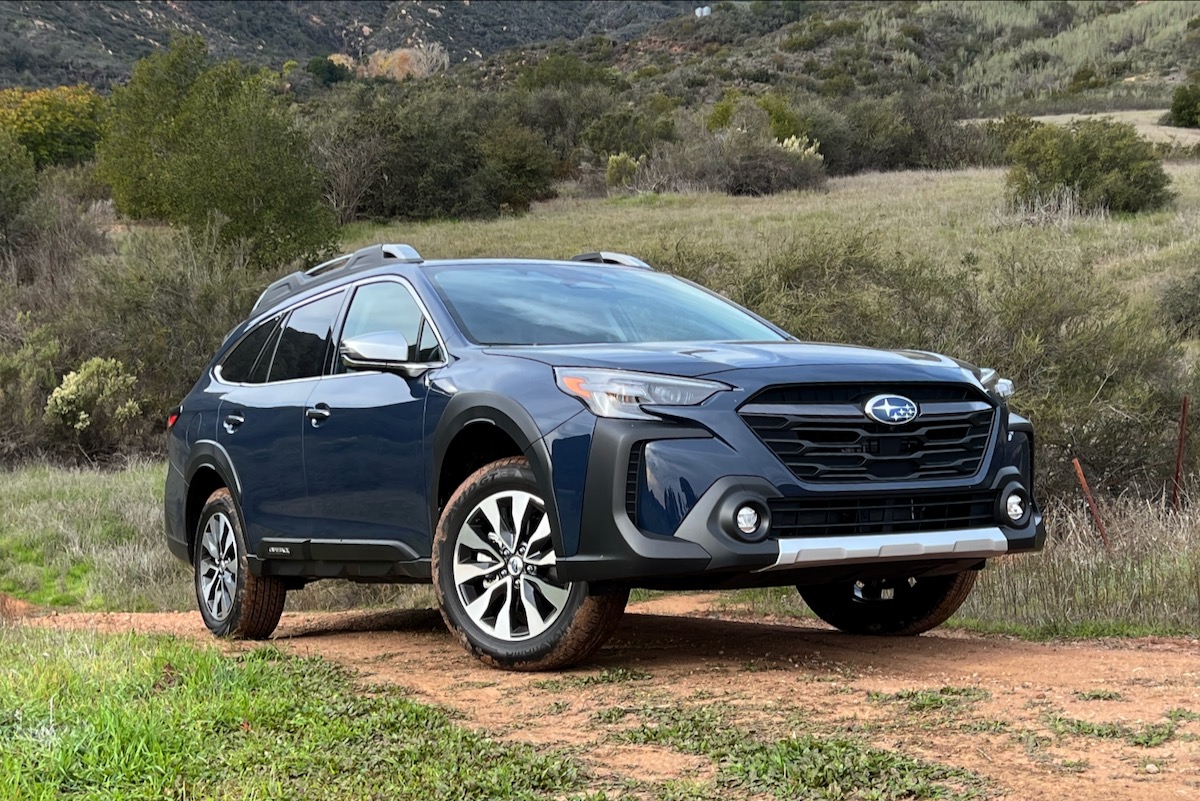
Over time, the Legacy became more vanilla than other midsize sedans and lost its swagger. Or maybe the other sedans just finally caught up with the safety tech and AWD availability offered by the Legacy. Either way, the only Subaru cars available in Canada today are the Impreza, WRX, and BRZ.
Though Subarus hold their values well, a used Legacy tends to cost slightly less than a used Honda Accord or Toyota Camry. Check out a 2018 or newer Legacy model and you can get a lot of modern technology, standard AWD, and really good safety features for $2,000 to $3,000 less than the competition.
Subaru Legacy: Cost, Reliability, and the Best Years to Buy
Frequently Asked Questions
Which Subaru Legacy years are the best?
As is often the case, the best examples are often the latter years of a generation. Various sources around the web point to the last year for the fifth generation Legacy (2014), the last years of the sixth generation (2017 to 2019), and pretty much anything in the final generation as being the best model years. Consumer Reports specifically cites 2017, 2018, and 2024 as models with higher-than-average reliability verdicts, making them “CR Recommended.”
What are the worst Subaru Legacy years?
The beginning of each new generation of the Subaru Legacy has a reputation for being a bit buggy. CarComplaints.com shows a bump in owner complaints at the beginning of the generation, then a tapering down. It calls 2013 the worst model year due to engine problems, but it also points to 2015 as the year with the most overall complaints. Other sources say to steer clear of 2001 to 2004 due to reliability complaints, as well as 2010 to 2011 because of growing pains with the redesign and a new continuously variable transmission (CVT).
Is a used Subaru Legacy a good deal?
While Subarus generally hold their value well, the 2017 or 2018 model years in the sixth generation are still decent deals at about $10,000 to $20,000. The lowest prices for the final generation are around $15,000, but decent examples typically cost $20,000 or more.
Subaru Legacy Pros and Cons
Pros:
- Standard all-wheel drive
- Comfortable
- Lots of standard safety features
Cons:
- Dull styling
- Interior feels cheap
- Sluggish performance
Subaru Legacy Generations
Seventh Generation (2020–2025)
The seventh and final generation of the Subaru Legacy is the safest, most technically advanced version of the midsize sedan. The new Subaru marked the return of the turbo, the standardization of the EyeSight safety suite, and the introduction of the gargantuan 11.6-inch vertical touchscreen infotainment system. It rode on the same Subaru Global Platform as the Subaru Outback and had a more spacious and quieter interior, a stiffer chassis, and better ride quality.
The 2020 Subaru Legacy carried over the 2.5-litre four-cylinder engine, but it was reworked for better fuel economy and more horsepower (182 hp in total). Though the six-cylinder engine was dropped, this generation heralded the return of the turbocharged Subaru Boxer engine in the form of a 260-hp 2.4-litre turbo four-cylinder unit. A continuously variable transmission (CVT) remained the only choice with both engines and had a standard paddle-shift feature for the eight-step sequential-shift manual mode.
At launch, there were four Legacy trims in Canada: Convenience, Touring, Limited, and Premier. In GT format, the top two trims came with the turbo engine. Subaru’s Symmetrical all-wheel drive (AWD) system remained the standard drivetrain across all models. Standard equipment included active torque vectoring, EyeSight, adaptive cruise control, auto vehicle hold, automatic climate control, LED headlights with automatic high beams, auto stop/start, a 10-way power adjustable driver’s seat, heated front seats, a 4.2-inch LCD colour display in the gauge cluster, Apple CarPlay and Android Auto, 17-inch steel wheels, and dual seven-inch centre touchscreens.
An 11.6-inch infotainment screen was standard with the Touring trim, as were 17-inch alloy wheels, LED fog lights, dual-zone climate control, keyless entry, a leather wrapped steering wheel, a sunroof, blind spot monitoring, rear cross-traffic alert, reverse automatic braking, and lane change assist. Other equipment available with higher trim levels included 18-inch wheels, heated rear seats, leather seats, navigation, a heated steering wheel, ventilated front seats, and Nappa leather upholstery.
The 2023 Subaru Legacy received a mid-cycle refresh comprising a revised front fascia with a larger grille, sharper headlights, and safety system updates. Trims in Canada were pared down to Touring, Limited, and GT. Rolling into the end of its life, the Legacy was available only in its top GT trim for its final model year in Canada. The last Legacy rolled off the line on September 12, 2025, at the Lafayette, Indiana, plant, bringing its 36-year production run to an end.
When looking for used Subaru Legacy examples from the seventh generation in Canada, we saw prices range from $15,000 to $30,000. Assuming you’re looking at vehicles from earlier in the generation, you’ll likely spend $20,000 to $25,000 for a seventh-gen Legacy.
Sixth Generation (2015–2019)
The Legacy kept its standard AWD for its sixth generation, which was a major competitive selling point as it became a more advanced and refined vehicle. Subaru’s EyeSight safety suite was more widely available in this generation, but the manual transmission was pared down to just the base trims with the smaller engine.
The 2015 Subaru Legacy essentially carried over the four- and six-cylinder Boxer engines from the fifth generation, but they were revised for this generation to be more fuel efficient. The 175-hp 2.5-litre four-cylinder engine delivered an estimated 9.4 litres per 100 kilometres with the manual transmission and 7.9 L/100 km combined with the CVT, while the 256-hp 3.6-litre six-cylinder engine delivers an estimated 10.2 L/100 km combined with the CVT as standard.
Trim levels in Canada were 2.5i, 2.5i PZEV, 2.5i Touring, 2.5i Limited, 3.6R Touring, and 3.6R Limited. The 2.5i Touring, 2.5i Limited, and 3.6R Limited trims were available with a technology package. Standard features on the 2.5i included a 6.2-inch touchscreen infotainment system, Bluetooth streaming and USB/aux inputs, a backup camera, and 17-inch steel wheels.
Touring models added 17-inch alloy wheels, a sunroof, a leather-wrapped steering wheel and shifter, a windshield wiper de-icer, fog lights, and a six-speaker stereo. Available features on upper trims included heated front and rear seats, 18-inch wheels, a 12-speaker audio system, and power-adjustable front seats. The technology package added the EyeSight suite including pre-collision braking, adaptive cruise control, lane departure warning, lane sway warning, and lead vehicle start alert. It also tacked on keyless entry, steering-responsive fog lights, and a five-inch multi-function trip computer.
The Subaru Legacy Sport trim arrived in 2017, slotted between the Touring and the Limited. It added unique exterior styling, a two-tone interior, and 18-inch wheels. Automatic reverse braking and automatic high beams were added to the EyeSight suite.
The 2018 Legacy received a midcycle refresh with revised styling, an updated infotainment system, and a re-tuned suspension. The big add here was the Subaru Starlink infotainment system, which now included Apple CarPlay and Android Auto phone integration. With this refresh, the manual transmission was discontinued.
In Canada, prices for the sixth-generation Subaru Legacy range from about $6,000 for very high-kilometre units to $23,000 for low-kilometre four-cylinders and cars with the six-cylinder engine. You can find good options for $15,000 or less, including the 2018 and 2019 model years with Apple CarPlay and Android Auto.
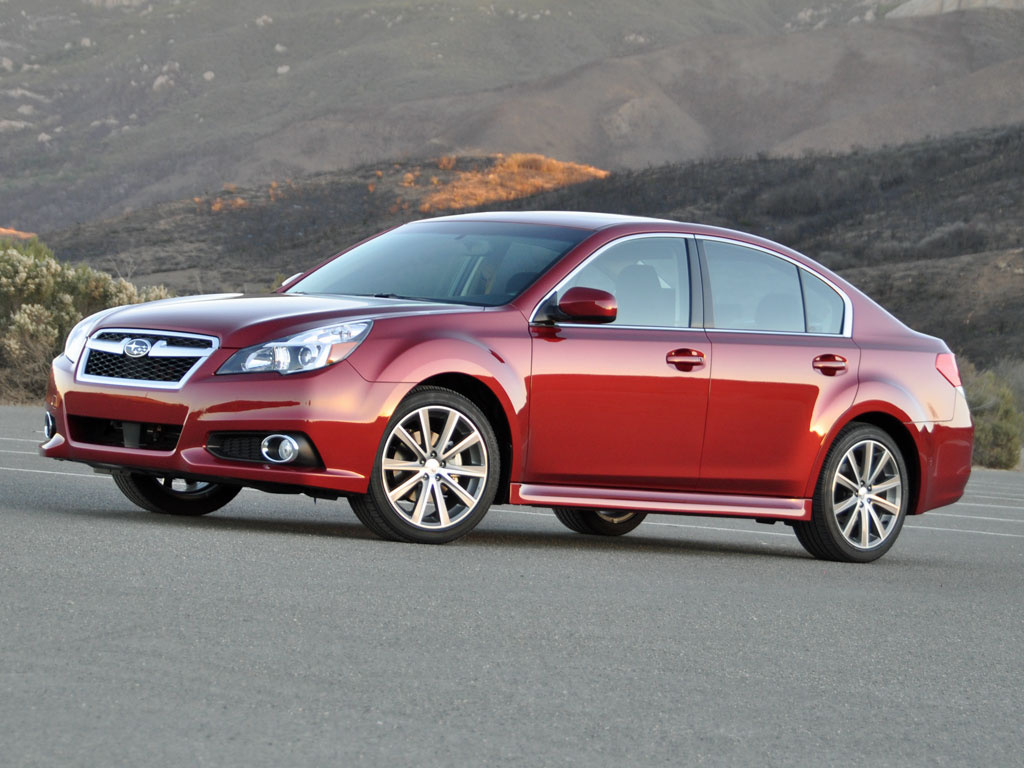
Fifth Generation (2010–2014)
The fifth-generation Legacy was bigger and more fuel efficient but lost some of its enthusiast following, especially after it ditched the turbocharged engine after the 2012 model year. It became more mainstream, and by the end of this generation it had transformed into a safe family sedan.
The engine lineup at launch was mostly a carryover from the fourth generation, including the 2.5-litre Boxer four-cylinder in non-turbo and turbo configurations. New additions were a 256-hp 3.6-litre Boxer six-cylinder engine, a new six-speed manual transmission for the four-cylinder models, and an optional CVT, known as Lineartronic. The Legacy sedan became the only body style.
Trims in Canada included the 2.5i, 2.5i PZEV, 2.5i Sport, 2.5i Limited, 2.5GT (the sole version with the turbocharged engine), 3.6R, and 3.6R Limited. Standard features comprised a six-speed manual transmission, 16-inch steel wheels, steering-wheel-mounted audio and cruise controls, AM/FM stereo with an aux input, a single CD player, a height-adjustable driver’s seat, front side and side-curtain airbags, keyless entry, and Vehicle Dynamic Control with traction control. The Subaru Legacy PZEV had 16-inch alloy wheels, a power driver's seat, a driver's auto up/down window, a stainless steel exhaust tip, and emissions control.
The Sport trim added a 10-way power driver’s seat, 17-inch alloy wheels, a windshield wiper de-icer, a power sunroof, a rear spoiler, a leather-wrapped wheel, a USB and iPod media hub, Sirius satellite radio, and Bluetooth. On the Limited, dual-zone automatic climate control was added along with a power passenger seat, a six-CD and MP3 premium stereo with nine Harman Kardon speakers, leather upholstery, and woodgrain trim.
The 2.5GT was the sporty option with 18-inch alloy wheels, a functional hood scoop, a rear spoiler, twin mufflers with stainless steel exhaust tips, and titanium trim as well as technology upgrades. Packaging on the 3.6R and 3.6R Limited was similar to the 2.5i Sport and Limited trims respectively.
The fifth-gen Legacy received a facelift in 2013 and ditched the turbo engine. It also got some styling updates, a retuned suspension and a tweaked CVT. Trims at this point included 2.5i, 2.5i Convenience (with a PZEV option), 2.5i Touring, 2.5i Limited, and 3.6R Limited. This is also when Subaru introduced its EyeSight driver assist safety suite on the Legacy, initially available only as an option on the 3.6R Limited and joining the 3.6R as standard and 2.5i Limited as an option in 2014.
In Canada, fifth-generation models range in price from as low as $4,000 for very high-kilometre models and $14,000 for newer lower-kilometre examples in good condition. Average prices are typically between $8,000 and $10,000.
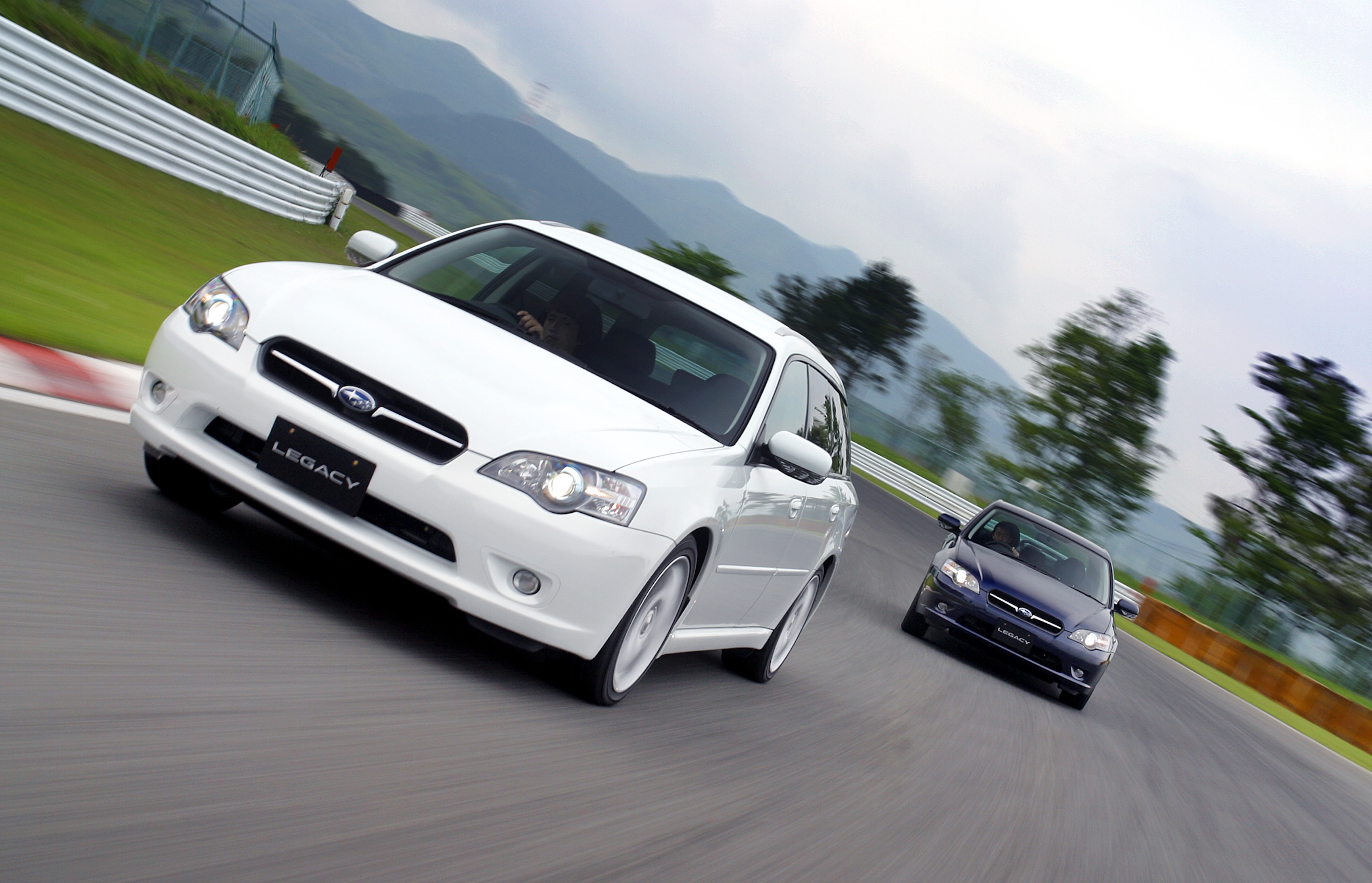
Fourth Generation (2005–2009)
The fourth-generation Subaru Legacy marked the return of the turbo engine to North America. This generation blended refinement and performance with the turbo models offering a decent midsize sports sedan alternative.
Two powertrains were available at launch: the 175-hp 2.5-litre Boxer four-cylinder engine and the 250-hp 2.5-litre Boxer four-cylinder turbo. The Legacy base engine was available with the 2.5i and the 2.5i Limited, while the turbo came with the 2.5 GT and the 2.5 GT Limited. The wagon was offered in all trims. A five-speed manual transmission was standard, and a four-speed automatic was available. AWD remained standard.
The spec.B trim debuted in Canada in 2007 with a Bilstein sport suspension, 18-inch wheels, SI-Drive mode, and a six-speed manual transmission borrowed from the WRX STI.
In 2008, the fourth-gen Legacy was refreshed with new front and rear styling, an updated grille, new bumpers, updated headlights, and interior revisions. In the U.S. this was the first model year where the sedan was the only body style available, but the wagon body style continued in Canada through to the end of this generation.
The Subaru Legacy 3.0R was introduced in Canada for 2009 with a new 3.0-litre horizontally opposed six-cylinder engine and a five-speed automatic transmission. New PZEV sedan and wagon models debuted, the 2.5GT models were discontinued, and some equipment was shuffled between trim levels.
The fourth-generation Subaru Legacy is now hard to find on the Canadian used vehicle market. We found only a small handful of models in our search ranging in price from less than $2,000 to upwards of $12,000.
Third Generation (2000–2004)
The third-generation Subaru Legacy focused on improved safety, refinement, and interior space. While this version still offered both sedan and wagon body styles, the Outback — though technically still a Legacy — became a full spinoff and was marketed as a standalone model.
The 2.2-litre engine was dropped, and the only available unit was the carried-over 165-hp 2.5-litre four cylinder. The five-speed manual and the four-speed automatic transmissions were still available, and AWD was standard across the lineup. It’s worth noting that while a turbocharged engine was available in the Japanese Domestic Market (JDM), it was not available in North America in this generation.
At launch, trims comprised the L, GT and Limited for the sedan and Brighton, Outback, and Outback Limited for the wagon. All models had anti-lock brakes and dual front airbags as standard, while the Limited added side-impact airbags. A dual-pane sunroof, a limited slip differential, a sport suspension, power seats, a CD player, wood trim, heated seats, and leather upholstery were among the available features. Other additions included front and rear cupholders, daytime running lights, and a larger instrument panel.
A 2003 facelift included sharper headlights, revised bumpers, and an upgraded interior.
Subaru Legacy units in this model year range are all but extinct in Canada. If you choose to import one from the United States as a classic car, prices there range from USD$3,000 to about USD$11,000. The average — if you’re lucky enough to find one as they’re also rare south of the border — is around USD$4,000.
Second Generation (1995–1999)
While the first-generation Subaru Legacy took aim at the midsize car market, the second generation arguably put Subaru on the path to being an adventure lifestyle brand. This is due to the introduction of the Legacy Outback wagon trim package with a raised suspension, extra body cladding, and standard AWD.
At launch, the second-generation Legacy still had sedan and wagon body styles, and all models were equipped with a 137-hp 2.2-litre four-cylinder engine with five-speed manual and four-speed automatic transmission options. FWD was still offered, and AWD was available.
In 1996, the Legacy added a newly available 155-hp 2.5-litre four-cylinder engine. The base trim’s name was changed to Brighton, and by 1997 AWD was standard on most trims with FWD being phased out. The second-gen Legacy was refreshed in 1998 with new headlights, a new grille, new bumpers, and new interior trim, while the 2.5-litre engine was bumped to 165 hp.
We found no examples of the second-generation Subaru Legacy in our research. Used examples are also relatively rare in the United States, where we found less than 20 vehicles available nationwide at the time of writing, most of them wagons. The average price for a vehicle in this generation is around USD$4,000, though there were a couple of outliers: one 1999 model with 62,000 miles was priced at USD$44,999.
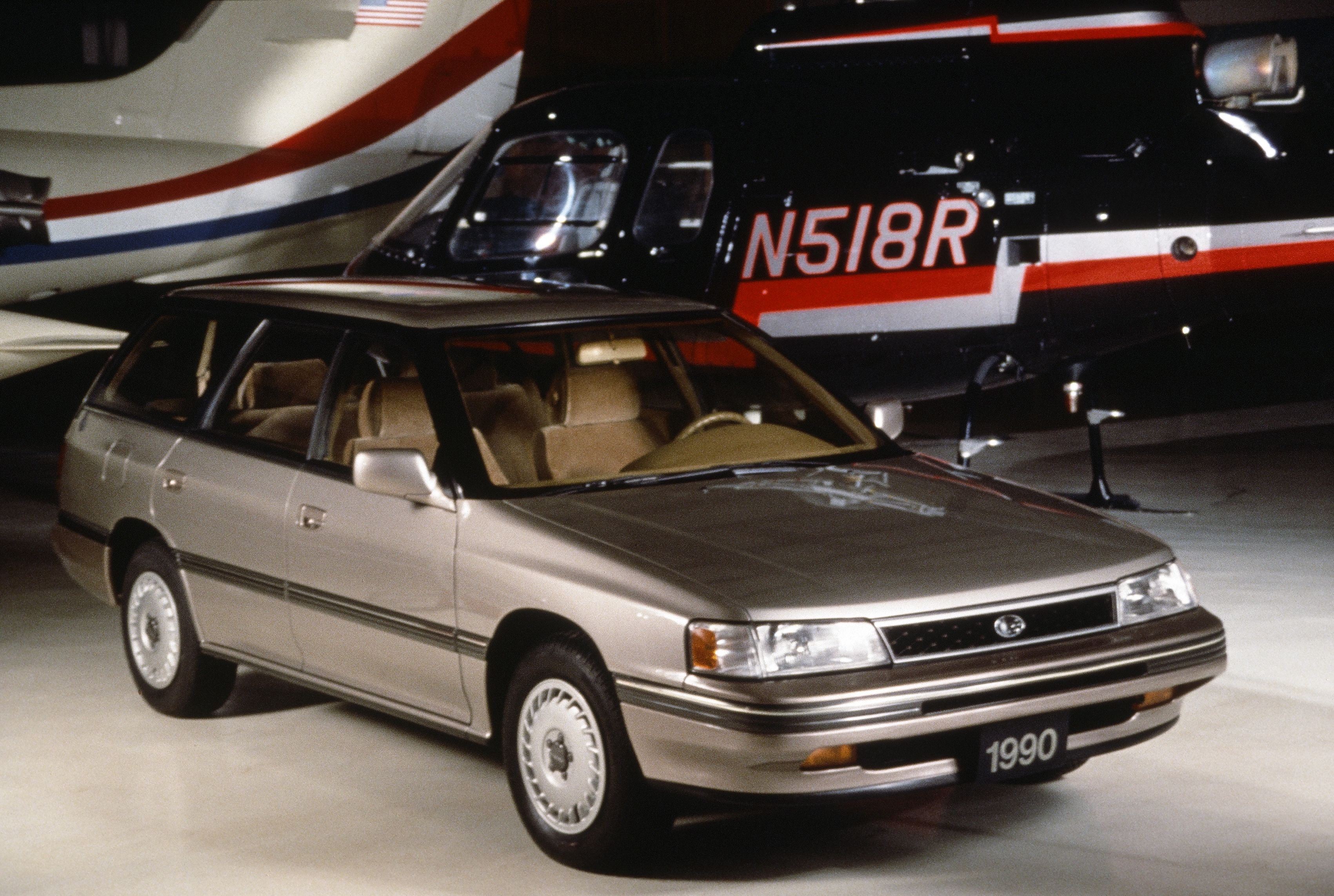
First Generation (1990–1994)
When Subaru launched the first-generation Legacy, it was to compete against the likes of the Toyota Camry, Honda Accord, and Mazda 626. It had both sedan and wagon body styles and marked Subaru’s move into the mainstream midsize car market. It was also the first Subaru built in North America.
At launch, FWD was standard, but AWD was available. It was equipped with a 130-hp 2.2-litre four-cylinder engine. Both five-speed manual and four-speed automatic transmissions were available. The first-gen Legacy added a 160-hp 2.2-litre turbo to the lineup in 1991 along with a Sport Sedan trim that had standard AWD. In 1992, the Legacy was facelifted with a new grille, headlights, hood, and interior updates.
Always at the forefront of safety, Subaru included motorized “passive” seatbelts through the 1994 model year. Driver’s airbags became an option in 1992 and standard in 1993.
First-generation examples are incredibly hard to come by anywhere in North America. We saw none in Canada in our research and just two for sale nationwide in the U.S. Both were 1993 wagons with more than 200,000 miles. The good news is that they cost about USD$2,000.
Related Topics