Now in its sixth generation, the Subaru Impreza has had a huge impact on the Japanese brand, proving that it could be more than a niche player. Although earlier Impreza models flirted with the enthusiast set in WRX and STI trims, later generations pushed the compact vehicle into the mainstream, making it a value leader with standard all-wheel drive (AWD) and plenty of safety features. Throughout its lifetime, the Impreza has rivalled the Mazda 3, Honda Civic, and Toyota Corolla, often as the affordable option, especially considering it had standard AWD for most of its existence. The Mazda 3, for example, didn’t start offering AWD until 2019, and the modern Civic doesn’t offer it at all.
Subaru Impreza Buying Guide: Cost, Reliability, and the Best Years to Buy
Search for Subaru Impreza
See all


Positioned as the entry into the Subaru brand, the Impreza costs slightly less than the related Crosstrek subcompact SUV. For the used car shopper, it’s both a blessing and a curse that Subaru vehicles hold their value. But owner satisfaction is generally high, and sellers will reap the benefit of higher resale values.
Our buying guide looks at the history of the Impreza over its six generations, advice on which are the best and worst versions to buy, and how much you can expect to pay for one.
Subaru Impreza: Cost, Reliability, and the Best Years to Buy
- Frequently Asked Questions
- Subaru Impreza Pros and Cons
- Subaru Impreza Generations
- Subaru Impreza Sixth Generation (2024–Present)
- Subaru Impreza Fifth Generation (2017–2023)
- Subaru Impreza Fourth Generation (2012–2016)
- Subaru Impreza Third Generation (2008–2011)
- Subaru Impreza Second Generation (2002–2007)
- Subaru Impreza First Generation (1993–2001)
Frequently Asked Questions
Which Subaru Impreza years are the best?
For newer models, the sweet spot is between the 2020 and 2023 model years at the end of the fifth generation. The U.S. National Highway Traffic Safety Administration (NHTSA) website shows fewer complaints and recalls for those models than for previous years, and this is where the Reliability Verdict starts to go up on the Consumer Reports website. The best of the bunch will be the 2023 model year.
What are the worst Subaru Impreza years?
The Subaru Impreza had a rough start as earlier generations were plagued by engine problems and transmission failures. CarComplaints.com calls 2012 the worst model year due to engine issues, many of which revolve around excessive oil consumption and unintended acceleration. Looking at the NHTSA website for overall complaints and recalls, 2002 through 2013 look like less-than-ideal picks. Consumer Reports gives the entire fourth generation below-average Reliability Verdicts.
Is a used Subaru Impreza a good deal?
Subaru vehicles tend to hold their value fairly well, so used examples can be expensive. The most basic vehicle from the 2020 model year still costs around $20,000, and that nearly matches the original MSRP. To get the best bang per buck we recommend looking for top trims, which will still be $23,000 or more, but that’s roughly $8,000 off the original price. Buyers who want to take a chance on a fourth-generation model from, say, 2015, will pay around $12,000, which is nearly 50% off the original MSRP.
Subaru Impreza Pros and Cons
Pros:
- Standard all-wheel drive
- Fun to drive
- Comfortable
Cons:
- Some interior materials feel cheap
- Not much cargo space
- Uninspired styling
Subaru Impreza Generations
Subaru Impreza Sixth Generation (2024–Present)
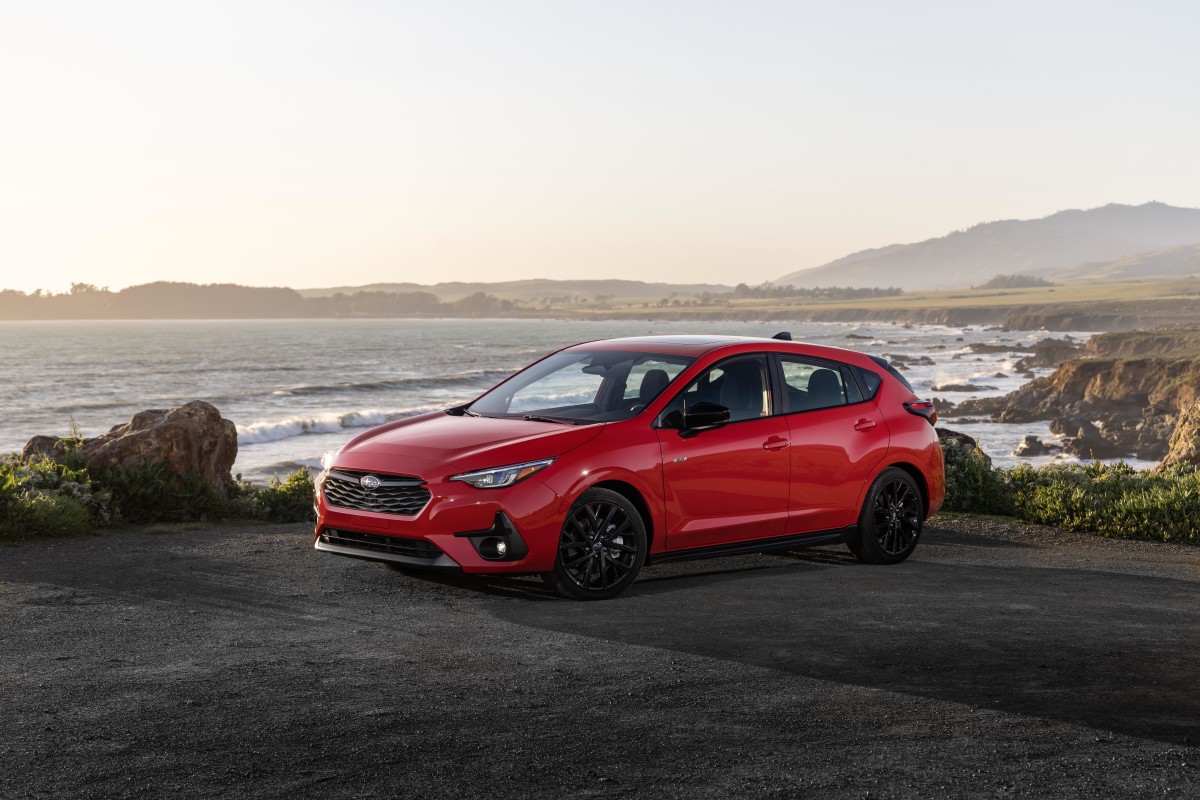
The 2024 Subaru Impreza marked the beginning of the sixth generation and the end of an era. The compact car became available only as a five-door hatchback and the manual transmission was gone. This generation also brought a more rigid body structure, more tech, and the return of a top-tier RS trim.
Two engines were available from launch. Convenience and Touring trims have a 152-horsepower 2.0-litre boxer engine, whereas the Subaru Impreza RS gets the 182-hp 2.5-litre boxer engine. The continuously variable transmission (CVT) is now the only option on all trims, and Subaru's EyeSight safety suite is standard.
The base Convenience model came equipped with a cloth interior, 16-inch wheels, dual-zone climate control, steering-responsive LED headlights, heated front seats, dual 7-inch touchscreens, and the Subaru Starlink Multimedia system with wired-in Apple CarPlay and Android Auto. The Touring model upgraded to a vertical 11.6-inch Multimedia Plus system with wireless Apple CarPlay and Android Auto, 17-inch alloy wheels, upgraded cloth upholstery, a leather-wrapped steering wheel, blind spot monitoring, rear cross-traffic alert, and paddle shifters. The RS trim, in addition to the more powerful engine, included 18-inch wheels, RS cloth upholstery with red accents, a power sunroof, a wireless phone charger, and a 10-speaker Harman Kardon premium audio system.
Since this is the current generation, prices will be more expensive. The baseline is about $22,000, whereas a 2025 Impreza RS with just over 10,000 kilometres on the clock goes for around $34,000. Buyers who want something with fewer than 50,000 kilometres and no reported damage will likely pay between $23,000 and $32,000.
Subaru Impreza Fifth Generation (2017–2023)
The fifth generation of the Subaru Impreza was perhaps the largest generational advancement in the model's lifetime. It debuted the new Subaru Global Platform (SGP) with increased chassis rigidity and a lower centre of gravity. The other big change was the addition of Apple CarPlay and Android Auto, which were standard across all trims. This generation also brought better handling and ride quality. The performance emphasis was completely gone, which also meant a gradual phasing out of the manual transmission. Impreza sedan and hatchback body styles were still available, and Subaru’s Symmetrical All-Wheel-Drive remained standard.
The fifth-gen Impreza kept the 2.0-litre boxer engine, but it was now direct-injected and delivered 152 horsepower. A five-speed manual was still available on the lower trims, but the continuously variable transmission (CVT) became more prominent. Trim levels in Canada included the base Convenience, Touring, Sport, and Sport-tech.
Other than AWD, standard equipment included a new Starlink audio system with a 6.5-inch infotainment touchscreen, Apple CarPlay and Android Auto, cruise control, and incline-start assist. Available features included welcome lighting, illuminated power window switches, an 8-inch touchscreen, six-way power adjustable driver’s seat, heated front seats, a heated steering wheel, steering responsive headlights, EyeSight driver-assistance technology, and a moonroof.
Neither 2018 nor 2019 model years received major changes, although Subaru’s EyeSight system was added to more trims. The 2020 model year saw a mid-cycle refresh with a revised front bumper, an updated grille, new wheel designs, updated climate controls, and infotainment upgrades. At this time, EyeSight became standard on all CVT-equipped models. After the refresh, the Impreza moved through the rest of this generation without major changes. The last year of the fifth-generation Impreza marked the last year of the sedan body style and the manual transmission in the North American market.
Used Subaru Imprezas of this generation are widely available with prices ranging from about $8,000 to $27,000. Those with no reported damage and fewer than 100,000 kilometres cost at least $13,000, and there are several good options at or below $15,000.
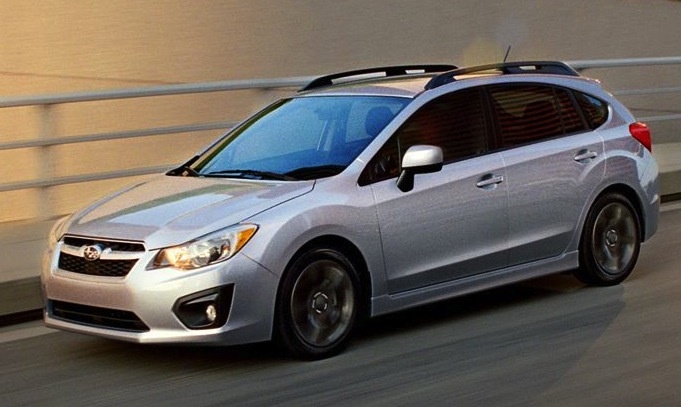
Subaru Impreza Fourth Generation (2012–2016)
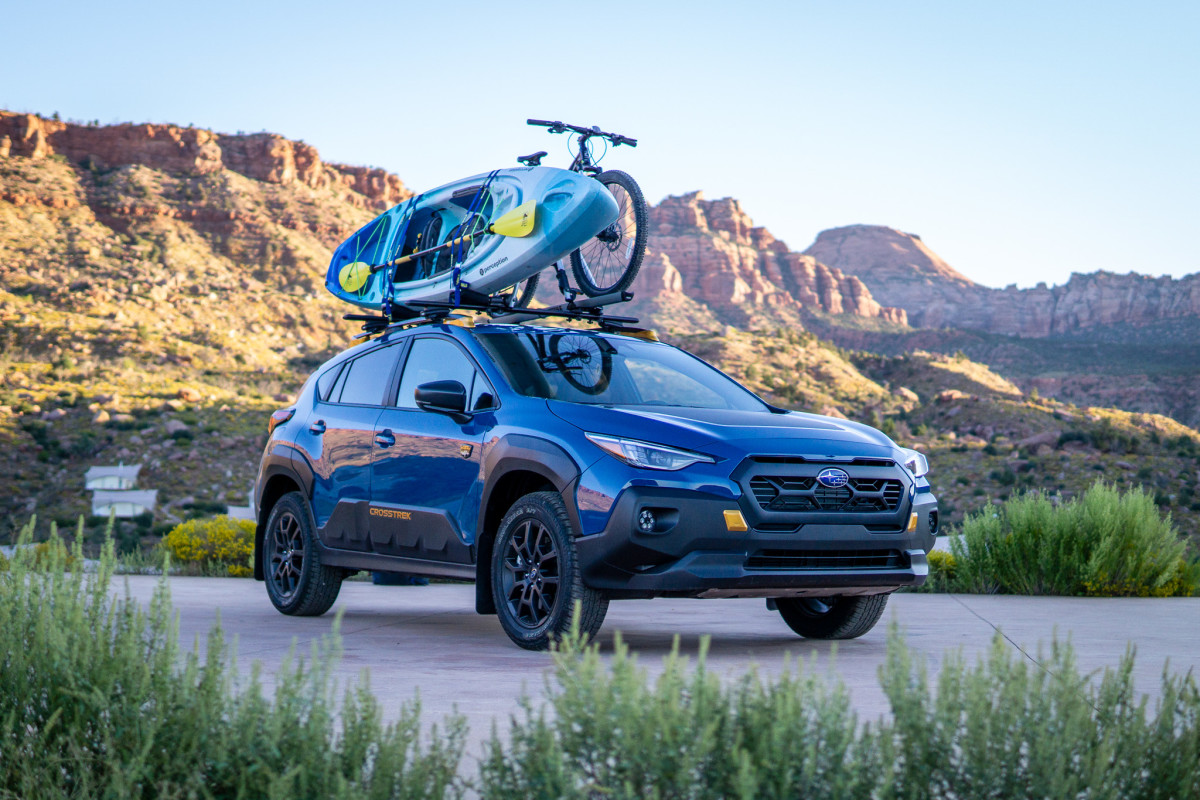
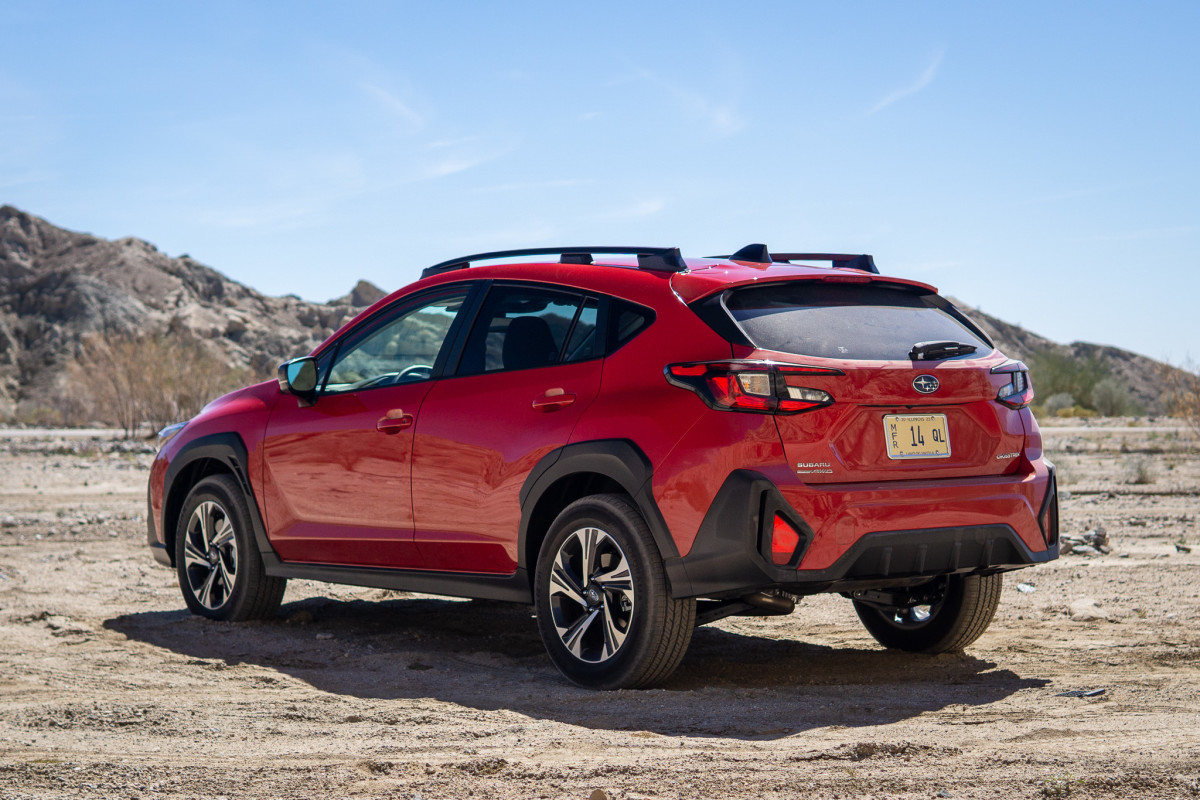
The fourth generation of the Subaru Impreza introduced a new engine, the Lineartronic continuously variable transmission (CVT), advanced driver assist systems, and improved fuel economy. The WRX model began to separate into its own lineup. Around this time, the new Crosstrek emerged as its own vehicle line based on the Impreza but with a more rugged appearance and extra ground clearance. Subaru’s Symmetrical All-Wheel Drive was still standard, which made the fuel economy improvements even more impressive.
The primary powertrain was a new 148-hp 2.0-litre boxer engine paired with either a five-speed manual or CVT. In Canada, trims included the base 2.0i, Touring Package, Sport Package, and Limited Package. All four were available in both sedan and hatchback body styles.
The 2013 and 2014 model years saw minor changes. Bluetooth phone pairing and iPod connectivity became standard in 2013.
Also in 2015, the Subaru Impreza got a mid-cycle refresh that included a revised front bumper and grille, updated headlights, and some rear styling changes. A rear-view camera became standard. The interior got a new infotainment system and improved materials. This was the year Subaru’s EyeSight with adaptive cruise control, pre-collision braking, and lane-departure warning became available in the Impreza lineup. It was also the year that the WRX became a standalone model.
Used examples that have covered 250,000 kilometres or more can be found from as little as $3,000. As much as they're a good advertisement for the Impreza’s longevity, buyers might prefer a car with less than 150,000 kilometres on the clock, for which they should budget at least $9,000.
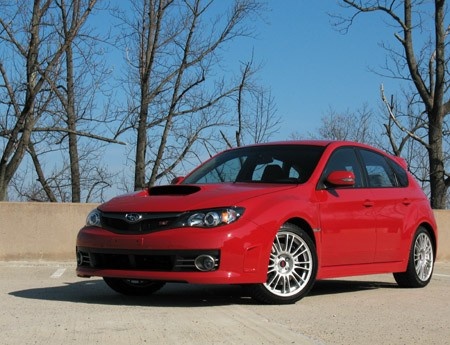
Subaru Impreza Third Generation (2008–2011)
As the third-generation Subaru Impreza came to market, the goal was to broaden Subaru’s customer base and make it more competitive in the compact segment. The wagon body style was gone in favour of the Impreza hatchback, and the model got longer and wider, which translated into a lot more rear seat space.
Although the Outback Sport and some of the specialty WRX trims were dropped, the core trims remained the same. The 2.5i trims were equipped with a 170-hp 2.5-litre engine paired with either a five-speed manual or four-speed automatic. The 2008 Impreza WRX got a 224-hp 2.5-litre turbo paired with a five-speed manual, and the WRX STI got a 305-hp 2.5-litre turbo paired with a six-speed manual as well as a wide-body design. Both the WRX and WRX STI were only available as a hatchback at launch.
Enthusiasts complained that the WRX got too soft with its detuned engine and more comfortable suspension, so Subaru gave the Impreza WRX a new WRX265 trim in 2009, increasing horsepower to 265, stiffening the suspension, adding wider tires, and making the tuning more aggressive. In 2010, a Limited Package became available with specs including 17-inch alloy wheels, iPod and USB integration, automatic climate control, and leather rally-style seats.
Heading into the last year of this generation, the Impreza got a refresh with a new front bumper and grille. The WRX STI got a sedan version, and the WRX received the wide-body fenders from the STI. There were also some tech upgrades in 2011, including a new radio in all but the base model that added Bluetooth hands-free phone connectivity, iPod integration, a USB port, and satellite radio.
Third-generation Subaru Imprezas are becoming scarce in Canada. Buyers will likely have to travel to find one, and prices range from about $4,000 to $10,000.
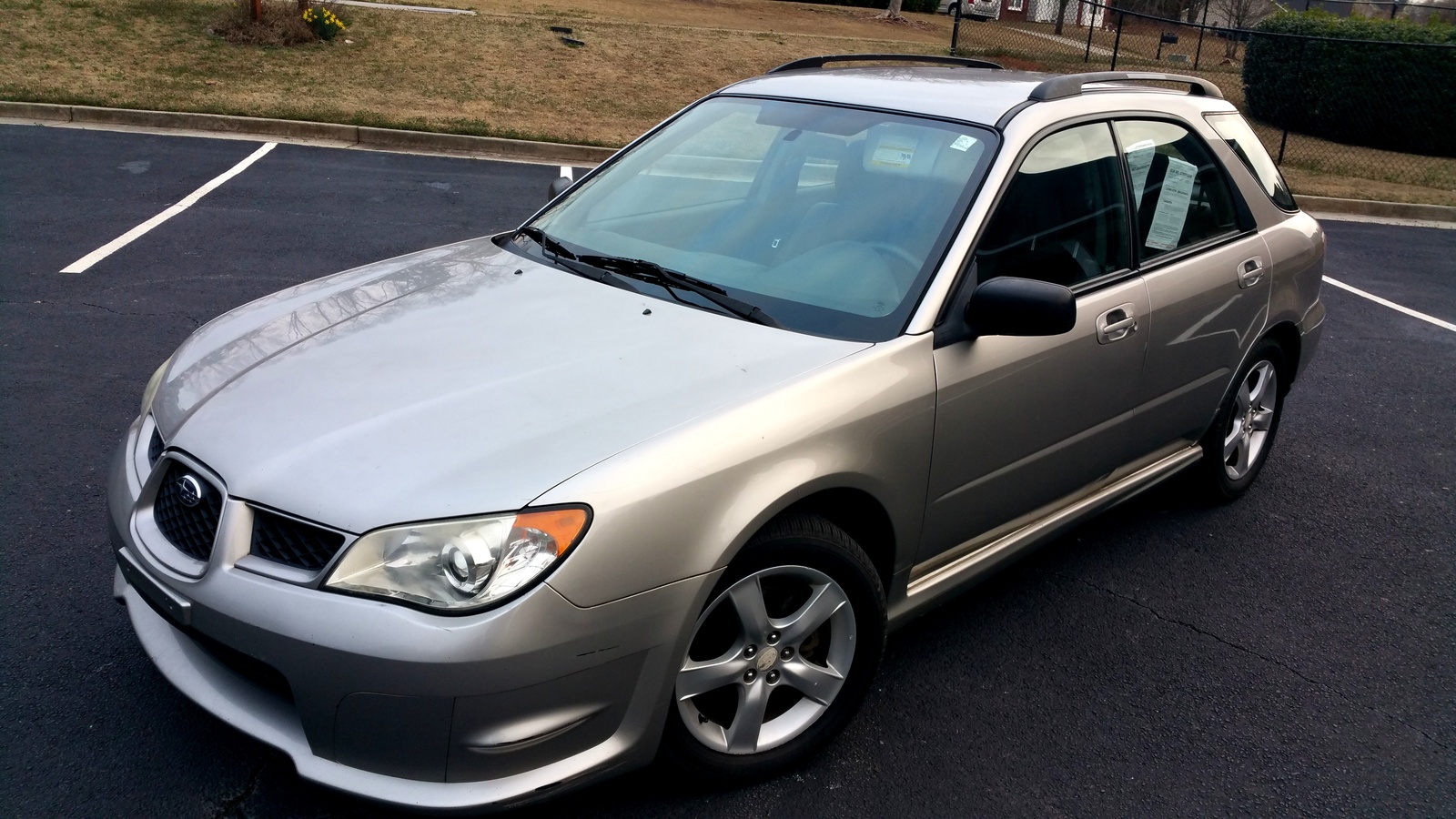
Subaru Impreza Second Generation (2002–2007)
The second-generation Subaru Impreza was marked by frequent design changes and turbocharged WRX fever. The 2002 Subaru Impreza grew a little and adopted a controversial “Bugeye” design with round headlights. Both the sedan and wagon body styles returned, and Symmetrical All-Wheel Drive was standard across the lineup.
The base engine was a 165-hp 2.5-litre four-cylinder boxer, appearing in the TS, RS, and Outback Sport trims. New for this generation was the 227-hp 2.0-litre that made its debut in the first North American version of the Impreza WRX. This model came with a functional hood scoop, five-speed manual transmission (with an optional four-speed automatic transmission), a sport suspension, and larger brakes. At launch it was only offered as a sedan.
In 2003, the Impreza WRX added the wagon body style, but the bigger changes came in 2004 with an exterior facelift that brought more rectangular headlights and the addition of the Impreza WRX STI, which got a 300-hp 2.5-litre turbo, a six-speed manual transmission, Brembo brakes, and a driver-controlled centre differential (DCCD). The Impreza WRX STI was only available in sedan form. The 2005 model year brought an interior refresh with better materials and a centre console redesign.
There was another shake-up in 2006 with yet another facelift. This one was dubbed the “Hawk-Eye,” featuring more elegant headlights and a three-part grille. This model year also saw some trim changes with Impreza’s base model becoming the 2.5i.
In the final year of this generation, the Outback Sport was discontinued in Canada. Second-generation Imprezas are now hard to find on the used vehicle market in Canada. Prices range from about $2,000 to $8,000.
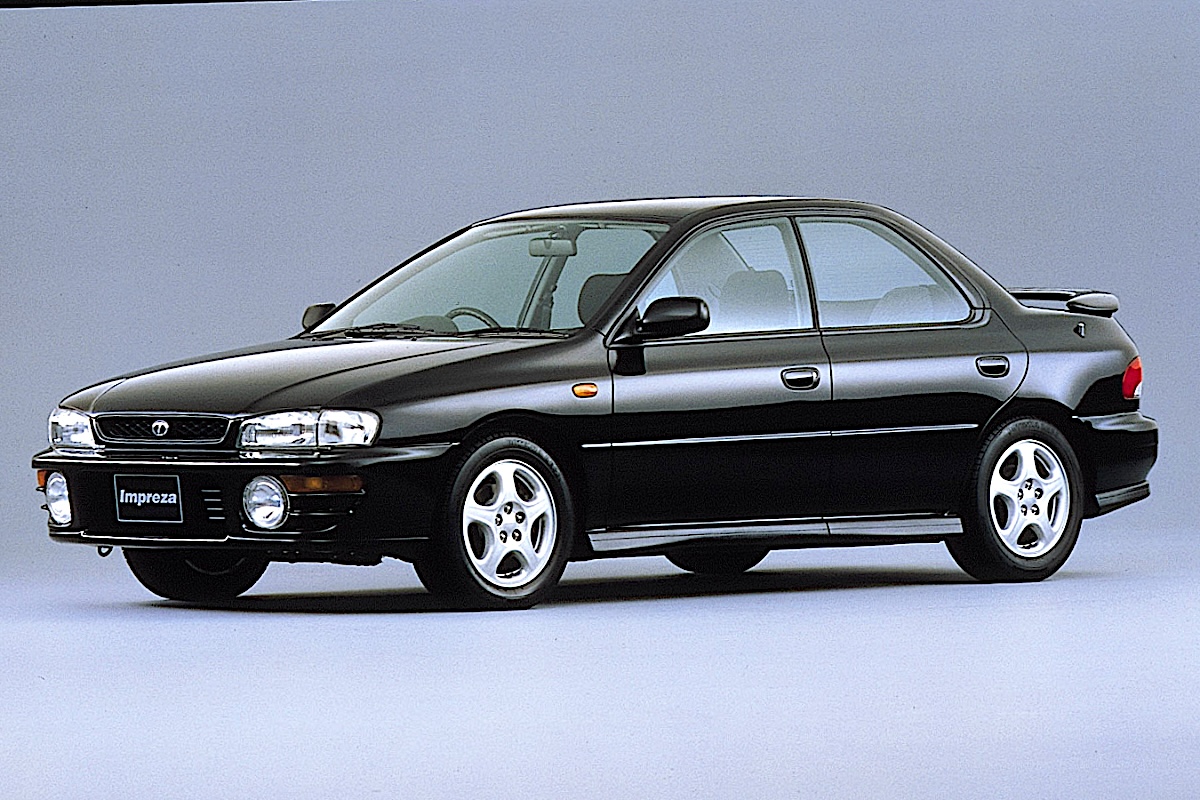
Subaru Impreza First Generation (1993–2001)
When the first-generation Subaru Impreza entered North America in 1993, it was available in both sedan and wagon body styles. While it was in this generation that Subaru’s Symmetrical All-Wheel Drive became standard, it was also available with front-wheel drive for the first few model years. It was equipped with a 110-hp, 1.8-litre four-cylinder boxer engine, paired with a five-speed manual or four-speed automatic transmission.
The Impreza saw its first big update in 1995 with the addition of a 135-hp, 2.2-litre engine available in higher trims. A two-door coupe body style was also introduced, and the rugged Outback Sport trim with a suspension lift made its first appearance. In 1997, the Impreza got a mid-cycle refresh with some interior and exterior styling changes. The 1.8-litre engine disappeared, and the 2.2-litre engine became standard. This was also the year that AWD became standard across the Impreza lineup.
In the early years the Impreza was more of a practical and affordable vehicle, but in 1998 the 2.5RS Coupe was introduced, and the first enthusiast-focused Impreza in North America was born. This model had a hood scoop, larger brakes, a rear wing, a rear limited-slip differential, a sport suspension, 16-inch gold wheels, and more aggressive bumpers. The 2.5-litre engine in this model delivered 165 hp. In 2000, the RS trim became available as a sedan, and the Impreza lineup got a refresh with updated headlights and taillights, interior revisions, and a new front bumper. The last model year of the generation was largely unchanged.
First-generation Imprezas are now all but extinct in Canada. If you can find one, you’ll likely find it has collectible status with prices well into five digits.
Related Topics

by Jill Ciminillo
Jill Ciminillo is a Chicago-based automotive writer, influencer, TikTok Creator, YouTube personality, and podcast host, with her articles appearing on websites such as U.S. News & World Report, Capital One Auto Navigator, Consumer Guide Automotive, A Girl's Guide to Cars, and Drive Chicago. Additionally, she co-hosts a weekly Car Stuff radio show via Talk Zone. Previously, Jill has been the automotive editor for the Chicago Sun-Times News Group as well as Sinclair Broadcast Group. She is also a past president for the Midwest Automotive Media Association and has the distinction of being the first female president for that organization. Jill is also currently a juror for the North American Car, Utility and Truck of the Year (NACTOY) and Women's Worldwide Car of the Year (WWCOTY).
The content above is for informational purposes only and should be independently verified. Please see our Terms of Use for more details.


