If you want a manual transmission, look at the 2002 to 2012 model years. Yearn for a V8? Narrow your search between 2011 and 2014 or 2022 and 2025. Looking for something more fuel efficient? Go for the inline-four turbo that was available from 2015 to 2025, first as the Lexus IS 200t, then as the Lexus IS 300. If Apple CarPlay is your jam, you’ll have to start with the 2021 model year.
The Lexus IS is ideal for young professionals or those who rarely bring passengers along for the ride — but it’s less practical for families because the back seat is really tight.
Lexus IS: Cost, Reliability, and the Best Years to Buy
Frequently Asked Questions
Which Lexus IS years are the best?
The newest years are the best bets from a reliability and technology standpoint, but they’re also the most expensive. For older examples, CarComplaints.com shows the 2013 model year has very few complaints, and it also has the lowest number of complaints and recalls of the second generation with the U.S. National Highway Traffic Safety Administration (NHTSA). If you’re looking for a third-generation example, the 2018 model year is a good bet.
What are the worst Lexus IS years?
Though Lexus IS models are typically reliable across the generations, there are a few model years to avoid. The 2007 and 2008 model years in IS 250 and IS 350 forms have an unusually large number of complaints and recalls because of interior accessory problems, and the most reported problem for 2007 was a melting dashboard. With the exception of the 2013 model year, which has very few reported complaints, the second generation is best avoided.
Is a used Lexus IS a good deal?
Considering that the current starting price for a new Lexus IS tops $60,000 at a minimum, a used IS can be a good deal. However, the Lexus brand holds value extremely well in Canada. Sedans from the 2013 model year are selling for $17,000 to $20,000, and you’ll spend at least $25,000 for an early third-generation model with less than 100,000 kilometres on the odometer. If you crave modern technology, such as Apple CarPlay, you’ll want a model from 2021 onwards, prices for which start at around $35,000. But you’ll pay more on average for a Lexus IS than its competition for a reason: these cars have a reputation for being bulletproof, and you’ll also get more of that retained value back when you sell.
Lexus IS Pros and Cons
Pros
- Fun to drive
- Easy-to-use technology
- Standard advanced safety features
Cons
- Not much cargo space
- Cramped back seats
- Poor fuel economy
Lexus IS Generations
Lexus IS Third Generation (2014–Present)
The 2014 model year for the Lexus IS is kind of weird. It ushered in the sedan’s third generation with a radically new design taking a few cues from the Lexus LFA supercar, plus better interior space and a revamped infotainment system. But the convertible carried over unchanged from 2013, and the Lexus IS F received only minor changes such as a carbon fibre rear spoiler.
The powertrains were carried over from the second generation and comprised a 2.5-litre V6, a 3.5-litre V6, and a 5.0-litre V8. Rear-wheel drive (RWD) was standard with all-wheel drive (AWD) available on non-F sedans, and there was no manual transmission. F Sport models (not to be confused with the IS F) added firmer springs and shock absorbers and a recalibrated electric power steering system.
The IS sedan offered a lot of standard luxury-level specs in this generation, including passive entry, push-button start, a 10-way power adjustable driver’s seat, leatherette upholstery, HID headlights with washers, an eight-inch infotainment system, dual-zone climate control, Bluetooth, and more. The new Lexus Enform 2.0 infotainment system was available. This generation also introduced some new available safety features such as automatic high beams, lane departure alert, blind spot monitoring, and rear-cross-traffic alert.
The IS F disappeared from the lineup in 2015. In 2016, the IS lineup lost both the IS 250 and the IS F but gained a 200t model with a 241-hp 2.0-litre four-cylinder turbocharged engine and a 300 AWD model with a 255-hp 3.5-litre V6.
There was a slight refresh for the 2017 model year with revised front and rear ends, a tweaked grille, new headlights and taillights, a bigger infotainment system, and a redesigned centre console. The Lexus Safety System+ was fitted as standard, which included forward collision warning, automatic emergency braking, lane departure warning, and adaptive cruise control.
There was a confusing nomenclature change in 2018, as the Lexus IS 200t with the four-cylinder turbo was renamed the IS 300, and the IS 300 AWD with the V6 engine kept its name. Both V6 engines got a five hp boost. The IS F Black Line Special Edition arrived in 2020 with unique design elements and a limited 900-unit production run.
The 2021 model year brought a significant refresh. There was new exterior styling including fresh taillights, plus a significant tech update. Apple CarPlay and Android Auto were finally included in the infotainment system, and the touchscreen display was updated. Standard features included NuLuxe synthetic leather seats, heated front seats, an eight-inch infotainment screen, passive entry, push-button start, dual automatic climate controls, and 18-inch wheels. The Lexus Safety System+ was standard with automatic emergency braking, pedestrian detection, lane departure warning, adaptive cruise control, automatic high beams, and lane trace assist. New for this year, blind spot monitoring and rear cross-traffic alert were also standard.
Available features included a 17-speaker Mark Levinson premium audio system, an F Sport Package with design enhancements, a power moonroof, and a 10.3-inch infotainment screen with navigation.
The IS 500 arrived in 2022, which marked the return of the 5.0-litre V8 engine. In addition to 472 hp and a 0-100 km/h time of 4.6 seconds, this performance-oriented model boasts a raised hood line, dark chrome accents, a quad-exit exhaust, an eight-speed Sport Direct Shift automatic transmission, and F Sport badging. It also got the updated Lexus Safety System+ 2.5 safety suite that included improvements to the pre-collision systems as well as the addition of emergency steer assist, all-speed dynamic radar cruise control, lane departure alert with steer assist, enhanced lane trace assist, and road sign assist.
Minor changes in 2023, 2024, and 2025 included the addition of packages and more options.
The 2026 model got another major refresh with a redesigned exterior that included a new grille and more aggressive headlights. The Lexus Interface infotainment system was standard, as was a 12.3-inch touchscreen, while the digital instrument cluster increased to 12.3 inches and the Lexus Safety System+ 3.0 was standard. Both the four-cylinder turbo and the V8 disappeared, leaving the only powertrain as a 311-hp 3.5-litre V6 with standard AWD and the only model as the Lexus IS 350.
This third generation spans more than 10 years, so there’s a lot of price variability among used examples.
If you’re looking for an accident-free vehicle with less than 150,000 kilometres from the first five or six years of the third generation, you’ll likely pay between $20,000 and $30,000. Post-2021 tech upgrade models start at roughly $35,000. If you must have the V8, you’ll likely pay closer to $60,000 and may need to travel to find one.
Lexus IS Second Generation (2006–2013)
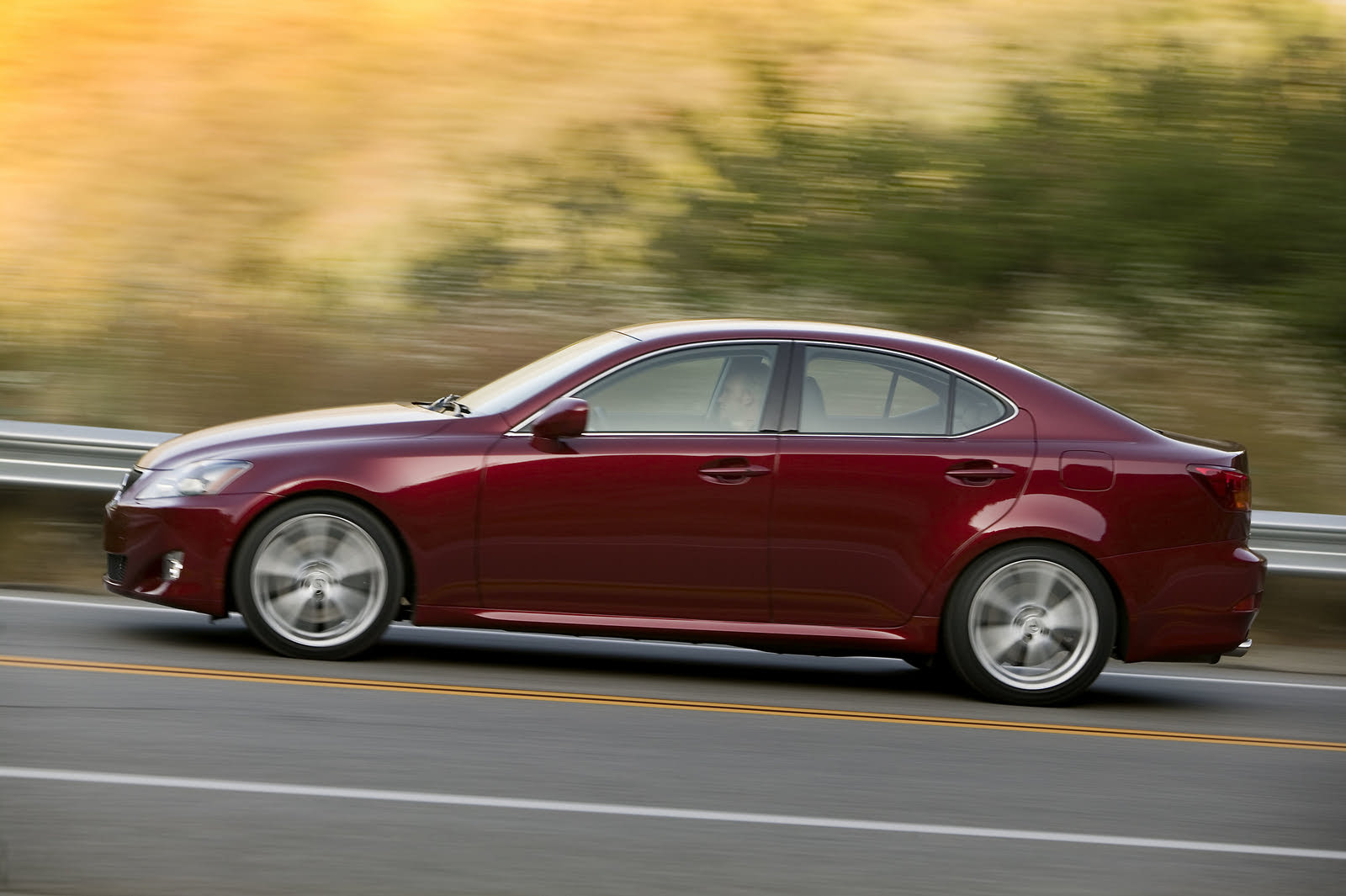
The second-generation Lexus IS was introduced at the 2005 New York International Auto Show. The wagon disappeared, and the sedan was wider and longer with nearly six centimetres extra in the wheelbase. It had more coupe-like styling with a fastback roofline, and it ushered in new tech features such as keyless ignition, electroluminescence display lighting, adaptive cruise control, and pre-collision safety systems.
For 2006, we saw two new V6 engines: a 204-hp 2.5-litre and a 306-hp 3.5-litre, which were used in the Lexus IS 250 and IS 350 respectively. Six-speed automatic and six-speed manual transmissions were available. While RWD was still standard on this compact sedan, AWD was offered for the first time but only with the IS 250 with an automatic transmission.
The IS retained its sporty nature, but this new generation also added available luxury features such as 10-way power adjustable front seats, heated and ventilated front seats, a power tilt-and-telescoping steering wheel, a power rear sunshade, a seven-inch touchscreen DVD navigation system with a back-up camera, a 14-speaker Mark Levinson premium audio system, and intuitive park assist.
In 2009, the IS got a refresh with new front and rear bumpers, folding rear headrests, new interior colours, and improved suspension and steering. A hardtop convertible two-door model arrived in 2010. There was another refresh in 2011 with some interior upgrades and slight exterior changes, and Lexus also added Bluetooth and an AWD option to the IS 350 models. This was also the year that the high-performance IS F came on the scene with a 416-hp 5.0-litre V8 engine and an eight-speed Sport Direct Shift transmission. It featured a lowered suspension, 19-inch wheels, and a specially calibrated version of Lexus’s Vehicle Dynamics Integrated Management system.
There were only minor changes and upgrades in 2012 and 2013. Following the latter year, the six-speed manual was discontinued.
The second-generation Lexus IS is not as plentiful on the Canadian used vehicle market as it once was. Prices start from $5,000 or less for models with well over 200,000 kilometres on the odometer. On the high end, we saw Lexus IS F models priced at $25,000 to $35,000. Lexus IS convertibles range between $16,000 and $23,000, but if you’re just looking for a sedan with no accidents and fewer than 150,000 kilometres, you’ll likely pay between $10,000 and $20,000.
Lexus IS First Generation (2001–2005)
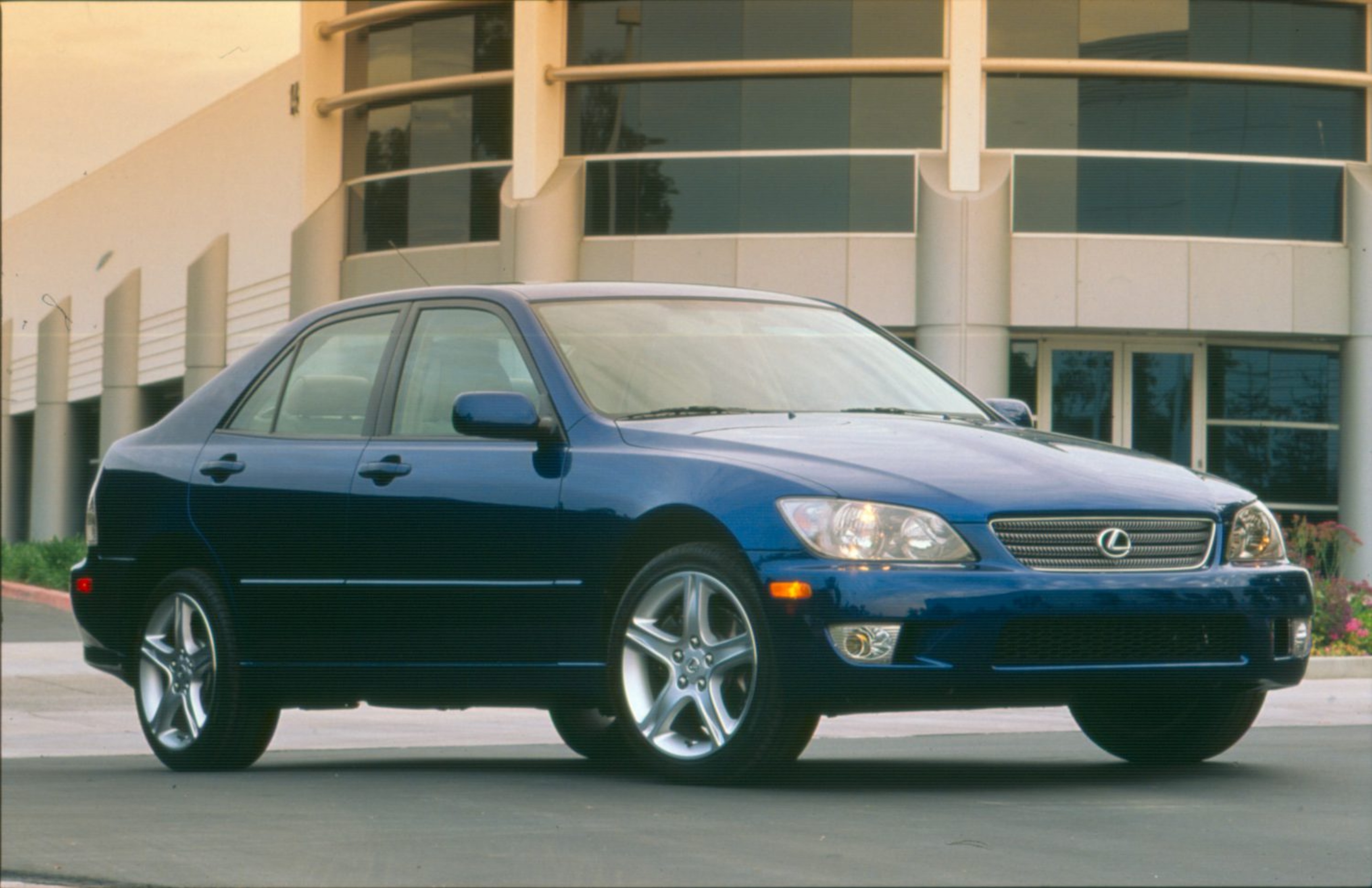
The first-generation Lexus IS was announced in 1999, and it went on sale in North America in 2000 as a 2001 model. It had a front-engine, RWD layout, and it set the stage for a future of dynamic driving for the Lexus brand. Fun fact: according to Lexus, “IS” is short for “intelligent sport.”
Launched as the IS 300, this compact sedan was designed to compete with the likes of the BMW 3 Series and the Mercedes-Benz C-Class. It was equipped with a 215-hp 3.0-litre inline six-cylinder engine. Initially the IS was equipped with a five-speed automatic transmission, but a six-speed manual was introduced for the 2002 model year.
It had standard cloth sport seats (leather seats were available), 17-inch alloy wheels, automatic climate control, power windows, and an eight-speaker premium audio system with a cassette player.
Though initially only offered as a sedan, a SportCross Hatchback (aka wagon body style) was offered from 2002 through 2005 and was only available with an automatic transmission. The IS got a refresh for 2004 that included redesigned fog lamps, a new 11-spoke wheel design, a smoked surrounding trim for the headlights and taillights, a storage compartment on the dash, and an automatic drive-away door locking system.
First-gen Lexus IS models are now quite rare, so you’ll likely need to travel to find them. We saw prices ranging from $2,000 for a 2006 model with more than 300,000 kilometres to about $18,000 for a 2002 SportCross. However, we saw several sedans for sale in the $15,000 range with less than 200,000 km on the odometer.
Related Topics