Jeep Cherokee Buying Guide: Cost, Reliability, and the Best Years to Buy
Frequently Asked Questions
Which Jeep Cherokee years are the best?
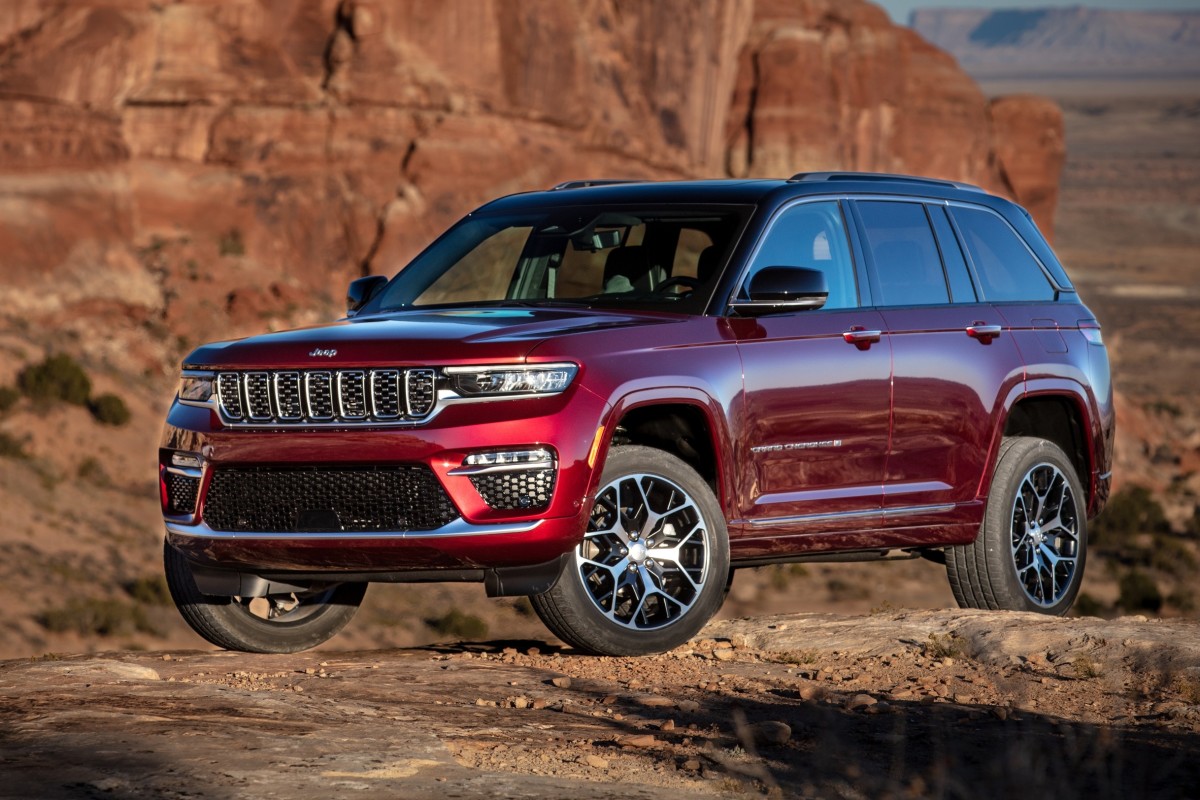
The second generation (1984-2001) is inarguably the best Cherokee for its style, bulletproof powertrains (except the GM V6), and off-road capability. Newer Cherokee models have the name but none of the character that made this vehicle famous.
Which Jeep Cherokee years are the worst?
Early third-generation Cherokee models (2014-2018) had major transmission issues as shown by the 800-plus complaints listed for 2014 and 2015 models at carcomplaints.com.
Is a used Jeep Cherokee a good deal?
The Jeep Cherokee can be a good deal depending on the price, condition, and generation you go for. For the third generation, prices at the time of writing ranged from $6,000 to $40,000 for 2014 to 2023 Cherokee models. Given the transmission issues that affect this generation and the age of previous versions, a thorough test drive is a sensible idea.
Pros and Cons
Pros:
- Jeep's four-wheel drive capability
- Good styling
- Good value
Cons:
- Poor efficiency
- Some bad engines through the years
- The new model is expensive
Jeep Cherokee Generations
Jeep Cherokee Fourth Generation (2026-Present)
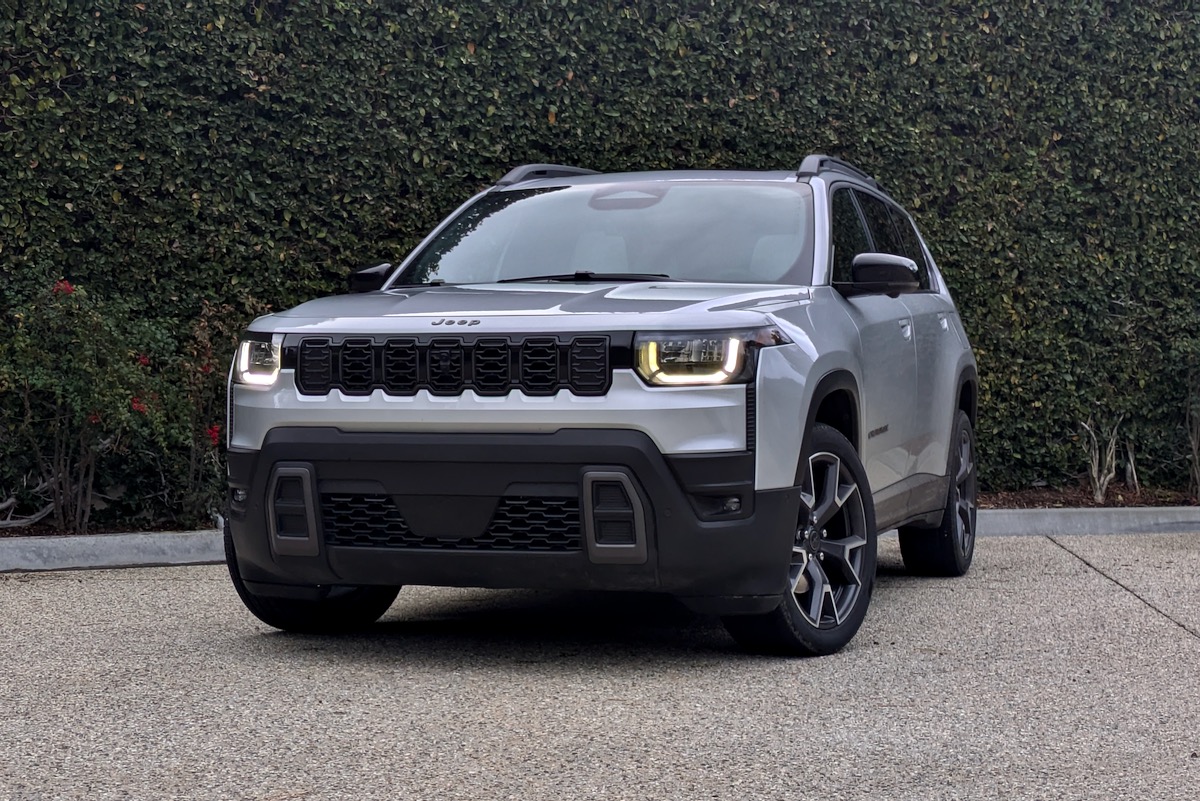
There's an all-new Jeep Cherokee for 2026, marking the return of a model that was discontinued in 2023. Slotting neatly into the gap between the smaller Jeep Compass and the larger Jeep Grand Cherokee, this time around it's a hybrid that brings back some of the chunky style from the XJ-series Cherokee.
The drivetrain is Jeep's first-ever hybrid system and the first Stellantis hybrid powertrain sold in North America. It combines a 1.6-litre turbocharged four-cylinder engine and two electric motors for 210 horsepower and 230 pound-feet of torque with standard all-wheel drive. Jeep claims an estimated 6.3 litres per 100 kilometres combined and more than 800 kilometres of range on a single tank, figures that exceed most competitors in the segment.
On capability, the 2026 Cherokee comes standard with Jeep's Active Drive I 4x4 system with rear-axle disconnect, and a Selec-Terrain management system offering Auto, Sport, Snow, and Sand/Mud modes. Jeep claims best-in-class approach and departure angles of 19.6 and 29.4 degrees, respectively, a breakover angle of 18.8 degrees, and 20.3 centimetres of ground clearance. Towing capacity is rated at 1,587 kilograms (3,500 pounds) — a figure that blows past its competition.
The 2026 Cherokee is wider, taller, and longer than the previous generation and has 30 percent more cargo space. Specs for every new Jeep Cherokee include a digital instrument panel, a 12.3-inch touchscreen with wireless Apple CarPlay and Android Auto, 10 years of wireless over-the-air updates, proximity entry, and rain-sensing wipers. Safety features include driver drowsiness detection, a semi-automated highway driving system, front emergency braking with pedestrian and cyclist detection, front cross-traffic alert, blind spot monitors, and rear emergency braking.
As of early 2026, the Canadian MSRP starts at $42,390 for the base model, $47,390 for the Laredo, $52,390 for the Limited, and $56,390 for the Overland, including destination charges and fees. Production has moved from Ohio to Mexico and is expected to start in early 2026.
Jeep Cherokee Third Generation (2014-2023)
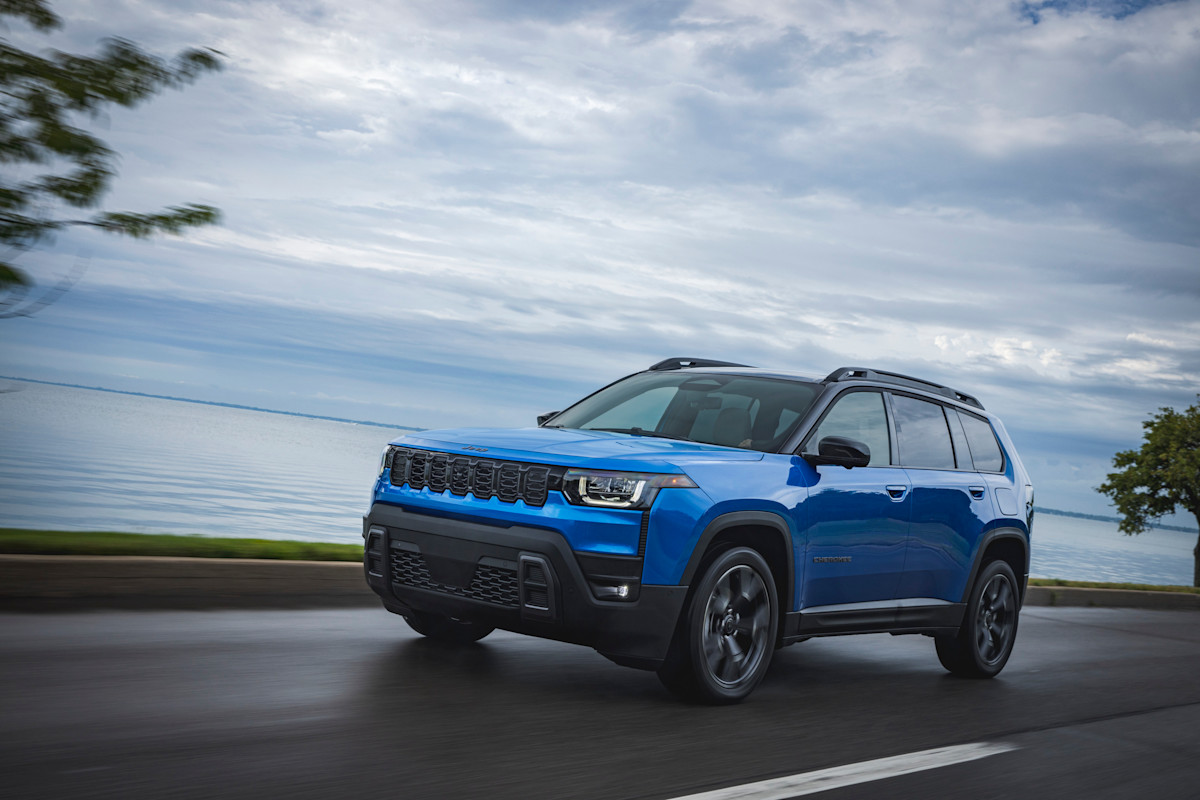
The third Cherokee for North America saw the Jeep brand move the model in a very different direction. It adopted a softer crossover body style with front styling that was in many ways ahead of its time. At either side of a modernized version of Jeep's seven-slot grille are thin LED strips that appear to be headlights but are actually top-mounted running lamps. The actual headlights are mounted below with fog lights beneath.
The radical look was a major departure, especially since the model name had been retired in North America for more than a decade and this new model was a world away from the rough and tumble 4x4 of old. It quickly became popular, however, for a new generation of buyers who didn't want or need Jeep's noisy, square, and gas-guzzling SUVs but desired some sense of all-weather traction and adventure.
The 2014 Cherokee, which replaced the Liberty, was sleeker and smaller than before. Jeep still included a low-range transfer case as optional on Sport, Latitude, and Limited trims, and standard on the Trailhawk, which also included a rear differential lock. These were features that no small crossover in this segment could offer. Even so, with a front-wheel-drive-based drivetrain and without the solid axles, this Cherokee wasn't as capable off-road as the old Cherokee. The Trailhawk trim level was the most rugged, but even it wasn't as good as a base Cherokee from 2001.
The chassis for this Cherokee was based on a Fiat design since Jeep was by this time under ownership of the newly formed Fiat Chrysler Automobiles (FCA). The base engine was a harsh and underpowered 2.4-litre four-cylinder with 184 hp and 171 lb-ft of torque, paired to a nine-speed automatic transmission. Fuel economy was as low as 7.5 L/100 km highway, and a 3.2-litre V6 engine with 271 hp and 239 lb-ft of torque was optional.
Standard equipment included LED taillamps, Bluetooth, air conditioning, two USB ports, an aux jack, an SD card reader, and remote keyless entry. Tech features included a 5-inch touchscreen with Uconnect 5.0 infotainment software and voice recognition. Standard safety equipment included front knee airbags and rear side airbags, in addition to front side airbags and full-length curtain airbags. Forward collision warning, lane departure warning, adaptive cruise control, blind spot monitors with cross-traffic alert, front and rear parking sensors, rain-sensing wipers, and a backup camera were optional only on Limited and Trailhawk trims. 4x4 trims included Selec-Terrain, Jeep's new driving mode selector.
The North trim added body-coloured mirrors and door handles, roof rails, chrome window trim, 17-inch alloy wheels, a leather-wrapped steering wheel, and auto up/down front windows. The Limited added 18-inch wheels, heated mirrors with turn signals, dual-zone automatic climate, a 7-inch colour display, a backup camera, automatic headlamps, leather upholstery with heated front seats, a heated steering wheel, eight-way power driver's seat, an 8.4-inch touchscreen with Uconnect 8.4 and SiriusXM radio, and an alarm.
The Trailhawk was specified like a Latitude but added red tow hooks, unique 18-inch wheels on white-lettered all-terrain tires, a 2.5-centimetre lift, revised front and rear bumpers, a Rock mode for the Selec-Terrain, rear locking differential, cloth and leather seats with red stitching, and the Uconnect 8.4 system. An Altitude trim, based on the Latitude, was introduced later in 2014 with gloss black on the grille, roof rails, window trim, lower front fascia, and wheels. Options included navigation with live traffic, HD radio, and a trailer package.
For 2015, auto-stop/start was added for the V6, while the four-cylinder, due to emissions upgrades (fuel cap, fuel tank, air cleaner, and more), now met Partial Zero Emission Vehicle (PZEV) standards. The backup camera and auto headlamps became standard on the Latitude and Trailhawk, while additional option packages included ventilated seats on the Trailhawk, forward emergency braking, and rear parking sensors and blind spot monitors as a separate package.
For 2016, Jeep added Siri Eyes Free and a customizable menu bar for Uconnect 8.4 systems, as well as a modified steering column and front seats for greater comfort.
The 2017 Cherokee made high-intensity discharge (HID) headlamps standard on all trims except the Sport, while the High Altitude and Overland were added as new trims.
The Cherokee received a refresh for 2019 that replaced the two-part headlights with a conventional one-piece design. A new hood, bumper, fog lamps, and taillamps were also included. A new 2.0-litre turbocharged four-cylinder engine with 270 hp and 295 lb-ft of torque became an option alongside the V6. The Overland added chrome front tow hooks and 19-inch wheels, while other Cherokee trims received new wheel designs. A dual-pane sunroof was a new option, while a 7-inch touchscreen was newly standard, along with Apple CarPlay and Android Auto. The Altitude trims were dropped. The interior received lighter colours on the lower trim panels, new cloth fabrics, gloss-black trim, and a revised centre console with a larger pocket for phones. Cargo space increased to 764 litres due to a 7.5-centimetre increase in width in the cargo hold. The nine-speed automatic received a software update.
For 2020, new wheels and colours were introduced across various trims, including Sangria and Spitfire Orange, and Alexa was added to Uconnect 8.4 systems with navigation. For 2021, more standard convenience features were added to each trim, including the heated front seats and rain-sensing wipers on the base Sport.
For 2022, the 8.4-inch touchscreen became standard on all trims and a new X trim borrowed some of the features from the Trailhawk, including the V6 and suspension lift. In its final 2023 model year, the Cherokee pared back to just two trim levels, Altitude and Trailhawk.
Average list prices on CarGurus at the time of writing ranged from $6,000 to $40,000 for 2014 to 2023 Cherokee models.
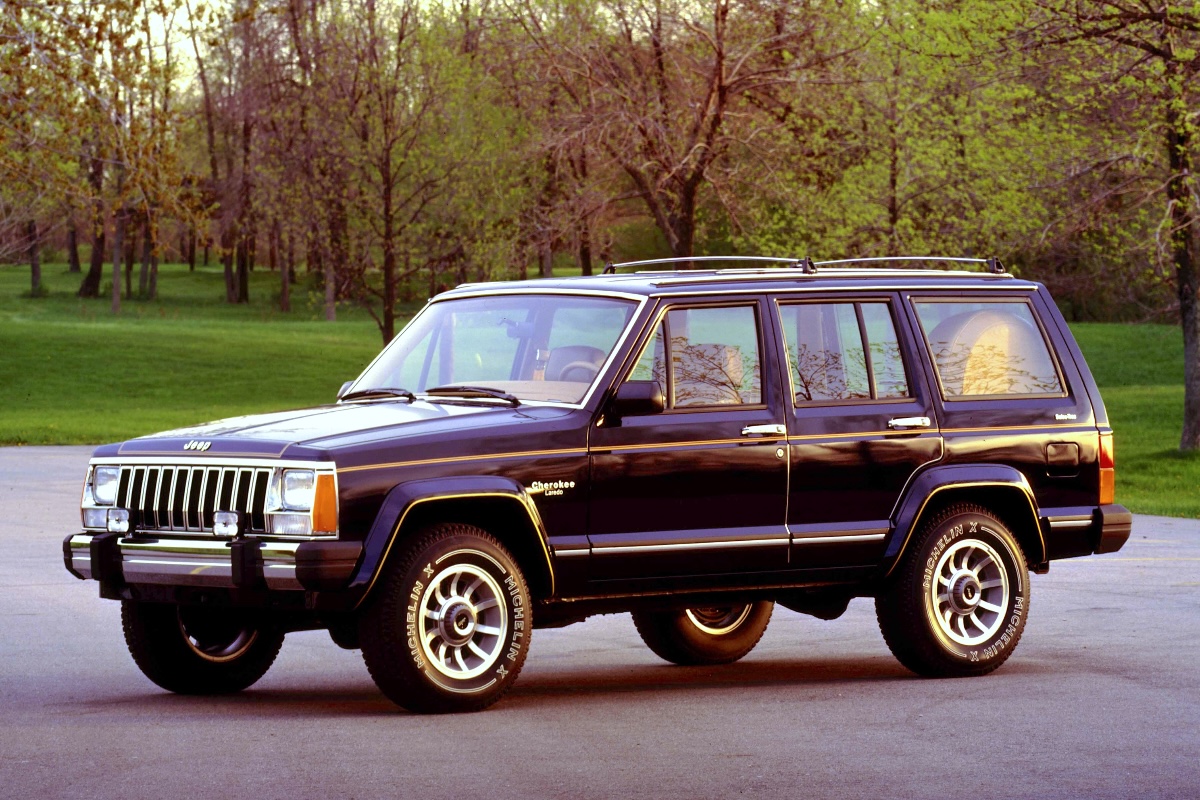
Jeep Cherokee Second Generation (1984-2001)
Jeep's first foray into modern SUVs came with the XJ-series Cherokee, which featured an angular body, tons of ground clearance, and modern comfort and conveniences. It was also significantly smaller than the unwieldy SJ-series Cherokee, which looked positively ancient by 1984. This new Cherokee used a unibody chassis instead of a body-on-frame, which allowed for a car-like ride, better handling, lower weight, and generous interior space from a smaller footprint. Ford and Chevrolet had just introduced the Bronco II and the S-10 Blazer, so the Cherokee's smaller size in both two- and four-door styles was more appropriate in 1984. It was more than 53 centimetres shorter, 10 cm lower, and 15 cm narrower than the first Cherokee. The Wagoneer became the new luxury trim of the Cherokee, while the Grand Wagoneer remained as Jeep's largest, plushest truck.
The base Cherokee came standard with a 2.5-litre four-cylinder engine with 103 hp, 128 lb-ft of torque, part-time Command-Trac four-wheel drive, a low range, and a four-speed manual transmission. Fuel economy was estimated at 15.7 L/100 km city and 13.5 highway. A five-speed manual and a three-speed automatic were optional. The latter was available with Selec-Trac, Jeep's full-time four-wheel drive system that used a centre differential and did not require switching to two-wheel drive. Nothing was standard beyond a cigarette lighter and vinyl upholstery — not even power steering or a radio.
There were no major changes until 1987, when the Cherokee Limited was introduced as the top trim below the Wagoneer. It was offered in dark colours with blacked-out gloss trim, gold wire wheels, gold badging and pinstripes, and a 4.0-litre inline-six. It had significant power for the time: 177 hp and 224 lb-ft of torque. A four-speed automatic, a larger fuel tank, and fog lamps were standard, along with thicker carpets, softer pleated leather seats, a six-speaker stereo, and "power everything," including the seats, windows, mirrors, locks, and antenna.
By 1988, an AM/FM radio was standard and new six-spoke white wheels, a sunroof, an off-road package, and the Trac-Lok rear differential were introduced as options. For 1989, Jeep offered optional anti-lock brakes and a standard five-speed manual that replaced the four-speed. Three-point seat belts were added for the rear seat for 1990.
For 1991, the Cherokee added the Briarwood to replace the Wagoneer, though it still came with faux-wood exterior paneling. By this point, the inline-six was making 190 hp and a security alarm was newly available, along with childproof locks for the rear doors. Cupholders were added for 1992, as well as a standard digital clock and available leather and sunroof.
Jeep introduced the Grand Cherokee in 1993 — a slightly larger and entirely different model that took the Cherokee's ethos and ran with it. To avoid overlap between the two models, Jeep reduced the prices of the Cherokee and reduced the number of trims to three. For 1994, a right-side mirror was standard, as were side-door beams and a centre-high-mounted stop light. A driver's front airbag was standard for 1995. The 1996 model had a retuned inline-six that delivered the same power and torque but at lower revs. The Selec-Trac four-wheel drive was also retuned. All trims came with the heavy-duty battery and alternator that were previously optional, along with intermittent wipers.
The 1997 Cherokee brought a passenger-side front airbag as standard, plus a new interior with reshaped bucket seats, a new two-piece dash with new gauges, new controls, more airflow, a power outlet to replace the cigarette lighter, and an optional eight-speaker Infinity sound system. A new steel tailgate with hidden hinges, along with thinner, restyled taillights, completed the changes.
For 1998, the six-cylinder engine was standard on all trims except the base. Heated front seats and a power passenger seat were newly optional for the 1999. For 2000, Jeep updated the airbags and made an engine immobilizer with an encoded chip on the ignition key an option. In its final 2001 model year — still with sealed-beam headlights and the same chassis and body from 1984 — the Cherokee came in two trims, Sport and Limited, and only with the six-cylinder engine.
Jeep Cherokees of this vintage are now very hard to find in Canada, so you’ll likely need to look to the U.S. market to find one. There, prices vary wildly with high-mileage examples available for USD$3,000 or less and well-cared-for vehicles costing USD$15,000 or more at a dealership. Many XJ Cherokees have been modified for off-road use, while others appear to be in great, original condition.
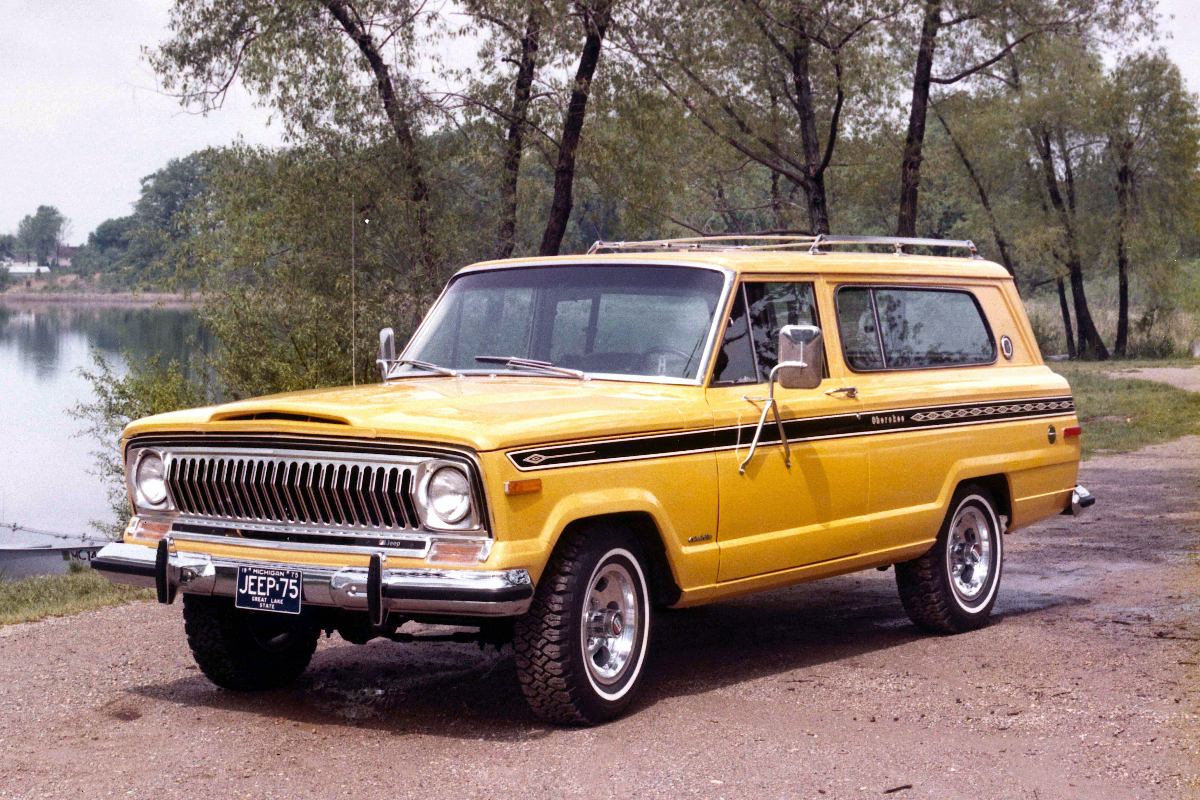
Jeep Cherokee First Generation (1974-1983)
The Jeep Cherokee was introduced as a two-door model and marketed by American Motors as a larger, plusher alternative to the CJ-5. In reality, however, it was a Wagoneer with two fewer doors and had the appearance of a pickup truck with a bed cap. Based on the same Wagoneer that had been in production since 1963, the SJ-series Cherokee was Jeep's push to compete with the Chevrolet Blazer, the Ford Bronco, the GMC Jimmy, and the International Scout without designing an entirely new vehicle. It wasn't all that different in concept from the two-door Wagoneer that was last built for 1967. Jeep kept the same roof pillars and body dimensions but introduced a new grille (with more slots than Jeep's typical seven) and all kinds of 1970s-fantastic paints and decals.
The Cherokee launched with four engines, one of which was a 6.6-litre V8 that made it faster than any other truck at the time. Most had the 5.9-litre V8 with either two or four carburetors, or a 4.2-litre inline-six. All made between about 110 and 210 horsepower and four-wheel drive and a three-speed manual were standard. Jeep's Quadra-Trac automatic four-wheel drive, a four-speed manual transmission, a three-speed automatic transmission, power steering, power front brakes, and air conditioning were the major options.
This generation of Jeep Cherokee is now all but extinct in Canada, and there were only a handful of Cherokee models from this generation on CarGurus USA during our research. Prices there for nicely restored models can top USD$20,000.
Related Topics