2026 Toyota RAV4 Plug-in Hybrid Reviews, Pricing & Specs
Write a review--
Original MSRP
7
of 10
expert review
avg user rating
(0 reviews)
Pros
New sporty GR Sport grade
More electric range
Powerful
Cons
PHEV charge port inconsistencies
Over-the-top GR Sport accents
Price
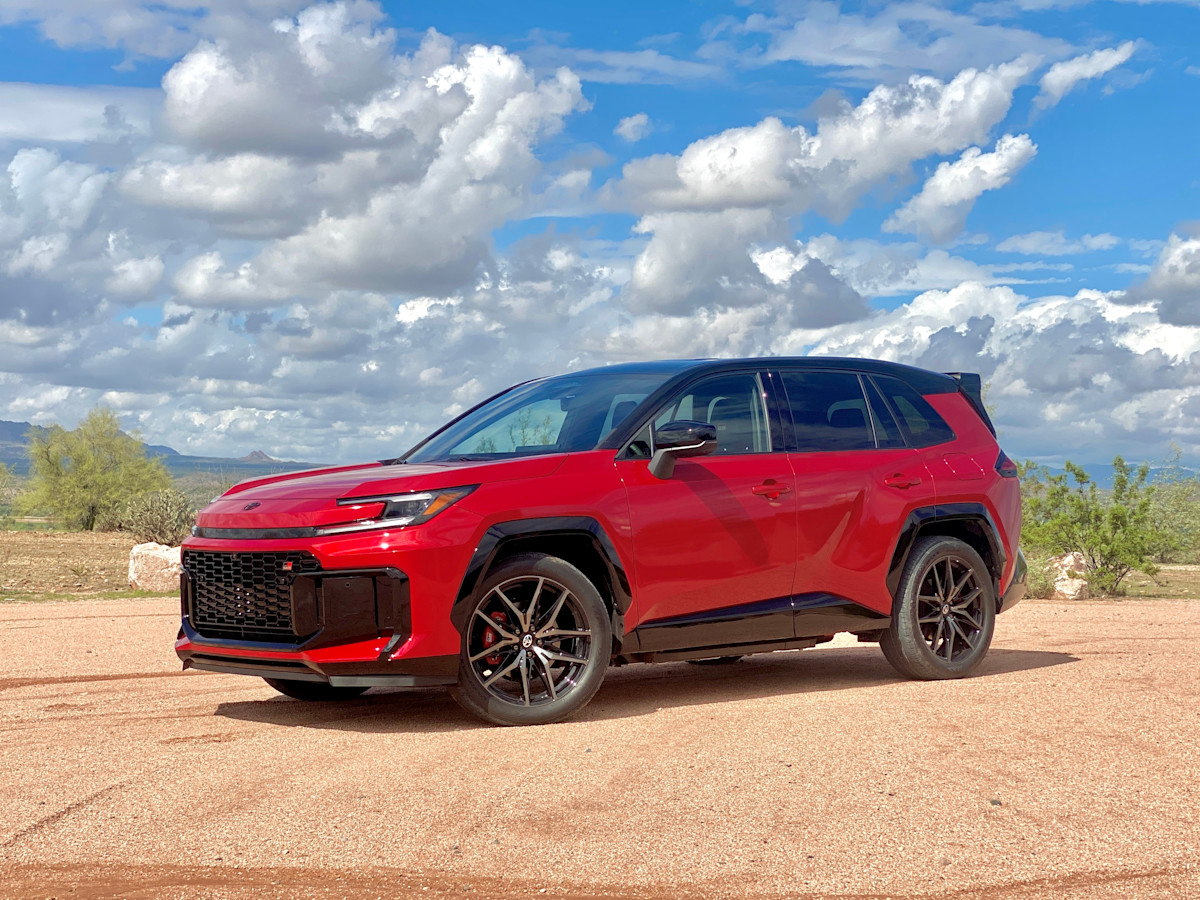
Toyota has improved the Toyota RAV4 Plug-in Hybrid with more power and range.
The more powerful RAV4 PHEV is even stronger for 2026, and Toyota has introduced a new GR Sport trim to showcase its sportier side. The expanded lineup has three distinct trims, and the electric range has increased by at least 20% over the 2025 RAV4. With these changes, Toyota has furthered its lead over plug-in hybrid newcomers such as the Hyundai Tucson and Kia Sportage — and even the Lexus NX 450h+.
Verdict: This is the best version of the RAV4, though the slightly sportier GR Sport pushes the bounds of affordability. With improved tech and a greater focus on electrification as well as available DC charging, the RAV4 Plug-in Hybrid leans forward.
While the new RAV4 has three distinct designs — dubbed Core, Rugged, and Sport — Toyota limits those options on the 2026 RAV4 PHEV. In Canada, the RAV4 Plug-in Hybrid is available exclusively in grades with the Sport design, including the base SE, the XSE, and the new GR Sport, the latter offered exclusively as a PHEV.
The sixth-generation RAV4 has the same footprint as the outgoing model, but these new grades can add buffer bumpers that increase the length. The GR Sport’s assertive grille and rear diffuser extend it by nearly five centimetres.
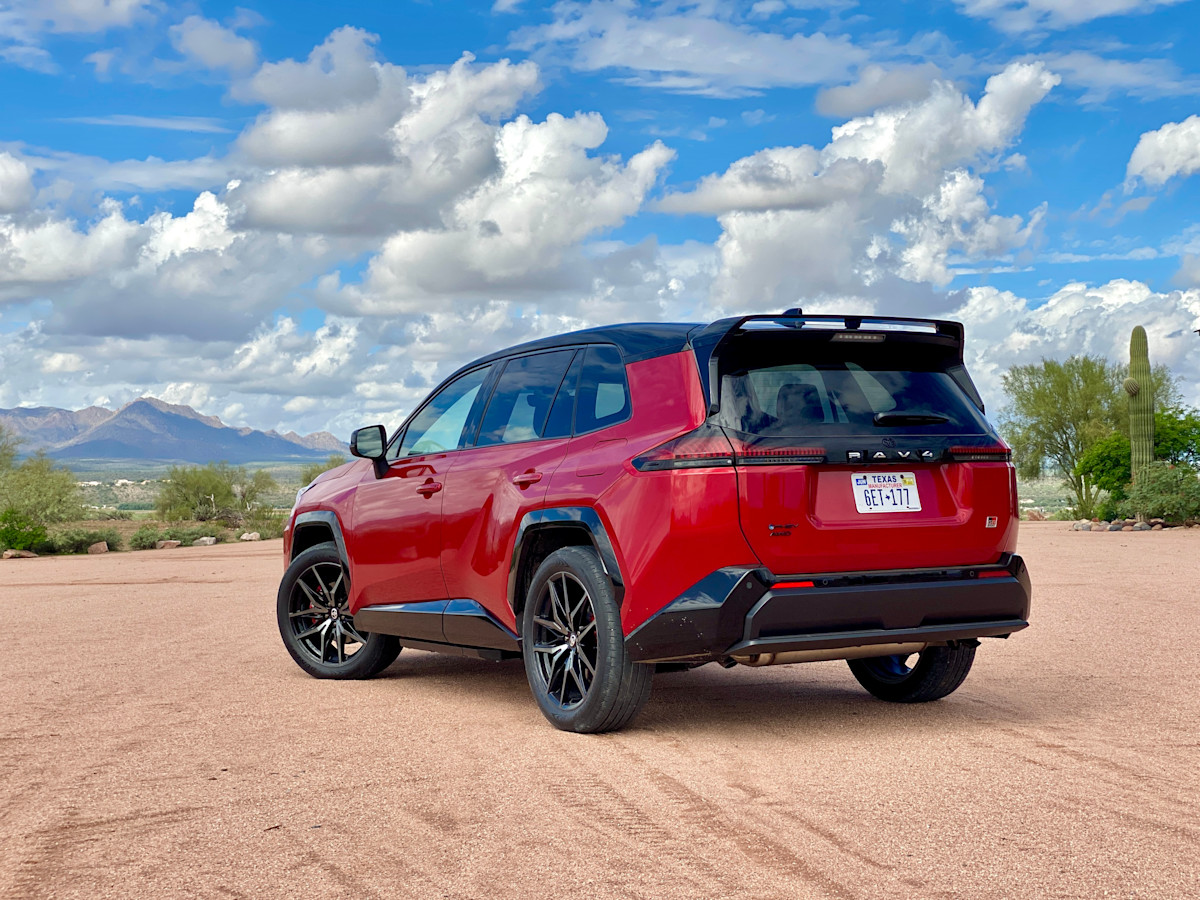
From the front and rear ends to the hood and the roof lines, the RAV4 is hip to be square. It boxes out all of its predecessor's angular cuts and takes on a broader truck-like presence consistent with Toyota’s other new SUVs. Boxy wheel arches remain, and bulges over the fenders kick out at the rear similar to the Highlander models.
Daytime running lights bracket the corners, and an integrated rear roof spoiler steps out over a vertical tailgate. The taillights look like vertical slash marks that narrow as they home in on the RAV4 badge.
The Sport trims seen on the RAV4 Plug-in Hybrid wear more gloss black accents on the rocker panels, fenders, front and rear bumpers, and integrated rear spoiler. The first-ever RAV4 GR Sport, inspired by Toyota’s Gazoo Racing division, shows off the racier elements. They include red brake calipers peering out of 20-inch black alloy wheels, a big rear wing, and a wide, steep mesh grille flanked by slim vertical running lights.
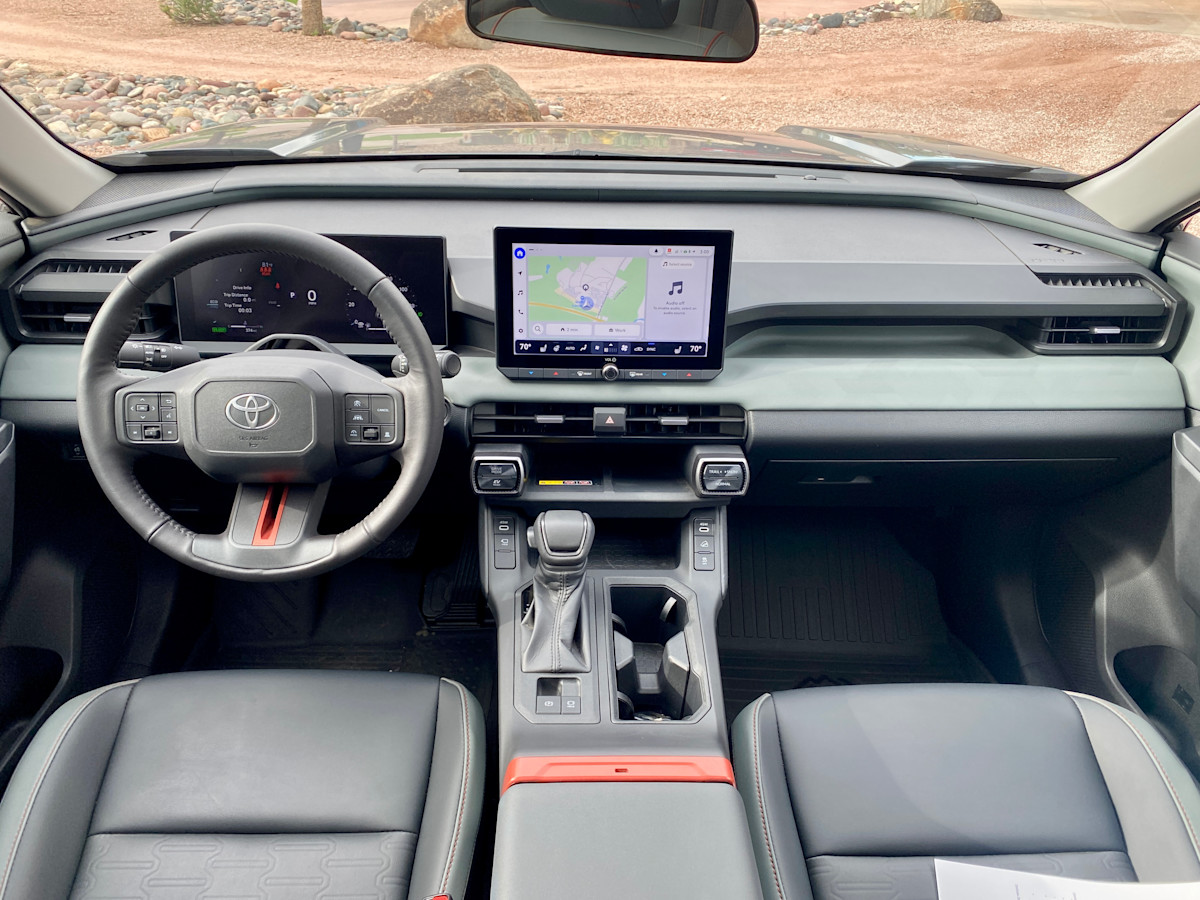
The mild differentiation carries on inside. Certain trims get certain accents, such as the red stitching on the black upholstery of the GR Sport and all the badging associated with it, lest you forget.
All three grades have a standard 12.3-inch digital instrument cluster with crisp graphics. A 10.5-inch touchscreen or available 12.9-inch touchscreen sticks out of the dash, but it’s better integrated and the overall design is more streamlined than its predecessor's.
A wide centre console houses a mechanical gear shifter on lower grades an a low-profile shift-by-wire setup with the XSE’s Technology Package or the GR Sport. The cupholder separator can be removed for more flexibility, and a storage nook sits below a wireless device charging deck where the console (which is wide and eats into some knee room) meets the dash. Stylish drive mode knobs flank that part of the console, making it easy to switch into Sport mode or into EV-only mode on the fly.
The 2026 RAV4 Plug-in Hybrid adopts the updated 2.5-litre inline four-cylinder engine (rated at 186 horsepower, up from 177 hp last year) from the standard RAV4. The PHEV benefits from a larger 22.7-kwh battery pack (from 18.1 kwh) and smaller, more efficient silicon carbide semiconductors in the power control unit. This leads to a boost in Toyota's estimated range of 68 kilometres for the 2025 model to 80 kilometres in 2026.
Power is up from 302 hp to 324 hp and this is the most powerful RAV4 to date. All-wheel drive is standard, with the large front motor rated at 203 hp and 201 lb-ft of torque (up from 179 hp and 199 lb-ft in 2025) and a smaller rear motor.
In EV mode, the RAV4 Plug-in Hybrid hustles off the line with no delay, but it plateaus at just under 50 km/h when the engine would usually be in charge. Consider EV mode for quiet cruising around town or to conserve fuel — not for sprints.
Leave it in Auto mode and mash the throttle to get that full satisfying power band. The two propulsion motors and engine work in tandem to deliver an unofficial 0-100 km/h time in the low five seconds — that's based on a few sprints on the flattest road we could find. Off the line, the front motor supplements the engine, making it quicker than if it were turbocharged since there’s no lag. The smaller rear motor is mostly for assistance and traction.
The other two modes are Hybrid, which makes the system less reliant on battery power, and Charge, which relies only on the gas engine and helps to recharge the battery. The latter is the optimal setting on the highway if the battery is low. When you get off the highway, you can drop it into the more efficient EV mode for the last portion of your drive.
The transition of power remains seamless, and paddle shifters allow drivers to override the computer in charge of the planetary gear set, or what Toyota calls the electronically controlled continuously variable transmission (CVT). The paddles pretend to have eight gears, but the system is quick to veto if you dare to redline (which is actually a blue line on Toyota’s new digital gauge cluster).
Overall, it’s a more spirited ride without sacrificing the typical comfort of the RAV4. Toyota strengthened the chassis to accommodate the larger battery pack, so new mounts result in great structural rigidity for a calmer and quieter ride.
Still, the RAV4 Plug-in Hybrid weighs around 275 kilograms (600 pounds) more than the hybrid RAV4. That 2,040-kilogram (4,500-pound) weight, depending on trim, makes its heft known in the corners, but that’s typical for the class.
The handling attributes are more pronounced on the new GR Sport trim. It sits 1.5 centimetres lower than the SE and XSE grades with 19 cm of ground clearance. Toyota equips it with 20-inch black alloy wheels.
In back-to-back testing with a heavier XSE model (it weighs 95 kilograms/210 pounds more than GR Sport) on the same stretch of terrain in the same conditions, there were mildly noticeable differences. The least explainable was the slight lift at launch in the lighter-weight GR Sport that we’ll chalk up to grippier tires.
Most noticeable was how evenly it handled over chunks of terrain that had dried on the road after storms, where the GR Sport jittered less than the XSE. This was due to the beefier rear suspension braces and tweaks to the suspension that result in more damping force. In turns, there seemed to be less body roll, likely from those enhancements and from the damping in the front anti-sway bar.
We’ll allow that the differences in our testing were minor enough that confirmation bias could have made our impressions more like illusions. Even if that were the case, the GR Sport handled more evenly than the XSE without any change in rigidity that would affect everyday comfort. It upholds its promise as a sportier RAV4.
The base SE is well equipped with a power-adjustable and heated front seats, five USB ports, push-button start and other conveniences. The front seats have adequate bolstering and thigh support. All but the base SE have synthetic leather upholstery branded SofTex, which can get a little sticky on hot days. Ventilated seats remedy that, and they’re standard on the GR Sport and XSE trims.
Toyota stuck with its winning formula by keeping the dimensions mostly the same from the previous generation. Even though the footprint has hardly changed and it still comes up short of rivals, the interior has been optimized with clever storage features. The shelf over the dashboard remains, and it’s perfect for smartphones, earbuds, and other small devices. Another storage shelf rests between the stack and the console, and above it is yet another shelf for the wireless device charger that comes with all but the base SE model. The centre console storage can be flipped up from either the driver's or passenger's side.
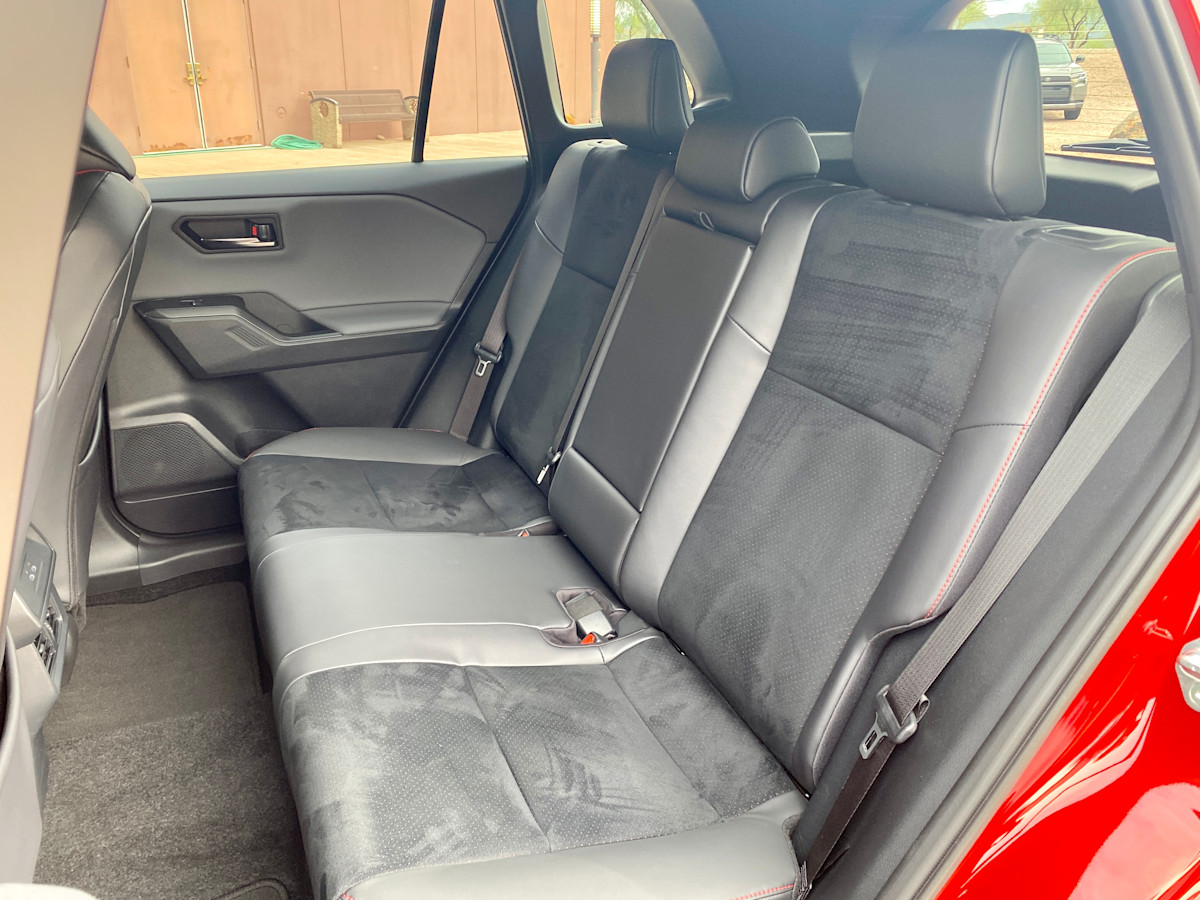
The deep door pockets can accommodate big water bottles, and the door handle recesses could double as phone holders. Every RAV4 seats four passengers in relative comfort, although five passengers make for more of a squeeze and the available panoramic sunroof eats into some headroom. The passenger space is the same as standard RAV4 models, which is one of the benefits of having a multi-pathway powertrain platform. The 960 millimetres of rear legroom is spacious enough to stack a six-footer behind a six-foot driver, but it falls short of larger models such as the Honda CR-V and the Volkswagen Tiguan.
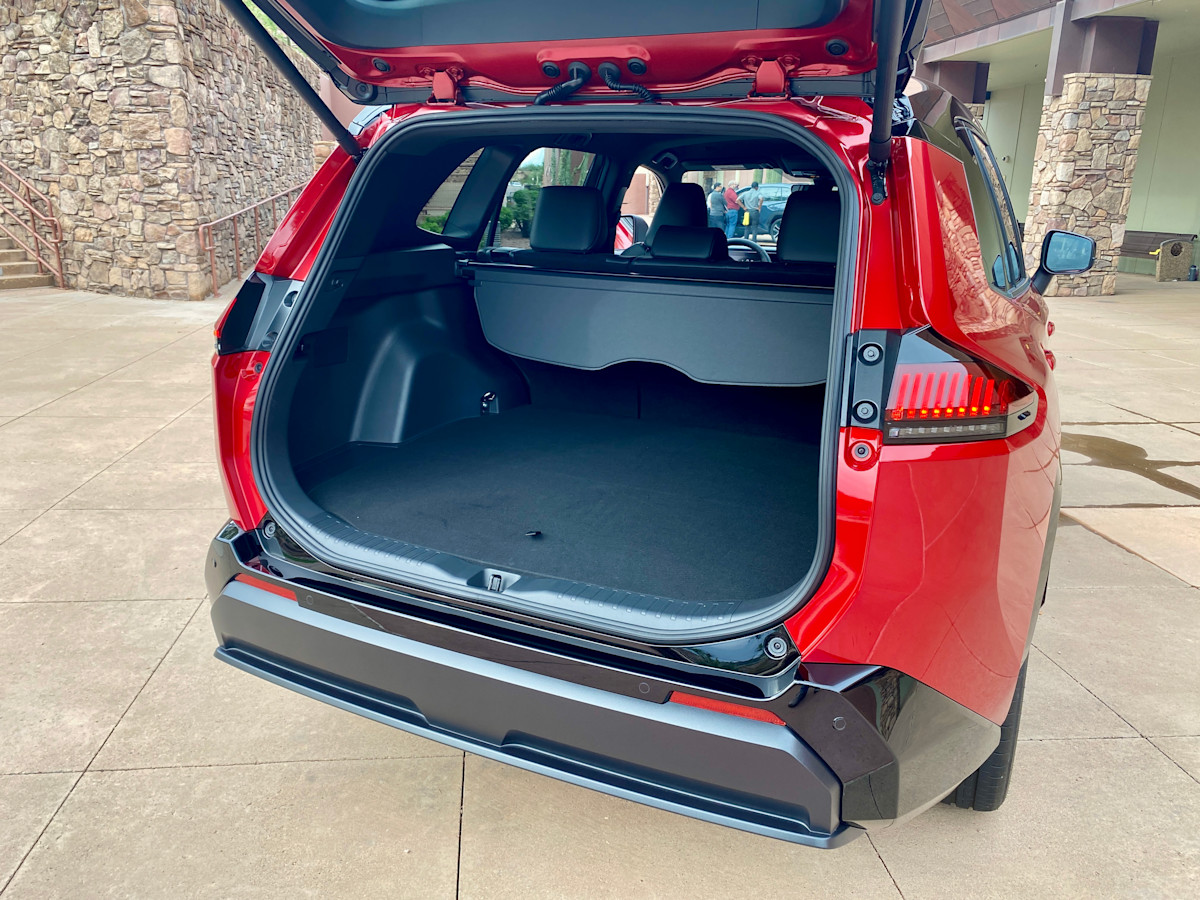
The difference in interior space between the standard RAV4 and the PHEV comes in the cargo area, at a loss of about two carry-on suitcases to 951 litres. Folding down the 60/40-split rear seats opens up a total of 1,798 litres. It has an even flat floor with the seats down, and under the cargo floor sits a temporary spare tire rather than a puncture repair kit.
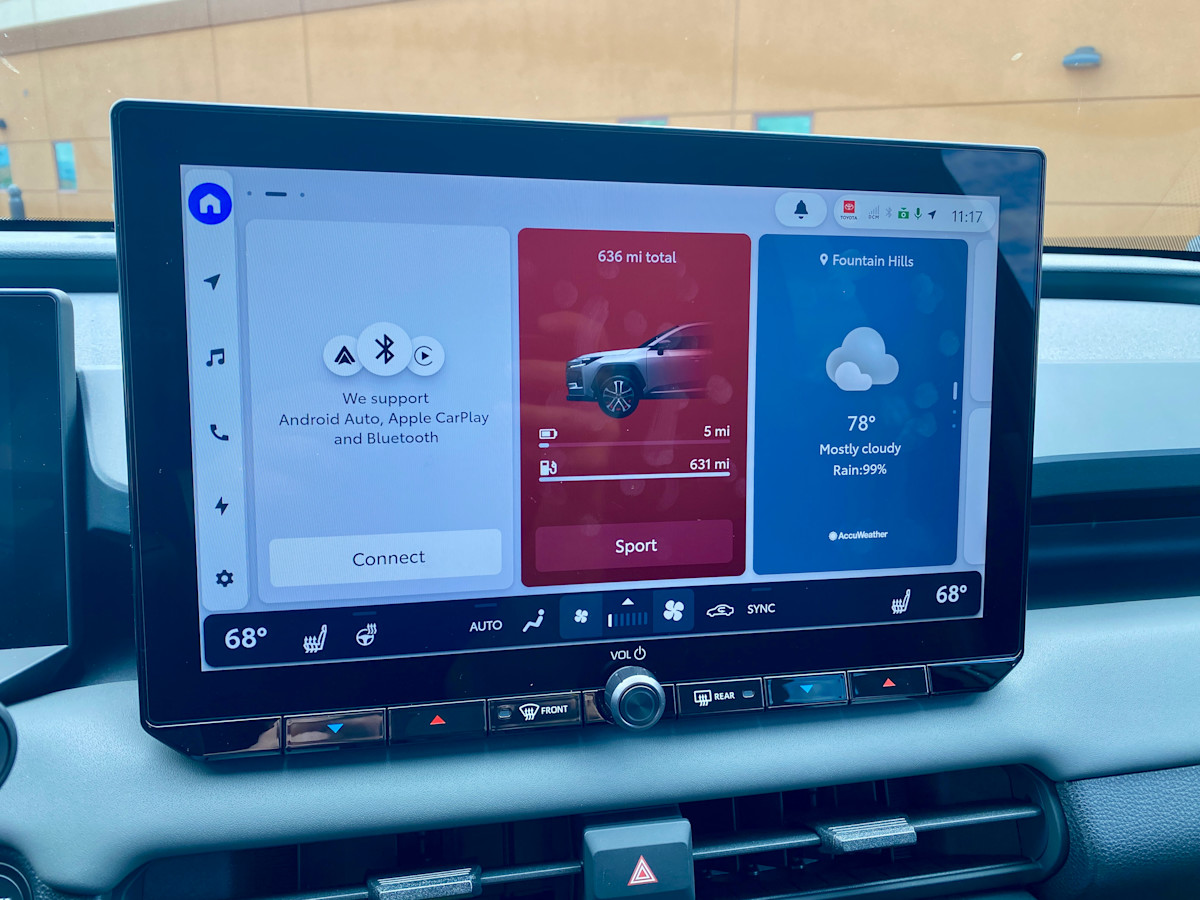
The RAV4 Plug-in Hybrid has a new 12.3-inch digital instrument cluster and an enhanced 10.5-inch touchscreen system. The digital displays are standard, as are wireless Apple CarPlay and Android Auto, while a larger 12.9-inch touchscreen graces the top trims. Toyota migrated the climate controls from a dedicated panel of dials and buttons into the lower portion of the touchscreen, but temperature buttons sit below them and there’s a physical volume knob.
The touchscreen has large customizable tiles and a quick menu for the most commonly used settings so you don’t have to poke around, while the cluster graphics and user interface are much improved. You can choose between three displays, then toggle through the display settings to customize the info displayed — the left side is for vehicle info, and the right side is mostly for driver assist systems. The centre could be used for a speedometer, a fuel use graph, or a navigation map.
The graphic enhancements are courtesy of Toyota’s new operating system, Arene, which is more responsive and quicker to load. The subscription-based Voice Assistant responds to a broader range of “Hey Toyota” prompts ranging from adjusting the cabin temperature to checking the temperature at your destination.
It's also possible to locate chargers along your route by tapping the bolt icon on the driver’s side of the menu. This opens up data for the plug-in hybrid system such as charging schedules and a range map.
Every 2026 RAV4 has a comprehensive suite of driver assistance features as standard. Now dubbed Toyota Safety Sense 4.0, the new OS encompasses a wider view for cameras and a broader detection range for radar. The enhancements should improve the system’s responsiveness and detection at night, though we only drove the car in daylight.
Included driver assistance systems include automatic emergency braking with pedestrian detection that can spot both moving vehicles and people at intersections; updated lane departure alert and lane keep assist systems; adaptive cruise control; blind spot monitoring with rear cross-traffic alert; automatic emergency braking; a safe exit alert that warns occupants about to get out of the car if a vehicle or a cyclist is coming up on their blind side; and an enhanced rearview camera with guidelines meant to ease backing up in crowded places. All but the base SE have a surround-view camera system that helps with narrow parking spots.
The enhancements should contribute to the RAV4’s historically strong safety record. We’ll update this space once crash-testing of the 2026 RAV4 Plug-in Hybrid is completed by the Insurance Institute for Highway Safety (IIHS) and the U.S. National Highway Traffic Safety Administration (NHTSA). The redesign should address shortcomings the IIHS found in the outgoing RAV4’s front crash protection, although the NHTSA rated the 2025 RAV4 at five out of five stars.
In Canada, the 2026 Toyota RAV4 Plug-in Hybrid starts at $52,408 for the base SE grade including the destination charge and other fees. The XSE grade is priced at $60,058, and adding the XSE Technology Package increases the price by $2,950. The RAV4 Plug-in Hybrid GR Sport carries a starting price of $61,158. While it’s not listed among the qualifying vehicles as of this writing (which may be due to a delayed pricing announcement), the SE grade’s sub-$50,000 MSRP means it should qualify for a $2,500 rebate through the federal EVAP program as well as provincial and territorial incentive programs where they still exist. Be sure to inquire about this with your dealer.
It was only sold in two trims last year, starting at $54,835 for the base SE. The new GR Sport is only available as a PHEV, and a price pushing past $60,000 isn’t surprising given its unique position. All PHEVs come standard with AWD.
For drivers who drive most often around town, the cost of ownership on a RAV4 Plug-in Hybrid should be lower over time. You can skip the gas station in most scenarios since the RAV4 PHEV can drive in all-electric mode for 80 kilometres.
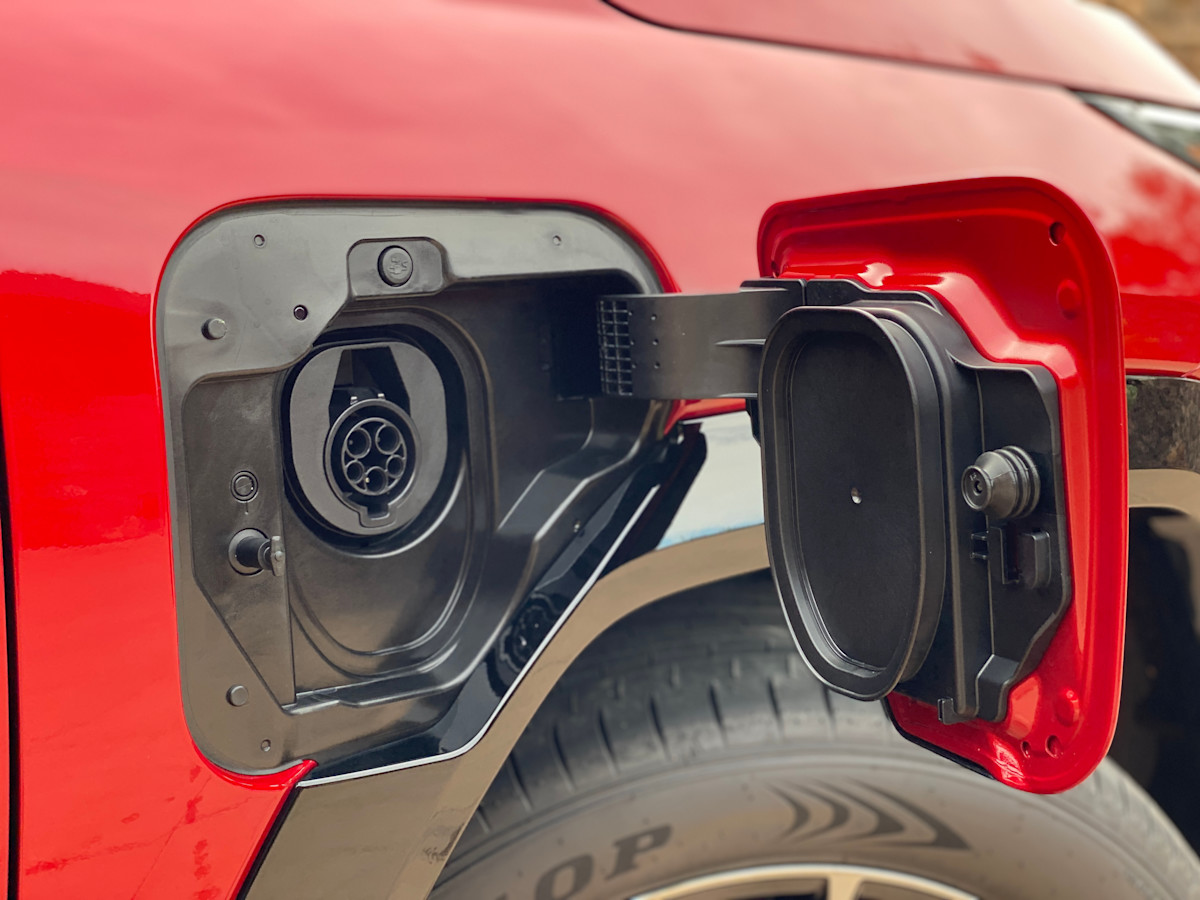
Roadside charging brings up a curiosity. The XSE trim has DC fast charging enabled through a CCS1 connector — not a Tesla-style NACS port as in the redesigned Toyota bZ. The RAV4 can charge from 10 to 80% in 35 minutes, which is a long time for an SUV with such a limited range, but it’s an option. The GR Sport has DC charging capability in other markets, but in Canada it does not. Toyota reps said they’ll respond to consumer input, so it could happen. Such are the complications for a global model.
The SE and GR Sport grades have only an AC charge port with a seven-kilowatt onboard charger. They’ll take 3.5 hours to charge on a Level 2, 240-volt charger. The XSE has an 11-kilowatt onboard charger, so they get the job done in 2.5 hours.

User reviews for 2026 Toyota RAV4 Plug-in Hybrid
Write a review2026 Toyota RAV4 Plug-in Hybrid Pricing
Trims & specs
Engine
Electric Motor HP: 203 · Electric Motor Power Output (Kilowatts): 151 · Electric Motor Torque: 201 · Hybrid Gas Engine HP: 186 · Hybrid Gas Engine HP@RPM: 6000 · Hybrid Gas Engine Torque: 172 · Hybrid gas Engine Torque@RPM: 4300
Engine
Electric Motor HP: 203 · Electric Motor Power Output (Kilowatts): 151 · Electric Motor Torque: 201 · Hybrid Gas Engine HP: 186 · Hybrid Gas Engine HP@RPM: 6000 · Hybrid Gas Engine Torque: 172 · Hybrid gas Engine Torque@RPM: 4300
Engine
Electric Motor HP: 203 · Electric Motor Power Output (Kilowatts): 151 · Electric Motor Torque: 201 · Hybrid Gas Engine HP: 186 · Hybrid Gas Engine HP@RPM: 6000 · Hybrid Gas Engine Torque: 172 · Hybrid gas Engine Torque@RPM: 4300
Engine
Electric Motor HP: 203 · Electric Motor Power Output (Kilowatts): 151 · Electric Motor Torque: 201 · Hybrid Gas Engine HP: 186 · Hybrid Gas Engine HP@RPM: 6000 · Hybrid Gas Engine Torque: 172 · Hybrid gas Engine Torque@RPM: 4300
