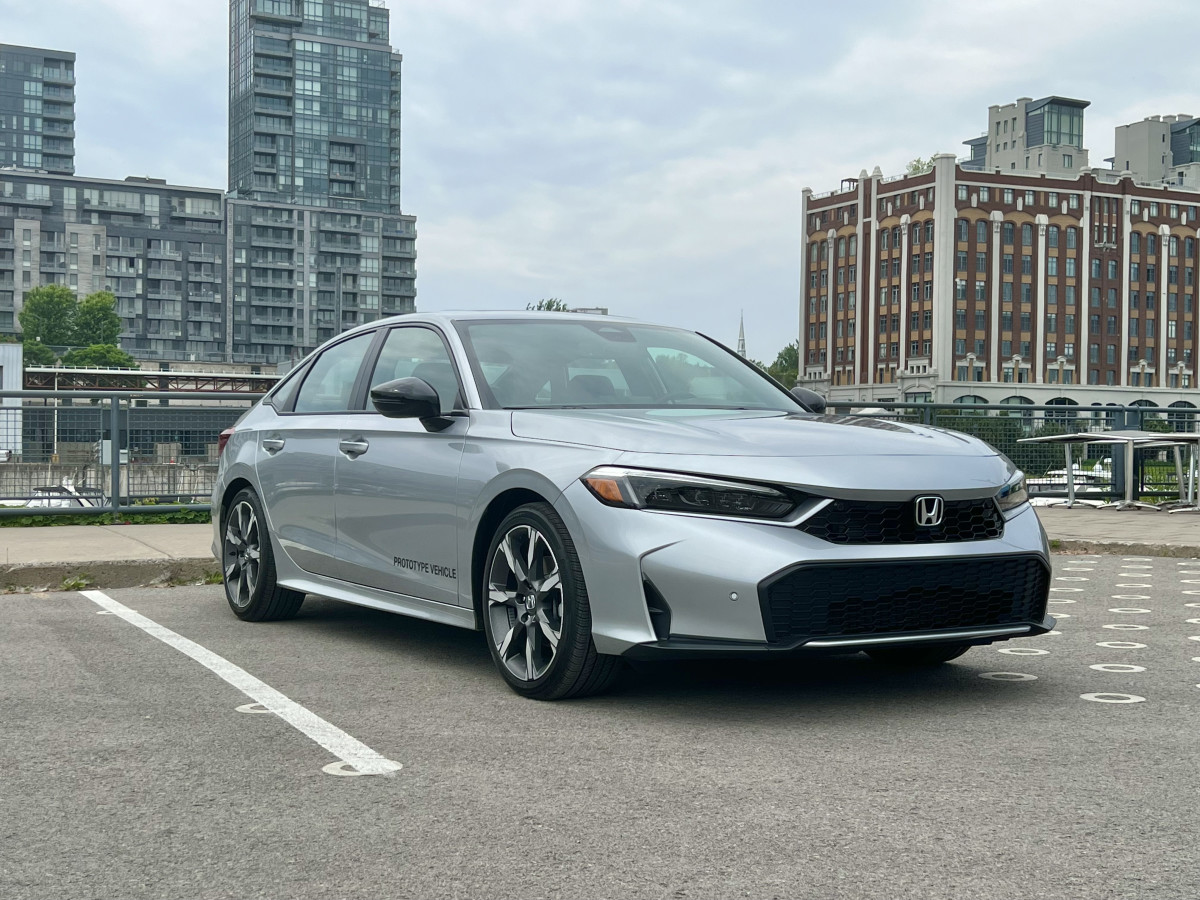
Seventh Generation (2018-present)
The latest, seventh-generation Volkswagen Jetta picks up where the last one left off, as a four-door sedan with a modern look and feel, clean-cut styling, and an emphasis on value. It’s slightly larger than its predecessor, and although it actually has a smaller trunk, it remains a practical family car.
The engine lineup is simple, to say the least. Initially, the only option was a 1.4-litre TSI gas engine making 147 horsepower and 184 lb-ft of torque, with a six-speed manual transmission as standard or an eight-speed automatic as an option. The latest Jetta GLI model also joined the range with a 228-horsepower 2.0-litre and a six-speed manual or seven-speed DSG transmission. As always, the GLI is a sportier take on the Jetta, with a limited-slip front differential to maximize traction through corners and a range of cosmetic upgrades. From the 2022 model year onwards, a new 1.5-litre TSI unit with 158 horsepower became the standard Jetta engine.
As you’d expect, this is the most advanced Jetta yet with a wealth of standard and available features. From the get-go, even the base model featured automatic LED headlights, air conditioning, a multifunction steering wheel, touchscreen infotainment system, and a rear-view camera as standard. Blind-spot monitoring, rear cross-traffic alert, and adaptive cruise control are available. Jetta trim levels in Canada have for this generation include Comfortline, Highline, Execline, and GLI.
A mild update for the 2022 model year featured design changes such as new front and rear bumpers to go with the 1.5-litre engine. A bigger upgrade took place for the 2025 model year and included new front and rear styling, a new dashboard design, and the latest Volkswagen infotainment system.
All models now feature Apple CarPlay and Android Auto compatibility, the Volkswagen Digital Cockpit, automatic emergency braking with pedestrian detection, blind spot monitoring, and rear cross-traffic alert. Core models have an eight-speed automatic transmission, but the Jetta GLI sticks with a six-speed manual as standard, making it the only vehicle left in VW’s Canadian line-up with a manual transmission.
The seventh-generation VW Jetta has a solid, quality feel inside, but its reliability record is nothing special, and early models can suffer from transmission problems. Warranty cover from new is an industry-standard four years or 80,000 kilometres.
As of this writing, the MSRP of a new Jetta ranges from just under $28,000 to almost $38,000 for the Jetta GLI, including delivery and fees. If you look to the used car market, you’ll find low-trim, early-model seventh-gen Jettas with roughly 150,000 kilometres start at $13,000. On average, expect to pay between $18,000 and $30,000, with the lower end of that range being lower-trim, higher-mileage examples and the upper end being newer cars in higher trims.
Sixth Generation (2010-2018)
The sixth-generation Volkswagen Jetta was the first to depart almost entirely from the Golf in its design. It came with a completely bespoke body available only in four-door sedan form. Longer and slightly lower than the previous model, it was more spacious and had a wheelbase that was more than seven centimetres longer.
Unusually, this Jetta was designed to cost less than its predecessor. Today you might call it “de-contented,” since most models initially had twist beam rear suspension, whereas all versions of the previous car had more sophisticated independent rear suspension. The initial engine lineup was carried over from the previous model, and it was already starting to feel old in its predecessor, so there was no progress there.
The gas options were a 2.0-litre four-cylinder with 114 horsepower or a 2.5-litre four-cylinder unit that made 170 horsepower. The sole diesel option was a 2.0-litre four-cylinder with 140 horsepower. The 2013 model year saw the return of the sporty Jetta GLI model, with a turbocharged 2.0-litre four-cylinder engine making 200 horsepower, a six-speed manual transmission and independent rear suspension. A 170-horsepower 1.8-litre turbocharged gas engine replaced the 2.5 from the 2014 model year onwards, while power for the GLI’s higher-powered 2.0 was boosted to 210 horsepower. Independent rear suspension became standard for all models, too.
The main innovation for the sixth-gen Jetta was the new Jetta Hybrid model, which combined a 1.4-litre turbocharged four-cylinder engine with a 27-horsepower electric motor and a seven-speed DSG transmission. In Canada, the hybrid was available from 2013 to 2016.
A mid-life update for the 2016 model year freshened the interior and exterior design. The long-running 2.0-litre base engine was replaced by a turbocharged 1.4-litre with 150 horsepower, while the diesel was dropped for the 2016 model year due to the Dieselgate emissions scandal. The Jetta Hybrid was discontinued soon afterwards, leaving the 1.4, the 1.8, and the 2.0 turbo models to see out the model’s lifespan.
In Canada, Jetta trims of this era generally followed VW Canada’s convention of Trendline, Comfortline, Sportline, and Highline, with various plus-trim option packs available. The hybrid and GLI models were badged separately with the latter offering a higher-equipment Autobahn version. Standard equipment improved over time, but even the earliest base models had stability control and front, side and curtain airbags. A rear-view camera became standard across the range for later models, with high-spec versions gaining advanced driver assistance features such as a blind-spot monitor, rear cross-traffic alert, and forward collision warning with automatic emergency braking.
The sixth-generation Jetta didn’t do much for the model’s reputation for reliability. Data from CarComplaints.com paints a rather unflattering picture. Engine problems are a common complaint, especially for earlier versions.
The entry price for a used Volkswagen Jetta of this era is about $3,000, which bags you a very high-kilometre car from the earliest model years. If you want one with less than 150,000 kilometres on the odometer, you’re looking at more like $8,000. Late, low-mileage Jetta GLIs top out at roughly $20,000.
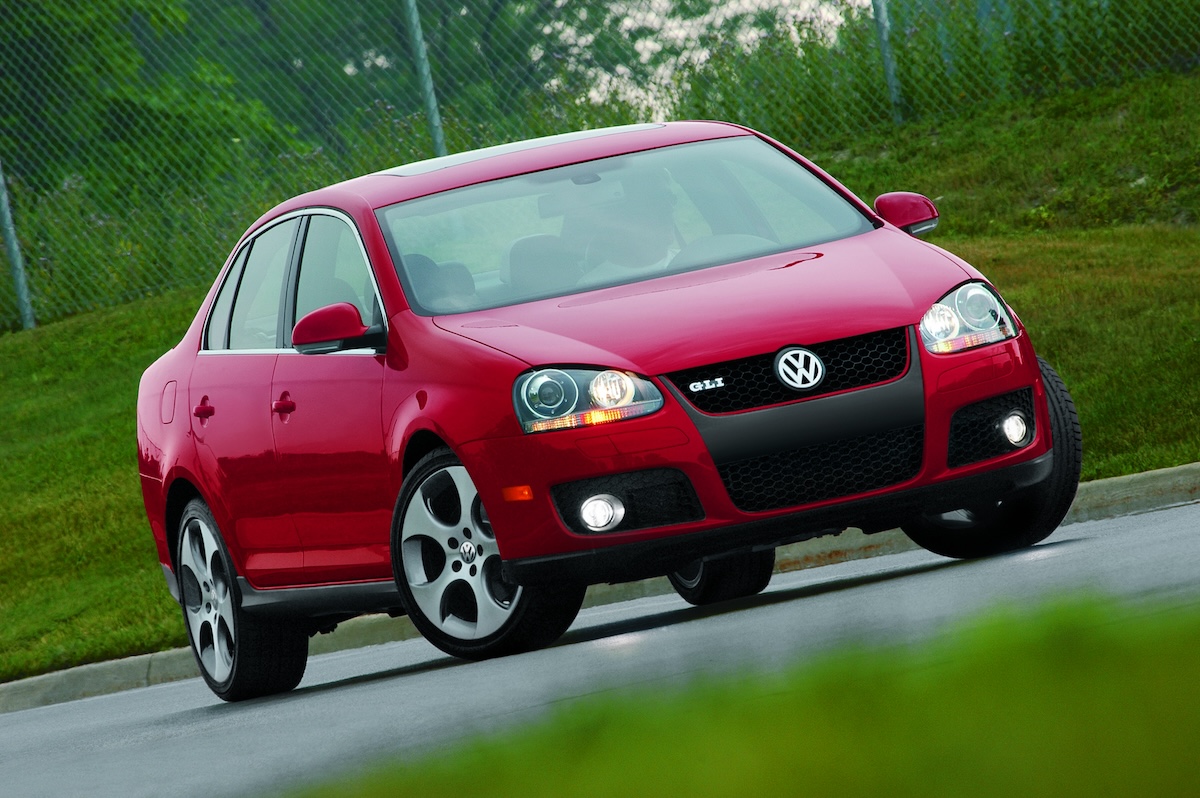
Fifth Generation (2005-2010)
Along with its curvier styling, the fifth-generation VW Jetta was significantly bigger than the car it replaced. It was nearly 18 centimetres longer, five cm wider, and more than five cm longer in its wheelbase. All that translated to a much more spacious interior, making this Jetta better suited to families. As with the previous model, there was also a roomy wagon version called the Jetta SportWagen for those who needed more space. In Canada, it was marketed under this name only for the 2009 model year. For subsequent years, it became known as the Golf SportWagen.
This Jetta has a range of updated engines that provided more power than before. Base versions had a 2.5-litre five-cylinder engine with 150 horsepower, and there was also a 2.0-litre four-cylinder unit with 200 horsepower. The diesel option was as before, a 1.9-litre unit with 100 horsepower. A five-speed manual transmission is standard, with a five-speed auto an option for all but the 2.0, which has an optional six-speed automatic. A 2.0-litre diesel with 140 horsepower replaced the 1.9 from the 2009 model year, and power for the 2.5 gas engine was increased to 170 horsepower.
Volkswagen Jetta trim levels for this generation in Canada included Trendline, Comfortline, and Highline. Base models were a touch… basic, but all versions came with front, side, and curtain airbags as well as crash-optimized elements such as the pedals and front headrests.
Although the fifth-generation Jetta feels like a well-built car, it doesn’t have a great record for reliability. Engine and transmission problems can surface, while electrical faults are reasonably common and the interior trim wears out easily.
The Mk5 Jetta was especially prone to rust, and so most Canadian cars from this era have met an early demise. The ones that remain haven’t hold their value well. It’s unusual to find a fifth-gen Jetta priced higher than $8,000, and any priced above $6,000 are likely to be rarer models like the Jetta SportWagen or have exceptionally low odometer readings.
From 2007 to 2009, the fourth-generation Jetta continued alongside the fifth-gen model in Canada and was sold as the Jetta City. For mechanical notes on these cars, refer to the section on the fourth-generation Jetta below.
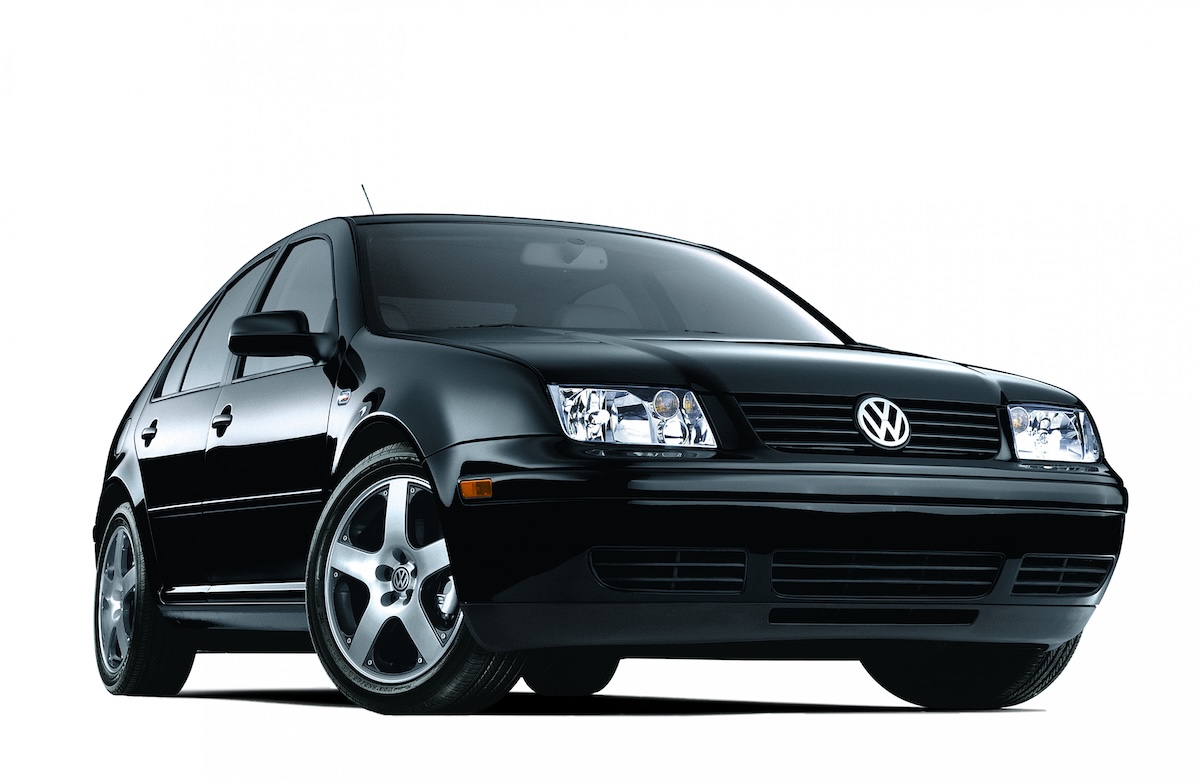
Fourth Generation (1999-2005)
Volkswagen gave the Jetta a much sleeker look in its fourth-generation form, with a bespoke sedan profile rather than the hatchback-with-a-trunk look of previous models. In fact, this was the first Jetta to have entirely different rear doors to the Golf hatchback on which was based. There was a greater differentiation at the front, too, with the Jetta having rectangular headlights that aligned it more closely with the larger Passat sedan.
Although slightly wider than its predecessor, its overall dimensions were similar, and interior space wasn’t much improved. In most respects, though, the fourth-generation Jetta seemed like it skipped forward two generations with a much more contemporary look, feel, and set of features.
One thing that didn’t change much was the engine lineup. Updated versions of the 115-horsepower 2.0-litre and the 174-horsepower 2.8-litre V6 gas engines carried over from the previous model. The 90-horsepower 1.9-litre TDI diesel unit carried over, too, but there was a new gas option in the shape of the 1.8T, with its 150-horsepower turbo engine.
An update for the 2001 model year added a new body style, the Jetta SportWagen, which was the first wagon version of the Jetta (or Golf) sold in North America. Additionally, V6 models were boosted to 200 horsepower and became available with a new five-speed automatic transmission, while other models had a five-speed manual or four-speed auto. An updated 1.9-litre diesel engine with 100 horsepower was introduced for the 2004 model year, while the V6 was replaced by a 180-horsepower version of the 1.8T towards the end of the model run.
Dual front and side airbags were standard from the start, with curtain airbags standardized from the 2001 model year onwards.
The fourth-generation Jetta has a better reputation for reliability than the models that followed it. It’s generally solid and has less complex electrical features and engines than later cars.
Very few Mk4 Jettas remain in Canada today. Apart from mint-condition and low-mileage GLIs, you’ll rarely see one priced above $6,000. Note that the fourth-generation Jetta continued to be sold alongside the fifth-gen model in Canada from 2007 to 2009 as the Jetta City. Since fourth-gen models have a better reliability record, these cars are a smart and economical alternative to older Mk4 cars and fifth-gen models.
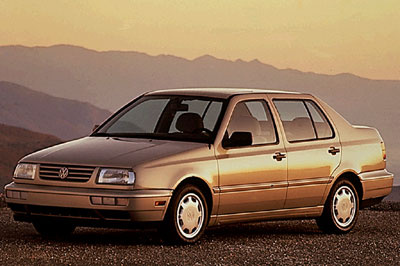
Third Generation (1993-1999)
In its third generation, the Volkswagen Jetta grew slightly, gained a more modern look, and added extra tech and safety features. Available only as a four-door sedan, the Jetta was introduced in 1993 and went on to be a big seller.
The powertrain lineup was stripped back. A 2.0-litre four-cylinder unit making 115 horsepower was the core unit. The diesel alternative was a 1.9-litre turbodiesel with 90 horsepower that returned excellent fuel economy. A five-speed manual was standard, while a four-speed automatic transmission was available as an option.
There was no GLI model for this generation. Its replacement was the Jetta GLX, which had a then-new 172-horsepower 2.8-litre V6. While not as overtly sporty as the previous GLI, the GLX had a close-ratio manual transmission (an auto was an option), BBS alloy wheels, a rear spoiler and beefed-up braking and suspension systems.
The Mk3 Jetta is known for being generally reliable, but even the later models are now more than 25 years old. An individual car’s condition largely depends on how it’s been maintained over the years.
The third-generation Jetta is all but extinct on the Canadian used car market. It’s somewhat unloved compared with the first- and second-generation models, so the odd one that pops up may work as a cheap runaround. Cars in good condition will still have value to collectors and modifiers, though, so they can cost a lot more. To find one in collectible condition, you’ll likely need to look to the United States.
Second Generation (1984-1992)
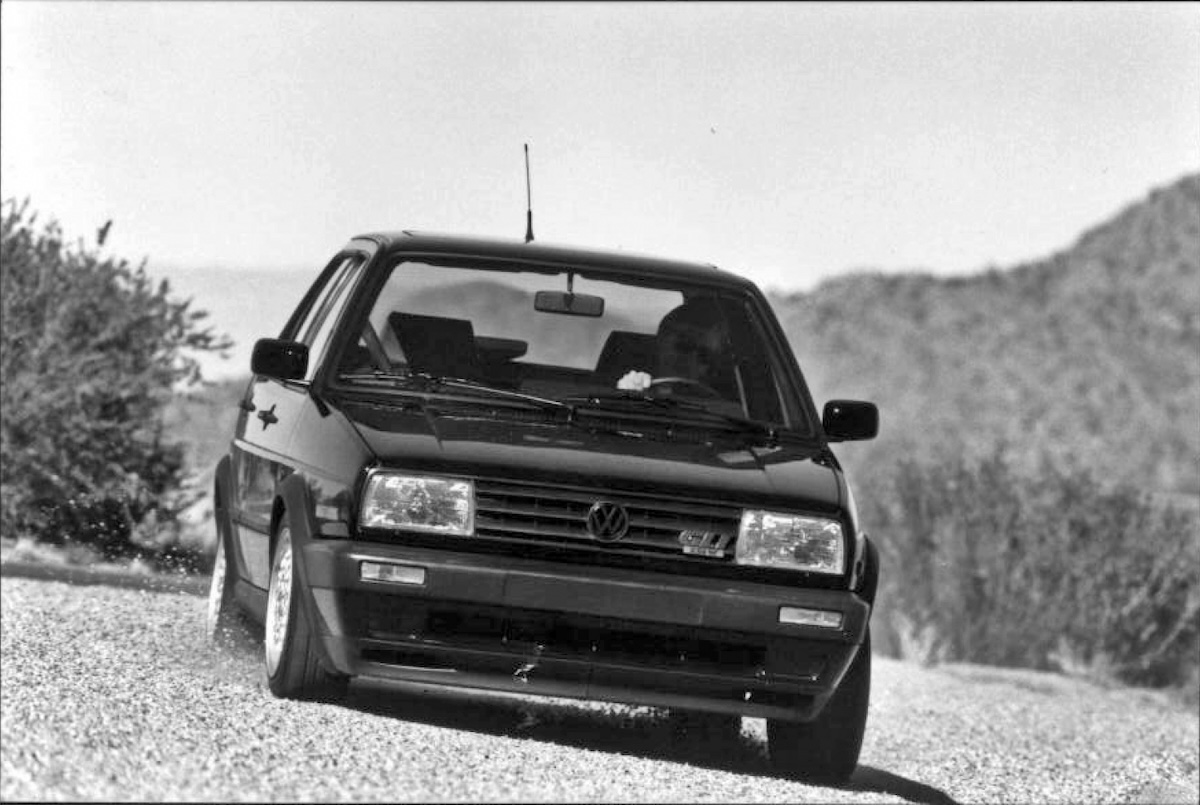
The second-generation Volkswagen Jetta was introduced for the 1985 model year. It was still available with two-door or four-door body styles, both of which looked rather ungainly compared with the delicately proportioned first-generation car. It was much more practical, though, thanks to a significant increase in size. As well as useful extra passenger space, it had a trunk capacity of 470 litres, which was very impressive by the standards of the time and compares well with many new cars today.
All models were front-wheel drive, while the engine lineup was very similar to that of the previous version. The gas option was a 1.8-litre four-cylinder, initially with 90 horsepower. As before, there were 1.6-litre four-cylinder diesel options: a naturally aspirated version with 52 horsepower, or a turbocharged version with 68 horsepower. The sporty Jetta GLI model continued with a 100-horsepower version of the 1.8-litre engine, a sports-tuned suspension, and a close-ratio five-speed manual transmission.
In 1987, the GLI was updated with a new 16-valve 1.8-litre engine making 123 horsepower. In 1990, the GLI received another engine upgrade, this time to a 2.0-litre unit with 134 horsepower. A new 100-horsepower version of the 1.6-litre diesel was introduced in 1991, and a new EcoDiesel model with lower emissions but just 59 horsepower was added in 1992.
Standard equipment for Jetta models of this era is basic by modern standards, but GLI models featured a leather-wrapped steering wheel and alloy wheels, while options included air conditioning, cruise control, and power mirrors.
The second-generation Volkswagen Jetta had a good reputation for reliability at the time, but rust is its enemy. As with any car of this age, steering, suspension, and transmission parts are likely to be worn, so a decent test drive is a must before you commit to buy.
The Mk2 Jetta is now exceptionally rare in Canada. This generation is a surprisingly collectible car, so even prices in the U.S. may be higher than you’d think, especially for a low-mileage or restored example.
First Generation (1979-1984)
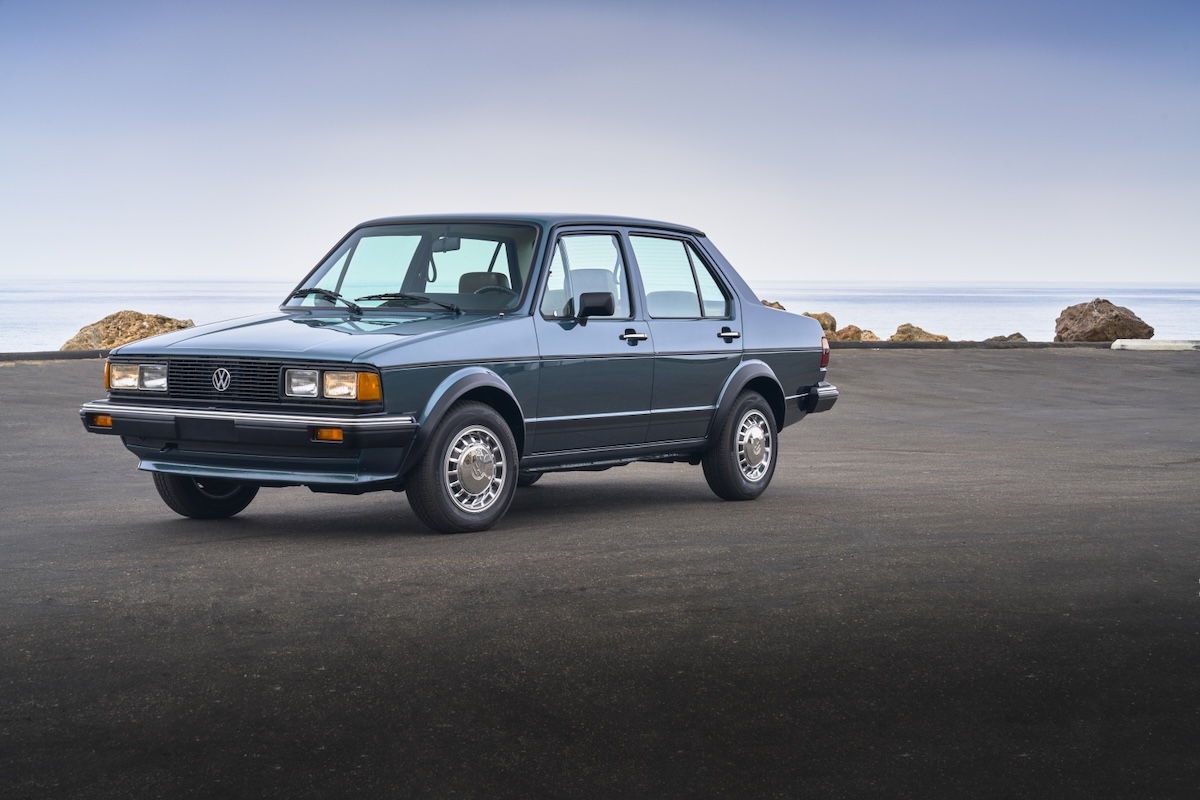
The Volkswagen Jetta sedan arrived in 1979 for the 1980 model year, five years after the Golf (then called the Rabbit) on which it was based. It was a straightforward hatchback to sedan conversion, with most parts shared other than its longer rear end. The wheelbase was the same, too, but the Jetta had a different design for the front grille and headlights, plus some slightly upgraded interior trim that gave it a more upscale feel.
Available as a two-door or a four-door model, the first Jetta was—like all its successors—front-wheel drive (FWD) only. A 1.6-litre four-cylinder gas engine making 76 horsepower was available from the start, and it was replaced by a 1.7-litre 74-horsepower unit in 1981. Alternatively, there were two 1.6-litre four-cylinder diesel engines: a naturally aspirated example with 52 horsepower, and a turbocharged version with 68 horsepower. A five-speed manual transmission was standard when new with a three-speed automatic as an option. All delivered good fuel economy for their time, the diesels especially so.
In 1984, Volkswagen added the sporty Jetta GLI to the range, which was essentially a Golf (Rabbit) GTI in sedan form. Available only as a four-door, it featured a number of changes over the standard car to make it more fun to drive. Power came from a fuel-injected, 90-horsepower, 1.8-litre engine, while a sport suspension kept it hunkered down in corners. A cosmetic makeover included bespoke interior trim, alloy wheels, black wheel arch trim, and a black panel between the rear lights.
Any first-generation Jetta is now at least 40 years old, so rust and neglect have gotten the better of many of them. Those that remain are likely to have been fastidiously maintained or restored, and reliability will depend on an individual car’s maintenance history.
The Mk1 Jetta is now exceptionally rare in Canada. Prices can vary wildly, even if you choose to shop the broader market in the United States. You might be able to pick up a car in original condition for a couple of thousand dollars, but any modified or restored example will cost a lot more.
Related Topics