If you want the ultimate performance Golf (barring aftermarket mods), the Volkswagen Golf R is the car for you. Introduced in North America for the 2012 model year as the range-topping version of the sixth-generation Golf, the Golf R is the successor to the R32 models offered in the fourth- and fifth-generation Golf lineups. Like those cars, the Golf R has Volkswagen’s 4Motion all-wheel drive (AWD) system as standard and more power than the concurrent front-wheel drive Volkswagen Golf GTI. However, while the R32 models produced this via a 3.2-litre V6 engine, the Golf R has a turbocharged 2.0-litre four-cylinder unit.
Over the course of three generations, the Golf R has evolved subtly, with each new version featuring a boost in power but maintaining the trademark R features. The first (based on the sixth-generation Golf) developed 256 horsepower and was available only with a six-speed manual gearbox in North America, whereas subsequent versions have offered a choice of six-speed manual or DSG dual-clutch automatic transmissions. The second-generation Golf R packed 292 horsepower, while the third-generation model (based on the eighth-generation Golf) arrived in 2022 with 315 horsepower—so there’s a lot more to it than your average Jetta.
The level of luxury and tech has also increased each time. Today’s Golf R has standard features including LED headlights, three-zone climate control, a panoramic sunroof, a Harman Kardon premium audio system, a 12-way power adjustable driver seat, adaptive cruise control and a head-up display. Prices have risen, too, with the base MSRP increasing from just under $40,000 in 2012 to more than $55,000 for 2026.
Our guide to the Volkswagen Golf R covers each of the three generations, with advice on which models are available, the best and worst versions for reliability, and how much you can expect to pay.
Volkswagen Golf R Buying Guide: Cost, Reliability, and the Best Years to Buy
Frequently Asked Questions
Which Volkswagen Golf R years are the best?
The current, third-generation Golf R is objectively the best version yet. However, right now the sweet spot may well be the previous 2015 to 2019 model. It’s almost as powerful, loaded with tech and safety features, has a decent reliability record, and doesn’t have latest car’s fiddly infotainment system.
What are the worst Volkswagen Golf R years?
The first Golf R is a fine car, but it’s probably the least appealing of the three versions you can buy used. Its styling and features are rather dated by modern standards, and it doesn’t offer the same breadth of choice as the later versions.
Is a used Volkswagen Golf R a good deal?
The Volkswagen Golf R is far from cheap, especially in third-generation guise, but it gives you a lot of performance and equipment for your money. If you’re after a hot hatch that’s fun to drive but also refined and comparatively subtle, it could be a good deal.
Volkswagen Golf R Pros and Cons
Pros:
- Fast and fun to drive, with lots of power and grip
- All versions are extremely well-equipped
- Upscale appearance, inside and out
Cons:
- Expensive to buy
- Lacks the raw edge rivals such as the Honda Civic Type R
- Fiddly infotainment system on latest versions
Volkswagen Golf R generations
Third Generation (2022-present)
After the second-generation Golf R was discontinued in 2019 and Volkswagen decided to stop selling mainstream Golf models in North America after 2021, the Golf R’s future looked uncertain. However, there was nothing to worry about. Introduced in 2022, the new Golf R picks up where the previous one left off and adds more power, more equipment and… more of everything, really. Now based on the eighth-generation Golf that went on sale in other markets in 2019, the latest Golf R crams an almost ludicrous amount of performance and features into a compact package.
The powertrain is familiar from previous Golf R models with its 2.0-litre four-cylinder TSI turbo engine. A six-speed manual transmission is standard while a seven-speed dual clutch DSG automatic is an option, and engine output is cranked up by 27 horsepower to 315 horsepower. Torque remains the same for manual versions at 280 lb-ft, but DSG versions gain an extra 15 lb-ft. As ever, this Golf R has 4Motion all-wheel drive, but the third-gen model gains a torque-vectoring system for the rear axle. This means that, in addition to distributing power between the front and rear wheels, the car’s electronics can also alter the power split between the rear wheels for maximum traction and control.
The exterior makeover is as tasteful as ever with R-specific bumpers, side skirts, and grille, plus a rear splitter, blue brake calipers, 19-inch alloy wheels, and a rear spoiler. Inside, there are heated sport seats trimmed in Nappa leather, a heated steering wheel, heated rear seats, R badging, ambient lighting, and a 10-inch touchscreen. A navigation system, wireless device charger, voice control, and support for Apple CarPlay and Android Auto are standard. Most functions are controlled through the touchscreen or by using touch controls on the steering wheel rather than physical switches or dials, which looks sleek but can be fiddly and distracting on the move.
A limited-edition model known as the Golf R 20th Anniversary Edition with bespoke interior and exterior trim details (and without the sunroof that’s standard on all other Golf Rs of this generation) was introduced for the 2023 model year to celebrate 20 years since the first Golf R32.
An update for the entire Golf range was rolled out in European markets in 2024. As part of this, European-spec Golf R models received a range of cosmetic tweaks, an improved and enlarged infotainment touchscreen, and an extra 13 horsepower. These upgrades, as well as the addition of a new Black Edition model, arrived in North America in April 2025. CarGurus has tested the 2025 Volkswagen Golf R and awarded it a review score of 7.7 out of 10.
The third-generation Golf R hasn’t been on sale for long, so it’s too early to predict its long-term reliability. So far, the main issue with other eighth-generation Golf models is glitchy software with the centre touchscreen (which controls basically everything) responding slowly or crashing completely.
You won’t find any bargain examples of the latest Golf R yet. Most have covered comparatively few kilometres, so although you’ll pay less than the current basic MSRP of just under $55,000, you can still expect to shell out something north of $40,000.
Second Generation (2015-2019)
After an absence of two model years, the Golf R returned to North America for the 2016 model year, and it had hot competition from the Ford Focus RS of the time. This second-generation model is based on the seventh-generation Golf that was introduced to Europe in late 2012.
Based on an all-new platform called MQB that’s used for a plethora of other Audi and VW models, this Golf R is more than five centimetres longer than the previous one with the same increase in wheelbase. It’s also a fraction wider and has a more purposeful stance. A now-familiar range of exterior styling upgrades includes bespoke bumpers, side sills, and grille, with R badges and black door mirrors. There are four exhaust tailpipes this time round, with two on each side rather than centrally mounted, while 18-inch alloy wheels are standard. From here on in, the Golf R was available only as a five-door model.
Power from the 2.0-litre TSI turbo engine was upped to 296 horsepower (a 36-horsepower increase), with torque boosted to 280 lb-ft. Initially available only with a six-speed DSG dual-clutch automatic transmission, a six-speed manual transmission was standard from the 2016 model year onwards, with a new seven-speed DSG transmission as an option. Fuel economy is better than in the first-generation Golf R's, but we’re still talking between 9.2 and 9.9 litres per 100 kilometres combined.
As before, 4Motion all-wheel drive is standard, and the suspension and steering setups are unique to the VW Golf R. Volkswagen’s “XDS” electronic differential lock—previously only available with the VW Golf GTI—was added as standard. This system detects wheelspin and uses a mixture of braking the slipping wheel and redistributing power to give maximum grip and control through corners.
Also standard is VW’s Driving Mode Selection function, which has Normal, Individual, and Race settings that change the way the engine and DSG transmission (if specified) respond. An optional “DCC” adaptive damping system allows you to choose between varying degrees of comfort or sportiness for the suspension with the choice of the same Normal, Individual, and Race settings and an additional Comfort setting.
Equipment levels are extremely high, even by hot hatch standards, with standard features including a touchscreen infotainment system, heated and electrically adjustable front seats, leather upholstery, Bluetooth connectivity, keyless entry, dual-zone climate control, bi-xenon headlights, and a rear-view camera. Upgrades over time improved the specs, and by the 2019 model year, all versions had an eight-inch touchscreen and LED headlights as standard. Driver assistance safety features had also been upgraded with forward collision warning, automatic emergency braking, pedestrian monitoring, blind spot monitoring, rear cross-traffic alert, and adaptive cruise control all standard by this time.
The second-generation Volkswagen Golf R has a fairly solid reputation for reliability, but coolant leaks and water pump failures are not unknown. Listen out for any rattling from under the hood on a test drive, which could indicate a stretched timing chain.
The Golf R is a desirable car that holds its value well. If you want one with less than 100,000 kilometres on the odometer, then even the earliest second-generation model will cost $25,000 or more, while later, high-spec versions will fetch up to $35,000.
First Generation (2012-2013)
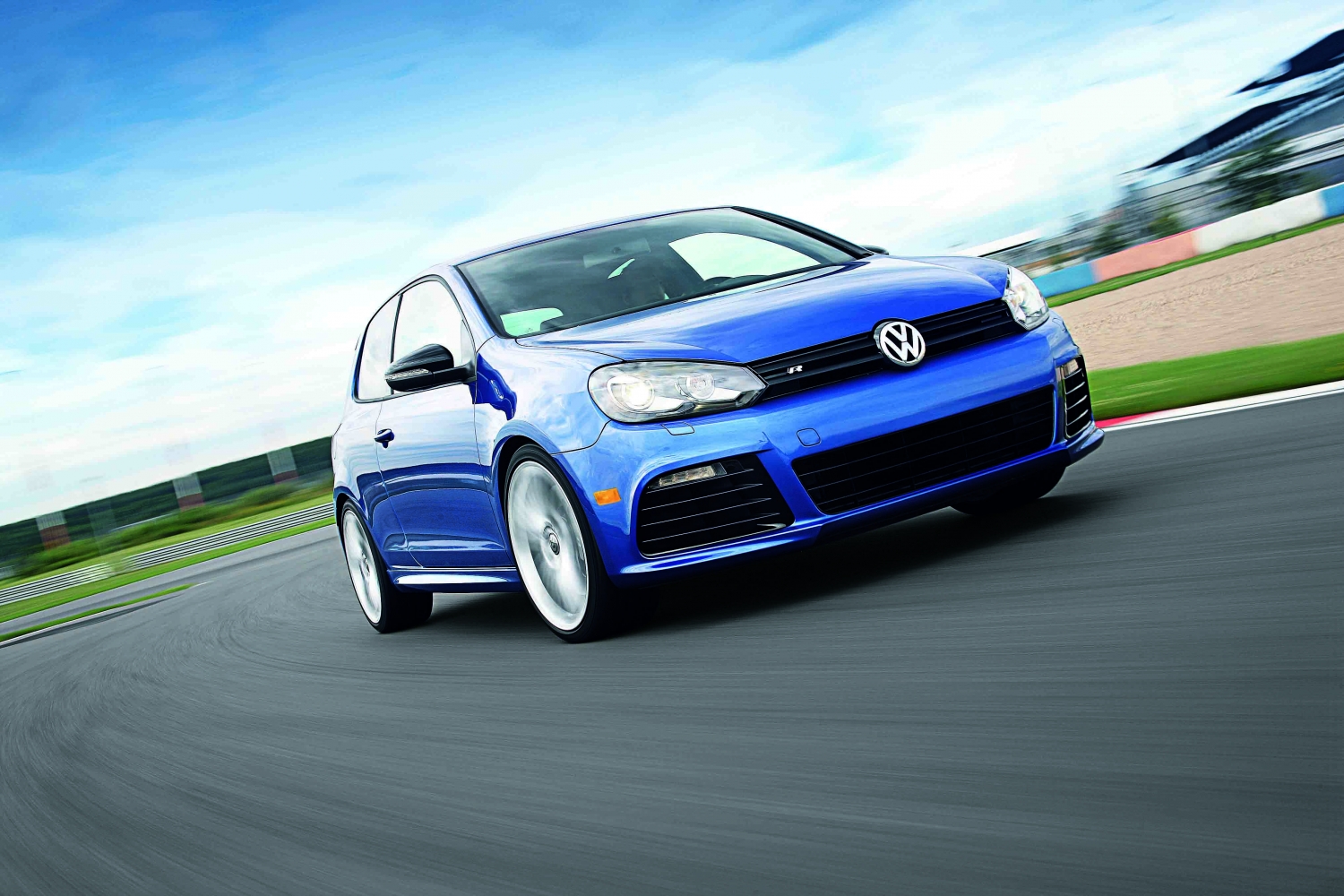
The first Volkswagen Golf R performance model that was introduced in 2012 was actually the third Golf to wear an “R” badge, following the Golf R32 models that had been offered with the fourth- and fifth-generation cars. The change in naming strategy for this, the sixth-generation Golf, reflected the move away from the naturally aspirated 3.2-litre “VR6” V6 to a more powerful version of the turbocharged 2.0-litre four-cylinder engine of the Golf GTI hot hatchback. R20 just doesn’t have the same ring to it.
Despite the size and cylinder deficit, the Golf R kicks out 256 horsepower—six horsepower more than the R32 and 56 more than the equivalent Golf GTI. There’s 258 lb-ft of torque, which is 51 lb-ft more than you get with the concurrent GTI. All this is channeled through a six-speed manual transmission and a Haldex all-wheel drive system that Volkswagen calls 4Motion. Lowered sports suspension, tweaked steering, and beefier brakes help to rein in the power.
Externally, the Golf R has a similarly subtle makeover in the same vein as its R32 predecessors with extended side sills, R-specific front and rear bumpers, twin central exhaust tailpipes, black side mirrors, bi-xenon headlights, and R badges, while black brake calipers lurk behind bespoke 18-inch alloy wheels. Both three-door and five-door body styles are available, and the interior is as user-friendly as in any Golf with the most restrained of overhauls for the R. Highlights include an R-badged multi-function steering wheel, sport seats with leather upholstery, and special blue instrument needles for the driver display. Standard equipment includes dual-zone climate control, while some of the options when new were a touchscreen navigation system, Dynaudio premium audio system, a sunroof, and keyless access with a push-button start.
The first-generation Golf R is at the age where its service and maintenance history are all-important. As a high-performance car, some may have seen hard track use, so check that the steering, the brakes, and the suspension feel as they should. Also listen for any rattles under the hood, which could be the sign of a worn cam belt.
Finding a good first-generation Golf R can take time because there are lots of modified and high-kilometre examples around. If you’re looking for one that hasn’t been messed with and has covered less than 200,000 kilometres, then expect to pay at least $19,000.
Related Topics