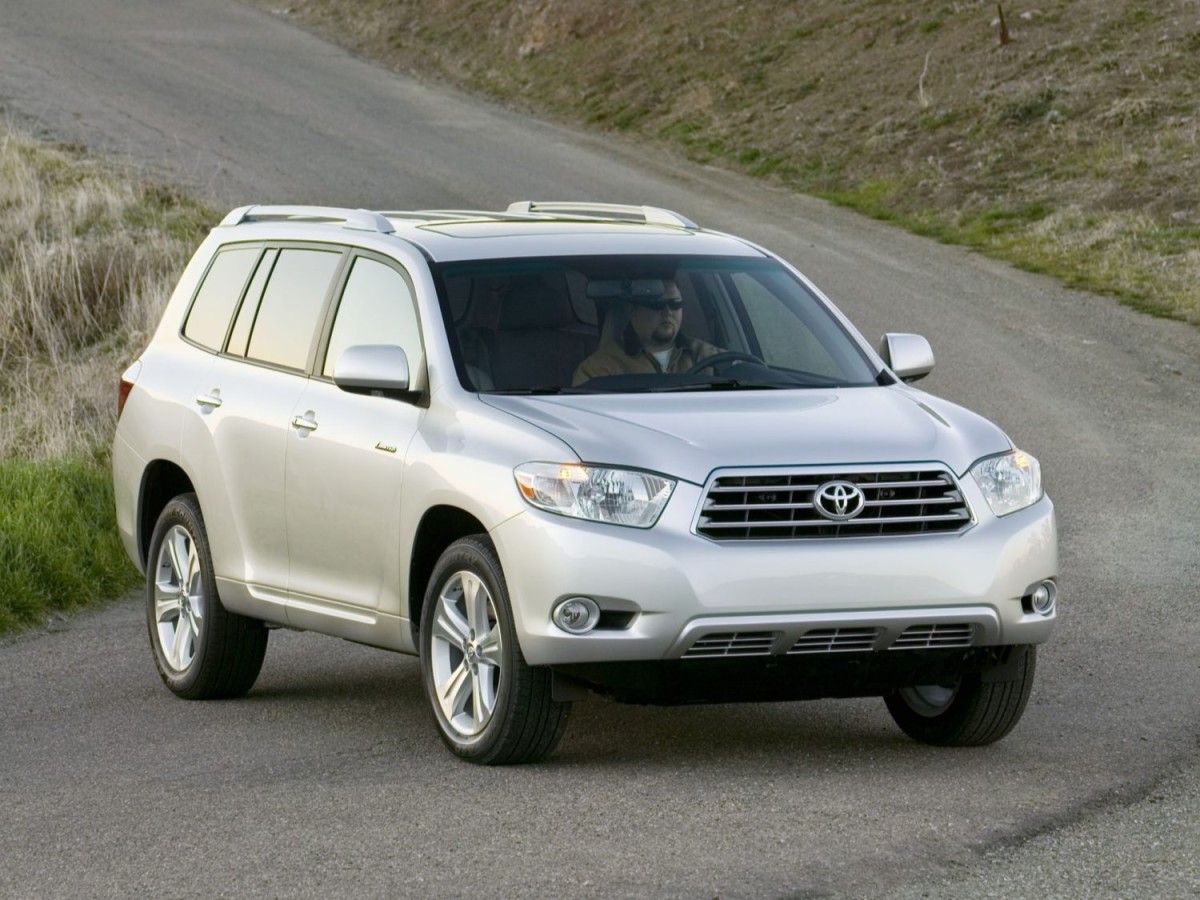
But It comes standard with a full suite of advanced driver aids, and the top trims offer near-luxury finishes. Aside from the pricey RAV4 Prime plug-in hybrid, Toyota has kept the crossover’s MSRP reasonable despite loading the vehicle with equipment. The 2024 Toyota RAV4 starts in Canada at just over $35,000 despite coming with things like standard all-wheel drive, wireless Apple CarPlay and Android Auto, blind spot monitoring and rear cross-traffic alert, and more.
RAV4s also have a rock-solid reliability rating in almost all forms. There have been some unusual models for which there is little data, like the two completely different fully electric RAV4s that Toyota built years ago. But in general, this crossover is an inexpensive and hassle-free long-term companion and one that stays cheap over time. Each generation is slightly different and the RAV4 has grown much larger since 1995, but Toyota has never entirely deviated from the original formula.
Here, we’ve outlined each generation and included some advice about what to look for and what to pay.
Toyota RAV4: Cost, Reliability, and the Best Years to Buy
Frequently Asked Questions
Which Toyota RAV4 years are the best?
Most RAV4s are trusty companions, and outlets like Consumer Reports give all but one model since 2011 above-average reliability ratings. There are a few years of concern, but in most cases, you can rely on the RAV4 to be a low-cost, low-hassle, long-term companion. The real difference is in features. Third-generation RAV4s (2006 to 2012) had optional V6 engines that made them more powerful than most other versions, and there was also a fully electric version in this generation that many buyers liked. Newer RAV4s have more features, particularly active safety systems, and that’s a major value add.
What are the worst Toyota RAV4 years?
Third-generation RAV4s may have more power than many of the others, but the 2005 to 2010 models also seem to have more problems. However, many reliability trackers give them average marks. Most of the issues revolve around brakes or suspension components, which might be a sign of age. 2019 RAV4s, the first year of the current design, also tend to come in for criticism, but the issues seem more serious, with some owners reporting transmission problems. The rest of the current-generation models have above-average reliability ratings.
Is a used Toyota RAV4 a good deal?
Yes. The RAV4 may cost more than many similar crossovers even though it feels and looks a little plainer or not very rugged, but it’s an excellent long-term investment. It’s reliable, safe, fuel-efficient, and full of useful features. Its resale values are high for a reason. That said, it’s best to watch out for signs of neglect, as the RAV4’s trademark reliability can lead to deferred maintenance. Many late-model hybrid RAV4s have also been used for gig driving, which will wear them out faster than normal "civilian" use.
Toyota RAV4 Pros and Cons
Pros:
- Good value, endlessly practical
- Generous standard safety features
- Excellent reliability record
Cons:
- Not exciting to drive
- Can be loud and unrefined
- Basic interiors
Toyota RAV4 Generations
Fifth Generation (2019-Present)
The fifth-generation RAV4 debuted for the 2019 model year, with gas-powered and hybrid versions as in the previous model. In 2021, Toyota added the RAV4 Prime, an impressively capable (and fast) plug-in hybrid range-topper. While the Prime is both speedy and fun to drive off-road, it’s also quite expensive, and its availability has been limited ever since its introduction.
The base Toyota RAV4 LE gets a 203-horsepower 2.5-litre four-cylinder engine and an eight-speed automatic transmission. In Canada, all-wheel drive (AWD) is standard. It’s plain inside and out and the engine is noisy and gruff, but the entry-level RAV4 comes standard with a long list of desirable features, including keyless entry, Toyota Safety Sense, wireless Apple CarPlay and Android Auto, 17-inch alloy wheels, and more.
Higher-trim RAV4s like the Limited get many extras standard, and in this generation, Toyota also expanded the overall scope of trims. There are now also RAV4 Trail and TRD Off-Road versions that are targeted at competitors like the Subaru Forester and its lifted Wilderness trim, and they hold up fairly well in most comparisons. The RAV4 will never be a hard-core off-roader like its big 4Runner and Land Cruiser brothers, but it’s no longer just a pavement-only pretender.
The Toyota RAV4 Hybrid uses a 2.5-litre four-cylinder and an electric motor that combine for 219 horsepower. It also gets standard electric all-wheel drive, and it retains its gas-powered counterpart's desirable luxury and entertainment features. This is the best version of the RAV4 thanks to its smoother drivetrain, extra power, and fantastic fuel economy (as low as 6.0 litres per 100 kilometres combined), but model-for-model it’s usually $3,000 or so more expensive than the gas-only version and the gulf widens in used models.
Speaking of price, the RAV4 Prime is the most expensive model in the catalog with a nearly $55,000 price tag (and even more for the high trim Prime XSE). That’s a bunch more than comparable PHEVs like the Hyundai Tucson or Kia Sorento, but the 302-system-horsepower Prime is a very impressive PHEV and it still qualifies for federal and provincial/territorial purchase rebates where they exist. It’ll sprint to 100 km/h in just over five seconds and its powerful electric motors are really handy off-road. It also comes with many more standard features than the lower-end RAV4s.
You can find gas-only RAV4s from this generation for $25,000 or less in decent shape, but good low-kilometre examples are more likely to sell for $25,000 to $45,000, with higher prices netting you the better-equipped models.
Hybrids cost more, and they’re hard to find in good shape below $30,000. Nicer ones and higher trim models go for at least $35,000, and in some cases as high as $48,000 even for 2021 or 2022 models. Demand for hybrids is very high, and the RAV4 is one of the best in its class. Expect to pay a premium, though the fuel savings will add up over time. The minimum cost of entry for a RAV4 Prime is $40,000 in 2024, and some used versions are priced so high that ordering a new one might be cheaper.
These years have a good reliability record with one notable exception. 2019 models score lower reliability ratings than the other years (and previous generation models). The issues tend to centre around the transmission and brakes. However, they’re still quite reliable compared to industry averages.
Fourth Generation (2013-2018)
The fourth-generation RAV4 represented a return to the earlier format, and it would prove to be the most successful version of the crossover yet. It’s also the vehicle that cemented the crossover as the new family car. Though it ditched the powerful V6 from the third-gen model, this was also the first RAV4 generation to include a hybrid, which gave it a major market advantage over other compact crossovers. Its pretty styling, which still looks fresh today, didn’t hurt either.
When this RAV4 was new in 2013, it came with only one powertrain, a 2.5-litre four-cylinder making 176 horsepower and 172 pound-feet of torque mated to a six-speed automatic transmission, with front-wheel drive (FWD) standard on lower trims and AWD standard on higher-priced models. These early versions could return 8.9 L/100 km combined with FWD or 9.4 L/100 km with AWD, and despite not being very exciting to drive and being rather noisy inside, they were very practical. Toyota also added new features, including a power liftgate and blind spot monitoring, and created more interior space by relocating the spare tire under the vehicle.
Inside, it got upgrades such as an optional 6.1-inch touchscreen audio system, automatic climate control, available Softex upholstery, and more standard features, but the biggest changes came with the RAV4’s mid-cycle refresh in 2016. That year brought style and equipment updates, plus the new hybrid, with technology adapted from the Prius.
2016’s updated styling brought LED exterior lighting and a redesigned front end. Inside, there was more sound insulation and updated interior styling, now with an optional 7.0-inch screen in addition to the previous 6.1-inch unit, and a small digital display in the instrument cluster. Active-safety systems were expanded to include available automatic emergency braking, lane departure warnings, and adaptive cruise control, though at this stage these features were only offered as an extra-cost package with the Limited trim.
The Hybrid mated a 150-horsepower 2.5-litre four-cylinder to a trio of electric motors for a total of 194 system horsepower and standard all-wheel drive. It proved not only slightly faster and much smoother than the gas-only version but could also consume as little as 7.2 L/100 km combined, a low number compared to past RAV4s. It proved very popular as soon as it hit lots, and used ones cost more than gas-only RAV4s today, but at first its availability was confined to the higher trims.
By 2018, this generation’s final outing, the Toyota Safety Sense suite (including adaptive cruise control) had been made standard across the lineup and the hybrid option extended to the base-model LE+. That year also saw the introduction of the first RAV4 Trail, which wasn’t as extensively modified for off-roading as the current version, but which did at least get a slight ground clearance lift. Hybrid models in these years actually had more clearance than non-hybrids, and the Trail was not a hybrid trim.
2013 and 2014 RAV4s have slightly lower reliability ratings than the other years, but the problems owners report, such as issues with interior accessories, are pretty minor. According to every data source this generation of RAV4 is very reliable, in hybrid or gas form.
Gas-powered fourth-generation RAV4s are common, though you’ll likely need to spend at least $15,000 to get one with less than 200,000 kilometres on the odometer. High-end, low-kilometre versions top out closer to $30,000. Fourth-generation RAV4 Hybrids are pricier. It’s very hard to find a decent one for less than $20,000, and most versions sell for between $25,000 and $32,000. They’re the best model offered in this generation, and since they also tend to come with lots of equipment, they’re just worth more.
Third Generation (2007-2012)
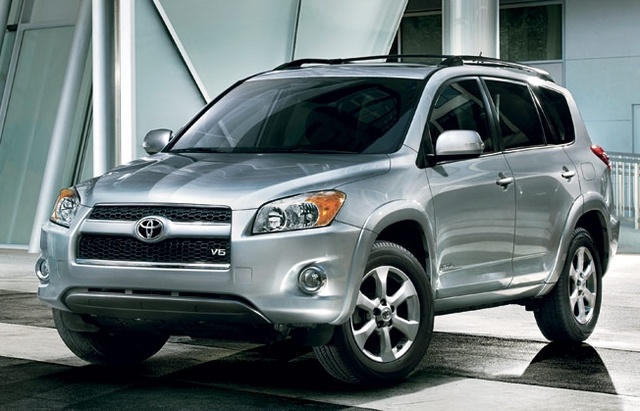
The third-generation RAV4, new for the 2006 model year, marked several major changes. Toyota expanded its size to roughly its current dimensions, taking it out of the subcompact SUV world and into the more popular compact SUV realm. The expanded size (17 centimetres longer overall) allowed Toyota to offer a tiny optional third-row, and this generation is the only one to have that option though it was so small as to be useful only to little kids. It also made a powerful V6 optional, and in time, it developed a second fully electric RAV4 with some help from Tesla.
The base 2.4-litre four-cylinder engine continued, but now with 166 horsepower. AWD started out as standard equipment in Canada in this generation, though FWD versions rejoined the line-up in 2009. In front-wheel drive form, this RAV4 could burn as little as 9.6 L/100 km combined. The big news, however, was the addition of the 3.5-litre V6. With 249 horsepower, it was the most powerful engine ever offered in a RAV4 until the 2021 RAV4 Prime debuted, and it made for brisk performance without too much loss in economy. V6 RAV4s could return 10.6 L/100 km combined with FWD and 11.0 L/100 km with AWD.
Visually, the third-generation design was also more daring, with more muscular looks than the previously cute and cheerful designs. The side-hinged tailgate remained, but Toyota dropped the manual transmission entirely.
The lineup now consisted of Base, Sport, and Limited trim levels. Sport trims came with a sport-tuned suspension, while V6 trims included hill ascent and descent control as a standard feature. The second-row seat continued to slide and fold forward, while the optional third-row bench seat folded into the floor. Owners of the Limited trim could add such options as leather upholstery and heated front seats.
In 2007, front-seat side airbags and side-curtain airbags joined the standard equipment list for all trims, while in 2009, a mid-generation refresh included updated front and rear ends, a new front grille, and a larger spoiler for the Sport trim, as well as a number of new standard and optional features, including push-button start, a rear-view camera, and a DVD navigation system with a 6.1-inch touchscreen. That same unit would carry over into the fourth generation model in 2013.
At the very end of this generation’s run, Toyota announced a second RAV4 EV. Developed with some parts sourced from Tesla, this version of the RAV4 didn’t appear until 2013, by which time the next generation had arrived, but it was built in small numbers for two years. It offered 166 kilometres of range from its Lithium-Ion battery pack and zero-to-100 times of roughly seven seconds. Fast charging wasn’t an option, but it could juice to 100% charge in six to eight hours on a 30-amp 240V charger. Only 2,600 were made, and although these were built at Toyota Motor Manufacturing Canada’s facility in Woodstock, Ontario, all units were sold in California. A handful of these found their way across the border and can still be spotted in metro Vancouver and on Vancouver Island. Many of the original units remain in service, but they’re not easy to buy today.
Overall, the third-gen RAV4 has the worst reliability rating of any generation, but that’s sort of like when a straight A student gets a B+. By the standards of its competitors, this is a very durable vehicle, and many of the issues that owners report are brake and suspension related, meaning they may be age-related or aren’t too hard to fix, unlike blown head gaskets or snapped timing belts on Subaru Foresters.
These are getting to be old vehicles now, but ones in decent shape with fewer than 200,000 kilometres on the clock should cost around $8,000 to $12,000. V6 models will cost a little more, but not much. They aren’t as common, however. Our research didn’t turn up any RAV4 EVs on sale in Canada, and these are rare in the U.S. market as well. They tend to sell down south for between $10,000 and $14,000 U.S. If you can’t charge at home, though, this isn’t the EV for you.
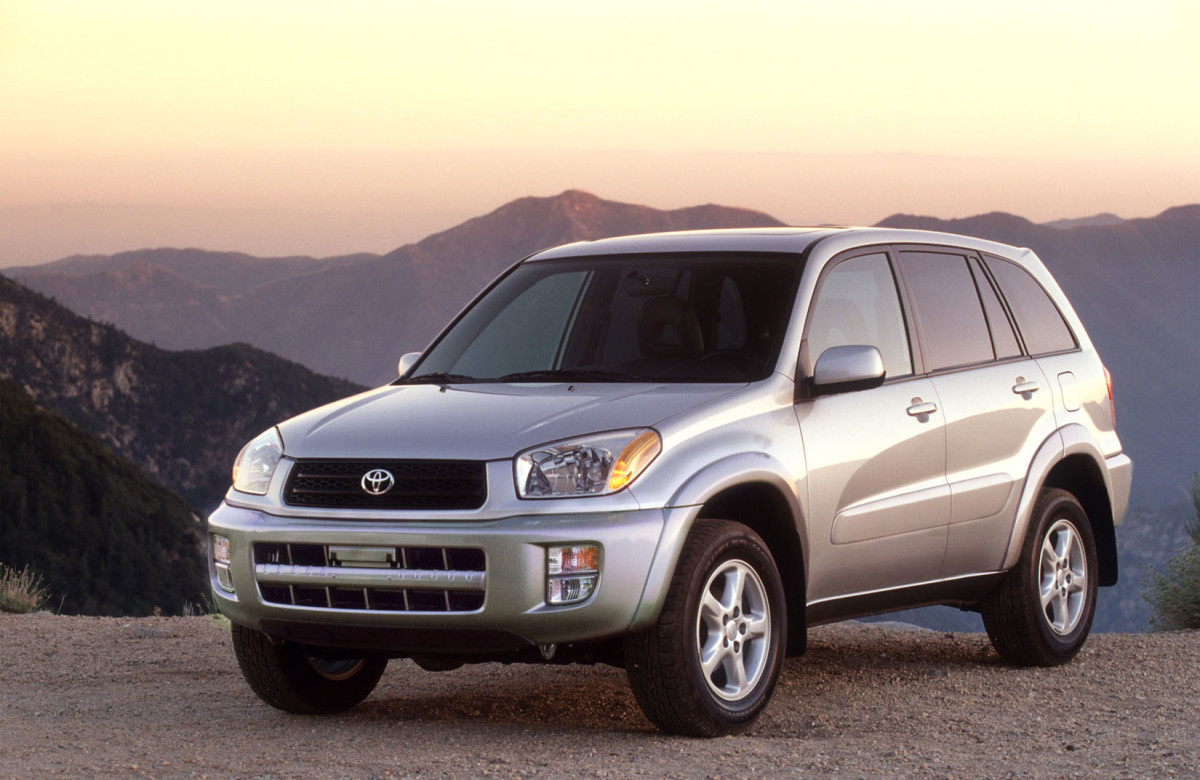
Second Generation (2002-2006)
The second-generation RAV4 debuted for the 2001 model year, and in many ways it was a subtle refinement of the original idea. Toyota dropped the slow-selling two-door model, at least in North America, and forgot all about the electric version for another decade. It also made the remaining four-door version larger, 3.3 centimetres longer and 6 centimetres wider, which resulted in more interior space.
Exterior styling updates were equally subtle but ensured a more muscular and less self-consciously cute appearance. A more rigid body and a re-tuned suspension resulted in an improved, more comfortable ride with minimal flexing and a quieter cabin on the highway. The RAV4 also received a new all-aluminum, 2.0-litre four-cylinder engine with variable valve timing, which helped to improve fuel efficiency. Horsepower jumped by 21 hp, up to 148. Buyers could choose from a five-speed manual or a four-speed automatic transmission.
Inside, front-seat legroom grew by about 7.5 centimetres, and headroom increased as well in the front, although both headroom and legroom decreased by a little over a centimetre for rear-seat passengers. The rear seat could be reclined and split 50/50, or slid and folded forward to increase cargo space. Owners again could choose front- or four-wheel-drive configurations, as well as such options as antilock brakes and a power moonroof. The rear tailgate was still side-hinged, opening to the curb side, which wasn’t ideal for loading.
In 2004, the RAV4 received a new 2.4-litre four-cylinder engine, which produced 161 hp. Toyota also made a few minor exterior styling updates, which included new circular fog lights integrated into the front bumper. Toyota added air conditioning, power exterior mirrors, and its electronic stability control system, called Vehicle Stability Control, front-seat side and side-curtain airbags, power door locks, and an upgraded six-speaker AM/FM audio system with both CD and cassette players. Leather upholstery was also available.
These RAV4s are pretty basic by today’s standards, but they have a rock-solid reliability record, and there’s very little to go wrong with them relative to more modern versions. They’re simple, durable vehicles but no longer particularly common. There’s no interest in them from collectors, and most have been used up in daily driving. Clean survivors should sell for between $4,000 and $9,500.
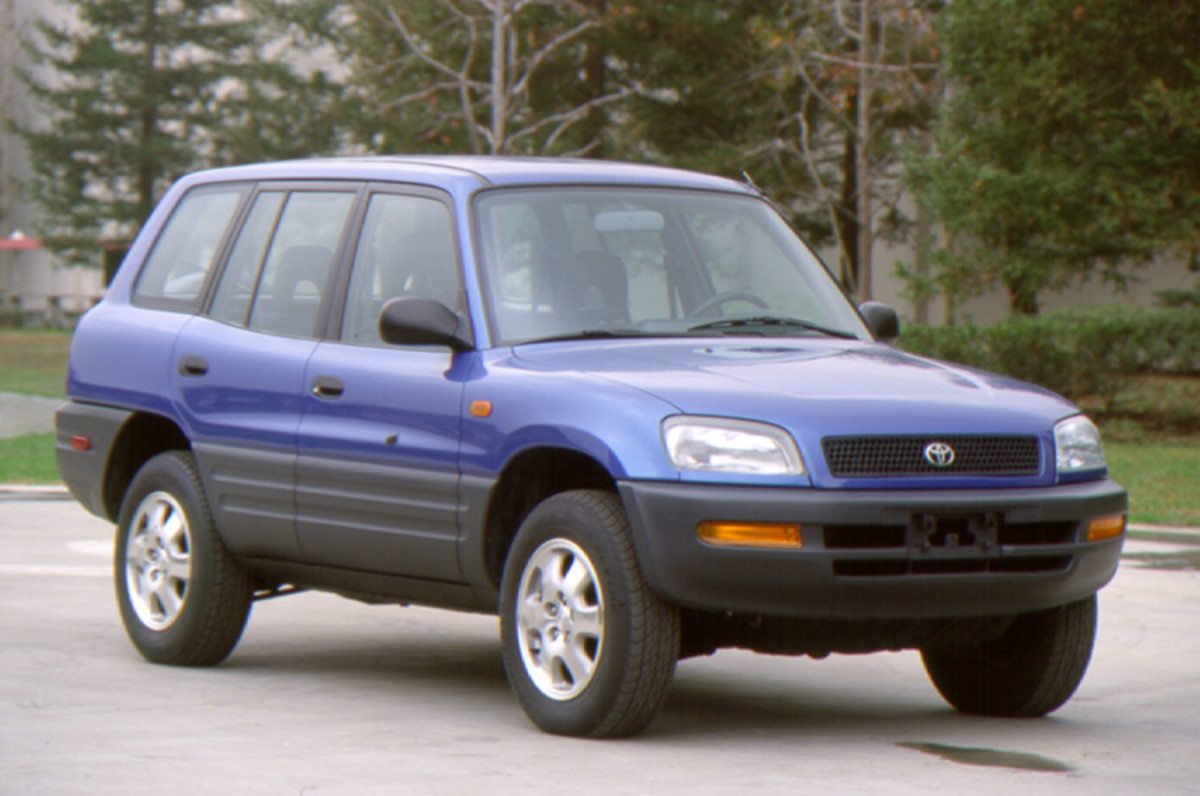
First Generation (1996-2001)
Loosely based on the Corolla platform and even borrowing some pieces from the Celica, the Toyota RAV4 debuted in North America for the 1996 model year, two years after it had made a huge splash in Japan. It was a brisk seller as soon as it was on sale, even though many traditional car critics didn’t know what to think of it. It was a small SUV like a Suzuki Samurai, but not one designed to go off-road, and it was more like a car to drive than any previous such vehicle, even the crossover 1984-2001 Jeep Cherokee.
Toyota spent five years designing and perfecting it. A concept version of the RAV4 was shown at the Tokyo Motor Show in 1989, and a close-to-production prototype was displayed at the same show in 1993. The final production RAV4 debuted at the Geneva (Switzerland) Auto Show in 1994. Though there had been vehicles like it in earlier eras, like the Matra Rancho and Lada Niva, it was the first proper modern small crossover SUV.
In its initial incarnation, the RAV4 was powered by a 120-hp, 2.0-litre four-cylinder engine, which was mated to either a five-speed manual transmission or an optional four-speed automatic. The RAV4 rode on a car-like fully independent suspension with unibody construction, resulting in good handling. Performance lagged, however, as it took a full 10 seconds for the RAV4 to accelerate from a standstill to 100 km/h.
With its short (compared to larger SUVs) yet wide body, the RAV4 exhibited good stability and maneuverability. It was available with either front-wheel drive or full-time four-wheel drive. Although not designed specifically for off-roading, the vehicle could be equipped with manual-shift four-wheel-drive trims with a centre differential lock, which improved off-road performance. Short-wheelbase two-door and long-wheelbase four-door versions were available, with a side-hinged tailgate at the rear. Front airbags were standard, and owners could add antilock brakes as an option.
The RAV4 received a minor facelift in 1998, with a new grille, front end, headlights, and taillights. In addition, the four-cylinder engine received a boost in power, to 127 hp, although owners and reviewers alike still complained about sluggish acceleration.
Minor revisions inside included a new three-spoke steering wheel and updated audio systems. Toyota also introduced a new two-door soft-top convertible trim, as well as a four-door RAV4L Special Edition with leather upholstery and unique exterior colours. The two-door hardtop trim disappeared from the lineup in 1999, leaving only the four-door and two-door soft-top trims.
The original RAV4 not only established the template for the later ones but also established the model’s solid record for quality and reliability. These first-generation models are durable and hard-wearing and can last more than 300,000 or more kilometres with proper maintenance. They’re rare now, especially in Canada where rust takes it toll, and collectors are already interested in the rarer two-door and two-door soft-top models, but they’re still suitable as reliable daily drivers. They sell for about $5,000 on average, though nice collectible ones might go for more.
Toyota also developed a nickel-metal hydride (NiMH) battery electric version of this RAV4 with a range of 153 kilometres and a top speed of 126 km/h. The automaker leased them to select customers from 1997 to 2001. In 2003, when the leases concluded, Toyota sold the 328 surviving examples in the U.S. as used vehicles. They’re still out there south of the border, but the complexity of maintaining them means they’re niche collector's items, not a good choice for an EV you intend to actually use.
Related Topics: