The Toyota Prius was first launched in Japan in 1997 and introduced to North America for the 2001 model year. Since then, it’s been synonymous with hybrid technology and eco-friendly driving. The world’s first mass-produced hybrid car added an electric motor to a petrol engine and set a new standard for fuel efficiency, low emissions, and environmental consciousness. It quickly became a favourite with eco-friendly consumers and urban commuters alike.
The Toyota Prius has evolved over several generations of hatchbacks. Each one has brought new advancements in technology, efficiency and design, as well as extra comfort and new features. In addition to the traditional hybrid Prius, you can also find a plug-in hybrid called the Toyota Prius Prime (and later simply the Prius Plug-in Hybrid), which extends electric-only driving range. The Prius name has proved so popular that it has also spawned spin-off cars, such as the smaller Prius C hatchback and the Prius V compact MPV.
Toyota hybrids are common in the automotive world today, as long-running models such as the Corolla and the Camry have long since sprouted their own hybrid versions. But the Prius is undeniably the car that started the trend, paving the way for the widespread acceptance of hybrid powertrains. It demonstrated that you could have a car that was both fuel efficient and relatively environmentally responsible, while still being practical and reliable, with usable rear seats and a good amount of cargo space.
A used Toyota Prius offers a distinctive design and an outstanding reputation for durability. It’s a great option for buyers that want a dependable vehicle with top-notch fuel economy.
Toyota Prius Buying Guide: Cost, Reliability and the Best Years to Buy
Frequently Asked Questions
Which Toyota Prius years are the best?
The best Toyota Prius models on the used market are generally considered to be from 2015 onwards, and particularly those from 2016 and 2017. That’s when the fourth-generation model was introduced, bringing with it significant improvements in fuel efficiency, as well as better handling and upgraded technology over earlier cars. The 2015 model is also worth checking out, as it’s the peak of the third generation of cars and has proved particularly reliable and efficient.
What are the worst Toyota Prius years?
While the Toyota Prius is generally very reliable and issues with it are rare, the 2010 and 2011 Priuses have come in for particular criticism. Although not widespread, some cars suffered from excess oil consumption and issues with the braking system. If you’re looking at cars of this age, make sure you thoroughly check the inspection and maintenance records to see if such problems have been identified and fixed. It’s also worth watching out for issues with the headlights in cars from 2006, 2007, and 2008, which have been widely reported and can cost several hundred dollars to fix.
Is a used Toyota Prius a good deal?
In short, yes, it is. While nearly new versions will unquestionably be more expensive, there is a used Prius to suit just about every budget. Early models can be found for as little as $6,000. As long as it’s been reasonably well maintained, the Prius's excellent reputation for reliability means you can have a very dependable car for very little.
Toyota Prius Pros and Cons
Pros:
- Excellent fuel efficiency
- Proven reliability
- Hybrid tech is particularly effective around town
Cons:
- Hybrid components can raise repair costs
- Some models lack power
- Older models could have battery life issues
Toyota Prius Generations
Fifth Generation (2023-Present)
Introduced for the 2023 model year, the fifth-generation Prius continues its now-traditional trick of fuel efficiency and reliability, but a comprehensive redesign made it a lot more stylish. No version of the Prius prior to this could be described as particularly swish, but this one? Check out the sleek lines and futuristic headlights and taillights. The new Prius turns heads so much that it won the 2024 World Car Design of the Year award.
As well as its good looks, the gen-five Prius has more horsepower than its forebears, returns 4.8 litres per 100 kilometres combined, and has standard all-wheel drive (AWD) in Canada. It’s also packed with safety features and upgrades such as the Toyota Safety Sense suite of driver assistance technologies such as automatic emergency braking and dynamic radar cruise control. It also comes with standard blind spot monitoring with rear cross-traffic alert and safe exit alert, which uses the blind spot monitor radar to let you know if there’s a vehicle or a cyclist coming before you open the car door.
On the flip side, the latest Prius is less spacious than before, both in the cabin and the trunk, and it’s also considerably more expensive. In Canada, two trims are offered, XLE and Limited, and the lowest it’s ever been priced new is $36,490 before fees for the 2023 XLE.
Toyota’s excellent reputation for reliability has shown no signs of disappearing with the fifth-generation Prius, and all models you’ll find on the used market today will still have their factory warranty. However, there was a recall on the rear doors in 2024 because of fears they could open while driving. The cause is water entering the door and short-circuiting the latches. Be sure this work has been completed on any car you’re considering.
As the fifth-generation Prius is still relatively new, there aren’t many used examples on the market yet, nor do they come at much of a discount versus buying new. Used 2023 models tend to go for $36,000 or more, depending on spec and odometer reading.
Fourth Generation (2016-2022)
Toyota Prius number four, introduced in 2016, brought with it significant advancements over the previous model in fuel efficiency, performance and design. The body structure was stiffened and the suspension upgraded for improved handling and ride comfort. The exterior was made more aerodynamic, which helped improve fuel economy. Some models could provide fuel economy as low as 4.4 L/100 km combined.
The interior was an improvement too, with better materials than before, newer tech, and comfortable front seats. Most fourth-generation Toyota Priuses have a touchscreen infotainment system and a rear-view camera, as well as safety features such as adaptive cruise control and lane-keep assist. Go for a higher-spec trim and you’ll get luxuries such as a premium sound system and a bigger touchscreen on the dash.
Models from 2019 onwards were available with all-wheel drive (AWD), and cars from 2021 onwards had updated safety equipment with more advanced driver assistance systems than before.
Reliability is a key selling point for the Prius, and the fourth-generation car doesn’t disappoint. That said, there were some recalls on early models to be aware of, including one issued in 2018 that affected almost 200,000 Priuses at risk of an electrical short because of a wire harness issue. Check that the work has been carried out on any affected cars you’re looking at.
Prices for a fourth-generation Prius will depend on the year, the odometer reading, and the condition of the car. A well-maintained earlier model with FWD and an odometer at less than 200,000 starts at $15,000, while newer models with lower mileage and AWD start at $20,000 for lower trims and $28,000 for higher trims.
Third Generation (2010-2015)
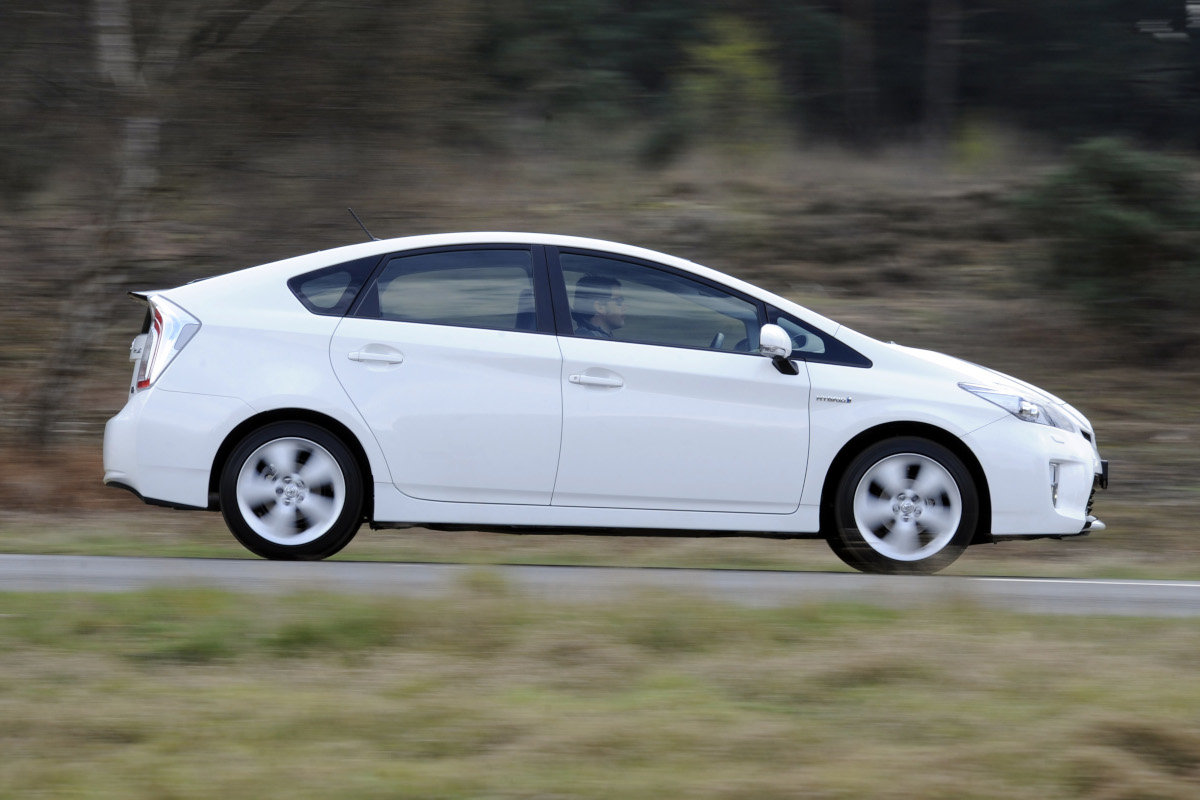
The arrival of the third-generation Toyota Prius for the 2010 model year brought with it improved fuel efficiency and extra performance over its predecessors, as well as more up-to-date features. It had an updated drivetrain, too, with a new 1.8-litre gasoline engine that delivered improved acceleration plus around 4.8 L/100 km combined.
The interior was also given a full overhaul. The materials were of a better quality than in the second-generation Prius. There was more space and an increased number of standard features, including a touchscreen infotainment system and Bluetooth. Go for a higher-spec trim and you’ll find luxuries such as a solar roof to top up the battery pack, a head-up display, and more sophisticated navigation.
Generally speaking, the third Prius has proved reliable. That said, the 2010 and 2011 models particularly suffered from issues with the brake systems and with excess oil consumption. These issues should have been rectified by now, but it’s still worth digging through the car’s maintenance history to make sure.
You can generally find a well-kept third-generation Prius with a reasonable odometer reading for between $10,000 and $15,000, but older models and/or cars with higher mileage can be found for less. As always, check for a full maintenance history.
Second Generation (2004-2009)
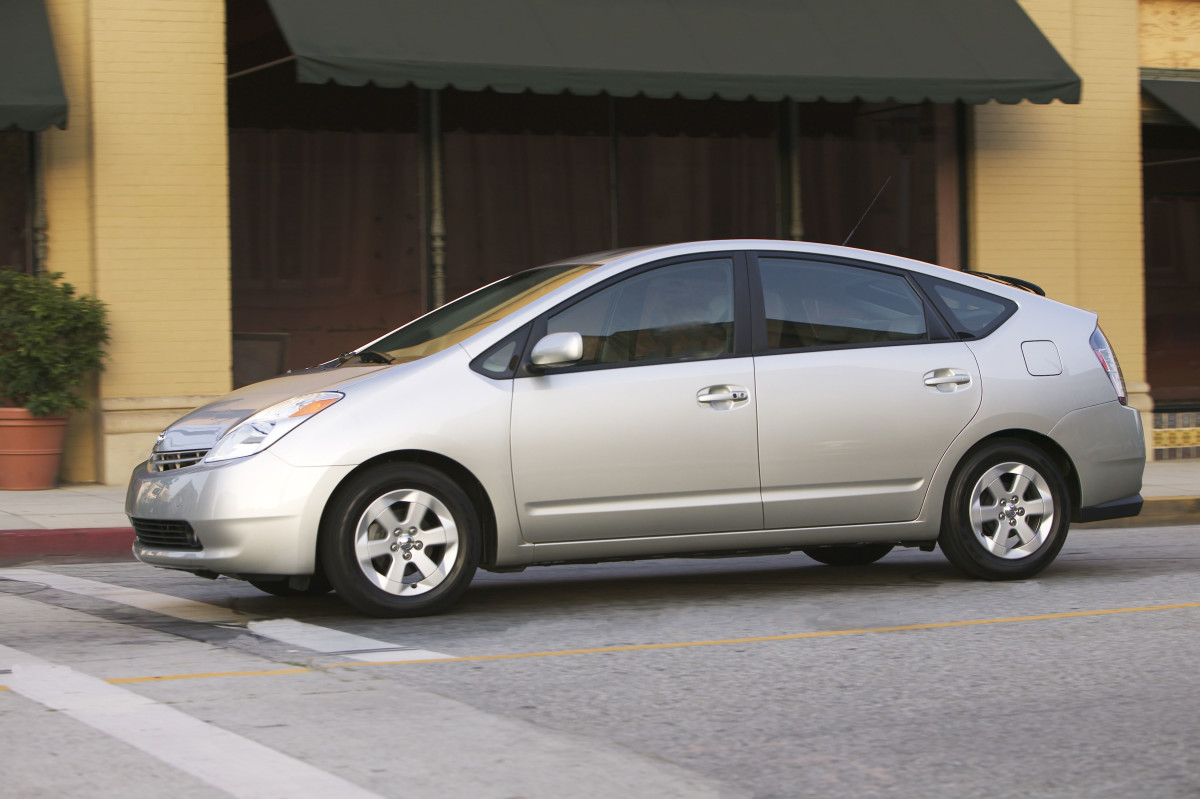
The second-generation Toyota Prius arrived for the 2004 model year. It was the first version of the Prius to sport the now-signature “liftback” body style. It offered more interior space than before, with improved aerodynamics to reduce fuel consumption. Toyota’s hybrid system was upgraded to further improve fuel economy, resulting in an average of 5.1 L/100 km combined.
Inside the second Prius, the more spacious cabin had what were for the time fairly state-of-the-art amenities, including a multi-function display that gave the driver real-time information about fuel efficiency and how the car’s energy was being deployed or harvested. Higher trim levels featured options such as navigation systems and upgraded audio systems.
The second-generation Prius is noted from its longevity, but cars of this age now inevitably suffer from battery degradation. Badly affected cars will have a warning symbol on the infotainment screen and a red warning triangle on the dashboard. It’s well worth checking the battery health, which you can do using a third-party app connected to the car’s diagnostic port, or you can pay a specialist to check it for you.
As they’re getting on in years, second-generation Priuses are becoming scarce in Canada, but they tend to be relatively affordable. Expect to pay between $6,000 and $10,000, depending on odometer reading and condition. This represents great value if you’re looking for an economical and reliable hybrid car.
First Generation (2001-2003)
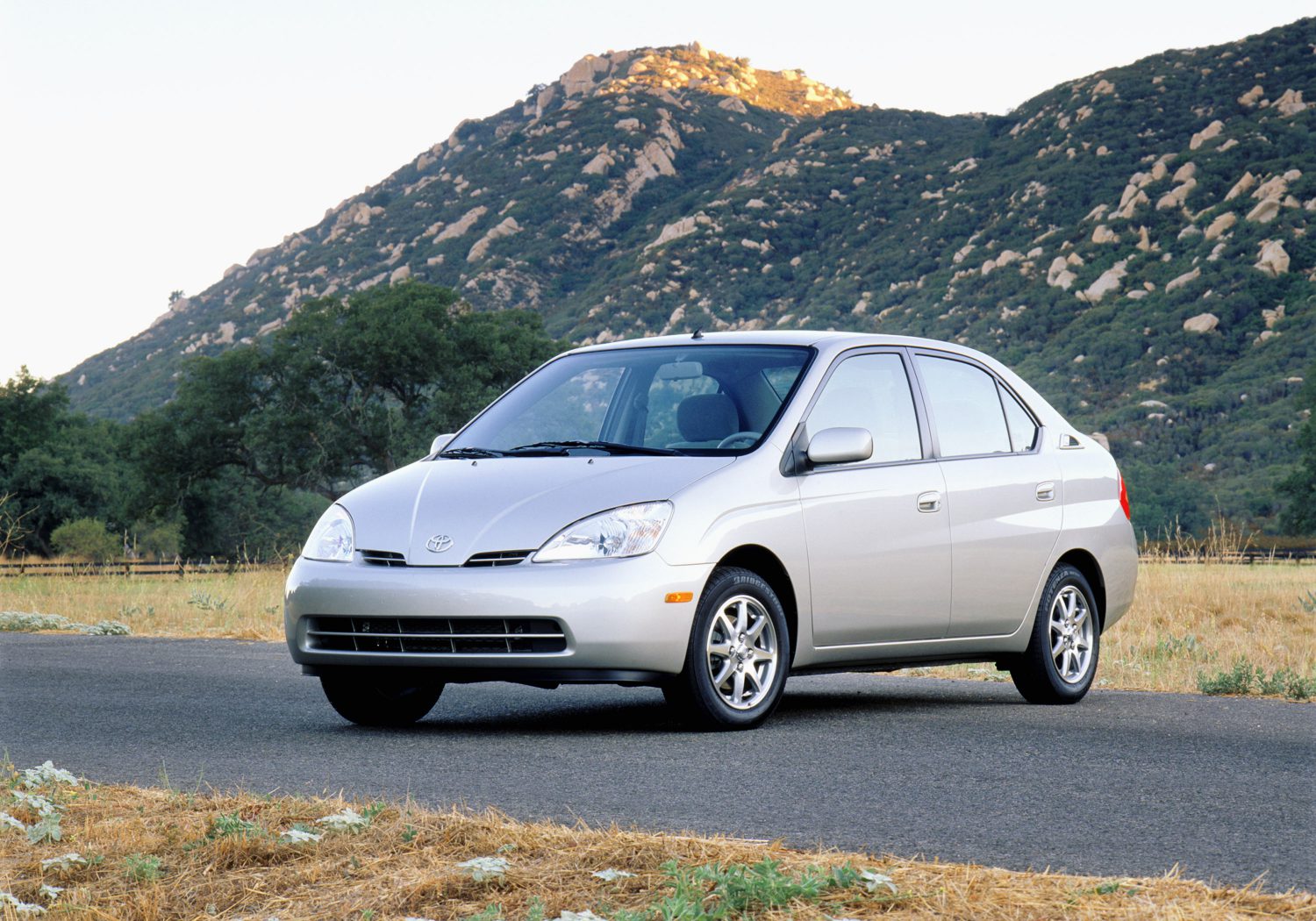
In the beginning, there was the original hybrid. The Honda Insight was actually the first hybrid sold in North America, but for the purposes of this story, it was the original Toyota Prius that really popularized the union of a gasoline engine and an electric motor. The first Prius was a compact sedan that featured, for the time, groundbreaking hybrid tech, and it would set out the hybrid journey that Toyota would follow for decades.
Original fuel consumption estimates for the Prius sat at 5.6 L/100 km combined, and the first-generation Prius will give you decent fuel economy more than 20 years later. The interior is basic by modern standards, but it’s functional enough with space for four, power windows, air conditioning, and even a CD player.
Reliability in the first-generation Toyota Prius is solid, but even the newest examples are more than two decades old, so there will be signs of wear. Check the battery health and make sure that the hybrid system is functioning correctly, and be prepared to do more maintenance than the handbook recommends due to the car’s age.
First-generation Priuses are now very difficult to find in Canada as many have succumbed to battery wear and rust. In the U.S., prices generally ranging from around $3,000 to $6,000. Expect a similar range, if not slightly higher, for those that pop up occasionally here. Although they lack some of the modern features and conveniences of newer automobiles – no Android Auto or Apple CarPlay here – they still offer excellent fuel economy and represent a solid choice for the budget-conscious buyer.
Related Topics