The innovative Toyota Highlander broke new ground when it debuted at the 2000 New York Auto Show for the 2001 model year. Crossover SUVs, which have unibody structures and offer a car-like driving experience, were not new then, but in the 1990s most midsize SUVs were traditional body-on-frame designs like the Ford Explorer. Full frames make big SUVs very durable off-road, but they’re heavy, space-inefficient, and not conducive to great handling.
The 2001 Highlander scaled up the Jeep Cherokee and Toyota RAV4’s unibody crossover format, with its better fuel efficiency and handling, to midsize proportions and instantly became a best-seller. It spawned an entire segment of midsize crossovers that dominate SUV sales today. The Honda Pilot, Ford Edge, Nissan Murano, Kia Telluride, Mazda CX-90 and lots of others are descended from the basic concept the Highlander outlined back then.
Toyota continued to offer its traditional SUVs, primary among them the full-frame 4Runner, but the Highlander’s sedan-like ride and quiet refinement (it was closely related to the Lexus RX) won over buyers and critics alike.
Early testers praised the Highlander's nimble handling, good road manners, smooth and supple ride, and overall performance on paved surfaces. The Highlander also performed well off-road when equipped with full-time all-wheel drive (AWD), which split torque 50/50 between the front and rear wheels during normal driving conditions but sent additional torque to specific wheels when it detected slippage.
Although initially available as a two-row, five-passenger vehicle, Toyota soon offered an optional third-row seat, which expanded the seating capacity to seven. In 2006, Toyota also added the Highlander Hybrid. It was the first seven-passenger hybrid vehicle in the world then, and it’s still one of the most efficient midsize SUVs today.
Throughout its production run, the Highlander has generally scored good marks with reviewers, who appreciate its exterior styling, upscale features, interior versatility, and overall affordability. What it’s never really done is impress in terms of driving dynamics. The Highlander gets the job done and does it well, but it isn’t exciting. Its suspension is soft and aimed at delivering a smooth ride, and the steering is generally numb and uncommunicative. It’s also not visually exciting, but that’s not what Highlander buyers prioritize. Reliability, safety, and economy are all top-notch.
Toyota Highlander: Cost, Reliability, and the Best Years to Buy
Frequently Asked Questions
Which Toyota Highlander years are the best?
All four generations of Highlander have stellar reliability ratings, so it’s hard to say which years are the absolute best. 2018 through 2022 models rank way above average at outlets like Consumer Reports and Dashboard Light and also generate very few grumbles on crowdsourced sites like CarComplaints. Among older models, 2005 to 2007 and 2012 to 2014 stand out as complaint-free years.
What are the worst Toyota Highlander years?
No Highlander is going to cause you to worry the way a Range Rover might, but there are a few years with average or slightly below-average repair records. The worst is actually the first full year of sales, 2002. Given that the Highlander was an all-new model then, it’s understandable that it would be a more trouble-prone year. Consumer Reports also suggests that 2008, 2009, and 2011 models have merely average repair records, while CarComplaints shows a spike in user quibbles with 2015 Highlanders. Those complaints centre on interior and infotainment issues, and they aren’t reflected in other outlets’ evaluations.
Is a used Toyota Highlander a good deal?
Yes, though they do sometimes cost more than rival SUVs. The Highlander is a very reliable and practical machine that can last a very long time, and the hybrid versions return really good fuel economy by midsize SUV standards. Later models are often loaded with advanced safety features that some competitors lack. All that means high resale values and higher purchase costs, but long-term savings. It’s hard to go too wrong with a Highlander and there are plenty of them, so it pays to shop around.
Toyota Highlander Pros and Cons
Pros:
- Spacious and comfortable
- Available hybrid models
- Handsome styling
- Excellent safety and reliability record
Cons:
- Dull to drive, and not very powerful
- Basic, plasticky interiors
- Toyota’s infotainment tech lags behind its competition’s
Toyota Highlander Generations
Fourth Generation (2020-Present)
The fourth-generation Highlander models are some of the most comfortable, practical vehicles on the market. The 2020 redesign brought more upscale styling and interior features, and Toyota reinforced the SUV’s body to make it more comfortable on the road. The only real demerits, as in the past, are the Highlander’s lack of vigour and its tiny third row. Toyota chose to offer a larger three-row SUV starting in 2023, the Grand Highlander. That vehicle rides on the same platform but offers more powerful hybrid engines and a proper adult-sized third row.
New Grand version aside, Toyota has only changed the Highlander recipe a little since this current generation debuted.
For this generation, the front-wheel drive (FWD) was dropped, and all-wheel drive (AWD) became standard equipment in Canada. As before, there are both gas and hybrid powertrains. At first, gas versions used a 3.5-litre V6 engine with 295 horsepower and 263 pound-feet of torque, but in 2023 Toyota replaced the V6 with a 2.4-litre turbocharged four-cylinder making 265 horsepower and 310 pound-feet of torque. Hybrids come with a 2.5-litre four-cylinder engine and an electric motor that combine for 243 system horsepower.
The new turbo four base engine measures better in every category of fuel economy, including averaging 9.9 litres per 100 kilometres combined, while being no less powerful than the V6. The Hybrid can deliver 6.7 L/100 km combined, which is much better than most other midsize SUVs, very few of which offer conventional hybrid drivetrains.
The Highlander is an actual do-it-all vehicle, boasting up to 2,387 litres of cargo space with the seats folded down. That’s one of the best measurements in its class. Every Highlander comes with an 8-inch touchscreen, USB inputs, Apple CarPlay and Android Auto, and more. Toyota’s tech remains a hassle to use with the current Highlander, but the standard smartphone interfaces do help.
Toyota Safety Sense comes standard, including functions such as lane-keep assist, lane-departure alerts, and automatic emergency braking. This suite of features helped Toyota earn “Top Safety Pick” or “Top Safety Pick+” designations from the Insurance Institute for Highway Safety (IIHS) every year since this design went on sale.
The Highlander line continues to expand as time goes on. Toyota now offers a Nightshade Edition, a sporty XSE trim, and a luxurious Platinum package for both powertrains. While mid-trim-level variants get features like Softex upholstery, the top Highlander Platinum offers leather-trimmed seats and high-end features like heated second-row captain’s chairs, a rear-seat reminder system, a 360-degree camera, a digital rear-view mirror, and more.
These late-model Highlanders are still very new and not cheap as used vehicles. Brand new 2024 Highlanders run from around $50,000 to $63,000 in Canada depending on the trim, and the cost of entry for a used model is about $35,000 to $60,000. You can find ones cheaper than that if you’re willing to take one with more than 150,000 kilometres or a low-spec trim, but it’s best to think of this as a long-term investment. Hybrid Highlanders cost more than their gas-powered counterparts, starting north of $40,000, but the fuel savings are significant enough to warrant consideration.
Third Generation (2014-2019)
Toyota redesigned the Highlander for the 2014 model year, bringing a sharper, more muscular shape to the family-hauling SUV. It’s arguably the most stylish version of this vehicle yet created. The refresh brought an eight-passenger seating option to the Highlander for the first time, though if you’re going to bring along eight people, at least three of them will have to be little kids.
The redesign also brought more technology to make life with kids easier, and more active-safety features. Top trims include adaptive cruise control, blind-spot monitoring with rear cross-traffic alerts, lane-keeping assist, and automatic emergency braking. Even low-end models get things like forward automatic emergency braking and lane departure warnings. Back in the mid-2010s, many of these features were still very new and not common on competitors. As a result, the third-gen Highlander received “Top Safety Pick” or “Top Safety Pick+” ratings from IIHS every year it was on sale.
In Canada, all versions of the Highlander from this generation came with a 3.5-litre V6. The gas-powered V6 made 270 and later 295 horsepower, while the hybrid version made an electrically assisted 280. Though definitely more efficient than other midsize SUVs at the time, this generation’s hybrid isn’t as frugal as the later 2020 and newer versions in part because it is a powerful V6. It’ll return about 8.2 to 8.5 litres per 100 kilometres in combined driving, while the four-cylinder and gas-only V6s use about 10.3 to 11.1 L/100 km.
The updated Highlander offered standard features that included a 6.1-inch touchscreen, Bluetooth, a backup camera, USB ports, and 18-inch wheels. The top Toyota Highlander Limited and Limited Platinum got near-Lexus levels of luxury features, such as a panoramic sunroof, heated steering wheel, and heated second-row seats.
Aside from some quibbles about infotainment and interior materials on 2015 models, these Highlanders have a very good reliability record and they tend to have high resale values.
Hybrid models currently sell for roughly $25,000 to just over $40,000, with newer and lower-kilometre examples at the high end and older, more worn ones down low. You can find them cheaper, but beware of high-kilometre examples that have been used extensively for ridesharing. The Highlander Hybrid became popular after Lyft and Uber drivers figured out how efficient and roomy they were. Gas-powered Highlanders of this generation sell for slightly less, but not much, and all are good values.
Second Generation (2008-2013)
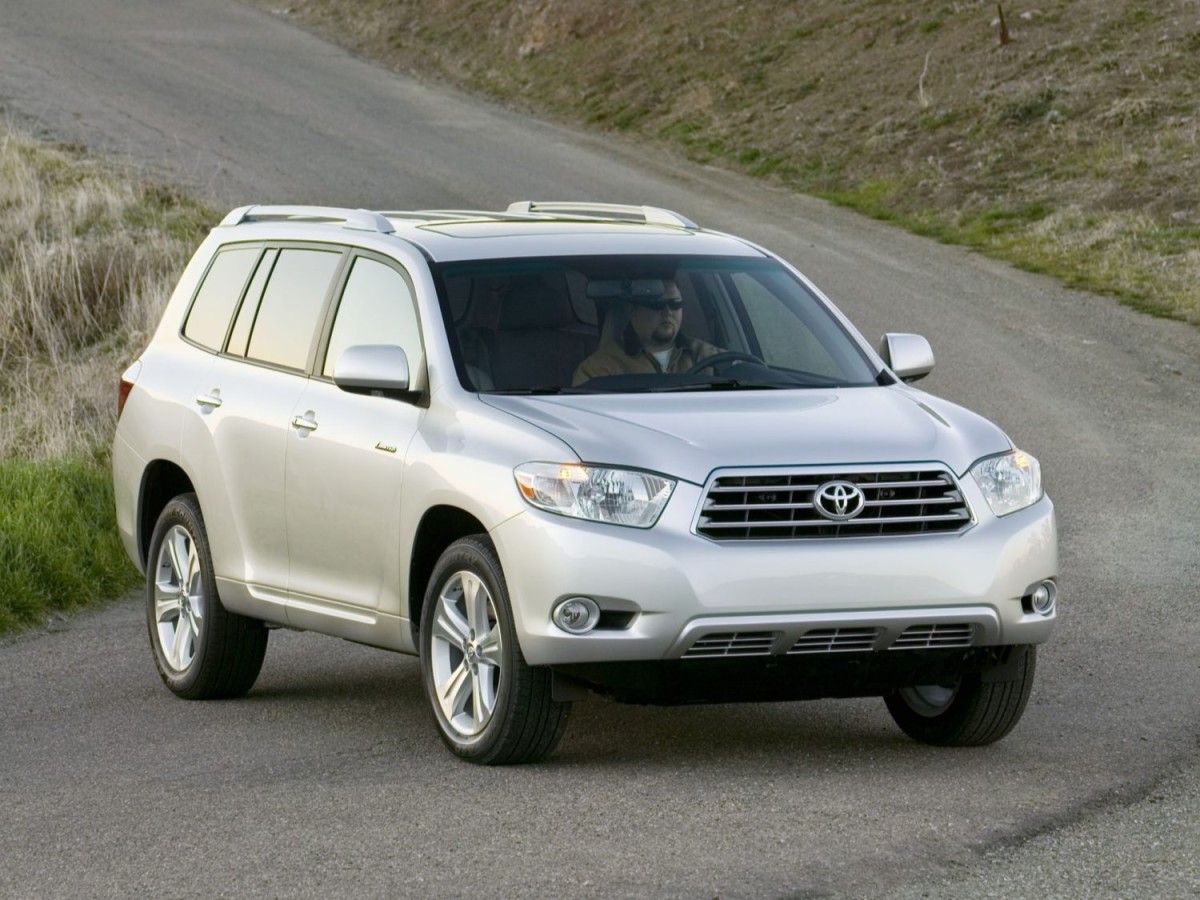
For the second-generation Highlander, which debuted at the 2007 Chicago Auto Show for the 2008 model year, Toyota stretched the wheelbase to 2,789 millimetres, up from 2,715 mm, while the overall length measured 4,785 mm, nearly a 10.5-centimetre increase. These big stretches were aimed at making the Highlander more substantial as the smaller RAV4 grew larger, and they produced a big increase in cargo space and rear legroom. First-gen models had 2,310 litres overall, and the second-gen had up to a maximum of 2,700 litres, which is more than the current model!
A new 3.5-litre, 270-hp V6 engine, borrowed from the Camry and the RAV4, powered all 2008 trims. Due to the Highlander's increased weight, Toyota dropped the 2.4-litre four-cylinder engine from the lineup. However, the automaker introduced a new, environmentally friendly 187-hp, 2.7-litre four-cylinder in 2009 for low-trim models. Hybrid Highlanders used a 3.3 litre, and later a 3.5-litre V6 with 270 or 280 total system horsepower. Hybrid models return between 8.2 and 9.0 L/100 km combined, while V6s burn around 11.6 to 12.4 L/100 km combined. The four-cylinder models do a little better at 10.4 L/100 km combined.
Standard safety features for the 2008 Highlander included front side-impact airbags, traction control, hill-start assist, and antilock brakes. Toyota continued to equip the Limited trim with a Vehicle Stability Control system. As in later generations but unlike the first, the second-gen Highlander earned “Top Safety Pick” designations from IIHS every year it was on sale.
In 2010, Toyota added electric power steering to the standard feature list. In addition, the automaker offered a new towing package for the Highlander, which increased its towing capacity to 2,268 kilograms (5,000 pounds), which is still the most typical tow rating in this class today.
Like other generations, these Highlanders are generally very reliable and long-lived, but 2008 and 2009 models seem to draw more complaints and have worse repair records than the others. They also command high resale values, and even 200,000-kilometre examples will cost more than $10,000 to buy. You can find lower-kilometre, clean ones for about $15,000 to $19,000 and be reassured about their reliability, but that is more than some newer used competitors.
Hybrid Highlanders from these years are much rarer now and outnumbered by non-hybrids by almost 4:1 in Canadian used car listings. They don’t cost much more and they’re no less reliable, but they are harder to find.
First Generation (2001-2007)
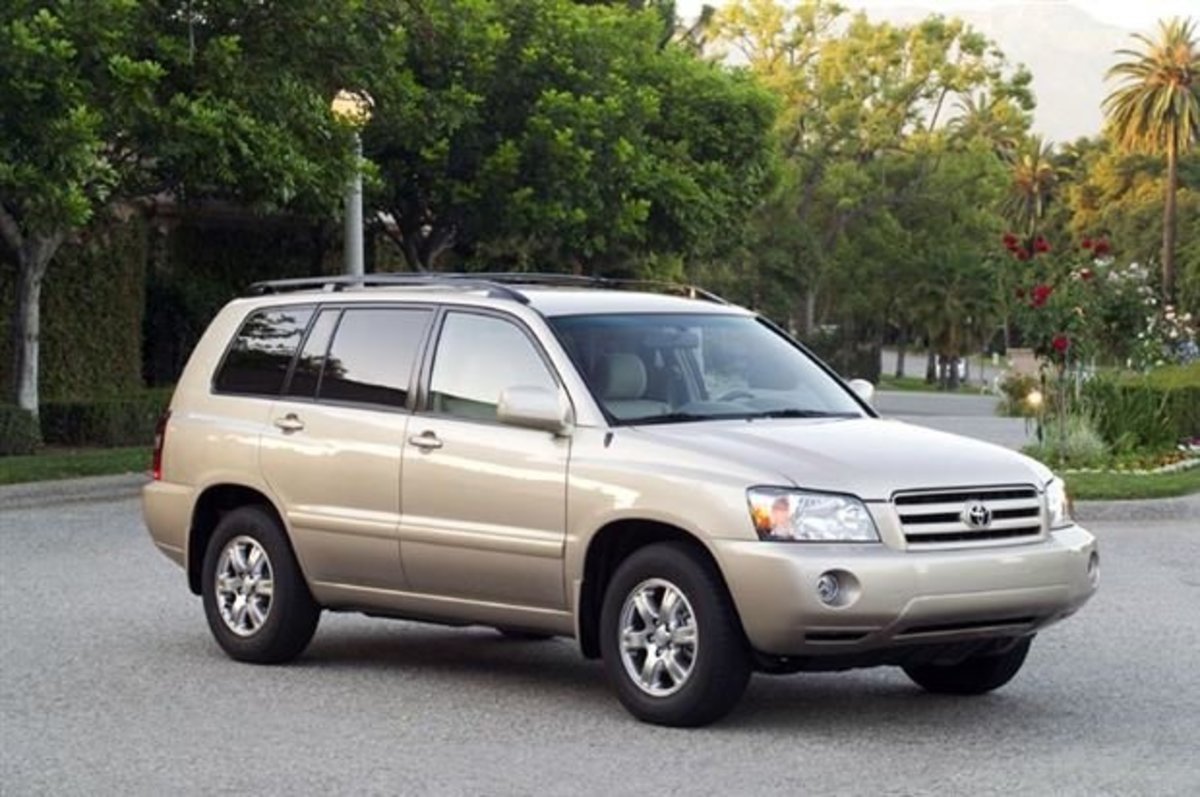
Debuting for 2001, the Toyota Highlander was the Japanese automaker’s first midsize crossover. Having pioneered the successful modern crossover SUV format with the RAV4 in 1995, it wasn’t hard to scale it up, and the Highlander used the same platform as the very successful Lexus RX. The SUV initially came in a single base trim in Canada, with seating for five passengers in two rows.
Geared toward families who spent most of their time shuttling kids around town to school and sports activities, the first-generation Highlander turned heads by mashing up the best attributes of an SUV, a minivan, and a station wagon. It sat on a 2,715-millimetre wheelbase, and its overall length measured 4,681 millimetres. In 2024, those are compact SUV dimensions, but the entire SUV class has grown considerably since then, and both the Highlander and RAV4 would be greatly enlarged in the late 2000s.
The Highlander came equipped with such features as cruise control, air conditioning, a CD player, and 17-inch alloy wheels. In 2004, Toyota gave the exterior a mild update and added traction control and a tiny optional third-row seat.
Power for the first-generation Highlander came from a 155-hp, 2.4-litre four-cylinder engine or an optional 220-hp, 3.0-litre V6, which linked to a four-speed automatic transmission. The base engine came with front-wheel drive (FWD), while the V6 was sold with AWD. Fuel economy specs measured at 10.9 L/100 km combined with the four-cylinder and front-wheel drive, or 13.2 L/100 km combined with the V6 and all-wheel drive.
The biggest news during the life of the first Highlander was the debut of the Hybrid model in 2006. Using a 3.3-litre V6 assisted by electric motors, it could return 9.1 L/100 km combined, a number better than virtually any other SUV had ever achieved at that time. It also sold with all-wheel drive, which was rare among hybrids at that time, and came standard with the third row.
The first-generation Highlander came standard with antilock brakes with electronic brake distribution and brake assist. Owners could add Toyota's Vehicle Skid Control system, which included traction control. Dual front airbags were also standard, while side-impact airbags were optional. It was considered a safe vehicle for its era but never earned the accolades of later generations.
These Highlanders are now very old, but they’re also very durable. Aside from the very earliest models (2001 and 2002), they have a stellar repair record and are capable of doing 300,000 kilometres or more. You’ll have to broaden your search to find one of these in Canada today, but once you do track one down, you shouldn’t need to pay more than $8,000 to secure it.
Related Topics: