In the years since, the Camry has moved with the times, dropping the liftback model but adding and then losing coupe and wagon body styles along the way. All-wheel drive (AWD) versions have featured and, as the Camry has grown in size, V6 engines have joined the range. Hybrid versions have been available since the mid-2000s, while the latest, post-2023 model is hybrid-only.
Core trim levels are Camry LE, Camry SE, Camry XSE, and Camry XLE. As you’d expect, standard equipment has improved over time, to the point where today’s Camry is packed with features. High-tech and well-equipped it may be, but it remains a car that won’t cost the Earth to run, with an MSRP starting at less than $40,000.
Our guide to the Toyota Camry covers all nine model generations, with advice on the best and worst versions, what to look out for, and how much you can expect to pay.
Toyota Camry Buying Guide: Cost, Reliability, and the Best Years to Buy
Frequently Asked Questions
Which Toyota Camry years are the best?
The latest Toyota Camry is the most advanced version yet, but the best choice may well be one of the 2017-2023 models. It will still be very well-equipped and spacious and is likely to be impressively reliable. You may even find one with some remaining manufacturer warranty, too.
What are the worst Toyota Camry years?
The worst year for Toyota Camry reliability is 2008, according to data from carcomplaints.com, with cars from this year suffering from excessive oil consumption. 2007 and 2009 are also bad years. In all, the 2006-2011 Toyota Camry doesn’t have the same excellent reliability record as previous and subsequent models.
Is a used Toyota Camry a good deal?
The Toyota Camry can be a great deal if you’re looking for a comfortable car that’s likely to be very dependable. While it’s not as desirable or enjoyable to drive as some midsize cars, the Camry is generally a very sensible option that’s cost-effective and easy to live with.
Toyota Camry Pros and Cons
Pros:
- Spacious and comfortable
- Most models are very reliable
- Fuel-efficient hybrids
Cons:
- Some versions look nondescript
- Not as much fun to drive as some midsize sedans
- Interior of earlier models is rather basic
Toyota Camry Generations
Ninth Generation (2023-present)
It’s an all-new era for the Toyota Camry as it goes hybrid-only for its ninth generation. The latest Camry is almost identical in size to its predecessor and shares its basic structure, including its front doors and windscreen. The front and rear sections have been completely redesigned, however, as has the interior. And the switch to purely hybrid means that the Camry Hybrid’s status as a separate model is over.
All models have front-wheel drive as standard, with the hybrid powertrain combining a four-cylinder 2.5-litre engine with a 100 kW electric motor to give a total output of 225 horsepower. In Canada, all-wheel drive is standard on all models but the base trim and adds a 30 kW motor at the rear to give 232 horsepower. A continuously variable transmission (CVT) is standard.
The general consensus is that this is the best — and the most desirable — Camry ever. With an exterior design that blends hints of both Prius and Lexus, it’s certainly the sharpest-looking version. No other Camry model feels this upscale inside, while the efficient hybrid drivetrain gives a Natural Resources Canada combined figure of 4.9 to 5.3 litres per 100 kilometres combined depending on the trim.
In Canada, the trim walk starts at the SE FWD, which includes heated front seats, a heated steering wheel, heated side mirrors, LED headlights, dual-zone automatic climate control, push button start, SofTex faux leather interior trim, a sport-tuned suspension, and an eight-inch infotainment touchscreen with wireless Apple CarPlay and Android Auto integration. Camry SE Upgrade AWD models have a sportier look and feel with black 18-inch alloy wheels and a standard moonroof. New Camry XSE and Camry XLE models have additional luxury features.
The standard Toyota Safety Sense package for all Camry trim levels includes advanced safety features such as radar cruise control, lane departure alert, emergency braking with pedestrian detection, and automatic high beams. A blind spot monitor with rear cross-traffic alert is also standard.
It’s too early to predict the long-term reliability of the latest Camry, but if it follows the examples set by its predecessors, it should be very dependable. Many of the parts used by the latest car are carried over from the previous generation, and those have a very good reliability record with few major issues raised on carcomplaints.com. The Camry has regular listings at or near the top of the midsize sector in independent reliability surveys.
Although it hasn’t been on sale long, you can already find used examples of the new Toyota Camry for sale. Don’t expect to pay much less than the MSRP at a dealership, however, because demand is strong due to the sometimes-lengthy wait times for a new car. Depending on spec, prices range from just under $40,000 to almost $50,000.
Eighth Generation (2017-2023)
The eighth-generation Toyota Camry shifted the model slightly upmarket while retaining its core values. Marginally longer and wider than its predecessor, it has a lower roofline and looks sportier, with a fastback-style sloping rear window and short trunk lid. High-spec versions even have 19-inch alloy wheels and four chrome-tipped exhaust tail pipes.
Engine choices are a 2.5-litre four-cylinder with either 203 or 206 horsepower or a 3.5-litre V6 with 301 horsepower, all paired with an eight-speed automatic transmission that offers the choice of manual shifts. The Camry Hybrid combines a 2.5-litre engine with an electric motor for a total system output of 208 horsepower and has a CVT. All versions give good performance and are more fun to drive than you might expect of a Camry. Front-wheel drive (FWD) is the standard layout, but non-hybrid versions are also available with all-wheel drive (AWD).
A wide range of trim levels was available over the model’s lifetime, including LE, XLE, SE, SE Nightshade, and XSE, with spec differences between four- and six-cylinder models and hybrid and non-hybrid models. Even entry-level Camry LE models have plenty of features as standard, though, including air conditioning, a reversing camera, radar cruise control, and heated exterior mirrors. Move up to Camry SE trim and additional equipment includes 17-inch aluminum alloy wheels, paddle shifters, a rear spoiler, and front sport seats covered in special sport fabric. Top-spec XLE trim includes automatic emergency braking, radar cruise control, lane departure alert, blind spot monitoring and rear cross-traffic alert, a 10-speaker JBL audio system, and LED headlamps.
An update for the 2020 model year added support for Apple CarPlay or Android Auto for all models, plus cosmetic updates including a new front grille. It also added the Camry TRD, a sporty trim level that includes a dramatic exterior makeover with a front splitter, side sill extensions and a large rear spoiler, as well as bespoke 19-inch alloy wheels. Available only with the 3.5 V6 engine, it also includes upgraded exhaust and brake components, and sport-tuned suspension.
The 2017-2023 model seems to be doing its bit to reinforce the notion that the Toyota Camry is a well-built, reliable car that’s unlikely to let you down. Despite the huge numbers sold, there are only a handful of fairly minor issues raised on carcomplaints.com. During this generation’s model run, Toyota continued to finish near the top of major independent reliability surveys.
There’s no shortage of used Toyota Camrys of this age to choose from, with prices starting from about $20,000 for earlier model years with less than 150,000 kilometres on the odometer. Prices for an equivalent Camry Hybrid start much higher at about $28,000. Higher-spec post-2020 models that have covered less than 100,000 kilometres average about $30,000.
Seventh Generation (2011-2017)
It was business as usual for the eighth-generation Toyota Camry, which arrived in 2011 for the 2012 model year. Despite being all-new, it looked very much like its predecessor, albeit with more of an angular design. The overall proportions are remarkably similar, while the exterior dimensions and wheelbase are unchanged.
It wasn’t without innovations, of course. This was the first Camry available only with an automatic transmission, for one. The interior is roomier despite the carryover dimensions, and it’s quieter thanks to improved soundproofing. Toyota also added ‘Entune,’ a package that allows you to integrate apps and data services to the car’s infotainment system.
The powertrain lineup was updated with a slightly more powerful 2.5-litre four-cylinder, now with 178 horsepower (an increase of nine). The 3.5-litre V6 carried over from the previous model, with the same 268-horsepower output. Both are slightly more fuel-efficient than before, with an NRCan combined rating of 8.2 L/100 km for the 2.5 and 9.5 L/100 km for the V6. A range of updates for the Camry Hybrid boosted power to 200 horsepower, while fuel economy is 39% better, rated at 5.7 to 6.0 L/100 km combined.
Toyota Camry trim levels for this generation are familiar, with LE, SE, and XLE versions offered. The entry-level LE trim is a little basic, but at the least includes air conditioning, 10 airbags and Toyota’s ‘Star Safety System’, which includes stability control and a brake-assist function. Toyota Camry SE and XLE models have alloy wheels, while a reversing camera and leather trim were available for higher-spec models. The 2014 mid-life facelift for this Camry was unusually far-reaching, with major design changes on the outside, higher-quality materials on the inside, and equipment upgrades for all trim levels.
Predictably, this generation of Toyota Camry has a good reputation for reliability. It was the top-ranked midsize car in the J.D. Power 2017 Vehicle Dependability Study, and the comparatively small number of issues raised on carcomplaints.com generally relate to minor issues, such as glitchy infotainment systems and noisy brakes.
Prices for a Toyota Camry of this generation with less than 200,000 kilometres on the odometer start at about $13,000 and rise to $20,000 or so for a late, high-spec model. There are lots to choose from, so it pays to shop around. You shouldn’t have to settle for one without a good service history.
Sixth Generation (2006-2011)
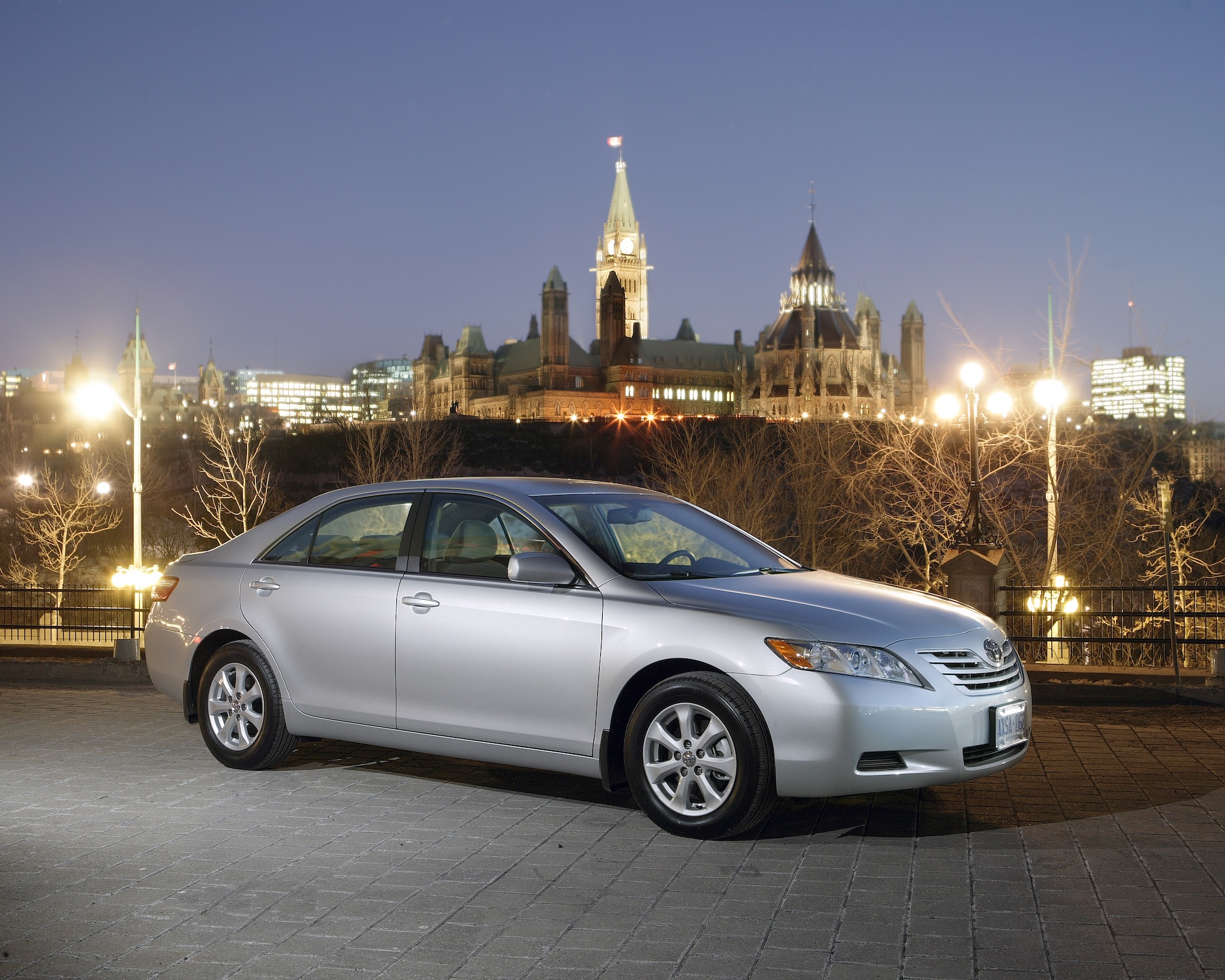
The sixth-generation Toyota Camry introduced for the 2007 model year is, to many eyes, one of the best-looking Camry models ever. With subtle details and well-balanced proportions, the exterior has more than a hint of both Mercedes-Benz and Lexus — Toyota’s premium brand — about it. The interior is similarly restrained, and top-spec Camry XLE models have Lexus-like polished wood trim inserts.
As with its predecessor, this Camry offers a choice of four-cylinder or six-cylinder engines. This time around, there’s a 2.4-litre four-cylinder with 158 horsepower and either a five-speed manual or five-speed automatic transmission. Alternatively, there's a 3.5-litre V6 with 268 horsepower and a five-speed auto as standard. There’s another option, too, because this generation saw the introduction of the first-ever Camry Hybrid. It combines a 147 horsepower 2.4-litre engine with a 105 kW electric motor for a total output of 188 horsepower. It has a CVT as standard and the best fuel economy of the range, giving an estimated 6.8 L/100 km combined.
Available trim levels from launch were LE, SE, and XLE. Standard features include air conditioning, steering wheel-mounted audio controls, and seven airbags. Stability control was initially an option across the lineup but became standard as part of an update for the 2010 model year that also included a new six-speed automatic transmission. A new 2.5-litre four-cylinder engine with either 169 horsepower or 179 horsepower replaced the 2.4 for the 2010 model year.
For the most part, the 2006-2011 Toyota Camry lives up to the model’s reputation for reliability. It was one of the top-rated midsize cars in the J.D. Power 2012 Vehicle Dependability Study. However, engine issues such as excessive oil consumption can be a problem, especially with the V6. Carcomplaints.com cites 2008 as the worst year for reliability due to this issue, although the highest number of complaints overall is for 2007 cars.
You can find bargain-basement Toyota Camry models of this era with well over 200,000 kilometres on the odometer for $6,000 or so, but you’re likely better off with a sub-150,000-kilometre example, which will only cost $2,000 to $3,000 more. A later 2.5 with a comparatively low odometer would be our recommendation, which should cost about $11,000.
Fifth Generation (2001-2006)
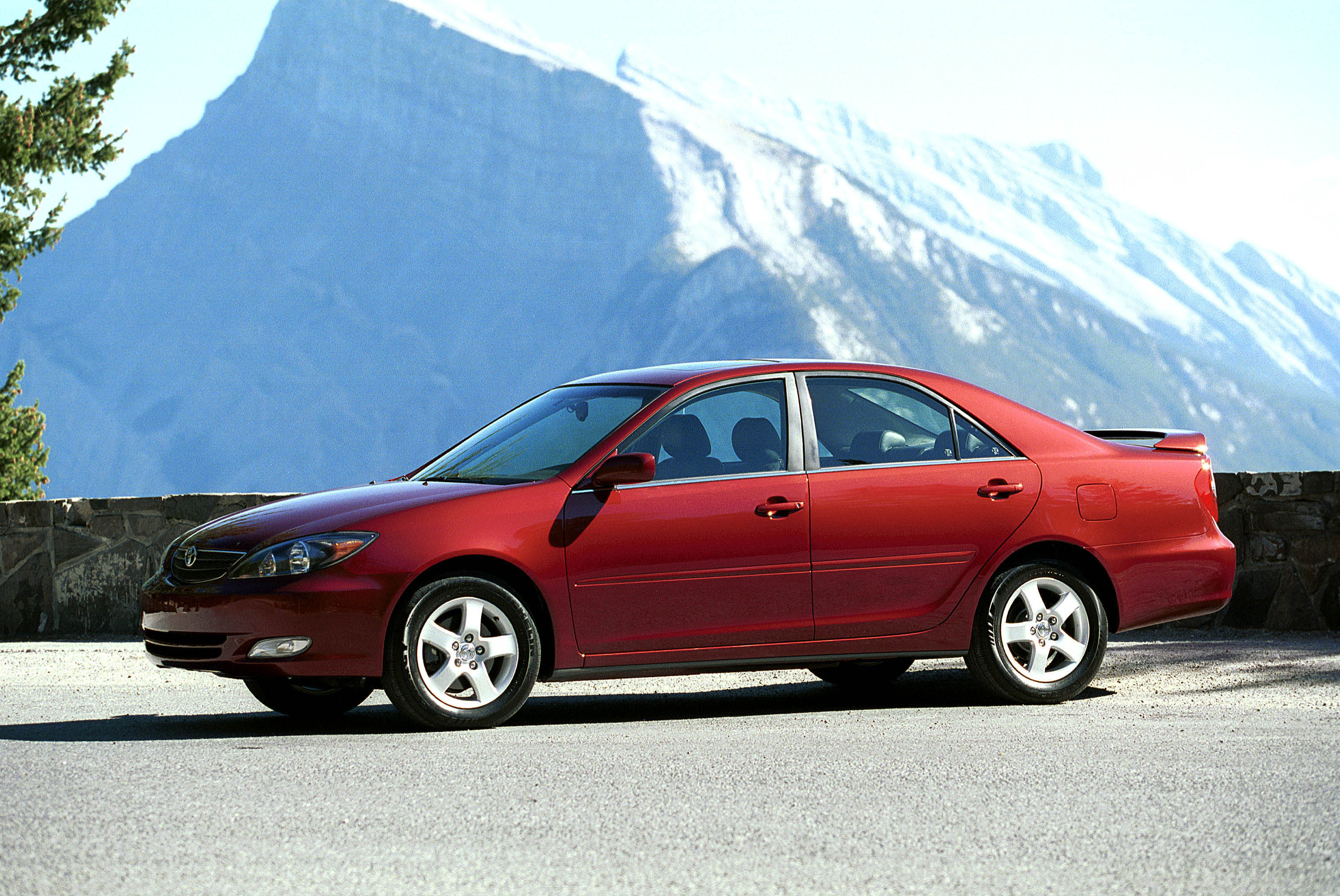
The Toyota Camry grew in size with the introduction of the fifth-generation model, gaining an extra 6 centimetres in height, 4 cm in length and an extra 5 cm in its wheelbase. Roomier inside and much more modern on the outside, it was available only as a front-wheel drive sedan, with no wagon or all-wheel drive versions offered in North America. A larger four-cylinder engine helps to counteract a slight increase in overall weight, with a 2.4-litre instead of the previous car’s 2.2, initially available with either a five-speed manual or four-speed automatic transmission. The other engine option is an auto-only 3.0-litre V6.
Standard equipment was competitive for the time, although it looks a bit basic now. Highlights for entry-level Toyota Camry LE trim include air conditioning and cruise control, SE trim adds more features and sportier suspension, while top-spec Toyota Camry XLE trim includes electric driver’s seat adjustment and a JBL premium audio system. Many safety features were optional extras, but equipment was upgraded over the years. By the 2006 model year all Camrys had anti-lock brakes and steering wheel-mounted stereo controls as standard, and the four-speed automatic transmission had been upgraded to a new five-speed auto.
Although the Toyota Camry of this era is generally a robust and dependable car, the oldest models are now more than 20 years old, so a good service and maintenance record is crucial. Some cars suffered from a serious head gasket issue that’s only fixed by a replacement engine. However, during this model’s production run, Toyota continued to score highly in every J.D. Power Vehicle Dependability Study.
If you want to avoid a really high-mileage, scruffy-looking example, then the starting price of a Toyota Camry of this era is about $7,000, which will get you a car with less than 200,000 kilometres on the odometer. It may be worth upping your budget if you can, because an extra $500 or so may bag you a later model with more features if one is available during your search.
Fourth Generation (1996-2002)
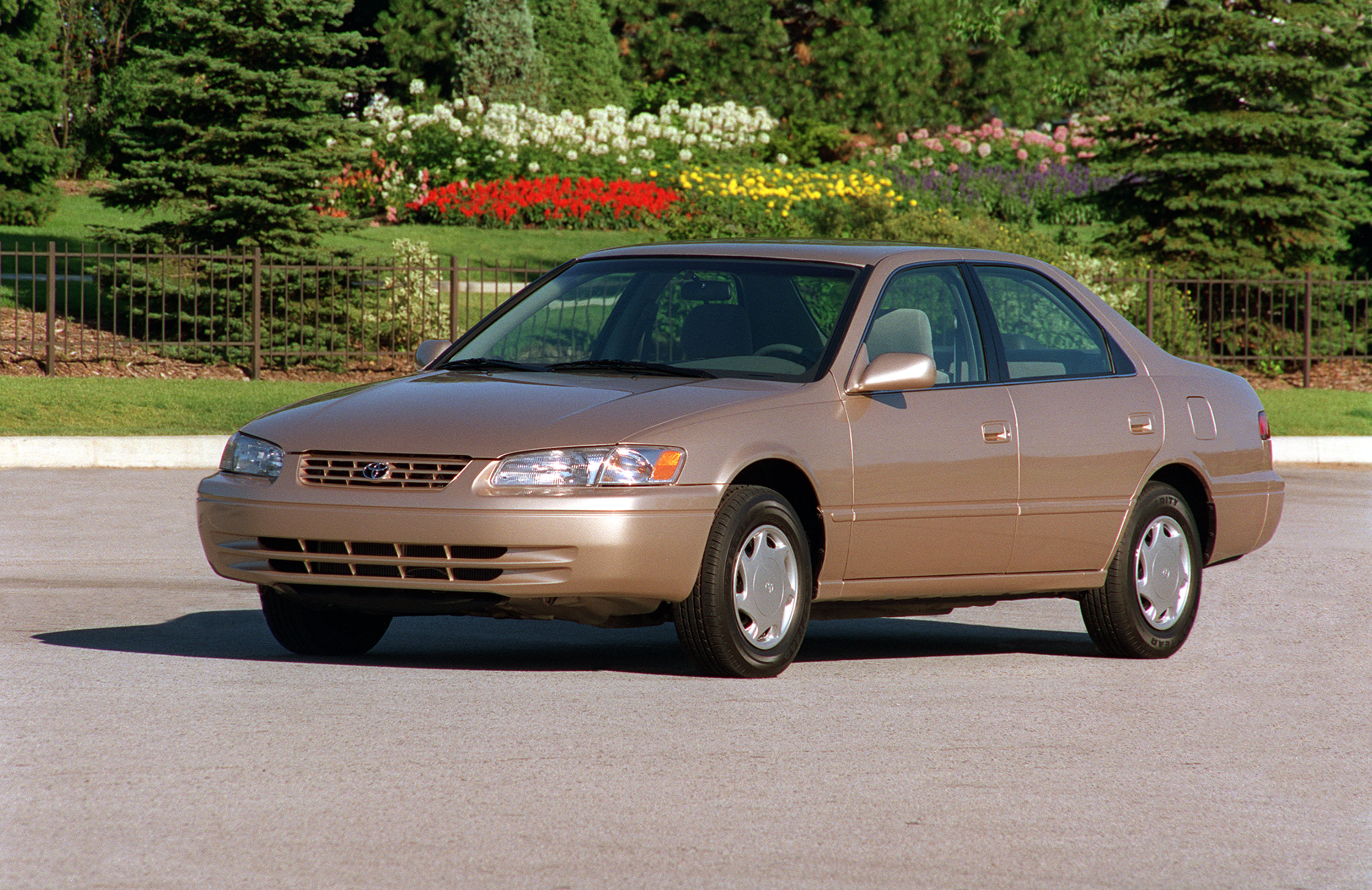
The fourth-generation Toyota Camry, introduced in 1997, was seriously popular. Available as a sedan only, it was slightly larger and better equipped than the car it replaced, yet just as affordable. Only front-wheel drive versions were offered, and the engine line-up was familiar with a choice of a four-cylinder 2.2 or a 3.0-litre V6. Both were available with either a five-speed manual or a four-speed automatic transmission.
Standard equipment was quite generous for the time. LE, and XLE trim levels were available and, by the 2001 model year, top-spec Toyota Camry XLE cars had heated and electrically adjustable door mirrors, remote keyless entry, a JBL premium audio system, alloy wheels, and electric front-seat adjustment as standard, with optional side airbags and traction control.
While the Toyota Camry of this era is known as a reliable car, the oldest versions are nearly 30, so Canadian weather has taken its toll and rusted out many of these cars. A used car’s condition will largely be down to how well the car has been looked after over the years. Some owners have noted excessive oil consumption and, as with any car this age, suspension and steering parts can wear over time, so pay attention to the ride quality and the handling during a test drive.
Expect to find only high-odometer examples of this era of Camry in Canada, listed for roughly $3,000.
Third Generation (1991-1996)
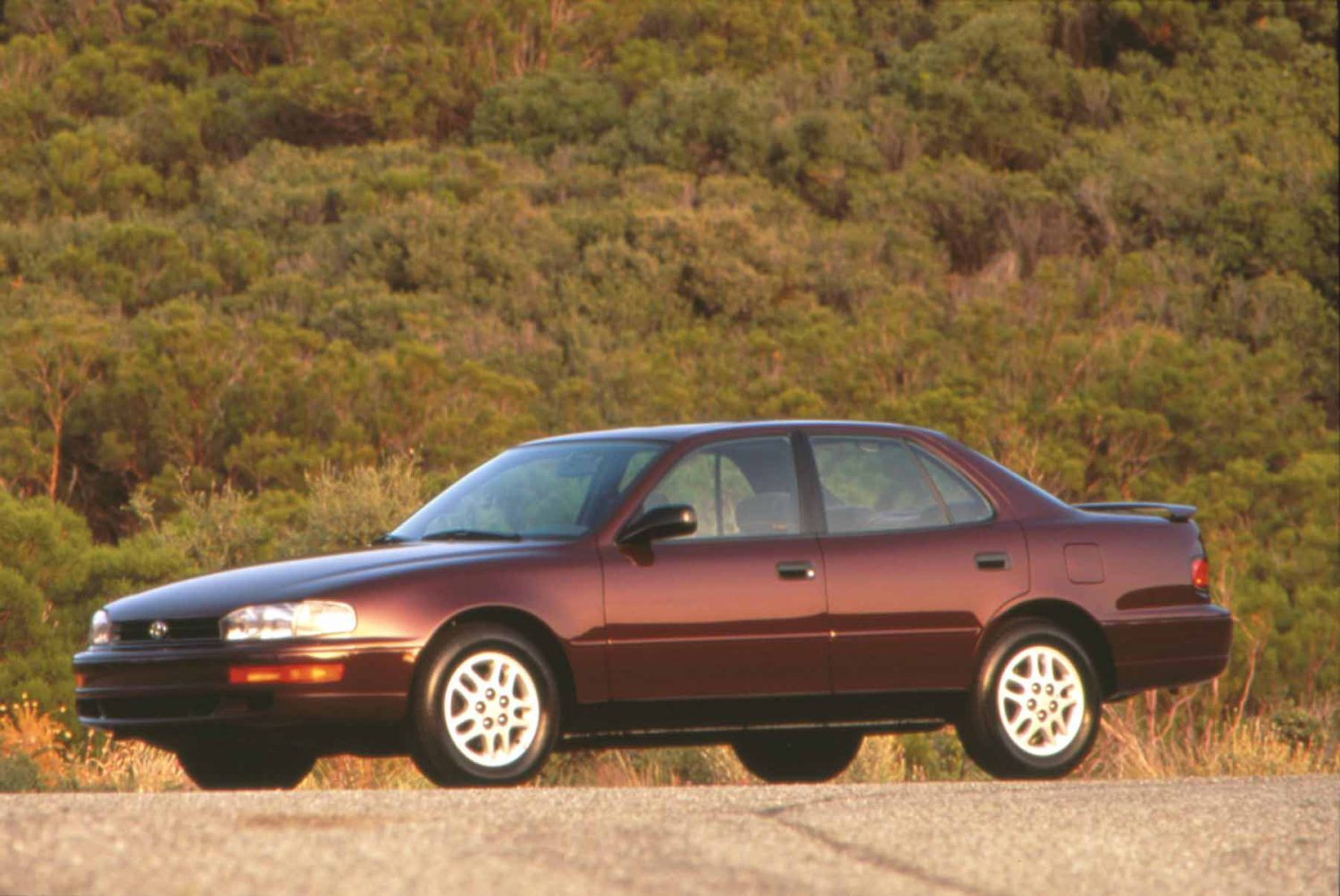
Compared with its predecessor, the third-generation Toyota Camry sedan was a much bigger car, about 15 centimetres longer and 7.5 cm wider. It was the first to be classified as a midsize car. As well as the sedan, this version was also available as a two-door coupe and a five-door wagon, with power coming from either a 2.2-litre four-cylinder engine, with a fairly meek 130 horsepower, or a 3.0-litre V6 with a gutsier 185 horsepower.
With engineering influenced by Toyota’s premium-brand Lexus models, the Camry of this era was quieter and more comfortable than the model it replaced. Available trim levels included LE and XLE. Updates over the model’s lifespan changed the design of the bumpers and taillights slightly, while changes to the 2.2-litre engine to reduce emissions dropped its output to 125 horsepower.
This Camry model has a reputation for being well-built, but it’s now very rare in Canada. Unless it’s been exceptionally well looked after, has very low kilometres, or has spent time in storage, any example is likely to be showing signs of wear and tear. At this age, the way a car has been maintained over the years is crucial to the shape it's in and its reliability.
Finding a Camry of this age isn’t easy, and those that are available tend to be well-preserved. While these cars can start as cheaply as about USD$2,000 in the U.S. for a (very) well-used car, the few remaining Canadian units on the market are asking closer to $7,000 as of this writing.
Second Generation (1986-1992)
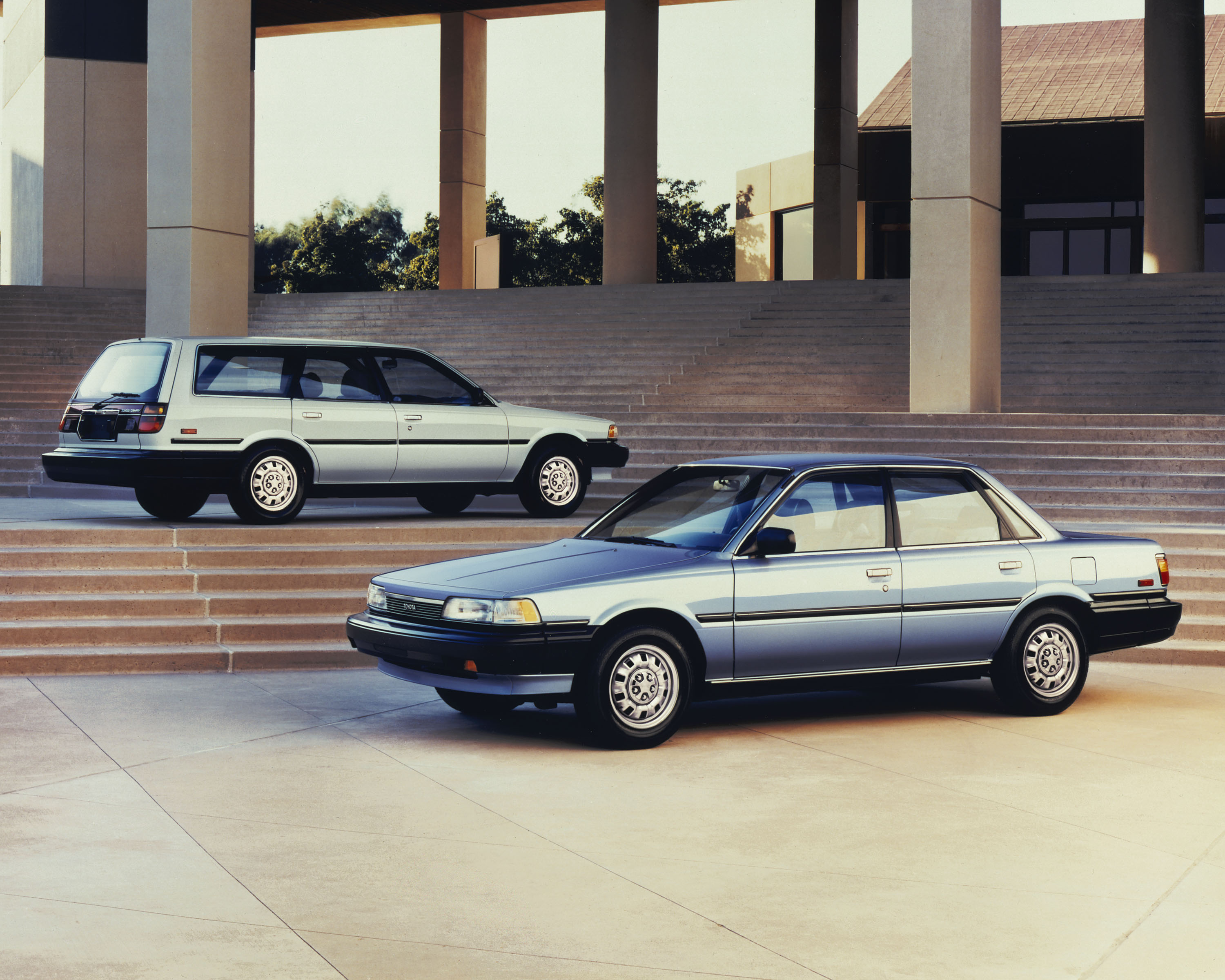
The second-generation Toyota Camry built on the strengths of the first, offering much the same spread of talents and similar spec but a touch of extra style and refinement. Introduced in late 1986 for the 1987 model year, it was slightly larger, while a range of changes made it quieter and more comfortable. There was no liftback this time, but a five-door wagon was available alongside the sedan.
The entry-level engine was a 2.0-litre four-cylinder which came with front-wheel drive as standard or ‘All-Trac’ all-wheel drive as an option. A 2.5-litre V6 was added later in the model run.
This second-generation Camry helped to build the model’s reputation as a supremely durable car, but few remain today. Those that do are likely to be well looked after, but finding a Camry of this age that doesn’t have at least a few issues may be a challenge.
That scarcity means any remaining Camrys of this era tend to cost more than you think. Prices vary wildly according to condition. You could pay $3,000 or less for a tatty example or a five-figure sum for one in tip-top shape. Either way, if you’re determined to have one, you’re more likely to find one in the U.S. than in Canada today.
First Generation (1983-1986)
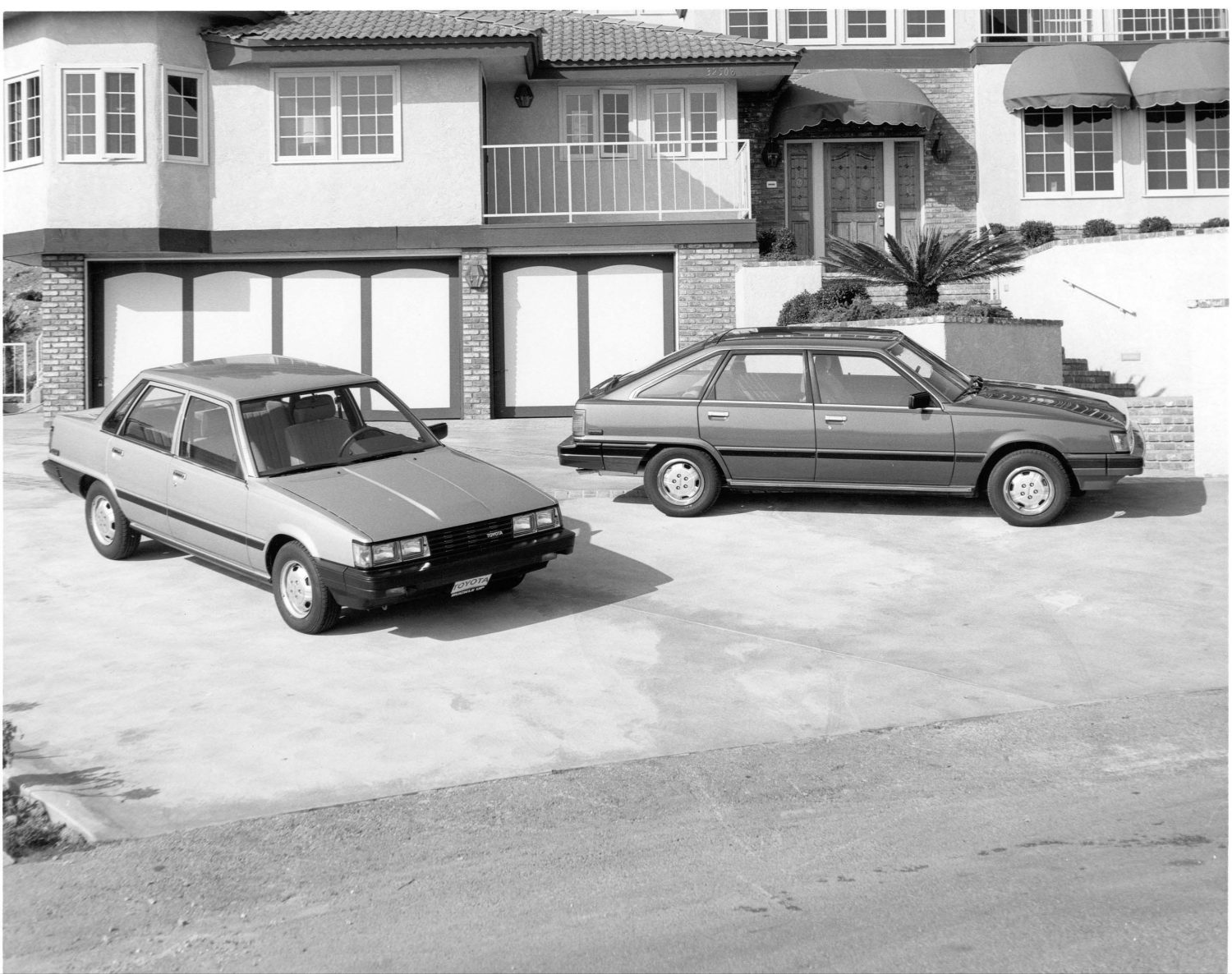
The first-generation Toyota Camry, introduced in 1982 for the 1983 model year, set the template for what was to become one of Toyota’s most successful models. Although more compact than any subsequent Camry, the first version was known for its quiet, comfortable ride and dependability — traits that continue to today.
Available as a four-door sedan or five-door “liftback” hatchback, the first Camry had four-cylinder engines that gave decent fuel economy, if rather lackluster performance. There was a choice of a five-speed manual or a four-speed automatic transmission.
There aren’t many surviving Toyota Camrys of this era. Any that remain and are for sale are likely to have been fastidiously looked after or restored because they are now forty or so years old. You might be able to find a scruffy one to use as a cheap runaround, but it’s more likely that you’ll have to pay $5,000-plus for a classic — and you’ll likely need to shop in the U.S. to find one.
Related Topics