The Nissan Z-car Japanese sports cars have an incredibly loyal following, which certainly applies to the Nissan 300ZX. From the incredible ride and handling to the powerful turbocharged second-generation coupe, we see owner review after owner review about how much fun these things are to drive and own.
While the first-generation Nissan 300ZX was more of a GT-car with amenities and luxury features, the second-gen models harked back to the Z’s sports cars heritage, which began with the Datsun 240Z in 1969. With four-wheel steering and enough horsepower to worry supercars from Ferrari and Porsche, the second-gen 300ZX made the “best sports car” lists of several automotive publications. It was even known as “the Corvette killer” by some because— along with fellow hot Japanese coupes of the era such as the twin-turbocharged Toyota Supra and the Mazda RX-7—it gave Chevrolet’s best-selling sports car a serious run for its money.
With the pressure of the rising yen exchange rate, North American sales of the Nissan 300ZX ended in 1996. But if used car pricing is anything to go by, these models are still a very hot commodity.
Nissan revived the Z car in the following decade, though, launching the Nissan 350Z coupe in 2003, the 370Z in 2008, and the latest Nissan Z in 2022.
Nissan 300ZX: Cost, Reliability, and the Best Years to Buy
- Frequently Asked Questions
- Nissan 300ZX Pros and Cons
- Nissan 300ZX Generations
- Nissan 300ZX Second Generation (1990–1996)
- Nissan 300ZX First Generation (1984–1989)
Frequently Asked Questions
Which Nissan 300ZX years are the best?
There were relatively few complaints and recalls throughout the 12 years the Nissan 300ZX was sold in the North American market. The years with zero complaints on CarComplaints.com include 1985, 1988, 1989, 1993, 1994, and 1996, and the latter three years also have zero recalls.
What are the worst Nissan 300ZX years?
Though the 1987 model logs three complaints on CarComplaints.com, the website doesn’t give them high priority. Instead, it zeros in on 1995 as the worst year because of engine problems logged by the National Highway Traffic Safety Administration (NHTSA), which resulted in two fires. Another complaint on this model year is rapid tire wear.
Is a used Nissan 300ZX a good deal?
Since Japanese Domestic Market (JDM) import cars are in hot demand these days, the Nissan 300ZX is a good investment, but not necessarily a good deal. The first generation 300ZX has an average transaction price of about USD$12,000, according to Classic.com, and the second generation climbs to an average of USD$24,000. Prices on the Canadian used vehicle market largely align with those averages, so there’s not much benefit to importing from the U.S. if you can find a domestic unit you like. If you want an official 300ZX race car, plan on spending a half a mil.
Nissan 300ZX Pros and Cons
Pros:
- Attractive styling
- Fun to drive
- Smooth shifter
Cons:
- Limited trunk space
- Small cockpit might not suit bigger drivers
- Not enough brake cooling for track driving
Nissan 300ZX Generations
Nissan 300ZX Second Generation (1990–1996)
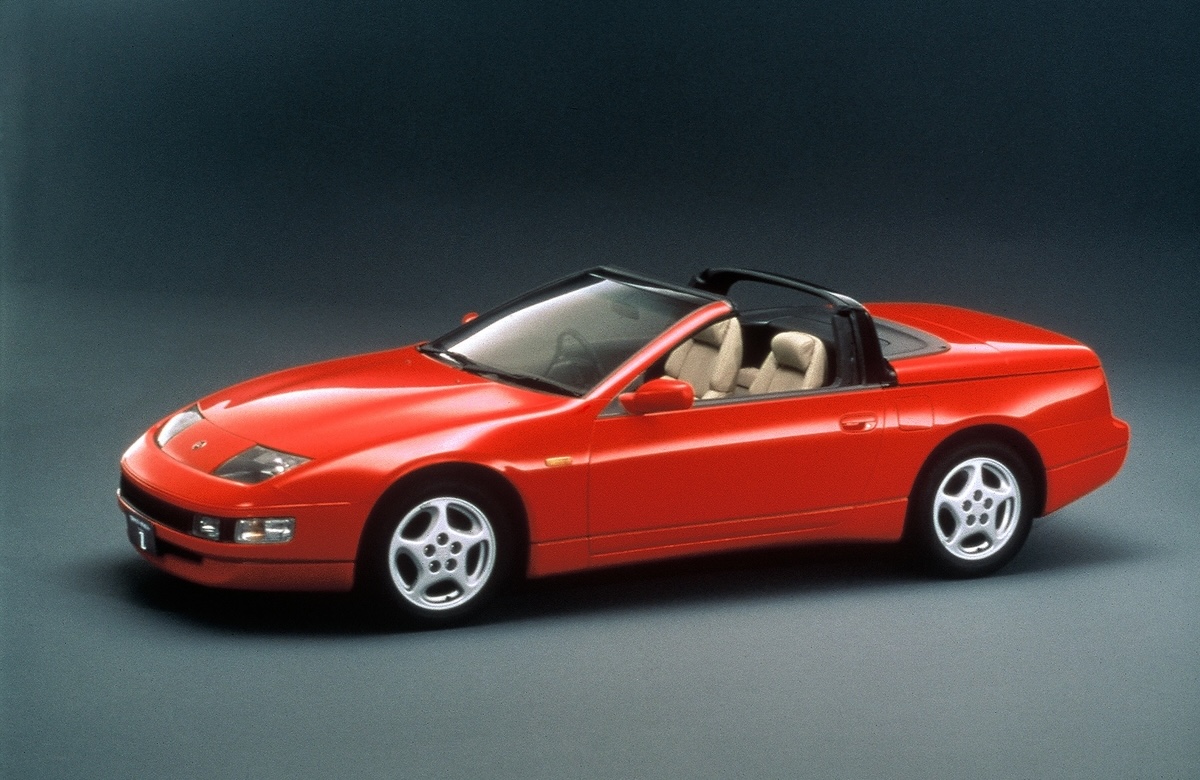
The second-gen Z32 300ZX got a complete redesign with rounded edges and a wider body. The pop-up headlights disappeared, replaced by integrated lights slanted at more than 60 degrees for the sake of aerodynamics.
When the first models arrived in North America in the spring of 1989, they were equipped with a 222-horsepower, naturally aspirated DOHC 3.0-litre V6, which was a 35 percent power increase over the previous generation. Arriving in late 1989, the 300ZX Turbo was equipped with a 300-hp twin-turbo V6 and matched the power output of the Ferrari 348, which came out the same year. A five-speed manual was standard, and a four-speed automatic was an option. However, turbos with the automatic transmission got 20 less horsepower.
300ZX Turbo models also received four-wheel steering, which Nissan called Super High Capacity Actively Controlled Steering (Super HICAS), as well as an adjustable two-mode suspension.
The Z32 model had two body styles—a two-seater and longer-wheelbase 2+2 model, but the latter was only available with the base naturally aspirated engine models in the North American market. Most of the 300ZXs at this point also had a standard T-top. A hardtop “slicktop” roof without the T-tops was available after 1991, but only as a two-seater, while a convertible arrived in 1993.
For the final two model years in North America, tuning company Steve Millen Motor Sports developed the SMZ model in conjunction with Nissan North America, and performance upgrades were covered by the factory warranty. Design-wise, the SMZ models had a unique grille, a large rear wing, and custom split five-spoke alloy wheels. Performance upgrades included Skyline Group N/GT-R brakes with larger calipers and pistons, a high-flow intake system, an aluminized steel free-flow exhaust system, and a turbocharger boost pressure increase. These models produced 365 horsepower, and only 104 were produced.
There were a few high-odometer vehicles available in Canada the $8,000 to $10,000 range at the time of writing, but the better examples are priced between $15,000 and $30,000.
Nissan 300ZX First Generation (1984–1989)
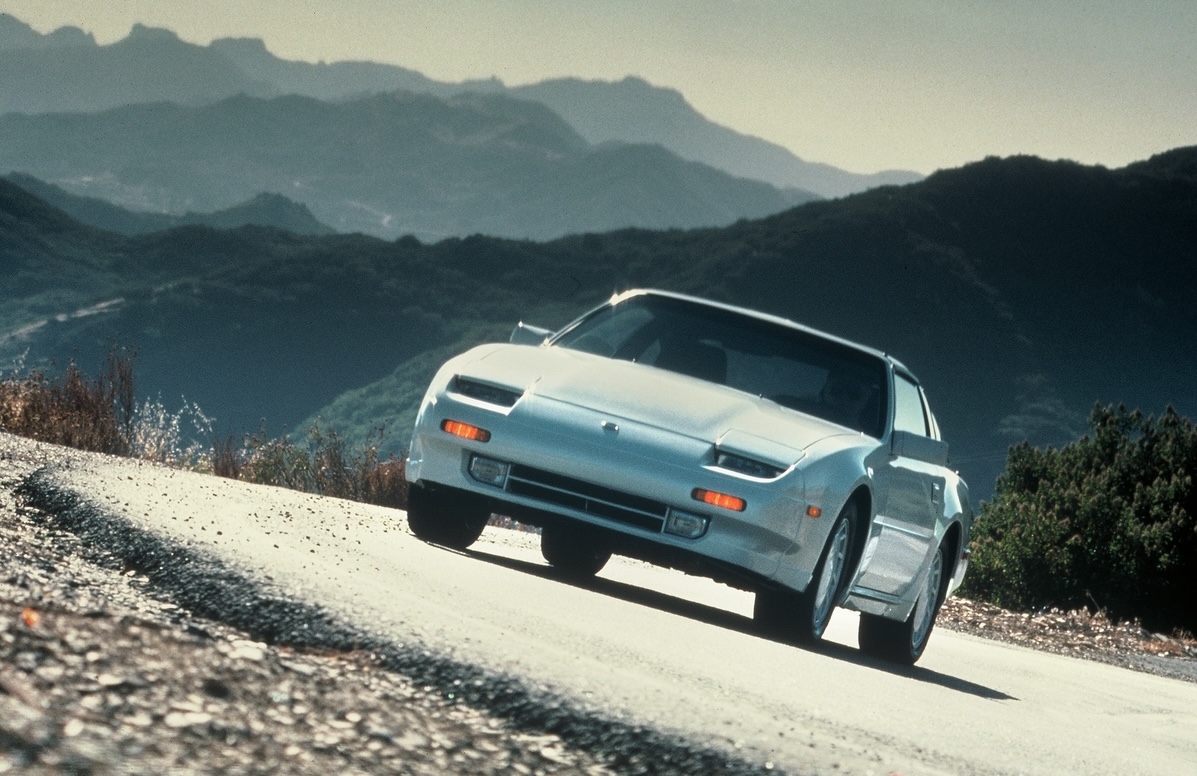
The Datsun nameplate was retired in North America as the first-generation Nissan 300 Z car hit the market. The 300ZX replaced the outgoing 280ZX, and like other Z cars, it was known as the Nissan Fairlady Z in Japan. Though the chassis was based on the one it replaced, by all accounts it handled better than its predecessor. Internally, Nissan called this first-gen model the Z31.
The 300ZX had two engine options—a 160-hp naturally aspirated V6 and a 200-hp turbocharged V6. A five-speed manual transmission was standard with both engines, while a four-speed automatic was available with the base V6 engine.
The design of the 300ZX included integrated bumpers, an aerodynamic shape, hood scoop, T-top roof, pop-up headlights, and available 2+2 seating. The pop-up headlights were unique because a small area remained exposed when they folded down. The 300ZX also offered two instrument cluster options, one with analog gauges and one with digital.
In 1986, the base two-seat model became available without the T-top, creating a truer entry-level version. Plus, this model year got a small midcycle refresh that included standard 16-inch wheels, the scoop removed from the hood, a new rear spoiler, and flared front fender. A new hood, foglamps moved to the front bumper, larger front brakes, and standard power front seats were added in 1987, and in 1988 the 300ZX received grey wheels and a five-hp boost.
Two special editions were available in North America. The first was 1984’s 50th Anniversary Edition, a two-seat model with the Light Pewter/Thunder Black colour scheme plus a digital dash, in-car electronic adjustable shocks, Bodysonic speakers in the seats, cruise control, mirrored T-tops, leather seats, and special 50th Anniversary Edition badging. The second was the Shiro Special, available in 1988. It had pearl white paint, stiffer springs, heavy-duty anti-sway bars, a unique front air dam, Recaro seats, and a viscous limited-slip differential.
In Canada, high-odometer first-gen 300ZXs start at less than $10,000, while cars in better condition typically go for between $15,000 and $30,000. During our research, a 1984 50th Anniversary Edition was listed with a 30,000-kilometre odometer reading and an asking price of $75,000.