The current fifth-generation cars get more tech, almost to the point of overload, and they come with advanced powertrain technologies to reduce fuel consumption. Even the C 63, which carried a rowdy V8 for years, has been redesigned with a turbo-four plug-in hybrid instead. Granted, it gets 671 horsepower from that setup, but the Mercedes C-Class of today is a departure from previous generations, both in specs and styling.
To help you choose which C-Class might be right for you, we’ve outlined all of the model’s generations here and included some advice about what to watch out for and what to pay.
Mercedes-Benz C-Class Buying Guide: Cost, Reliability, and the Best Years to Buy
Frequently Asked Questions
Which Mercedes-Benz C-Class years are the best?
The current generation models (2022 and newer) offer more features and technology than any previous generation and so far seem like reliable, quality companions. The 2008 to 2014 models are much plainer than later versions, but they have a good reliability record and are very affordable now for what they are. These two generations (third and fifth) are the best bets for a good experience.
What are the worst Mercedes-Benz C-Class years?
The fourth-generation models, built from 2014 to 2021, don’t have the best reliability record, but that shouldn’t scare off every buyer. The most complaints seem to come from models early in the run and from 2018, a year that Consumer Reports rates below average for reliability. 2006 and 2007 models also don’t seem to fare very well from a reliability standpoint.
Is a used Mercedes-Benz C-Class a good deal?
It can be. The C-Class offers lots of performance and technology and has long been the standard-setter for luxury in its class. Older models that have fallen in value over time can offer luxury and refinement at a bargain price. The only caveat is that this is still a Mercedes-Benz, and it’s still a complex vehicle with relatively high maintenance costs. It is, however, a more affordable way to live with a Mercedes than some of the company’s larger and more complex offerings. The C-Class also offers a generally better reliability record than the alternatives of Audi and BMW.
Mercedes-Benz C-Class Pros and Cons
Pros:
- Upscale with a reasonable price
- Solid performance
- High-end styling and tech
Cons:
- Tech can be overwhelming at first
- Harsh ride at times
- Smallish trunks and back seats in most generations
Mercedes-Benz C-Class Generations
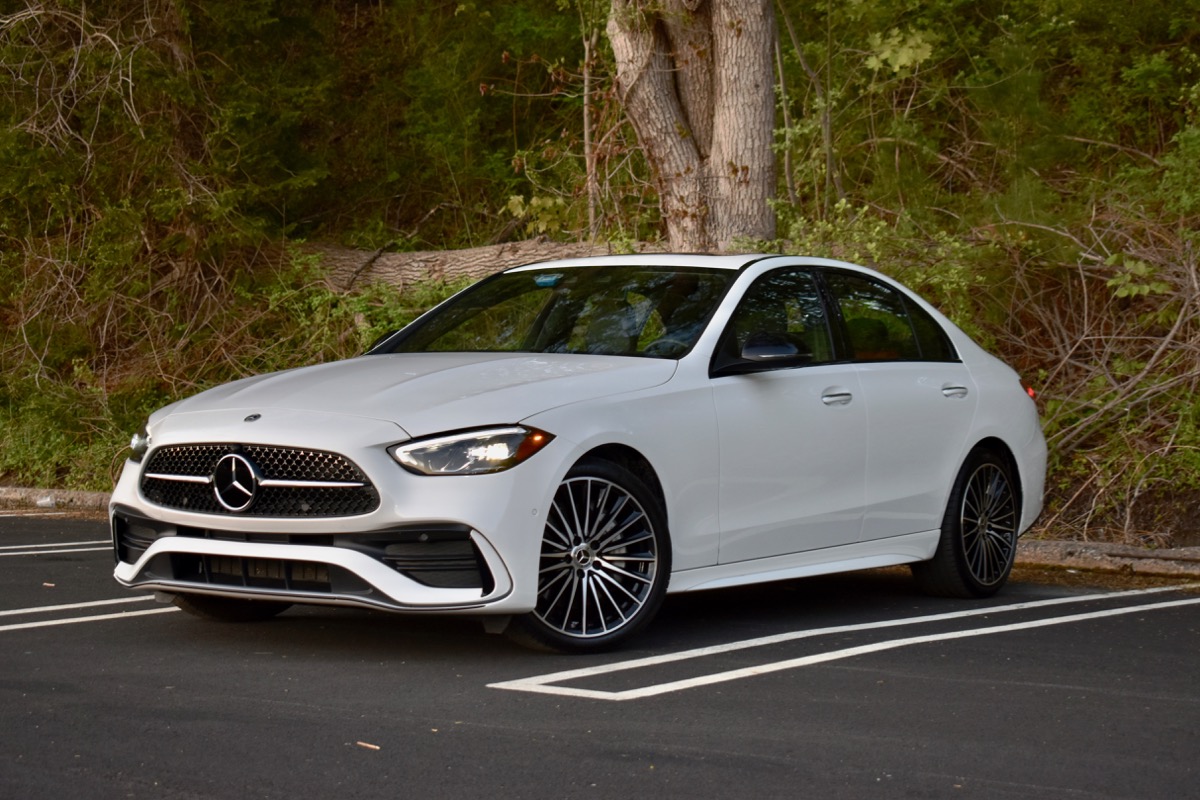
Fifth Generation (2022-Present)
The 2022 C-Class introduced the car’s fifth generation. Mercedes upgraded its powertrain with a standard 48-volt mild-hybrid system that combines with a turbocharged 2.0-litre engine for 255 horsepower and 271 pound-feet of torque. That’s good enough for a zero to 100 km/h time of 6.0 seconds, and Mercedes claims highway fuel economy as low as 7.1 litres per 100 kilometres with this configuration. The mild hybrid technology allows the car to glide with the engine off during braking or coasting. In Canada, 4Matic all-wheel drive is standard.
In 2023, the Mercedes-AMG C43 joined the lineup, using a tuned-up version of the same 2.0-litre turbocharged four with 402 horsepower and 369 pound-feet of torque. This version It also gets rear-axle steering, an adjustable sport-tuned suspension, and racier exterior and interior styling. it’ll do 0-100 in 4.3 seconds, according to the automaker.
One more variation debuted in early 2024, the AMG C63 S e-Performance, which replaces the old C63 S. In place of the former 4.0-litre, twin-turbo V8, this version is a plug-in hybrid using a 2.0-litre turbocharged four-cylinder and an electric motor, good for 671 horsepower. Its introduction was delayed until the summer of 2024 for nebulous reasons, and AMG, Mercedes-Benz’s in-house tuner car factory, has since hinted that it may bring back a V8 version of the C-Class at a later date, but this is a very quick machine and should be lots of fun around a track.
As has become typical for Mercedes products in Canada, the C-Class is highly customizable with a wide variety of colours and trims available at various price points. A longer wheelbase gives the new C-Class better interior space and solid rear legroom (952 millimetres), though the trunk isn’t as big as some rivals (455 litres).
The car features the latest safety systems like blind-spot monitoring, and automatic emergency braking. Many more systems are available, including a head-up display and a world-class adaptive cruise control and lane centring system, but they cost extra and might not be found on every used example. Still, the Insurance Institute for Highway Safety (IIHS) has given it “Top Safety Pick” or “Top Safety Pick+” ratings every year it’s been on sale.
A large 11.9-inch tablet-style touchscreen runs Mercedes’s latest MBUX infotainment system and is easily viewable from the front seats, and there’s a 12.3-inch digital instrument display to match. This design, and indeed the dashboard and cabin design generally, are directly cribbed from the new-in-2021 W223 Series S-Class, and they genuinely look fantastic. There’s also ambient lighting and lovely mesh grilles for the stereo speakers. The Mercedes infotainment system is a little fussy, as are the touch-sensitive controls, and a few more buttons might better serve this cabin, but you do acclimate to the systems. Wireless Apple CarPlay and Android Auto are standard.
These fifth-generation C-Class models are only just hitting dealer lots as used vehicles, and they start just under $45,000. Brand-new ones start at $61,00 not including fees, which in Canada are set at the dealership level.
Notably, the C-Class coupe and convertible from the prior generation continued in 2022. They were sold in Canada under the C-Class banner in 2023 and spun off into the CLE-Class for 2024. If you’re shopping for a 2022 C-Class Coupe or Convertible in Canada, see the fourth generation summary below.
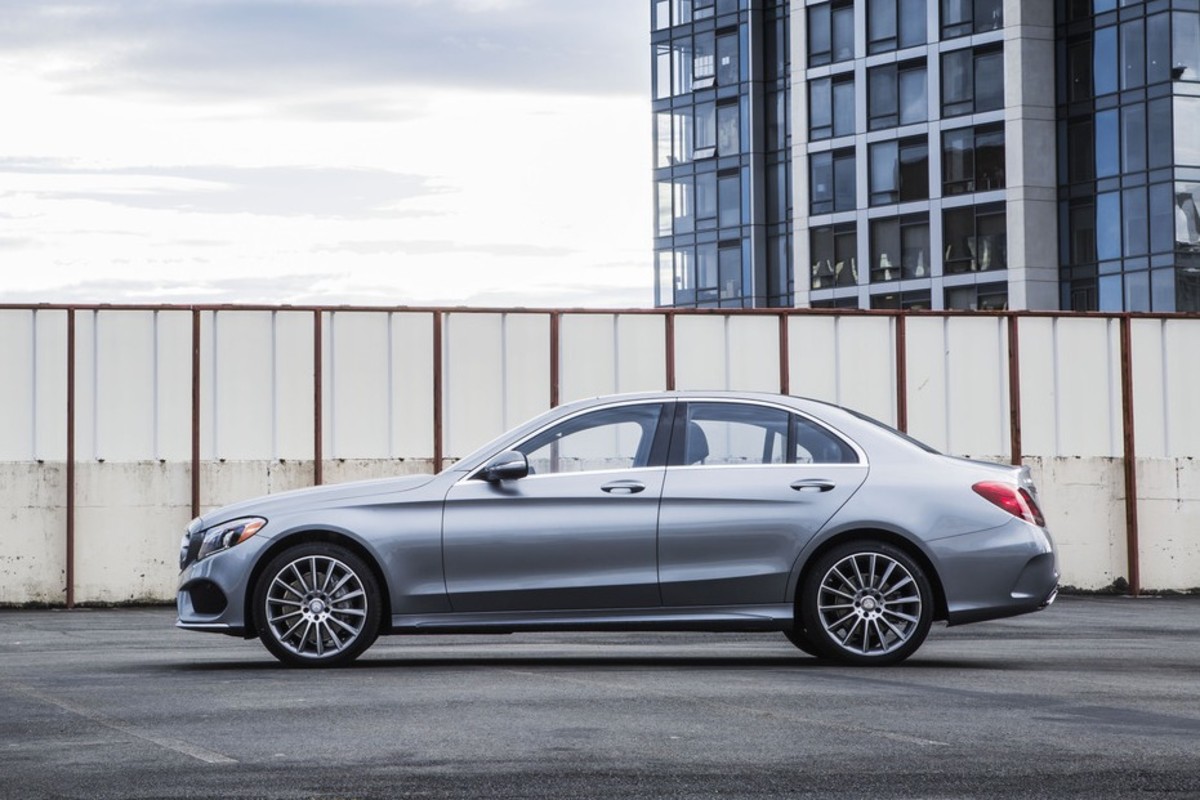
Fourth Generation (2015-2021)
For the sport sedan’s fourth generation, Mercedes revised the C-Class with a pseudo fastback shape and dramatic styling for the front and rear ends inspired by the 2014 W222 S-Class. The new car was 100 kilograms (220 pounds) lighter than before and came in sedan, coupe, and cabriolet body styles. A wagon was offered in Canada, but not in the United States, beginning in 2018. As with previous C-Classes, it was rear-wheel drive by design, with 4Matic all-wheel drive optional.
Early on, there two models in the sedan lineup, the C 300 and C 400. The C 300 used a 2.0-litre turbocharged four-cylinder making 241 horsepower and 273 pound-feet of torque. This model continued for the whole run, and it was also the base grade for the coupe and convertible when they were introduced in 2017 (in 2015, the previous-generation coupe remained on sale). Later on, the C 300 got a boost to 255 horsepower.
The higher-spec sedan was the C 400, with a 3.0-litre twin-turbo V6 making 329 horsepower and 354 pound-feet of torque. Both versions used a seven-speed automatic transmission with paddle shifters. At the top of the lineup was a brand-new AMG C 63, with a 4.0-litre twin-turbo V8 making 469 horsepower and 479 pound-feet of torque. If that wasn’t enough, there was also the C 63 S, with 503 horsepower and 516 pound-feet of torque.
In 2016, the C450 AMG was introduced. It was an evolution of the earlier C 400, with power rising to 362 horsepower and 384 pound-feet of torque, but it was only offered that year. In 2017, this powertrain became the Mercedes-AMG C 43.
That same year, the C 43, C 63, and C 63 S powertrains were extended to the coupe and convertible models. The two-door versions of this design ran into late 2022, though the C 63s were dropped in 2021. All powertrains, including the C 300, had an automatic stop/start system to save fuel.
Inside, the fourth-gen C-Class cabin also drew inspiration from the W222 S-Class, with finer materials than ever and pretty chrome and wood detailing. The AMG models were available with carbon fibre and Alcantara bits to look racier, but this is fundamentally a luxurious car. The two-door models aren’t much fun in the back, but the four-door has about average room for the class, with 894 mm of rear legroom. The trunk isn’t huge though, with just 356 litres in the sedan and as little as 250 litres in the convertible. The Audi A5 and BMW 4 Series two-doors have more space but don’t feel as luxurious.
This generation uses a modest 7-inch touchscreen as standard equipment, but an 8.4-inch unit was optional and later standard (and included on most of the higher trims). It uses the Mercedes MBUX infotainment system, which isn’t too complex in this generation. There are also multiple ways to control it, including a touchpad, the screen itself, and a click wheel, and plenty of hard controls remain, unlike in the subsequent fifth-generation model.
World-class driver assist gear, including active blind spot assistance and adaptive cruise control, was optional. Still, Mercedes included only the ADAS basics as standard, like forward automatic emergency braking and daytime running lights. Still, this C-Class earned “Top Safety Pick+” designations from IIHS in four out of the seven years it was on sale.
Unfortunately, this C-Class doesn’t have the best reliability ratings, with 2018 models receiving below-average scores from outlets like Consumer Reports and lower scores generally from other trackers like the Dashboard-Light index. Most owner complaints centre on electrical system issues and problems with the infotainment and display screens. Some of these cars are still new enough to qualify for factory extended warranties and CPO programs, which can add peace of mind.
These C-Classes, or at least the C300, are also affordable. Early models in good shape with low kilometres can be had from roughly $20,000, while 2018 and newer ones can cost anywhere from $25,000 to $40,000 or more depending on configuration. C400s and C43s cost about 10-15% more than C300s but can range up to $60,000. High-end C 63 and C 63 S models are much pricier and start around $70,000. Coupes and (especially) convertibles will also cost more than sedans; both had higher prices when they were new.
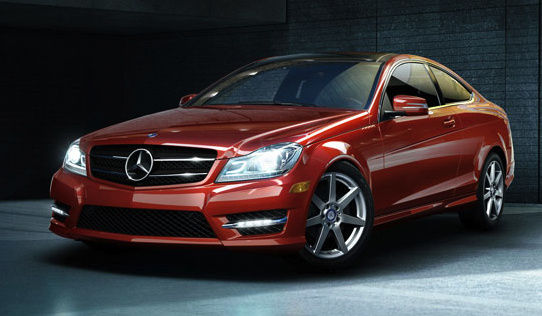
Third Generation (2008-2014)
Introduced right as the Great Recession began, the third-generation C-Class came, at first, only as a very conservative-looking sedan. In other countries, a wagon continued, but in North America the new model (the W204 Series for Mercedes-Benz nerds) dropped the former hatchback and wagon variations to concentrate only on the basic four-door, now wrapped in a taut, angular shape inspired by the W221-Series S-Class that had debuted in 2007. The interior was slightly more colourful than before, but it was still a sober-looking cabin, with more plastic than wood or chrome.
As before, the C-Class was rear-drive, with 4Matic all-wheel drive optional. It came exclusively with V6 or V8 engines. The three initial models were C230, making 201 horsepower and 181 lb-ft of torque from a 2.5-litre V6, the C 300 with a 3.0-litre V6 making 228 horsepower and 221 pound-feet of torque, and the C 350, with a 3.5-litre V6 producing 268 horsepower and 258 pound-feet. Both used a seven-speed automatic transmission.
A new AMG model also debuted a year later, the Mercedes-AMG C 63, using a 6.2-litre V8 with 451 horsepower and 443 pound-feet, a big jump over the previous C 55 model. It had many chassis modifications, including borrowing its front suspension from the AMG versions of the CLK coupe, and it could more than hold its own against the contemporary BMW M3 and Audi RS 4. Over time, AMG also offered a variety of tuning packages that gave it even more power.
Inside, the sedans were well-appointed for the era, but the back seat was pretty small, with just 850 mm of rear legroom. The trunk also measured a fairly modest 351 litres (and 331 litres in the coupe). There was a navigation system with a clever flip-out display with a standard 5-inch screen or an optional 7-inch unit.
The C230 was renamed to C250 in 2010. In 2011, the C-Class sedan was joined by a sleek-looking coupe, a replacement for the old CLK class. It used the same drivetrains as the sedan, including getting its own AMG C 63 version, but looked much sportier. There was also, briefly, an AMG C 63 Black Series coupe, an ultra-high-performance, 510-horsepower track warrior made in limited quantities in 2012.
That same year, Mercedes refreshed the powertrains and the interior. In the cabin, the dashboard and door panels were redesigned to integrate a more modern display and richer-looking materials, including lots of wood surfaces. The later 2012-2015 cars are more opulent inside and have some additional tech features, though the screen remained a 7-inch unit, now controlled by a click wheel on the console. In later years, Distronic adaptive cruise control, active blind spot monitoring, and active lane keep-assist became optional on both body styles. Like the later C-Classes, this one was a regular “Top Safety Pick” winner with IIHS.
In 2012, the C250 received a new four-cylinder engine, a 1.8-litre turbocharged four making 201 horsepower and 229 pound-feet of torque. At the same time, the C 300 and C 350 powertrains also got stronger, reaching 248 and 302 horsepower, respectively. The C-Class continued with few changes until 2014, though the coupe ran one more year after the sedan was redesigned, into 2015.
This C-Class has a solid reliability record, though it is vulnerable to rust and it had an unusually high number of recalls. The NHTSA database shows recalls pertaining to the widespread, ongoing airbag inflator problem affecting many manufacturers. Other recalls and problems include dim taillights, failing power steering components, and weak fuel filter housings. Fuel economy is no great shakes either. Most owner complaints in this generation are generated by the relatively rare C 250, which wasn’t very popular when it was new and seems to have trouble with its timing chains and chain tensioners, but the issues don’t seem widespread.
These C-Classes are very affordable now, and you can pick up clean, low-kilometre sedans for approximately $9,000 to $20,000. There are some expensive service items, but these are generally a good buy. The coupe is rarer and costs about 10-20% more than the sedan, model for model. The AMG versions are in a different league, offering a big jump in performance and some collector appeal. If you’re shopping for one of those, expect to pay a minimum of $25,000 to $35,000.
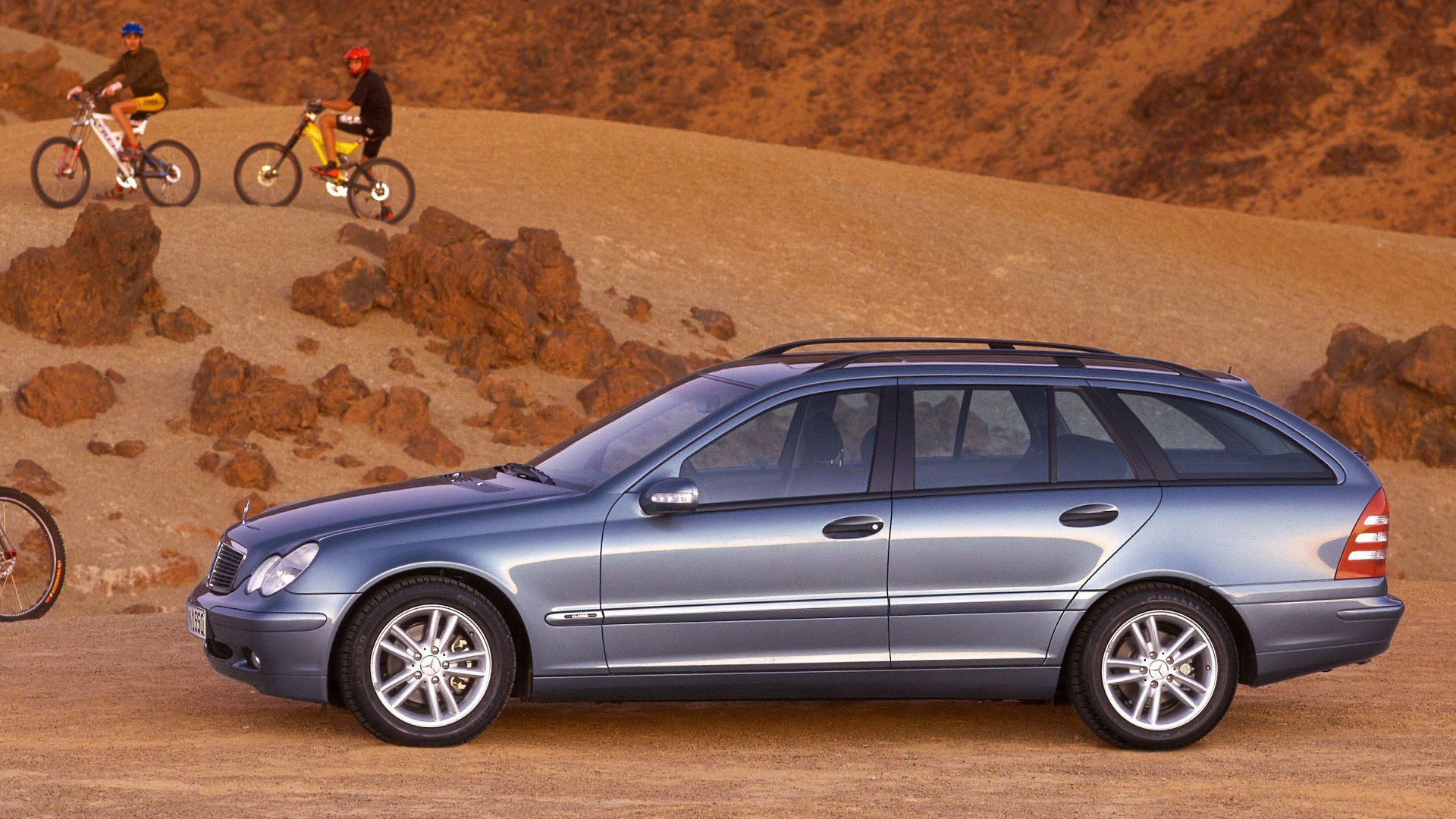
Second Generation (2001-2007)
The second-generation C-Class lineup greatly expanded, adding two new body styles: a small hatchback and a station wagon. The former was a response to BMW’s 3 Series “Compact,” while the latter was meant to keep pace with the increasing popularity of the Audi A4 and BMW 3 Series wagons. Of this trio, the Mercedes wagon was the most luxurious, while the C-Class “Sport Coupe” offered performance and luxury in a budget-friendly shape, provided you didn’t need too much of a back seat. This generation also offered all-wheel drive, which its predecessor did not.
This C-Class is split into two eras: the original models (offered from 2001 and 2002 to 2004) and the facelifted versions (2005 to 2007). They have similar names and look similar but use different engines and have different options and features.
The early models consisted of the C 240 and C 320 sedans (in 2001). Both used V6 engines, the former a 2.6-litre unit with 168 horsepower and 177 pound-feet of torque, the C 320 with a 3.2-litre unit making 215 horsepower and 221 pound-feet. Buyers could choose from a six-speed manual or a five-speed automatic.
In 2002, the sedans were joined by the Sport Coupe and the Wagon, and another powertrain, the C 230 Kompressor, a supercharged 1.8-litre four-cylinder with 189 horsepower and 192 pound-feet of torque. C 230Ks came only as Sport Coupes or sedans and both could have the manual. Wagons were automatic-only and only came in the C 240 or C 320 lines. That same year, the AMG C 32 joined the line as well, with a supercharged 3.2-litre V6 making 349 horsepower and 332 pound-feet of torque. It came only as a sedan and only with an automatic.
For the early 2000s, the second-gen C-Class cabin looked and felt very modern, and it had lots of features, including an optional Mercedes-branded cellphone. The wood, plastic, and faux-leather interior looked nicer than those of Audi or BMW, but the back seat was cramped, with just 838 mm of legroom. The car also offered a CD-ROM-based nav system with a 5-inch screen, heated seats, a panoramic roof on the Sport Coupe, rain-sensing wipers, power memory seats, climate control with particulate filters, keyless entry, stability control and 4Matic all-wheel drive.
In 2005, Mercedes-Benz dropped the Sport-Coupé and the manual transmissions from the U.S. lineup due to slow sales, and the wagon soon followed, but these cars carried on in Canada. The one addition for the year was the C 55 AMG, which used a 5.5-litre V8, making 362 horsepower and 376 pound-feet of torque. Later that year it also changed the engines for the 2006 model year. The new powerplants were the C 280, with a 3.0-litre V6 making 228 horsepower and 221 pound-feet of torque. The C 320 was dropped in favour of the C 350, with a 3.5-litre V6 making 268 horsepower and 258 pound-feet of torque. There were also light changes to the interior integrating an updated optional nav screen and a new audio system with MP3 capability.
This C-Class has a mixed reliability record, and strangely, the extreme ends of the lineup catch the flack: early models from 2001 and late ones from 2006-2007. Early ones are vulnerable to rust and electrical problems, while later ones have trouble with engine internals, particularly balance shaft failure. According to the National Highway Traffic Safety Administration (NHTSA), this generation also suffered recalls for various electrical and sensor problems, airbag modules, and seat belt buckles.
Thanks to rust and our extreme weather, this generation of C-Class is scarce in Canada today. Aside from the AMG models, which command high prices and are already collector cars, these are a bargain if you can find one. Expect to pick up a nice, clean example with under 200,000 kilometres for about $5,000. Wagons and manuals might cost a little more, but not much.
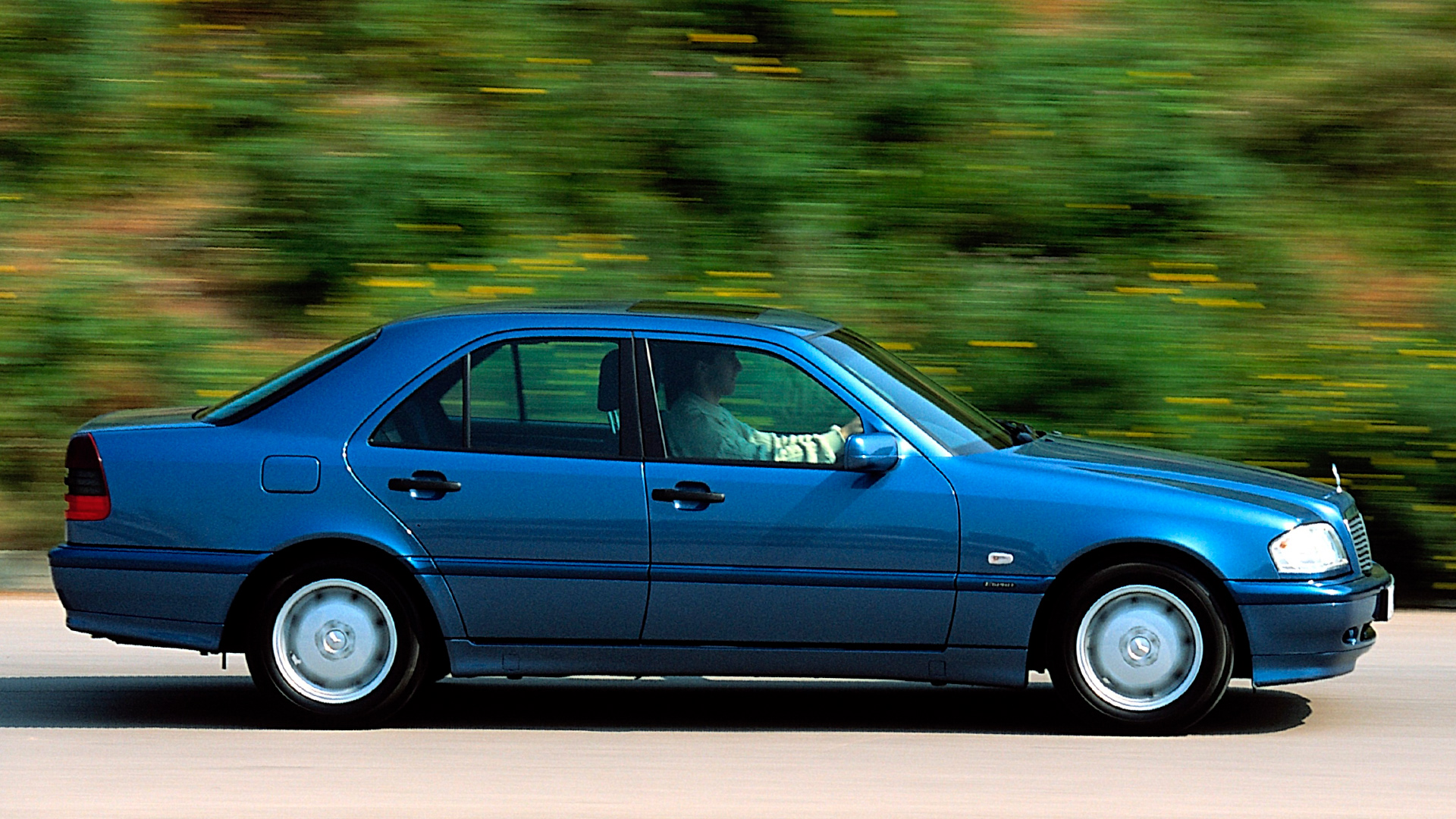
First Generation (1994-2000)
The first-generation C-Class debuted for the 1994 model year, replacing the 1980s-era 190 Series as Mercedes-Benz’s entry-level sedan. It featured subdued styling, but that actually made it seem more upmarket and luxurious than the 190 had and less like the taxi you might get into at the Munich airport. It was small, but it looked refined and less gimmicky than the late Jaguar-esque 1990s E-Class that sat next to it in the showroom for much of its life.
It debuted as the four-cylinder C 220, with 148 horsepower and 155 pound-feet of torque, and the inline-six C 280, with 194 horsepower and 199 pound-feet. Both had rear-wheel drive and a four-speed automatic transmission. 4Matic all-wheel drive was not available in this generation. The following year, they were joined by the Mercedes-AMG C36, one of the first “factory” AMG models and a serious hot rod at the time, with a 3.6-litre V6 making 268 horsepower and 280 pound-feet of torque.
In 1997, the C 220 became the C 230 with a slightly larger 2.3-litre four and a torque boost to 162 pound-feet. The following year, the C36 gave way to the V8-powered C 43, with 302 horsepower and 302 pound-feet of torque. Both the C 36 and C 43 were available in Europe before they came across the pond, and some European models have since been imported to North America. The Euro-spec cars have lower ride heights, better handling, and higher top speeds, but all of these AMGs are Mercedes fan favourites.
1999 saw the addition of a supercharger to the four-cylinder model, which became the C 230 Kompressor. With 185 horsepower and 200 pound-feet of torque, it was functionally as fast as the six-cylinder C 280.
The first-gen C-Class interior looks a little basic and button-heavy by today’s standards, and it lacks many of the advanced amenities of its successors. But it’s also clean, simple, and almost classically Mercedes, with clear ties to the prior S-Class and E-Class models. Like other early C-Classes, it has a tight back seat, with just 833 mm of legroom, less than in the contemporary BMW 3 Series sedan or the Acura TL of the day. It’s well made, but not without its issues.
Corrosion, as with all 1990s Mercedes-Benz models, is a problem thanks to the water-based paint used on the cars when they were new. The wiring can also degrade, which is another issue that was endemic to 1990s Benzes. Head gaskets can also go on both the four- and six-cylinder engines. This tends to happen at higher mileages, and there’s usually a tell — a leak at the back of the engine where the cylinder head meets the block. The C 230K’s supercharger also has a lifespan of about 250,000 kilometres before it’ll need replacing.
That said, this is a nice entry-level classic Benz now, and aside from the AMG versions, it’s very affordable. Even really nice W202-series C-Classes don’t usually cost much more than $10,000. If you shop around long enough, you can probably find one for even less. However, the C 36 and C 43 will cost you a minimum of about $18,000, sometimes much more, and you’ll likely need to look south of the border to find one.
Related Topics