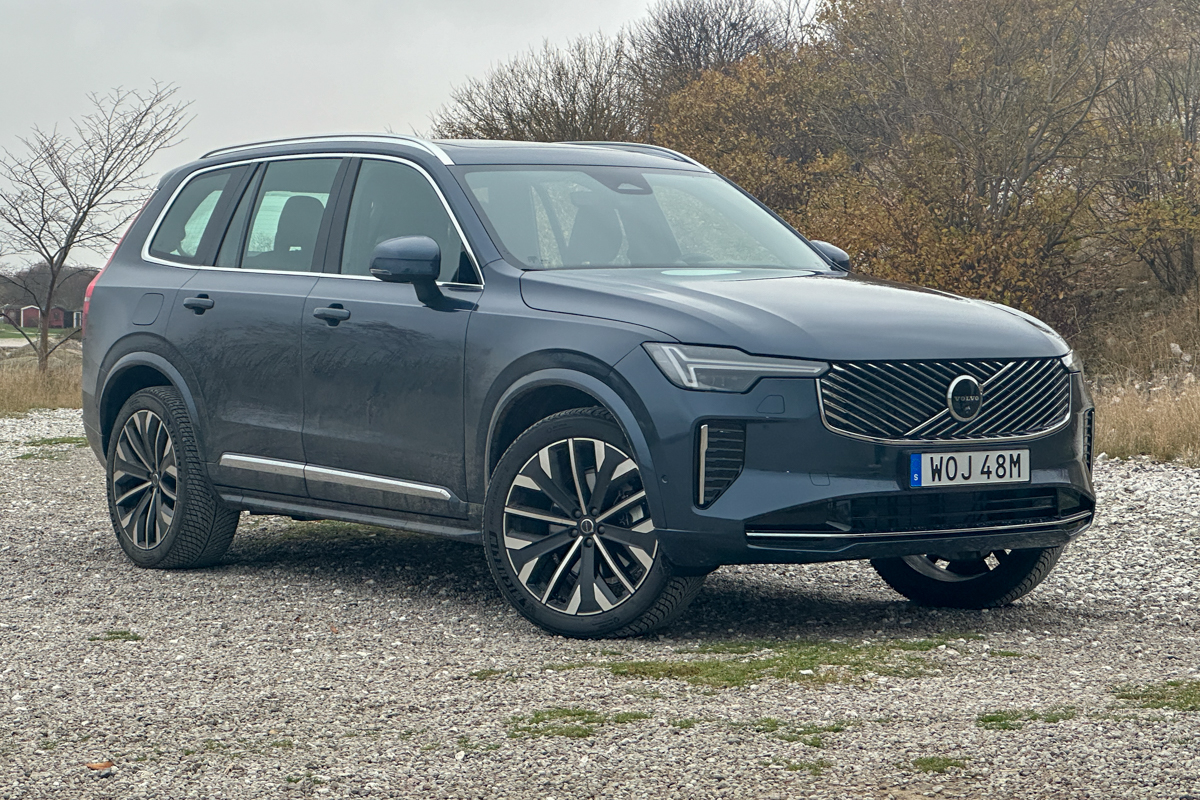
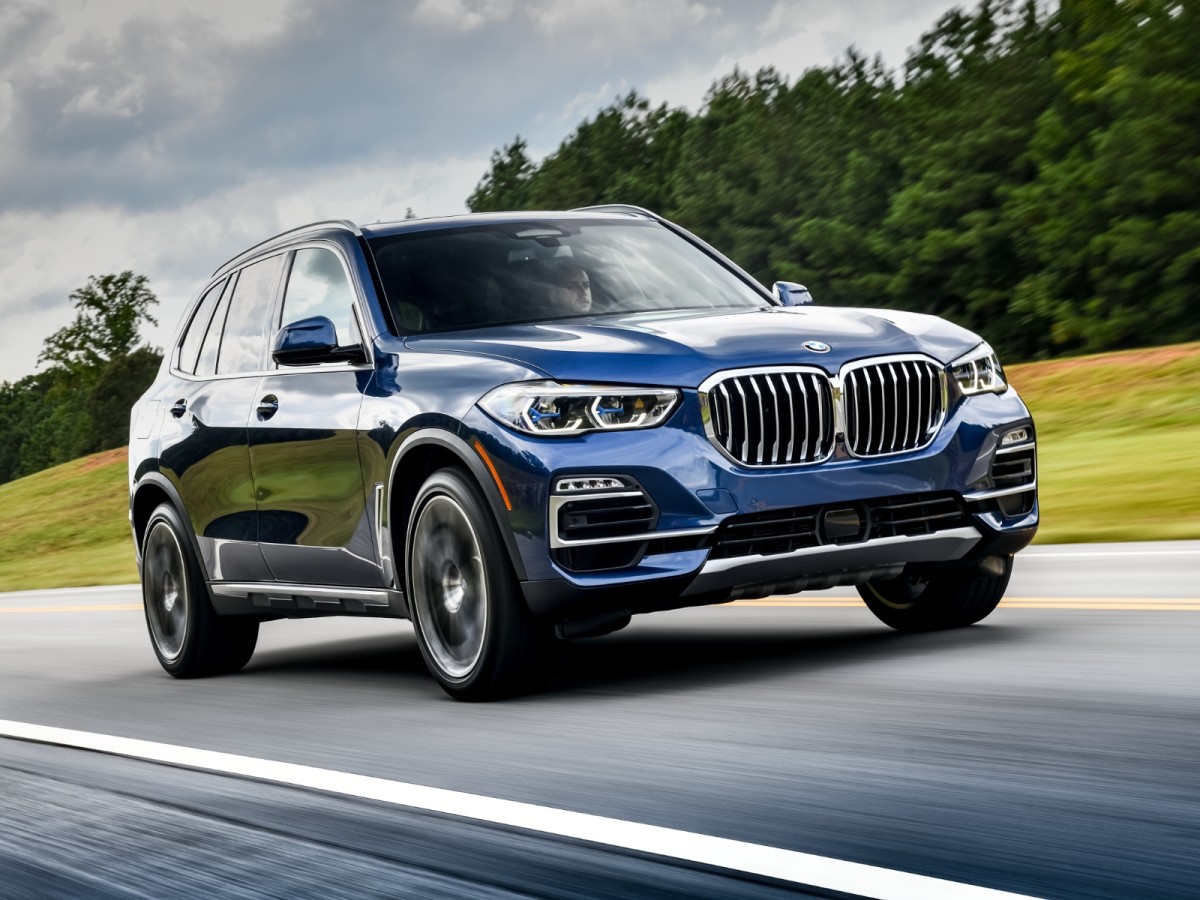
In 1997, Ford changed the lights, grille, and bumpers of its new Expedition, added chrome and some Lincoln logos, and successfully blew up a market segment that contained only two competitors selling in small quantities. Lexus and Land Rover had full-size luxury SUVs in the mid-90s, but they weren't cool. Overnight, the Navigator inspired General Motors to launch the Cadillac Escalade, and those vehicles together persuaded Nissan to release the Infiniti QX56, Mercedes-Benz the GL, and onward until today where dozens of powerful, decadent 4x4 SUVs make huge profits for luxury car brands that traditionally never built them.
The Navigator is an American institution in size, capability, and strength. No matter that Lincoln—for most of the Navigator's 27 years—made little effort to distinguish it from a Ford while charging tens of thousands of dollars more.
The latest fifth-generation 2025 Navigator carries the same turbocharged V6 engine in a familiar, redressed exterior. However, it goes hard on the electronics, including a 48-inch display across the dash and a touchscreen that removes many physical controls. It also piles on comfort for the second and third rows with massaging and heated seats and upgraded rear seat entertainment.
While European competitors ride on car chassis and drive with more verve and sprightliness, they are all smaller— much smaller. The Navigator and the extended Navigator L are effectively limousines in every sense. Direct competitors in terms of size and luxury content are the Cadillac Escalade, the GMC Yukon Denali, and the Chevrolet Tahoe High Country. The Infiniti QX80 and the Lexus LX are next in line as body-on-frame trucks, despite being only slightly smaller. The Land Rover Range Rover, the Mercedes-Benz GLS, the BMW X7, and the Audi Q7 are smaller still yet, like the Navigator, their very existence is overkill. For buyers who can afford $100,000 to $150,000 SUVs, overkill feels just right.
Lincoln Navigator: Cost, Reliability, and the Best Years to Buy
Frequently Asked Questions
Which Lincoln Navigator years are the best?
For the very lowest prices, the 2015 to 2017 Navigator (the third-gen refresh) is the best value. It’s relatively modern, courtesy of its turbocharged V6 engine. For interior quality and more power, the fourth generation (2018 to 2024) is best overall.
Which Lincoln Navigator years are the worst?
The first, second, and third (pre-refresh) Navigator models (1998 to 2014) are outclassed in terms of contemporary style, luxury, and technology. But they are solidly built, last a long time, and accommodate a lot of people and cargo for relatively little money.
Is a used Lincoln Navigator a good deal?
A used Navigator is always a good deal, as depreciation is very high regardless of odometer reading.
Pros and Cons
Pros:
- Stylish design
- Powerful engine
- Impressive technology
Cons:
- Poor ride quality
- Cramped back seats
- Too few physical controls
Lincoln Navigator Generations
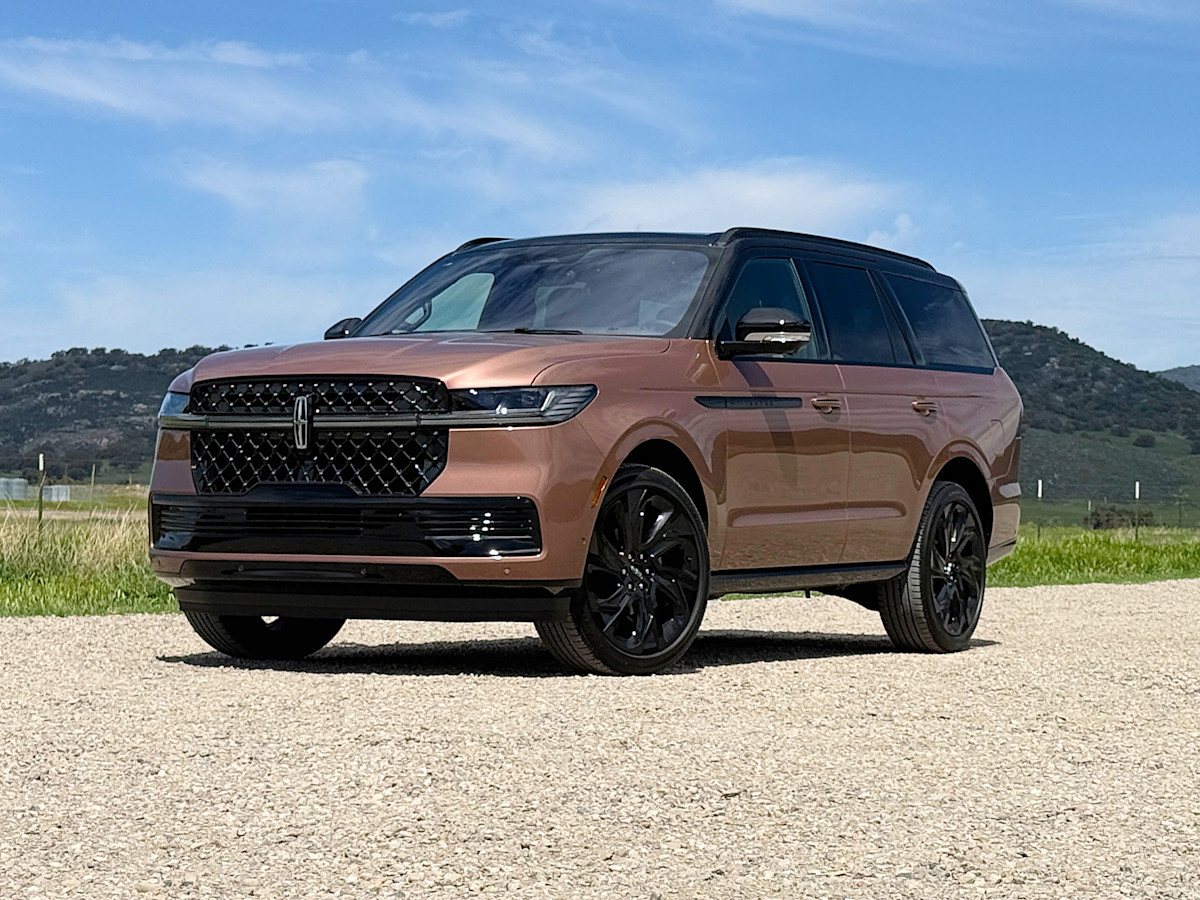
Lincoln Navigator Fifth Generation (2025-Present)
The newest 2025 Lincoln Navigator employs the design cues of the midsize three-row Lincoln Aviator and the midsize two-row Lincoln Nautilus. The grille is bisected by a bar integrated with daytime running lamps and an illuminated Lincoln logo. Smaller headlights, a wide and thin taillight strip, and wheels up to 24 inches are the major changes. The greenhouse, with its flat body panels and large windows, continues as usual.
Inside, Lincoln fits the Navigator with an oval-shaped steering wheel, a 48-inch non-touch display mounted close to the windshield, and air vents that require a touchscreen to operate. Within that touchscreen, there are lots of complicated and distracting menus to adjust the simplest of features, such as the seats. There is no head-up display.
Material quality is generally good, though the Navigator is still full of hard plastic (such as the seatbacks) that don’t belong on such an expensive vehicle. Lincoln's application of leather and wood isn’t quite as special as in the fourth generation, and the few physical controls that do exist such as the rubber pads on the steering wheel come across as cheap.
The Navigator pampers occupants with a new heated third row, standard 24-way “Perfect Position” front seats, and a second row that finally offers power-reclining, cooled, and massaging seats. A new split liftgate creates a place to sit when parked, and a cargo management system can organize gear as a table, a shelf, or a backrest. This generation has the most cargo space of any Navigator, with up to 3,029 litres (or 3,444 litres in the Navigator L, which is 30 centimetres longer than the standard model).
Two trim levels are available. The entry-level manufacturer’s suggested retail price (MSRP) is $128,695 including fees for the Navigator Reserve. This includes a twin-turbocharged V6 engine with 440 horsepower and 510 lb-ft of torque, a 10-speed automatic transmission, four-wheel drive, Lincoln Rejuvenate (which uses the ambient lighting, perfume, audio, and seat controls to act like a spa), hands-free highway driving, adaptive dampers, 22-inch wheels, and every conceivable driver assistance feature. A Jet Appearance package ($4,000 extra as of this writing) darkens the exterior trim and wheels.
The 2025 Lincoln Navigator Black Label trim ($151,695) marks the launch of the Black Label program in Canada. It has softer leather, richer woods, 30-way seats, 28 speakers on the Revel stereo, four years of maintenance included, and more. The long wheelbase Navigator L adds $4,000 to each trim level.
In our first drive of a 2025 Navigator Black Label, we found the 24-inch wheels made the ride too stiff and jarring. We liked the acceleration, the quiet cabin, and the very comfortable seats.
As of this writing, the fifth-generation Lincoln Navigator was too new for reliability or depreciation predictions. Used vehicle prices will likely remain close to new until the first round of these Navigators begin to come off lease in 2028.
Lincoln Navigator Fourth Generation (2018-2024)
Launched 20 years after the first Navigator went on sale, this generation genuinely felt like a Lincoln vehicle instead of a rebadged Ford. Interior quality, materials, and design—with only the doors and glass shared with the Expedition—were substantial improvements, and nothing suggested it was related to Ford. This generation is what we consider to be the best Navigator, before oversized billboard advertisement-looking screens and cheap plastics invaded an otherwise sumptuous cabin.
Every Navigator in this generation came with a 3.5-litre twin-turbo V6 engine and a 10-speed automatic transmission shared with the Ford F-150 Raptor. As such, power was abundant (450 horsepower and 510 lb-ft), and the paddle shifters offered rev-matched downshifts. The optional 30-way power front seats had separate left and right thigh extensions, thigh bolsters, torso bolsters, an upper backrest tilt separate from the main backrest, a four-way headrest, three-way lumbar, and two massage programs, features no other luxury automaker could match.
After the first year, the 2019 Navigator made adaptive cruise control, auto high beams, forward emergency braking, lane keep assist, and automatic parking standard on the Reserve trim. For 2020, Lincoln made power running boards, cooled front seats, and a wireless charging pad standard with every trim level. It updated its driver assist technologies, known as Lincoln Co-Pilot 360, and the Sync infotainment system.
A midcycle refresh for 2022 changed the shape of the lights and the grille, along with a wider 13.2-inch touchscreen running a newer and faster version of Sync. A hands-free driving system, called ActiveGlide, was standard, along with system chimes and warnings recorded by the Detroit Symphony Orchestra. The adaptive dampers added a forward camera to read the road and adjust the ride stiffness.
Pricing for used fourth-generation Lincoln Navigators starts at $35,000 for high-odometer early models, while later examples can still go for $100,000 or more. Aim for three-to-four-year-old models with reasonable odometer readings for the best deals, which average $65,000 to $70,000.
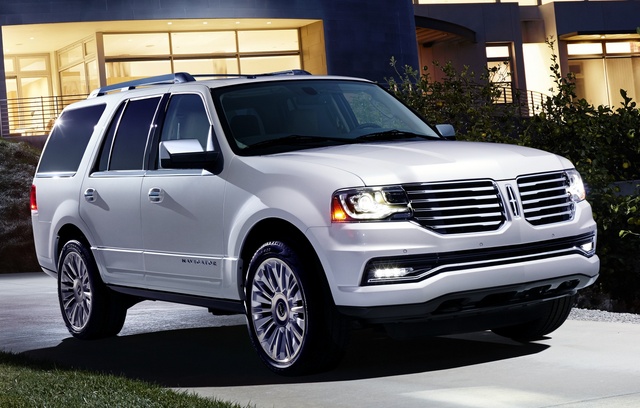
Lincoln Navigator Third Generation (2007-2017)
This was the longest-running Navigator generation. Initially, it brought more chrome to the grille, 20-inch aluminum wheels, door handles, door trim, and mirror caps. Everything about its style was louder and decked out. This included the interior, which featured dramatically improved materials, voice-activated infotainment, THX surround sound, and higher-end finishes. The third row of seats was power fold on the Ultimate trim, which was the only trim offered in Canada for the first half of this Navigator’s run.
A 5.4-litre V8 engine made 300 horsepower and 365 lb-ft of torque, sent through a six-speed automatic transmission. At the time, however, the Navigator felt slow, and its fuel consumption was excessive (rated at 18.2 litres per 100 kilometres in the city and 13.3 L/100 km on the highway). Towing was rated at 4,125 kilograms (9,100 pounds), while power-adjustable pedals, cooled front seats, rear DVD entertainment, and power running boards were all available.
For 2008, the extended-wheelbase Navigator L became available in Canada for the first time. A backup camera was standard, and the Sync voice-activated multimedia, rain-sensing wipers, and heated second-row seats followed suit in 2009. The V8 engine's output was raised to 310 horsepower that year, and the navigation could be controlled via Sync's voice commands. For 2010, Ford MyKey was introduced to restrict the vehicle's functions, such as speed or the audio system, for valets or teen drivers. Trailer sway control was also added.
For 2011, rear passengers could view entertainment on two screens instead of one. Convex lower side view mirrors were introduced for 2012. There were no changes for 2013, while the heavy-duty trailer tow package became standard in 2014.
The 2015 Navigator was significantly refreshed with new front and rear fascias, lights, and bumpers, and a new interior with softer materials. The engine was remarkably better, as the old V8 was dropped in favour of a 3.5-litre twin-turbo V6 with 385 horsepower and 460 lb-ft of torque, which bumped highway fuel economy to 11.8 L/100 km. A new infotainment system, MyLincoln Touch, had more customization features but was replaced for 2016 with Sync 3, which was much faster and easier to use. There were no changes for 2017.
Third-generation Navigators can be dirt cheap but often have well over 150,000 kilometres on the clock. They’re also becoming somewhat scarce in Canada as they succumb to age and rust. Expect prices starting at roughly $10,000 for the oldest, highest-kilometre examples to just over $30,000 for the newest and lowest-odometer versions. Most of the refreshed models (2015-2017) are between $25,000 and $30,000.
Lincoln Navigator Second Generation (2003-2006)
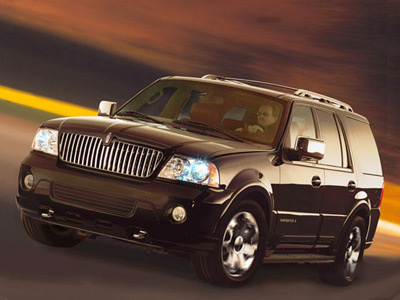
One of the most important changes in the second-generation Lincoln Navigator was an independent rear suspension, which allowed more space for cargo and third-row occupants while providing a more controlled and stable ride. Other mechanical upgrades included a new frame that was stiffer and stronger, rack-and-pinion steering that was more accurate and tightened the turning radius, larger brakes, and air suspension—a feature never again seen on a Navigator after this generation.
The exterior dimensions were hardly changed. A power-folding third row of seats (which folded completely flat into the floor) and a power liftgate were newfound luxuries. A 5.4-litre V8 with 300 horsepower and 355 lb-ft of torque was standard on every model year, with a four-speed automatic transmission. Acceleration was very slow and fuel consumption very high. Side curtain airbags and electronic brake force distribution were standard, and stability control was optional. A cover for the radio— which, along with the silver-painted centre stack, was very chic at the time—was one part of an elegant interior.
For 2005, Lincoln made AdvanceTrac electronic stability control with roll stability control standard, changed the grille and front bumper, offered new 18-inch wheels, upgraded the transmission to a six-speeder, and boosted the engine's torque by 10 lb-ft to 365 lb-ft. There were no major changes for 2006.
Most Canadian Navigators of this vintage have fallen victim to age and rust. We found one second-generation Lincoln Navigator in our research—a 2006 model with 120,000 kilometres for $20,000.
Lincoln Navigator First Generation (1998-2002)
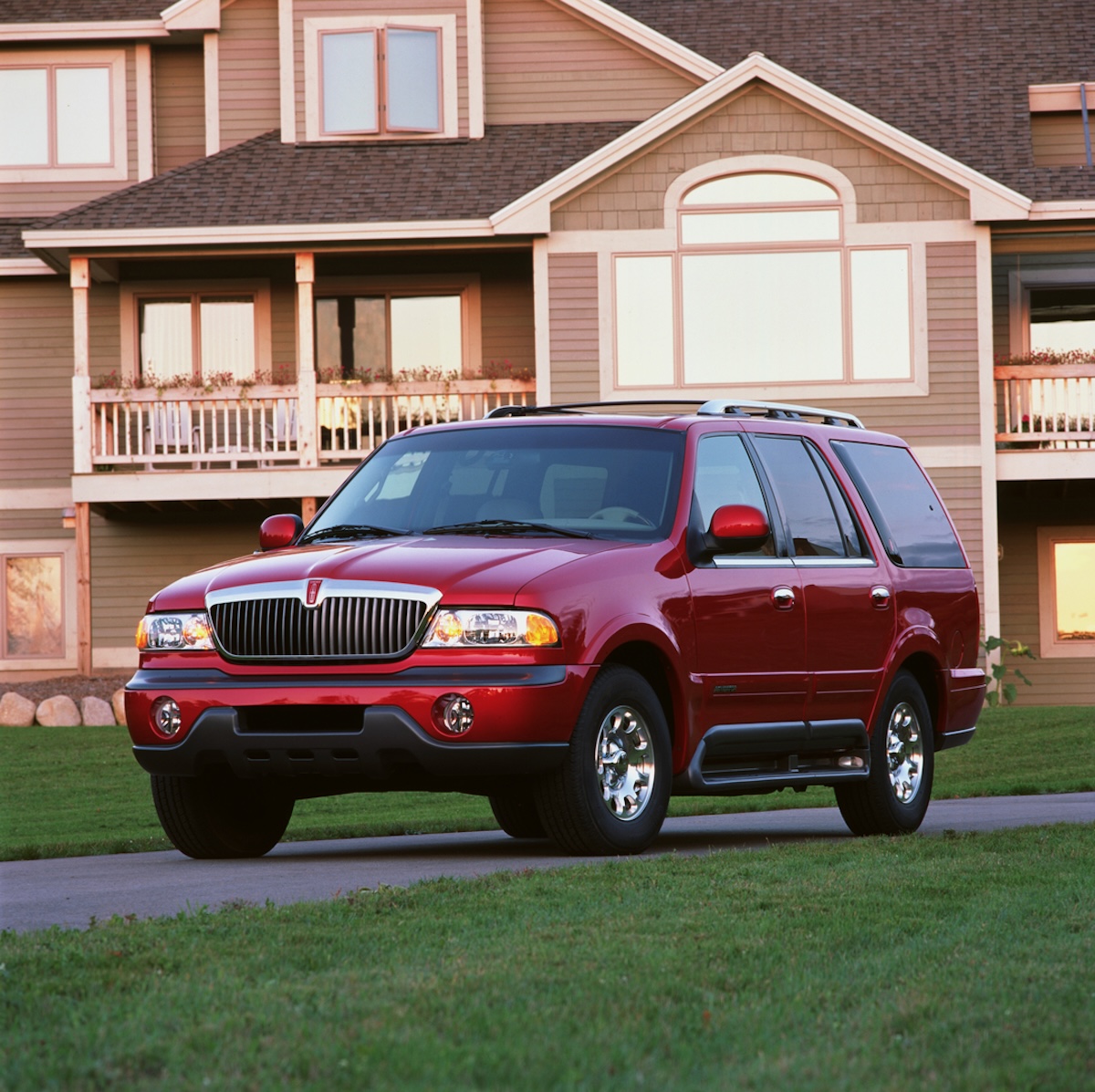
The first Lincoln Navigator was simple and effective at making the Ford Expedition feel more luxurious than it really was. It offered a low-range four-wheel drive transmission, towing capacity of up to 3,625 kilograms (8,000 pounds), standard captain's chairs, supportive leather seats, 17-inch chrome wheels, lots of cupholders, remote keyless entry, tri-zone climate, and lots of wood trim. The 5.4-litre V8 made 230 horsepower and 325 lb-ft of torque, sent through a four-speed automatic transmission.
For 1999, Ford replaced the single overhead cam engine with a dual overhead cam for improved power and torque (300 horsepower and 360 lb-ft). New options included heated front seats, a cell phone, an Alpine stereo, power-adjustable pedals, and an easier way to remove the optional third row seat.
Side thorax airbags became standard for 2000, while navigation on a five-inch screen and cooled front seats were optional. Softer leather, more storage in the front centre console, more wood trim, and mild changes to the body cladding also appeared on this model year. For 2001, Lincoln added child seat anchors to the back seats.
No first-generation Lincoln Navigators were available for sale in Canada as of this writing. If one comes up that catches your eye, inspect it carefully for rust and other signs of age-related wear.
Related Topics