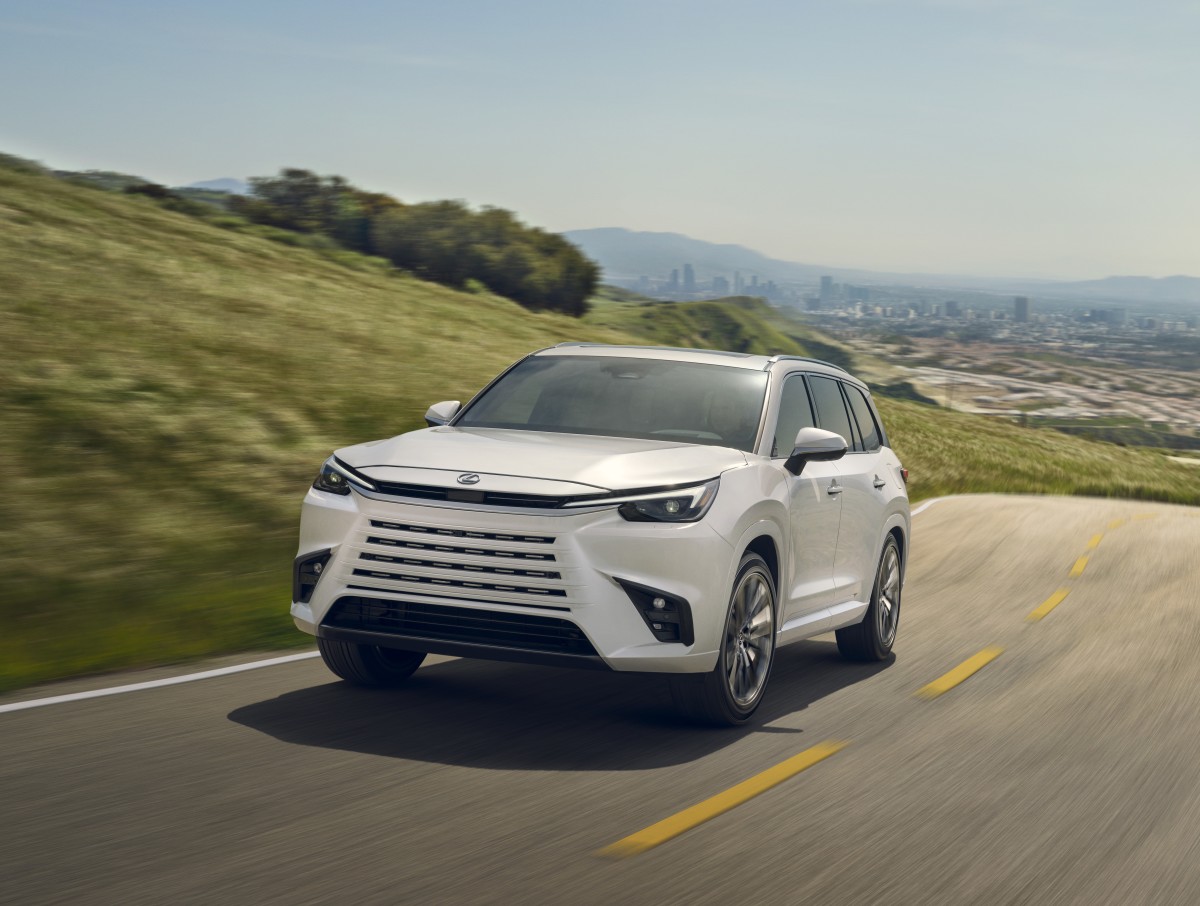
The Lexus NX was introduced for the 2015 model year as the first compact crossover SUV from Toyota’s luxury division. ‘What took them so long?’ you might wonder, since Lexus introduced its first luxury SUV, the RX, in 1998. Regardless, the Lexus NX certainly looked the part when it finally arrived. With its angular styling and dramatic interpretation of the brand’s then-recently introduced “spindle” grille, it was immediately the most striking-looking car in the class.
Underneath, it shared some of its basic structure with the Toyota RAV4 of the time, but was mostly a Lexus-only production. While not as edgy looking on the inside, the NX followed Lexus’s modern luxury playbook. Its interior was fit to bear scrutiny next to its key rivals, the Audi Q5 and the BMW X3.
Futuristic exterior apart, what distinguished the NX from the competition was the choice of powertrains. In this respect, the NX was ahead of its time. Where many rivals offered four- and six-cylinder engines, the NX was introduced with a choice of a four-cylinder gas engine or a gas/electric hybrid. The standard all-wheel drive (AWD) in Canada was more in keeping with the norm, as was the fact that every version had an automatic transmission.
With its forward-looking design and powertrains, perhaps it’s not surprising that the basics of the NX have changed little over time. The second-generation NX, introduced for the 2022 model year, looks uncannily like a facelifted version of the first, even though it’s actually an entirely new car. The range was expanded to include a wider choice of gas engines, however, while a powerful plug-in hybrid version was added. There’s no pure-electric NX, and the slightly larger RZ was the only Lexus electric vehicle sold in North America at the time of writing.
Standard equipment isn’t especially generous, with many features part of a range of option packs. In line with the model lineups of its key competitors, the NX offers packages for those that want a sportier look and feel. Known as F Sport, these include a tuned suspension and a range of cosmetic changes for a more responsive drive.
While the basic premise and look of the NX has stayed much the same since it was introduced, Lexus has added more high-tech features and safety kit over the years. The Lexus Safety System+ became standard in 2018 with automatic emergency braking, automatic high beams, adaptive cruise control, and lane departure warning with lane keep assist. Today, the Lexus Safety System+ 3.0 adds pedestrian and cyclist detection, intersection turning support, lane tracing assist, and road sign assist.
Our buying guide has the lowdown on which models are available, which are the best and the worst versions for reliability, and how much you should pay.
Lexus NX Buying Guide: Cost, Reliability, and the Best Years to Buy
- Frequently Asked Questions
- Lexus NX Pros and Cons
- Lexus NX Generations
- Second generation (2021-present)
- First generation (2014-2021)
Frequently Asked Questions
Which Lexus NX years are the best?
The Lexus NX has an outstanding reputation for reliability. As such, there aren’t really any “best” years. The second generation that began in 2022 is better equipped than the first, though, and offers a wider choice of powertrains.
What are the worst Lexus NX years?
All Lexus NX models have very good reliability records. The worst for issues on CarComplaints.com is the 2015 NX 200t, but there are only a handful of complaints, most of which are for minor hiccups, such as glitchy infotainment systems.
Is a used Lexus NX a good deal?
The Lexus NX, like most Lexus models, doesn’t have the wider appeal or dynamic finesse of many of its core rivals. However, it’s a high-quality product with a luxury feel and is likely to be extremely dependable.
Lexus NX Pros and Cons
Pros:
- Exceptional reliability record
- Fuel-efficient hybrid models
- Distinctive exterior design
Cons:
- Not as good to drive as some rivals
- Many desirable features are part of option packs
- Non-hybrids aren’t great for fuel economy
Lexus NX Generations
Second generation (2021-present)
The second-generation Lexus NX, introduced for the 2022 model year, follows the old “if it ain’t broke, don’t fix it” maxim. It looks so similar to the first-generation car on the outside that you could be forgiven for thinking it's simply an updated version, but just about everything is new. It’s also a fraction larger, with just 2.5 centimetres added in overall length, the same increase in the wheelbase, and smaller increases in width and height.
The styling evolves the themes of the first car, with the only real divergence the introduction of a full-width tail-light bar at the rear. There’s a greater shift inside, with a more minimalist look and a dashboard dominated by a large touchscreen display. This was initially a 9.8-inch example in base models and a 14-inch setup in higher-spec versions.
An extended range of powertrains tops and tails the lineup compared with the first NX. The new entry-level NX 250 has a 2.5-litre inline four-cylinder engine with 203 horsepower and, like all NX models, comes with standard all-wheel drive (AWD) in Canada. (Note that the NX 250 has been discontinued in Canada as of the 2026 model year). Next up is the Lexus NX 350, which has a 2.4-litre four-cylinder turbo engine with 275 horsepower. Both have a six–speed automatic transmission.
There are also two hybrid options. The NX 350h is a conventional hybrid that combines a 2.5-litre engine with an electric motor on each axle for a total system output of 239 horsepower. The NX 450h+ is Lexus’s first plug-in hybrid (PHEV). It has the same basic specs as the NX 350h but adds a larger, rechargeable battery for a total system output of 302 horsepower and a pure-electric range of up to 60 kilometres.
Natural Resources Canada lists the combined fuel economy rating at 8.4 litres per 100 kilometres for the NX 250, 9.8 L/100 km combined for the NX 350 (or 9.7 with F Sport packaging), 6.0 L/100 km combined for the NX 350h, and 6.6 L/100 km combined with the NX 450h+ when it’s operating in hybrid mode.
Even the earliest, base-spec NX 250 model comes with wireless Android Auto and Apple CarPlay integration, but many of the features you might expect as standard are part of option packs such as a power moonroof and leather upholstery. Other available premium features Individual a Mark Levinson premium audio system, Lexus Digital Key (which allows you to open the car remotely using your phone), a wireless charger, and power-folding rear seats. F Sport models have a range of sporty upgrades, including adaptive variable suspension, several cosmetic upgrades, and 20-inch alloy wheels.
While it’s not the most rewarding drive in the sector or the most practical, few cars can touch the NX for reliability. Lexus’s reputation for it is nothing short of exceptional. In the J.D. Power 2024 U.S. Vehicle Dependability Study, Lexus was named top brand overall for the second year running, and the NX achieved first place in the compact premium SUV sector.
Notably, the second-generation Lexus NX is assembled in Canada. Beginning with the 2022 model year with the launch of the second generation, the Lexus NX joined the Lexus RX and Toyota RAV4 on the assembly line at Toyota Motor Manufacturing Canada’s facility in Cambridge, Ontario.
As of this writing, pricing in Canada for the Lexus NX as a new car ranges from a shade under $58,000 to roughly $80,000, including destination charges and fees. Thanks partly to its excellent reliability record, the NX holds its value very well. If you’re looking at a used example, expect to pay between $40,000 and $55,000 unless the car has covered a ton of klicks.
First generation (2014-2021)
If Lexus’s first compact model, the CT hatchback, was something of a misstep, the brand was on more familiar ground when it introduced its first compact SUV, the NX, for the 2015 model year. It already had a successful formula with the RX midsize SUV, which by then had been on sale for more than a decade. It’s simplifying things to say that the NX is a downsized version of the RX, but the two cars share similar attributes and tech. However, the NX has an edgier look and is aimed at a slightly younger, less luxury-oriented market.
In contrast to the feeble Prius powertrain that the CT made do with, the lineup for the NX was a decent fit for its intended audience. The single gas engine available from launch was a 2.0-litre four-cylinder turbocharged engine initially badged NX 200t. With 235 horsepower and 258 lb-ft of torque, it doesn’t give the stirring acceleration of high-powered versions of some rival cars. It’s quick enough, though, with a 0 to 100 km/h time of roughly seven seconds. A conventional six-speed automatic transmission and all-wheel drive were both standard in Canada.
The hybrid option, labeled NX 300h, combines a 2.5-litre inline four-cylinder engine and two electric motors, one at the front and a second at the rear axle to create standard all-wheel drive. Total system output is 194 horsepower—Lexus doesn’t quote a combined torque output—and the 0 to 100 km/h time is just over nine seconds. A continuously variable transmission (CVT) is standard.
Despite costing more to buy, the NX 300h was quite a bit slower than the NX 200t. You did get a limited amount of electric-only range at low speed, though, which seriously improved fuel economy. Natural Resources Canada lists a combined figure for the NX 300h of 7.4 to 7.5 litres per 100 kilometres depending on equipment and model year, compared with equivalent figures of 9.6 to 9.9 L/100 km for the NX 200t.
While it feels reasonably luxurious, the features you get with the NX depends on how the car was specified when new. Base 200t versions come with dual-zone climate control, power front seat adjustment, and a rear-view camera, while a range of options could be added through Premium, Luxury, Executive, and F Sport packages.
As standard, the NX 300h came fully equipped in its first model year with standard features such as heated and ventilated front seats with leather upholstery and a memory function for the driver’s seat, a power moonroof, a head-up display, a wireless charging pad, rain-sensing wipers, and an extensive suite of safety and driver assistance technologies including blind spot monitoring and rear cross-traffic alert.
A facelift for the 2018 model year included restyled bumpers and headlamp inserts, equipment upgrades, and a larger infotainment display. Safety features were significantly upgraded with the addition of Lexus Safety System+ as standard, a package that included a pre-collision system with pedestrian detection, lane departure alert, lane keep assist, radar cruise control, and intelligent high-beam headlamps. At the same time, the NX 200t was renamed NX 300 to reflect Lexus’s latest naming strategy.
The NX has done its bit to cement Lexus’s reputation for making extremely reliable cars. Lexus has repeatedly been named top brand overall in J.D. Power’s annual U.S. Vehicle Dependability Study reports, and the NX has landed in first place more than once in the compact premium SUV sector. Less than twenty issues with this generation of NX were flagged on CarComplaints.com, and most relate to minor problems. This is an exceptionally low number given how many NX units have been sold.
Prices for used first-generation Lexus NX models vary significantly in Canada depending on spec and condition. Expect to pay at least $21,000 for one that’s covered less than 150,000 kilometres. Later, high-spec models with fewer kilometres can cost $35,000 or more.