The original Honda Pilot ushered in an era of non-minivan-style family vehicles with a car-like ride when it was launched in 2003. In fact, it was the first three-row SUV built on a unibody platform. More than two decades later, the Pilot is a solid, long-term contender in the midsize SUV segment courtesy of its extensive tech and safety features.
It lags behind competitors such as the Ford Explorer, the Toyota Highlander, and the Kia Telluride in terms of infotainment and fit and finish. However, it offers more third-row legroom and headroom and can seat up to eight passengers (except the Honda Pilot TrailSport, which has captains chairs and seats seven). Its main competitors max out at seven seats.
Honda upped its safety game on the Pilot in 2016, when it introduced its optional Honda Sensing safety suite. This is when it started winning Top Safety Pick (TSP) awards from the Insurance Institute for Highway Safety (IIHS) — and the 2025 model even gets the top TSP+ award. This safety tech became standard on all trims in 2019 and has been continually upgraded ever since.
Overall, the Honda Pilot is a stalwart of the segment and worthy of a test drive if you’re looking for a safe and reliable three-row SUV.
Honda Pilot Buying Guide: Cost, Reliability, and the Best Years to Buy
Frequently Asked Questions
Which Honda Pilot years are the best?
One of the old axioms in the automotive world is to buy the last model year of a generation cycle if you want it to be reliable, and that seems to hold true with the Honda Pilot. If you look at CarComplaints.com, some of the most reliable years are 2008, 2015, and 2022, and each of these model years receives the website’s “Seal of Awesome.” That said, both the second and third generations seem to be reasonably complaint free, as long as you steer clear of the 2016 model. Consumer Reports says second-generation models are generally more reliable than the third, while 2014 and 2021 versions get its “recommended” label.
What are the worst Honda Pilot years?
According to CarComplaints.com, the two worst years for the Honda Pilot are 2016 and the original 2003 model. Consumer Reports data backs this up, as these two models get reliability ratings on the lower end of the scale, and the 2005 Honda Pilot also fares poorly. This is largely due to transmission issues since all these model years have a large number of complaints for transmission failure. The 2016 model also has reports of transmission jerks when accelerating, and the 2005 model has several reports of transmission fluid leaking into the radiator.
Is a used Honda Pilot a good deal?
The Pilot’s resale values tend to be high, due to Honda’s reputation for reliability and safety, while Honda’s conservative approach to design means even 10-year-old models don’t appear dated. Looking at the end of the third generation, you’ll likely spend between $30,000 and $45,000 for low-kilometre examples. But if you drop back to the second generation, which generally has a better reputation for reliability, you’ll pay between $14,000 and $20,000. The best buy might just be the 2014 Pilot, which has higher reliability ratings. For a true bargain, look to 2006. Though it’s a first-gen vehicle, this is the year of the mid-cycle refresh. These are scarce in Canada now, but if you find one, it’ll likely be priced at around $6,000.
Honda Pilot Pros and Cons
Pros:
- Plenty of cargo space
- Easy-to-use technology
- Standard advanced safety features
Cons:
- Average fuel economy
- Pedestrian performance
- Interior materials feel cheap
Honda Pilot Generations
Honda Pilot Fourth Generation (2023-Present)
As most automakers favour turbocharged, four-cylinder powertrains in their midsize SUVs, Honda has held the line with a naturally aspirated, 3.5-litre, 285-horsepower V6 engine in the latest Pilot — the model's most powerful engine to date — paired with a new 10-speed automatic transmission.
The fourth-generation model was influenced by the overlanding trend, and the mid-level Pilot TrailSport trim caters to it with rugged off-road suspension, higher ground clearance, all-terrain tires, steel skid plates, and some standout bits of trim, such as synthetic leather seats with orange stitching.
In Canada, Honda’s i-VTM4 all-wheel drive system is standard equipment in this generation. This includes drive modes for normal, ECON, snow, tow, sport, trail, and sand. As for fuel efficiency, the fourth-gen Pilot averages between 11.0 and 11.8 litres per 100 kilometres, depending on the trim level.
Taking a cue from the Odyssey minivan, the current Pilot also gets Honda’s “magic” seats in the second row that allows the middle seat to be removed and stored under the rear cargo floor.
The Pilot has long been known for its generous complement of safety features, and the latest version is no different. The base Honda Pilot Sport trim level has a heap of active driver aids (which the manufacturer calls its Sensing Driver-Assistive features), including forward collision warning, a collision mitigation braking system (read: automatic emergency braking), blind-spot monitoring, adaptive cruise control with low-speed follow, lane-departure warning, cross traffic monitor — to name but a few.
Move up one trim level to the Honda Pilot EX-L, and you get front and rear parking sensors. The higher Honda Pilot trim levels — the Honda Pilot Touring and the Black Edition — add a multi-view camera system with lens washers and rain-sensing wipers.
As for functionality and tech, base Sport trim levels get a seven-speaker sound system, a seven-inch infotainment screen, a seven-inch driver information screen, Bluetooth connectivity, Apple CarPlay and Android Auto. The next level up, EX-L, adds a nine-speaker sound system, a nine-inch touchscreen infotainment system, SiriusXM, wireless Apple CarPlay and Android Auto, a wireless phone charger, and CabinTalk, Honda’s in-car PA system. The Touring trim really ramps things up with a 12-speaker Bose sound system, a Wi-Fi hotspot, and the so-called Honda satellite-linked navigation system.
There have been few changes to the fourth-generation Honda Pilot since its launch. Though it’s still early days, reliability of this generation is looking good, and owner satisfaction is way up. As a used vehicle, this generation ranges from $47,000 to $57,000, and a new one will add roughly $10,000 to the bottom line.
Honda Pilot Third Generation (2016-2022)
The third-generation Pilot is defined by tech upgrades and additional safety features. It’s also the generation that ditched the sound system’s volume dial. The 2016 model introduced new top-trim features like ventilated front seats, heated second-row seats, a heated steering wheel, and a panoramic moonroof. This model year also saw Honda Sensing (think automatic emergency braking and lane keep assist) available for the first time on the Pilot.
Though the engine was still a 3.5-litre V6, it had direct injection and it was more powerful, delivering 280 horsepower and 262 pound-feet of torque. The five-speed automatic transmission was ditched, replaced by a six-speed automatic in lower trims and a nine-speed automatic in upper trims.
Honda added Apple CarPlay and Android Auto integration in 2017, and it was standard out of the gate in Canada. A mid-cycle refresh occurred in 2019, with some exterior styling changes and a new hands-free power tailgate. At this point, Honda Sensing was made standard on all trim levels and the nine-speed automatic transmission was tweaked for smoother shifts. In 2021, Honda added remote start and went all in on the nine-speed automatic, making it standard across all trims.
Models in this generation range from $20,000 to $42,000, which seems a little pricey for a generation beset with transmission complaints, although most of these issues seemed to be smoothed out after the 2019 model year. And according to Consumer Reports, the 2021 model year, priced between $32,000 and $42,000, is the best of the bunch.
Honda Pilot Second Generation (2009-2015)
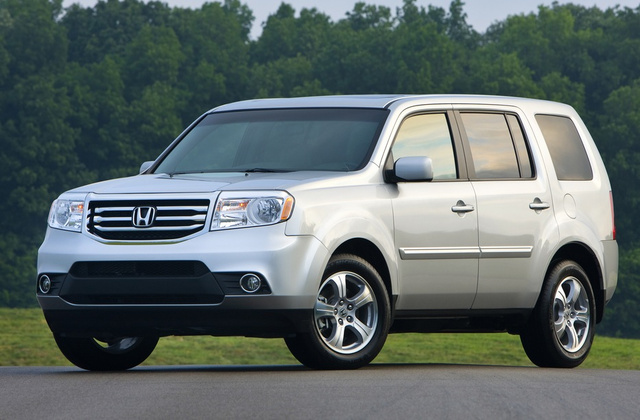
Production of the Honda Pilot moved from Honda of Canada Mfg. in Alliston, Ontario, to the Honda Alabama Auto Plant for the second generation. The redesign made the Pilot a little less minivan and a little more truck-like. The benefit? The boxier shape gave it more interior space and a bigger cargo area. Though the interior was also revised, the materials were regarded as cheap and the cabin unrefined. When possible, opt for a model with leather-trimmed seats, which hold up better over time.
Though the 3.5-litre V6 engine wasn’t all-new, it was retuned for added horsepower and torque, with the numbers increasing to 250 and 253, respectively. All versions received variable cylinder management (VCM) and the new i-VTEC valvetrain system plus a five-speed automatic transmission.
A refresh in 2012 included a more efficient engine, an 8-inch multi-information display and extra noise insulation. Bluetooth phone connectivity, a rear-view camera, and an 8-inch touchscreen infotainment screen were added in 2013 and, closing out this generation were convenience features such as a one-touch-open power moonroof.
The second-generation Honda Pilot ranges in price from $9,000 to $20,000. Though Consumer Reports pegs the reliability for these vehicles in the mid-range, they are largely complaint-free. The 2012-2013 models have some transmission complaints, but there’s an uptick in reliability and owner satisfaction for 2014. That, combined with standard tech features such as a rear-view camera and Bluetooth connectivity, make it our top pick for this generation.
Honda Pilot First Generation (2003-2008)
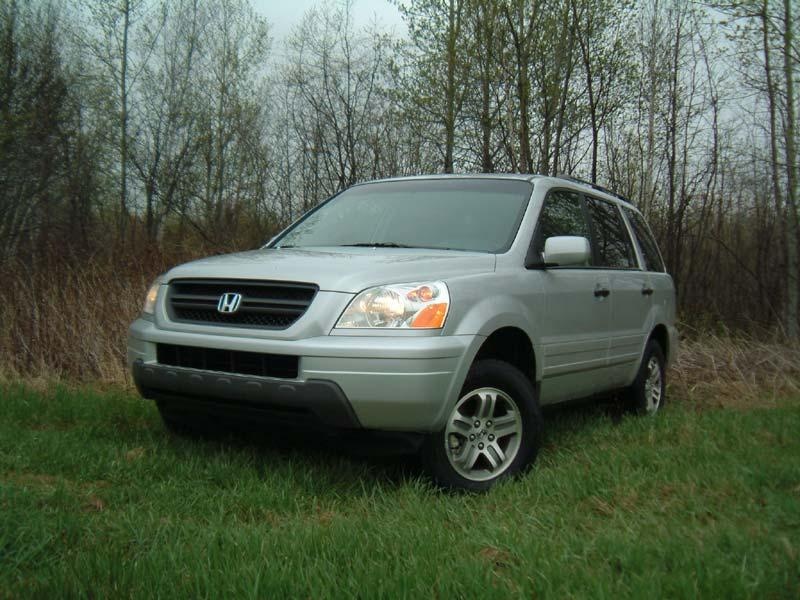
The first-gen Honda Pilot was intended to provide rugged utility and more space than the existing CR-V compact crossover SUV. In fact, it was the first three-row mainstream SUV built on a unibody platform — in which the car’s body and chassis are a single unit — providing a more car-like ride. It could seat eight, but the third row had limited leg room and was really only for children or small adults. If you used that third row for people, cargo capacity was limited. In the top EX-L trim, it even had an optional DVD entertainment system. Initially, it was only offered with four-wheel drive (4WD), though front-wheel drive (FWD) was offered on the entry-level trim beginning in 2007.
The 2003-2004 models were equipped with a 3.5-litre V6 that delivered 240 horsepower and 242 pound-feet of torque. The 2005 models got a new 255-hp V6 with a revised five-speed transmission. Though the engine didn’t change for 2006, the Society of Automotive Engineers (SAE) revised the way horsepower and torque numbers were measured, so the 2006 numbers dropped to 244 and 240 respectively, even though Honda didn’t technically change anything.
The 2004 and 2005 model years received some creature-comfort updates, and there was a mid-life refresh for the 2006 model year. The 2004 model got sliding second row seats in all trims. The 2005 model added ambient lighting, a revised instrument panel, an integrated remote key fob, an optional six-disc CD changer, new bumpers, headlights, and taillights. New creature comforts included active noise cancellation and XM Satellite Radio.
Toward the end of the first generation, there weren’t any more significant updates, other than a couple new trim levels and colour changes. This, in addition to the fewest owner complaints, made 2007 and 2008 models the best picks of this generation for reliability and owner satisfaction.
There aren’t a whole lot of these Canadian-built SUVs kicking around north of the border anymore, but the ones you do find with reasonable odometer readings should be priced between $7,000 and $9,000. Opt for later model years to avoid known transmission problems.
Related Topics