Almost everyone you know has a Honda Civic connection. You’ve either owned one or had a friend or family member who had one. Most likely, bragging is involved in telling everyone about how long it was driven before it finally went kaput. After all, the Civic was Canada’s best-selling car for nearly 25 years, and it’s so famously reliable that some of those elder-Trudeau-era Civics are still rolling around.
The original Honda Civic, a pint-sized, 50-horsepower hatchback, went on sale in 1973 and offered cheap, efficient, and durable transportation. 51 years later that formula hasn’t really changed, although the car eventually gained sedan bodies, performance variations and hybrid models. It’s also grown over time. The Civic entered its eleventh generation in 2022, with both hatchback and sedan body styles, along with performance-oriented Si and Type R variants on offer.
While the Civic certainly isn’t pint-sized anymore, it’s still a good value, though Honda has made the occasional misstep with this model over the years. It still sets the bar for compact, efficient, safe, practical, and affordable compact cars. Plus, most Civics are genuinely fun to drive, even the base models.
These incredibly popular cars have been built in huge numbers since the 1970s, so the used-car market is full of them and many are available at great deals. Here, we’ve taken a closer look at each generation.
Honda Civic Buying Guide: Cost, Reliability, and the Best Years to Buy
Frequently Asked Questions (FAQ)
Which Honda Civic years are the best?
Although the Civic has a well-earned reputation as reliable and economic transportation, the later generations have helped it move beyond being just a commuter car. Honda Civics from 2016 to present are both very roomy for small cars and genuinely fun to drive. They should prove reliable with routine maintenance.
What are the worst Honda Civic years?
The seventh generation, 2001 through 2005, is generally considered one of the worst for the Honda Civic in terms of reliability. Transmission issues are a common complaint, and the new hybrid engine technology, closer to today's mild hybrids than a conventional hybrid design, brought some bugs with it. The ninth generation Civic, built from 2012 to 2015, has a stellar reliability record but is generally considered the least fun version to drive.
Is a used Honda Civic a good deal?
Yes. Honda Civics deliver good fuel economy and great driving dynamics, particularly the newer models. While you get a lot of bang for your buck with the Civic in almost every generation, emerging stiff competition from the Hyundai Elantra and Kia Forte—and especially the Toyota Corolla, which has overtaken the Civic as Canada’s best-selling car in recent years—has eroded the stranglehold the Civic once had on the compact sedan segment.
10th Generation (2016 to 2021)
Though not everyone liked the styling, the tenth-generation Civic earned considerable critical praise for its handling, features and practicality. Considered a return to form after the disappointing ninth-generation model, this iteration debuted in two-door coupe or four-door sedan format, with a five-door hatchback added in 2017. The hatch, long the best-seller in the European Civic lineup, was built at Honda’s facility in the United Kingdom, while the Civic sedan continued its long history of being assembled at Honda of Canada Mfg. in Alliston, Ontario. This generation also saw the first introduction of the high-performance Civic Type R in North America, as this model had previously only been sold internationally.
A major step up in size from the previous version, the tenth-gen Civic had almost as much room as an early 2000s Honda Accord. It offered a slew of active-safety features that were rare on small, affordable cars in the late 2010s, including adaptive cruise control, systems which helped it win multiple Top Safety Pick designations from the Insurance Institute for Highway Safety (IIHS).
This Civic’s boy-racer styling hasn’t aged very well, but if you like it or can look past it, just about every iteration is a fun, reliable, and economical daily driver. Owner gripes, according to outlets like Consumer Reports, tend to centre on the HVAC systems (with many complaints) and the quality of the car’s paint and trim, but in general the tenth-gen Civic is a good choice for frugal motoring. Don’t expect to find good deals on the specialized Type R, but you should be able to find many decent, low-kilometre examples for around $15,000 to $18,000.
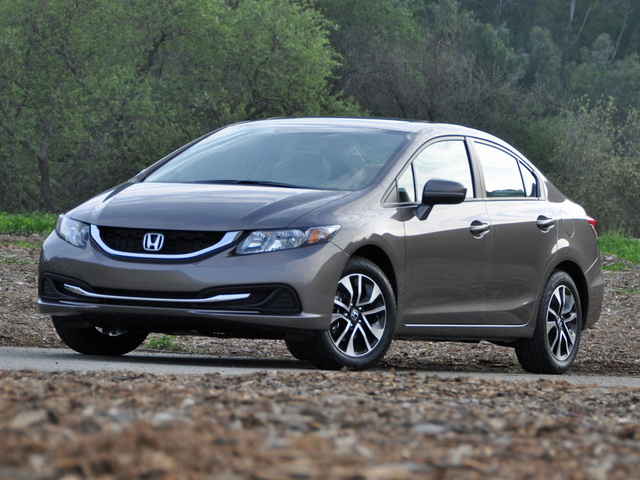
9th Generation (2012 to 2015)
Honda released the ninth-generation Civic in 2012 in coupe and sedan form. Although perfectly competent and very reliable, most critics weren’t big fans of this generation, which lacked the edgy style and fun driving dynamics of its eight-generation predecessor. Developed at the height of the great recession, it also came in for criticism for obvious cost-cutting measures as Honda decided to make it a more bare-bones car. Most were powered by 1.8-litre four-cylinder engines of around 140 horsepower, but there were also efficiency models with only 110 horses and the sporty Si with a 201-horsepower 2.4-litre engine.
Buyers were less convinced than critics, however, and the Civic still sold well on price and value. What wasn’t universally loved then still makes good transportation now thanks to those essential qualities. Honda also didn’t cut back on everything. This Civic earned Top Safety Pick and Top Safety Pick+ designations from IIHS every year it was on sale and almost all versions were capable of burning less than 8 litres per 100 kilometres combined. Even the seemingly sporty Si isn’t that fun to drive, but it works. A hybrid model also returned to the lineup, now with a more reliable Lithium-Ion battery pack and fuel consumption as low as 5.2 L/100 km combined.
This generation has a generally stellar reliability record, and there aren’t any specific areas where owners seem to encounter pain points, though the quality of the interior came in for criticism when new. Non-hybrid ninth-gen Civics in good condition with low kilometres can be had for budgets of $10,000 to $15,000 now. Though Civic Hybrids of this era are rarer, there are a few kicking around at price points ranging from $13,000 to $20,000, depending on odometer reading and condition.
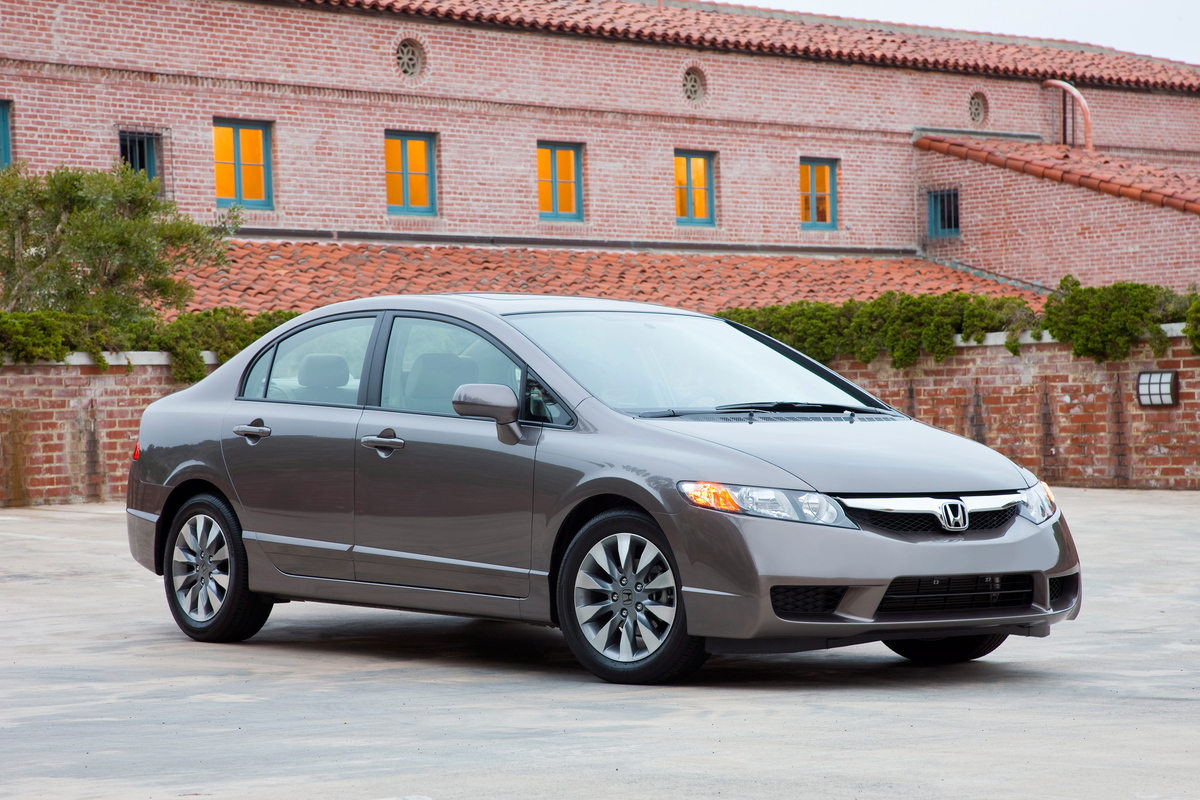
8th Generation (2006 to 2011)
The 2006 model year heralded the debut of the eighth-generation Civic, the most radical reinvention of the model to date. It ditched the seventh-generation’s staid styling for swoopy, futuristic-looking lozenge shapes and an equally unusual interior and two-tiered dashboard design. Though the two-door hatchback Si was dropped, the Civic Coupe got much more attractive styling and the Si could now be had on the coupe or sedan bodies.
With the exception of the Hybrid, Civics in these years used 1.8 or 2.0-litre (Si) four-cylinder engines mated to five-speed automatic or manual transmissions. The Hybrid used a smaller 1.3-litre four and an electric motor mated to a continuously variable automatic transmission (CVT). Light, fun to drive and very efficient, this generation of the Civic was well-liked by enthusiasts and ordinary drivers alike, but it is a little noisy inside, and the interior still seems a little odd.
Like most Civics, the eight-generation has a good reliability record, but it does come in for criticism from owners in some years for transmission, paint, and HVAC issues. The air conditioning system seems to be particularly problematic. Civic Hybrids of this era also seem to require more costly repairs than gas models, offsetting their fuel savings. While hybrids aren’t easy to find in good condition, there are clean eight-generation Civics with under 150,000 kilometres on the dial for $13,000 or less.
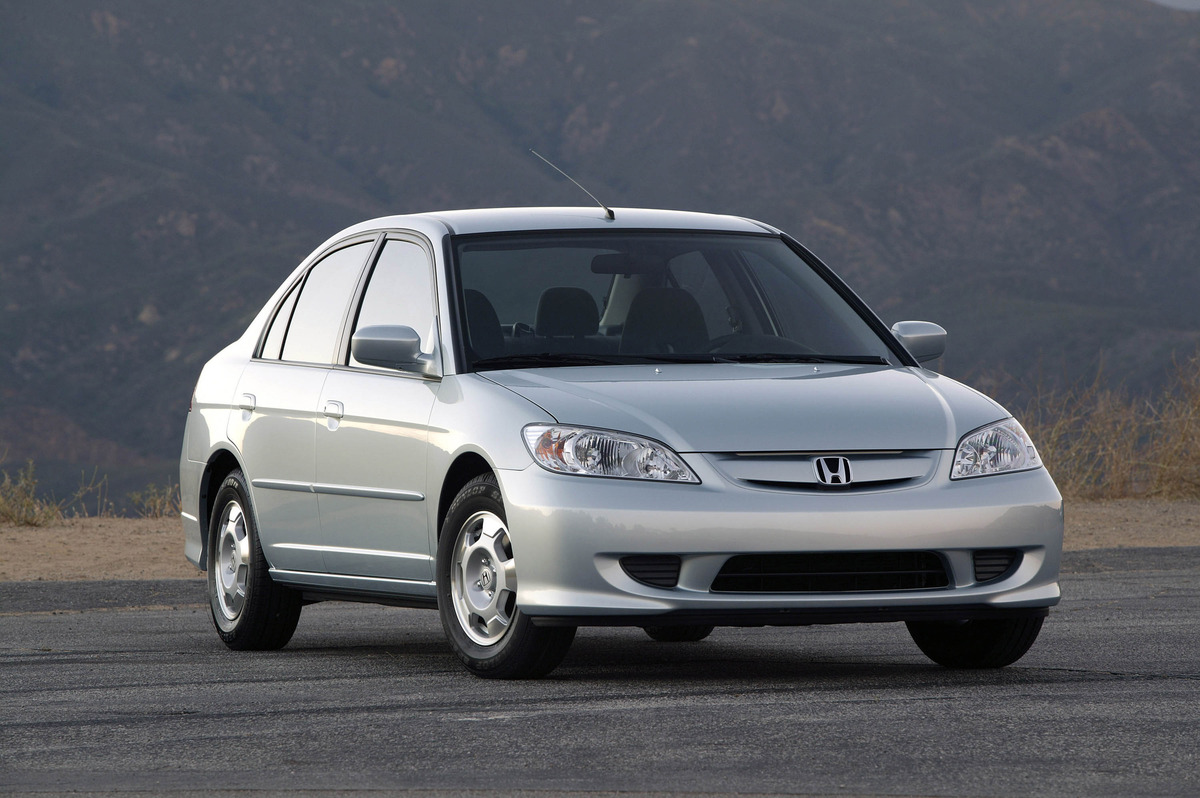
7th Generation (2001 to 2005)
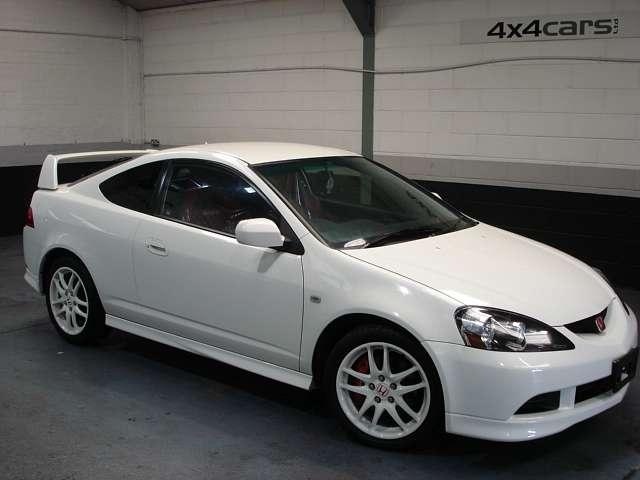
Honda released the seventh-generation Civic for the 2001 model year. It was offered in coupe and sedan body styles and most versions used a 1.7-litre four-cylinder engine producing between 115 and 127 horsepower, depending on the trim level. The sporty SiR—which was badged as Si in the U.S.; Canadian Si units were the equivalent of the U.S. EX trim in the sixth and seventh generations—returned as a three-door hatchback sourced from the United Kingdom. This version, with a 2.0-litre 160-horsepower four-cylinder engine, is quite different from the other Civics of this era as it was part of the European Civic lineup. It has different styling and already attracts interest from collectors.
In 2003, Honda added the first Civic Hybrid to the lineup. The actual design of this hybrid is closer to a modern mild hybrid vehicle than a full hybrid like the Toyota Prius, but it was an impressive vehicle for its time and capable of fuel economy as low as 5.8 L/100 km combined where most other seventh-gen Civics burned into the mid 8s. Its design also allowed for manual transmissions, unlike most other hybrids, but few were sold.
Generally considered by critics and enthusiasts as not as light or fun to drive as previous Civics, the seventh-gen model was a decent seller but has one of the worst reliability records of any generation in early 2001 and 2002 models, and hybrids seem worst of all, though these are so rare you’re unlikely to come across one in your search. Good gas-powered Civics of this era with under 150,000 kilometres shouldn’t cost more than $8,000, but they aren’t as easy to find as later Civics.
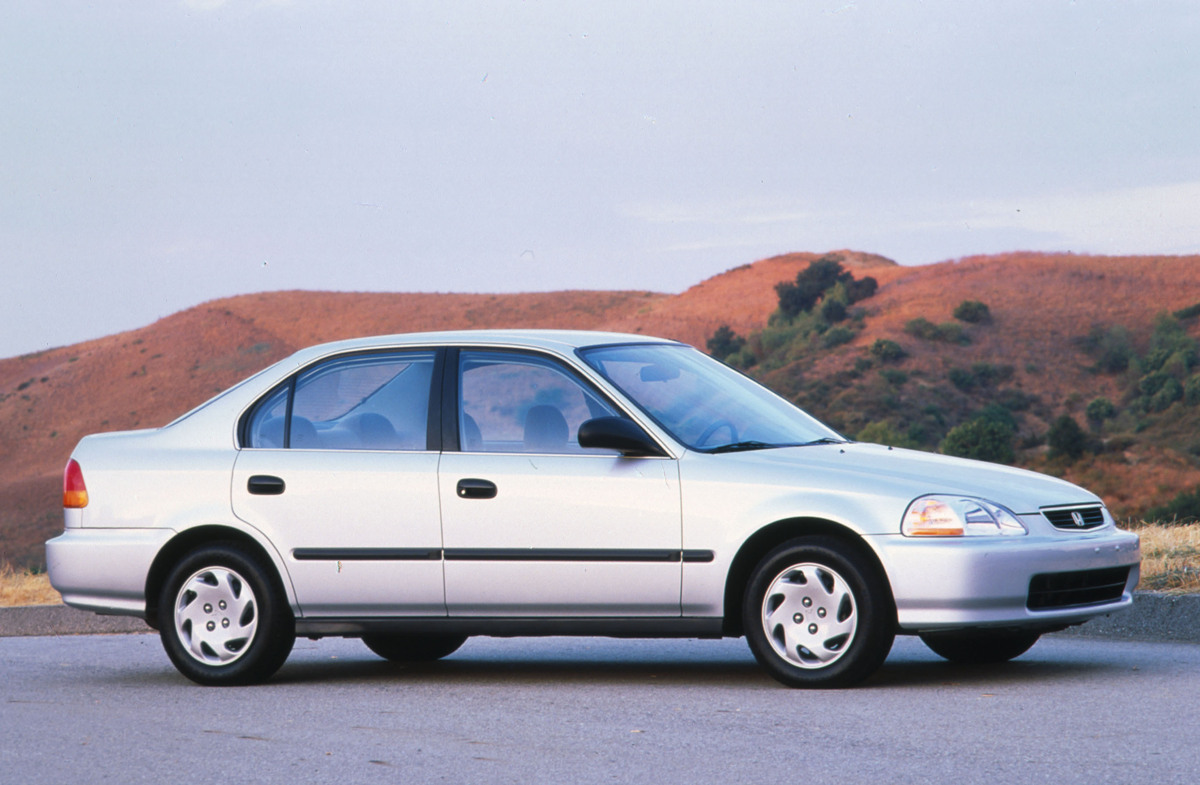
6th Generation (1996 to 2000)
Introduced for model year 1996, the sixth-generation Honda Civic was sold as in coupe, sedan, and hatchback form like its fifth-gen predecessor, and it got a pair of new 1.6-litre four-cylinder engines. Though all the engines were 1.6s, power levels were quite varied from 106 to 160 horsepower and the various models could be had with either a five-speed manual or four-speed automatic. Light and lithe, even the slowest of these Civics was fun to drive and back in Japan this model became the basis for the original Civic Type R. Canada even received the market-exclusive Acura EL with this generation, a rebadged Civic with premium options.
Like most Civics, this car has a great reputation for reliability, with examples lasting well beyond 300,000 kilometres, but maintenance is important as with the youngest of these cars now pushing a quarter-century old, many have been neglected. They’re also fairly basic, and some modern safety equipment that younger drivers take for granted, like anti-lock brakes, wasn’t standard on all versions. You can expect good fuel economy, but all of these Civics have a tight back seat.
In Canada, the weather has taken its toll and these Civics are getting harder to find. You shouldn’t have to pay too much to find a good basic four-door from this generation, as this is a bargain-basement machine that you can buy for $5,000 or less. Enthusiasts have already snapped up most of the two-door and hatchback models to modify, and the rare SiR, offered in 1999 and 2000 only, is already an appreciating collector car. If you can find it, expect nice examples of one of those to push $20,000.
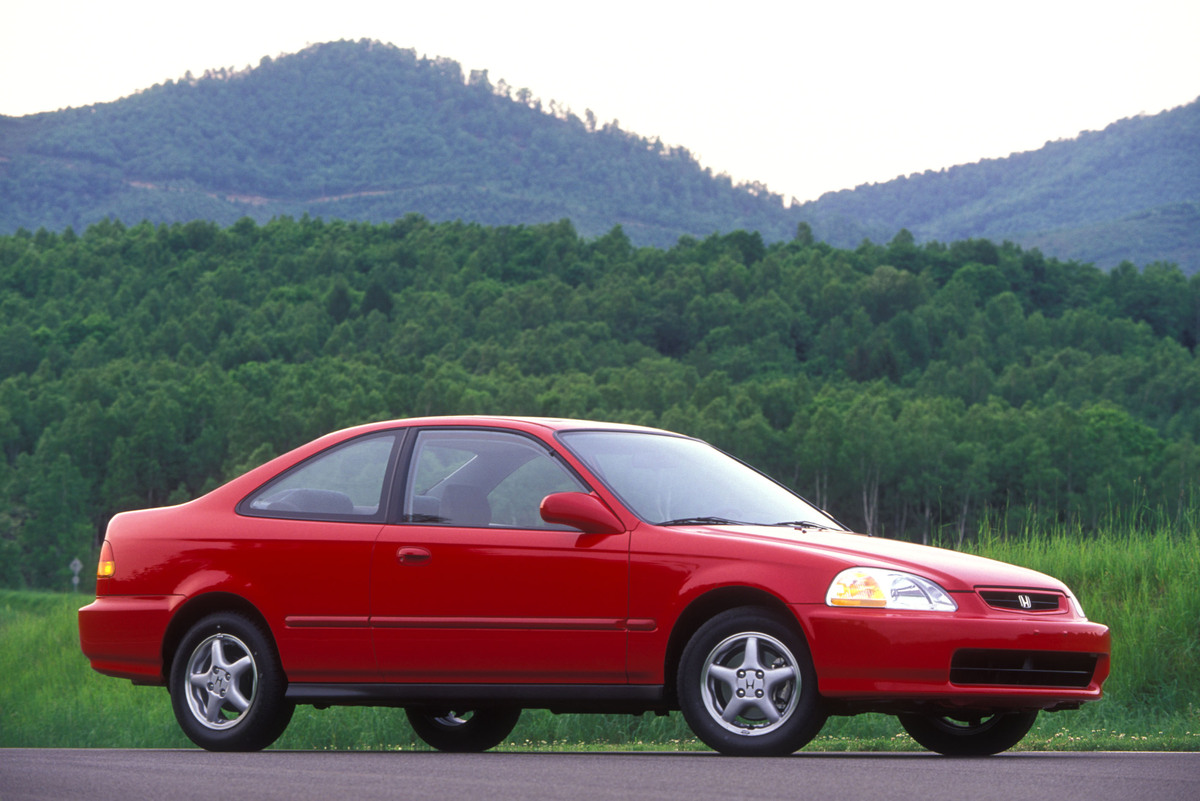
5th Generation (1992 to 1995)
Today a fan favourite with classic Honda enthusiasts, the fifth-generation Civic debuted in late 1991 with newly aerodynamic styling and lots of technological advancements. Honda’s engineers had purposefully designed it to be larger but lighter, using many lightweight materials and soft-edged, contemporary shapes. The result was a timeless look that’s aged very well while sacrificing none of the fun and frugality of earlier Civics. The all-new coupe and evolved hatchback looked particularly good, and the latter had a neat split-tailgate opening akin to a Range Rover.
In this generation, power came from high-revving 1.5-litre four-cylinders of 92 or 102 horsepower and a 16-valve, 125-horsepower 1.6-litre four in the Si. Light, fun, and efficient, they were plenty of fun to drive. None weighed more than about 1,150 kilograms (2,500 pounds), and most got around 8.6 L/100 km combined with the four-speed automatic transmission or 7.0 combined with the five-speed manual.
Fifth-gen four-door models and low-end trims are cheap today and ultra reliable, but they are three decades old now so finding a clean one in winter-ravaged Canada won’t be easy. Two-door models and hatchbacks, particularly Si models, are already collector vehicles and many have been extensively modified. They’ll cost quite a bit more than bargain-bin four-doors, but if you shop around for a long time, you might be able to find one of these for less than $10,000. The Civic Wagon was dropped for this generation.
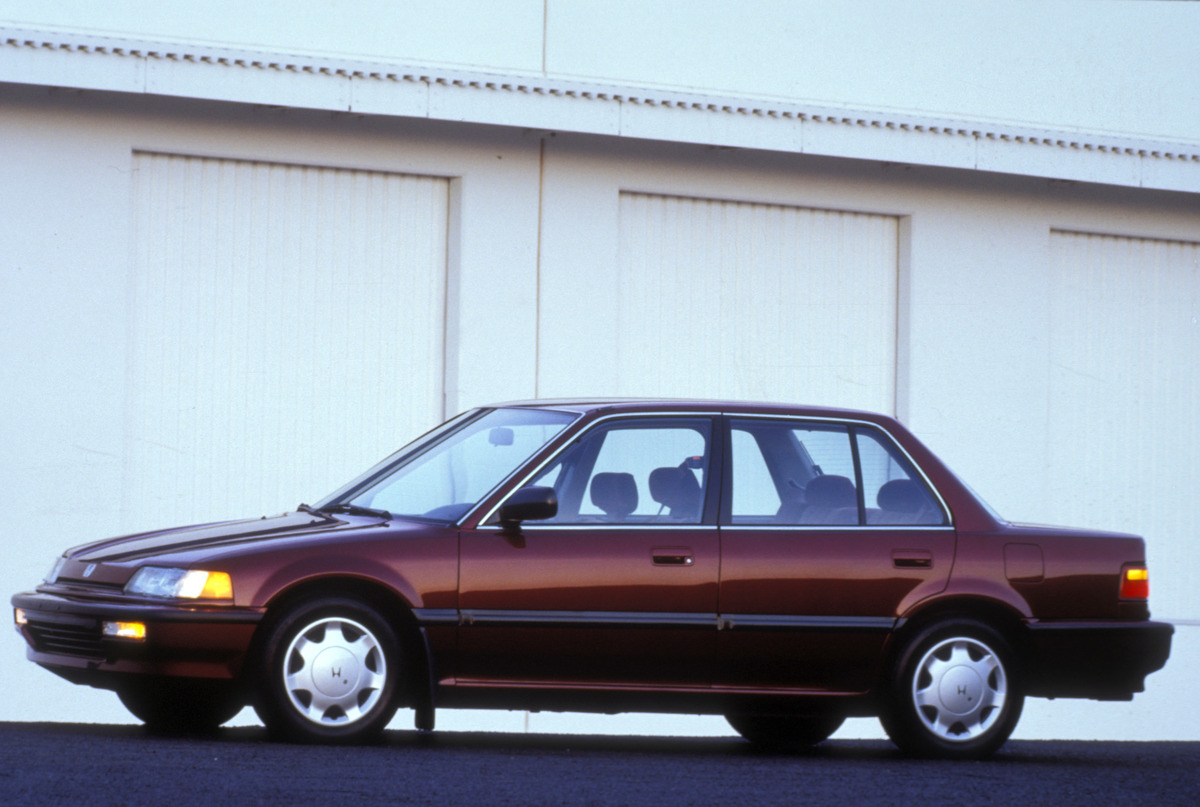
4th Generation (1988 to 1991)
The fourth-generation Honda Civic debuted in late 1987 for the 1988 model year. This generation also marked the debut of Civic production at Honda Canada Mfg. in Alliston, Ontario. This Civic was the largest yet, 15 to 20 centimetres longer than the third-generation model and with smoother, much more aerodynamic styling. The larger dimensions outside also meant a bigger and more useable interior. This is an old car now, but the interior design was ahead of its time and could easily pass for a car of the early 2000s. It also brought further adoption of electronic fuel injection and more powerful engines.
There were many fourth-generation models, but body styles were still constrained to a three-door hatchback, a four-door sedan, and the tall-roofed wagon, which later evolved into the CR-V. The hatch and sedan models are quite different from the wagon, which could be had with all-wheel drive, but all used the same platform and basic hardware. Power came primarily from 1.5-litre four-cylinder engines with 92 or 108 horsepower. The Canadian version of the sporty Si had the 108 hp engine and an available automatic transmission, which was unique to our market. Front-drive wagons used a 92-horsepower 1.5, while all-wheel drive wagons used a 105-horsepower 1.6.
These are essentially classic cars now, and not so easy to find in good condition. Many three-door models and even a few wagons have been modified by enthusiasts, and very nice examples fetch pretty tidy sums on old car auction sites. This is the first truly modern Civic, with fuel injection and a very modern interior. It’s still a decent driver and plenty of fun, but prices are only going to go up, not down, for clean ones.
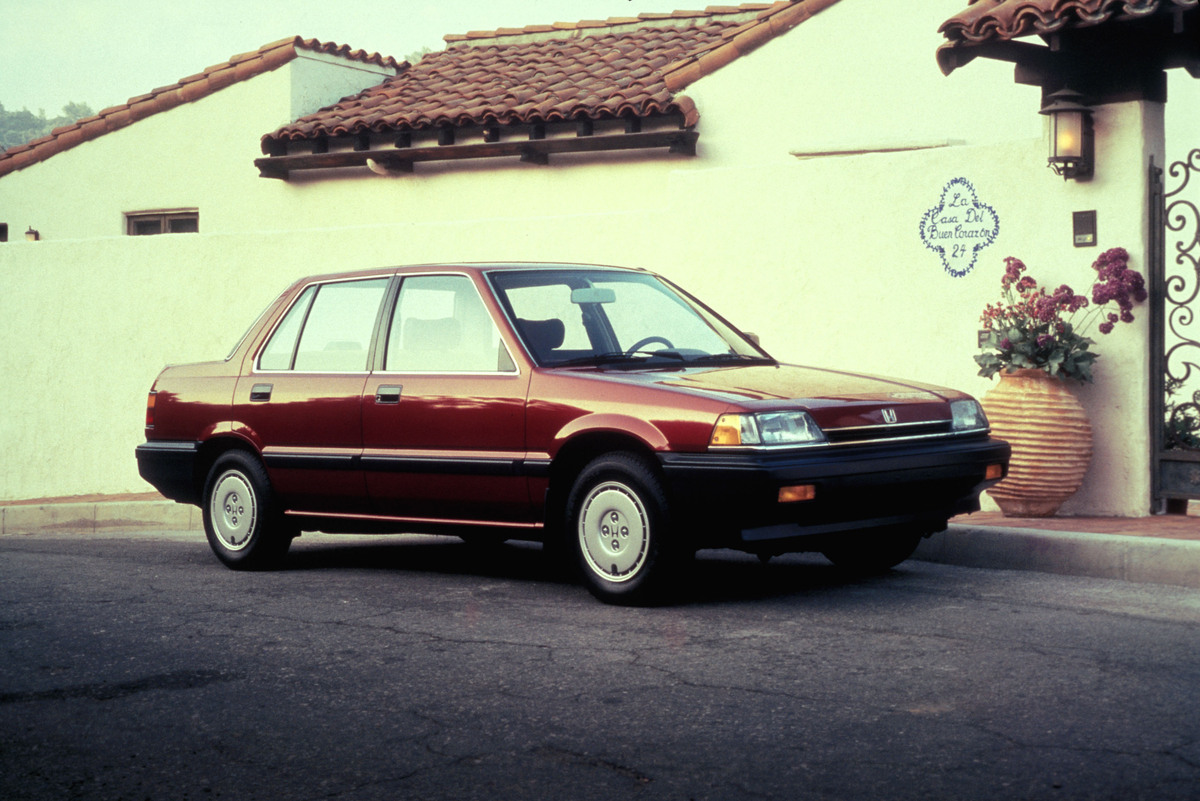
3rd Generation (1984 to 1987)
Radically reshaped with angular and aerodynamic styling on a longer wheelbase, Honda unveiled the third-generation Civic for the 1984 model year. In addition to the sleek new shape, the Civic Wagon continued, though it became more of a cross between a tall car and a small minivan. It proved surprisingly popular and remained a fixture of the Civic line until 1991, eventually evolving into the more SUV-like CR-V for 1996. This Civic was also the basis of the small CRX hatchback, another popular eighties Honda.
Though quite a bit larger than the first two Civic generations, the third generation was still small and light, the three-door only 3,810 millimetres long (smaller than today’s Mini Hardtop) and weighing less than 900 kilograms (2,000 pounds). That enabled this car to perform pretty well with only 1.3-litre, 60-horsepower or 1.5-litre, 76-horsepower engines with fuel fed by old-fashioned carburetors. They could also burn less than 8 L/100 km combined on average. All were front-wheel drive, but the wagon could also be had with four-wheel drive and an unusual six-speed manual transmission, though one of the gears was an ultra-low crawl gear.
In 1986, the sporty Si model debuted, the first North American-model Civic with fuel injection. Available only in the three-door hatchback, the Si’s fuel injection gave it a heady 91 horsepower, with a spoiler and air dam to match. This is the most collectible of these third-generation Civics today, although it doesn’t fetch the high prices of later Sis. Now four decades old, the third-gen Civic isn’t easy to find in good shape, especially in Canada, but it tends to be cheap even as a collector vehicle, and nice examples should cost less than $10,000. It might be a little small and slow as a daily driver, however.
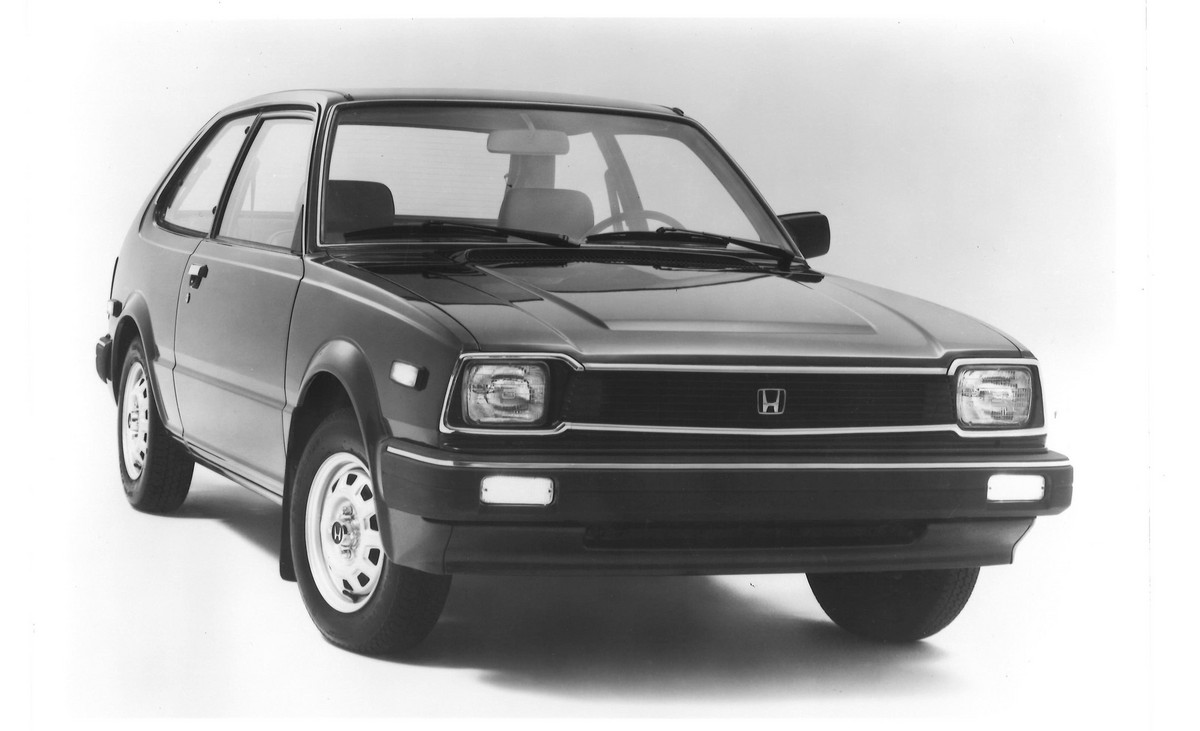
2nd Generation (1980 to 1983)
Larger and more mature-looking than the original, the second-generation Honda Civic took a shape that more closely resembled its big brother, the first-generation Accord. Debuting in 1980, it came in more body styles than the original, too, with a popular four-door sedan joining the three-door hatch and five-door wagon. Many of the second-generation Civic’s mechanical pieces were evolved from its predecessor, and it used carbureted 1.3 and 1.5 litre four-cylinder engines evolved from the previous car, as well as a version of the CVCC cylinder head.
Reliable and frugal, this Civic wasn’t necessarily fun to drive, but as an economy car it excelled, and it proved just as popular as the original. Back in the early 1980s, it was one of the most highly recommended used cars on the market by outlets like Consumer Guide and Consumer Reports, but it wasn’t entirely trouble-free. Many of these Civics, like the original, rusted pretty badly and 1980 and 1981 models had a series of brake and carburetor problems that had them cycling in and out of dealerships for repair.
You can still find these Civics in daily use in fair-weather locations like the southern United States, but they’re exceedingly rare now in Canada. They also need more maintenance than later models, and most of the remaining cars are manual-transmission models, as the automatics were often trouble-prone and sapped power from the small engines. These should be considered collector cars now rather than potential dailies. You’ll likely need to look to the south to find one, where nice examples can sell for about $5,000 to $9,000 U.S.
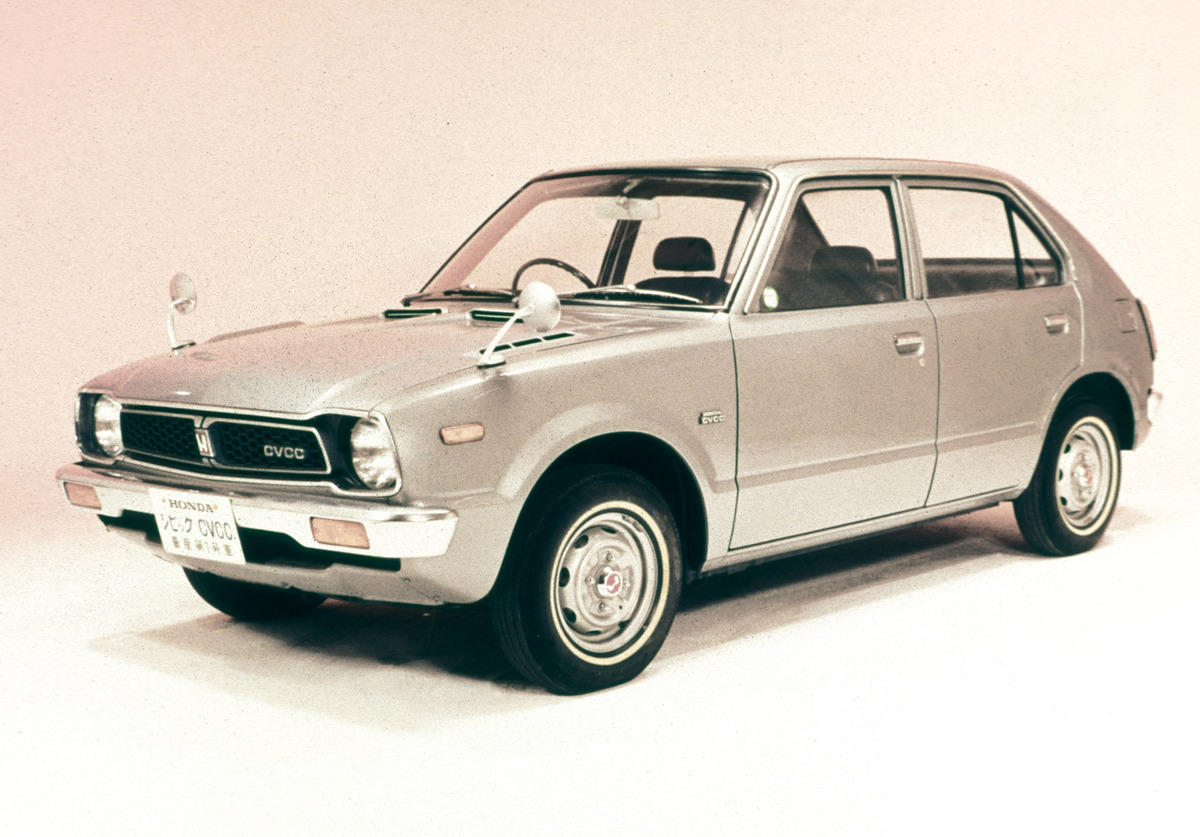
1st Generation (1972 to 1979)
It’s not an exaggeration to say that the original Honda Civic is the car that put the automaker on the global map. Honda had already been selling cars for almost a decade by the time the Civic arrived, but aside from the trouble-prone N1300 (not sold in North America), they were truly tiny cars designed for Japanese tastes. The Civic, on the other hand, was a thoroughly modern supermini that was the equal of global small-car powerhouses like the Fiat 127, Renault R5, and Volkswagen Polo. It debuted in Canada and the U.S. for 1973, just in time for the first oil crisis, and after initially slow sales, it took off like a rocket in 1974.
Powered by a 59-horsepower 1.2-litre four or, later on, a 64-horsepower 1.5-litre, the Civic was tiny, but its stratified-charge CVCC cylinder head allowed to burn fuel cleanly and efficiently in ways other small cars could not. Though not necessarily stylish, it was cheap, reliable, and fun to drive even if it could barely manage 130 km/h. And fuel economy of roughly 7 L/100 km looked mighty good from behind the wheel of a 13 L/100 km Plymouth Valiant. It helped establish Honda’s global rep as a maker of quality, appealing small cars.
Today, the original Civic is a collector vehicle and it seems very old and small inside, particularly to younger folks used to the modern cars of the 21st century. It also had more foibles than later Civics, with a trouble-prone “Hondamatic” automatic transmission, a need for regular valve and carburetor adjustments, and vast amounts of rust. Rust is this car’s mortal enemy, and many of them dissolved long ago. Those that remain are cheap, cheerful collector cars. You’ll likely need to shop south of the border to find one, where project cars can be had for as little as $1,000 U.S., but good first-gen Civics generally sell for between $5,000 and $10,000 U.S. A few have commanded even higher prices.
Related Topics: