The GMC Canyon is a midsize pickup truck that was introduced in 2004, when it replaced the slightly smaller Sonoma. As with almost all General Motors vehicles, the Canyon has a lot in common with its corporate sibling, which in this case is the Chevrolet Colorado. In its second generation, the Canyon began to distinguish itself by offering more luxurious trim levels.
GMC Canyon Buying Guide: Cost, Reliability, and the Best Years to Buy
Search for GMC Canyon
See all


The Canyon gives shoppers a smaller and more affordable alternative to the full-sized GMC Sierra. It could be the right-sized choice for those who don't need as much utility and off-road prowess, and it will also save them money at the gas pump. On top of that, it's easier to manoeuvre, which could make it a smarter choice for city-bound owners. There's something to be said for choosing the smallest vehicle that meets your needs, and the GMC Canyon is a good example of that. Our buyer’s guide explains the ins and outs of buying a new or a used example.
GMC Canyon Buying Guide: Cost, Reliability, and the Best Years to Buy
- Frequently Asked Questions
- GMC Canyon Pros and Cons
- GMC Canyon generations
- Third generation (2023 - present)
- Second generation (2015 - 2022)
- First generation (2004 - 2012)
Frequently Asked Questions
Which GMC Canyon years are the best?
The current third generation is easily the best GMC Canyon. This is really no surprise because it benefits greatly from decades of development and evolution. With smarter technology and engineering, the latest Canyons are more powerful, more efficient, and safer than any of their predecessors. Were it not for its elevated price, it could challenge the related Chevrolet Colorado and the Ford Ranger for class-leading status.
Which GMC Canyon years are the worst?
We'd suggest avoiding the first-generation GMC Canyons. They were blighted by a weak base engine, compromised comfort, and an interior that couldn't compete with rivals of the time. On top of that, some disappointing crash test scores should concern potential shoppers. While Canyon models of this vintage may be affordable, you'd be better served by alternatives like the Toyota Tacoma and Nissan Frontier.
Is the GMC Canyon a good deal?
One of the more prominent advantages of the GMC Canyon over most of its history has been its elevated sense of luxury. This is especially true of the top Denali trims that were added in the second generation. If refinement is a priority for you, the Canyon could make sense from a financial standpoint. The issue we see is the majority of pickup truck shoppers place utility and off-road capabilities higher on their wish lists, and the Canyon doesn't stand out from other trucks in this regard. Luxury is more expensive, and paying more for something you don't necessarily need seems unnecessary.
GMC Canyon Pros and Cons
Pros:
- Luxurious top trims
- Impressive off-road models
- Wide variety of models and trim levels
Cons:
- More expensive than its Chevrolet Colorado twin
- Past versions trailed contemporary rivals
- Early models had poor crash test scores
GMC Canyon generations
Third generation (2023 - present)
The third-generation GMC Canyon debuted for the 2023 model year. It’s offered only as a four-door crew cab with a five-foot bed. It’s easy to tell this Canyon apart from the second-generation model thanks to its very different exterior styling. It features narrow LED accent lights atop the actual headlights with surrounding bodywork elements that converged toward a central point in the large rectangular grille. It has a hint of familial ties to the full-sized GMC Sierra 1500 and enough of its own personality to distinguish it from the related Chevrolet Colorado, which debuted in the same year.
All Canyon models from this generation are powered by a turbocharged 2.7-litre four-cylinder engine that produces 310 horsepower and 430 lb-ft of torque, paired with an eight-speed automatic transmission. In Canada, four-wheel drive (4WD) and a single-speed transfer case are standard. Higher GMC Canyon trim levels come standard with a two-speed transfer case.
Unlike most pickup trucks, the 2023 Canyon does not have a stripped-down and affordable work truck version, though the nearly identical Chevrolet Colorado does offer one. The entry-level Canyon Elevation trim is far from basic and has plenty of off-road equipment, though in Canada heated seats are not standard equipment. Standard feature highlights include 18-inch wheels with all-terrain tyres, an off-road suspension, a remote-locking tailgate, a sliding rear window, keyless entry/ignition, an eight-inch digital instrument panel, an 11.3-inch infotainment touchscreen with Google built-in, and wireless Apple CarPlay and Android Auto. Standard safety features included forward collision warning with automatic emergency braking and lane keep assist.
The Canyon AT4 trim adds standard remote start, hill descent control, a household power outlet in the bed, and the EZ Lift tailgate, which gently deploys and gives an assist when closing. On the inside, it benefits from dual-zone automatic climate control, a power-adjustable driver’s seat, heated front seats, and additional USB charge ports.
The AT4X package takes off-road abilities further, adding 17-inch wheels with improved all-terrain mud tyres, locking front and rear differentials, side rock slider rails, a raised suspension, a spray-in bedliner, GM’s Safety Alert Seat with haptic feedback, a trailer hitch receiver, and an integrated trailer brake controller. Skid plates and adaptive Multimatic DSSV dampers are available as options.
On the inside, the AT4 Premium Package also adds leather upholstery, a wireless charging pad, a heated steering wheel, ventilated front seats, a power passenger seat, and driver’s seat memory. In its inaugural year, this trim was eligible for the Edition 1 package that added beadlock wheels, an LED light bar, a front-mounted power winch, front brush guards, additional underbody camera views, cargo bed rails, and accessory switches. In Canada, this package had very limited availability.
At the top of the lineup is the more luxurious Canyon Denali trim. It skips many of the off-road features and instead adds chrome exterior accents, 20-inch wheels, and a smarter interior.
The 2024 Canyon includes a larger 11-inch digital instrument panel on all models and adds trailer coverage to its blind-spot monitor. That year also pushed off-road prowess to even higher limits with the Canyon GMC Canyon AT4X AEV Edition package that includes the beadlock wheels, 35-inch tyres, a bed-mounted full-size spare tyre, front and rear recovery hooks, and stronger skid plates.
Power specs are impressive for a midsize pickup, especially torque. The Elevation and Denali trims could hit 100 km/h in around 6.5 seconds, which is brisk for the class. The more off-road-focused models sacrifice some performance: they trail that acceleration time by about two seconds and aren't as agile on the road.
Not surprisingly, the extra power results in slightly lower fuel economy estimates. Natural Resources Canada rates the Canyon at 13.6 litres per 100 kilometres in the city, 11.0 on the highway, and 12.4 in combined driving. With increased all-terrain capabilities comes reduced efficiency, with the AT4X increasing fuel consumption to 14.0 L/100 km combined and the AT4X AEV to 14.9 L/100 km combined.
The U.S. National Highway Traffic Safety Administration (NHTSA) awarded the GMC Canyon four out of five stars in overall and frontal crash protection, five stars for side impacts, and only three stars in rollover tests. The Insurance Institute for Highway Safety (IIHS) gives the GMC Canyon good scores in its small overlap front and updated side tests. However, the Canyon gets an acceptable score from the Institute for its headlights and forward pedestrian detection and a poor rating for its vehicle-to-vehicle forward collision mitigation system.
In its debut year in 2023, the Canyon was issued safety recalls for seatbelt anchors, over-tightened front wheel hubs, and phantom braking from the frontal collision mitigation system. Those were addressed for the 2024 model year, though that one received recalls for a headlight flickering issue and a fuel pump leak. All problems were solved for 2025 GMC Canyons.
With limited data in only a couple years of production, we don't yet have a complete picture of how well the third-Generation GMC Canyon retains its value. The initial 2023 model year points to it depreciating at a faster rate than other midsize pickup trucks, but that’s also dependent on the trim level. At the time of writing, GMC Canyon AT4 prices on the Canadian used vehicle market are very close to new truck prices, but 2023 Elevation and Denali trims can be found for roughly $10,000 less than buying new.
Second generation (2015 - 2022)
The second-generation GMC Canyon arrived in time for the 2015 model year, looking more like a traditional pickup truck than its predecessor and successor. Its blocky appearance mimicked that of the full-size GMC Sierra with vast expanses of upright body panels, which made it look bigger than it really was. This Canyon was available as either a four-passenger extended cab or a five-passenger crew cab with a 6’2” bed. The crew cab was also offered with a shorter 5’3” bed.
The Canyon was initially available with a choice of two engines. The base powertrain was a 2.5-litre four-cylinder that produced 200 horsepower and 191 lb-ft of torque. Most models had a six-speed automatic transmission and were offered with rear-wheel drive (RWD) or four-wheel drive (4WD) with a two-speed transfer case. The RWD extended cab was also eligible for a six-speed manual transmission. An optional 3.6-litre V6 produced 305 hp and 269 lb-ft of torque. Properly equipped, the four-cylinder Canyon could tow as much as 1,587 kilograms, while the V6 was rated at 3,175 kilograms.
The Canyon was also split into three trim levels. The base SL trim was your typical work truck with essentials such as 16-inch alloy wheels, air conditioning, cloth seat upholstery, a power-adjustable driver’s seat, a 4.2-inch infotainment display, keyless entry, cruise control, and an EZ-Lift tailgate.
The SLE trim stepped things up with 17-inch wheels, a folding rear bench (crew cab only), a smarter interior with fewer hard plastics, an eight-inch touchscreen, an upgraded sound system, satellite radio, additional USB charge ports, a subscription-based Wi-Fi hotspot, OnStar telematics, and Siri Eyes Free control for iPhones. The top SLT trim added automatic climate control, remote start, leather seats, and heated front seats.
The SLE trim was eligible for the All-Terrain package option that upgraded to all-terrain tyres, an off-road-tuned suspension, a locking rear differential, hill descent control, front recovery hooks, and power-adjustable heated front seats. A Driver Alert package added frontal collision and blind-spot warnings. The SLT trim was further eligible for a sliding rear window and a navigation system.
In 2016, a 2.8-litre four-cylinder Duramax turbo-diesel engine was made available for the crew cab SLE and SLT trims. It produced 181 hp and a hearty 369 lb-ft of torque. This increased the Canyon's towing capacity to 3,490 kilograms and was bolstered by an optional exhaust braking system and an integrated trailer brake controller. Apple CarPlay was another addition, but only for these higher trim levels.
For the 2017 model year, the V6 engine received a slight boost in output to 308 hp and 275 lb-ft of torque, paired with an eight-speed automatic transmission. A new luxurious Denali trim was also added to the lineup. It included 20-inch chrome wheels, a spray-in bedliner, ventilated front seats, a heated steering wheel, the Driver Alert package, a Bose premium audio system, and a wireless charging pad. The following year, the rearview camera was upgraded with trailering assist guidelines, and the smaller infotainment screen was increased to seven inches.
The entire infotainment system received a makeover for 2019 and included Apple CarPlay and Android Auto as standard. A remote-locking tailgate was added to the available features list in 2020. For 2021, the trim levels were rearranged and renamed Elevation Standard, Elevation, and AT4, while the Denali continued. The AT4 trim essentially took the place of the All-Terrain package and added underbody skid plates. The Denali also added rear parking proximity sensors.
In the final year of the second-generation Canyon, the Denali added an optional Black Edition package that gave it a darker aesthetic.
For its initial 2015 model year, the four-cylinder RWD Canyon with the automatic transmission was estimated to return 10.5 litres per 100 kilometres in combined driving. The manual transmission was rated at 10.8 L/100 km combined, while adding 4WD with the automatic raised the combined figure to 11.3 L/100 km combined. The RWD V6 matched that combined figure, while adding 4WD lifted it to 11.8 L/100 km combined.
The RWD Duramax diesel engine was the fuel economy leader with a Natural Resources Canada-estimated 9.4 L/100 km combined. Adding 4WD brought those estimates up to 10.3 L/100 km combined. For the rest of the production run, the Canyon's fuel economy fell within those same ranges.
The U.S. National Highway Traffic Safety Administration (NHTSA) gave the 2015 GMC Canyon four out of five stars in overall and frontal crash protection, five stars for side impacts, and only three stars in rollover tests. These scores remained consistent through 2022. The Insurance Institute for Highway Safety (IIHS) awarded its highest score of "Good" to the crew cab in all crash tests except for the fairly new small frontal overlap test, where it scored the second-worst rating of "Marginal". The extended cab fared slightly better with the second-best score of "Acceptable" in the small overlap and side impact tests.
As is typical for almost any vehicle, the inaugural 2015 model year saw more safety recalls than other years. These included issues with the power steering, a fuel pump leak, a brake fluid leak, the airbags, and seat anchors. The fuel pump recall was finally addressed in 2019, and the following years saw only a few more recalls issued for seatbelt bolts and the front passenger seat frame.
For the most part, GMC Canyons of this generation depreciate at a faster rate than rival midsize pickups in their class. One outlier is the 2022 crew cab, which managed to retain more of its value at the time of writing. On the Canadian used vehicle market, GMC Canyons from this period range in price from $17,000 for early-model low-trim versions with 150,000 kilometres or more to roughly $45,000 for 2021 and 2022 AT4 and Denali units with reasonable odometer readings.
First generation (2004 - 2012)
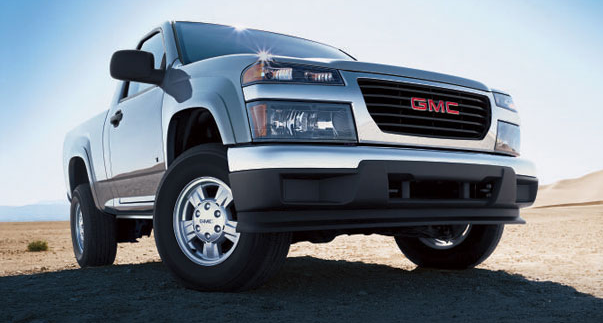
The GMC Canyon debuted in 2004, replacing the smaller Sonoma. It was available in either regular, extended, or crew cab. The regular and extended cab models came with a six-foot bed, while the crew cab had a standard five-foot bed. They looked almost identical to the Chevrolet Colorado, which was also introduced that year, and are easily recognizable for their split headlights enclosed behind transparent plastic coverings.
While the exterior was appropriately brawny, the interior was a bit of a disappointment. This was primarily due to the liberal use of hard plastics, which represented a significant downgrade from the Toyota Tacoma and Nissan Frontier of the time. The Canyon's power output also lagged behind these rivals.
The base engine was a 2.8-litre four-cylinder that produced 175 horsepower and 185 lb-ft of torque. A five-speed manual transmission was standard, with a four-speed automatic available as an option. The Canyon started with a rear-wheel drive (RWD) layout, and four-wheel drive (4WD) was optional and came with a two-speed transfer case. Properly equipped, the Canyon could only tow up to 1,810 kilograms.
A 3.5-litre five-cylinder was also available and produced 220 hp and 225 lb-ft of torque. Shoppers could choose between a standard suspension or a Z71 upgrade for more ground clearance and improved off-road abilities. The Z71 package also added a locking rear differential, larger tyres, and underbody skid plates.
Two trim levels were initially offered, though a basic Work Truck trim was available for commercial customers. The SL trim's feature highlights included 15-inch alloy wheels, cloth front bench upholstery, vinyl flooring, and a power-adjustable driver's seat. The SLE added cruise control, a CD player, front bucket seats, upgraded cloth upholstery, carpeting, and folding rear seats (extended and crew cab models).
In 2006, an SLT package became available, adding a power-adjustable front passenger seat, an auto-dimming rearview mirror, and leather seat upholstery. A ZQ8 package was also added as a counterpoint to the Z71 off-road package. The ZQ8 was focused on street performance and switched to a lower sport suspension, 17-inch wheels with performance tyres, and a more responsive steering system.
For the 2007 model year, the base engine was upgraded to a 2.9-litre four-cylinder that produced 185 hp and 190 lb-ft of torque. The five-cylinder was also increased to 3.7 litres, which pushed output to 242 hp and 242 lb-ft of torque.
The GMC Canyon received a series of upgrades in 2009 with a minor styling refresh, the addition of a new 300 hp V8 engine, improvements to the braking system, and standard stability control for all models. The SL trim was also renamed the Work Truck, was available to the general public, and downgraded to 16-inch steel wheels.
For 2010, side curtain airbags were added as standard equipment, and in 2011, Bluetooth and OnStar telematics were included. No changes were made for its final year in 2012.
At launch, the four-cylinder engine with the manual transmission was estimated to return 11.9 L/100 km in combined driving, while the automatic transmission was estimated at 12.8 L/100 km combined. Adding 4WD raised those figures to 13.1 and 13.4 L/100 km respectively. The five-cylinder engine was rated at 13.1 L/100 km combined for the manual and 13.7 for the automatic with 4WD.
The 2007 power bump had little effect on efficiency, increasing estimates by less than 0.5 L/100 km in each configuration for the four-cylinder. The V8 engine was estimated at between 13.5 and 14.7 L/100 km in combined driving, the latter being with 4WD.
The U.S. National Highway Traffic Safety Administration (NHTSA) gave most GMC Canyons four stars in frontal crash tests, driver protection in side impacts, and rollover prevention. Side impacts for the front passenger received five stars. The crew cab Canyon was awarded five stars in frontal collisions. In later years, side impact scores dropped to three stars.
The Insurance Institute for Highway Safety (IIHS) gave the extended cab its best score of "Good" in frontal crash tests, but the crew cab struggled by comparison. It was given the second-best score of "Acceptable" in the same test, the lowest "Poor" rating in side impacts, and "Marginal" scores for roof strength.
The first-generation GMC Canyon initially received recalls for child seat anchors and brake lights. The brake lights were addressed in 2009, though the seat anchor problem persisted through 2011. Other issues that popped up included recalls for the fuel system, hood latch, rear axle, and wiper motors, so keep an eye out for all the above during a test drive.
Over the years, these GMC Canyons depreciated at a faster rate than other pickup trucks in its class. In the 2020s, their value retention improved, though that could be attributed to the worldwide drop in production and a depletion of used vehicle reserves. At the time of writing, prices for this generation of GMC Canyon on the Canadian used vehicle market range from $4,000 to $15,000, though not much inventory remains available as these trucks are prone to rust.
Related Topics


by Stephanie Wallcraft
Stephanie Wallcraft is a multiple award-winning professional automotive journalist based in Toronto, Ontario, Canada. In addition to CarGurus Canada, her byline has appeared in major Canadian publications including Toronto Star Wheels, Driving.ca, and AutoTrader.ca, among others. She is a Past President of the Automobile Journalists Association of Canada and was named 2024 Canadian Automotive Journalist of the Year.
The content above is for informational purposes only and should be independently verified. Please see our Terms of Use for more details.


