2024 brings a redesigned Ranger which, in the tradition of its 1980s ancestor, is really a very heavily updated version of its predecessor. For the first time, Canada and the U.S. also get the Ranger Raptor, a high-performance off-road version similar to the F-150 Raptor.
Though there are distinct eras within both trucks, there are two essential Rangers, the old one and the new one. The old Ranger is a bog-simple workhorse, and even more than a decade after it ceased production, it’s an omnipresent staple of North American roads, a cheap pickup that’s easy to fix and for which parts can be found anywhere. It’s very basic and there’s no crew cab model, but it’s usually reliable and a good deal compared to its Japanese rivals.
Late-model Rangers are also tough trucks and very good work vehicles, but they’re much larger, more modern, and use more sophisticated powertrains. That’s good, in that the new Ranger’s turbocharged engines deliver lots of power and its ten-speed automatic transmission uses it well, but they're also more costly to buy and repair. Here, we’ve broken down all of the generations since the truck’s 1982 debut, including the different eras of both old and new models.
Ford Ranger: Cost, Reliability, and the Best Years to Buy
Frequently Asked Questions
Which Ford Ranger years are the best?
Among the pre-2012 Rangers, there are only a handful of years that draw major complaints, so shopping for the newest, cleanest, and most well-equipped one you can find is more important than a specific date, though 1999 stands out as a troublesome model year. Generally speaking, the old Rangers are tough as nails. Post-2019 Rangers, in contrast, are a more mixed bag. It’s reliable, but when it does break things are expensive. 2021 and newer models tend to have better records than the first two years.
What are the worst Ford Ranger years?
Among the older models, 1999, 2002, and 1997 stand out as years with above-average numbers of complaints. Outlets like Consumer Reports don’t go back as far as the 1990s, but in years past they did publish ratings on these vehicles. Current crowd-sourced sites like CarComplaints also rate 1999 as a particularly trouble-prone year. With modern Rangers, the first full year of availability, 2019, stands out as the one with the worst reliability record, but it isn’t awful.
Is a used Ford Ranger a good deal?
Yes. Pre-2012 Rangers tend to cost less than their Japanese rivals, in part because the truck was quite dated by the time production ended. 1990s versions, which also compete with the old-timey Chevy S-10 pickup, are priced about the same as their domestic rivals. Newer Rangers also sell for lower prices than the very popular Toyota Tacoma or the larger Jeep Gladiator, but they cost about the same as similar Chevy Colorado and GMC Canyon. Both the old and new models are good values, but the newer ones are much more competitive with modern trucks.
Ford Ranger Pros and Cons
Pros:
- Sized for easy parking, better fuel economy
- Generally rugged
- Reliable powertrains
- A still-thriving aftermarket
Cons:
- Rust in older generations
- Expensive on the used market
- Third-gen overhead-cam V6 can be trouble-prone
Ford Ranger Generations
Fifth Generation (2024-present)
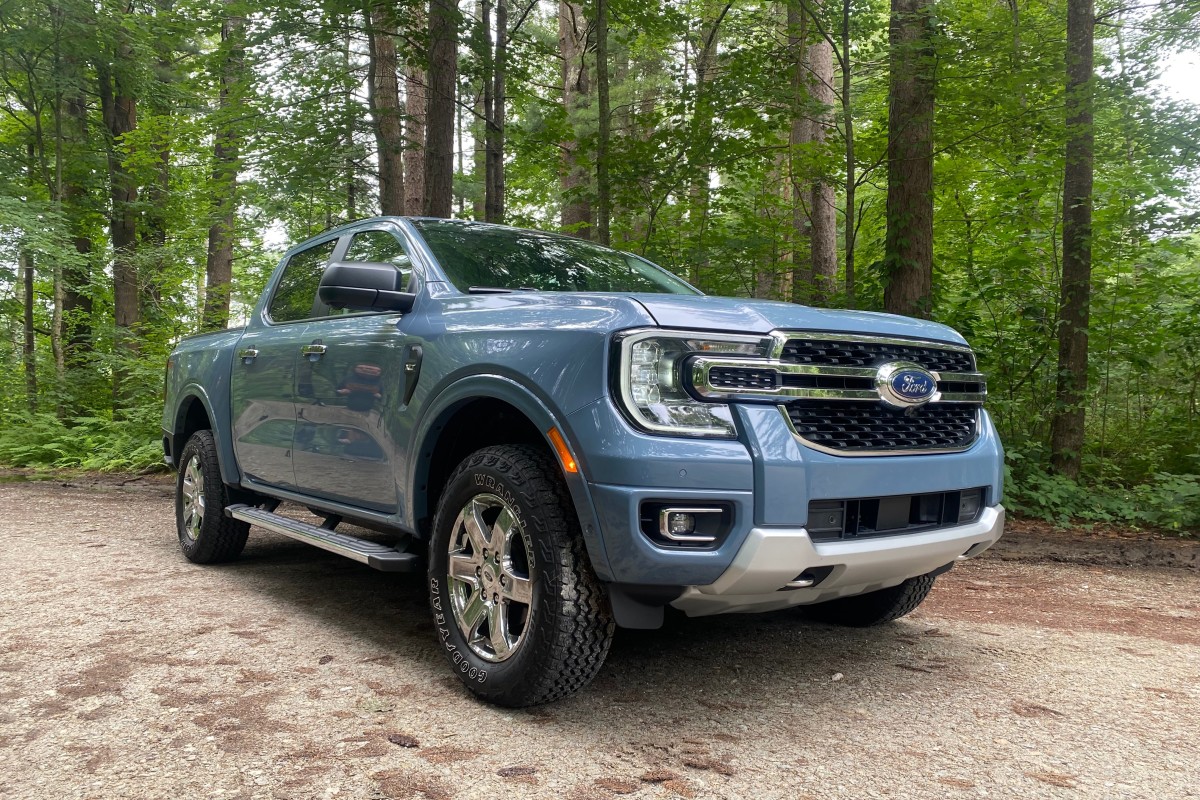
The current generation of Ranger pickup is known within Ford as the P703 or T6 Ranger. Confusingly, it’s sometimes described as the second generation of the reconstituted Ranger brand. That’s because it’s a very extensive update of the original T6 Ranger that debuted here in 2018 but elsewhere in the world in 2011. Originally, the updated Ranger was supposed to be a 2023 model, but global supply chain issues pushed its introduction into 2024.
Though it has the same basic midsize pickup body shapes and measurements, door openings, chassis, engines, transfer cases, and transmissions, few of the parts are interchangeable with those of the generation that preceded it. The old 2.3-litre, 270-horsepower turbocharged four-cylinder engine remains on the base model, but most fifth-generation Rangers use a larger 2.7-litre turbocharged V6 with 315 horsepower. There’s also a Ranger Raptor now, with a 3.0-litre V6 with 405 horsepower, the highest output in the midsize truck segment.
The fifth-generation Ranger is a bit longer in wheelbase, though no real growth in interior room, with a wider tread width than the earlier trucks for better stability. The suspension has been redesigned for better spring articulation and wheel travel, which provides not only a better ride on the road but also an improved ability to climb over obstacles off-road. By design, the updated Ranger’s body looks a lot more like a baby F-150 than the anonymous looks of the previous Ranger, and now only comes as a full four-door crew cab.
Belying the basic simplicity of the first few generations, the current Ford Ranger is a technologically advanced truck with all the adaptive safety equipment that has become relatively ubiquitous over the last half-decade. Ford Co-Pilot 360—a suite of safety equipment including automatic high beams, blind spot monitoring, cross-traffic alert, trailer tow monitoring, lane-keeping assist, and others—is available even on the base XL trim. That equipment becomes standard on XLT and higher models, which can also be had with adaptive cruise control.
Inside, the biggest news is a redesigned cabin and a vastly more modern infotainment system. A 10.1-inch screen running Ford’s latest Sync 4 system is standard, and a 12-4-inch portrait-styled screen is optional, again, shades of the F-150. These screens are much nicer, and the software is more functional than the very dated system in the fourth-generation Ranger.
You can saddle up with a fifth-gen Ranger at your local Ford dealer, but it’ll be some months before any used examples show up on the market.
Fourth Generation (2019-2023)
After a seven-year hiatus, the fourth-generation Ranger made its debut at the January 2018 North American International Auto Show in Detroit. In the intervening years, sales of midsize trucks had soared, and so Ford finally tapped the Australian-designed T6 Ranger it had been selling in other countries for North American duty. It also revived U.S. production, building the new-for-2019 Ranger in Wayne, Michigan.
Though reinforcement of its body structure and frame was required for U.S. regulations, the T6 Ranger proved to be very capable of meeting buyers’ needs. It offered the highest payload capacity of any midsize truck while it was on the market and a very competitive 3,400-kilogram (7,500-pound) maximum towing capacity when properly equipped (to the Chevy Colorado diesel’s 3,500-kilogram (7,700-pound) rating). It also proved an adept off-roader, particularly after Ford launched the Tremor package in 2021, though the Ranger Raptor version was not sold here.
Unlike the global Rangers, North American models only came in two body configurations: a SuperCab with reverse-opening rear access panels and a full four-door SuperCrew, the latter of which was the more popular by far. There was just one engine, a turbocharged 2.3-litre four-cylinder making 270 horsepower, mated to a ten-speed automatic transmission. This combination can burn as little as 10.8 litres per 100 kilometres combined, which is good compared to gas-powered alternatives. As with other full-frame pickups, these Rangers offered rear-wheel drive (RWD) and four-wheel drive (4WD), though 4WD became standard in Canada by the end of this generation’s run.
For the first time in the Ranger’s history, active safety features were offered including Ford’s Co-Pilot 360 system and adaptive cruise control, but none were standard as on the Toyota Tacoma. A very basic infotainment system was featured on an 8-inch screen running Ford’s older Sync 3 system, but even this was optional. Base trucks got a 4.2-inch LCD screen, and the entire cabin looked like it was designed in the late 2000s, which it was.
Though plain looking inside and out, the revived Ranger proved an adept truck, especially as a work truck. Though the base-trim XL came with few modern conveniences, it offered the full mechanical setup of the other Rangers, unlike base-model Tacomas and Colorados, which used much weaker four-cylinder engines and still returned worse fuel economy. Of this generation, the only one that stands out for reliability issues is the 2019 debut model. Transmission, electrical, and paint quality problems are the lion’s share of gripes.
All of them are still pretty expensive used though, as nearly-new trucks have really held their value following the production shortages during the height of the pandemic. Even a cheap XL model in good shape will cost at least $28,000, though it is possible to find worn ones for less. XLT models will run the gamut from about the same price, and many 2021 or newer models cost $40,000 or more. That’s still less than a comparable Toyota Tacoma or Jeep Gladiator.
Third Generation (1998-2012)
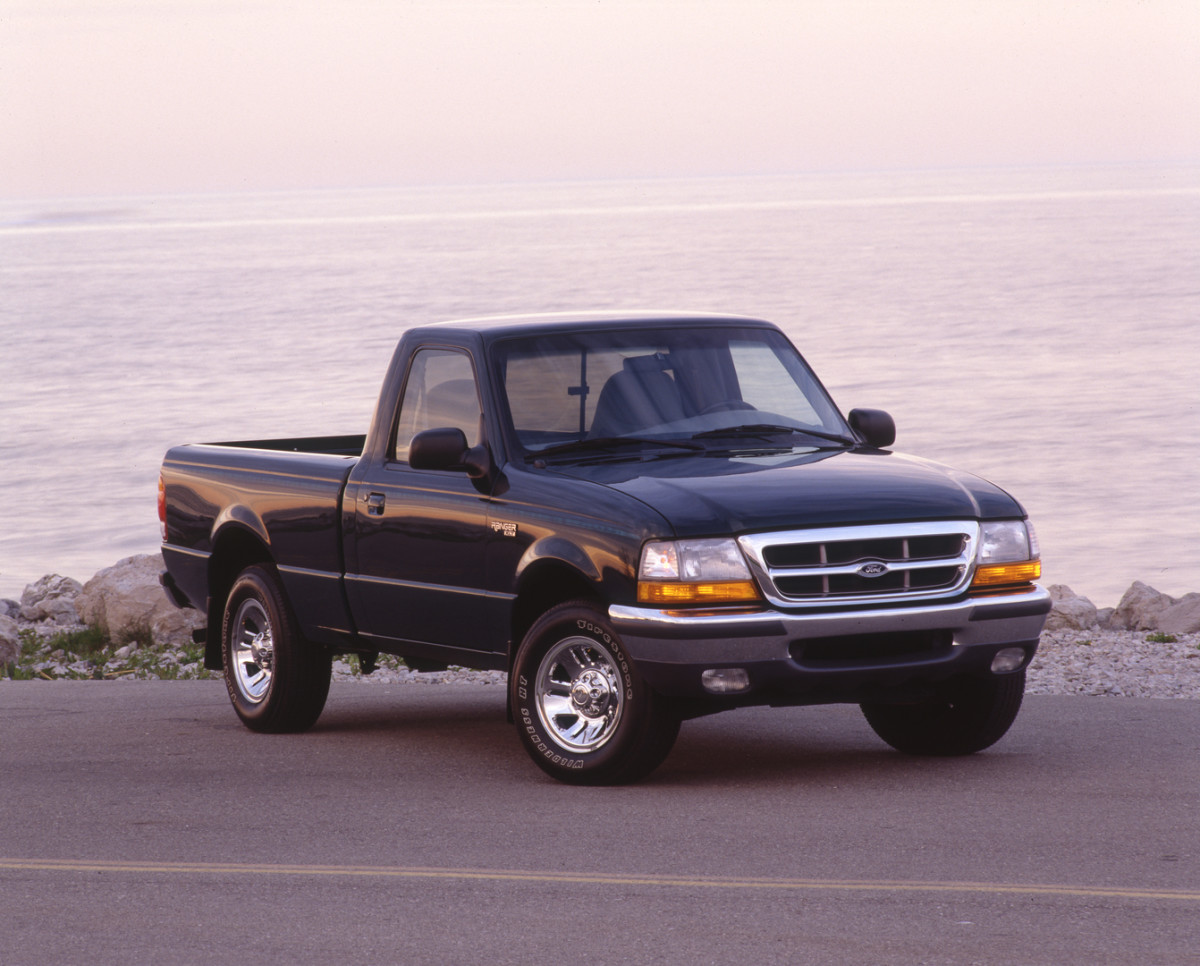
The longest-running version of the classic Ranger, the third-generation model appeared in 1998. Though still related to the 1982 design, this third-generation model got major engineering upgrades and modestly updated front end and interior styling. A new suspension and rack and pinion steering replaced the 1960s-era “Twin I-Beam” design and recirculating ball setups, which made this Ranger a better handler than the first two. A longer wheelbase also created a little more room, but the cabin was almost unchanged visually.
This Ranger continued the regular and extended cab designs, but now added a four-door extended cab. A proper crew cab was built overseas, but not sold here. As before, third-generation Rangers were also rear-wheel drive by default, but also available with four-wheel drive. Buyers could choose from a Mazda-sourced five-speed manual or a Ford four-speed automatic transmission, which gave way to a five-speed auto in 2000. Since it was in production for so long, several engines were offered at different times during the life of this Ranger.
From 1998 to 2001, the base engine was the old 2.5-litre “Pinto” four-cylinder with 117 or 119 horsepower, while two overhead-valve V6s were optional, the 3.0-litre “Vulcan” (146 to 148 horsepower) and the 4.0-litre “Cologne” (160 horsepower). In mid-2001, the “Pinto” gave way to the much more modern 2.3-litre “Duratec” (135 to 148 horsepower) while the overhead-valve Cologne was dropped in favour of the overhead-cam (OHC) 4.0-litre “Cologne” V6 (207 horsepower). The Vulcan V6 continued into 2008, while the Duratec and newer Cologne remained until 2012.
The overhead-cam Cologne is one of the few weak points of these trucks, in that its timing chain tensioners wore quickly, leading to premature failure and major repairs. Eventually, Ford corrected the issue and most of these engines will have had replacement tensioners fitted by now, but it is a known weakness. The other engines are generally very reliable, and they’re easy to repair in most other areas. Parts, both original and aftermarket improvement items, are also plentiful.
Though seemingly evergreen, Ford did make changes during this truck’s long run beyond the engines. There were periodic grille updates, the discontinuation of the flareside bed, and many special graphics and off-road packages including the original FX4 and Tremor, packages that have since been revived on the modern Ranger. But these trucks were simple and basic, and often favoured as work vehicles.
They feel even more bare-bones by today’s standards, with an interior full of gray plastic and few luxuries, but aside from the overhead-cam V6, they’re hard-wearing and cheap. Some of the later-year models, and ones that are particularly clean or well kept, may cost up to $18,000, but serviceable models with under 150,000 kilometres can be found for under $10,000 with some searching. Older and more worn examples can be had for as little as $5,000. Frills are few and far between, but they last.
Like the generations before it, the third-generation Ranger was the basis for the contemporaneous Mazda B-Series, which is harder to find but a little cheaper to buy. 1999 models have an unusually poor repair record, perhaps in part due to all of the then-new components in this heavily modernized design.
Second Generation (1993-1997)
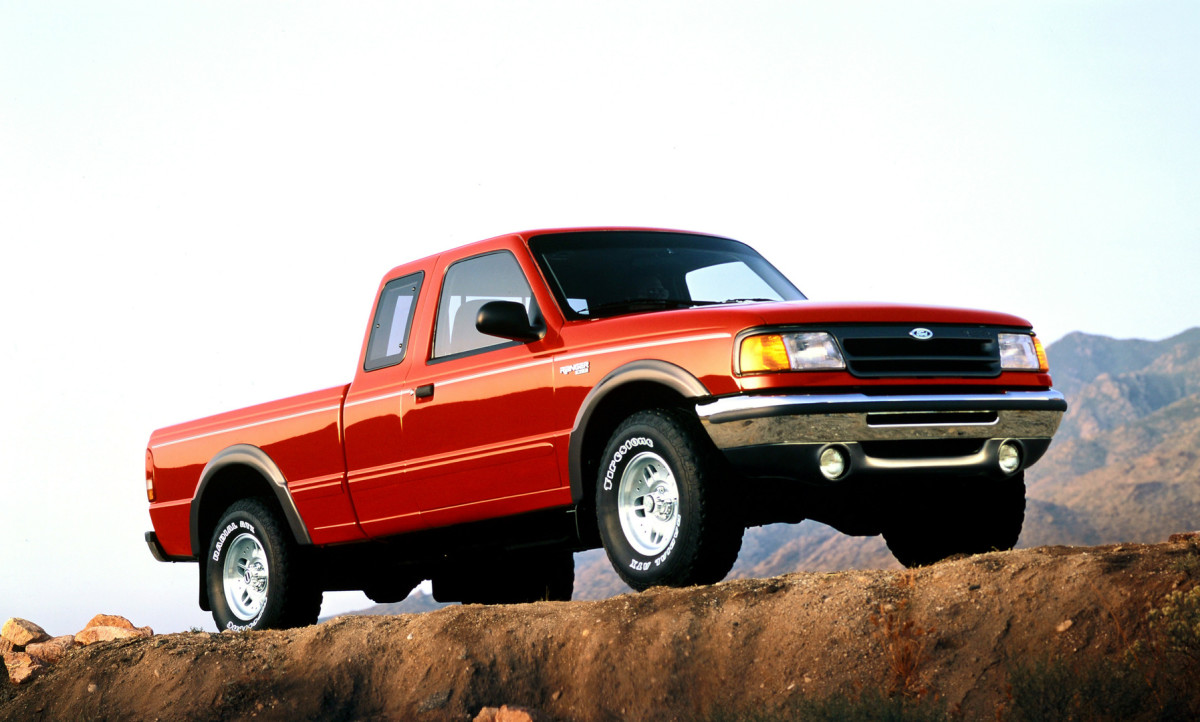
The second-generation Ranger only lasted five model years, but this generation was a big seller and provided a solid lead-in for the third generation that arrived for 1998. Under the skin, these trucks were essentially a carryover from the late first generation, with a more aerodynamic body in keeping with the design of the then-upcoming 1996 Ford F-150 (which debuted at the end of 1994). Underneath, the first generation’s old-timey Twin I-Beam front suspension remained, a 30-year-old design at the time, as did the circa 1982 frame design.
The trucks were available in both six-foot and seven-foot beds for the regular cab, along with a stylish flareside short bed beginning in 1992. The body was by far the biggest change, featuring flush-mounted glass, a lower hood, the elimination of the rain gutters, and a 7.5-centimetre-wider cab that made the truck feel much larger inside.
At first, some of the first-generation’s 1989 interior remained, but in late 1994 the cabin got a more contemporary makeover to match the interior of the 1995 Ford Explorer. The smooth grey or beige plastic that defined this update feels low rent today but seemed very contemporary then.
Engines included the 2.3-litre OHV “Pinto” four-cylinder, the 3.0-litre “Vulcan” V6, and the overhead valve 4.0-litre “Cologne” V6, all of which would continue into the early third-generation years. Transmissions included a Mazda five-speed manual as the base transmission, with a four-speed automatic transmission as an option. Later trucks offered a five-speed automatic.
Safety equipment was limited, but typical of small pickup trucks at the time. A steering wheel-mounted airbag was standard beginning in 1995. In 1996, a passenger airbag was optional, making the Ranger the first compact pickup to be offered with dual airbags. This was long before modern infotainment, but most rangers came with at least AM/FM radios with two speakers at the base level and increasing to multiple speakers. Cassette players, CD players, and finally CD changers were included by the end of the run.
Though they don’t ride or handle as well as the later 1998 to 2012 Rangers, these mid-1990s versions look very much like them and are very durable. They’re rare in Canada nowadays thanks to age and a tendency to rust, that latter point being one of this truck’s few weaknesses. They’ll be cheap if you can find them, likely in the range of $8,000 or less, which as in other generations is less than a similar Toyota truck. Rival Chevy S-10 and GMC Sonoma pickups are broadly similar and about the same price, but now less common.
In a sign of how the auto industry was changing in the 1990s, Mazda replaced its own B-Series truck design with a rebadged Ford Ranger for 1994.
First Generation (1983-1992)
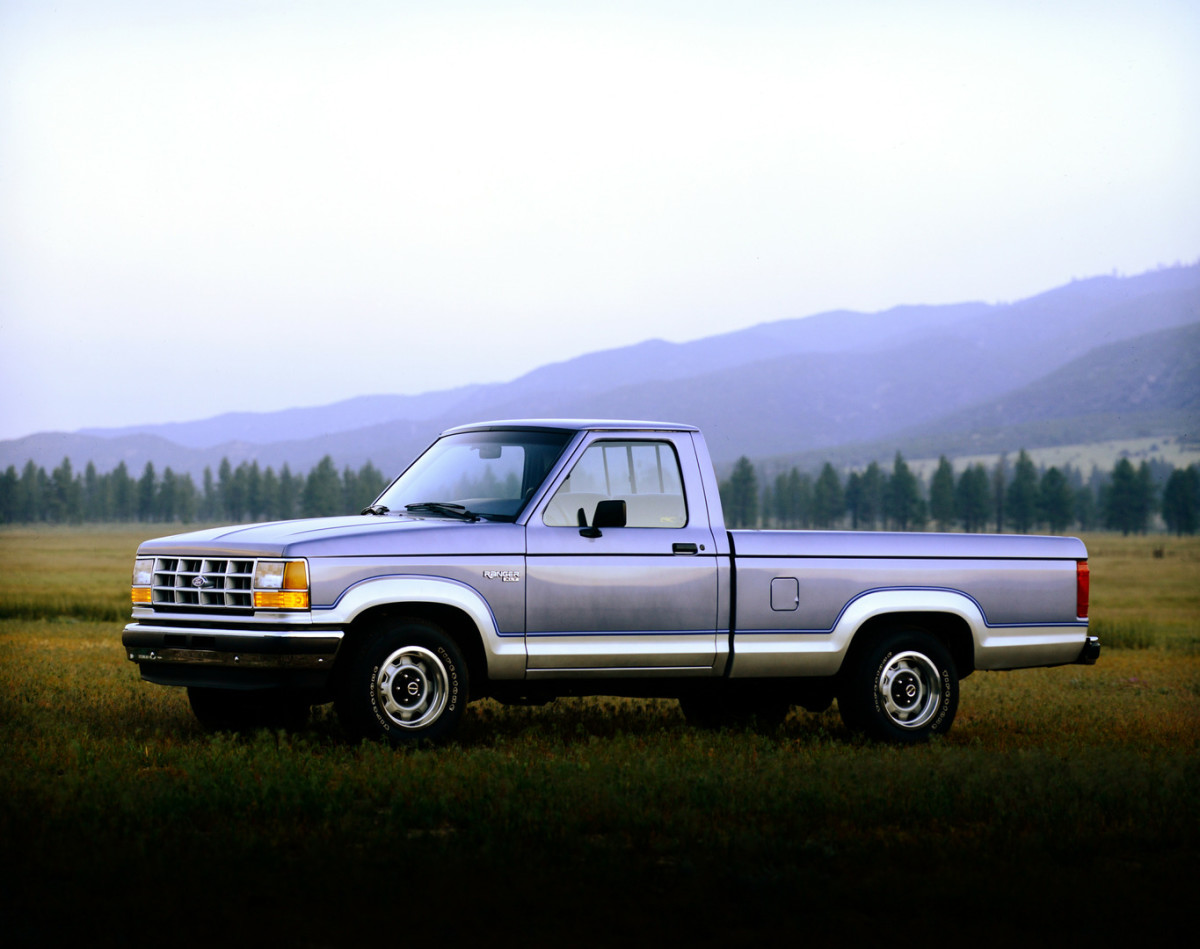
With Toyota and Nissan (then Datsun) selling as many compact pickups in North America as they could ship over from Japan, in the early 1970s, Ford sourced a Japanese compact truck of its own from Mazda. A rebadged Mazda B-Series built in Hiroshima, the Ford Courier debuted in 1972 and quickly became a hot seller. But Ford eventually wanted to build a more profitable domestically designed and built small truck, one free from punitive import tariffs. It began work on “Project Yuma” in 1976, and the Ford Ranger was the result, replacing the Courier for 1983.
This first Ranger was designed in the era of two successive fuel crises, and it was intended to meet lofty fuel economy targets for the mid-1980s, but also be better adapted to North American consumers than the Courier. It achieved both goals, with a big roomy cabin and roughly 10 L/100 km combined from its gas engines (there were also diesels, but few were sold). Though still small, the Ranger also had a 545-kilogram (1,200-pound) payload capacity, more than most of its Japanese competition. The truck was an immediate hit, and soon commonplace on North American roads.
In 1986, Ford added 43 centimetres behind the rear door and developed its first-ever Ranger SuperCab, which would be the most popular configuration for the rest of the life of the classic Rangers. Centre-facing jump seats came to the interior for the 1989 model year, when the truck underwent a major facelift that changed its appearance to mimic that of the “Bricknose” era of the F-Series. This front end was also used on two Ranger spin-off SUVs, the Bronco II and the original Explorer.
Engines included a tiny 2.0-litre four-cylinder from 1983 to 1988, a 2.3-litre four-cylinder that would eventually get electronic fuel injection in 1985, three “Cologne” V6 engines (a 2.8-litre, a 2.9-litre and a 4.0-litre), and the two-year-only 3.0-litre “Vulcan” V6. The rarely ordered diesel fours (capable of less than 9 L/100 km combined but very slow) were sourced from other companies: Perkins and Mitsubishi.
A four-speed manual transmission was standard in 1983 and 1984, with a five-speed as an option. The standard gearbox increased to five cogs in 1985 and stayed there throughout the generation. In the first two model years, the automatic option was a three-speed, and in 1985, that increased to a four-speed automatic with an overdrive. All of these components are generally very durable, and repairing an early Ranger is easy unless the problem is rust. They’re slow, but not hard to live with.
These early Rangers came in many colours and trim combinations, and there were also chassis cab commercial versions. Though a popular truck when new, they rusted pretty badly, and survivors are rare now. The early Ranger hasn’t gotten much attention from collectors, but it is a cool period vehicle that can still be used every day. Nice examples generally sell for less than $10,000, and though there hasn’t been much interest from collectors, a few have sold for even more than that at auctions.
Related Topics: