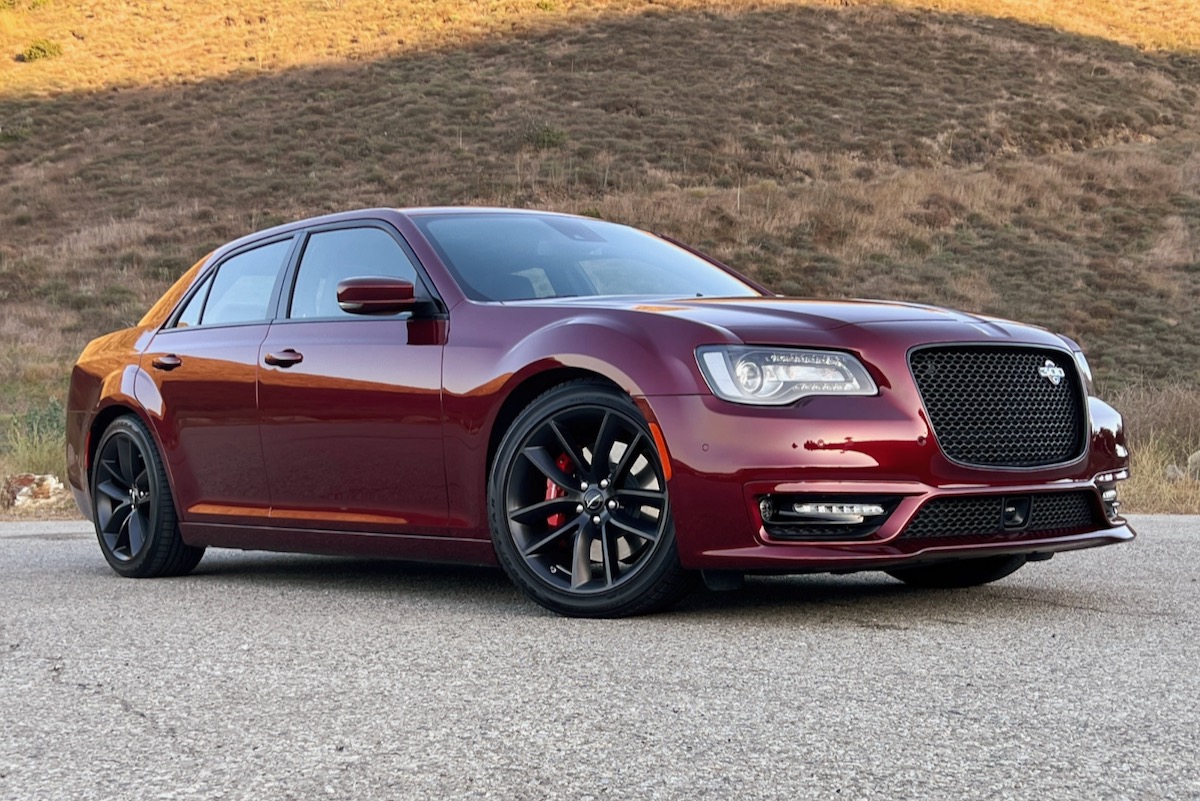
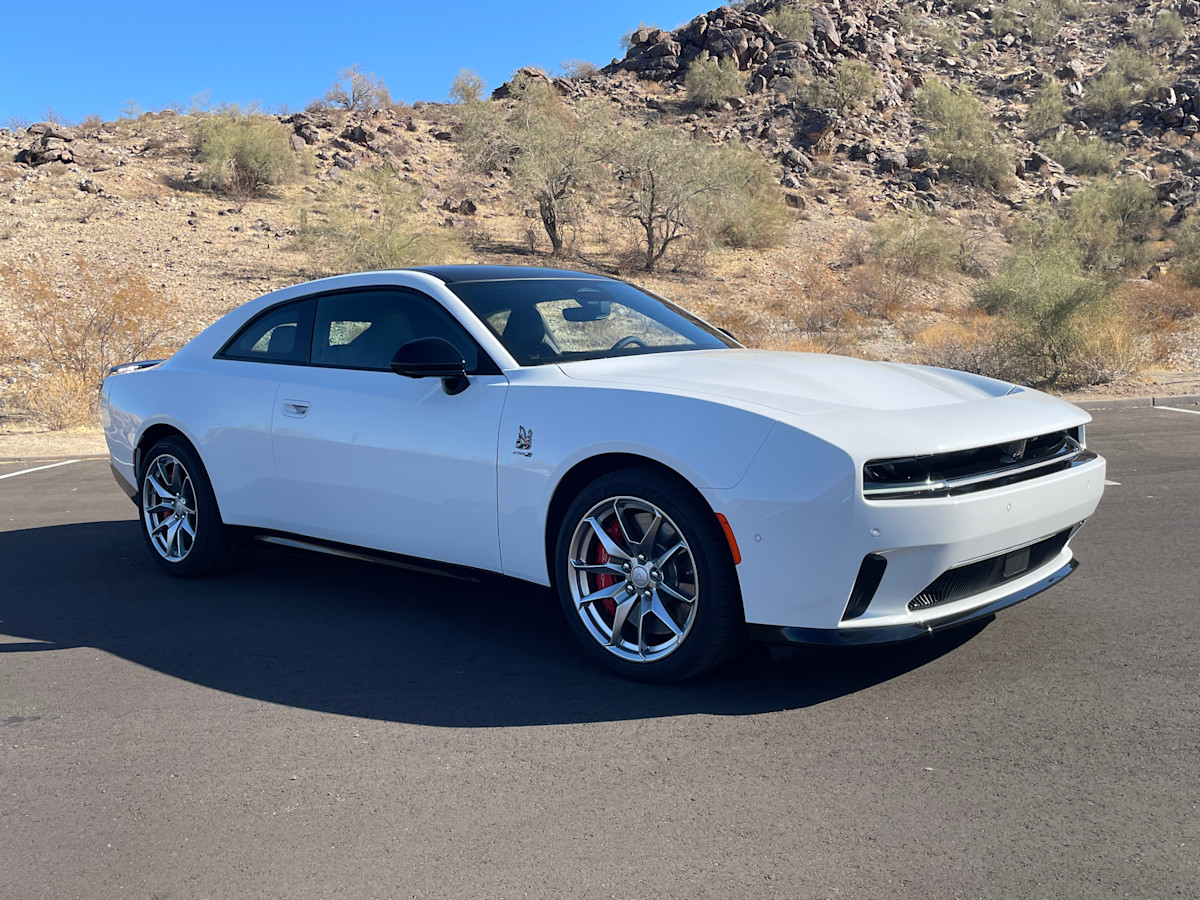
Though we know the modern Dodge Magnum as a powerful, track-ready station wagon, it was originally a two-door coupe launched in 1978. It lasted just two model years and was a supplement to the Dodge Charger, created mainly to have a more aerodynamic car that would be eligible for NASCAR. When the nameplate was revived in 2005 as a wagon, the only thing that really connected the two was a rear-wheel drive platform and a powerful engine.
As a vehicle from the 2000s, the Magnum wasn’t fitted with a back-up camera or much in the way of modern safety technology. But, hey, air conditioning was standard—and yes, we find it funny 20 years later that automakers felt the need to call that out in press releases of the era.
The interior was considered basic, even when the Magnum was a new car. The utilitarian station wagon body style—which fit a 27-inch TV in the cargo area (of the non-flat-screen variety) and offered plenty of room in the rear seats—was one of the biggest selling points. Another was the availability of the high-performance Hemi V-8 engine and the souped-up SRT8 version produced by Dodge’s Street and Racing Technology (SRT) division, which pretty much rendered the Magnum a practical muscle car.
Even though the Magnum’s body style was a five-door wagon, it was classed as a full-size car and shared a platform with the Dodge Charger, the Dodge Challenger, and the Chrysler 300, as well as the Mercedes-Benz E-Class of the time. It was assembled alongside those Dodge and Chrysler vehicles at the Brampton Assembly Plant in Brampton, Ontario.
Dodge Magnum: Cost, Reliability, and the Best Years to Buy
- Frequently Asked Questions
- Dodge Magnum Pros and Cons
- Dodge Magnum Generations
- Dodge Magnum First Generation (2005–2008)
Frequently Asked Questions
Which Dodge Magnum years are the best?
Though the Dodge Magnum only stuck around for four model years, the last one in 2008 was definitely the best. According to the U.S. National Highway Traffic Safety Administration (NHTSA), it had the fewest number of complaints and recalls, plus it got a small refresh that year with a revised front end, a fresh interior, and more standard equipment.
What are the worst Dodge Magnum years?
It’s cliché, but the worst Dodge Magnum model year was the first: 2005. According to NHTSA, it logged more than 600 consumer complaints and seven recalls. CarComplaints.com goes so far as to call this model year a clunker, and the most-reported problem for that year was that the gear shift would stick in park.
Is a used Dodge Magnum a good deal?
If you’re willing to deal with the ailments of a 20-year-old vehicle, the Dodge Magnum can be a very good deal—if you can find one. In Canada, there was exactly one listed at CarGurus.ca while we researched this article. It had more than 300,000 kilometres and was priced at less than $3,000. Keep an eye on the listings, though, as well-priced gems do come up from time to time.
Dodge Magnum Pros and Cons
Pros:
- Unique retro styling
- Plenty of cargo space
- 5.7-litre Hemi V8 engine
Cons:
- A lot of blind spots
- Safety features are options
- Poor fuel economy
Dodge Magnum Generations
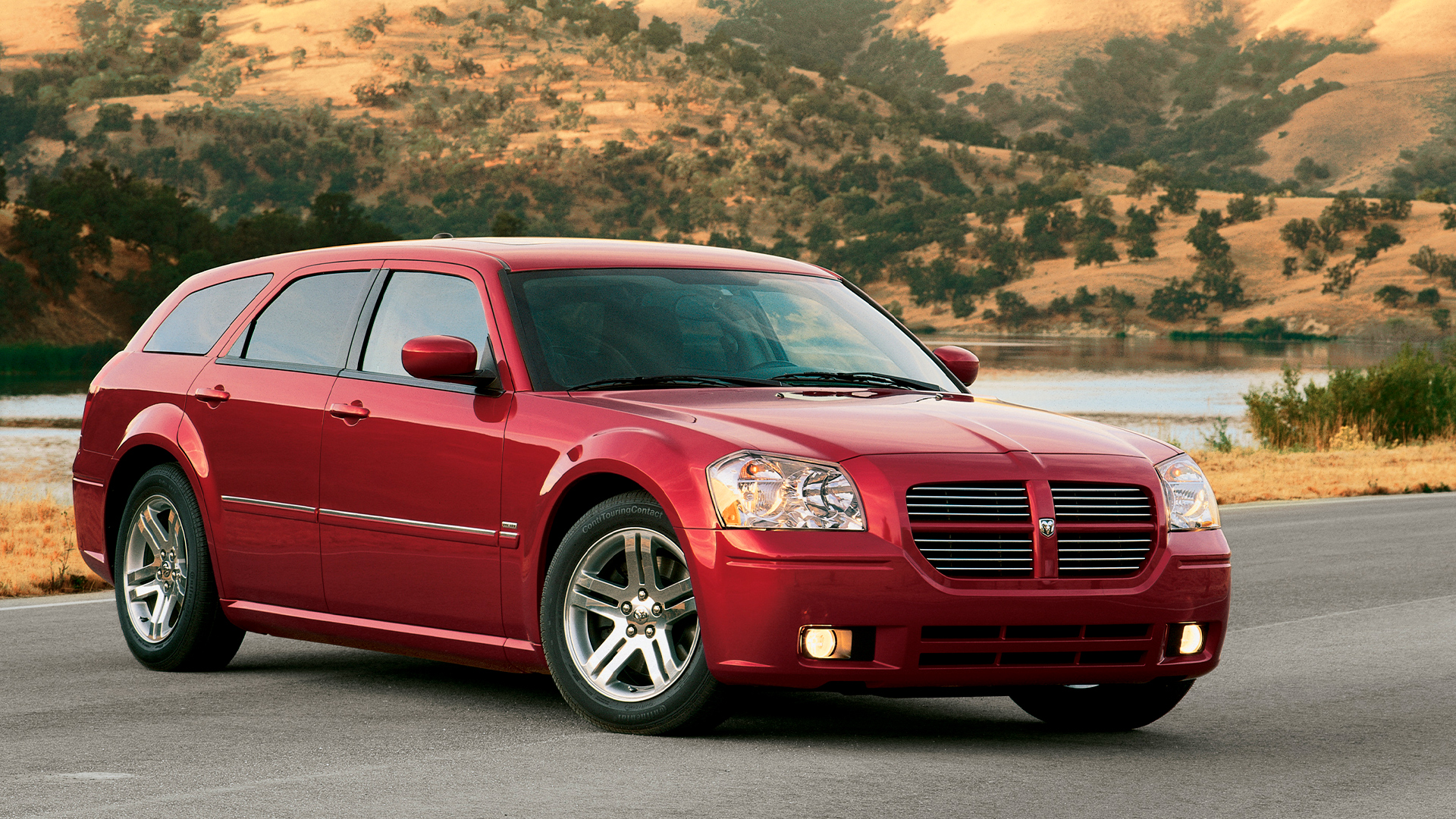
Dodge Magnum First Generation (2005–2008)
When the Magnum returned in 2005, Dodge called it “the new shape of American Muscle”. It was a kind of transitional vehicle in the pre-SUV age, as buyers were looking for a long wheelbase and more utility, but didn’t want to give up car-like ride and handling. Even though it was a wagon, it was rear-wheel drive (RWD) based and was available with a potent Hemi V8.
At launch, this sport wagon had three engine options: a 190-horsepower 2.7-litre V6 engine, a 250-hp 3.5-litre V6, and a 340-hp 5.7-litre Hemi V8. These were available with the SE, SXT, and R/T trim levels respectively. RWD was standard, but all-wheel drive (AWD) was available and, sporty though the Magnum was, it wasn’t available with a manual transmission. The four-speed automatic was the base transmission with the Magnum SE, while a five-speed automatic was available on the SXT with AWD and standard on the Dodge Magnum R/T.
The 2005 Dodge Magnum was the first RWD vehicle for the Dodge brand in nearly 20 years, which, when combined with the big engines, explains its long hood. It also had the Dodge crosshair grille and standard 17-inch wheels.
Though the Dodge Magnum wasn’t particularly fuel efficient—combined fuel economy ratings ranged from 11.1 to 15.8 litres per 100 kilometres combined, depending on the powertrain—the Hemi engine included an innovative a bit of tech. This was an industry-first Multiple Displacement System (MDS), which allowed for cylinder deactivation when less power was needed.
Standard features included a CD player, air conditioning, a telescoping steering wheel, cruise control, anti-lock brakes, stability control, and keyless entry. Available features included alloy wheels, a power driver’s seat, 18-inch alloy wheels, leather seats, side-curtain airbags, adjustable pedals, heated seats, a sunroof, and a six-speaker Boston Acoustics sound system.
Dodge’s parent company, Chrysler Group, had a partnership with Mercedes-Benz at the time. A lot of the Magnum’s components were derived from the E-Class and the S-Class, including the five-speed automatic transmission, the suspension, the steering system, the driveshaft, and the CAN Bus electrical architecture.
In 2006, the Dodge Magnum SRT8 joined the lineup with a 6.1-litre Hemi V8 and specs of 425 hp and 0-100 km/h time in the low five-second range. It included 20-inch wheels, Brembo brakes with red callipers, SRT-tuned dampers, specially tailored spring rates and suspension bushes, and beefed-up anti-sway bars.
In 2008, the ill-fated Magnum got a facelift and updated interior. In addition to new headlights and exterior colours, the cruise control stalk was relocated away from the turn signal toward the lower right side of the steering wheel.
That year, the Magnum—along with the Chrysler Crossfire, the PT Cruiser Convertible, and the Chrysler Pacifica SUV—got the boot as a part of Chrysler Group’s restructuring plans, and it was replaced by the Dodge Journey.
If you have your heart set on a Dodge Magnum, prepare to be disappointed. When we did a nationwide search on a couple of used car websites, the pickings were slim. We found less than 10 vehicles for sale across Canada, with prices ranging from $1,000 to $10,000.