The Dodge Durango midsize SUV was introduced for the 1998 model year. It featured a body-on-frame construction based on the Dodge Dakota and Ram pickup trucks. Like many Dodge and Chrysler products of the time, the Durango was, and still is, a mishmash of powertrains and parts shared among multiple brands from Chrysler (now Stellantis), including Chrysler, Jeep, and Ram.
For the third generation, the Durango was moved to a crossover SUV platform shared with the Jeep Grand Cherokee, which had better fuel economy but was less capable. Typically, the Durango is capable of seating seven across three rows.
Each generation features a range of V6 and V8 engine options, including high-performance options shared with the Dodge Charger and Challenger muscle cars. The Durango has generally been available at a wide range of price points when new, with the performance versions having the potential to become sought-after on the used market.
The Durango has offered a wide variety of configurations and trim levels, particularly in its third generation, which was introduced for the 2011 model year and is still in production as of the 2026 model year. Trims range from basic fleet and rental specs to Pursuit and Special Service versions intended for police duty, regular family-oriented versions, and high-performance models that mimic Dodge sports car trims such as R/T, SRT 392, and SRT Hellcat versions. There was also a short-lived hybrid model.
Though the Stellantis Uconnect infotainment system is generally well liked, some versions have been known to cause glitches in the Durango. Other Durango problems throughout the years have included electrical issues, transmission problems, cracked exhaust manifold bolts, as well as oil pressure issues and total engine failure in the earliest model years.
Dodge Durango Buying Guide: Cost, Reliability, and the Best Years to Buy
Frequently Asked Questions
Which Dodge Durango years are the best?
Buy the most recent Dodge Durango you can afford in as good a condition as you can find, preferably from the current third generation. However, if you want a body-on-frame SUV with a V8 engine, the first-generation Durango is good, too. Just stick with 2001 to 2003 models.
What are the worst Dodge Durango years?
Avoid the first model years of all three generations of Durango. From 1998 through 2000, engine problems were common, particularly in Durangos powered by the 5.2-litre Magnum V8 engine. In 2004 through 2006, electrical problems caused cabins to catch fire, which resulted in a recall in 2007. The third generation, which started in 2011 and was shifted to a unibody platform, had more electrical problems, which led to power shortages and loss of braking power.
Is a used Dodge Durango a good deal?
A late model Dodge Durango with a clean body and good maintenance records is a reasonable purchase and can be a good deal if you don’t overpay.
Dodge Durango Pros and Cons
Pros:
- Strong powertrains
- Seven-passenger seating
- Available with body-on-frame or unibody platforms
Cons:
- Lots of problems with all three generations
- Poor fuel economy
- Current generation is outdated
Dodge Durango Generations
Third Generation (2011-Present)
The third generation of the Dodge Durango, introduced for the 2011 model year and still on sale new as of the 2026 model year, was markedly different from the car it replaced. It moved from the Dodge Dakota truck platform to that of the Jeep Grand Cherokee, a midsize crossover with a unibody construction. The move to a crossover design made the Durango much more comfortable and easy to drive.
The Durango was refreshed with updated styling in both 2014 and 2021, and the 2021 overhaul also included updated infotainment technology with improved touchscreen accessibility.
From 2011 through 2024, the Durango’s powertrain lineup consisted of the base Pentastar V6 as well as 5.7-litre, 6.4-litre, and supercharged 6.2-litre Hemi V8s. In 2025, Dodge dropped the 6.4-litre V8 from the lineup. The V6 engine was paired with a five-speed automatic transmission, while V8 models got a six- or an eight-speed automatic. In Canada, all-wheel drive (AWD) has been standard for the Durango’s entire third generation.
In Canada, Durango trims of this generation generally include base SXT, R/T, and Citadel trims, with other trims being offered at various price points including GT (which became the base trim in later model years), Limited, SRT 392, and SRT Hellcat. The latter two featured special sporty styling inspired by Dodge’s Charger and Challenger sports cars and upgraded features such as Brembo brakes to help stop the additional horsepower, stylish aluminum wheels with a black finish, and sports front seats with faux suede trim. These models also may feature exterior and interior design touches such as exclusive grilles, badging near the shifters, and sporty red trim.
Some models are available with second-row captain’s chairs and reduce seating capacity to six, but the standard seating arrangement with space for seven passengers is more common.
Depending on the trim you’re after, you can find features such as leather seats or even Nappa leather and a premium audio system by Harman Kardon. Available safety features and driver convenience technologies on later models include lane departure warning, a backup camera, blind spot monitoring, adaptive cruise control, and forward collision warning, along with Apple CarPlay and Android Auto.
Pause for thought if you’re thinking of buying the earliest model years from this generation. There were many recalls to address reliability issues such as brake failure, problematic fuel pumps, and electrical and wiring issues. They should have been taken care of by the manufacturer, but it’s still worth paying attention to these areas during an inspection and on a test drive.
Pricing on third-generation Dodge Durango models runs the gamut on the Canadian used vehicle market. Special editions such as the Dodge Durango SRT Hellcat command well over six figures and aren’t far off their original MSRP when new at the dealership. At the other end of the spectrum, the earliest V6-powered examples average $10,000 and typically have odometer readings of 200,000 kilometres or more. Middling examples can be had for roughly $30,000 to $40,000 for mid-trim units that are four to five years old with less than 100,000 km on the odometer.
Second Generation (2004-2009)
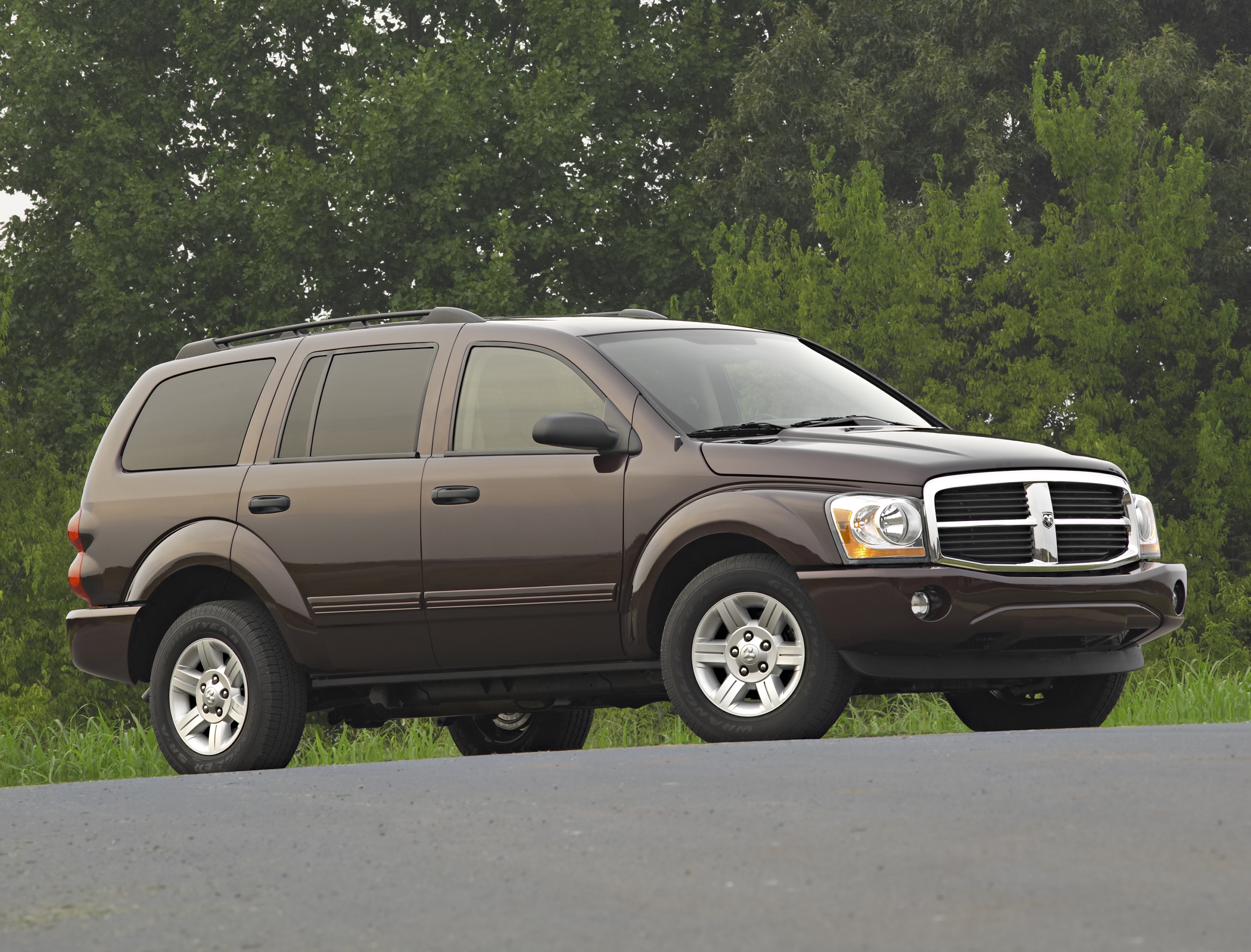
The second generation of the Dodge Durango looked similar to the first and was again based on the Dodge Dakota pickup truck. However, it was longer, wider, taller, and could be configured with up to eight seats thanks to an available second-row bench. Again, many parts were shared between the Durango and Dakota, as well as the Dodge Ram. The Durango was refreshed in 2007 with an updated front end and new features such as electronic stability control and park assist.
Notably, this generation marked the first appearance of Dodge’s 5.7-litre Hemi V8 engine. The 2004 to 2009 Durango again offered a Magnum V6 engine, along with the Magnum V8 and Corsair V8. A short-lived hybrid Durango, featuring the Hemi V8 and electric motors, was introduced for 2009 but discontinued after just two months. Transmission options across the generation were four- and five-speed automatics as well as a CVT, and four-wheel drive (4WD) was standard in Canada.
The second generation was known for electrical problems that could cause, among other issues, spontaneous fires inside. It took Dodge three years to issue a recall to replace the faulty electrical component that was prone to overheating. In the final year of this generation, the Durango’s reputation for reliability was so poor that only about 4,000 examples of the 2009 model year were sold.
Second-generation Durango models are largely best avoided, which is easy to accomplish since very few remain on the Canadian used vehicle market today. If you do come across one and you’re considering buying it, note that the early years are the worst ones. Across this generation, you shouldn’t need to pay more than $7,000, even for the very best examples.
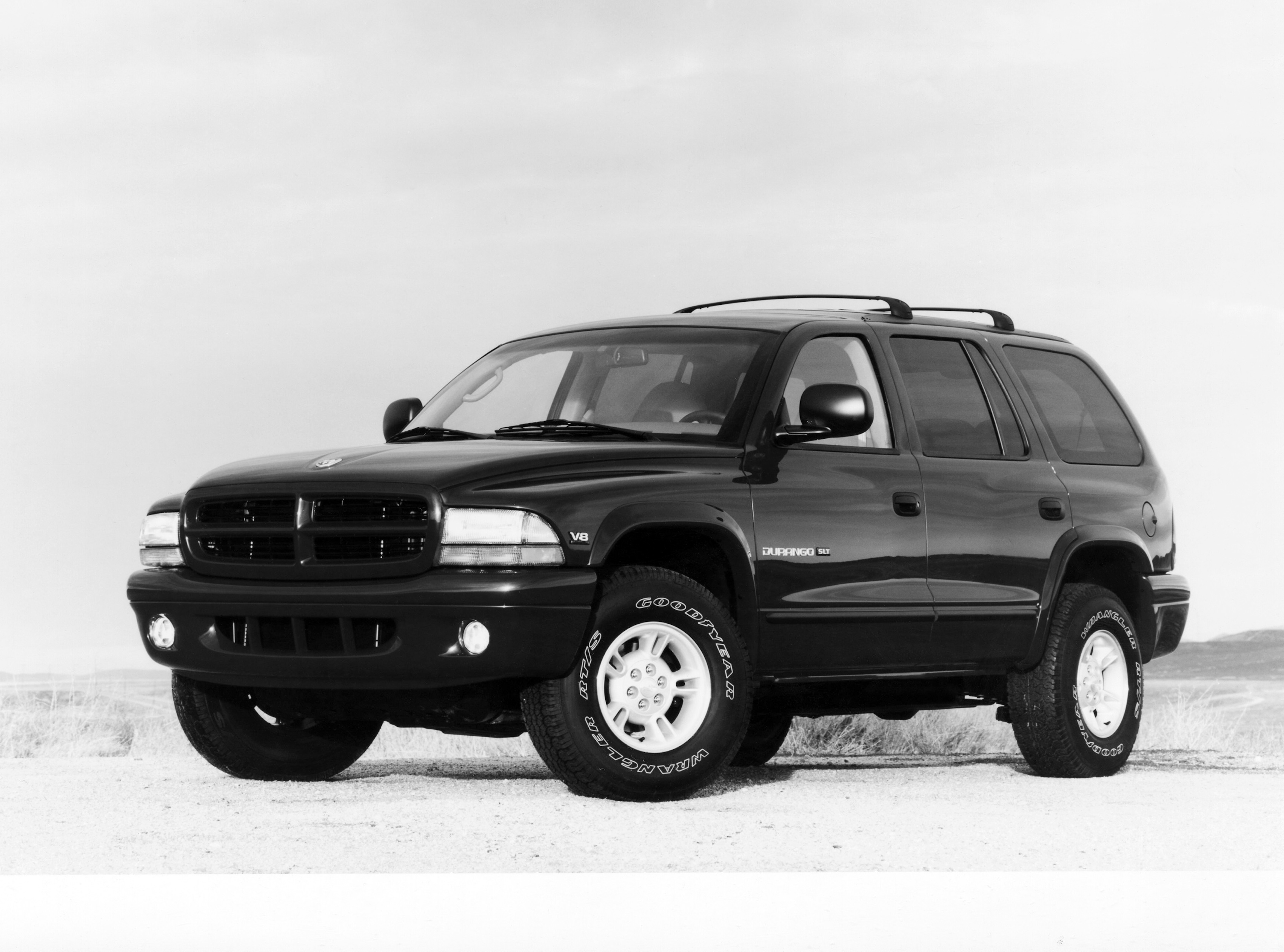
First Generation (1998-2003)
The Dodge Durango was introduced as a traditional, truck-based SUV with room for seven and a maximum towing capacity of 3,400 kilograms (7,500 pounds). It shared the Dodge Dakota pickup’s chassis and some of its parts. Other components were pulled from Chrysler, Dodge, and Plymouth minivans.
The Durango was available at launch with a variety of V8 engines, including the problematic 5.2-litre Magnum that was later replaced with a 5.9-litre version. There was also a supercharged Magnum V8 available until the 2000 model year, as well as a 3.9-litre Magnum V6 that was available only in 1999. Depending on the engine, the Durango got a four- or five-speed automatic transmission. In Canada, four-wheel drive (4WD) was standard.
Standard features included cloth upholstery, power windows and locks, 15-inch alloy wheels, and a cassette player — still an automotive industry staple at the time. Higher trims and packaged options brought the likes of leather upholstery, a power-adjustable driver’s seat, steering wheel-mounted audio controls, and a CD player.
Skip the earliest Durango models equipped with the 5.2-litre Magnum V8 engine, which had numerous problems including oil pressure irregularity and sudden premature failure. Instead, go for the later 5.9-litre Magnum V8. Keep in mind, too, that the first-generation Durango was built on a truck platform and most were probably driven hard, so be cautious when examining the body’s condition.
Very few first-generation Durangos remain on the Canadian used vehicle market today. Those still hanging around typically have odometer readings of well over 200,000 kilometres and sell for $5,000 or less.
Related Topics: