Fifth generation (2021 to Present)
Chevrolet redesigned the Tahoe for the 2021 model year, softening the previous generation’s crisply tailored lines, improving passenger comfort, expanding cargo space, and upgrading technology. Chevy also doubled the number of Tahoe trim levels, adding the sporty RST, the rugged Z71, and the luxurious High Country to the existing LS, LT, and Premier versions. Size-wise, it sits above the brand’s smaller SUVs such as the Chevrolet Equinox, the Chevrolet Blazer, and the Chevrolet Traverse.
The fifth-gen Tahoe has an independent rear suspension for the first time, which allowed Chevrolet to lower the cabin’s rear floor, enhancing space and comfort in the third-row seat. In addition, the lower floor translates into more cargo space, increasing the maximum volume to 3,480 litres with both rear rows folded flat. Four-corner air suspension is a class-exclusive option.
A 355-horsepower, 5.3-litre V8 engine remains standard, with a 420-hp 6.2-litre V8 — the same unit found in the Corvette sports car — available as an upgrade. Chevrolet also introduced a 277 hp Duramax turbodiesel 3.0-litre inline six-cylinder for this generation that matches the 6.2-litre V8 for torque output while returning significantly better fuel economy. Each engine is paired with a 10-speed automatic transmission, and when properly equipped, the Tahoe can tow 3,810 kilograms (8,400 pounds).
Technology improvements include a 10.2-inch touchscreen infotainment system with wireless Apple CarPlay, wireless Android Auto, and access to a 4G LTE Wi-Fi hotspot. A large 15-inch head-up display is an option, and Tahoe buyers can outfit the SUV with numerous trailer towing cameras and features such as Hitch Guidance and Hitch View.
In 2022, the standard Chevy Safety Assist package added lane-departure warning, lane-keeping assist, and front and rear parking sensors. The Tahoe LT and higher trims had a standard 12.3-inch digital instrumentation display and the Google built-in infotainment system, and the 2022 Tahoe offered even more camera views for towing. Chevy started offering its Super Cruise hands-free highway driving assistance technology in Canada beginning with the 2024 model year.
A significant update arrived for the 2025 model year with freshened styling, an updated interior with a new dashboard and centre console, a more powerful Duramax diesel, and a sizable 17.7-inch touchscreen infotainment system. Buyers can choose giant 24-inch wheels for the first time, and the Tahoe Z71 is finally available with the Duramax diesel engine. Another round of trailering technologies debuted, including Boat Ramp Assist.
Fifth-generation Tahoe owners haven’t complained much about their SUVs. However, based on the tech upgrades that arrived in 2022, we think you should skip the 2021 model unless it’s a deal too good to pass up. As always, get yourself a vehicle history report and inspect it closely for signs of neglect or abuse during a test drive — especially the Z71 models.
What should you pay for a fifth-generation Tahoe? Used cars with fewer than 100,000 kilometres range from around $60,000 for lightly equipped higher-mileage models to $90,000 for a nearly new Chevrolet Tahoe with a 6.2-litre V8, four-wheel drive, and an upper trim level.
Fourth generation (2015 to 2020)
The fourth-generation Tahoe improved over the third-generation version, particularly regarding interior design, quality, and convenience. For example, it finally got fold-flat third-row seats, eliminating the requirement to remove the heavy seats from the vehicle to use the maximum cargo space.
Equipped with a 355 hp 5.3-litre V8 engine, a six-speed automatic transmission, and RWD or 4WD, the fourth-gen Tahoe kept things simple. Only three trim levels were available: Chevrolet Tahoe LS, Chevrolet Tahoe LT, and Chevrolet Tahoe LTZ, which became Premier later in the run. The Tahoe LTZ had standard adaptive damping suspension that improved the SUV’s ride and handling. When equipped with the proper towing equipment, the Tahoe could tackle up to 3,900 kilograms (8,600 pounds).
As before, the 2015 Tahoe offered three rows of seats and seating for up to nine people with the optional front bench seat. However, due to the tall rear vehicle floor, the fourth-gen Tahoe’s third row was uncomfortable for adults, falling short of its primary rival, the Ford Expedition. Additionally, the Tahoe didn’t carry as much cargo as the Ford, topping out at 2,681 litres. Even Chevy’s own Traverse crossover SUV supplied more cargo space.
Touchscreen infotainment systems with up to an eight-inch display were available, and the fourth-gen Tahoe offered forward-collision warning, automatic emergency braking, blind-spot monitoring, rear cross-traffic alert, and lane-keeping assist systems. Through an active OnStar subscription, an automatic collision notification system could speed rescuers to the scene of an accident.
Tech upgrades arrived in the 2016 Tahoe. Next-generation MyLink infotainment technology debuted, equipping the SUV with Apple CarPlay and new OnStar features. Lane-keeping assist and a head-up display were also newly available.
The 2017 Tahoe Premier replaced the Tahoe LTZ and Teen Driver technology appeared, allowing parents to monitor how their children drove the vehicle. A rear-seat reminder system also debuted that year, while ventilated seats were available.
In 2018, a Tahoe RST Performance Edition option package arrived, adding a 420 hp 6.2-litre V8 engine and a 10-speed automatic transmission. Available only with Premier trim, the RST Performance Edition fortified the Tahoe with sports suspension and 22-inch wheels. If you wanted the RST look but not the hardware, an RST Edition upgrade was available with LT and Premier trims.
Aside from its cramped third-row seat and cargo-carrying compromises, the fourth-generation Tahoe is an appealing full-size SUV. Unfortunately, the 2015 Tahoe is also the most-recalled version, according to VehicleHistory.com. CarComplaints.com says it’s one of the most troublesome incarnations of the Tahoe, suffering from climate control problems and various electrical maladies.
However, owners have logged far fewer complaints about models from 2016 or later. Those are the best versions of the fourth-gen Tahoe, but make sure you have a qualified mechanic perform a careful inspection and get a vehicle history report while you’re at it.
Prices for used examples with less than 150,000 kilometres can range from just over $30,000 for lower trims on earlier models to $50,000 or so for a low-kilometre, loaded example with a bigger engine and 4WD. There’s not a lot of inventory out there as of this writing, so you may need to travel to secure one of these depending on where you live in Canada.
Third generation (2007 to 2014)
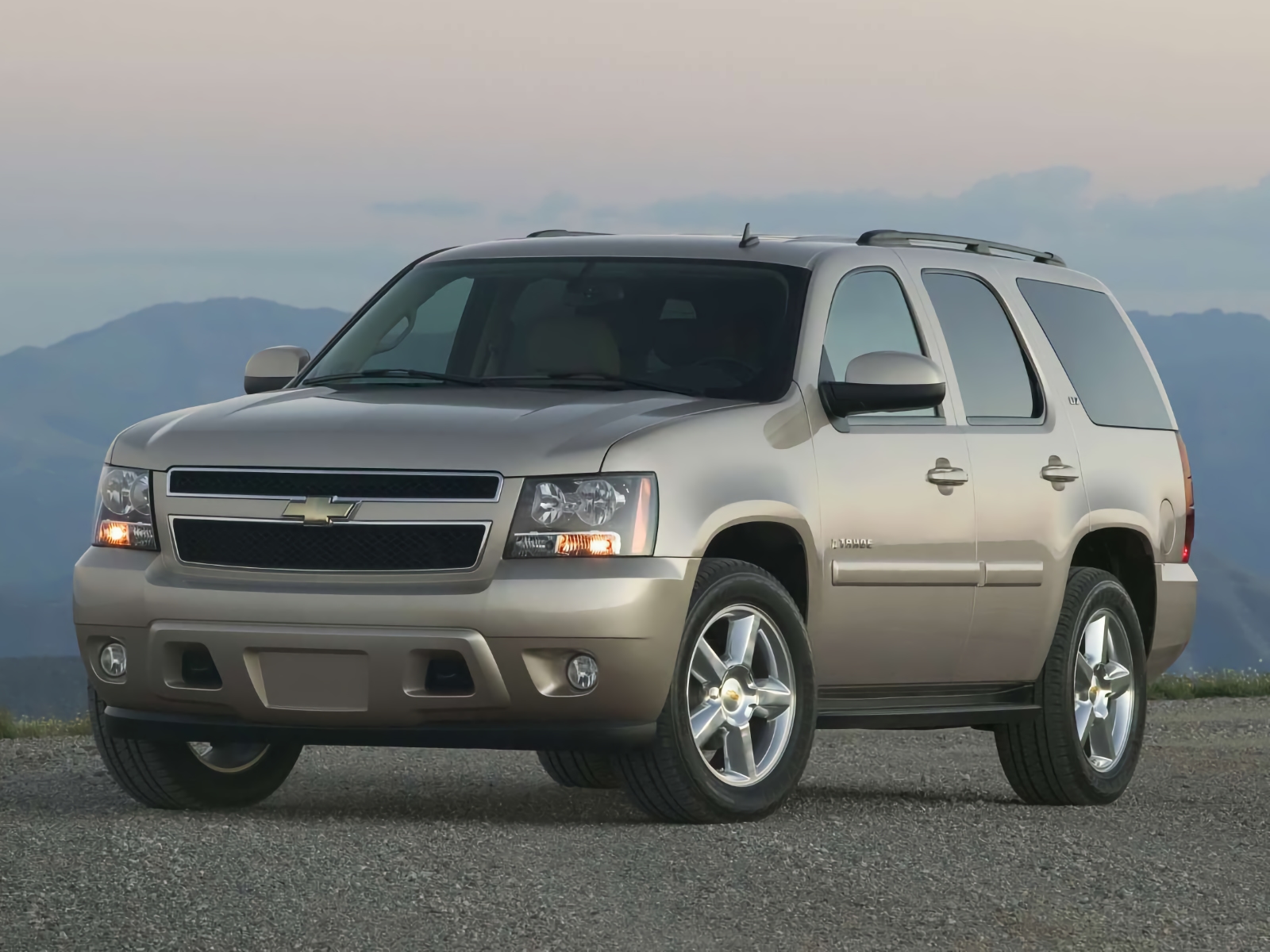
With the redesigned 2007 Tahoe, Chevy distanced the SUV’s design from the full-size Chevrolet Silverado 1500 pickup trucks with which it shared a platform and a powertrain. Doing so allowed the company to give the Tahoe a cleaner and more sophisticated look inside and out. The interior was significantly more refined regarding quality, fit, and finish, but it still didn’t have fold-flat third-row seats, so you’ll have to hoist them out to access all the available cargo space.
The 2007 Tahoe, sold in LS, LT, and LTZ trim levels, offered a 290 hp 4.8-litre V8 or a 320 hp 5.3-litre V8 engine, a four-speed automatic transmission, and RWD or 4WD. The larger engine came with Active Fuel Management cylinder deactivation technology, and the maximum towing capacity is 3,490 kilograms (7,700 pounds).
In 2008, Chevrolet offered an optional hybrid powertrain in the Tahoe. Developed in partnership with BMW and DaimlerChrysler, the General Motors version used a 6.0-litre V8 engine, an electrically variable transmission with two integrated 60-kilowatt motors, a battery pack, and a regenerative braking system. Total system output measured 332 hp, it could operate only on electricity at speeds of up to 40 km/h, and Natural Resources Canada said it would consume 11.0 litres per 100 kilometres in combined driving with RWD and 11.8 L/100 km combined with 4WD. The 4.8-litre V8 was discontinued in Canada this same year.
By 2009, the Chevy Tahoe’s V8 engine lineup had grown to include a 6.2-litre unit. Most Tahoes also had a six-speed automatic transmission, Bluetooth, and side-impact airbags were standard. Available features included blind-spot monitoring and ventilated front seats. The OnStar subscription services plan added a new stolen vehicle slowdown function to thwart thieves.
In 2010, Chevy killed the 6.2-litre V8 engines, but the Tahoe Hybrid continued and 2010 models were the first ones equipped with a USB port. In 2011, the trailer towing package added an integrated trailer brake controller, and in 2012, an available hard-drive navigation system debuted with digital music storage capability. You could also get a heated steering wheel with LTZ trim.
The Tahoe Hybrid exited production after the 2013 model year. Aside from some added standard features for the Tahoe LS, Chevy made no changes to the 2014 Tahoe as it readied the release of a new model.
Avoid the 2007 model. It earns a rare “Clunker” rating from CarComplaints.com because the 5.3-litre V8 engine reportedly consumes significant quantities of oil. Mechanics claim the fix is to replace the engine’s pistons and rings, which is expensive. Also, if oil levels are not religiously maintained, the engine could fail completely.
That problem persisted in the 2008 and 2009 Tahoes with the 5.3-litre V8, but there were fewer complaints from these owners compared to those of 2007 models. Still, we don’t recommend buying a 2007 to 2009 Tahoe. By 2010, it wasn’t a significant issue according to CarComplaints.com. In fact, the 2010 to 2014 Tahoe models are relatively trouble-free. You should still get a used one carefully inspected and obtain a vehicle history report for added peace of mind.
Also, while the idea of a Tahoe Hybrid might be appealing, we suggest avoiding it. That version was never popular, and replacing the aging hybrid components could prove costly.
While these Tahoes aren’t all that old relatively speaking, there aren’t many of them on the Canadian used car market. Expect to find pricing in the $15,000 to $20,000 range and an odometer reading close to or beyond 200,000 kilometres.
Second generation (2000 to 2006)
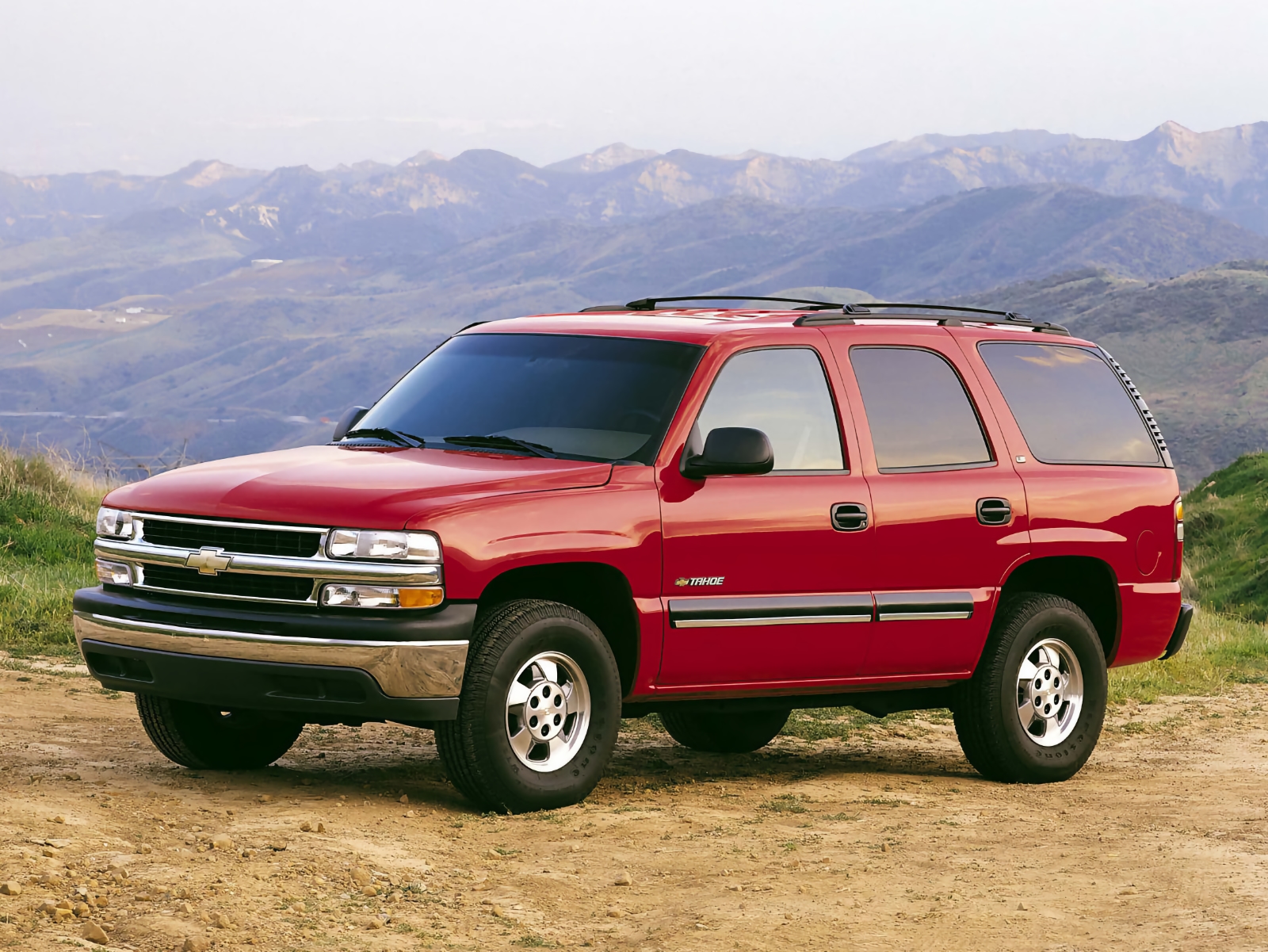
Chevy rolled out an all-new Tahoe for the 2000 model year. It traded the first-generation model’s simple, clean, squared-off appearance for rounded edges and more visual interest. That theme extended to the interior, where the hard plastic surfaces, large panel seams, and swollen switchgear lacked refinement and sophistication.
The 2000 Tahoe was available in base, LS, and LT trim with RWD or 4WD. A 275 hp 4.8-litre V8 was standard, and a 285 hp 5.3-litre V8 was available with LS and LT trims. Both engines were bolted to a four-speed automatic transmission, and the maximum towing capacity was 3,490 kilograms (7,700 pounds).
Chevrolet engineered the second-generation Tahoe for longevity, improving everything from the structural rigidity to the dent-resistant steel body. It was also more fuel efficient, better able to handle long drives and road trips, and safer in a collision.
In 2001, the Tahoe offered OnStar subscription services for the first time. Suspension enhancements improved the ride quality in the 2002 model, and the LS trim added more standard equipment.
Numerous enhancements arrived for 2003. The restyled dashboard and centre console enhanced the interior’s look and feel, while a triple-zone climate control system improved comfort. Upgraded brakes, improved safety features, and a Bose audio system also arrived that year.
Chevy made minor changes to the 2004 Tahoe such as new aluminum wheels and another improvement to the braking system. In 2005, the rear side-hinged cargo access doors departed in favour of a traditional liftgate. The 2006 Tahoes added more standard equipment in advance of a redesign for 2007.
CarComplaints.com reports that second-generation Tahoes were more problematic than the first-gen models. In an unusual twist, owner complaints grew in frequency from 2000 to 2004. We’d normally expect the first year or two following a redesign to be the most troublesome. In the second-gen Tahoe’s case, the 2004 Tahoe earns a “Clunker” rating from CarComplaints.com due to the volume of complaints.
Due to owner gripes about the 2003 to 2005 Tahoes, we suggest avoiding them. The 2006 model year appears to be the most trouble-free, followed by those sold from 2000 to 2002. As we always recommend, get any used Tahoe inspected by a qualified mechanic and a vehicle history report. Tahoes of this vintage are now very rare in Canada. You may wish to use the classic car import exemptions to bring one up from the United States, in which case you’ll find second-gen Tahoes with less than 250,000 kilometres can sell for USD$7,500 to USD$15,000.
First generation (1995 to 2000)
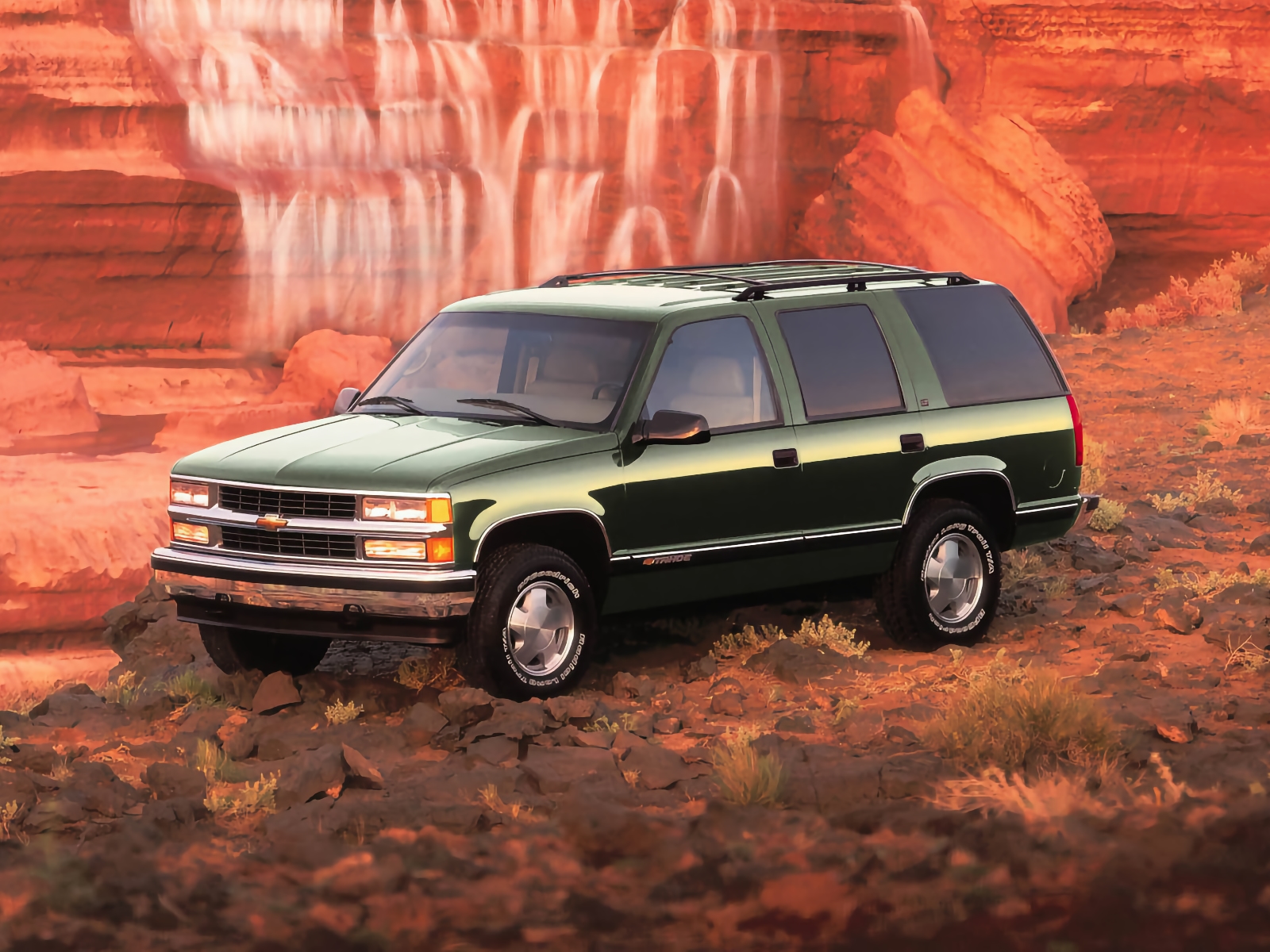
Chevrolet redesigned the full-size Blazer two-door SUV for the 1992 model year. When Chevy added a four-door version in 1995, it switched to the Tahoe nameplate and redeployed the Blazer name for use on a smaller SUV based on the S-10 pickup truck.
Shorter than the nearly identical Chevrolet Suburban and more practical than the Tahoe two-door, it established a consumer preference for a large SUV in a size other than extra-long. While the four-door was new that year, the changes for the two-door included a new dashboard with improved controls and a standard driver’s-side airbag.
The two-door Tahoes came in base, LS, and LT trim with an optional Sport Package, while four-door models arrived in LS and LT trim. A 5.7-litre V8 provided 200 hp, and the two-door was available with a turbocharged 6.5-litre diesel V8 supplying 180 hp and a stump-pulling 380 lb-ft of torque. A part-time 4WD system was optional on all Tahoes and, depending on the body style and the engine, it could tow up to 3,175 kilograms (7,000 pounds).
A more powerful 5.7-litre V8 arrived in 1996, supplying 250 hp and 335 lb-ft of torque. That change cancelled the rare five-speed manual transmission available for the two-door model. Chevy continued offering a turbodiesel V8 option for the two-door Tahoe.
The 1997 Tahoe lineup added a front passenger airbag, an improved transmission, new variable steering, and a convenient power door lock switch in the cargo area, while the 5.7-litre V8 made 255 hp. In 1998, an Autotrac 4WD system and OnStar subscription services arrived. In its final year of production, the 1999 Tahoe lineup added a Z71 Off-Road Package and a Tahoe Limited Edition model.
The Tahoe Z71 had standard Autotrac 4WD, a brush guard, skid plates, unique suspension tuning, and cosmetic alterations. The Tahoe Limited Edition was supposed to be a Tahoe SS until a last-minute decision against it. It featured RWD, a blacked-out exterior, and sporty styling elements. It also included the hardware from the Tahoe’s police package: cop suspension, cop brakes, and cop cooling system (that’s one for Blues Brothers fans).
Those two special-edition Tahoes proved so popular that Chevy kept them around for an extra year as the 2000 Tahoe Z71 and 2000 Tahoe Limited. If a collectible version of a Tahoe exists (aside from a super-clean two-door), it’s one of those.
CarComplaints.com says owners don’t have many issues with the first-generation Tahoe, suggesting it’s a reliable vehicle. Of course, they’re getting up there in age, so you’ll want a qualified mechanic to perform a thorough inspection, especially for rust, plus the usual vehicle history report.
You’re almost certainly going to need to look to the U.S. to find a first-gen Tahoe today. As for the price, clean examples can run from USD$8,000 to USD$25,000, with the two-door versions commanding a premium. However, you may find even more expensive outliers.
Related Topics