Ninth Generation (2016-2022)
All-new in the spring of 2015, the ninth-generation Malibu hit the market as a 2016 model and was met with strongly positive reviews. It wasn’t quite as refined as competitors such as the Toyota Camry or Honda Accord, but it was a good deal more sophisticated than the car it replaced. Its sleek styling presciently predicted the trend towards fastback sedan shapes in the late 2010s. Its longer wheelbase and overall length also meant a larger, more open-feeling back seat, though trunk space actually slightly shrank.
Three power plants were offered for 2016, along with a plethora of new technology. The Malibu was available in L, LS, LT, and Premier trims, as well as a hybrid model.
The Malibu Hybrid paired a 1.8-litre four-cylinder engine with a 76-kW electric motor for a total output of 182 horsepower and 277 pound-feet of torque. As a bonus, the hybrid delivered a Natural Resources Canada combined fuel economy rating of 5.1 litres per 100 kilometres. Also on tap for this year was a 2.0-litre four-cylinder turbocharged engine with 250 horsepower and 258 pound-feet of torque, mated to an eight-speed automatic transmission. This engine only managed 9.0 L/100 km combined, but it was a good match for the more powerful top trims of the Honda Accord and Toyota Camry.
The standard engine was a 1.5-litre turbocharged four-cylinder with 163 horsepower and 184 pound-feet of torque, paired with a six-speed automatic transmission. This power plant returned 7.6 L/100 km combined. Reviewers found this combination produced lackluster acceleration, but it was what most Malibu buyers chose. Chevrolet axed the slow-selling hybrid in 2020 and the 2.0-litre turbo in 2022. It didn’t help that to get the 2.0, buyers had to pay up for the top-tier Premier trim, the pricing of which seemed out of step with the car’s interior and features.
The 2016 Malibu offered a decent array of safety and driver-assistance features, though none were standard. Depending on the trim, the Malibu had lane-keeping assist and lane-departure warning, blind-spot monitoring, rear cross-traffic alert, adaptive cruise control, automatic emergency braking, and front and rear park assist.
These features continued to be an option into 2022. That year, Chevrolet finally made some active safety features standard, including automatic emergency braking with pedestrian detection and forward collision warnings. This Malibu’s Safety scores are middling, but it did earn Top Safety Pick designations from the Insurance Institute for Highway Safety (IIHS) in 2016 and 2017.
The Chevy MyLink infotainment system ran on a seven-inch screen with Apple CarPlay and Android Auto functionality, but an eight-inch screen was optional on upper trims and standard on Premier trim. Curiously, only Apple CarPlay was compatible on the eight-inch screen at the beginning of 2016, with Android Auto coming later. Chevrolet added wireless Apple CarPlay and Android Auto connectivity in 2021.
In 2017, Chevrolet added a nine-speed automatic transmission to the Malibu’s 2.0-litre turbocharged engine, and the Redline Edition appearance package became an option for LT models in 2019. The 2019 model year also saw revised front and rear fascias and the introduction of the sporty Chevrolet Malibu RS trim. The new Infotainment 3 system made its debut on a standard eight-inch touchscreen, and the 1.5-litre turbocharged engine got a continuously variable transmission (CVT).
2023 and 2024 were more or less carry-over years from 2022, as Chevrolet debated dropping the car altogether, which it did at the end of 2024 despite the Malibu still selling fairly well.
Of all the front-wheel drive Malibus, this version has the best reliability record, according to outlets like J.D. Power, Consumer Reports, and CarComplaints.com. It generates far fewer owner gripes than the others, although it isn’t without issues, including weak transmissions prior to the addition of the CVT.
Late model Malibus are really cheap for what they are, and most 2022 to 2024 models sell for less than $22,000 used. That’s less than the MSRP of a brand-new base-model Honda Civic, and the Malibu is a much larger car, even if it doesn’t have the Civic’s standard safety gear. Earlier Malibus are even cheaper, with most examples selling for between $12,000 and $18,000, even the more powerful 2.0-litre turbos and the fuel-frugal hybrids. Those hybrids are rare and they require more maintenance, but their fuel economy is very attractive.
Eighth Generation (2013-2015)
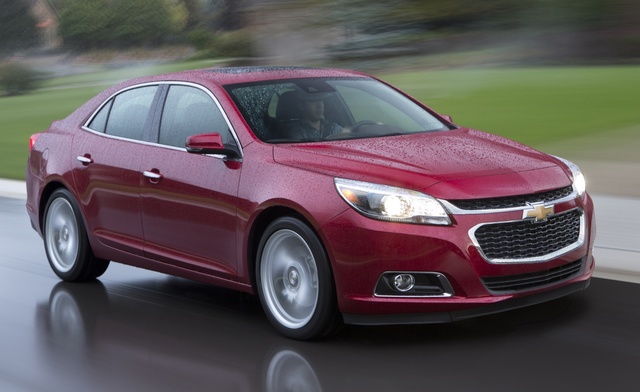
Chevrolet said the eighth-generation Malibu had the DNA from its muscle-clad siblings, the Camaro and Corvette, though that seemed like a bit of a stretch. Available in LS, LT, and LTZ trims as well as the Malibu Eco, the midsize car was an improvement from the last generation, but it still lagged behind heavy hitters like the Camry and Accord. Though it was only offered for three model years, those years are a little misleading as the car went into production in 2011 as a 2013 model.
There were three basic powertrains in this generation. The Malibu Eco mated the eAssist technology, a mild-hybrid setup with a 15-kW integrated starter-motor/generator and a 115V lithium-ion battery, to a 2.4-litre Ecotec four-cylinder engine. Together, they produced 182 horsepower and 172 pound-feet of torque. While it returned a Natural Resources Canada-estimated 6.4 litres per 100 kilometres on the highway, that rose to 8.0 L/100 km combined.
Other engine options included a 2.5-litre Ecotec four-cylinder engine with 197 ponies and 191 pound-feet of torque, the engine that most buyers chose, or a 2.0-litre turbocharged Ecotec four-cylinder engine with 259 horsepower and 260 pound-feet of torque. This last powerplant was only available on the top 2LT/3LT and LTZ trims. All three power plants were mated to a newly designed six-speed automatic transmission.
For 2013, the Malibu had a few cool safety features, like available lane-departure warning and forward-collision alert. A rear-view camera was also available. Inside, the seven-inch radio display on the upper trims flipped up to reveal a storage cubby, and the MyLink system offered navigation. The Malibu’s interior looked much nicer than before, and Chevrolet offered it in several pleasing colour combinations, but the nicest finishes and materials were reserved for the priciest top trims, which means those combos aren’t seen on very many used examples.
Even though the Malibu had just been revamped for 2013, the following year brought a few new features. In 2014, the 2.0-litre turbo engine was retuned to produce 295 pound-feet of torque and the 2.5-litre engine offered stop/start technology. Chevy retuned the chassis and suspension a bit to improve the ride, while the front end got a bit of an appearance tweak. Finally, blind-spot monitoring and rear cross-traffic alert were available this year, as were Siri Eyes Free and Text-to-Voice features for easier communication on the go.
Though replaced by the ninth-generation model for 2016, Chevrolet continued to sell this eighth-generation car to fleets that year as the Malibu Limited. This situation mirrored the earlier continuation of the fifth-generation Malibu as the “Chevrolet Classic” in 2004.
These eighth-generation Malibus have a better repair record than their predecessors but not as good a record as the later ninth-generation models. Curiously, Consumer Reports gives the 2014 model very poor marks in almost every area regarding reliability, but other tracking outlets don’t agree.
Some issues recur on this car, such as premature failure of the fuel level sensor (which requires removing the fuel tank to fix), worn wheel bearings, problems with the stop/start system, power steering problems, and problems with the ignition key hardware. Keep an eye out for all the above at the dealership and during a test drive.
These Malibus are relatively inexpensive, and while finding low-kilometre examples is harder than it is on some rivals like the Accord or the Kia Optima, they are out there. You can pick up an eighth-gen Malibu in good shape with less than 100,000 kilometres on the odometer for about $10,000 to $13,000.
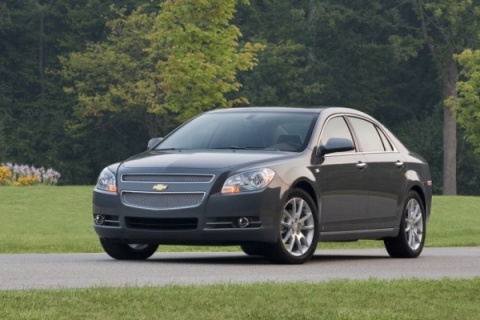
Seventh Generation (2008-2012)
For 2008, the Chevrolet Malibu was entirely redesigned. It continued on GM’s “Epsilon” platform but made huge gains in refinement and style. This platform was also shared with the closely related Saturn Aura, and both cars had interiors that put earlier Malibus and Saturns to shame in terms of design.
The lower trims did not get some of the nicer colour schemes and materials, but when the cars were new, the higher trims really were impressively luxurious. The only real demerit was that both the back seat and trunk space shrank slightly from the sixth-gen model. The hatchback Malibu Maxx was not revived.
This Malibu was available in four trim levels: LS, 1LT, 2LT, and LTZ. The base model was outfitted with a 2.4-litre four-cylinder engine making 169 horsepower and 160 pound-feet of torque, mated to a four-speed automatic. However, higher trims could get a 3.6-litre V6 with 252 hp and 251 lb-ft of torque mated to a six-speed automatic. At one point, Chevy offered the six-speed with the smaller engine only on the LTZ trim.
2008 also marked the debut of the Malibu Hybrid. This model sported a 2.4-litre four-cylinder gas engine and a tiny electric motor that produced only 169 horsepower. With a combined fuel efficiency rating of 8.7 L/100 km, less than a litre below the non-hybrid four-cylinder Malibu, it wasn’t efficient enough to draw many buyers and was discontinued in 2009.
Reviewers praised the 2008 Malibu for its myriad improvements over the previous generation but still noted that it faced heavy competition from the Nissan Altima, Honda Accord, and Toyota Camry. The fifth generation got better interior materials and improved fit and finish, but there weren’t too many amenities and some that the car did offer were unusual. Navigation could be equipped, but only audio turn-by-turn directions and instructions on the radio faceplate, not a navigation screen.
In 2009, Chevrolet added Bluetooth connectivity to the Malibu and expanded the availability of the six-speed automatic transmission. By 2010, the six-speed was standard on all but the base model, and in 2011, it was standard across the board.
This Malibu’s main weak points are broken plastic pieces, trouble with the door locks and power steering systems, and a tendency to wear out wheel bearings and suspension bushings. 2010 and 2011 models also earn more gripes from owners about transmissions, timing chains on the 2.4-litre models, and electrical issues on CarComplaints.com. They have an average repair record, though they did earn awards for initial quality when they were new.
These years are very affordable now, with most examples with under 150,000 kilometres selling for roughly $5,000 to $10,000, and even the nicest ones rarely going much higher. That makes them a deal if you can live with their limited features. V6 models are the best bet, as that engine has a better reliability record than the four-cylinder models.
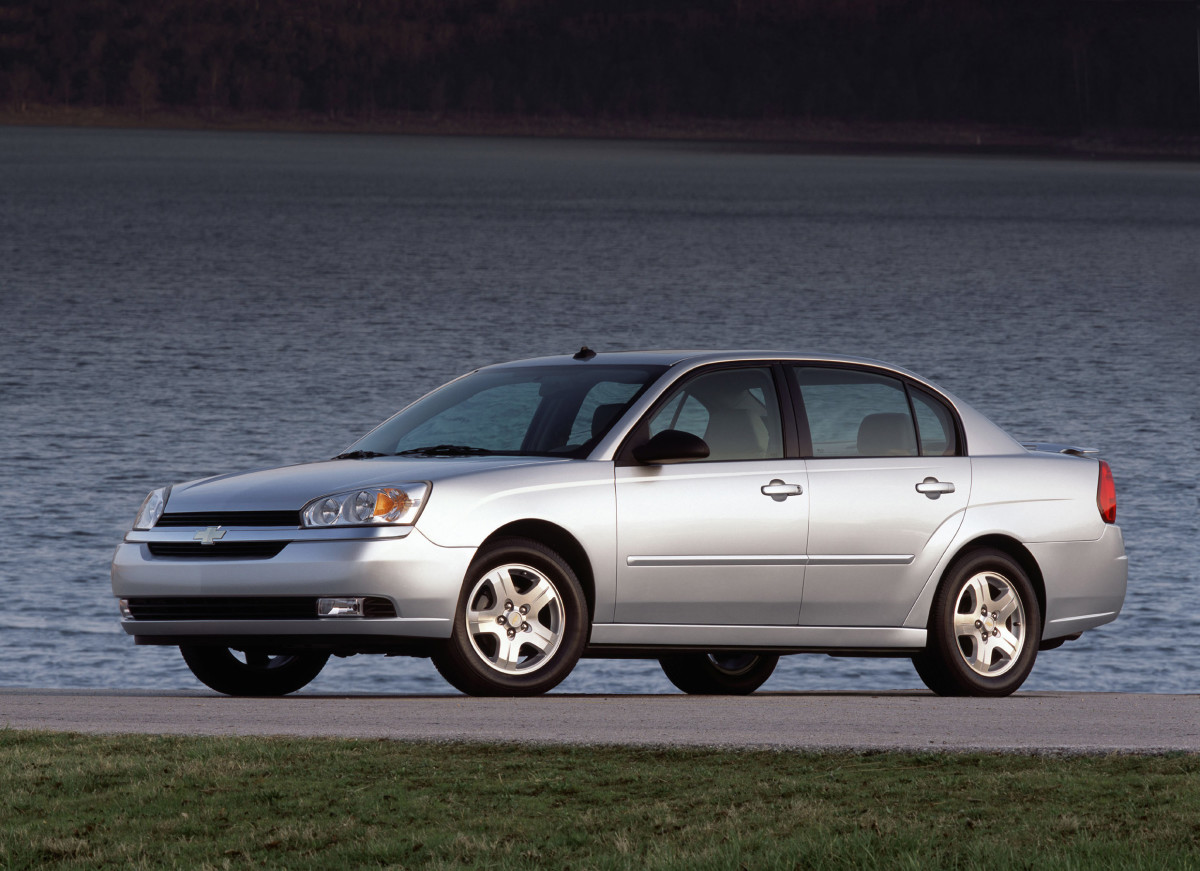
Sixth Generation (2004-2007)
For 2004, the Malibu was redesigned and joined the Epsilon platform shared with the Saab 9-3 and various foreign market GM cars like the Opel Vectra. For the first and only time, the modern front-drive Malibu was available in more than one body style. In addition to the sedan, there was also the Malibu Maxx, a long-wheelbase five-door hatchback that was a cross between a hatch and a station wagon, but not quite either one.
At first, the sixth-gen Malibu was available in base, LS, and LT trims, but in 2006, Chevrolet added an SS model to both body styles. It’s the only modern Malibu SS yet offered.
There were two basic powertrains. A 2.2-litre four-cylinder making 144 horsepower and 155 pound-feet of torque was standard, with a 3.5-litre V6 optional (and standard in the Maxx). The V6 made 200 horsepower and 220 pound-feet to start, but in 2007 it got a bump to 217 horses.
The Malibu SS used a 3.9-litre V6 with 240 horsepower and equal torque, which was a lot of power for a car of this type in 2006. The SS also came with a tauter suspension, big alloy wheels, and many visual cues to its performance intent. All versions were front-wheel drive, and they all used four-speed automatic transmissions.
The sixth-generation Malibu was widely praised for its roomy cabin and comfy back seat. The sedan had 978 millimetres of rear legroom, and the Maxx had a Mercedes S-Class-like 1,041 mm. The Maxx also boasted 645 litres of cargo space behind the rear seats and 1,161 litres with them folded, while the Malibu sedan had a 436-litre trunk, which was average for the class. The interior wasn’t a bad design either, though it was full of cheap hard plastic, as in the previous Malibu.
There isn’t much in the way of in-car tech in these Malibus, though they could be equipped with satellite radio and OnStar. They also had adjustable pedals, so many drivers could easily get comfy. The Maxx offered a second-row skylight and a rear-seat DVD entertainment system, but buyers rarely ordered them. Similarly, safety systems were limited to the basics like anti-lock brakes and airbags. After selling pretty slowly, the Chevrolet discontinued the Maxx after the 2006 model year.
This Malibu has a strictly average repair record, but it’s better than the earlier fifth-generation model. Many owners report problems with the power steering system over time, small electrical issues, and problems with interior fittings, but nothing that will keep them off the road all that long.
These models are also quite vulnerable to rust, which is why there aren’t many left now in Canada. Aside from mint-condition SS models, these Malibus are dirt cheap if you can find them. Expect to pay between $4,000 and $7,500. We found exactly one Malibu Maxx in Canada in our research, which has survived the rust risk in B.C.’s Lower Mainland.
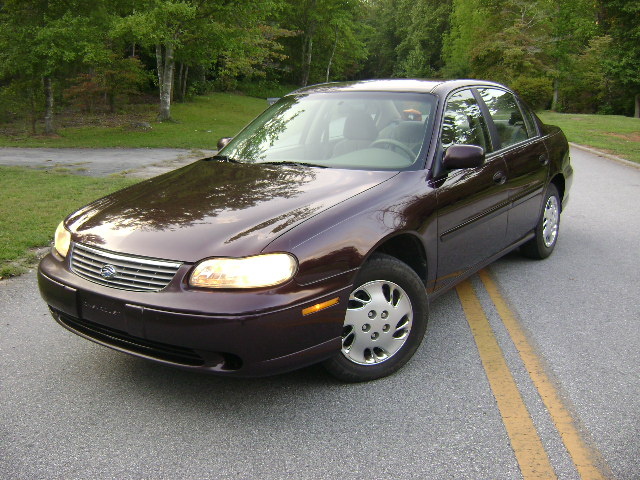
Fifth Generation (1997-2003)
The fifth-generation Chevrolet Malibu is also the first generation with front-wheel drive, and it debuted to great acclaim in 1997 after the name had taken a fourteen-year hiatus. It was a contender for the North American Car of the Year, and Motor Trend named it the Car of the Year for 1997. It didn’t quite live up to this hype, but it was a good seller for Chevrolet and did manage to win back a few buyers who’d been put off by the aging 1980s-era Corsica that preceded it.
For 1997, the Malibu’s base model came with a 2.4-litre four-cylinder engine that made 150 horsepower and 155 pound-feet of torque. The LS trim got a 3.1-litre V6 that only produced 155 ponies, but it went big on torque, with 185 pound-feet. This larger engine was also available as an option on the base model. Both of them came with a four-speed automatic transmission and front-wheel drive only.
The Malibu was nothing great to look at, but it had a few innovative standard features, such as automatic daytime running lights and headlights, a dash-mounted ignition switch, and a cupholder on the left-hand side of the instrument cluster. GM also built a lightly revised version of this Malibu from 1997 to 1999 as the Oldsmobile Cutlass, which had slightly different styling and came only with the V6 but which was functionally identical.
The Malibu remained largely the same for the next two years but got a bit of a facelift for the new millennium. The view from the front seats was revised, when the fascia received styling cues similar to the Chevrolet Impala. The 3.1-litre V6 was the only engine available, bumped to 170 horsepower and 190 pound-feet of torque. The 2001 Malibu got an automatic headlight on/off setting, but the car remained largely the same for the 2002 and 2003 model years.
Although the sixth-generation Malibu replaced this one in 2004, Chevrolet did not stop production. Instead, it renamed the car the “Chevrolet Classic” and sold it only to fleet customers in 2004 and 2005, so you could try one at the Avis counter but not buy one from your local dealer. Nowadays, rental car companies have long since sold those cars and they’re just ordinary used cars. They differ from the other Malibus in using a different engine, a 2.2-litre Ecotec four-cylinder with 144 horsepower and 155 pound-feet of torque. This is the least powerful and least well-equipped version of this car but was often the cheapest as a used vehicle.
Unfortunately, the fifth-generation Malibu developed all kinds of problems as a used vehicle, and it has the worst repair record of any of the modern Malibu generations. V6 models have many problems with gaskets and coolant leaks, but all models have electrical and corrosion problems. Due to the latter issue, you’re not likely to find one of these in most of Canada today. If you do, it’ll be dirt cheap, well into the sub-$5,000 range.
Related Topics