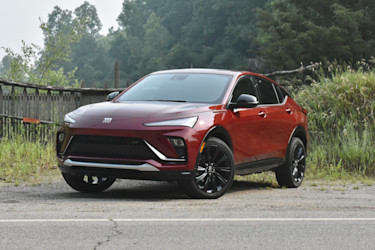
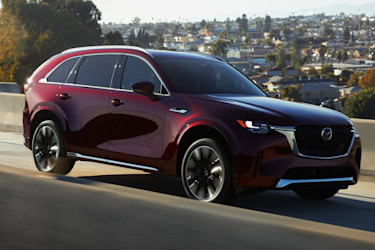
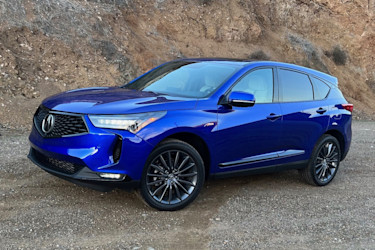
Chevrolet got serious about selling a competitive compact crossover SUV when it introduced the 2005 Equinox. Offering more style, space, and power than established rivals such as the Honda CR-V, Subaru Forester, and Toyota RAV4, the Equinox demonstrated that Chevy could compete in a segment rapidly growing in popularity.
The second-generation follow-up in 2010 brought a more sophisticated design and, over time, technology. Unfortunately, new four-cylinder and V6 engines ultimately proved troublesome due to oil consumption, stalling, and failures, so we cannot recommend buying one, no matter how well it has been cared for or maintained.
A redesigned third-generation Equinox arrived in 2018, equipped with new turbocharged gas and diesel four-cylinder engines that appear to be more dependable. Technology continued to advance in this model, which retained the spacious interior for which the Equinox had become known. That model lasted until 2025 when a fourth-generation model arrived with a more rugged design and a thoroughly modern interior.
According to Repair Pal, the Equinox offers slightly better than average reliability across all model years, but it’s also more likely to suffer a “severe or major issue” compared to other vehicles. As a result, it ranks near the bottom of the compact SUV class for reliability. Data from CarComplaints.com suggests the first few years of production within each generation are typically the most problematic, and that you should avoid buying a second-generation Equinox equipped with a four-cylinder engine.
Chevrolet Equinox: Cost, Reliability, and the Best Years to Buy
Frequently Asked Questions
Which Chevrolet Equinox years are the best?
If your budget dictates choosing an older Chevy Equinox, look for a clean and well-maintained 2009 first-generation model. Otherwise, skip ahead to 2019, the second year of production after the 2018 redesign. Any Equinox produced since 2019 appears to be relatively trouble-free, according to CarComplaints.
What are the worst Chevrolet Equinox years?
CarComplaints suggests avoiding the 2005 and 2006 models, which have generated more owner complaints than nearly every other year of production. However, the second-generation Equinox has suffered the most widespread and severe problems, particularly related to excessive oil consumption, stalling, and engine failure in models with the 2.4-litre four-cylinder and 3.0-litre V6. Do not get one of these.
Is a used Chevrolet Equinox a good deal?
The Equinox does not hold its value well, and many of them wound up serving in government and commercial fleets. Prices are therefore appealingly low, but you must be careful about which model year you’re considering. Under no circumstances should you get a 2010-2017 model with a 2.4-litre four-cylinder or 3.0-litre V6 engine. Also, carefully inspect any used Equinox for signs of neglect.
Chevrolet Equinox Pros and Cons
Pros
- Roomy interior
- First three generations offered more power than most rivals
- Good safety ratings
Cons
- Serious engine problems with 2010-2017 Equinox models
- Cheap interior materials
- Not as much cargo space as rivals
Chevrolet Equinox Generations
Fourth Generation (2025-Present)
Chevrolet introduced a new Equinox for the 2025 model year. Trim levels for the fourth-generation Equinox in Canada comprise Chevrolet Equinox LT, Chevrolet Equinox RS, and the new Chevrolet Equinox Activ, the latter styled to look more rugged and ready for off-roading. But aside from standard all-terrain tires, the Activ isn’t any more capable in the rough stuff. It’s worth noting that an electric Equinox EV debuted in 2024 but is unrelated to the gas-powered Equinox models beyond the name.
The fourth-generation Equinox comes only with a turbocharged 1.5-litre four-cylinder engine carried over from the previous model. With front-wheel drive (FWD), it’s paired with a new continuously variable transmission (CVT) and generates 175 horsepower and 184 pound-feet of torque. The optional all-wheel drive (AWD) system comes with an eight-speed automatic transmission, allowing a bump in torque to 203 lb-ft. At the time of writing, this generation of Equinox has an affordable starting MSRP of $37,133 for the Chevy Equinox LT including fees (AWD adds $2,300 to the price), while the top-end RS and Activ trim levels both kick off at $44,233.
At about the same size as the prior model, the fourth-gen Equinox has seating for five and 844 litres of cargo space behind the back seat. Fold it down, and the SUV holds 1,798 litres, less than many of its contemporaries. The interior is more inviting, though, with claims of improved materials. Digital instrumentation (Chevrolet calls the display behind the steering wheel a “Driver Information Centre”) and a colour touchscreen infotainment system with Google Built-in lend the SUV a more high-tech look and feel. Intellibeam headlamps automatically turn the high beams on or off when they detect the presence or absence of other traffic.
The Chevy Equinox RS and Activ come with the LT’s Convenience Package II as standard, which includes an eight-way power adjustable driver’s seat, rain sensing wipers, dual-zone automatic climate control, and wireless device charging. These trims also include roof rails and Chevy’s Autosense power liftgate, which automatically opens when it senses the key fob at the back of the car.
The RS trim also gets 19-inch “carbon flash metallic” machined-face aluminum wheels, while the Activ has an available Summit White roof for cars ordered in two-tone paint schemes.
Chevy also added plenty of standard advanced safety features — themselves bundled into the Chevy Safety Assist package — such as enhanced automatic emergency braking and intersection automatic emergency braking (which monitors for cross-traffic when you’re pulling out of an intersection and hits the brakes if needs be), rear park assist, a following distance indicator (which displays the following time in seconds between your vehicle and the one in front), among others.
If history is anything to go by, the 2025 Equinox may have a few bugs that need working out. However, with a powertrain carried over from the previous generation and off-the-shelf technology already in use in other General Motors vehicles, perhaps the fourth-gen Equinox will be less prone to first-year teething problems.
The 2025 Chevrolet Equinox is brand new as of this writing, so there isn’t yet enough used inventory on the market to provide meaningful pricing estimates.
Third Generation (2018-2024)
A redesigned third-generation Chevrolet Equinox arrived for the 2018 model year. Chevrolet started with a clean slate of powertrains for this version, including new turbocharged gas and diesel four-cylinder engines that are proving to be more dependable than those in second-generation models. The Equinox retained its spacious interior despite coming down in length by 12 centimetres, a fact the automaker used to position the Equinox as larger than compact SUVs but smaller than midsize. Technology continued to advance throughout this generation.
This version of the Equinox was the first with an engine line-up comprised entirely of four-cylinders. At launch, the base engine was a 1.5-litre four-cylinder engine that generates 170 hp and 203 lb-ft of torque. It posted fuel economy averages between 8.3 and 8.9 litres per 100 kilometres combined depending on model year and configuration. An upgrade 2.0-litre four-cylinder made 252 hp and 260 lb-ft. Offered only with all-wheel drive (AWD), it averaged 9.7 L/100 km combined.
Chevy also introduced the first diesel into the compact SUV segment, a 1.6-litre turbodiesel with 136 hp and 236 lb-ft of torque and averaging 7.4 L/100 km combined. The two smaller powertrains came with a six-speed automatic transmission, while a new nine-speed automatic was the default with the 2.0-litre engine.
Front-wheel drive (FWD) was standard on all trims in Canada in 2018, which included L, LS, LT, and Premier, while the top three trims were also available with AWD. By the end of the third generation, AWD was standard on the top trims. Various feature packages were available for all but the base L trim following Chevrolet’s numbering convention (1LS, 1LT, 2LT, 3LT, etc.).
The L grade was dropped for 2019, leaving three core trims. This model year introduced improved resolution for the exterior cameras and added three USB ports, bringing the total to four. Adaptive cruise control became optional via a package on the top Premier trim, and the diesel powerplant was discontinued after the 2019 model year.
More safety features were made standard for 2020. These included forward collision alert and automatic emergency braking with pedestrian detection, lane keep assist, lane departure warning, and a following distance indicator.
2021 was meant to bring a mid-cycle refresh for the Equinox, but this was pushed back a year due to supply chain disruptions during the COVID-19 pandemic. In the meantime, the 2.0-litre engine and nine-speed automatic combo was dropped for 2021, leaving the 1.5-litre and its six-speed as the sole option for the remainder of this generation.
When that refresh did arrive for 2022, it was largely cosmetic with powertrains and configurations unchanged. The most significant update was the new RS trim, which brought a sportier look along with 19-inch wheels.
For 2023, the 1.5-litre four-cylinder received a small power bump to 175 hp, while torque remained unchanged at 203 lb-ft. The Equinox otherwise remained steady throughout the final years of its third generation.
The 2022 Chevrolet Equinox was the final model year to be built in Canada. GM’s CAMI Assembly in Ingersoll, Ontario, was retooled that year to produce BrightDrop electric delivery vehicles, and all Equinox production for North America was shifted to Mexico.
The third-generation Equinox is widely cited as being more reliable than previous versions. J.D. Power often listed it in its annual reliability studies during this era, and issues on CarComplaints.com drop off dramatically after the 2019 model year. In addition, every model year rated by the U.S. National Highway Traffic Safety Administration received a five-star safety rating. However, only the 2020 and 2021 models were ranked as a Top Safety Pick by the Insurance Institute for Highway Safety (IIHS).
Used examples of the Chevrolet Equinox are plentiful on the Canadian used car market. While there are some high-kilometre bargains, most prices land between $18,000 and $32,000, with lower-trim and higher-odometer vehicles at the bottom of that scale and newer low-kilometre RS and Premier units toward the top.
Second Generation (2010-2017)
Following the successful first-gen Equinox, the stylishly redesigned second-generation model cemented the SUV’s popularity. Unfortunately, it has also proven to be the most troublesome version of the Equinox based on owner complaints, and we recommend that you avoid buying one.
The new-for-2010 engines are largely to blame. In pursuit of improved fuel economy, Chevrolet introduced a 182 hp 2.4-litre four-cylinder as the standard powerplant, with an optional direct-injection 3.0-litre V6 providing 264 hp and quicker acceleration. A new six-speed automatic transmission routed power to the front wheels, and there was an optional all-wheel drive system.
Similar in size to the model it replaced, the second-generation Equinox offered a more sophisticated cabin with plenty of space. Cargo volume dropped, though, to 889 litres behind the back seat and a maximum of 1,803 litres. Notably, some versions of the SUV had a power liftgate.
Initially sold in four trim levels — Chevrolet Equinox LS, 1LT, 2LT, and LTZ — it offered available remote engine starting, OnStar connected services, Bluetooth connectivity, automatic climate control, leather seats, and a touchscreen infotainment system.
In 2011, the 2LT trim and higher included a USB port and Bluetooth as standard. Chevy followed up on those technological advances with newly available forward collision alert and lane departure warning systems in 2012. That same year, all but the Equinox LS had a standard reversing camera.
By 2013, Chevy had shelved the troublesome 3.0-litre V6, replacing it with a 3.6-litre V6 delivering a robust 301 hp. The 2013 Equinox also got further tech advances, including an available power front passenger seat. There were no notable changes for the 2014 Equinox, but in 2015 Chevrolet added a 4G LTE Wi-Fi internet hotspot.
Minor styling changes in 2016 brought improved headlights and smarter interior materials, while tech updates included a standard seven-inch touchscreen infotainment system. In its final year of production, the LTZ trim name was swapped for Premier, though equipment remained the same.
In 2010, the Equinox earned five-star crash-test ratings from the NHTSA. However, when the government agency rolled out new standards for 2011, the SUV earned four-star ratings until its next redesign. The IIHS called the SUV a Top Safety Pick every year until 2017 when the Equinox lost that designation due to its unimpressive collision avoidance technology.
Second-generation Equinox owners consistently report serious problems with the 2.4-litre four-cylinder and 3.0-litre V6 engines. Excessive oil consumption, stalling, and engine failures are common in high-kilometre models, and repairs are expensive. Based on our research, you should run away from any second-generation Equinox with a four-cylinder engine as fast as your feet can take you, and the same applies to the short-lived 3.0-litre V6 engine.
If you want to tempt fate, roll the dice and get a 2016 or 2017 Equinox equipped with a 3.6-litre V6 engine. Even then, ensure you perform a vehicle history check and get a thorough inspection by a knowledgeable mechanic. You can find low-odometer examples of this vintage with the V6 for less than $20,000.
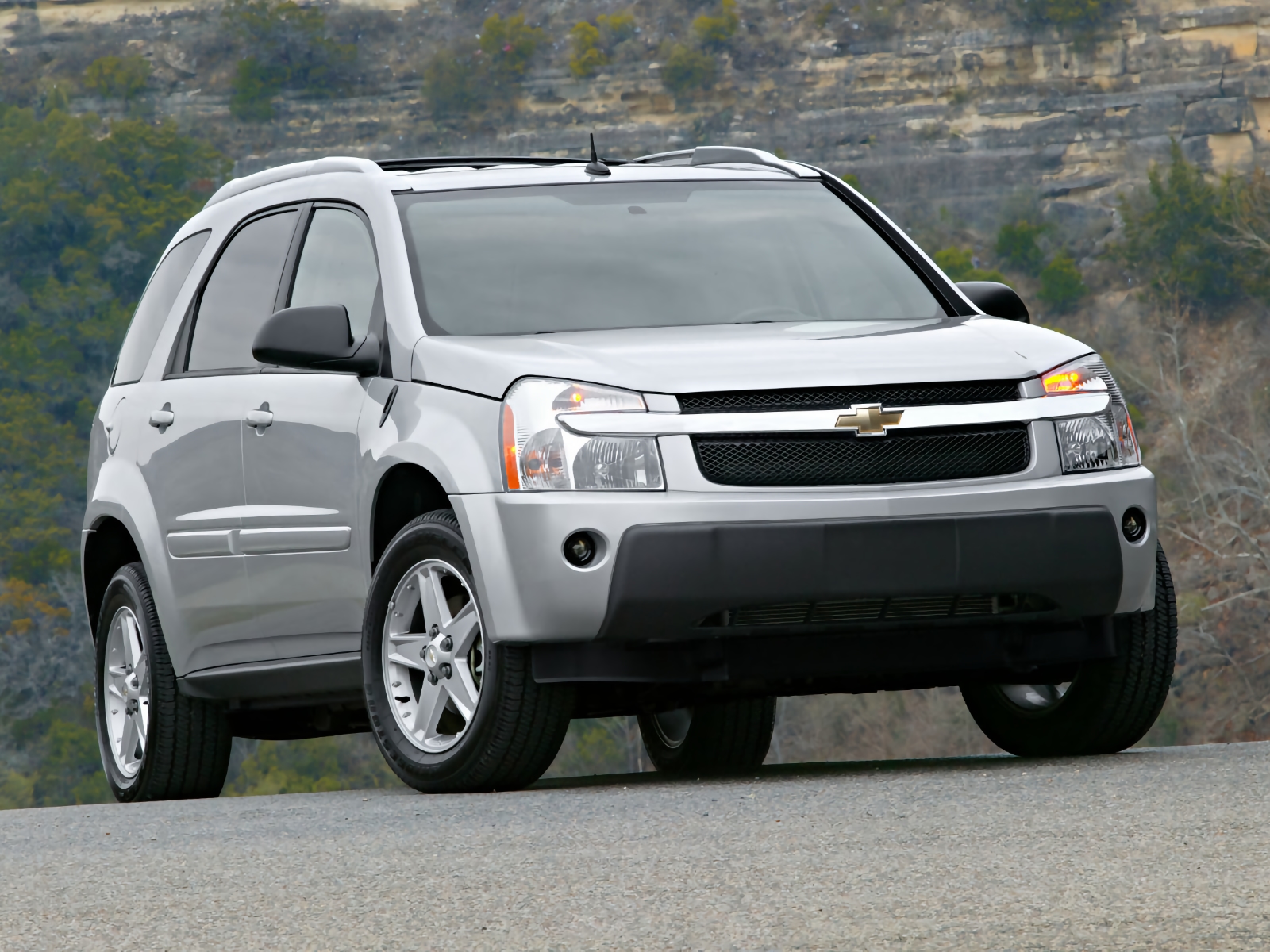
First Generation (2005-2009)
Chevy’s first small SUV was the Tracker. Based on a Suzuki, the Tracker was slow, unrefined, and a whole bunch of other negative adjectives. So, when the 2005 Chevrolet Equinox went on sale combining attractive design and the driving experience of a car with a standard V6 engine and available all-wheel drive, it was kind of a big deal. For Chevy, anyway.
From the start, the Chevrolet Equinox was assembled in Canada at GM’s CAMI Assembly in Ingersoll, Ontario — and CAMI was the only plant in the world building them through the first generation.
Equipped with a back seat that could slide almost 20 centimetres forward and back to create extra cargo space or rear-passenger legroom, the original five-passenger Equinox offered an appealing blend of style, comfort, utility, and performance. It came in LS and LT trim levels, and its 3.4-litre V6 engine sent 185 horsepower to the front or all four wheels through a five-speed automatic transmission.
Cargo space measured 991 litres behind the back seat, and if you folded them down, the SUV could carry 1,953 litres of cargo. Amenities such as leather, heated front seats, and a six-CD player were available for the 2005 Equinox. In 2007, anti-lock brakes became standard along with more capable four-wheel disc brakes and stability control. Remote engine starting was a new option in 2007.
Chevy added performance to the 2008 Equinox lineup. The new Sport model boasted a 264-hp 3.6-litre V6 engine, stiffer suspension, and hydraulic rather than electric assistance for the steering. For its final year before it was redesigned, the 2009 Equinox offered Bluetooth connectivity for the first time, while side-impact airbags were standard instead of optional.
For the era, the first-generation Equinox was a safe vehicle according to the NHTSA, earning five-star ratings. However, the IIHS was less impressed with its ability to protect occupants in a collision.
CarComplaints says the 2005 and 2006 model years were among the most troublesome in the history of the Equinox, so they’re best avoided. Complaints from owners dropped significantly for 2007 and 2008, and the 2009 Equinox ranks as one of the most trouble-free model years.
This first generation of Equinox was not very winter hardy despite its Canadian roots, so there are few examples left in the Great White North today. Those that remain typically have more than 200,000 kilometres on the odometer and are listed for $5,000 or less. Since few owners complained about the 2009 models, which also had standard side-impact airbags, we think that’s the one to go for if you have the option. Get a vehicle history report before you sign on the dotted line and have the SUV inspected by a mechanic to help uncover any potential problems.
Related Topics