The Chevrolet Blazer can be divided into two eras — modern and classic — and they’re completely unrelated. The original K5 and S-10 models are capable off-roaders with a body-on-frame chassis. They have a lot in common with their pickup truck counterparts, even though their brief was to compete with the likes of the Ford Bronco, the Dodge Ramcharger, and the International Scout. The Blazer that left the scene in 2005 was smaller and had more amenities than the originals, but it would be hard to call that final model year modern.
Chevrolet Blazer Buying Guide: Cost, Reliability, and the Best Years to Buy
Search for Chevrolet Blazer
See all


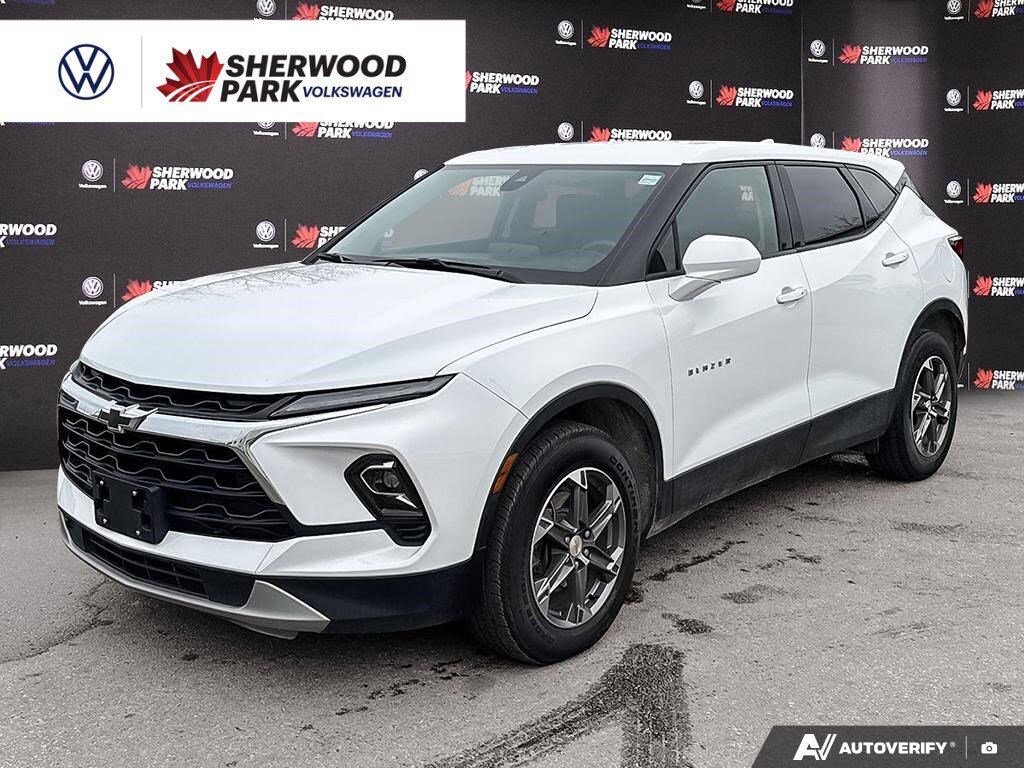
When the new Chevrolet Blazer was announced, many hoped for a K5 or S-10 revival, similar to the retro reimagining of the Ford Bronco. Alas, when the new model arrived in 2019, it had nothing — and we mean absolutely nothing — in common with its rough-and-tumble namesake. It was midsize and had a unibody construction, with an edgy design and an aerodynamic shape, which looked more like a Chevy Camaro than a classic Blazer. Plus, it had all the modern connectivity features you could possibly want, including Apple CarPlay and Android Auto. While it’s a great vehicle for what it is, purists are still shaking their heads and pining for a true off-roader.
Chevrolet Blazer: Cost, Reliability, and the Best Years to Buy
- Frequently Asked Questions
- Chevrolet Blazer Pros and Cons
- Chevrolet Blazer Generations
- Chevrolet Blazer (2019–present)
- Chevrolet Blazer EV (2024–present)
- Chevrolet S-10 Blazer Second Generation (1995–2005)
- Chevrolet S-10 Blazer First Generation (1983–1994)
- Chevrolet K5 Blazer, Multiple Generations (1969–1994)
Frequently Asked Questions
Which Chevrolet Blazer years are the best?
For the modern Chevrolet Blazer, 2022 is the model year with the highest owner satisfaction ratings from Consumer Reports, even if it doesn’t have the best reliability ratings. It was also subject to only one recall, and just 14 consumer complaints were logged by the National Highway Traffic Safety Administration (NHTSA). For classic Blazer models, 2005 is your best bet because it has the fewest consumer complaints and zero recalls.
What are the worst Chevrolet Blazer years?
Consumer Reports gives the modern Blazer worse than average reliability ratings across the board, and it generally has mediocre owner satisfaction scores. If we were going to pick one year to avoid, it would be 2019, which had two recalls and 111 consumer complaints via the NHTSA — and 2020 was a close second. For the classic Blazer, the 2000 model year logged 626 complaints and had four recalls. CarComplaints.com deemed 1994 to be the worst year to buy due to engine problems, which led to 707 complaints and seven recalls.
Is a used Chevrolet Blazer a good deal?
The Chevy Blazer seems to be holding its value fairly well. Looking at the 2022 model year as an example, most models are only about $10,000 less than their original MSRP, rendering the Canadian national average purchase price about $35,000. Even if you go back to 2019—a year we wouldn’t recommend—the average price is roughly $25,000. So, you’re not paying for depreciation, but we wouldn’t call it a steal. You’re not likely to find many classic models in Canada, but if you do, the average purchase price for a late-model original Chevy Blazer is $5,000 or less.
Chevrolet Blazer Pros and Cons
Pros:
- Stylish design
- Spacious
- Simple technology
Cons:
- Uncomfortable seats
- Poor visibility
- Poor value for money
Chevrolet Blazer Generations
Chevrolet Blazer (2019–present)
When Chevrolet revived the Blazer name for 2019’s new vehicle, it completely ignored the rugged, off-road reputation of the classic models and applied it instead to a five-passenger midsize SUV with a unibody construction. If you can get over Chevy’s complete disregard for history, the new Blazer has sporty styling and it’s well-packaged.
Standard features with the first entry-level Blazer include dual-zone climate controls, 18-inch wheels, heated front seats, the OnStar connectivity service, a Wi-Fi hotspot, up to six USB ports, a rear camera, Chevy Safety Assist, and push-button start. It also has Apple CarPlay and Android Auto throughout its lineup and model years.
In Canada, Blazer trim levels through most of this generation have been LT, True North, RS, and Premier. The base and LS trims were dropped by 2021. Upper trims offer equipment such as heated and ventilated seats, an automatic heated steering wheel, leather-appointed seating with red accents, heated rear seats, silver roof rails, a panoramic moonroof, wireless charging, a power liftgate, high-beam assist, blind-spot monitoring, a 360-degree camera, adaptive cruise control, and lane keep assist.
It’s worth noting that, even though Teen Driver and a rear-seat reminder are standard on the base Blazer LT, most of the other safety features are optional or only available on upper trims. The likes of blind-spot monitoring, rear cross-traffic alert, and rear park assist are standard starting on RS and Premier trims, but not with the LT. Similarly, more advanced driver-assistance features such as adaptive cruise control and lane change alert are not found on the base trim.
The base powertrain at launch was a 193-horsepower 2.5-litre inline-four, offering combined fuel economy of 9.9 litres per 100 kilometres from front-wheel drive (FWD) models, the only drivetrain available with this engine. A 308 hp, 3.6-litre V6 was, and still is, available with the base trim in FWD and all-wheel drive (AWD) versions, while AWD was standard with the RS and Premier trims. With the V6 and AWD, fuel economy measures up at 11.3 L/100 km combined.
A new 230 hp, 2.0-litre inline-four turbo engine joined the lineup in 2020. In 2021, a towing package called VR2 Trailering became available. In 2022, Chevy dropped the 2.5-litre engine and added a two-tone roof option, while 2023 marked the mid-cycle refresh with a new grille, headlights, taillamps, and wheel designs, plus a larger standard 10.25-inch infotainment screen.
New Blazer prices start at $47,133 at the time of writing including destination charges and fees, with upper trim levels topping out at $56,833. Late, mint-condition used examples can get pretty close to those figures, but on the lower end of the scale, high-mileage models from 2019 and 2020 can go for $20,000 or less. If you’re looking for a vehicle with less than 100,000 kilometres, the minimum you’ll pay is $25,000.

Chevrolet Blazer EV (2024–present)
While the Chevrolet Blazer EV looks similar to the internal-combustion Blazer, it’s built on a completely different platform. Both come with the standard General Motors infotainment system, but the Blazer EV has a much larger 17.7-inch touchscreen. One important distinction is the Blazer EV does not offer Apple CarPlay and Android Auto, instead favouring the native Google operating system.
The all-electric range varies from 455 to 538 kilometres, depending on whether you opt for the all-wheel or rear-wheel drivetrain as well as the trim level. Connected to a DC fast charger, it can charge up to 80% in about 30 minutes.
The Chevrolet Blazer EV is available in Canada with three trim levels: LT, RS and SS, the latter having launched for 2025. Interestingly, the Blazer EV offers three drivetrain types: AWD (LT, RS, SS), FWD (LT, RS) and RWD (RS).
Prices for the 2024 Chevrolet Blazer EV on the Canadian used car market reflect the actual prices Canadian consumers paid, including the federal government’s EV rebates that were still applicable at that time. Prices are therefore roughly $15,000 lower on average versus buying new for cars that are just one year old, many of which have less than 20,000 kilometres on the odometer. There are some good deals to be found here if you’re in the market for a practical EV.

Chevrolet S-10 Blazer Second Generation (1995–2005)
The K5 Blazer was dropped for the 1995 model year, so what was the S-Blazer simply became the Blazer. The only powertrain option was the 4.3-litre V6 engine, and a driver’s side airbag was standard.
The Blazer was refreshed in 1998, with a new dashboard, larger door handles, headrests for the rear bench seats, new grille, and new stacked headlights. Mechanical changes included the addition of a standard front passenger airbag, the discontinuation of a manual transfer case, and standard four-wheel disc brakes.
Notable option bundles introduced on this generation included the Trailblazer and ZR2 packages. The Trailblazer appearance package was introduced in 1999 and was available on the LS and LT trims, adding added gold-accented alloy wheels, interior/exterior upgrades, and daytime running lamps. The ZR2 package, added in 1996, was only offered on two-door models because of the shorter wheelbase. This package offered an increased track and added three inches to the length to clear the larger tires and the 15-inch wheels. Other modifications with included a stronger front anti-sway bar, skid plates, and Bilstein shocks.
Blazers of this era were prone to rust, so very few remain in Canada today. If a unit catches your eye, it’s likely to be priced at $5,000 or less unless it’s in exceptionally good condition. All Blazers of this era qualify for import under classic car exemptions, so if you’re set on buying one, consider looking to the U.S. market. There, average price for a Blazer of this generation is about USD$10,000, according to Classic.com. It logged the lowest sale at about USD$2,000 and the highest at USD$31,000. Online listings in the U.S. reveal a wide range of prices from USD$2,000 to USD$22,000 for a low-mileage model in excellent condition.
Chevrolet S-10 Blazer First Generation (1983–1994)
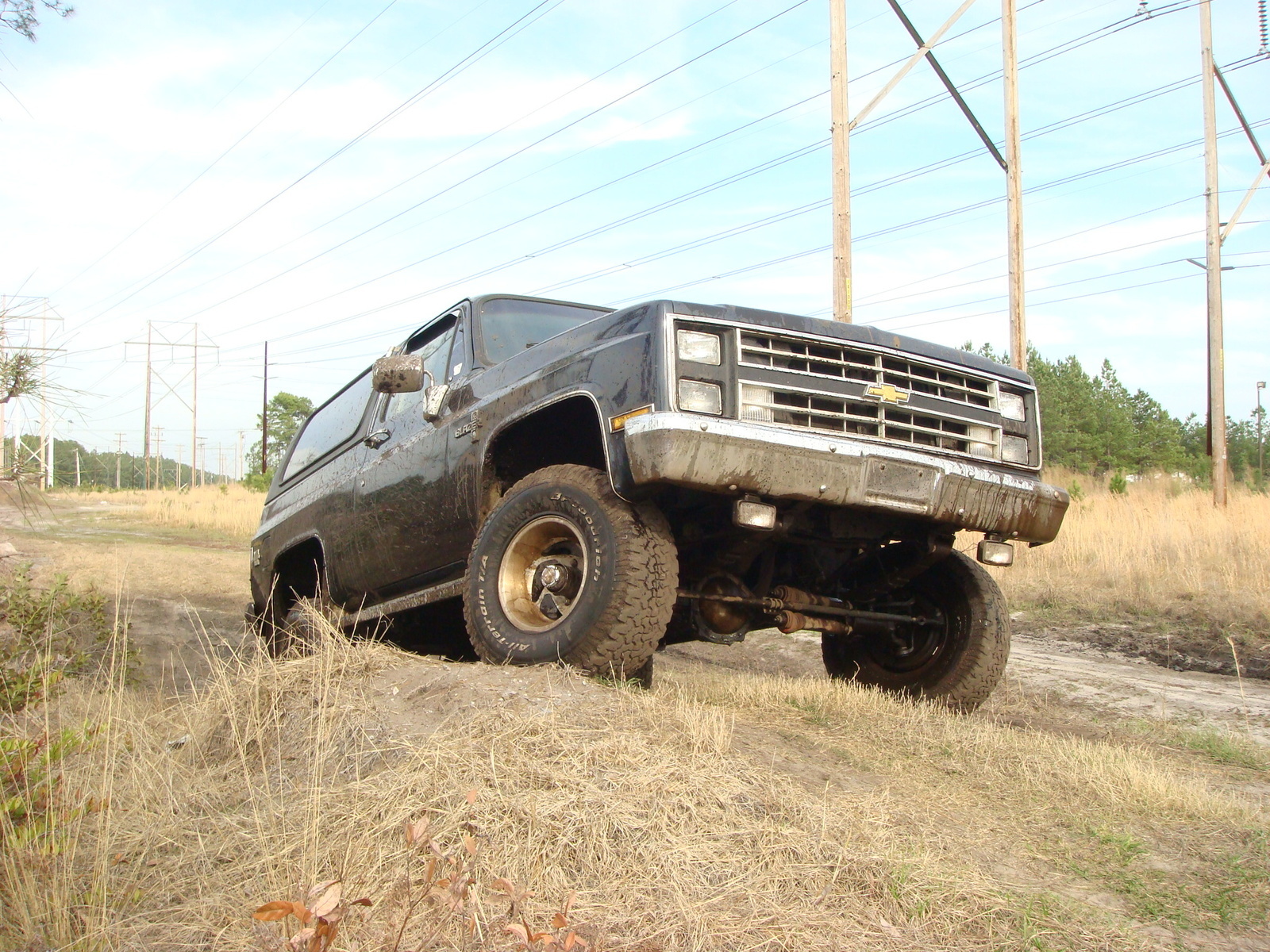
Introduced in 1982 as a 1983 model, the first-generation Chevrolet S-10 Blazer was based on the S-10 pickup truck and the badge-engineered cousin of the GMC S-15 Jimmy. This model was nearly 37 centimetres shorter and 38 cm narrower than the K5 Blazer, which led to the nickname “baby Blazer.”
It was originally only offered as a two-door, but a four-door was added in 1991, which was 16.5 cm longer. It did not have a removable top. Early four-door models were initially available as four-wheel drive only, but rear-wheel drive arrived after a couple months.
As the baby Blazer, this model had smaller powerplants than the K5, with the base option being a four-cylinder engine. A diesel engine was available until 1984, when the S-10 Blazer added the 2.5-litre “Iron Duke,” replacing both the original inline-four and diesel options. A 4.3-litre V6 arrived in 1988, and after 1989 it was the only available powertrain. This generation had both manual and automatic transmission options.
The 1992 S-10 Blazer received updated rear black glass as well as a new grille. It was also the first model year available with an NP233 electronic transfer case and standard anti-lock brakes. The S-10 Blazer was renamed S-Blazer in 1993.
These are all but extinct in Canada now, so if you’re set on owning one, expect to shop south of the border. While the first S-10 Blazer is considered a classic, you’ll find, on average, it is more reasonably priced than the K5 Blazer. Classic.com lists the average transaction price at about USD$10,000. The lowest sale recorded was USD$4,000, and the top sale was about USD$22,000.
Chevrolet K5 Blazer, Multiple Generations (1969–1994)
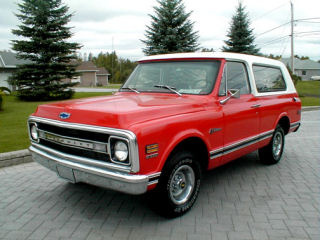
The original Chevrolet K5 Blazer was built on a full-size truck platform and designed to compete with the International Scout and Ford Bronco. Because it was built on the same platform as the C/K Series of pickups from General Motors, it lowered the cost of production. One of the huge selling points for this utility vehicle was that it combined off-road capabilities with luxury features such as air conditioning and an automatic transmission. The first models were only available with part-time four-wheel drive, along with an optional removable hardtop or soft convertible top. A rear-wheel drive model was added later on.
The Chevrolet K5 Blazer had various powerplants throughout the years, it but was primarily powered by inline six-cylinder engines and V8s, although the second and third generations had a “Detroit Diesel” V8 option.
The second-generation K5 Blazer merged the rear hatch glass and the tailgate into a single unit, allowing the glass to retract into the tailgate via a manual crank. However, the weight of the glass was problematic, causing the crank to fail prematurely. The Blazer got antilock brakes in 1990, and three-point shoulder harness seat belts simultaneously became standard for rear passengers.
The third-generation K5 Blazer ditched the removable roof, and the tailgate glass was fixed. All models were equipped with independent front suspension and solid rear axle with leaf springs. Four-wheel drive versions had torsion springs up front, while rear-wheel drive iterations had coil springs. After it was discontinued, the third-generation K5 Blazer was renamed and relaunched as the 1995 Chevrolet Tahoe.
You don’t see many K5 Blazers listed on traditional used car websites even in the U.S. because they’re now true classics. However, if you look at Classic.com, you can see that the average transaction price is about USD$54,000. The lowest transaction price was USD$2,000, but the top sale range of USD$440,000 was for a mint 1972 K5 Blazer with custom modifications, sold at a Barrett-Jackson auction.
Related Topics

by Stephanie Wallcraft
Stephanie Wallcraft is a multiple award-winning professional automotive journalist based in Toronto, Ontario, Canada. In addition to CarGurus Canada, her byline has appeared in major Canadian publications including Toronto Star Wheels, Driving.ca, and AutoTrader.ca, among others. She is a Past President of the Automobile Journalists Association of Canada and was named 2024 Canadian Automotive Journalist of the Year.
The content above is for informational purposes only and should be independently verified. Please see our Terms of Use for more details.


