The humble minivan is overdue for its comeback story. These days, people with large families to move around are far more likely to buy a three-row SUV than a minivan. What those same buyers don’t realize is that a minivan will provide significantly more space as a family vehicle for people and their gear, and they’re much easier to climb into and out of while doing it. Some minivans even offer all-wheel drive (AWD) and great fuel economy from hybrid powertrains. Little ones can’t ding other cars in parking lots when the side doors slide out of the way. Throw in some unique available features like built-in fridges and vacuums and expected technology like Apple CarPlay and Android Auto, and minivans seem like a no-brainer for everything from commuting to family road trips.
Convinced yet? Take a look through this list of the best minivans you can buy new in Canada in 2025. It also happens to be a list of every minivan you can currently buy in Canada. Just six minivans remain on the Canadian market — automakers don’t want you to think of a couple of these family haulers as minivans, but we’re including them on technicalities — so we’ve provided more detail and listed pros and cons for each model. If you’re looking for a wider selection, check out our separate list of the best used minivans available in Canada, where you’ll find discontinued models like the Mazda Mazda5, Chrysler Town & Country, and Nissan Quest.
All pricing includes manufacturer’s suggested retail price (MSRP) plus destination charges and dealership fees but not options or sales taxes. While they were current as of publication time, prices are subject to change. U.S. models are shown, and equipment availability in Canada may vary.
The Best New Minivans in Canada for 2025
Chrysler Grand Caravan
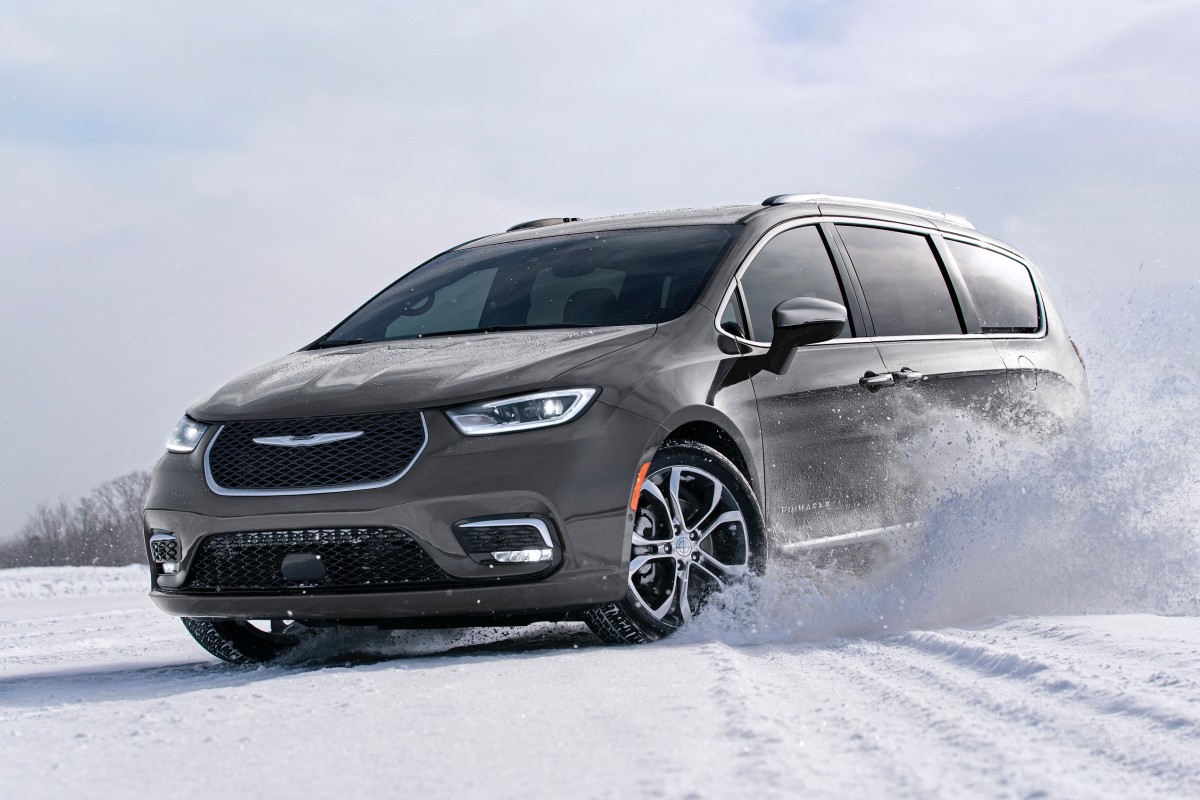
‘Wait,’ you may be thinking to yourself. ‘Isn’t that supposed to say Dodge Grand Caravan?’ That was the correct nameplate for a very long time, but it’s not anymore. Here’s what happened. Back in 2020, the parent company of Dodge — it was still FCA back then, not yet Stellantis — decided to rearrange that brand to include only products with performance intent. When the Dodge Grand Caravan was discontinued, the budget-level van product was moved over to the Chrysler brand to become the Chrysler Voyager, and the Grand Caravan nameplate died in the U.S. However, Grand Caravan has so much legacy name recognition in Canada that the automaker decided to call it the Chrysler Grand Caravan in Canada instead.
Functionally, the Chrysler Grand Caravan plays the same role as the Voyager does in Chrysler USA’s line-up. It’s a defeatured, entry-level version of the more upmarket Chrysler Pacifica, using the design and some parts from before the latter’s 2021 refresh. It employs a 3.6-litre Pentastar V6 producing 287 hp and 262 lb-ft of torque, matched to a nine-speed automatic transmission and FWD. (Those are identical specs to the gas-powered Pacifica; more on that in a moment.)
The Chrysler Grand Caravan has middling fuel economy of 10.6 L/100 km combined. The sole trim level of the Grand Caravan offered in 2025 is the SXT, and while it’s not flashy by any means, it does come with features buyers in this segment care about like second- and third-row Stow ‘n Go collapsible seats. The 2025 Chrysler Grand Caravan has a new car starting price in Canada of $49,995.
Search for Chrysler Grand Caravan
See all
Chrysler Pacifica
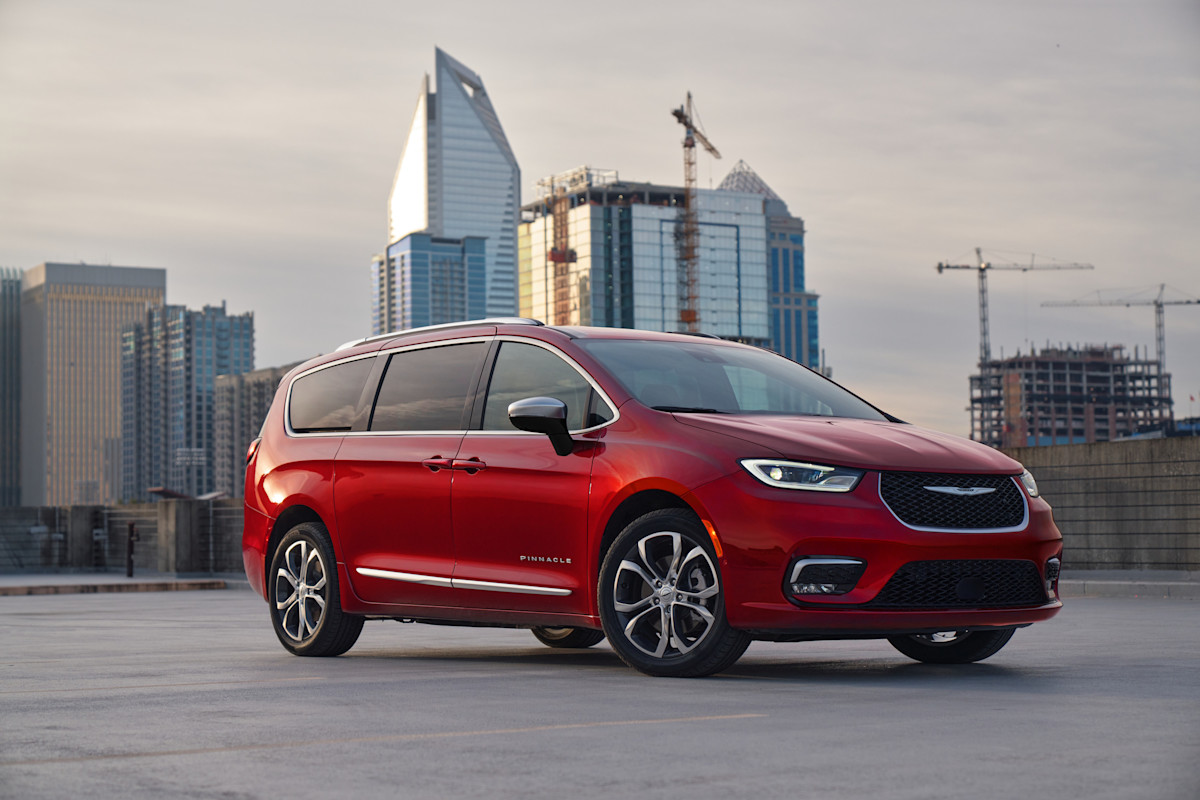
In many ways, the Chrysler Pacifica and the Chrysler Grand Caravan are the same vehicle. The underpinnings are the same, but the Pacifica comes with more powertrain options and premium features
In Canada, the Chrysler Pacifica is sold in both gas-powered and plug-in hybrid (PHEV) form. The gas version has the same specs as the Chrysler Grand Caravan — 287 hp and 262 lb-ft of torque from a 3.6-litre Pentastar V6 engine, matched to a 9-speed automatic — but the difference here is the available AWD. Choose that, though, and you’ll pay at the pumps with the highest fuel consumption in the segment at 12.0 L/100 km combined. Standard features are on the sparser side but include Chrysler’s Uconnect 5 infotainment system with a 10.1-inch touchscreen. The 2025 Chrysler Pacifica has a Canadian starting price of $54,995.
The Chrysler Pacifica Hybrid PHEV has 51 kilometres of electric-only range and a combined fuel efficiency of 2.9 litres-equivalent per 100 kilometres when charged (or 8.0 L/100 km city/7.9 highway/8.0 combined when running in hybrid mode without a charge). Though it’s more expensive up front, it qualifies for the full federal and provincial EV rebates, meaning you can knock up to $12,500 off the price depending on where you live in Canada. The downsides of the PHEV are that it’s been plagued with reliability issues, power is lower at 260 hp, it doesn’t have an AWD option, and it can’t be equipped with Stow ‘n Go seats in the second row because that space is where the battery lives. Still, many owners report being happy with their purchase and the money and emissions it saves. The 2025 Chrysler Pacifica Hybrid has a starting price in Canada of $62,290 before EV incentives are applied. Federal rebates are available across the country, so expect to knock at least $5,000 off the final invoice.
Search for Chrysler Pacifica
See all
Honda Odyssey
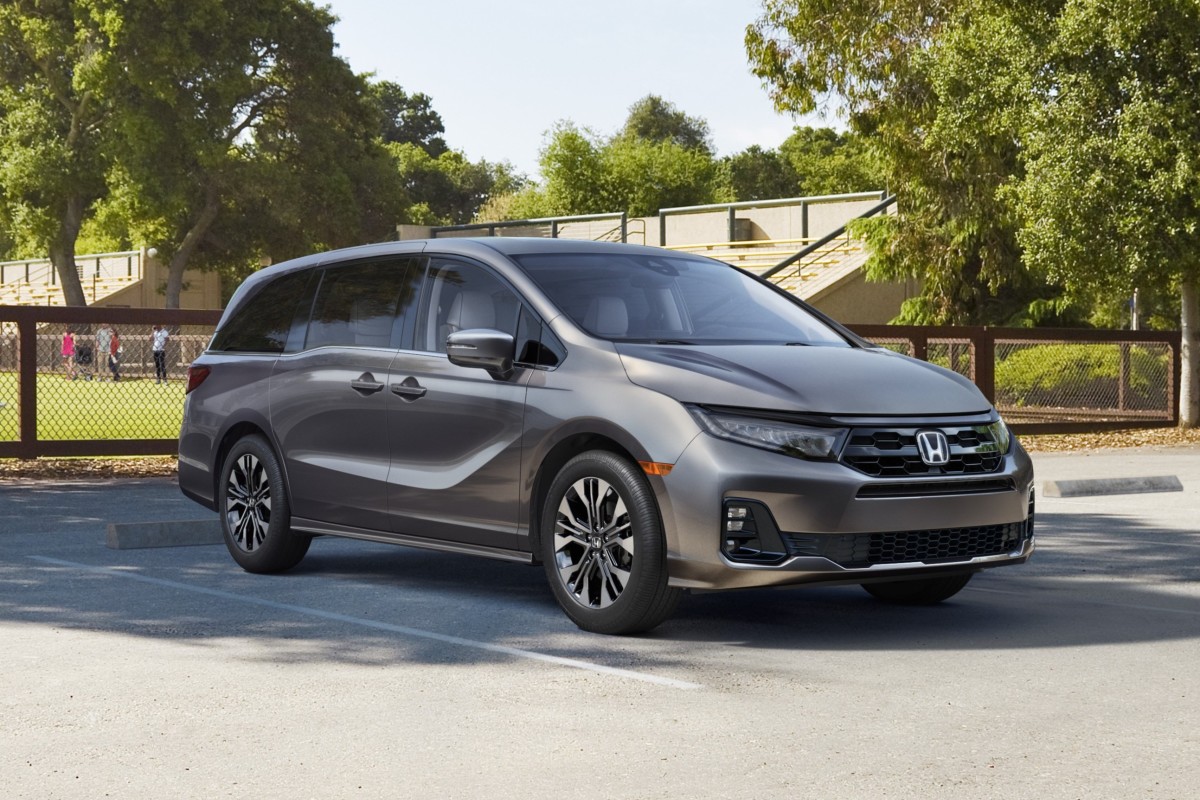
The Honda Odyssey has been a mainstay in suburban driveways since the 1995 model year. But with the current generation going essentially unchanged since 2018, it’s now being outpaced by its competition.
The naturally aspirated 3.5-litre V6, which generates 280 horsepower and 262 pound-feet of torque, runs through a 10-speed automatic transmission. This combination feels sluggish relative to electrified rivals. On top of that, the HondaVac built-in vacuum option — formerly one of the most family-friendly reasons to choose an Odyssey — has been missing since model year 2022. Add in that front-wheel drive (FWD) is the only drivetrain configuration and the estimated combined fuel economy is a relatively high 10.6 litres per 100 kilometres, and it’s hard to make a case for Honda’s people hauler.
A redesign was rumoured to be in the works for 2025, including a hybrid option, but that hasn’t transpired. There are some light styling and technology updates, though. For now, the Odyssey lives on as arguably the least desirable minivan on the market. The 2025 Honda Odyssey has a Canadian starting price of $52,056.
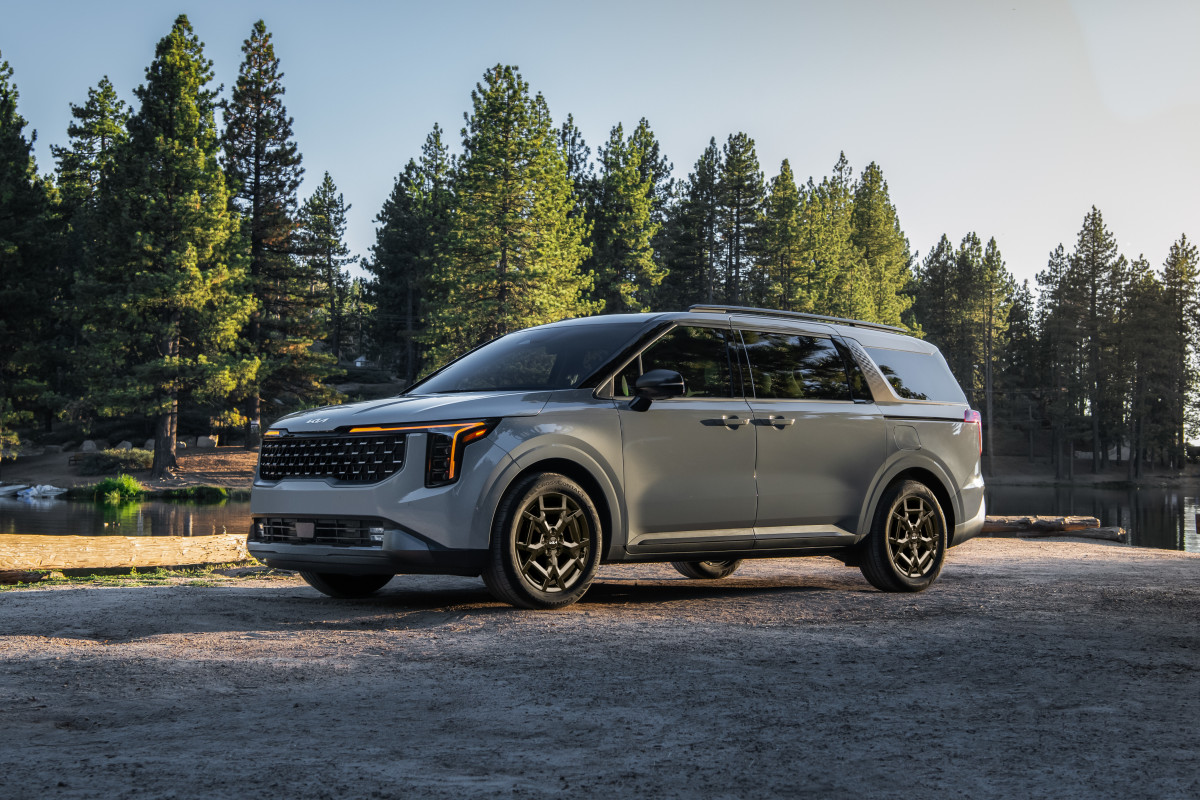
Kia Carnival
The Kia Carnival is a reincarnation of the Kia Sedona. The latter nameplate was sold in Canada from 2002 to 2021, when it was replaced by the Carnival as it launched in 2022. Kia calls the Carnival a Life Utility Vehicle, and it’s styled to look more like an SUV. But with its low ground clearance and sliding side doors, make no mistake: it’s a minivan.
One of the features Kia touted most with this new release is the VIP second-row seats. They’re heated and ventilated, recline to a view of the panoramic sunroof complete with footrest, and slide forward, backward, and sideways to help occupants find their favourite spots. However, in practice, these seats are not very practical. They all but block access to the third-row seats when equipped, and they can’t be removed to open up loading room for cargo. They’re only standard on the top SX+ trim, though, so they won’t be in the way for most buyers.
New for 2025, two powertrains are available on the Carnival. The gas-powered version has a normally aspirated 3.5-litre V6, making 290 hp and 262 lb-ft of torque sent through an 8-speed automatic transmission to FWD. This powertrain doesn’t feel especially energetic, and its 11.1 L/100 km combined fuel consumption average is not great. In the new 2025 Kia Carnival Hybrid, a 1.6-litre turbo four cylinder paired with hybrid drive produces a combined 242 hp and 270 lb-ft of torque. It has a fuel economy average of 7.2 L/100 km, which is excellent for a vehicle this size, but FWD remains the default. The 2025 Kia Carnival starts in Canada at a price of $43,280. As of this writing, pricing for the 2025 Kia Carnival Hybrid models has not yet been announced.
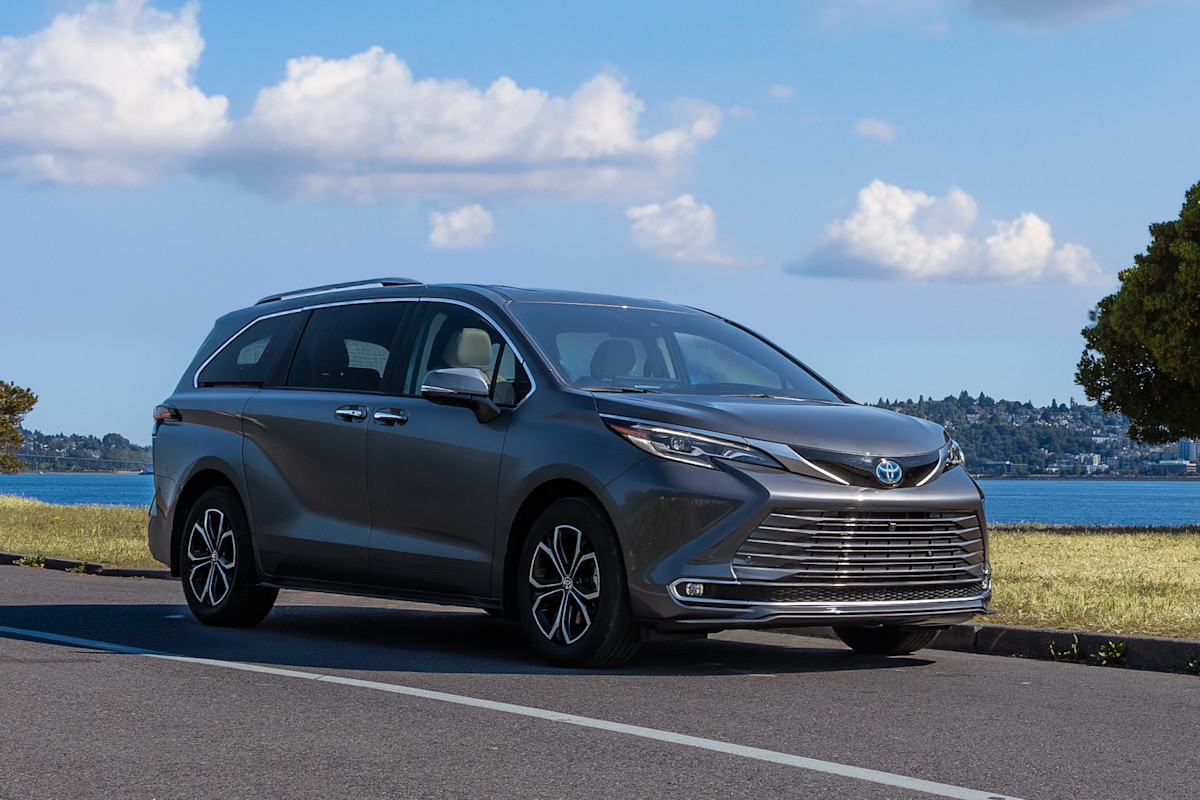
Toyota Sienna
This is a controversial take in some circles, but we’re convinced the Toyota Sienna is the best value for money in Canada within today’s minivan segment. Since the fourth generation of the Toyota Sienna minivan launched for 2021, a fuel-efficient hybrid powertrain has been standard equipment. AWD is also offered, making this the only minivan on the Canadian market available as a hybrid that drives all four wheels. While the Sienna can’t drive solely on electric power, its electrified powertrain has fuel consumption estimates of 6.6 L/100 km city, 6.5 highway, and 6.6 combined with FWD, or 6.8 city/6.7 hwy/6.8 combined with AWD. For many drivers, that’s a completely fair compromise. This is especially true on long road trips, where the Pacifica PHEV runs out of charge not long after it gets started.
A downside is that while the total system output is decent at 245 hp, the 2.5-litre four-cylinder engine is rough and underpowered when it needs to run on its own without the electric motors. The second-row seats also can’t be removed as they’re hardwired to the vehicle. If you think you’ll ever need the versatility of the entire cabin’s worth of cargo space, the Pacifica may be the way to go. But if you don’t expect you’ll ever move those rear seats anyway, the Toyota Sienna’s fuel efficiency, reliability, long list of standard safety features such as adaptive cruise control and blind spot monitoring, and overall value are tough to beat.
For 2025, the Toyota Sienna receives a new Platinum grade with premium features like second-row captain’s chairs with footrests — and these seats are more practical than the Kia Carnival’s VIP seats — plus a built-in cooler and vacuum cleaner. The 2025 Toyota Sienna Platinum starts at a price of $72,289 in Canada. That’s a little rich for a lot of Canadian families, though. At the lower end of its line-up, the 2025 Toyota Sienna has a starting price in Canada of $50,715.
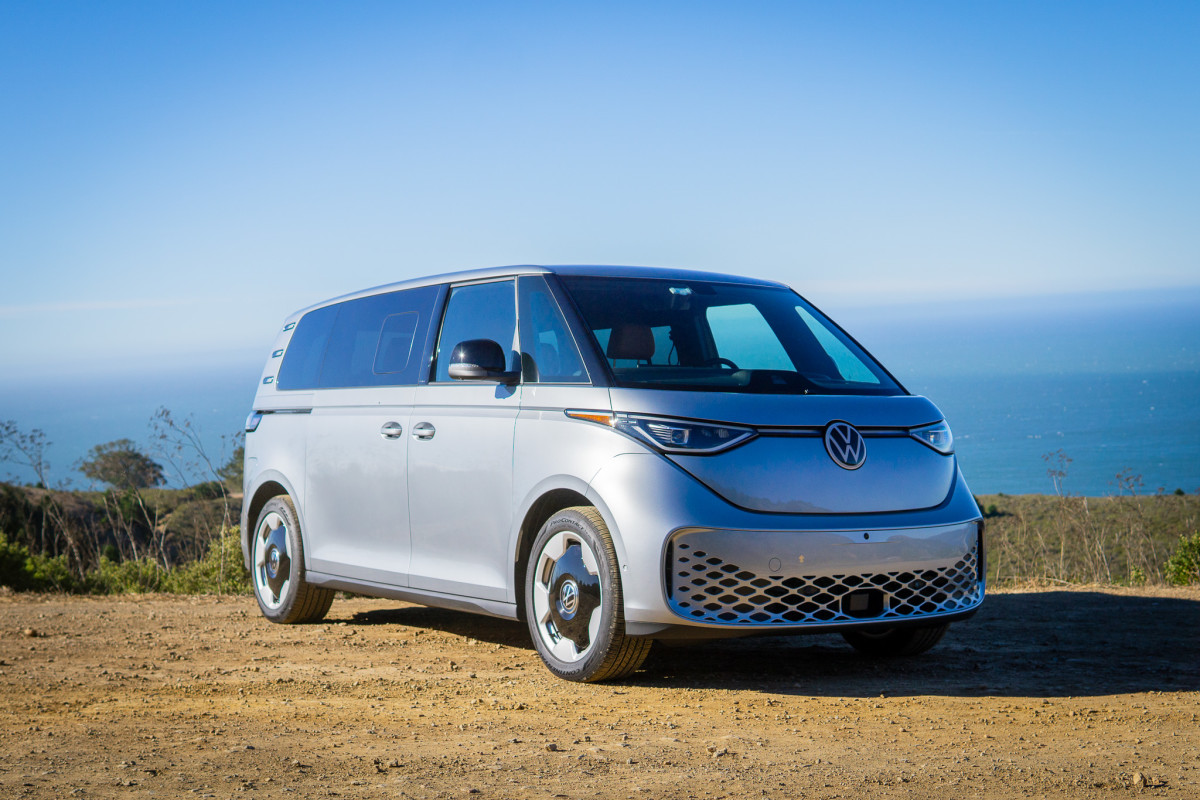
Volkswagen ID.Buzz
Volkswagen really doesn’t want you to think of the all-new, all-electric ID.Buzz as a minivan. That practical family functionality doesn’t align with the carefree nostalgia vibe they’re going for. But this revived version of the VW Minibus has power sliding doors at the sides, a low load floor, and a ton of interior space. By all accounts, this is a minivan, albeit an unusually quirky and spacious one. It’s also the only battery electric vehicle on this list.
In its first model year in Canada, the 2025 Volkswagen ID.Buzz is offered with FWD and AWD drivetrains. The range difference between them is negligible at 377 and 372 kilometres respectively. The RWD version, an homage to the original, generates 282 hp and 413 lb-ft of torque from a single electric motor. In the AWD version, the front axle receives a second motor, adding another 99 lb-ft of torque and bring the total horsepower output to 335 hp.
At launch, the Buzz is offered in a single trim in Canada, the fully loaded First Edition. It’s a little pricey: the 2025 Volkswagen ID.Buzz RWD — which sports a second-row bench seat — is priced in Canada at $79,995. If you want the iconic two-tone exterior paint, that’ll be $1,500 extra, and the electrochromic panoramic sunroof costs another $2,000 more. The AWD version, which comes with second-row captain’s chairs, is priced at $85,495 before options. Whether this vehicle can generate enough buzz at these price points is yet to be seen, but it certainly is a whole lot of fun.
Search for Volkswagen ID.Buzz
See all
All pricing includes destination charges and fees but not sales taxes. U.S. models are shown, and equipment availability in Canada may vary. Looking for a used minivan instead? Check our list of the best used minivans in Canada, where you’ll find discontinued models like the Mazda Mazda5, Chrysler Town & Country, and Nissan Quest.
Related Topics: