The Audi Q5 is Audi’s compact SUV, a rival for luxury compact crossovers such as the BMW X3, the Mercedes-Benz GLC, and the Porsche Macan. It was introduced for the 2009 model year as Audi’s second SUV model, following the launch of the Q7 in 2006. While every Q5 has decent ground clearance and ‘quattro’ all-wheel drive (AWD) as standard, the Q5’s appeal is centred on its luxurious interior, upmarket image, and practicality, rather than its off-road ability.
Initially available only with a 3.2-litre V6 engine, Audi expanded the Q5 range over time to include four-cylinder and diesel engines and a Q5 hybrid model. A high-performance SQ5 variant has also joined the range but, unlike the smaller Q3 SUV and the related Audi A4/A5 models, there’s no super-fast RSQ5 version.
From the start, the Q5 has been well-appointed. There’s never been a budget model for those that don’t want all the bells and whistles. That means every Q5 gives you a premium SUV with features, quality, and a price to match. You also get Audi’s quattro all-wheel drive system which, under normal conditions, sends 60% of power to the rear wheels and 40% to the front.
It was very much a case of evolution rather than revolution for the second-generation Audi Q5, which arrived for the 2018 model year with a similar appearance and only a fractional increase in size. A plug-in hybrid was added to the range in 2020, but the big news was the addition of the Audi Q5 Sportback model as part of a facelift in 2021. Although identical to the standard Q5 from the central pillar forward, the Q5 Sportback has a sloping roofline, giving it an ‘SUV coupe’ look. The new third-generation Audi Q5 went on sale for the 2025 model year.
The Audi Q5 has the look and feel of a luxury product, as befits a car with a premium price tag. However, it scores well for functionality with a spacious interior and a large trunk. Even the earliest entry-level Audi Q5 includes standard features such as 18-inch alloy wheels, leather upholstery, heated front seats, rain-sensing wipers, and cruise control.
Here’s our guide to the Audi Q5 SUV, covering each generation of the car, which models are available, what to look out for, and how much you can expect to pay.
Audi Q5 Buying Guide: Cost, Reliability, and the Best Years to Buy
Frequently Asked Questions
Which Audi Q5 years are the best?
If you’re looking for the best reliability from your used Audi Q5, the second-generation model (2018 model year onwards) is the one to go for. It’s proving generally dependable so far, although Audi’s reputation for reliability as a brand is nothing special overall.
What are the worst Audi Q5 years?
The worst years for the Audi Q5 are between 2012 and 2014. Common problems for cars of this era include excessive oil consumption and timing chain issues, with 2.0T models most affected.
Is a used Audi Q5 a good deal?
The Audi Q5 is a good deal if you’re looking for a high-quality SUV that’s practical, comfortable and well-equipped, and you don’t mind paying more for it. It’s far from cheap, but it does feel like a top-grade product. There are fuel-efficient powertrain options if you want to keep running costs to a reasonable level.
Audi Q5 Pros and Cons
Pros:
- Smooth and comfortable ride, with standard all-wheel drive
- Roomy, high-quality interior
- All versions have lots of standard equipment
Cons:
- Not as much fun to drive as some midsize SUVs
- Some models are rather expensive
- Unadventurous styling
Audi Q5 Generations
Third Generation (2025-present)
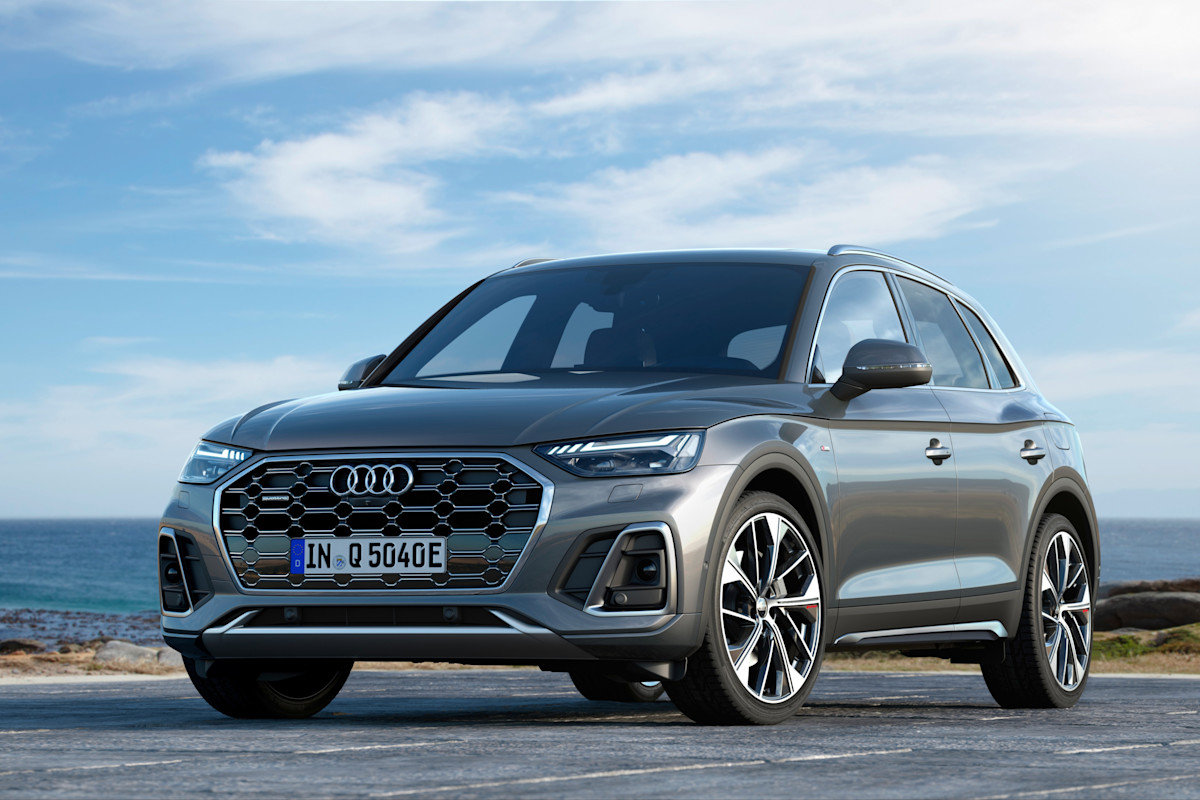
The all-new third-generation 2025 Audi Q5 was revealed to the world in September 2024. The new version is based on a platform called Premium Platform Combustion. Shared with the Audi A5 and A6 car families as well as the larger Q7 SUV, this platform is exclusive to Audi and is considered an evolution of the Volkswagen Group MLB platform.
As is common with Audi’s design department, the updates to the Q5 are subtle and iterative. The corners have been squared off slightly, the hood and rear are more upright, and the overall look is more streamlined. Slimmer headlights adorn the front, while the taillights are integrated in a trendy bar that span the liftgate. The Q5 Sportback body style carries over into the third generation.
On the inside, the new Q5 offers luxury finishes such as quilting but with available sustainable materials made from recycled plastics. The entire width of the dashboard can be covered with screens if you choose: the 11.9-inch digital instrument cluster and 14.5-inch infotainment screen are standard, while a 10.9-inch screen positioned ahead of the front passenger is optional.
The standard Q5 comes with a 2.0-litre turbocharged four-cylinder engine carried over from the previous generation. This mill now produces more power at 268 horsepower and 295 pound-feet of torque, allowing the Q5 to go from 0 to 100 km/h in 6.2 seconds. A 3.0-litre turbo V6, also carried over, powers the 2025 Audi SQ5 for 362 hp and 406 lb-ft, getting the SUV from 0 to 100 km/h in 4.8 seconds. Power figures are the same in the Q5 Sportback and SQ5 Sportback models. In either case, a seven-speed dual-clutch transmission sends power to standard quattro all-wheel drive (AWD).
A plug-in hybrid is available with the third-generation Q5 in other markets, but Audi Canada has no plans to bring it into Canada as of this writing. The Audi Q5 continues to be assembled for Canada at the automaker’s plant in San José Chiapa, Mexico.
As of this writing, pricing on the third-generation Audi Q5 ranges from just over $63,000 for a base Audi Q5 to just under $87,000 for a top-trim Audi SQ5 Sportback Technik. This model is brand new on the Canadian market, so reliability and used vehicle pricing insights are not yet available.
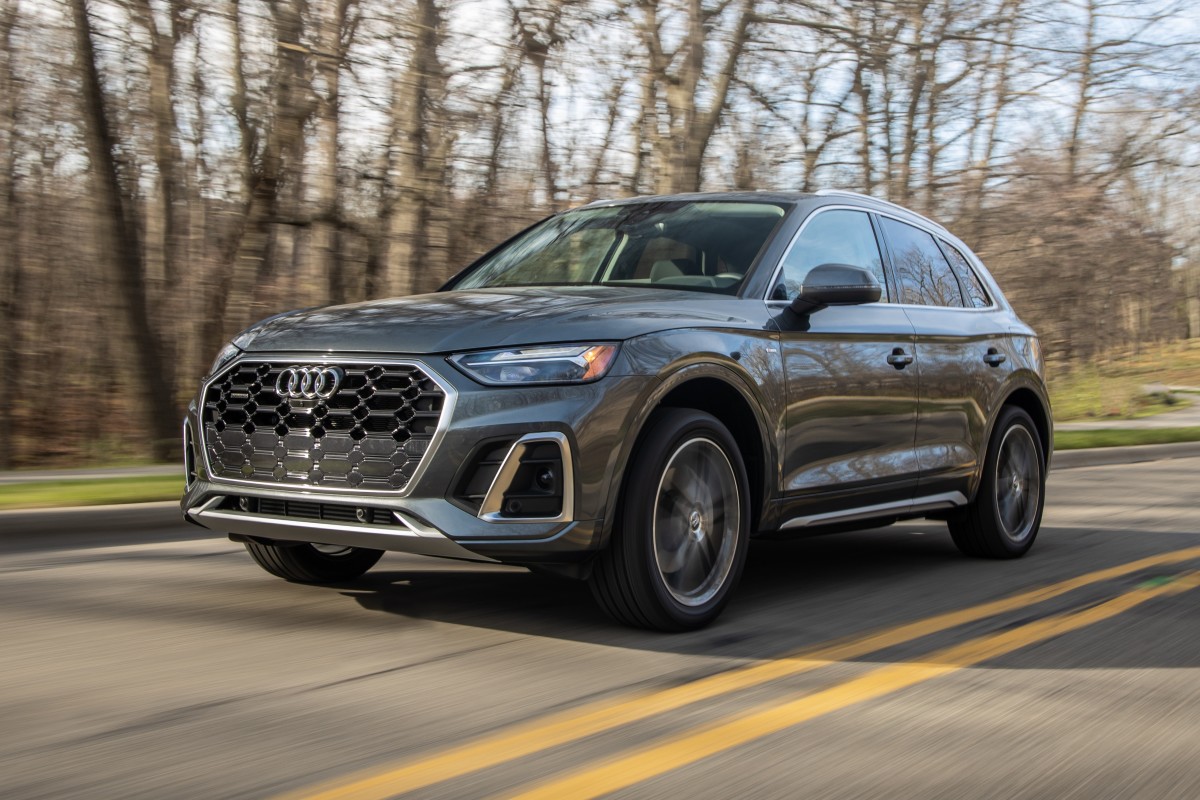
Second Generation (2018-2024)
The second-generation Audi Q5 arrived in 2017 for the 2018 model year. It picks up where the first one left off with similar looks and a familiar blend of quality and comfort, but with even more high-tech kit. It’s a very refined package with few major weak spots.
Initially, the second-generation Q5 was available only with an updated version of the four-cylinder 2.0T engine from its predecessor. It’s slightly more powerful with 252 hp and 273 lb-ft of torque, and it comes with a seven-speed ‘S tronic’ automatic transmission — a dual-clutch system — in place of the older car’s eight-speed conventional ‘Tiptronic’ auto. Combined with a new quattro all-wheel-drive system, it delivered improved fuel economy with an initial Natural Resources Canada combined figure of 9.6 litres per 100 kilometres. The high-performance SQ5 model was available from the get-go this time, and it had a turbo 3.0-litre engine with 354 horsepower and 369 lb-ft of torque, with an eight-speed Tiptronic automatic transmission as standard.
A mid-life update for the 2021 model year brought minor cosmetic changes, the first Q5 Sportback model, and a small boost of power for the plug-in hybrid (PHEV) model that launched in 2020. The Q5 TFSI e PHEV combines a 2.0-litre engine with an electric motor for a total output of 362 horsepower and an estimated pure electric range of between 31 and 39 kilometres, depending on the model year.
The engine lineup has since been updated and the Q5 adopted Audi’s latest naming strategy. The second generation ended with two 2.0 TFSI models, the Q5 40 TFSI (201 horsepower) and the Q5 45 TFSI (261 horsepower). Other than its sleeker rear section, the Q5 Sportback is identical to the Q5 and only slightly less practical, with a trunk capacity of 699 litres rather than 730 litres.
Audi Q5 trim levels for this era followed Audi Canada’s now-familiar naming convention of Komfort, Progressiv, and Technik. All are extremely well-equipped. From the start, standard features for Audi Q5 Komfort models included Bluetooth, three-zone climate control, a rear-view camera, leather upholstery, power and heated front seats, a power tailgate, and 40/20/40-split rear seatbacks.
Optional equipment early on included Apple CarPlay and Android Auto support, a panoramic sunroof, full LED headlights, a Bang & Olufsen sound system, and the Audi Virtual Cockpit, a digital driver display that offers a wealth of different configurations.
Despite its premium image, Audi tends to muster only mid-table rankings in most independent reliability surveys. In fact, in the J.D. Power 2024 U.S. Vehicle Dependability Study, the automaker finished second from the bottom. The general consensus is that the second-generation Audi Q5 is more reliable than the first-generation car. Owners of this Audi Q5 model have cited comparatively few problems on CarComplaints.com, although some have noted issues with the car’s ‘MMI’ infotainment system.
Prices for Audi Q5 models of this era start at about $27,000 for an older and lower-trim model that’s covered less than 100,000 kilometres. Newer, higher-trim, and lower-kilometre units can cost anywhere from $30,000 to $50,000 or more, the latter most often applying to well-equipped SQ5 and SQ5 Sportback models.
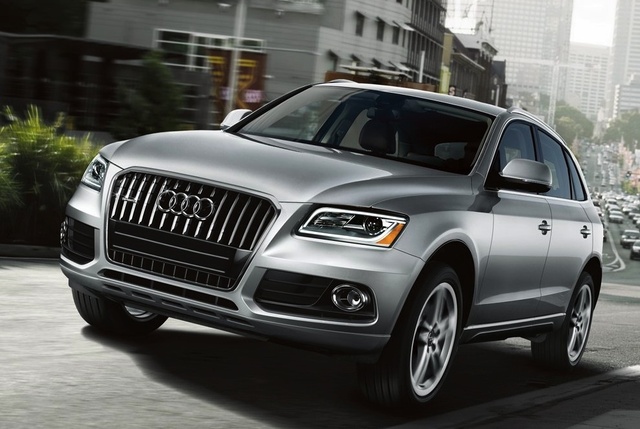
First Generation (2009-2017)
The introduction of the first-generation Audi Q5 in 2009 was a no-brainer, capitalizing on the boom in popularity of luxury SUVs that continues to this day. Based on the same platform and sharing many parts with the concurrent Audi A4 sedan and A5 coupe, the Q5 would become a rival for cars such as the Lexus NX, the Mercedes-Benz GLK, and the BMW X3. In fact, the exterior dimensions of the first Q5 are almost identical to those of the BMW X3 that went on sale in 2010. It’s a car that ticks a lot of boxes in any guise, with a roomy and beautifully built interior and a real feeling of solidity and smoothness.
To begin with, the Q5 came only with a 3.2-litre V6 engine with 270 horsepower and a six-speed Tiptronic automatic transmission as standard. A four-cylinder option was added in 2011. Badged 2.0T, it’s a turbocharged ‘TFSI’ engine with 211 horsepower and an eight-speed automatic transmission. The 3.2-litre V6 was replaced from 2013 onwards by a new 3.0-litre supercharged V6. At the same time, the Q5 Hybrid joined the range. The hybrid powertrain combines the 2.0T’s engine with a 54-horsepower electric motor for a total output of 245 horsepower.
In 2014, power for the 2.0T increased to 220 horsepower and two new models joined the range. These were the Q5 TDI, which has a 240-horsepower 3.0-litre V6 diesel engine, and the SQ5, a high-performance model with a supercharged 3.0-litre V6 engine with 354 horsepower. Both came with an eight-speed automatic transmission as standard. The Q5 TDI was a victim of the demise of diesel and was dropped in 2016.
Audi Canada used the Premium and Premium Plus trim names early in the Q5’s run, and the Komfort, Progressiv, and Technik names used today took hold in 2014. Even the earliest entry-level Q5 models came with 18-inch alloy wheels, power heated front seats and outboard mirrors, leather upholstery, a 6.5-inch touchscreen infotainment system, a 10-speaker audio system, and Sirius satellite radio.
In general, Audi as a brand has an average reliability record and the Q5 doesn’t do anything to shift the dial. Although there aren’t a huge number of issues raised by first-generation Audi Q5 owners on CarComplaints.com, some of those that do come up are fairly major with excessive oil consumption and failing timing chains the most prominent. These seem to be centred on 2.0T models with the V6 gas and diesel models less affected. Other common issues, regardless of engine, include rattling or leaking panoramic sunroofs and noisy suspension caused by failing control arms. These are things to look out for on any test drive.
When it was new, the MSRP for the first Q5 started from just over $43,000 in Canada. You can now often pick up early Audi Q5 models with less than 150,000 kilometres on the clock for $15,000 or less, which represents a lot of car for the money. V6 models are rarer but land in a similar ballpark. The jumping-off point for an SQ5 is about $17,000, though prices can run much higher for low-kilometre cars in great condition.
Related Topics